
19 Hawaii Luau Food Customs From The 1960s That Tourists Today Wouldn’t Expect
Pack your bags, don your brightest floral shirts, and get ready to feast… but not quite like you’re imagining. Hawaii, a land steeped in tradition and vibrant culture, offers an experience that’s as much about the journey into the past as it is about the breathtaking scenery.
And when that journey takes you to a luau, prepare for a delightful shock. Forget the predictable poi and kalua pig you might have in mind. The luaus of the 1960s were a different beast entirely. A fascinating blend of ancient custom and burgeoning tourist appeal, with some surprising offerings that might just leave you scratching your head.
Or perhaps reaching for a second helping of something utterly unexpected!
1. Whole Pigs Were The Star
Nothing announced a genuine 1960s luau like the unmistakable aroma of kalua pig roasting in an underground imu. Men would rise before dawn to dig the pit, line it with volcanic rocks, and kindle a fire that would burn for hours.
Once the rocks glowed red-hot, they’d wrap a whole pig in ti leaves, place it in the earth oven, and cover it with wet burlap sacks and soil. The slow cooking process lasted all day, infusing the meat with smoky flavors.
When unveiled at sunset, the tender pork literally fell off the bone-a dramatic moment that signaled the true beginning of the feast.
2. No Forks Allowed
Utensils were considered unnecessary at authentic 1960s luaus. Guests received a bowl of water with floating flower petals to cleanse their fingers before and during the meal.
Eating with your hands wasn’t just allowed-it was expected. This practice connected diners directly with their food in a way that honored Hawaiian traditions. Tourists often found this custom challenging at first, especially when handling slippery foods like poi or oily fish.
Locals would gently guide visitors on proper technique: using just the first two fingers and thumb of the right hand to scoop and pinch food.
3. Poi Came First
The purplish paste made from pounded taro root always inaugurated the feast. Hawaiians believed poi prepared the stomach for the rich foods to follow. Served in communal bowls, family members and close friends would share from the same container-a sign of trust and community.
I remember my uncle telling me how his first luau in 1963 shocked him when everyone dipped into the same poi bowl. “The host noticed my hesitation and explained that Hawaiians believe if a family can share poi, they can share anything.”
Tourists were taught to indicate the thickness they preferred by showing one, two, or three fingers.
4. Pineapple Was More Than Garnish
Fresh pineapple played a crucial role in 1960s luaus beyond mere decoration. The fruit’s enzymes acted as a natural meat tenderizer and palate cleanser between courses.
Hosts would strategically place pineapple slices throughout the meal to enhance the dining experience. The fruit’s acidity cut through the richness of fatty pork and complemented the saltiness of seafood dishes.
Pineapple was also believed to aid digestion, making it both a functional and flavorful component of the feast. Guests were encouraged to nibble on pineapple between sampling different dishes to fully appreciate each distinct flavor.
5. Plates Were Smaller
Unlike today’s all-you-can-eat buffet style, 1960s luaus featured carefully portioned small plates. Food would arrive in waves throughout the evening, allowing guests to savor each distinct offering.
This approach prevented waste and honored the resources that went into creating the feast. Sometimes these “plates” weren’t plates at all but ti leaves folded into makeshift bowls, adding an earthy aroma to the food.
My grandmother still talks about attending a luau in Hilo where she received seven different small servings over three hours. “We never felt stuffed, just perfectly satisfied with each new taste that arrived.”
6. No Soda, Only Fresh Juices
Commercial sodas were conspicuously absent from authentic 1960s luaus. Instead, guests sipped vibrant tropical juices pressed from fruits harvested that very morning.
Guava, passion fruit, and pineapple juices flowed freely, often mixed with coconut water for a refreshing natural beverage. Children delighted in drinking from bamboo cups or coconut shells rather than glass or plastic.
These juices weren’t just thirst-quenchers but considered part of the nutritional experience. The natural sugars complemented the savory dishes without overwhelming them, creating a balanced meal that reflected Hawaii’s abundant resources.
7. Coconut Everything
Coconut reigned supreme in 1960s luau cuisine, appearing in virtually every course. Fresh coconut milk formed the base for savory chicken and fish dishes, while shredded meat added texture to vegetable sides.
Coconut cream enriched desserts like haupia pudding, giving them silky smoothness. Even the serving vessels were often coconut shells, polished and repurposed as bowls or cups.
The versatility of coconut reflected Hawaiian resourcefulness-using every part of this abundant resource. Tourists often remarked on the difference between fresh island coconut products and the canned versions available on the mainland, noting the remarkable complexity of flavor.
8. Seafood Was Always Local
Seafood at 1960s luaus came straight from Hawaiian waters, often caught the same day. Fishermen would deliver their morning catch directly to the luau site, where it would be prepared using traditional methods.
Raw fish preparations like poke featured ahi tuna so fresh it practically glistened. Octopus was tenderized by pounding and salting before being mixed with seaweed and kukui nuts.
I still remember my father describing a North Shore luau where he watched fishermen paddle in with their catch just hours before the feast. “The mahi-mahi was still showing its brilliant colors when they began preparing it,” he’d say. “You could taste the ocean in every bite.”
9. Side Dishes Were Sacred
Certain side dishes carried spiritual significance at 1960s luaus. Lomi-lomi salmon represented the coming together of Hawaiian and Western influences, while limu (seaweed) connected diners to the ocean’s bounty.
Sweet potatoes symbolized the underground realm of the god Kāne. Omitting any of these traditional sides would be considered improper and potentially unlucky.
Each side dish had its specific preparation method and serving protocol. Elders would sometimes tell stories about the origins of these foods as they were passed around, ensuring cultural knowledge transferred alongside the meal itself.
10. Guests Were Served In A Specific Order
Strict hierarchy governed serving order at authentic 1960s luaus. Respected elders (kūpuna) always received their food first, followed by other adults and finally children.
This practice wasn’t merely etiquette but a demonstration of proper respect for age and wisdom. Servers would approach elders with slight bows, presenting food at slightly lower than eye level as a sign of deference.
Tourists often found themselves confused by this custom, sometimes beginning to eat before elders had been served. Hosts would gently correct these missteps, using them as opportunities to explain Hawaiian values of respect and the importance of honoring those with life experience.
11. Drinks In Coconut Shells
Beverages at 1960s luaus came in natural vessels that enhanced both flavor and experience. Freshly husked coconuts were halved, cleaned, and polished to serve as drinking cups for everything from water to fruit juices.
These natural containers weren’t just novelties but practical choices that kept drinks cool longer than glass. The slight coconut essence that infused each sip added subtle complexity to the beverages.
I’ll never forget my aunt’s story about her first Hawaiian vacation in 1967. “The hostess handed me this coconut shell filled with pineapple juice, and I was so worried about spilling it that I barely moved all evening,” she laughed. “But that juice tasted like nothing I’d had before.”
12. No Silverware For Certain Foods
Specific foods demanded handling without utensils, even if silverware was available for other dishes. Kalua pork required gentle pulling apart with fingers to appreciate its tender texture.
Poi was traditionally scooped with one, two, or three fingers depending on its consistency. Roasted breadfruit needed to be broken apart by hand to release its fragrant steam properly.
Locals believed these foods lost something essential when eaten with metal implements. The tactile connection between person and food was considered part of the nourishment process itself. Tourists gradually learned which foods warranted finger-eating and which could be approached with the provided wooden or bamboo utensils.
13. Luau Songs And Food Were Linked
Music and dining intertwined seamlessly at 1960s luaus. Specific chants or songs signaled the arrival of certain dishes, creating a choreographed dining experience.
When musicians began the rhythmic “Kaulana Na Pua,” servers would emerge with seafood dishes. The livelier “Little Brown Gal” might accompany the presentation of kalua pig.
These musical cues helped coordinate the complex serving sequence and enhanced the storytelling aspect of the luau. Guests learned to anticipate what foods would appear based on the changing melodies. This practice transformed eating from a simple act into a multisensory cultural immersion that engaged ears as much as taste buds.
14. Dessert Came Last, Always Tropical
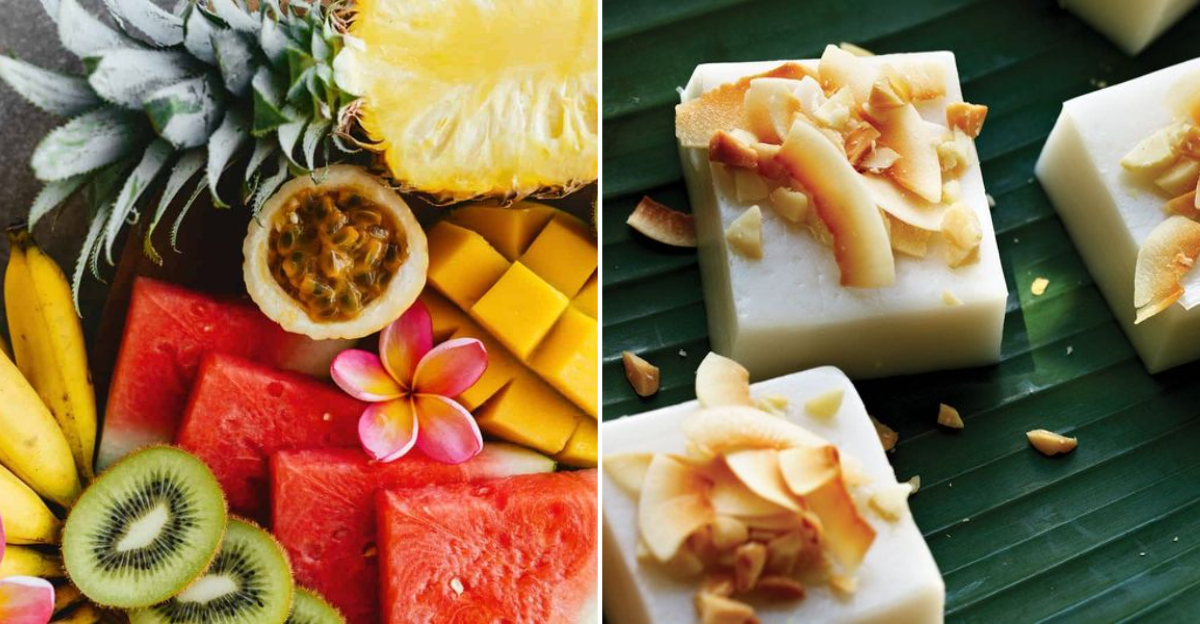
Sweet endings to 1960s luaus never featured mainland desserts like cakes or pies. Instead, haupia (coconut pudding) set in wooden trays would be cut into small squares and served on ti leaves.
Fresh tropical fruits arranged in artistic displays provided natural sweetness. Papaya halves filled with berries, mango slices fanned out in patterns, and star fruit cut to emphasize its shape created edible art.
The timing was deliberate too. Desserts arrived only after a period of rest and conversation following the main courses. My cousin who attended a Maui luau in 1969 still talks about the haupia that was so fresh the coconut had been cracked open just hours before.
15. Spam Was Popular, But In Unique Ways
Spam’s presence at 1960s luaus reflected Hawaii’s post-war relationship with this mainland import. Rather than serving it straight from the can, luau hosts transformed the humble meat into sophisticated island delicacies.
Thin-sliced Spam wrapped in nori and rice became musubi—a perfect portable snack. Diced and marinated Spam added savory notes to pineapple fried rice. Some hosts even created Spam poke, cubing and seasoning it with soy sauce, sesame oil, and seaweed.
These creative adaptations showed how Hawaiians incorporated outside influences while maintaining their culinary identity. Mainland visitors were often surprised to find this humble canned meat elevated to delicacy status.
16. Pineapple Upside-Down Cake Was a Party Staple
Pineapple upside-down cake stood as the one mainland dessert that earned a place at authentic 1960s luaus. This exception emerged because the dessert showcased Hawaii’s iconic fruit in a way that delighted both locals and visitors.
Baked in cast iron skillets over open fires, these cakes developed caramelized edges that commercial versions couldn’t match. The pineapples used were smaller, sweeter varieties rarely exported to the mainland.
I still cherish the memory of my mother describing her first taste at a Kauai luau in 1964. “The cake was still warm when they flipped it over,” she’d recall. “The pineapple juices ran into the cake, making it so moist you didn’t need anything else with it.”
17. Tables Were Decorated With Ti Leaves
Lush green ti leaves formed the foundation of 1960s luau table settings. These broad, shiny leaves served multiple practical purposes beyond mere decoration.
Arranged as placemats, they provided natural, biodegradable eating surfaces that imparted subtle flavor to the food. When folded and pinned with wooden picks, they became impromptu serving bowls for saucy dishes.
Ti leaves held cultural significance too. Considered sacred to Lono, god of peace and fertility, their presence blessed the gathering. After the meal, guests often took their ti leaf home as a symbol of good fortune. The subtle aroma they released when warmed by hot food added another sensory dimension to the dining experience.
18. Everyone Had To Try Poi
First-time luau attendees in the 1960s couldn’t escape the poi ritual. This purple paste, made from pounded taro root, served as the spiritual center of Hawaiian cuisine.
Hosts would personally introduce newcomers to poi, showing them how to dip fingers and scoop properly. Tasting this staple food represented more than culinary adventure—it symbolized willingness to embrace Hawaiian culture completely.
The taste often surprised mainland visitors, who expected sweetness but encountered something more complex. “One finger poi” (thicker consistency) was usually offered to beginners as it was easier to manage. Those who showed appreciation for poi were warmly welcomed as honorary family members for the evening.
19. Children’s Portions Were Special
Young guests at 1960s luaus received thoughtfully modified dishes that introduced them to Hawaiian flavors without overwhelming their palates. Kalua pork might be shredded more finely, poi sweetened slightly with fruit, or seafood deboned with extra care.
These adaptations weren’t merely practical but pedagogical-designed to nurture appreciation for traditional foods. Children’s portions often came on special ti leaf bundles shaped into boats or animals.
My friend’s father grew up in Honolulu and recalls how the luau aunties would create little fish shapes from his poi. “They’d use bits of seaweed for eyes,” he said. “It made me excited to try everything, even foods I was unsure about.”