
Here’s Why This Missouri Steakhouse Still Serves Steaks Exactly The Way It Did In The 1940s
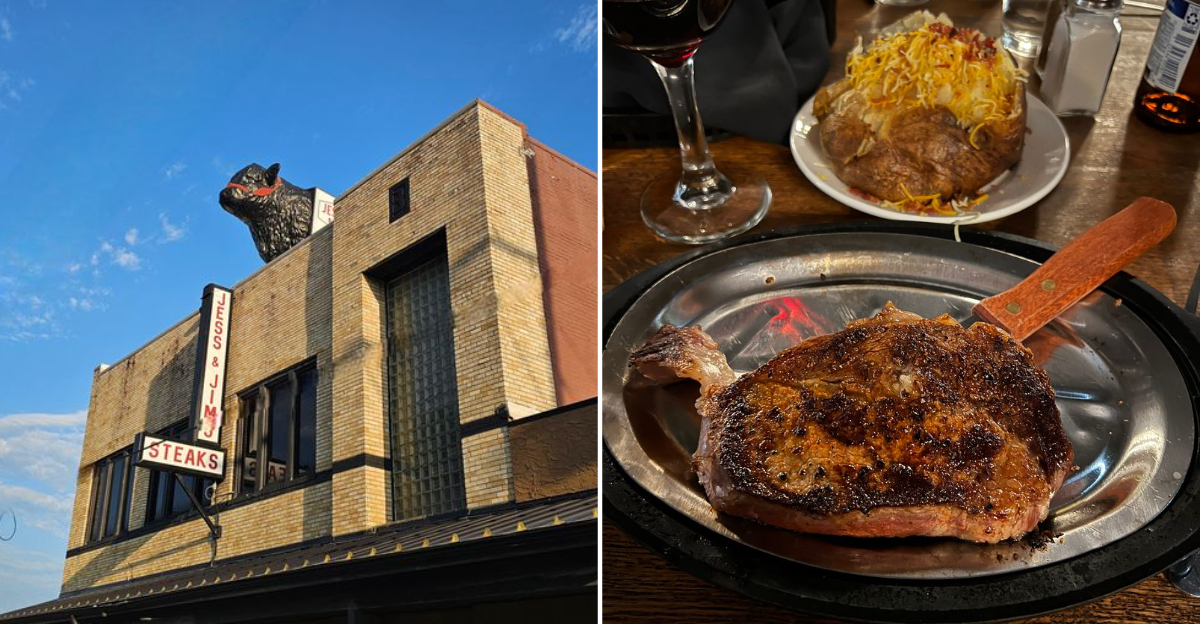
Tucked away in the Martin City neighborhood of Kansas City, Missouri, Jess & Jim’s Steakhouse has been serving up sizzling slabs of beef since 1938.
While other restaurants chase trends and reinvent themselves every few years, this family-owned gem has stuck to what works, thick-cut steaks, simple sides, and an atmosphere that feels like stepping into a time machine.
What makes this place so special that it refuses to change with the times, and why do steak lovers keep coming back for more?
Family Legacy Keeps the Flame Burning Since Day One

When you walk into Jess & Jim’s Steakhouse at 517 E 135th St, Kansas City, MO 64145, you’re not just entering a restaurant—you’re stepping into a family story that spans generations.
Mike Van Noy, the current owner, represents the multi-generation family operation, continuing the tradition started by the original founders rather than being strictly “second generation.”
Family-owned businesses have a special magic that corporate chains can never replicate. There’s accountability, pride, and a genuine connection to the community that goes beyond profit margins.
The Van Noy family didn’t inherit just a building and some recipes—they inherited a responsibility to preserve something precious. Every steak served, every customer greeted, carries the weight of decades of reputation.
This isn’t some restaurant group’s nostalgia project or a themed dining experience. Real people with real roots in Kansas City have poured their lives into maintaining authenticity.
Unlike restaurants that change hands and lose their soul, Jess & Jim’s has maintained its identity through careful stewardship. The family understands that their customers aren’t just hungry—they’re seeking connection to simpler times when quality mattered more than speed.
Born in 1938, Perfected Through the War Years
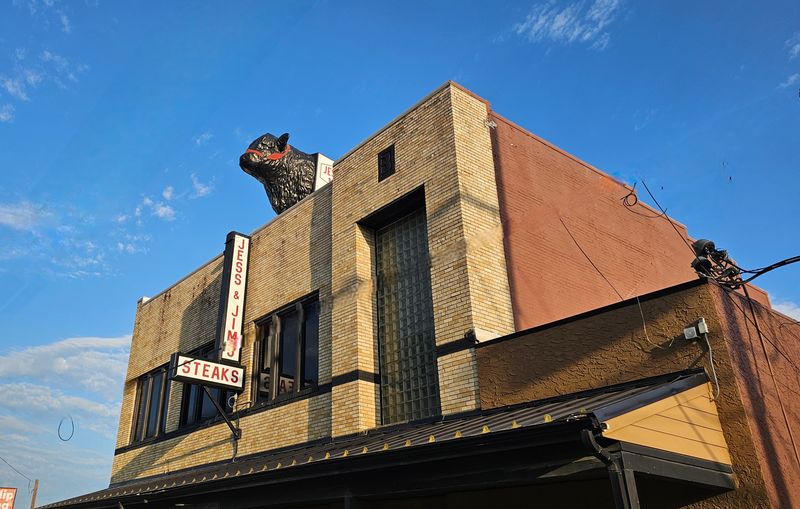
Opening a steakhouse in 1938 meant Jess & Jim’s was already an established institution when the 1940s rolled around with all their challenges and changes.
The restaurant didn’t just survive the 1940s—it thrived and defined itself during that decade. Those formative years shaped everything from portion sizes to cooking techniques that remain unchanged today.
Many restaurants claim vintage credentials, but few can legitimately say they operated during wartime America. Jess & Jim’s earned its stripes the hard way, adapting without compromising.
The Martin City neighborhood where it first opened has changed dramatically over eight decades. Yet the steakhouse remains a constant, a landmark that locals use for directions and newcomers discover with delight.
Operating through the Great Depression’s tail end and World War II taught this establishment resilience. That toughness translated into a no-nonsense approach to food—serve quality, charge fairly, and don’t mess with success.
The Legendary Playboy Strip Steak That Made History
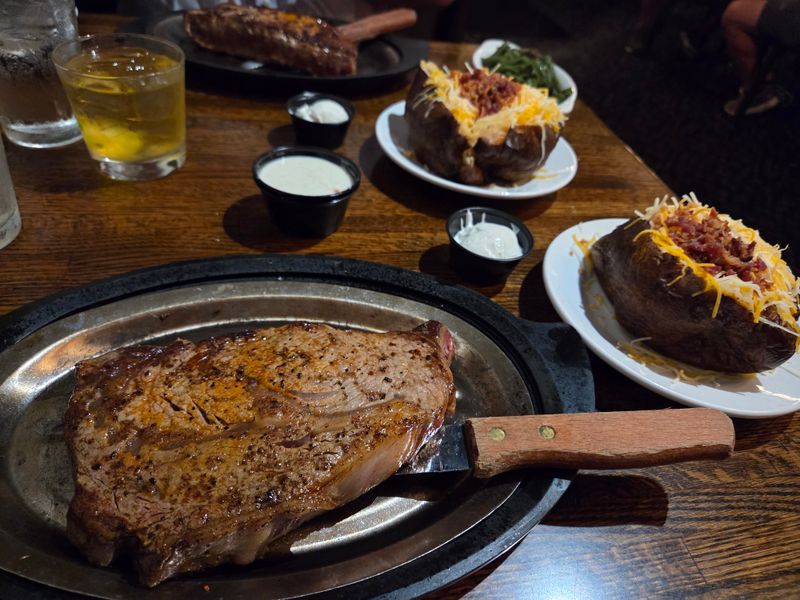
Few menu items achieve legendary status, but the 25-ounce Playboy Strip at Jess & Jim’s isn’t your average entree—it’s a monument to meat.
Back in the 1970s, Playboy magazine sent food critics across America hunting for the best steaks. When they sank their teeth into this massive sirloin, they knew they’d struck gold, gushing about it in print and cementing its reputation forever.
Don’t let the provocative name fool you—this isn’t some gimmicky creation. It’s a straightforward Kansas City strip, hand-cut thick and cooked to perfection without fancy sauces or complicated preparations.
Weighing in at over a pound and a half, this beast of a steak makes modern portion-controlled dining look downright wimpy. This is old-school American excess at its finest, unapologetic and delicious.
The genius lies in the simplicity. Quality beef needs nothing more than proper seasoning and high heat to shine, a philosophy Jess & Jim’s has never abandoned.
Ordering the Playboy Strip isn’t just getting dinner—it’s participating in Kansas City culinary history. Customers still request it by name, decades after that magazine review, proving that excellence never goes out of style.
Hand-Cut Steaks Because Machines Can’t Love Meat
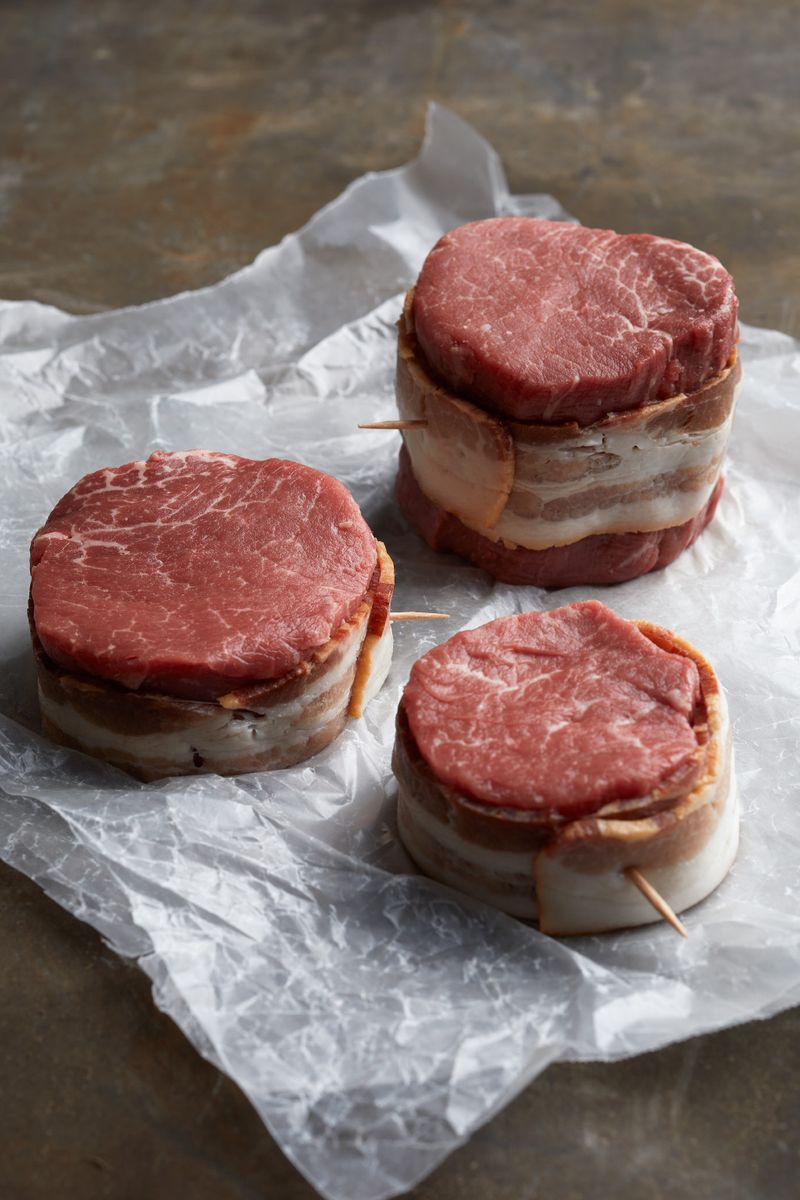
In an era of pre-portioned, vacuum-sealed, factory-processed everything, Jess & Jim’s still employs actual humans with sharp knives to cut their steaks.
Hand-cutting isn’t just some quaint tradition—it’s a quality control measure that ensures every steak meets exacting standards. A skilled butcher can feel the meat, judge the marbling, and cut with precision that machines simply cannot match.
This practice costs more in labor and time, which is exactly why most restaurants abandoned it decades ago. But Jess & Jim’s understands that shortcuts in the kitchen lead to shortcuts on the plate.
Each hefty steak that arrives at your table has been individually assessed and prepared by someone who knows beef intimately. There’s craftsmanship involved, the kind that’s rapidly disappearing from American dining.
Customers can taste the difference even if they can’t articulate why. The texture, the way it cooks, the satisfaction of cutting into it—all superior because a human cared enough to do it right.
This commitment to hand-cutting represents the restaurant’s broader philosophy: honor the ingredients, respect the craft, and never sacrifice quality for convenience or profit margins. That’s how you stay relevant for over 80 years.
Wood-Paneled Walls That Witnessed Decades of Dinners
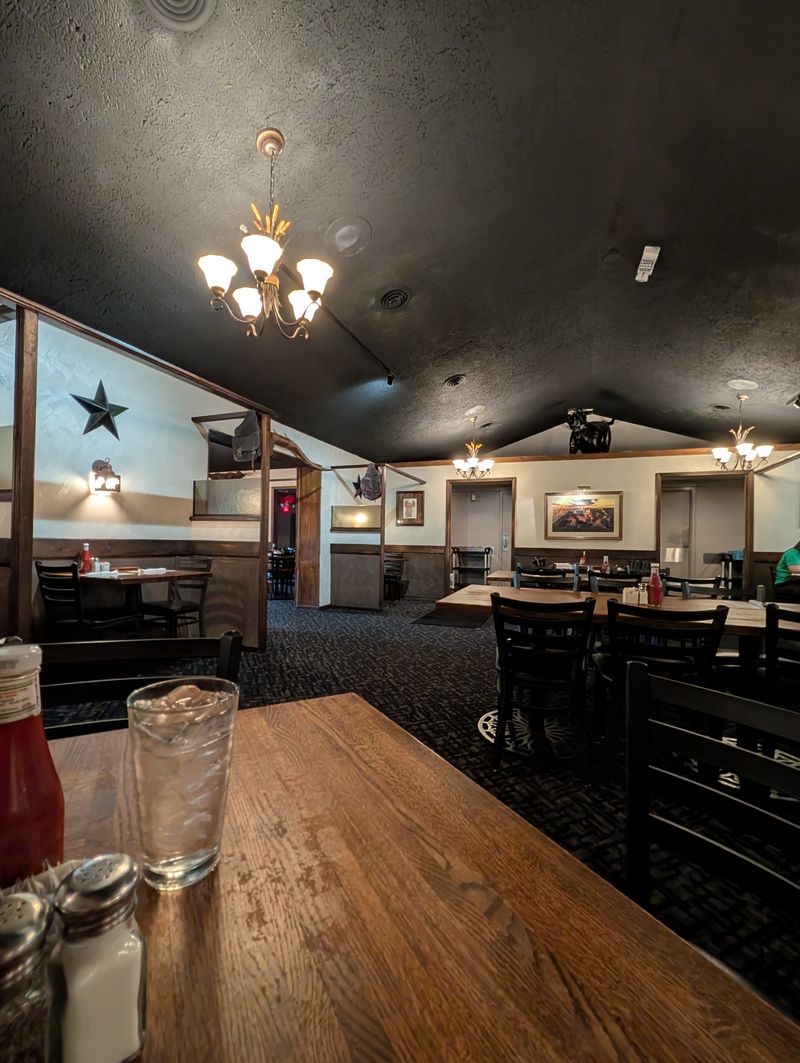
Walking into Jess & Jim’s feels like entering your grandfather’s favorite hunting lodge—in the best possible way.
The wood-paneled walls haven’t been ripped out for exposed brick or modern minimalism. They remain, darkened by decades of smoke and stories, creating an atmosphere money simply cannot buy.
Authenticity cannot be manufactured or purchased from a vintage decorator. These walls, booths, and fixtures earned their character through years of service, absorbing the laughter, conversations, and celebrations of countless families.
Modern restaurants spend fortunes trying to create “vintage vibes” with distressed furniture and Edison bulbs. Jess & Jim’s doesn’t need to try—it genuinely is vintage, and customers immediately sense the difference.
The unpretentious roadhouse atmosphere puts everyone at ease. There’s no dress code anxiety, no intimidating sommelier, no pressure to perform sophistication you don’t feel.
Some reviewers might call the decor dated, but that completely misses the point. This isn’t a museum or a theme restaurant—it’s the real deal, preserved not through effort but through simple continuity.
You can almost hear the echoes of 1940s diners, soldiers on leave, celebrating families, first dates, and anniversary dinners that these walls have witnessed throughout the decades.
That Iconic Steer on the Roof Ain’t Going Anywhere
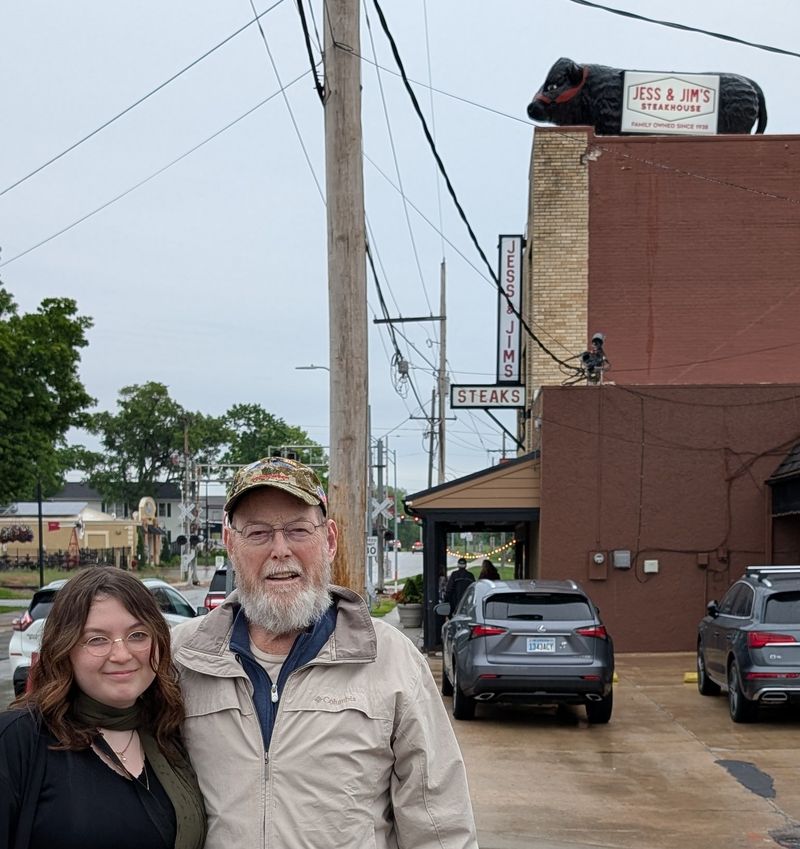
Before Instagram made quirky signage cool, Jess & Jim’s had a massive steer perched atop their building, silently advertising beef excellence to passing motorists.
This isn’t subtle branding or clever marketing—it’s bold, unapologetic, and wonderfully kitschy in a way that modern corporate restaurants would never dare attempt. The steer announces exactly what you’re getting: serious meat in a place that doesn’t take itself too seriously.
Roadside attractions like this defined mid-century American dining culture. Giant cows, spinning chickens, and oversized food items beckoned travelers off highways and into local establishments with personality.
Most of these landmarks have vanished, demolished in favor of sleek, forgettable facades. Jess & Jim’s kept their steer, recognizing it as part of their identity and local heritage.
Customers use it as a meeting point and landmark. “Meet me at the place with the steer on top” works perfectly in a city full of restaurants with generic storefronts.
This rooftop resident represents the restaurant’s refusal to modernize for modernization’s sake. If something works and customers love it, why change it? The steer stays, a defiant symbol of tradition in an ever-changing world.
Simple Sides Because Steak Is the Star

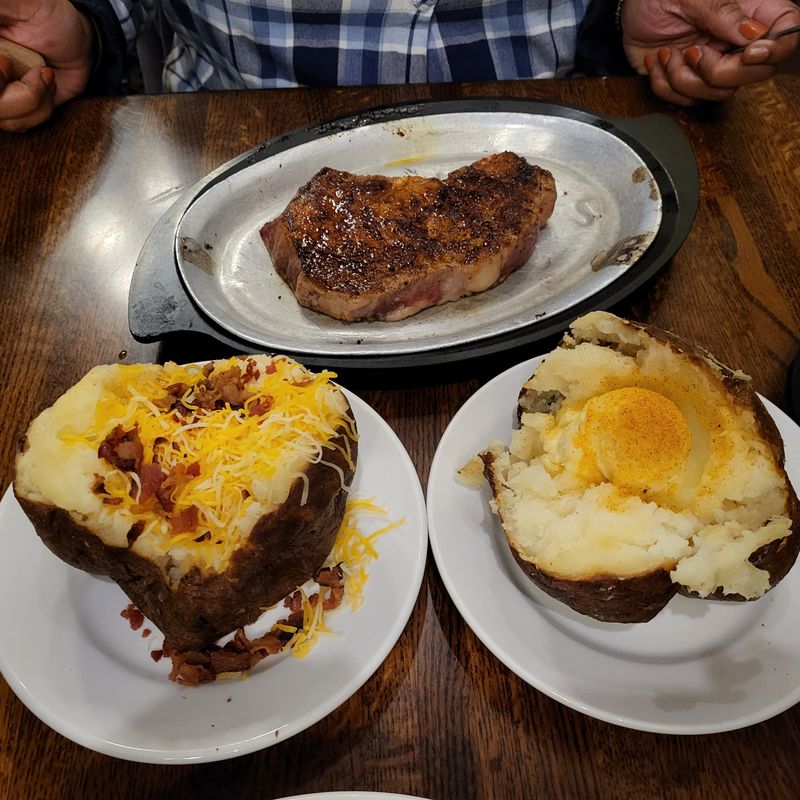
Forget truffle-infused this or deconstructed that—Jess & Jim’s serves baked potatoes, salads, and green beans without apology or pretension.
The twice-baked potatoes have achieved legendary status in their own right. Multiple reviews rave about them, with one customer admitting it was the best baked potato they’d had in years (calories be damned!).
This approach to sides reveals the restaurant’s core philosophy: let the steak shine. Accompaniments should complement, not compete with or distract from the main event.
Modern restaurants pile plates with seven different micro-vegetables and three sauce drizzles, creating visual chaos that photographs well but overwhelms the palate. Jess & Jim’s understands that sometimes more is just more, not better.
The simplicity also reflects 1940s dining sensibilities when meals were straightforward and portions were generous. Meat, potato, vegetable—done. No small plates, no sharing concept, no confusion about what you’re ordering.
Customers appreciate knowing exactly what they’re getting. The menu doesn’t require translation or explanation, and sides arrive hot, properly seasoned, and satisfying.
Even the pickled beets served before meals maintain tradition, a touch from earlier eras that surprises and delights modern diners unfamiliar with this once-common practice.
No Tasting Menus or Trendy Small Plates Here
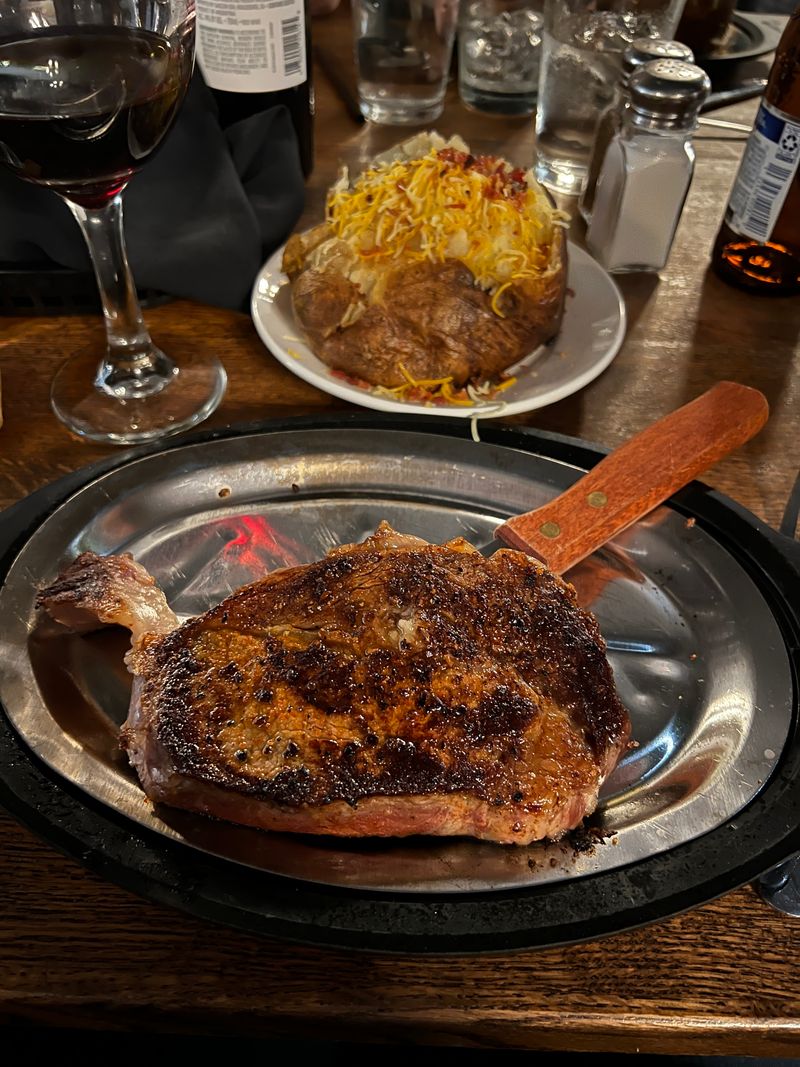
Tasting menus conquered fine dining, but Jess & Jim’s never surrendered to the trend of tiny portions at big prices.
When you order a steak here, you get a steak—a substantial, hunger-crushing, belt-loosening piece of beef that doesn’t require a magnifying glass to locate on your plate. This is dining for satisfaction, not for Instagram stories.
The small plates phenomenon emerged from foodie culture’s desire to sample everything, but it fundamentally misunderstands what steakhouse customers want. They want one exceptional thing, prepared perfectly, served generously.
Jess & Jim’s menu remains refreshingly focused. You won’t find Asian fusion tacos, drinks with seventeen ingredients, or deconstructed desserts that look like abstract art.
This focused approach was standard in the 1940s when menus were shorter and restaurants specialized rather than trying to be everything to everyone. That wisdom has been lost in modern dining’s quest for novelty.
By refusing to expand into trendy territory, the restaurant protects its identity and expertise. The kitchen staff perfects a limited number of items rather than spreading their attention across dozens of complicated dishes.
Customers seeking culinary adventure might be disappointed, but those craving a proper steakhouse experience find exactly what they’re looking for—no surprises, no gimmicks, just excellence.
Quintessential Kansas City Without the Upscale Pretension
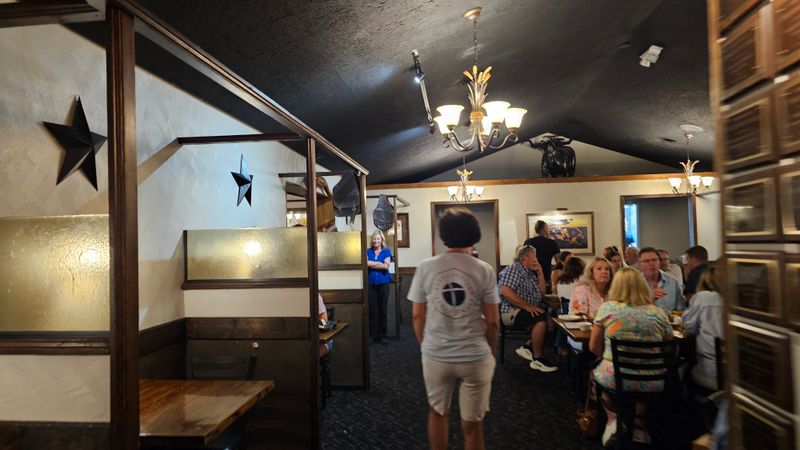
Kansas City has earned international recognition for its barbecue and steaks, but fame often brings gentrification and inflated prices.
Jess & Jim’s has resisted the temptation to go upscale, maintaining its working-class roots and neighborhood identity. This isn’t a place where you need reservations weeks in advance or worry about wearing the wrong shoes.
Being called the “quintessential Kansas City steak place” means embodying the city’s honest, unpretentious character. No velvet ropes, no celebrity chef, no attitude—just good people serving great beef to their neighbors.
Other historic restaurants in the area have renovated into unrecognizable modern versions of themselves, chasing younger demographics and higher margins. Jess & Jim’s stayed true to its original customers and values.
The pricing reflects this philosophy too. At moderate prices (marked $$ on Google), it remains accessible to regular families rather than becoming a special-occasion-only splurge destination.
Local loyalty runs deep because the restaurant never betrayed its community by pricing them out or transforming into something foreign.
People remember eating here as children and now bring their own grandchildren.
This authenticity attracts tourists seeking genuine local experiences rather than polished, sanitized versions designed for visitors. They want real Kansas City, and Jess & Jim’s delivers exactly that.
Open Seven Days a Week Because Steak Cravings Don’t Take Days Off
Consistency matters, and Jess & Jim’s proves it by opening their doors seven days a week, year after year, decade after decade.
Their current hours are: Monday–Thursday 11 AM – 8:30 PM, Friday–Saturday 11 AM – 9:30 PM, Sunday 11 AM – 8 PM.
The phone number (816-941-9499) connects to staff who actually answer and help, another refreshing throwback to when customer service meant more than automated menus and voicemail.
Being open and reliable for over 80 years means multiple generations have built memories here.
Grandparents courted here in the 1950s, parents celebrated here in the 1980s, and grandchildren now discover it fresh while honoring family tradition.