
13 Hidden Gems In Michigan’s Upper Peninsula
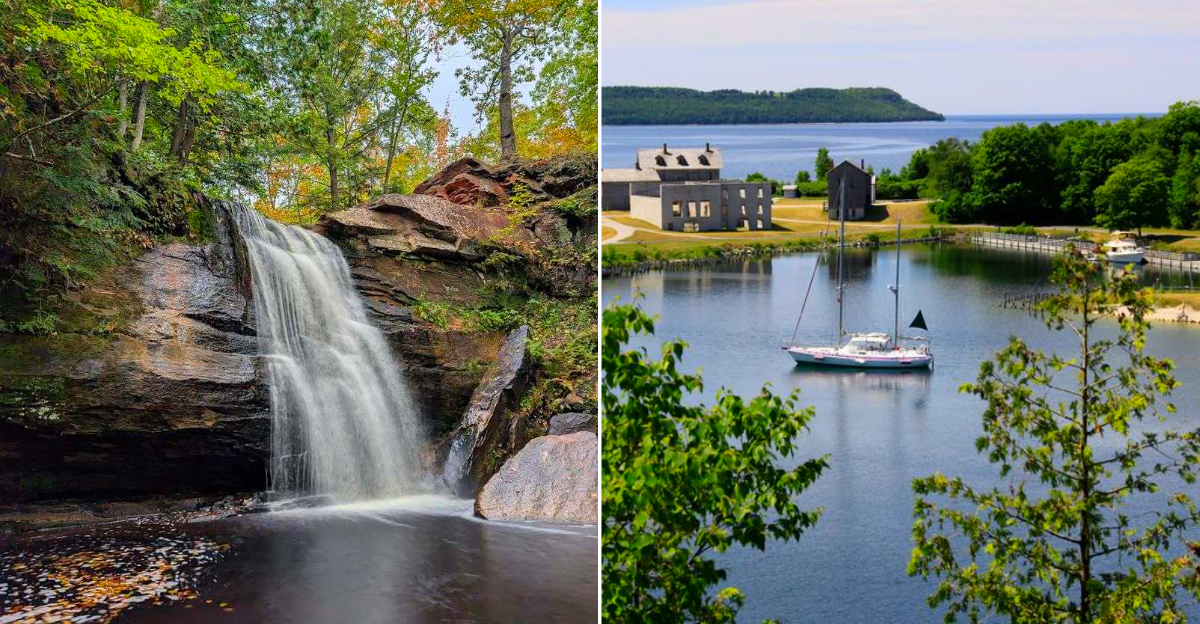
To a proud Michigander, the Upper Peninsula is a soul-cleansing ritual. I’ve spent countless miles chasing the “good gravel” beyond the reach of cell towers, where the spruce shadows stretch long over tannin-stained streams that flow like liquid amber.
There is a specific, quiet magic here that starts as a whisper and ends as a roar, whether it’s the thunder of a hidden waterfall or the steady, rhythmic pulse of a lighthouse standing guard over a temperamental Lake Superior. It is, quite simply, the most perfect corner of the most perfect place on earth.
This traveler’s guide to the Upper Peninsula’s hidden gems features the best scenic lookouts, historic lighthouses, and crystal-clear natural springs for an authentic Michigan wilderness adventure.
I’ve followed the quiet county roads to find the spots where time actually feels like it’s holding its breath. If you’re ready to see the Mitten’s “top” at its most pristine, these selected gems will suit you just fine.
1. Kitch-iti-kipi At Palms Book State Park
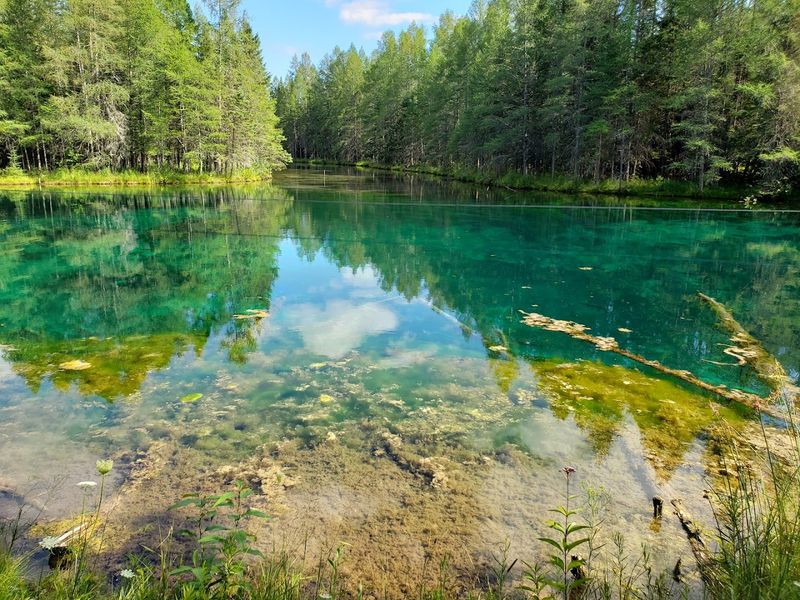
Quiet ripples roll across an emerald eye of water so clear you can see the spring boil like champagne. The self-operated wooden raft glides on cables, and you become the guide, peering through viewing windows at trout suspended over pale limestone. The surrounding hemlocks hold their breath, and the world narrows to green light and gentle creaks of rope.
Legend meets geology here, but facts win: 10,000 gallons a minute surge from a limestone fissure, always near 45 degrees. Arrive early to avoid the line and find that hush. Bring a light jacket, even in July, and a five-dollar bill for the self-propelled ride.
2. Fayette Historic State Park And Townsite
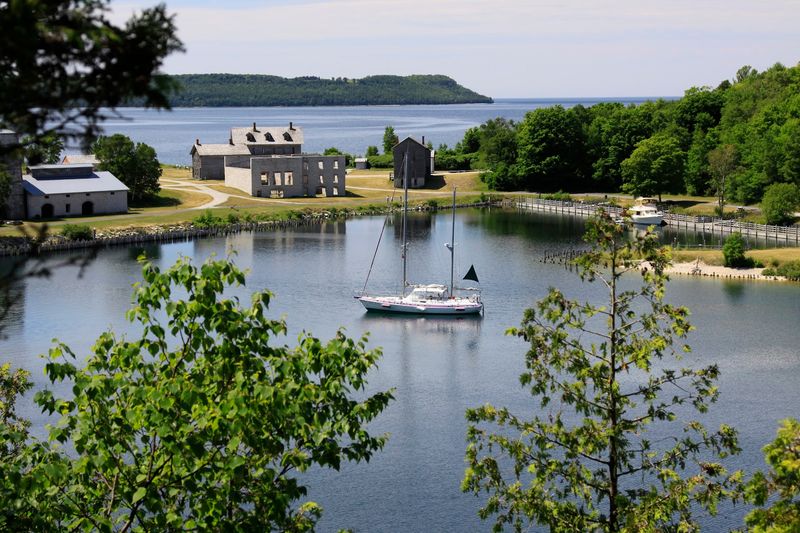
White clapboard houses and furnace ruins perch on limestone like a set from a quiet play about labor and limestone. The bay glows turquoise on windy days, licking at docks where pig iron once shipped out. Stroll the boardwalk between machine shop and hotel, and the clank of industry seems only a door away.
Built around an 1867 charcoal iron operation, Fayette thrived then emptied when hardwoods dwindled and processes modernized. Rangers keep the stories sharp, not sugary. Wear sturdy shoes for the bluff trail, and roam late afternoon when gulls ride thermals and the town’s grid casts thoughtful, tidy shadows.
3. Bond Falls Scenic Site
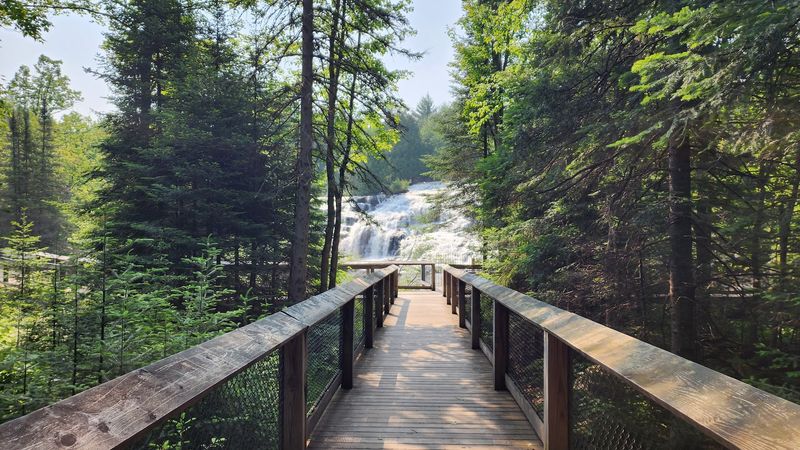
Water hurries down in layered sheets, fanning across black basalt like a well-practiced trick. The roar is companionable, not scolding, and the boardwalk invites multiple angles of looking. On misty mornings, spiderwebs along the rail catch beads like tiny chandeliers.
Bond Falls was harnessed by a hydro project upstream, yet the flow remains generous and aesthetically kind. Platforms are accessible, with spur trails for those who like muddy ankles. Come on a gray day to skip glare, bring a snack, and if you photograph, pack a cloth for spray. I left with damp cuffs and a clearer head.
4. Agate Falls Scenic Site
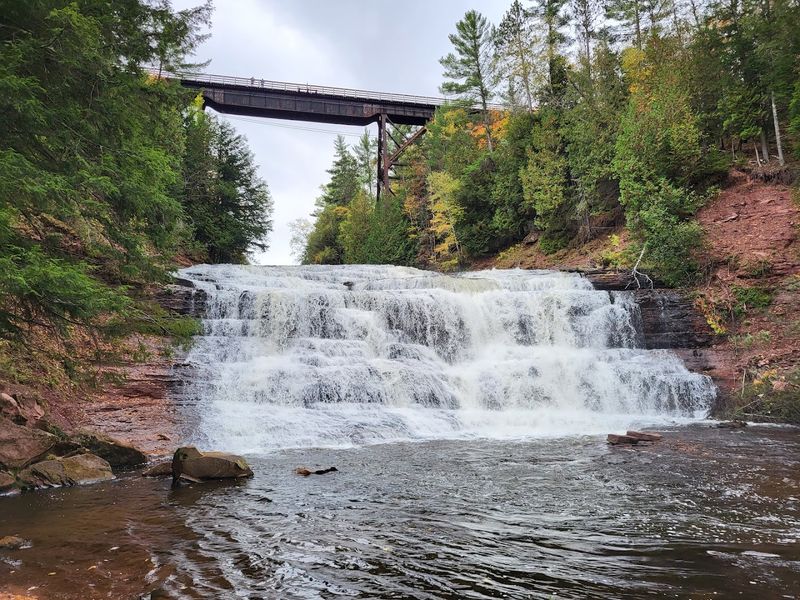
Down in a green pocket, Agate Falls ribbons over a wide rock staircase while a tall rail trestle hovers like a quiet witness. The sound is smoother than nearby cousins, a constant shush that encourages lingering. Ferns seem to lean closer, as if they approve of your choice.
This site was shaped by the Middle Branch Ontonagon River cutting through ancient lava flows. Trails drop from a roadside stop to overlooks, and you can scramble further with care. Watch footing near wet roots, especially after rain. Early evening brings warm light through the girders, and the trestle frames the falls just right.
5. Laughing Whitefish Falls State Park
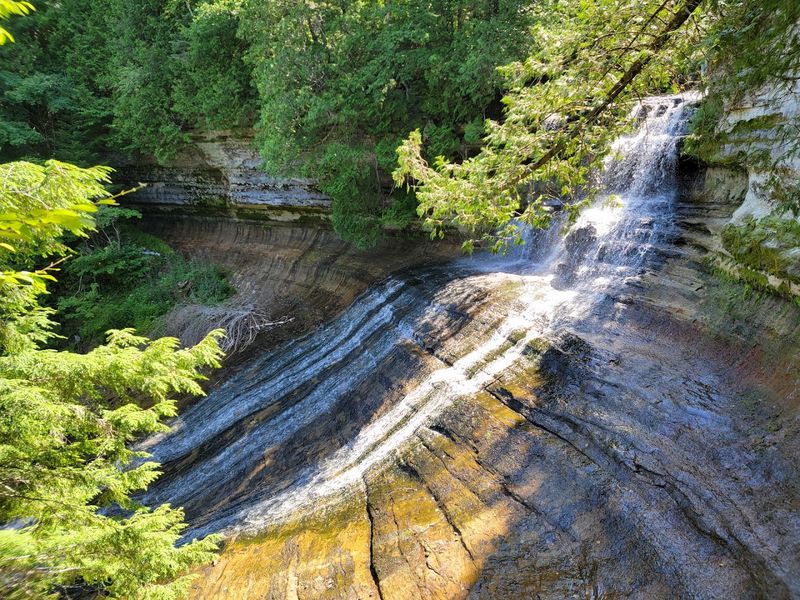
Through a hardwood tunnel, you hear a bright rattle that lives up to the name. The falls tilt elegantly down a long limestone slide, spreading into white fans that look hand-brushed. Platforms perch at respectful distances, letting you trade perspectives like pages in a field notebook.
Glacial meltwaters carved this drainage, but daily weather writes the mood. Trails are straightforward, with stairs that warm the calves. Mosquitoes hold office in June, so bring spray and patience. Visit after steady rain for maximum voice, or in October when sugar maples turn confetti.
The laughter becomes a hush then, sweeter for the contrast.
6. Canyon Falls Roadside Park
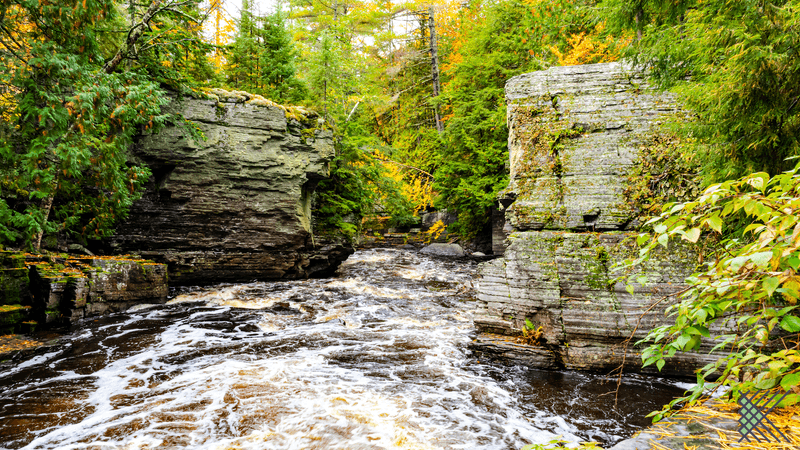
From a modest highway pull-off, the trail slips into a basalt corridor that tightens like a good sentence. Canyon Falls pounds into a dark bowl, then races through a gorge where the river seems to practice signatures. The air cools fast, smelling of cedar and iron.
Local folks call it the Grand Canyon of the U.P., with appropriate humility. It is compact, muscular, and easy to reach. Rock ledges tempt bold steps, but wet lichen is treacherous, so mind the edges. Weekdays feel almost private.
I carried coffee down at dawn and felt the canyon unknot the rest of the day.
7. Hungarian Falls Nature Area
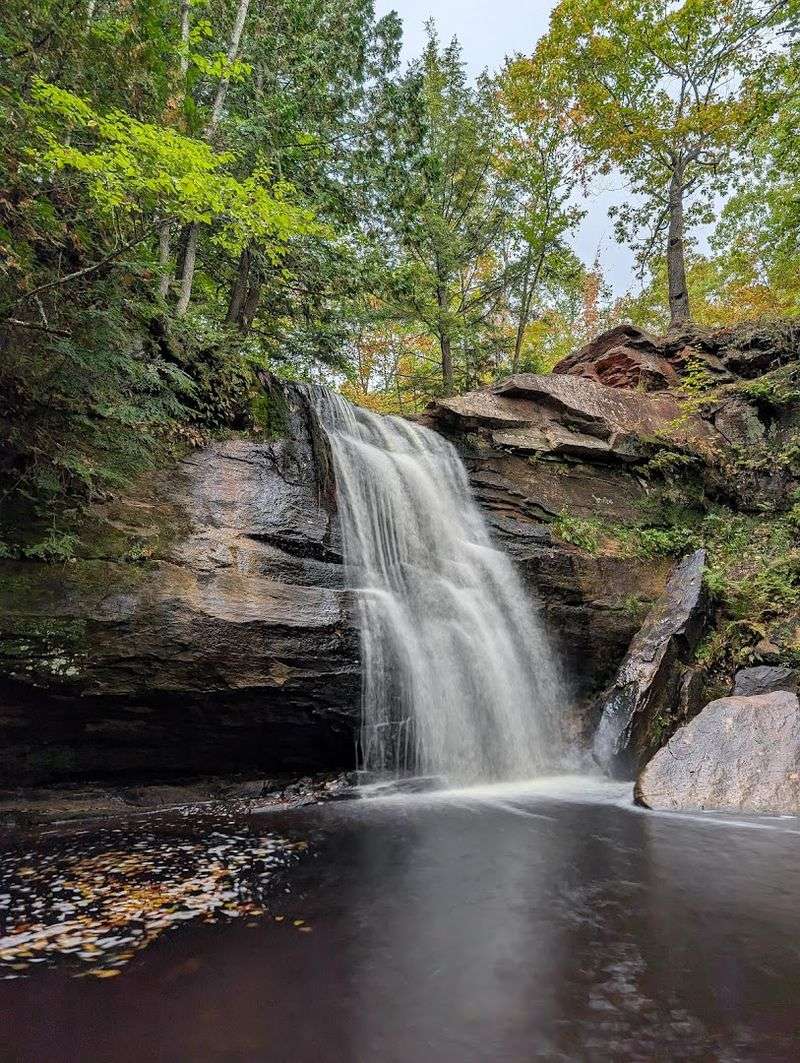
A chain of drops steps through a ravine, each tier giving a different sentence of the same thought. The upper falls are tidy, the middle feels secret, and the lower goes dramatic near the old dam site. Birch and maple crowd close, drafting the water’s energy.
These cascades once worked beside Keweenaw mining, with small dams influencing flow. Community groups help keep paths open. Parking is limited on narrow roads, so be courteous and skip muddy days. Wear shoes you do not love.
The reward is a layered afternoon of modest climbs, fine spray, and the friendly rumble of Dover Creek.
8. Porcupine Mountains Wilderness State Park
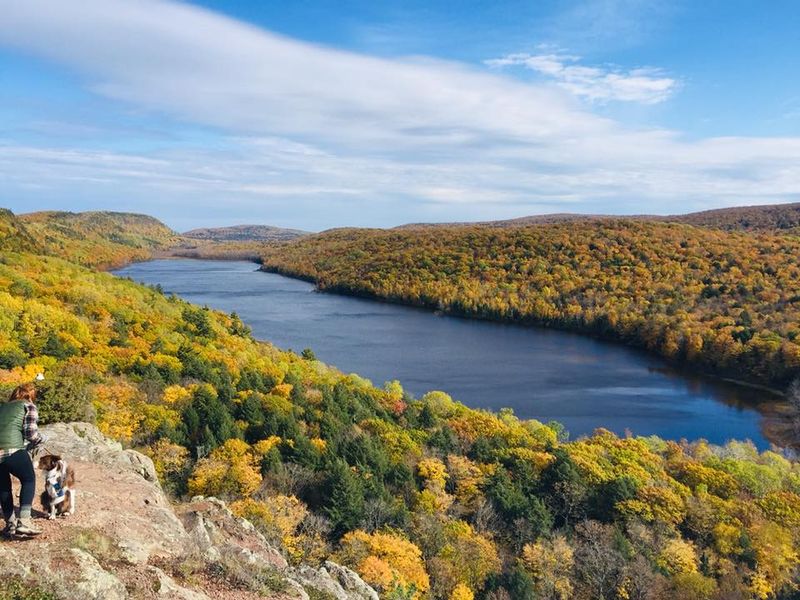
Ridges roll like a green ocean frozen mid-breath, and Lake of the Clouds fits perfectly in its bowl. Wind comes off Superior with a saltless sea attitude, moving clouds like stagehands. On certain evenings, the escarpment glows copper and the breath catches in communal silence.
This is Michigan’s biggest state park, with backcountry cabins, miles of trails, and honest blackflies in spring. Old-growth hemlock stands are rare and protected. Check trail conditions at headquarters, and pack layers that forgive fast weather. Venture beyond the overlook toward Mirror Lake or the Little Carp River, where your boots learn the dialect quickly.
9. Quincy Mine Tours
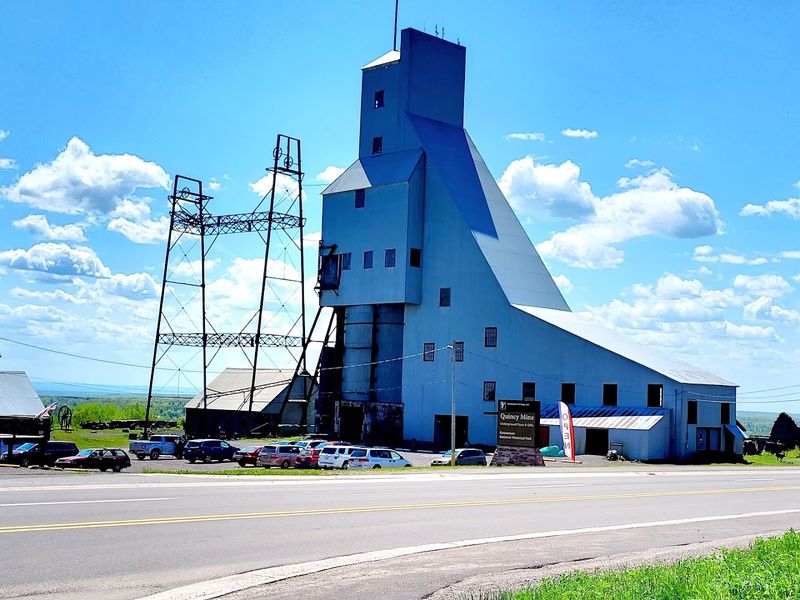
The shaft-rockhouse stands like an angular sentinel, all rivets and resolve. Guides hand you a hardhat and history, then trams pull you down to steady, 43-degree air where past labor breathes quietly. Drips ping, lights hum, and the rock walls glint with hints of copper story.
Quincy, the Old Reliable, dominated late 19th-century copper output, surviving busts through efficiency and deep shafts. The tour balances engineering with people, not hagiography. Bring a warm layer and respect the low ceilings. Afterward, the hoist building’s gargantuan engines make modern machines seem fidgety.
The view over Hancock and Houghton ties it together nicely.
10. Calumet Visitor Center At Keweenaw National Historical Park
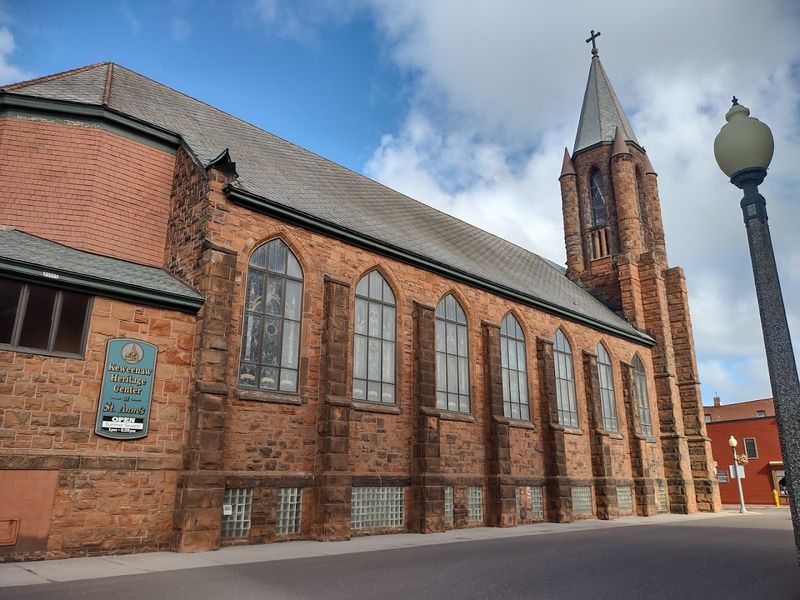
Inside a handsome brick building, the Keweenaw’s copper story gathers itself with maps, tools, and voices that do not blur. Exhibits move from geology to union halls to front porches, treating each with the same respect. A film clicks on, and suddenly the streets outside feel layered.
Part of the national historical park’s partnership model, the center orients you to multiple heritage sites across the peninsula. Staff happily sketch a day plan. Admission is free, time is the cost. Start here before Quincy or Calumet Theatre, then wander into a bakery for cardamom bread.
History digests better alongside something warm.
11. Point Iroquois Lighthouse
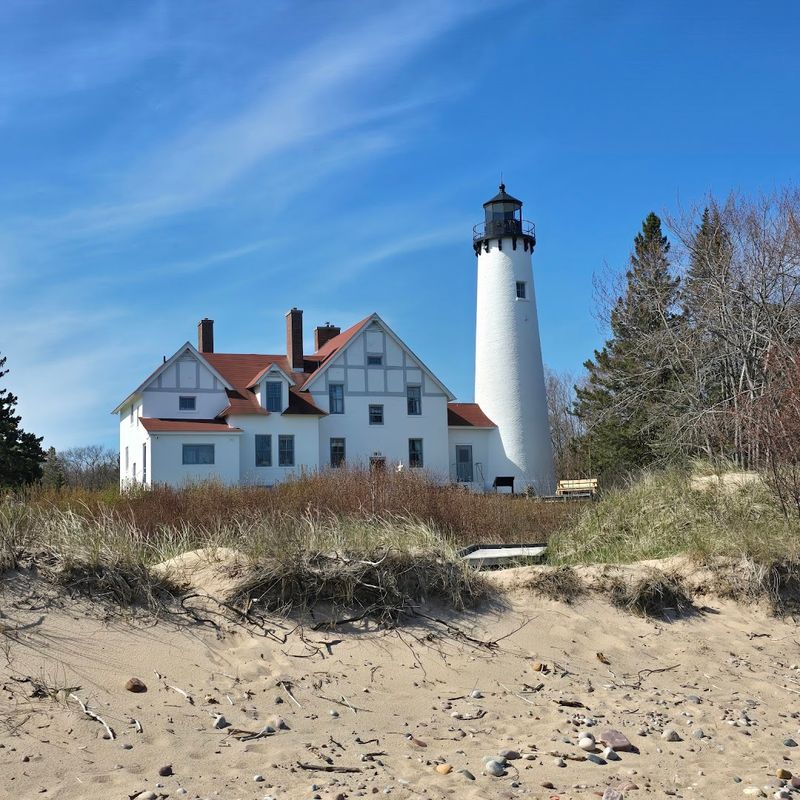
A white tower and red roof keep a clean line against Whitefish Bay, where Superior arranges moods by the hour. Inside, a Fresnel lens gleams like precise jewelry, and stairs spiral neatly to a view that straightens your posture. Waves speak in clipped syllables along the beach.
From 1857 to 1962, this light guarded a busy shipping lane near the Soo Locks. Volunteers keep exhibits crisp and stories gently told. Check seasonal hours before you point the car north. Bring layers, picnic on the sand, and watch freighters angle past, patient and certain as planets.
12. Eben Ice Caves
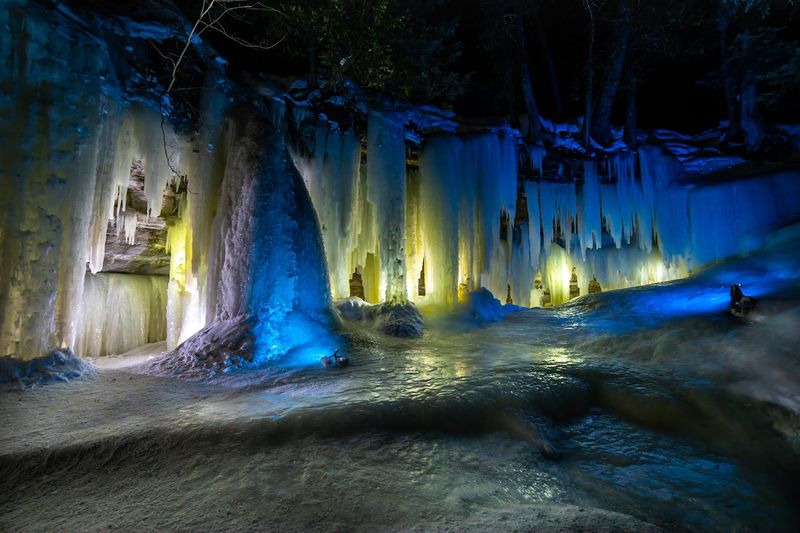
In deep winter, sandstone ledges grow curtains of ice that glow pale gold and glacial blue, like cathedral windows built by drip and patience. Footsteps squeak, breath halos, and somewhere a jay edits the quiet. The caves are really alcoves, but the spectacle needs no argument.
Access crosses private farmland to federal wilderness, so follow posted routes and pack out everything. Microspikes matter, as do warm layers and a thermos you admire. Weekdays are calmer. I shuffled beneath a frozen fringe and felt the season declare itself, confident and generous, right there in a fold of Alger County.
13. Seney National Wildlife Refuge
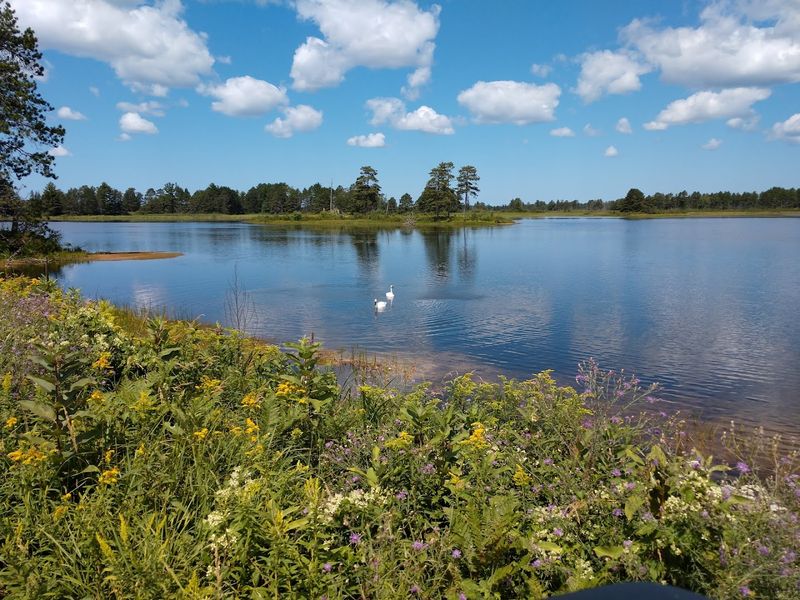
Evening spreads a low gold across pools where swans draw cursive and cranes rehearse their bugle. The Marshland Drive loops quietly through a patchwork of water, grass, and sky that seems to reset the brain. Windows down, you hear wind write on cattails.
Established in 1935, Seney shelters migratory birds and patient observers. Stop at the visitor center for recent sightings and mosquito intelligence. Bring binoculars, never haste. Pull over often, scan edges, and expect surprises near pool outflows.
Late spring and early fall are a birdwatcher’s sweet spot, though winter tracks tell stories if you like snow.