
10 Hidden Gems In North Carolina Most Tourists Never Discover
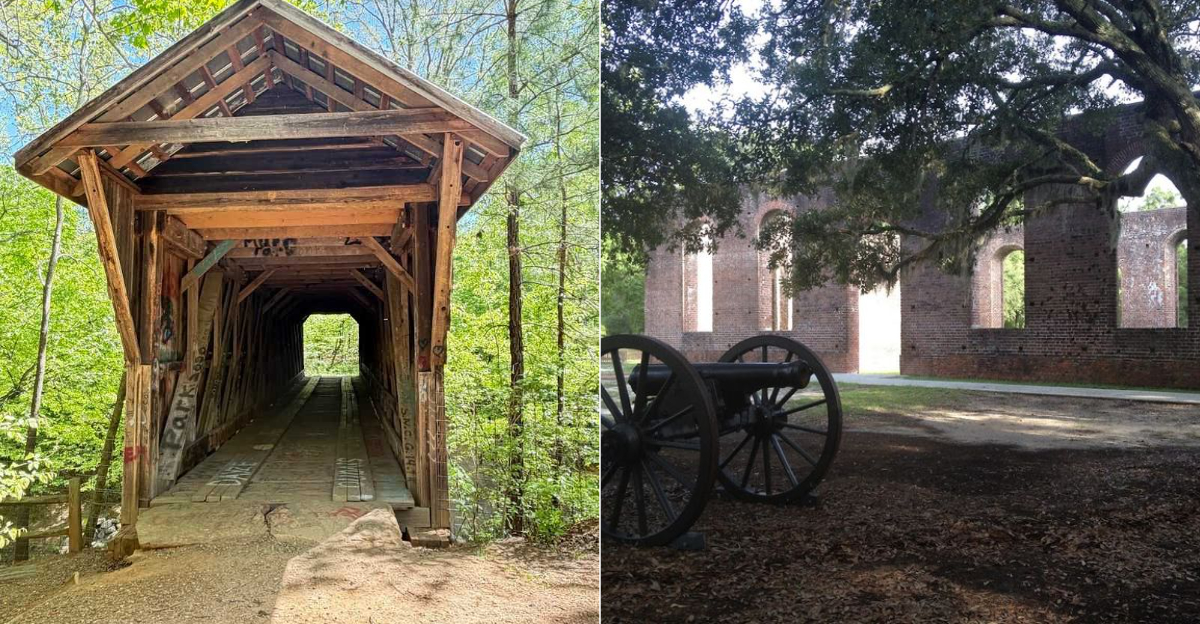
The best travel discoveries are often the places you almost drive right past. While millions of visitors flock to North Carolina’s famous beaches, mountain towns, and iconic attractions, some of the state’s most fascinating spots remain quietly hidden in plain sight.
These are the places with fewer crowds, surprising stories, and the kind of charm that makes you wonder how they stayed secret for so long.
From tucked-away natural wonders to small destinations full of history and character, these hidden gems show a completely different side of the Tar Heel State.
They may not always appear on the first page of a travel guide, but they offer experiences that are every bit as memorable. For those willing to wander beyond the usual stops, North Carolina still has plenty of surprises waiting to be found.
1. Vollis Simpson Whirligig Park
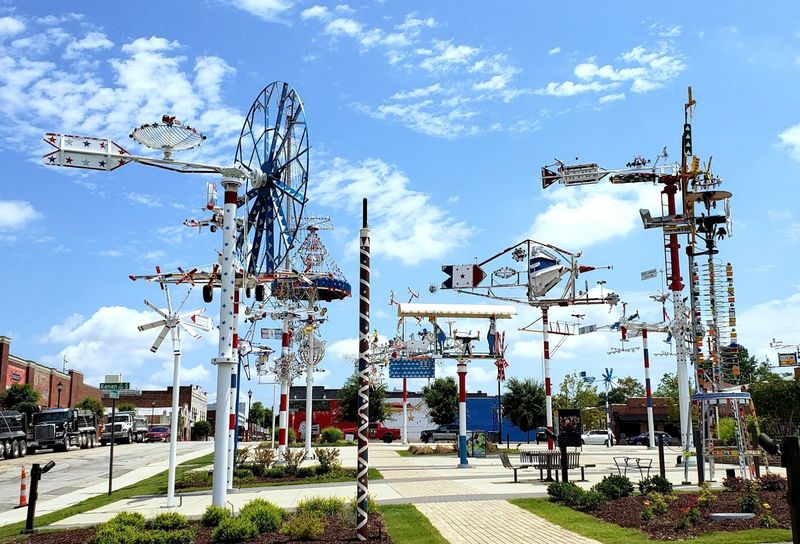
Picture hundreds of enormous spinning sculptures made from old machinery parts, road signs, and industrial scrap, all twirling and glinting under the Carolina sky.
That is exactly what greets you at Vollis Simpson Whirligig Park in Historic Downtown Wilson. Located at 301 S Goldsboro St, Wilson, NC, this park is a full-on sensory celebration of one man’s wildly creative mind.
Vollis Simpson was a retired mechanic who turned salvaged materials into something truly extraordinary. His wind-powered whirligigs feature farm animals, airplanes, and human figures, all animated by the breeze.
The genius part?
He used cut road signs to make them glow brilliantly at night.
North Carolina officially recognized these sculptures as the state’s folk art in 2013, which feels like a long-overdue standing ovation.
The park was designed with deep community involvement and honors Wilson’s agricultural roots in a surprisingly joyful way. Every piece feels alive, almost like the art is waving hello.
If you want a place that makes you smile before you even read a single sign, this is it.
Bring a camera, because no description fully captures the magic of watching these giants spin.
2. Körner’s Folly
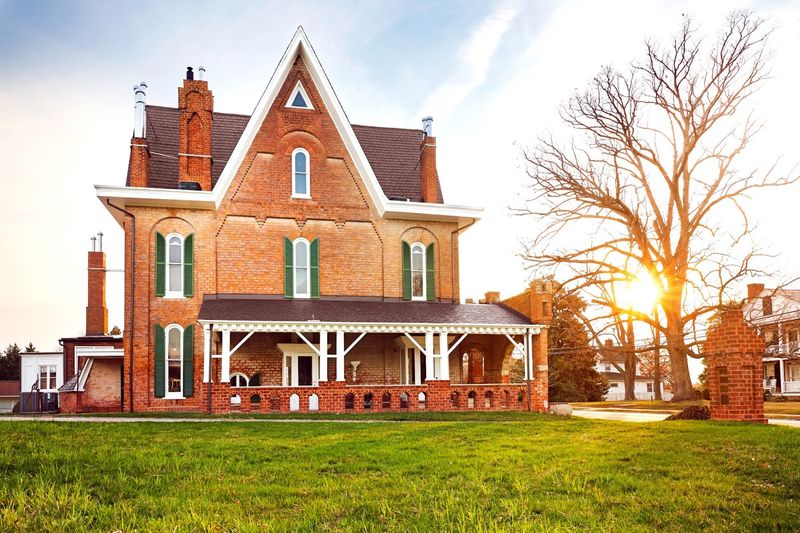
No two rooms in this house make the same sense, and that is entirely the point. Körner’s Folly at 413 S Main St, Kernersville, NC, is one of the most gloriously strange buildings in the entire American South.
Built in 1878 by designer and painter Jule Gilmer Körner, the house was essentially his living business card.
Körner wanted to impress wealthy clients, so he made the house itself the showroom. The result is a labyrinth of 22 rooms spread across seven different levels.
Ceiling heights swing from a cramped 5.5 feet to a dramatic 25 feet, and no two windows or doorways share the same shape.
Fifteen unique fireplaces dot the interior, each with its own personality. Hidden trap doors, pivoting windows, and clever cubbyholes reward curious explorers around every corner.
Ninety percent of the original furniture is still in place, which gives the whole experience an eerie, time-capsule quality.
The crown jewel sits on the top floor: Cupid’s Park Theatre, believed to be America’s first private little theater.
The Folly also hosts seasonal events, including a Victorian Christmas that feels like stepping into a snow globe. Architecture has never been this wonderfully unhinged.
3. Judaculla Rock
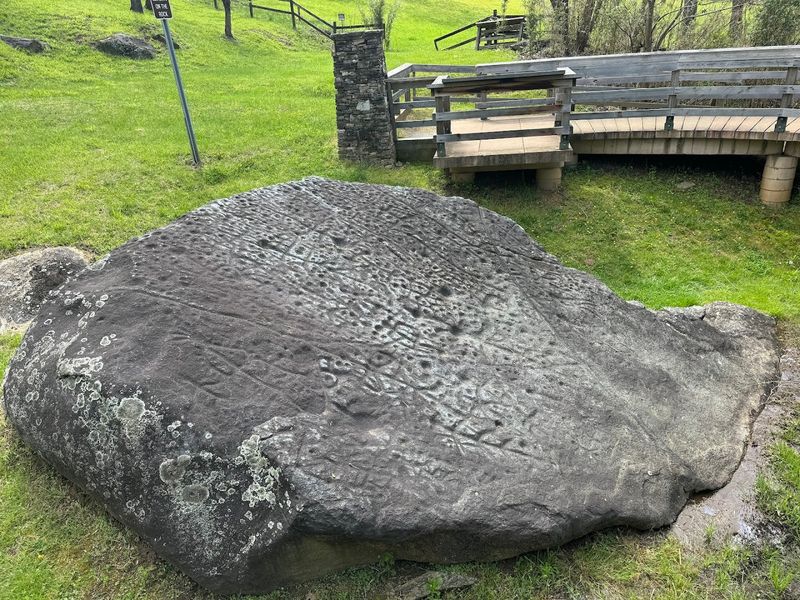
Somewhere near Cullowhee, a massive soapstone boulder sits quietly in a meadow, covered in carvings that have puzzled archaeologists for generations. Judaculla Rock, located at 552 Judaculla Rock Rd, Cullowhee, NC, holds more petroglyphs than any other known rock east of the Mississippi River.
That is not a small claim.
About 1,548 distinct motifs are etched into its surface, featuring abstract shapes, lines, and patterns that researchers have not fully decoded.
These are not a written language in any conventional sense. Their exact meaning remains one of North Carolina’s most fascinating open questions.
For the Cherokee people, this site carries deep spiritual weight. Oral traditions connect the markings to Judaculla, a legendary slant-eyed Master-of-Game who was said to have left his handprints or claw marks in the soft stone.
Archaeological evidence suggests soapstone quarrying began here thousands of years ago, while the petroglyphs themselves were created roughly 1,500 to 2,000 years back.
The site is listed on the National Register of Historic Places, which feels appropriate for something this ancient and layered. Standing beside Judaculla Rock, you get the distinct feeling that the stone has something important to say, and it is in no rush to explain itself.
4. Town Creek Indian Mound
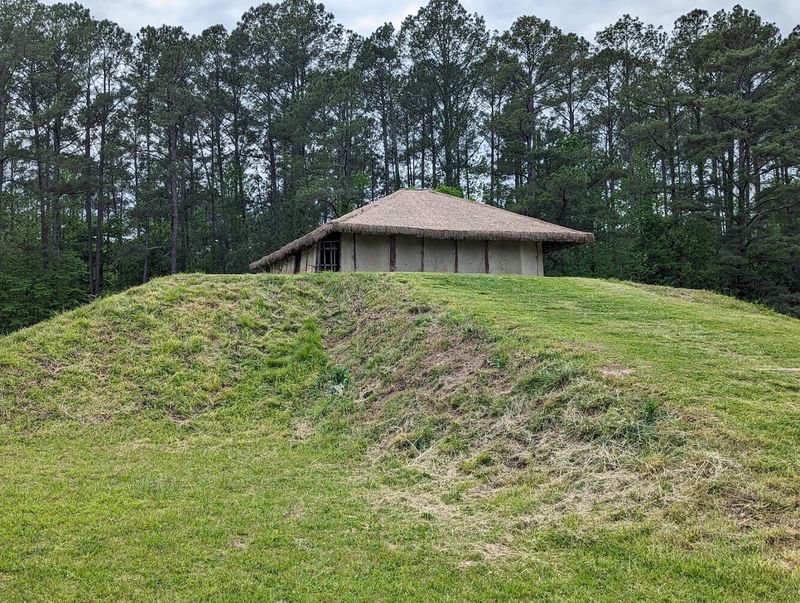
Long before European settlers drew lines on maps, the Pee Dee people built something remarkable in the heart of what is now Montgomery County.
Town Creek Indian Mound, at 509 Town Creek Mound Rd, Mount Gilead, NC, is a ceremonial complex that operated from roughly 1150 to 1400 CE. It is the kind of place that reframes everything you think you know about pre-colonial America.
The centerpiece is a striking 15-foot-high platform mound that once supported temples and important community structures.
The surrounding plaza hosted rituals, including the significant busk festival, a celebration tied to renewal and community identity. Archaeological excavations have been ongoing since 1937, slowly revealing the complexity of Pee Dee society.
Visitors can walk among reconstructed ceremonial lodges, burial houses, and a protective stockade that brings the site to life in a tangible way.
This is the only ceremonial mound and village center of the Pee Dee culture remaining in North Carolina. It also holds the distinction of being the only National Historic Landmark in the state dedicated entirely to American Indian culture, and it was North Carolina’s very first State Historic Site.
History does not always come with dramatic fanfare, but this place earns every bit of quiet reverence it receives.
5. Reed Gold Mine
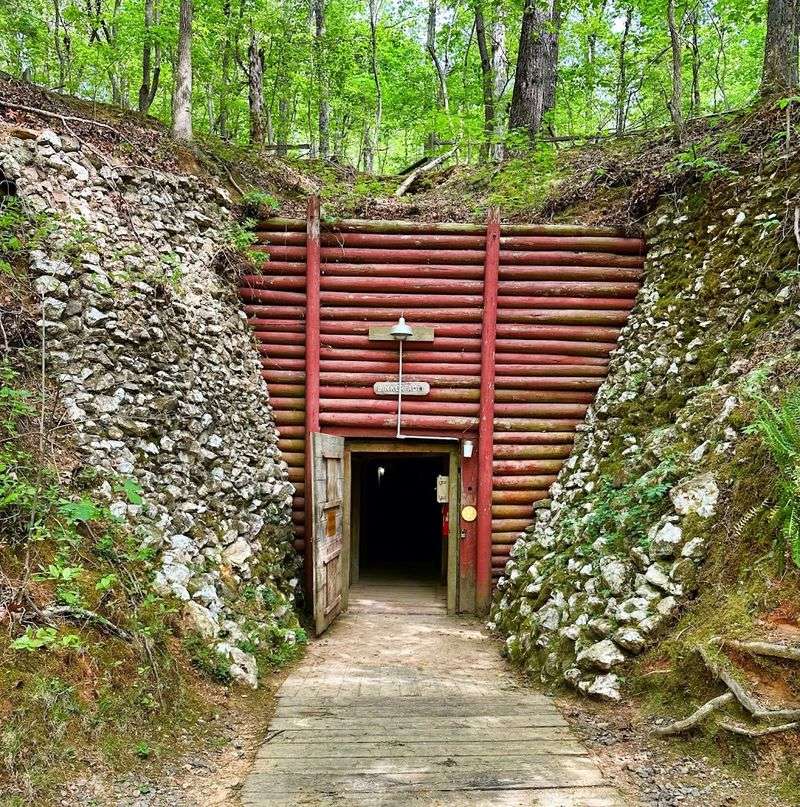
A 12-year-old boy found a shiny rock in a creek in 1799, and without knowing it, he changed American history.
That rock turned out to be a 17-pound gold nugget, and the family used it as a doorstop for three years before figuring out what they had. Reed Gold Mine, at 9621 Reed Mine Rd, Midland, NC, is where the United States’ first documented commercial gold discovery happened.
John Reed eventually sold that original nugget for just $3.50, completely unaware of its true value. That blissful ignorance did not last long.
The discovery sparked the nation’s first gold rush, and North Carolina led the entire country in gold production until California stole the spotlight in 1848. Some nuggets pulled from this mine weighed up to 28 pounds.
Today, guided tours take visitors through portions of the original underground tunnels, where the earthy smell and dim light make the history feel immediate. Gold panning is available for anyone who wants to try their luck the old-fashioned way.
The visitor center showcases mining equipment and engaging exhibits that trace the full arc of this remarkable story. Reed Gold Mine holds National Historic Landmark status, and honestly, the story alone is worth the drive out to Midland.
6. Brunswick Town And Fort Anderson
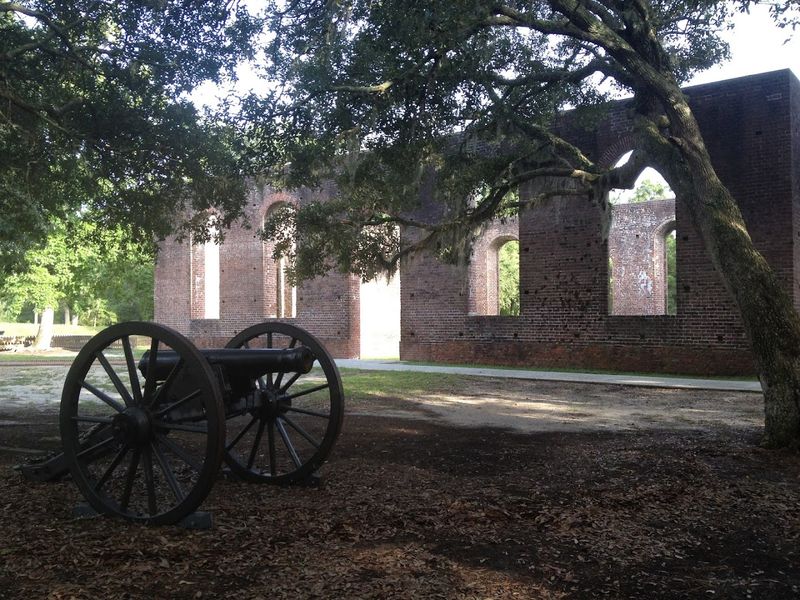
Two completely different chapters of American history share the same patch of North Carolina soil, and the combination is quietly spectacular.
Brunswick Town and Fort Anderson, located at 8884 St Philips Rd SE, Winnabow, NC, sits along the Cape Fear River with a story that spans from colonial port to Civil War fortification.
Maurice Moore founded Brunswick Town in 1726, naming it in honor of King George I.
The port became a vital hub for shipping naval stores like tar and pitch, and it gained historical fame as the site of the Stamp Act Resistance in 1765. British troops burned the town to the ground in 1776, and it was never rebuilt.
Decades later, Confederate forces constructed Fort Anderson directly on top of those colonial foundations, layering one era of conflict over another.
The fort played a key defensive role along the Cape Fear River during the Civil War. Today, visitors can walk among both colonial ruins and Confederate earthworks in the same afternoon.
Ongoing archaeological work continues to surface new details about both periods.
The waterfront setting adds a peaceful, almost meditative quality to the experience. Brunswick Town is the rare kind of place where you can stand in two centuries at once without even moving your feet.
7. Historic Occoneechee Speedway Trail
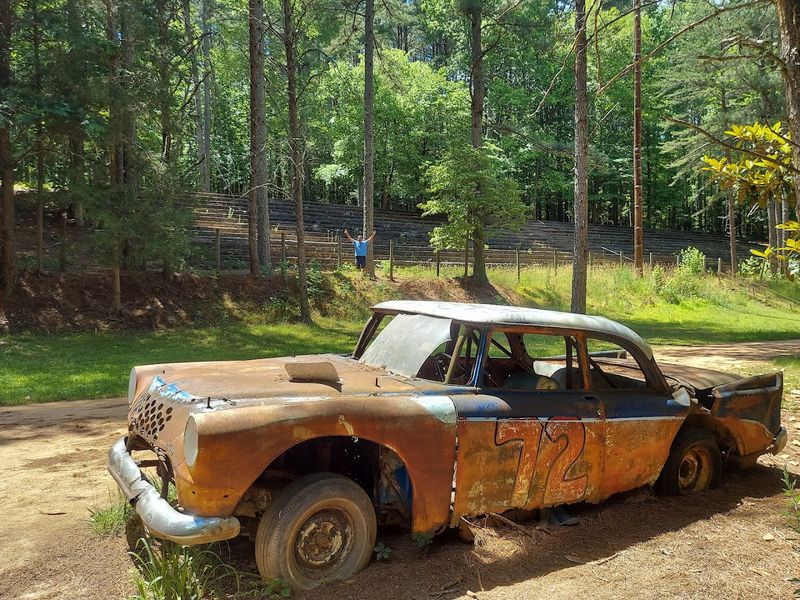
Before NASCAR was a household name, before the fancy asphalt superspeedways and the massive sponsorship deals, there was a dirt oval carved into the earth just outside Hillsborough.
The Historic Occoneechee Speedway Trail at 320 Elizabeth Brady Rd, Hillsborough, NC, is the last surviving dirt track from NASCAR’s inaugural 1949 season, and walking it feels like finding a time capsule buried under the trees.
The track started as a half-mile horse track, later expanded by Bill France Sr. into a 0.9-mile dirt course that opened in September 1947, before NASCAR even officially existed.
Racing legends including Richard Petty, Fireball Roberts, and Ned Jarrett once pushed their machines hard around this very oval. Louise Smith made history here in 1949 as NASCAR’s first female driver.
Today, the site is a 44-acre walking trail with over three miles of scenic paths weaving through the landscape.
The old grandstands still stand in partial form, and much of the original oval track remains visible. It is one of only three racetracks in the country listed on the National Register of Historic Places.
For anyone who loves motorsport history, or just loves stumbling onto something genuinely unexpected, Occoneechee delivers a rush that no asphalt track can replicate.
8. CSS Neuse Civil War Museum
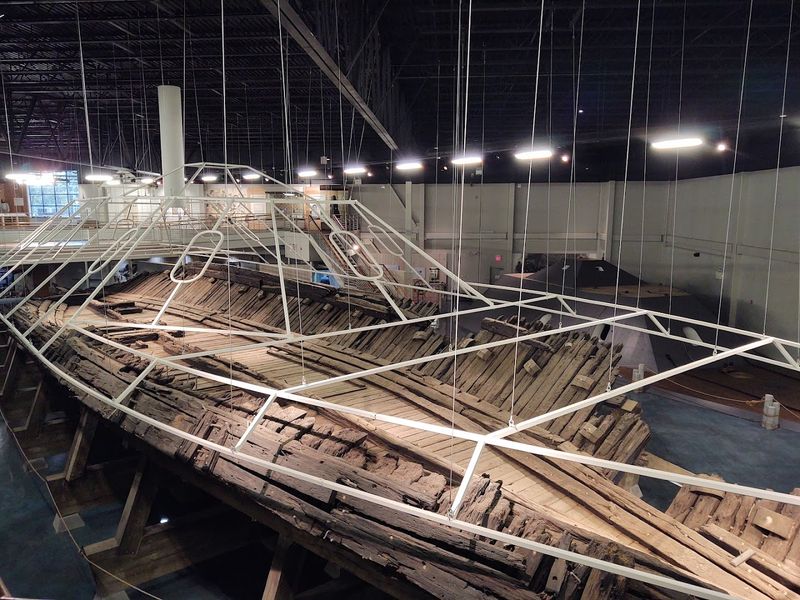
There is something genuinely surreal about standing next to the actual hull of a Civil War ironclad that spent nearly a century submerged in a river.
The CSS Neuse Civil War Museum at 100 N Queen St, Kinston, NC, houses the recovered remains of a Confederate steam-powered ironclad ram, and it is far more dramatic than it sounds on paper.
The CSS Neuse was built in Kinston between 1862 and 1864, representing some of the most ambitious naval engineering of its era.
In 1865, it was intentionally sunk in the Neuse River to prevent capture. The lower hull was recovered in 1963, and the retrieval yielded an astonishing 15,000 artifacts, making it the largest artifact collection ever recovered from a Confederate vessel.
The museum uses those finds to tell a layered story about Kinston’s wartime role and the daily lives of Civil War sailors.
Exhibits also cover the broader history of Lenoir County and the conflict’s impact on eastern North Carolina. A full-size replica of the CSS Neuse stands proudly nearby in the city, giving visitors a sense of the ship’s original scale.
Naval history rarely gets this tangible, and the CSS Neuse Museum makes sure you leave with a genuine appreciation for how much can survive centuries underwater.
9. Emerald Village
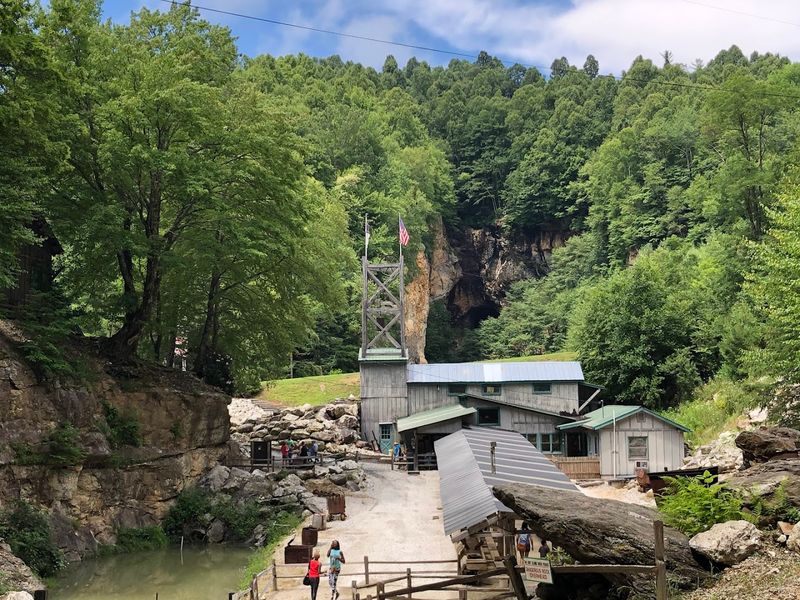
Tucked into the Blue Ridge Mountains at 331 McKinney Mine Rd, Spruce Pine, NC, Emerald Village is the kind of place that makes you feel like a real-life treasure hunter. With 12 historic mines on the property, this destination goes far beyond a typical tourist attraction.
It is layered, hands-on, and genuinely surprising at every turn.
The North Carolina Mining Museum gives context to the region’s rich geological history. An underground tour of the historic Bon Ami Mine leads to a beautiful underground waterfall, which is one of those unexpected moments that stops you mid-step.
Gem mining lets you sift through buckets of raw material and keep everything you find, which is a thrill that does not get old.
For the more adventurous, the Crabtree Emerald Mine dumps and the Historic McKinney Mine dumps offer hands-on digging opportunities.
The Discovery Mill building packs 12 levels of exhibits, including a model railroad, an antique music museum, and glowing black-light minerals.
The nighttime Black Light Mine Tours are a highlight, revealing fluorescent minerals including world-renowned Hyalite Opal. Emerald Village has been featured on National Geographic TV and the Travel Channel, and it is pet-friendly.
Whether you are chasing emeralds or just chasing curiosity, this place delivers something sparkling every single time.
10. Bunker Hill Covered Bridge
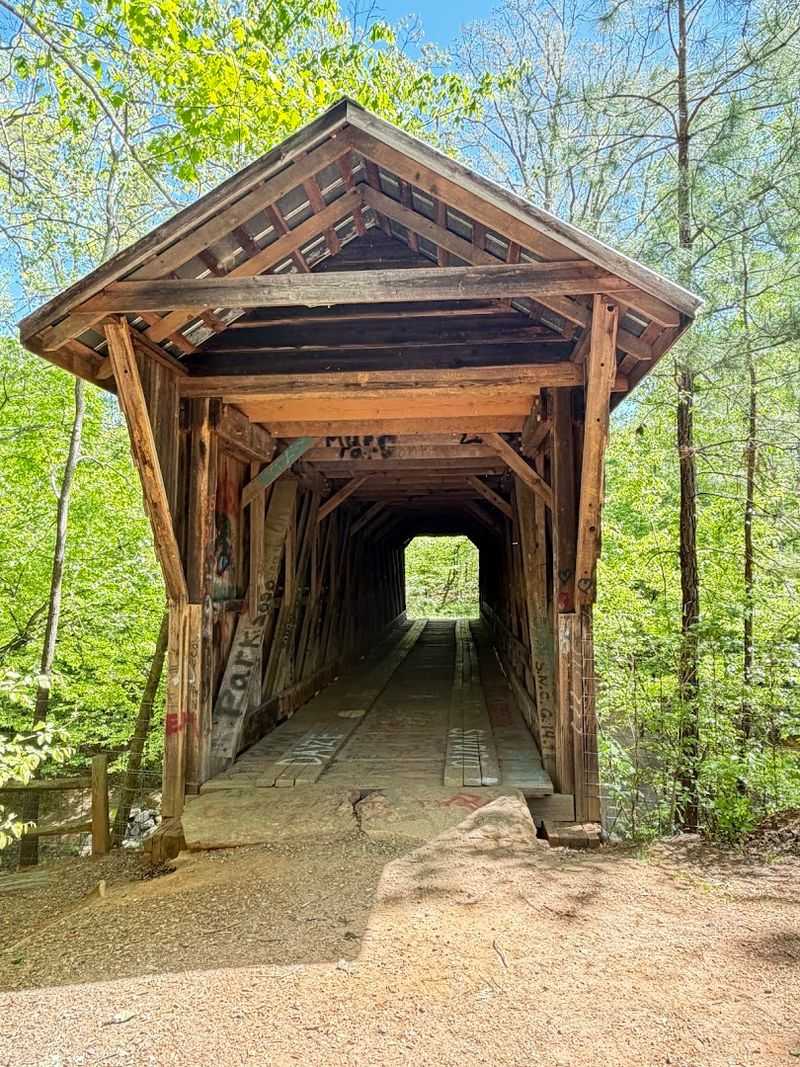
Some things age beautifully, and this bridge is proof. The Bunker Hill Covered Bridge at 4160 E US Hwy 70, Claremont, NC, was built in 1895 and still stands with quiet dignity over Lyle’s Creek.
It is one of only two original covered bridges left in North Carolina, which makes it genuinely rare by any measure.
Andy L. Ramsour constructed the bridge using the Improved Lattice Truss design, a structural method patented by Brigadier General Herman Haupt.
This makes Bunker Hill the only surviving wooden example of that specific truss system anywhere in the state. The bridge was covered in 1900 to protect its timbers from the elements, and its original wooden shingles were later swapped for a tin roof in 1921.
The Bolick family generously donated the bridge to the Catawba County Historical Association in 1985, preserving it for future generations. In 2001, it earned designation as a National Civil Engineering Landmark, a title that feels entirely deserved.
The surrounding landscape is peaceful and photogenic, making it a perfect stop for a slow afternoon. Bridges like this one carry more than just foot traffic.
They carry the weight of community memory, and Bunker Hill has been holding that weight gracefully for well over a century. Have you ever stood somewhere and felt history settle around you like that?