
9 Hidden Historical Sites In Pennsylvania That History Buffs Will Love
Like many of you, my fascination with history began with the grand narratives, the famous figures, and the pivotal events that shaped our nation. Pennsylvania, naturally, was a key part of that.
But as I explored more, I found myself drawn to the quieter corners, the places where history felt less like a textbook and more like a lived experience.
It’s in these unsung locations that the echoes of the past seem loudest. I’ve spent time seeking out these hidden gems, and I’m thrilled to share nine Pennsylvania historical sites that truly resonated with me and will, I believe, captivate any true history enthusiast.
1. Meadowcroft Rockshelter & Historic Village (Avella, Washington County)
Archaeologists uncovered something extraordinary beneath a rocky overhang in Washington County that rewrote North American history books. Evidence suggests humans called this shelter home more than 16,000 years ago, making it one of the continent’s oldest known habitation sites.
Artifacts discovered here include stone tools, pottery fragments, and remnants of ancient fires that paint a vivid picture of prehistoric life. The site goes beyond archaeology with a living history village that transports visitors through millennia.
Recreated Indigenous settlements show how Native Americans lived, while an 18th-century trading post demonstrates colonial commerce. Costumed interpreters bring 19th-century log cabins to life, offering hands-on experiences that make history tangible rather than theoretical.
Walking through Meadowcroft feels like time-traveling without a machine.
2. Grey Towers National Historic Site (Milford)
Gifford Pinchot’s summer estate stands as a testament to American conservation history and architectural beauty. The first Chief of the U.S. Forest Service lived here, shaping environmental policies that still influence how we protect wilderness areas today.
His French chateau-style mansion overlooks pristine grounds that reflect the family’s deep commitment to preserving natural resources for future generations. Touring the mansion reveals fascinating details about the Pinchot family’s influential role in early 20th-century America.
Period furnishings, family photographs, and personal belongings offer intimate glimpses into their daily lives. The grounds feature unique landscape designs, including the famous Finger Bowl, a dining table with a pool of water at its center where guests floated dishes to one another during outdoor meals.
3. John Brown Farm & Tannery (Richmond Twp, Crawford County)
Before his famous raid on Harpers Ferry, abolitionist John Brown lived a quieter life running a tannery in rural Pennsylvania. His property became a crucial stop on the Underground Railroad, where escaped slaves found temporary refuge on their dangerous journey to freedom.
Hidden rooms built into the structures concealed people fleeing bondage, their walls holding stories of courage and desperation. Visiting the farm provides context for understanding Brown’s radical transformation from businessman to militant abolitionist.
The buildings remain largely unchanged, allowing visitors to see the actual spaces where freedom seekers hid from slave catchers. Interpreters share accounts of harrowing escapes and the network of brave individuals who risked everything to help others.
4. Frick’s Locks Historic District (East Coventry Township)
Ghost towns usually exist out West, but Pennsylvania hides its own eerie abandoned settlement along the Schuylkill River. Frick’s Locks thrived during the canal era when waterways served as highways for transporting goods across the state.
Stone houses, crumbling canal locks, and weathered ruins create an atmospheric landscape that feels frozen in time, offering photographers and history enthusiasts an unforgettable experience. I stumbled upon Frick’s Locks during a kayaking trip and couldn’t believe an entire village sat empty along the riverbank.
The town emptied gradually as railroads replaced canals, and residents relocated for better opportunities elsewhere. Today, nature slowly reclaims the structures, with trees growing through windows and vines covering walls, creating a hauntingly beautiful reminder of industrial America’s rise and fall.
5. Schaumboch’s Tavern (Albany Township, Berks County)
Dark legends swirl around this 1793 stone tavern like morning mist over Hawk Mountain. The original owner’s reputation spawned tales that still intrigue visitors today, though separating fact from folklore proves challenging after two centuries.
Built with thick stone walls typical of Pennsylvania German architecture, the structure served travelers navigating mountain roads when the journey between towns took days rather than hours.
Now situated within Hawk Mountain Sanctuary, the tavern combines historical intrigue with natural splendor. Visitors can explore the building while enjoying some of the best raptor-watching opportunities in North America.
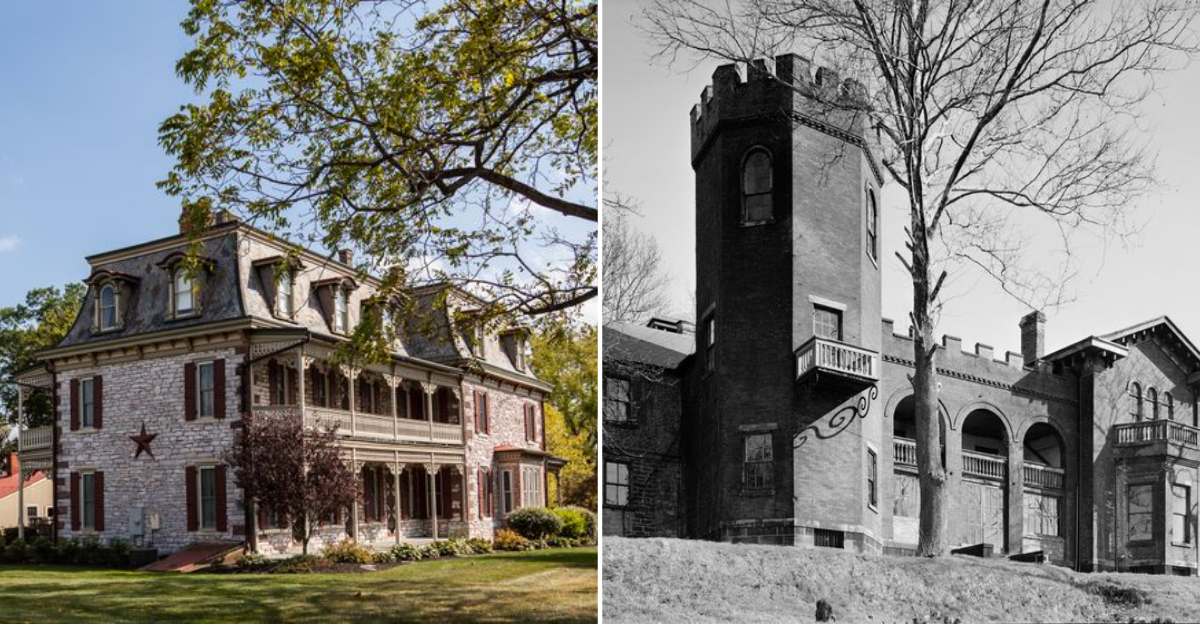
6. Bowman’s Castle (Nemacolin Castle) (Brownsville)
Perched dramatically above the Monongahela River, this fortified house earned its castle nickname through sheer presence and strategic location. Built during the late 1700s when frontier life meant constant vigilance, the structure’s thick walls and defensive design reflect the era’s dangers.
The building’s connection to frontier commerce tells stories about early American expansion and cultural exchange. Trading posts like this facilitated interactions between European settlers and Indigenous peoples, though relationships ranged from cooperative to hostile.
Architecture buffs appreciate the structure’s unique design elements that blend residential comfort with military practicality, showing how frontier families balanced daily life with security concerns in ways modern Americans can barely imagine.
7. Tulpehocken Manor Plantation (Jackson Township, Lebanon County)
Step onto grounds that have witnessed nearly three centuries of American agricultural life. Dating to approximately 1740, Tulpehocken Manor Plantation preserves the full scope of colonial and early American rural existence through remarkably intact structures.
Beyond buildings, the property features a stone quarry that supplied construction materials for the region and canal lock ruins that reveal Pennsylvania’s transportation evolution. My visit during harvest season made history feel especially alive, with period crops growing in fields just as they would have generations ago.
The plantation offers educational programs where visitors can try colonial crafts, tend heritage gardens, and understand the backbreaking work that built America’s agricultural foundation one season at a time.
8. Columcille Megalith Park (Bangor, Northampton County)
Over 90 massive stones rise from Pennsylvania forest floor in arrangements inspired by ancient Celtic sacred sites. Created as a modern spiritual retreat rather than an archaeological site, Columcille offers something different from typical historical destinations.
Walking among the towering stones creates an unexpectedly mystical experience that transports visitors beyond ordinary time. Each formation serves specific purposes, from meditation circles to seasonal celebration spaces, all designed to foster reflection and connection with nature.
The park demonstrates how historical traditions can inspire modern expressions of spirituality and community, proving that history remains a living force rather than merely a subject for study.
9. Kecksburg Space Acorn Monument (Westmoreland County)
Something streaked across the Pennsylvania sky on December 9, 1965, crashing into woods near the tiny village of Kecksburg. Witnesses described a fiery object, military personnel arrived quickly, and rumors spread faster than official explanations could contain them.
Decades later, debate continues about whether the incident involved a meteor, Soviet satellite, or something more mysterious, making Kecksburg a pilgrimage site for UFO enthusiasts worldwide. The town embraced its unusual claim to fame with a giant metallic acorn monument commemorating the event’s anniversary.
Each year, the annual UFO festival draws believers and skeptics alike to celebrate the unsolved mystery with activities ranging from serious lectures to lighthearted costume contests. Kecksburg proves that sometimes the best historical sites are those shrouded in delightful uncertainty.