
11 Hidden North Florida Spots That Feel Truly Enchanting
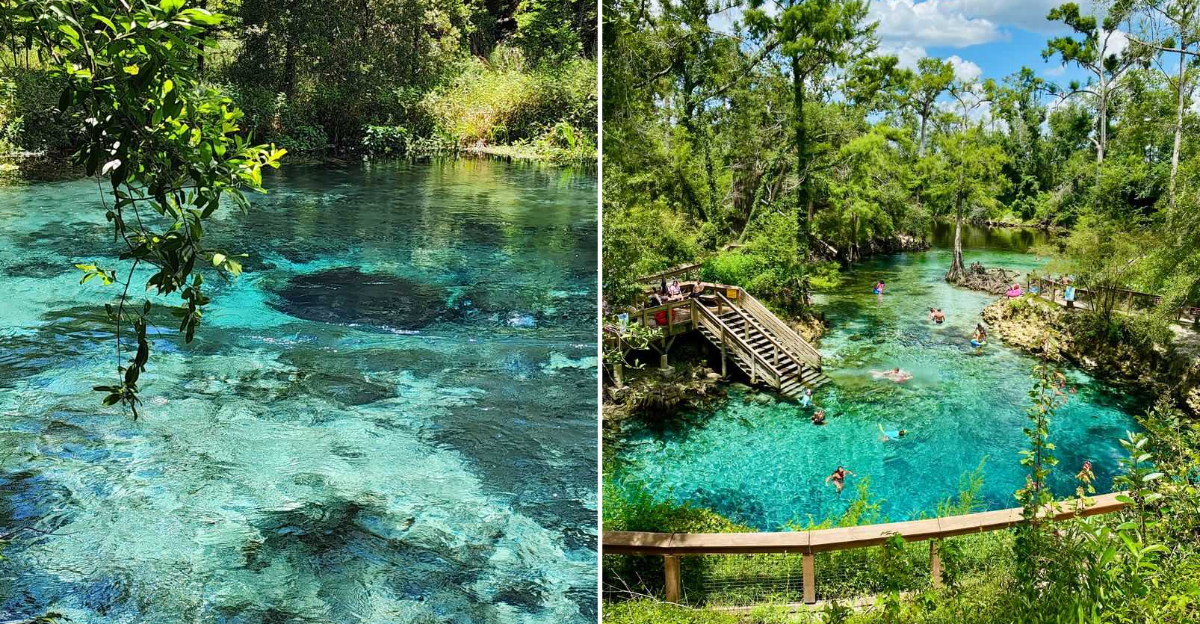
North Florida holds secrets that most tourists never discover.
While crowds cram into theme parks and busy beaches, this quieter half of the state hides magical places waiting for travelers who crave something different.
Tucked between forests, rivers, and forgotten coastlines are enchanting spots that feel like nature’s best-kept whispers, places where the world slows down and the ordinary turns extraordinary.
If you’re ready for mystery, beauty, and a dash of adventure, you’re in the right place.
1. Devil’s Millhopper Geological State Park – Gainesville
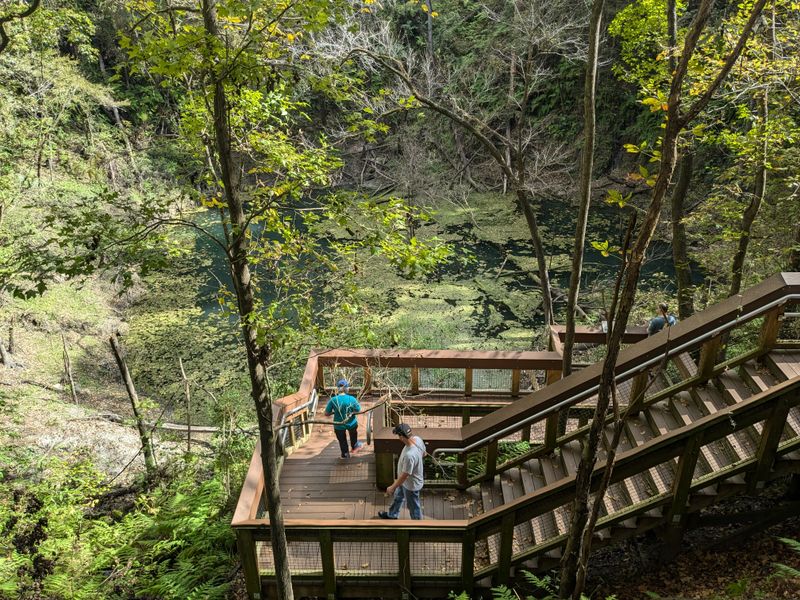
Picture a giant taking a massive bite out of the earth, then filling that crater with waterfalls and prehistoric plants.
That’s essentially what Devil’s Millhopper Geological State Park at 4732 Millhopper Rd, Gainesville, FL 32653 looks like when you peer over the edge.
This 120-foot-deep sinkhole formed thousands of years ago when the limestone bedrock collapsed, creating a miniature rainforest ecosystem right in the middle of North Florida.
Walking down the 232 steps feels like descending into a lost world where temperatures drop noticeably and tiny streams trickle down moss-covered walls.
While fossils do occur in the surrounding limestone, visitors won’t typically see exposed fossils on the walls during their descent, most are embedded deeper within the formation.The name supposedly comes from the devil grinding up sinners like grain in a millhopper, though the only thing getting ground down here is your leg muscles on the climb back up.
Bring your camera because the light filtering through the canopy creates magical photo opportunities.
Early morning visits reward you with fewer crowds and wildlife sightings including owls and various songbirds.
The half-mile nature trail around the rim offers a completely different perspective of this geological wonder.
2. Ichetucknee Springs State Park – Fort White
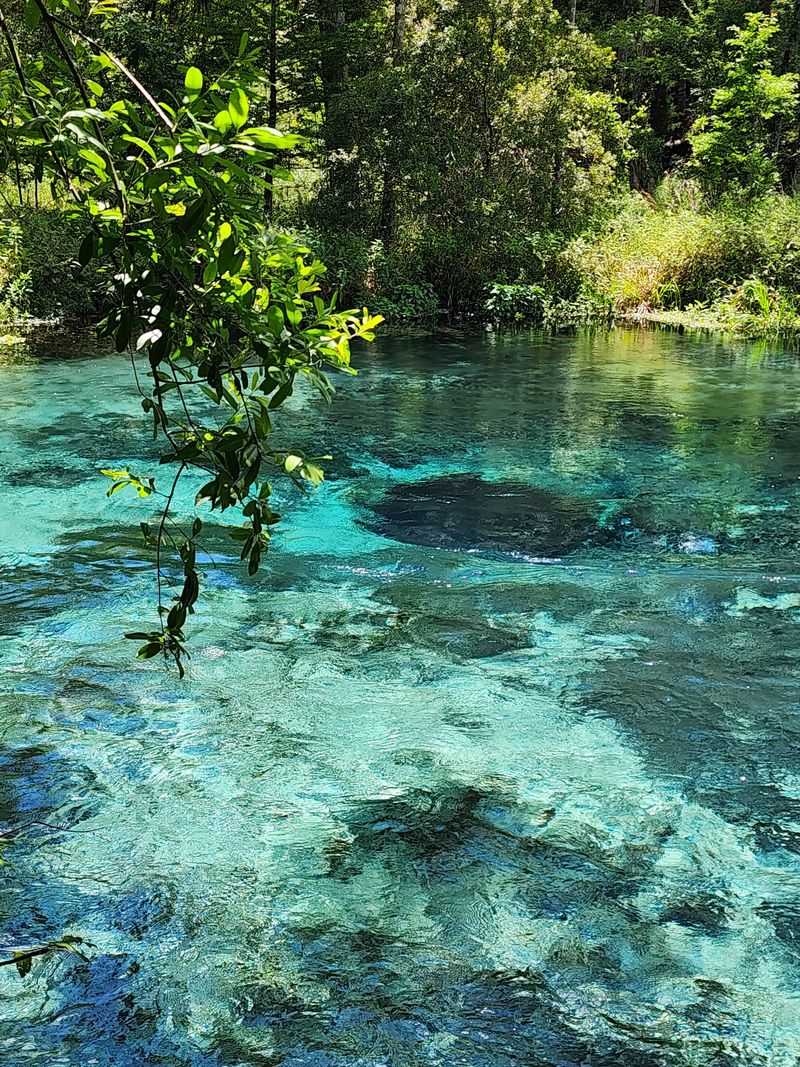
Crystal-clear water so transparent you can count fish scales from your inner tube—that’s the Ichetucknee experience in a nutshell.
Located at 12087 SW U.S. Highway 27, Fort White, FL 32038, this spring-fed river system pumps well over 200 million gallons of 72-degree water daily, with flow levels that naturally fluctuate rather than staying at a fixed number.
Lazy river tubing here puts theme park versions to shame because Mother Nature designed this attraction millions of years ago.
The three-hour float from the north entrance takes you past cypress trees draped in Spanish moss, turtles sunbathing on logs, and occasionally curious otters.
Snorkeling reveals an underwater garden where eelgrass sways and limestone formations create natural sculptures.
Summer weekends get packed tighter than a can of sardines, so weekday visits or off-season adventures offer more elbow room.
Eight named springs feed the river, each with its own personality and depth.
Blue Hole Spring drops to 20 feet deep and glows with an otherworldly blue that photographs can’t quite capture.
Rent tubes at the park or bring your own, but note that cooler and container restrictions primarily apply at the north entrance to protect the most sensitive portions of the river.
3. Madison Blue Spring State Park – Lee
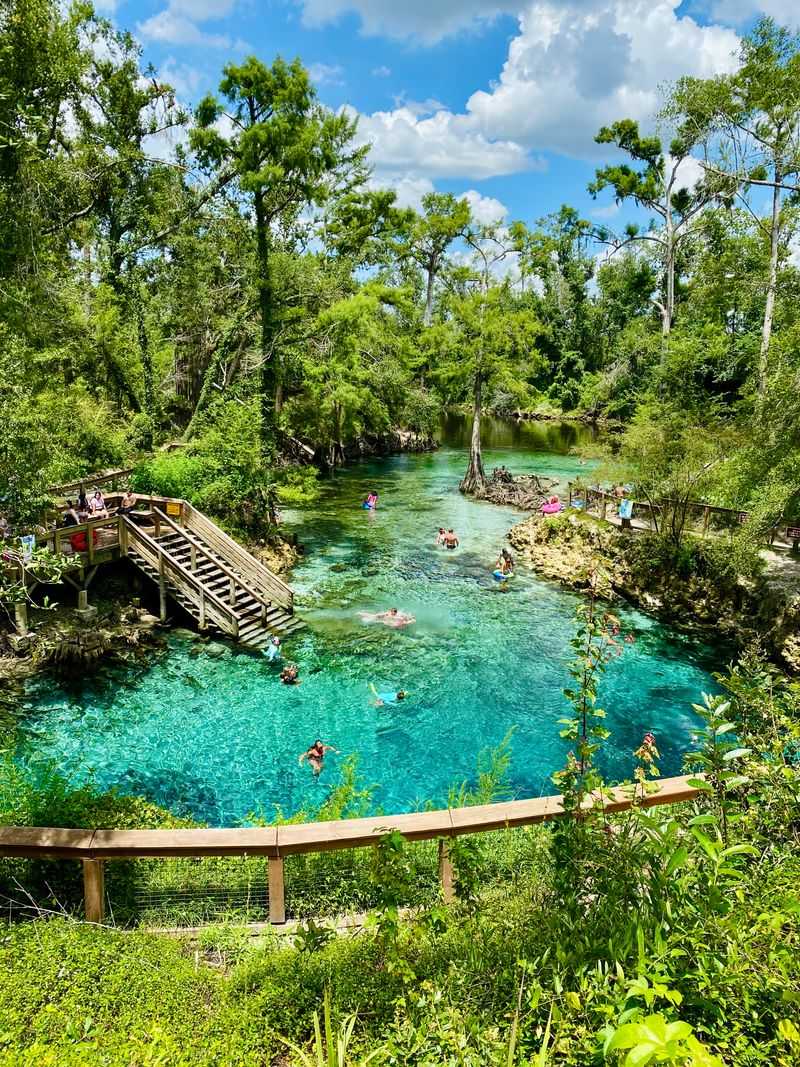
Ever wondered what liquid sapphire looks like?
Madison Blue Spring State Park at 8300 NE State Road 6, Lee, FL 32059 answers that question with authority.
This first-magnitude spring typically discharges tens of millions of gallons daily, though exact flow varies with seasonal conditions, creating a swimming hole that looks Photoshopped even in person.
The spring basin measures about 82 feet across and 25 feet deep at its deepest point, perfect for swimmers who want more than ankle-deep wading.
Certified cave divers explore the extensive underwater cave system that extends over 1,000 feet into the limestone.
Watching divers disappear into the cavern opening feels like witnessing explorers entering another dimension.
The boardwalk and observation deck let non-swimmers appreciate the spring’s beauty without getting wet, though resisting the temptation proves nearly impossible on hot days.
Paddlers can launch kayaks or canoes into the Withlacoochee River for scenic trips past cypress swamps and wildlife.
The spring run connecting to the river creates current that’s gentle enough for beginners but interesting enough to keep experienced paddlers engaged.
Pack a picnic because shaded areas near the spring make ideal lunch spots with million-dollar views.
4. Florida Caverns State Park – Marianna
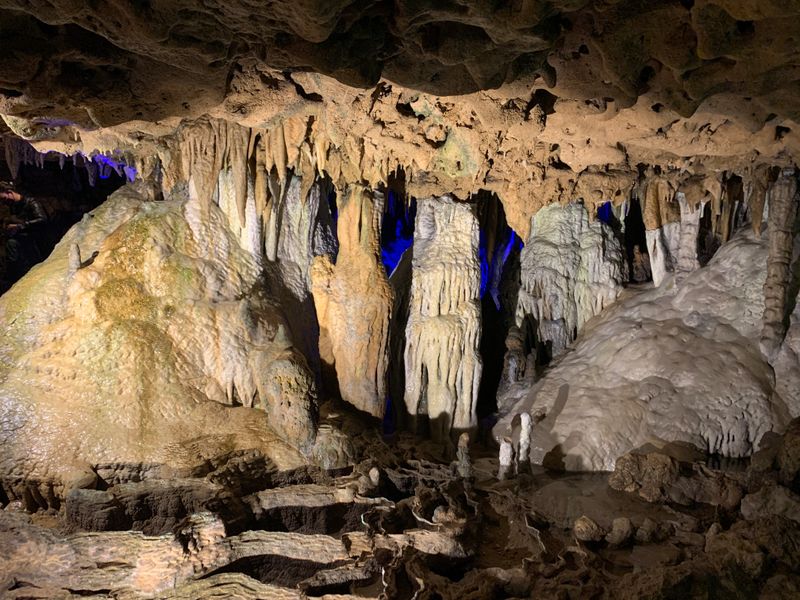
Florida doesn’t exactly scream “cave exploration,” but Florida Caverns State Park at 3345 Caverns Rd, Marianna, FL 32446 flips that assumption upside down.
These air-filled limestone caves feature stalactites, stalagmites, flowstones, and draperies that took millions of years to form drop by drop.
Guided tours lead visitors through rooms with names like the Cathedral Room and Wedding Room, where formations resemble frozen waterfalls and natural chandeliers.
The temperature inside stays around 65 degrees year-round, making it Florida’s best natural air conditioning.
Above ground, the park offers hiking trails, horseback riding paths, and the Chipola River for canoeing and swimming.
Blue Hole Spring within the park provides another swimming option with its cool, clear water.
History buffs appreciate the Civilian Conservation Corps architecture from the 1930s that still serves park visitors today.
The cave tour requires moderate physical ability since you’ll navigate stairs and duck through some passages, but the payoff exceeds any effort.
Bat colonies once filled these caverns, and restoration efforts continue, though populations remain much smaller than they were historically.
Booking tours in advance during peak season prevents disappointment because group sizes stay limited to protect the delicate cave environment.
5. Falling Waters State Park – Chipley
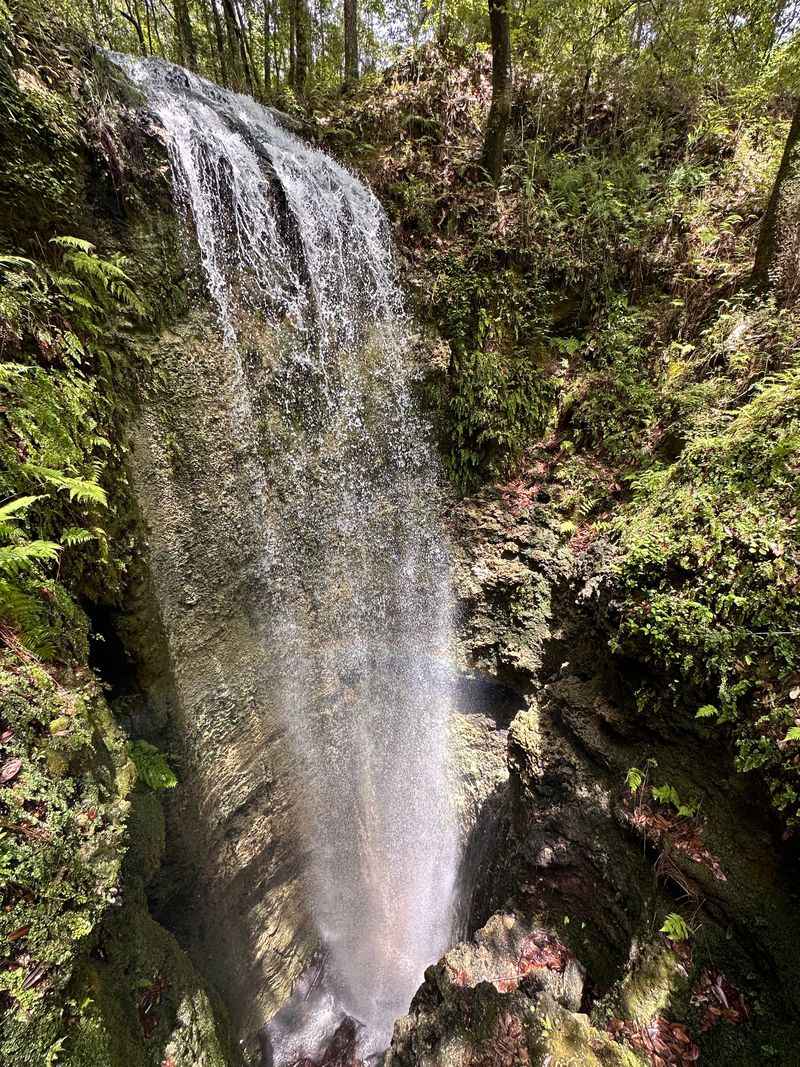
Waterfalls in Florida sound about as likely as snow in July, yet Falling Waters State Park at 1130 State Park Rd, Chipley, FL 32428 delivers exactly that rarity.
The 73-foot waterfall plunges into a cylindrical sinkhole, creating Florida’s tallest waterfall and most unique geological feature.
Where the water goes after disappearing into the pit remains partially mysterious, though geologists believe it feeds underground aquifers.
The observation platform lets you peer into the sinkhole’s depths while mist from the falls cools your face on humid days.
Surrounding hiking trails wind through hardwood forests filled with magnolias, dogwoods, and various oak species.
The one-mile Sinkhole Trail passes several smaller sinkholes, revealing how porous and dynamic Florida’s limestone foundation truly is.
Butterfly enthusiasts bring field guides because the park attracts dozens of species to its wildflower meadows.
The campground offers both tent sites and RV hookups for visitors wanting to extend their stay beyond a day trip.
Local legend claims the sinkhole served as a hideout for outlaws during Reconstruction, though historians find limited evidence supporting those tales.
Seasonal variations affect water flow dramatically—visit after rainy periods for the most impressive waterfall display.
6. Big Talbot Island State Park / Boneyard Beach – Jacksonville area
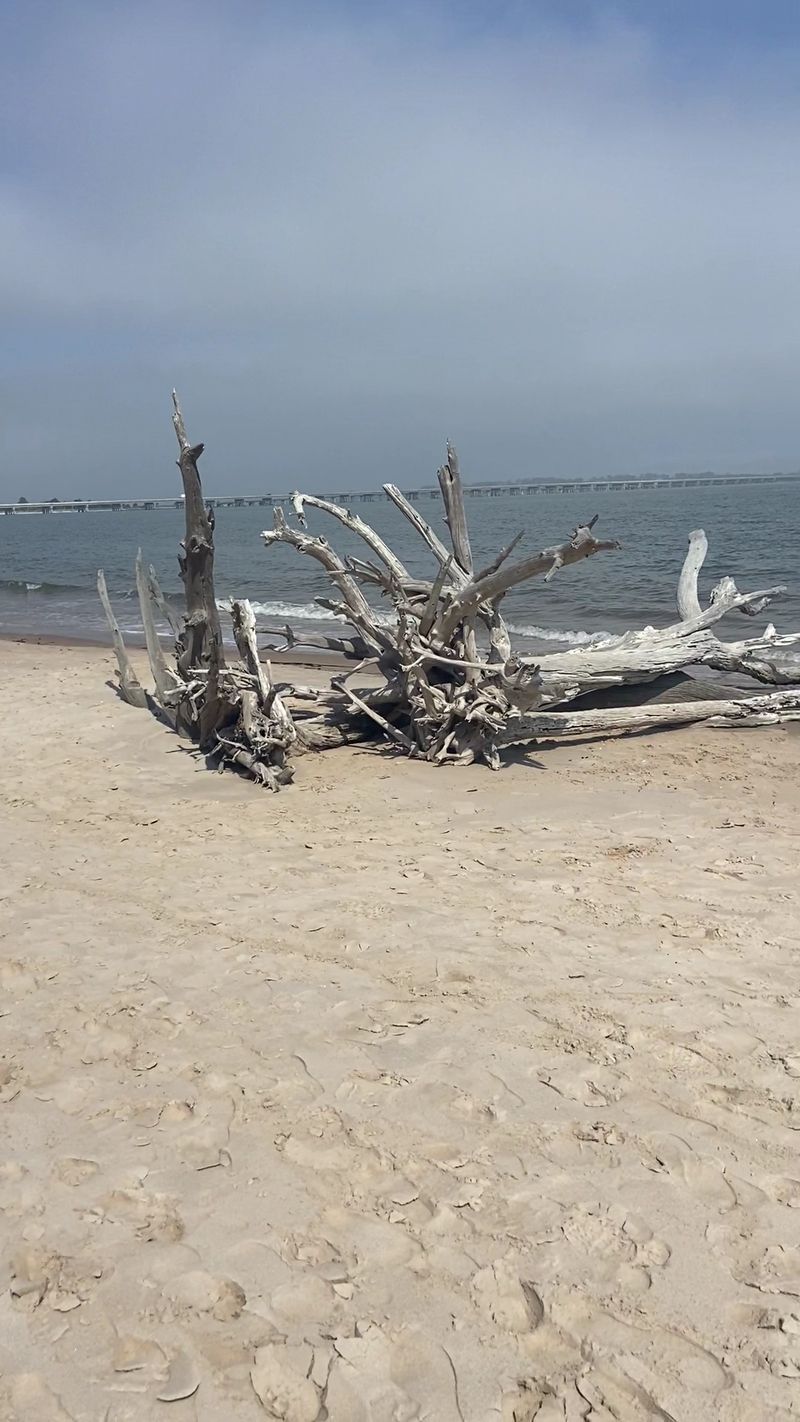
Boneyard Beach looks like the set of a post-apocalyptic movie where nature reclaimed everything.
Located at State Road A1A North, Jacksonville, FL 32226, this stretch of Big Talbot Island State Park features bleached tree skeletons scattered across dark sand like giant bones.
Erosion claimed the maritime forest, toppling oak and cedar trees that now create surreal sculptures shaped by salt, sand, and storms.
Photographers arrive at sunrise and sunset when golden light transforms the ghostly landscape into something otherworldly.
The contrast between smooth driftwood, rough bark textures, and endless ocean creates composition opportunities that could fill memory cards.
Walking among these fallen giants feels humbling as you witness nature’s power to both create and reclaim.
The beach sits on the northern end of the island, accessible via a short trail from the parking area.
Beachcombing yields interesting shells, sea glass, though shark teeth are less common here compared to nearby beaches.
Kayakers explore the salt marshes on the island’s inland side, where winding creeks hide herons, egrets, and dolphins.
The park’s trails offer hiking through maritime hammocks where living forests show what Boneyard Beach looked like before erosion worked its magic.
7. Cedar Lakes Woods & Gardens – Williston
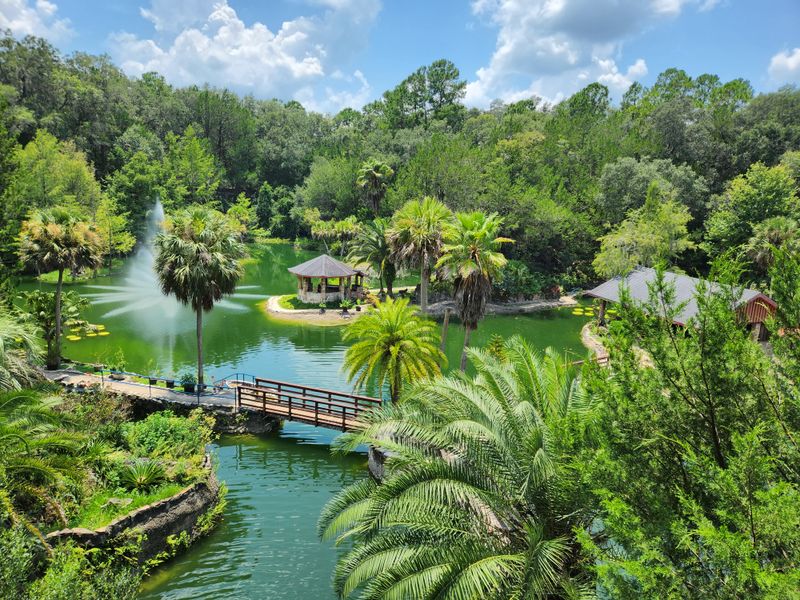
One man’s retirement project turned into North Florida’s most romantic hidden garden.
Cedar Lakes Woods & Gardens at 4990 NE 180th Ave, Williston, FL 32696 began when Dr. Raymond Webber started transforming overgrown property into a botanical wonderland.
Twenty years of dedication created winding paths through themed gardens featuring plants from six continents.
Spring-fed lakes and man-made ponds together create the property’s reflective waterways, providing water features that reflect century-old cypress trees and colorful blooms year-round.
Limestone ruins strategically placed throughout the property create mysterious backdrops that transport visitors to Mediterranean villas or ancient temples.
The attention to detail shows in every carefully placed stone and thoughtfully chosen plant combination.
Wedding photographers discovered this location years ago, and now couples flock here for engagement photos and ceremonies.
Seasonal festivals celebrate everything from butterflies to holiday lights, transforming the gardens with special installations.
The property spans 100 acres, though only portions open for tours to maintain the gardens’ intimate atmosphere.
Guided tours share Dr. Webber’s vision and the botanical stories behind plant selections from around the world.
Visiting during spring azalea blooms or fall foliage changes provides extra visual rewards, though honestly, any season delivers beauty.
8. Edward Ball Wakulla Springs State Park – Wakulla Springs
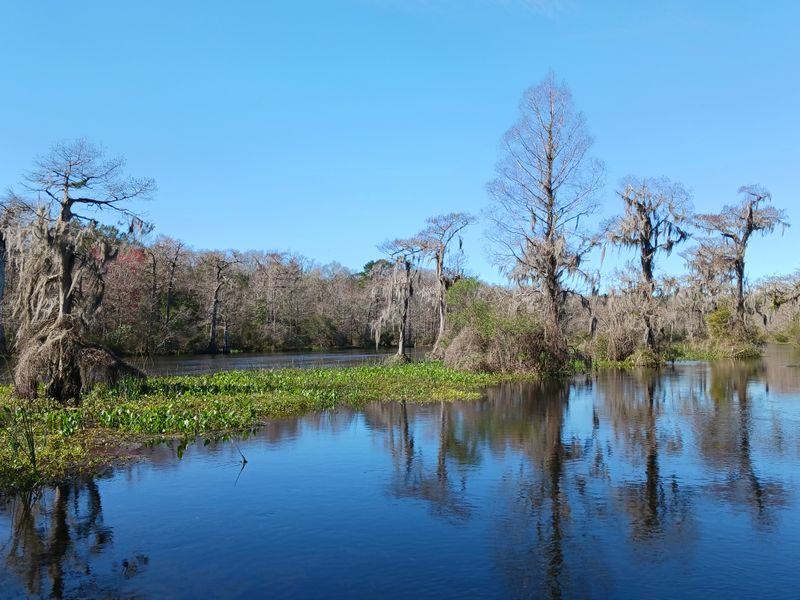
Wakulla Springs holds the title of one of the world’s largest and deepest freshwater springs, with flow rates often measured in the hundreds of millions of gallons per day, far exceeding earlier lower estimates.
Located at 465 Wakulla Park Dr, Wakulla Springs, FL 32327, this natural wonder served as a filming location for Tarzan movies and Creature from the Black Lagoon.
The historic lodge built in 1937 features marble floors, hand-painted cypress ceilings, and Old Florida elegance that modern resorts can’t replicate.
Glass-bottom boat tours operate only when water clarity is exceptional, making them far less frequent than standard river tours.
River boat tours take visitors through pristine wilderness where alligators sunbathe and hundreds of bird species nest in cypress trees.
The swimming area lets you experience the spring’s constant 70-degree water, perfect for cooling off during summer heat.
Manatees visit during winter months, seeking the spring’s warmth when Gulf waters turn chilly.
The diving platform attracts brave swimmers who plunge into water so clear it looks shallow despite being 20 feet deep.
Nature trails wind through surrounding forests where wildlife sightings include deer, turkeys, and occasionally black bears.
Staying overnight in the lodge feels like time traveling to Florida’s golden age of tourism.
9. Torreya State Park – Bristol
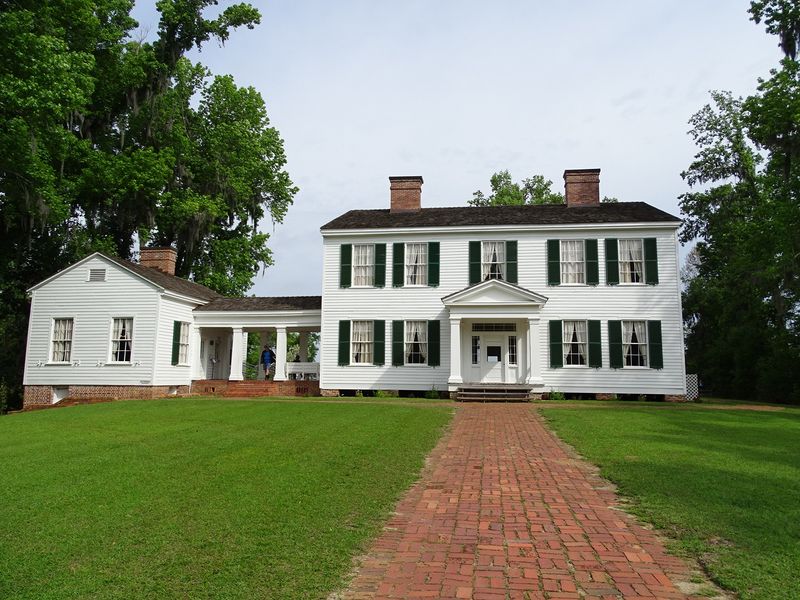
Most people think Florida is flat as a pancake, but Torreya State Park at 2576 NW Torreya Park Rd, Bristol, FL 32321 proves otherwise with dramatic bluffs rising 150 feet above the Apalachicola River.
The park protects one of North America’s rarest trees—the Torreya tree, which grows naturally only in this small region.
Steep ravines create microclimates where Appalachian plant species thrive hundreds of miles south of their normal range.
The Gregory House, a restored 1849 plantation home, sits atop the bluffs offering glimpses into Florida’s antebellum history.
Hiking trails range from easy river views to challenging climbs through ravines that’ll test your cardiovascular fitness.
The Weeping Ridge Trail descends into a ravine so lush with ferns and moss it resembles a temperate rainforest.
Rock Bluff Landing provides river access for paddlers wanting to explore the Apalachicola by kayak or canoe.
Primitive camping options let adventurous visitors experience true wilderness solitude.
Fall colors here are surprisingly vivid for Florida, though not as dramatic as those in northern states, still, they provide a unique seasonal spectacle for the region.
The remoteness means crowds stay minimal even during peak seasons, offering peaceful communion with nature that’s increasingly rare.
10. St. Marks National Wildlife Refuge & Lighthouse – St. Marks
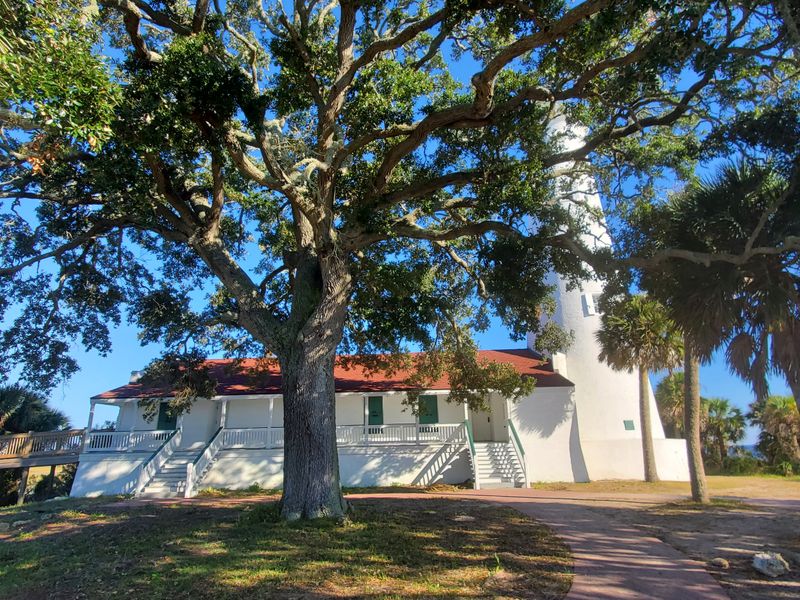
Where the land meets the Gulf, St. Marks National Wildlife Refuge at 1255 Lighthouse Rd, St. Marks, FL 32355 protects 70,000 acres of coastal wilderness.
The 1831 lighthouse still stands sentinel over Apalachee Bay, its white tower visible for miles across flat marshlands.
Birding here ranks among the Southeast’s best with over 300 species recorded, including massive migrations of monarch butterflies each fall.
The wildlife drive winds through salt marshes where alligators patrol ditches and wading birds stalk fish in shallow pools.
Biking the paved road to the lighthouse can reveal dolphins at times, though sightings near shore are occasional rather than common.
Fishing from the rocks around the lighthouse yields redfish, trout, and occasionally tarpon for skilled anglers.
The visitor center offers exhibits explaining the refuge’s ecology and the lighthouse’s maritime history.
Multiple hiking trails explore different habitats from coastal scrub to freshwater impoundments managed for waterfowl.
Winter brings massive flocks of ducks and geese seeking refuge from northern cold.
Sunset at the lighthouse delivers stunning color shows as the sun melts into the Gulf horizon.
The refuge’s size means you can visit repeatedly and explore different sections each time, discovering new wildlife and landscapes.
11. Dr. Julian G. Bruce St. George Island State Park – St. George Island
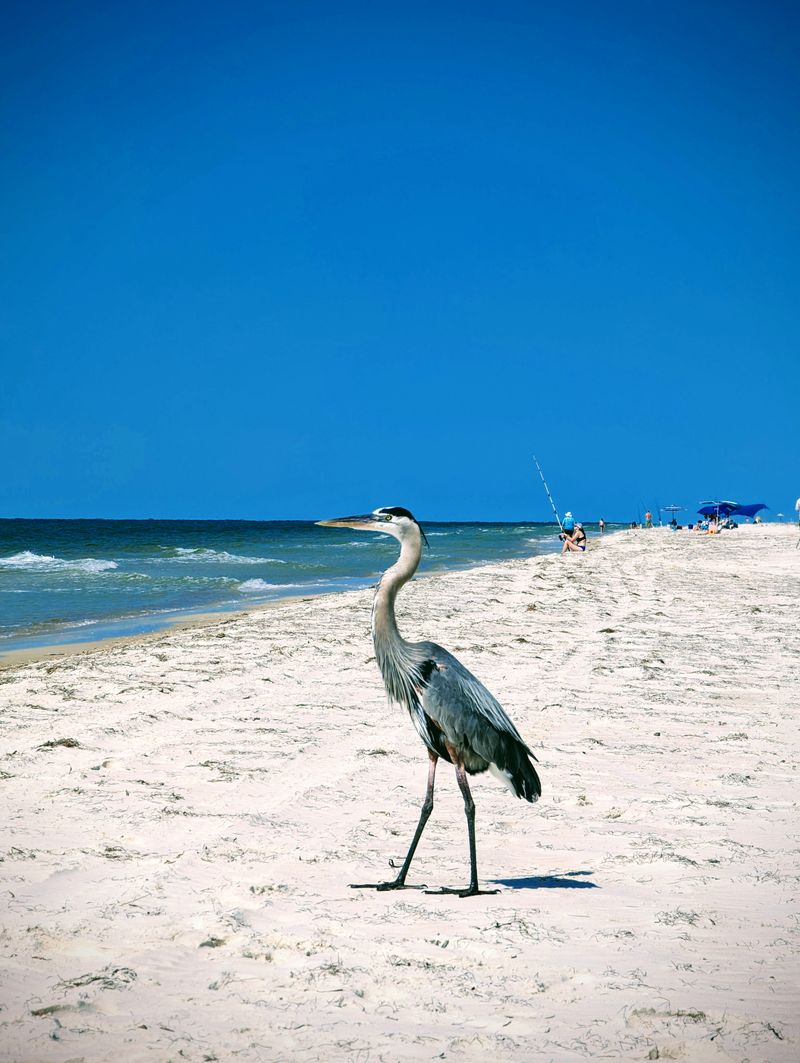
Nine miles of undeveloped beach paradise exist at Dr. Julian G. Bruce St. George Island State Park, located at 1900 E Gulf Beach Dr, St. George Island, FL 32328.
This barrier island park protects some of Florida’s most pristine coastal ecosystems where sugar-white sand meets emerald Gulf waters.
Unlike developed beaches crammed with high-rises and beach bars, this stretch feels wonderfully remote and untouched.
Beachcombing yields treasures ranging from colorful shells to sand dollars, especially after storms stir up the Gulf floor.
The bay side offers calmer waters perfect for kayaking through grass flats where scallops and other marine life shelter, though recreational scalloping is not typically permitted in this region.
Camping here puts you steps from the beach, with sunset and sunrise views that don’t cost extra despite being priceless.
Sea turtle nesting season transforms the beach into a protected nursery where loggerheads and other species lay eggs.
The park’s Gap Point area provides excellent fishing opportunities for both surf casters and pier anglers.
Hiking trails wind through coastal dunes where sea oats stabilize sand and provide habitat for beach mice.
The lack of artificial light makes stargazing exceptional on clear nights when the Milky Way stretches overhead.
Visiting during shoulder seasons offers warm weather with smaller crowds and lower accommodation prices in nearby towns.