
8 Hidden Texas Caves That Feel Like A Whole Other World Underground
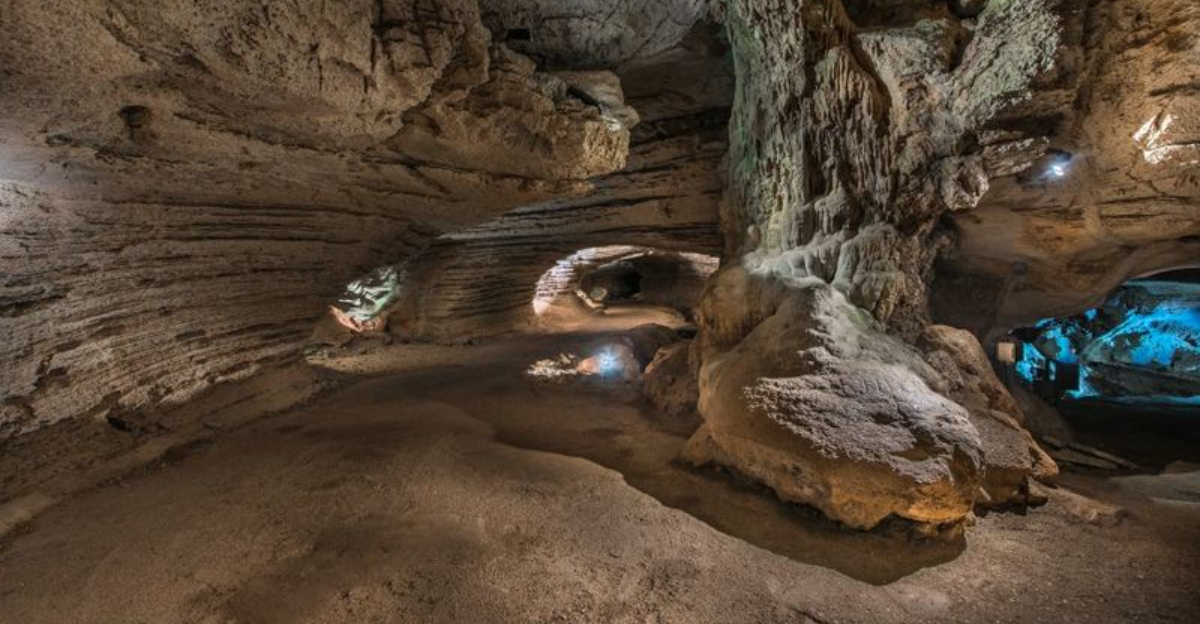
Texas may be known for its wide-open skies, endless highways, and sprawling ranches, but beneath the surface lies a world just as vast and breathtaking. Hidden underground are caves that feel like portals to another realm—places where time slows, light bends, and the earth reveals secrets carved over millions of years.
Step inside and you’ll find cathedral-like chambers glittering with crystal formations, underground waterfalls tumbling into silent pools, and delicate rock sculptures still growing one drop at a time. Some caves welcome visitors with paved walkways and glowing lanterns, while others remain raw and untamed, demanding courage from anyone daring to squeeze through their narrow passages.
Whether you’re drawn to the shimmer of helictites, the echo of music in a natural stone concert hall, or the thrill of crawling into a wild cavern few have seen, these caves promise an adventure that feels far removed from the Texas you know above ground. Each one is a reminder that the Lone Star State’s greatest treasures aren’t always found under the sun—they’re waiting in the shadows below.
1. Inner Space Cavern: Nature’s Time Capsule
The first time I squeezed through Inner Space Cavern’s entrance near Georgetown, I literally gasped. Prehistoric animal remains from mammoths and saber-toothed cats still lie preserved where they fell thousands of years ago!
The Lake of the Moon reflects formations in its crystal-clear waters, creating mirror images that seem to double the cave’s size. My favorite spot remains the Soda Straw Balcony, where thousands of hollow calcite tubes hang from the ceiling like nature’s wind chimes.
Originally discovered in 1963 during highway construction, this cave maintained a perfect 72°F year-round. What makes Inner Space truly special? The living, breathing formations continue growing today—some calcite drips add merely one inch every hundred years!
2. Natural Bridge Caverns: Colossal Underground Cathedral
“Holy moly!” Those words escaped my mouth when I first stood beneath the 60-foot limestone bridge that gives Natural Bridge Caverns its name. Located just outside San Antonio, this isn’t just Texas’s largest commercial cave—it’s a genuine underground palace.
Stalactites drip from vaulted ceilings while stalagmites reach upward like nature’s skyscrapers in chambers large enough to fit entire buildings. The Hall of the Mountain King room stretches over 350 feet long with formations towering seven stories high!
Summer evenings bring another spectacle: millions of Brazilian free-tailed bats emerge from nearby Bracken Cave in swirling tornado-like clouds. Four college students discovered this underground wonder in 1960, crawling hours through tight passages before stumbling upon the massive chambers we tour today.
3. Longhorn Cavern: Bootleggers’ Underground Hideout
Gangsters, outlaws, and bootleggers—Longhorn Cavern has sheltered them all! During my tour through this Hill Country gem, I couldn’t help imagining Prohibition-era parties held in the underground ballroom where the Civilian Conservation Corps installed a smooth dance floor in the 1930s.
The Queen’s Throne Room showcases a magnificent formation resembling a royal seat, complete with drapery-like flowstone curtains. Unlike many caves, Longhorn formed primarily through water erosion rather than chemical dissolution, creating unusually smooth, flowing passages.
Native Americans considered this cave sacred ground long before it became a Confederate gunpowder factory during the Civil War. My guide pointed out ancient smoke stains still visible on certain ceilings! The crystal-clear underground river that carved these chambers has mostly vanished, leaving behind a spectacular maze of rooms.
4. Caverns Of Sonora: Crystal Wonderland
“We’ve saved the best for last,” my guide winked before leading me into the final chamber of Sonora Caverns. Boy, was she right! The famous Butterfly formation—delicate twin calcite crystals joined perfectly like angel wings—took my breath away.
Located halfway between San Antonio and Big Bend, these caverns boast the highest concentration of helictites (gravity-defying formations that grow sideways) I’ve ever seen. Millions of crystal needles, fishtails, and coral-like structures cover nearly every surface in a dazzling display of nature’s geometry.
Ranchers discovered this cave in 1905 after following a whirlwind of bats emerging from a small hole. The temperature stays at 71°F with 98% humidity year-round, creating perfect conditions for the ongoing crystal growth. These formations grow so densely that guides joke about needing “cave weightlifting” to avoid bumping the delicate crystals!
5. Cascade Caverns: Home Of The Underground Waterfall
Rain pounded the metal roof of the visitor center as I arrived at Cascade Caverns near Boerne. “Perfect timing!” exclaimed my guide. “The waterfall should be flowing today.” Sure enough, after descending 132 steps, we heard it before seeing it—a 100-foot underground waterfall thundering into a crystal-clear pool!
Prehistoric humans once used this cave’s entrance as shelter, leaving behind artifacts dating back 10,000 years. The Cathedral Room’s magnificent acoustics prompted early explorers to hold church services here, with voices echoing hauntingly through the chambers.
Blind salamanders scurry through the cave streams, pale white creatures that have evolved without eyes in this perpetual darkness. During one memorable flash flood in the 1930s, visitors had to remain inside for three days until waters receded! When dry, guides show the high-water marks still visible on the walls.
6. Cave Without A Name: Symphony In Stone
“Sing something,” urged my guide, standing in the Queen’s Throne Room. Nervously, I hummed a few notes and nearly jumped when they returned, amplified and eerily beautiful. Cave Without a Name earned its reputation as Texas’s most musical cave for good reason!
Located in Boerne, this cave got its quirky name when a young boy won a naming contest by declaring it “too pretty to have a name.” Six massive chambers showcase every type of formation imaginable—curtains of flowstone hang like petrified waterfalls while delicate soda straws reach down from ceilings.
Musicians regularly perform concerts underground, utilizing the cave’s perfect natural acoustics. The constant 66°F temperature makes it pleasant year-round. My favorite feature? The rimstone dams—hundreds of miniature terraced pools filled with crystal-clear water, resembling nature’s infinity pools cascading through the cave.
7. Wonder Cave: First Show Cave In Texas
Mark Bevers must have gotten quite a shock in 1893 when his well-drilling equipment suddenly plunged into nothingness beneath San Marcos! What he’d accidentally discovered became Wonder Cave—Texas’s first commercial cave and still one of its most charmingly old-school underground adventures.
Unlike most Texas caves formed in limestone, Wonder Cave resulted from an ancient earthquake fault, creating unusually straight passages and dramatic angular rooms. The original wooden stairs from the 1920s have been preserved in sections, giving tours a delightful vintage feel.
During Prohibition, bootleggers used hidden passages to smuggle alcohol, and local college students held secret parties in the larger chambers. My favorite spot? The Wishing Well Room, where decades of tossed coins have created a gleaming carpet of copper and silver underwater. Legend claims if you can land a coin on the central stalagmite, your wish will come true!
8. Airman’s Cave: Wild Caver’s Ultimate Challenge
“Are you SURE you want to do this?” My caving buddy looked skeptical as we prepared to enter Airman’s Cave in Austin. I soon understood why—the infamous Birth Canal entrance required squeezing through an 18-inch gap for nearly 30 feet! Not for the faint-hearted or claustrophobic.
Unlike commercial caves, Airman’s remains wild and undeveloped. No lights, pathways, or guides—just your headlamp illuminating miles of challenging passages. Named after an Air Force cadet who discovered it in 1971, this cave stretches over two miles beneath Austin neighborhoods.
The Aggie Art Gallery features walls covered in prehistoric-looking mud formations resembling strange animals and faces. Most impressive? The 100-foot-long Running Man formation that looks eerily like a stick figure sprinting across the ceiling. Getting through required army-crawling, chimneying up tight passages, and navigating a three-dimensional maze—the ultimate underground adventure!