
14 Hidden Waterfalls In Vermont That Tourists Overlook
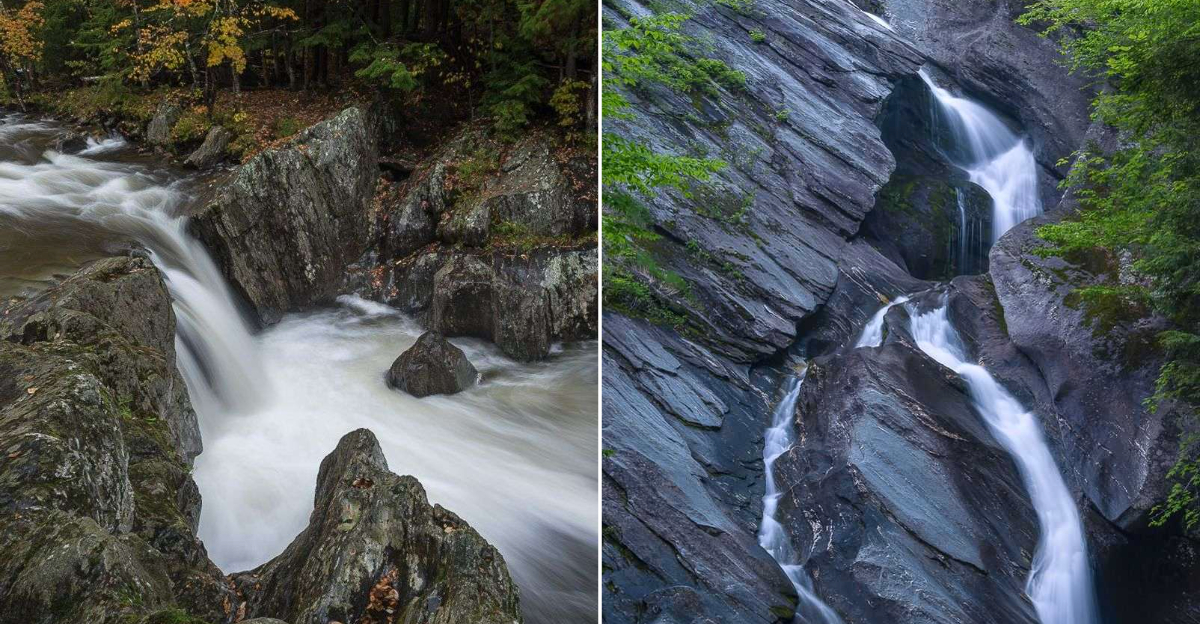
Waterfall scene in Vermont goes way beyond the Instagram-famous spots that clog your feed every fall.
Sure, everyone knows about the big-name cascades, but the real magic happens on those unmarked forest trails where you park beside a crooked sign and wonder if you took a wrong turn.
These hidden drops offer the same drama, better swimming holes, and a fraction of the selfie sticks. Pack your boots, grab a trail snack, and get ready to explore water features that most visitors speed right past on their way to crowded overlooks.
1. Pikes Falls (Salmon Hole Falls)
A quick forest stroll drops you at a 20-foot ribbon of whitewater that empties into an olive-green swimming hole locals guard like a state secret.
The natural rock slide on one side has launched countless summer afternoons, and the pool runs deep enough for a proper plunge.
You will find roadside parking a few miles from Jamaica village, and the path is obvious, even if the sign looks like it survived three winters too many.
Spring melt turns the cascade into a thundering curtain, while late summer keeps the flow gentle and swimmable.
2. Hamilton Falls
Granite walls squeeze this tiered giant into a roaring chute that echoes through Jamaica State Park after every rainstorm.
The falls split into multiple levels, each carving its own pool and ledge system, and the volume after spring snowmelt is genuinely impressive.
Park rangers post warnings at the trailhead for good reason. Swimming at the top is strictly off-limits because of strong currents and slippery rock.
Stick to the lower viewing areas, respect the signs, and you will enjoy one of the state’s most dramatic vertical drops without any drama.
3. Big Falls
One of Vermont’s burliest drops funnels the Missisquoi River through a tight gorge just steps from your car door.
The raw power of the water squeezing between rock walls makes for a show you can hear before you see it, and safe viewing perches let you lean in without risking a swim you did not plan.
The Conservancy maintains an alternate access point downstream called Big Falls Eddy if you want calmer water for wading or a picnic.
Either way, this spot delivers maximum waterfall impact with minimum hiking effort.
4. Jay Branch Gorge (Four Corners Falls)
A short walk through quiet woods brings you to an 8-foot plunge that drops into a pool locals swear has no bottom.
The water stays glassy even when nearby streams run cloudy, and the flow holds steady through summer when other falls turn to trickles.
Photogenic ledges frame the scene perfectly, yet you will rarely bump into another soul here. Jay Branch Gorge sits in the shadow of bigger-name neighbors, which keeps the crowds thin and the experience intimate.
Bring your camera and a towel for an afternoon dip.
5. Journey’s End
Half a mile of shaded trail winds through Johnson’s woods before delivering you to a pocket gorge where Foote Brook spills like satin over smooth ledges.
The pools run cold and clear, trout-friendly and perfect for cooling off after the walk in.
Permanent conservation protections guarantee public access, so this spot will stay wild and open for future explorers. Pack out everything you pack in, stay on marked paths, and treat the area like the gift it is.
The quiet beauty here rewards respectful visitors with a serene escape.
6. Trout River Falls (Three Holes)
Three punchy drops carve bowl-shaped pools that beg for a hot July cannonball, yet midweek you might have the whole place to yourself.
Each tier offers a different depth and vibe, so you can pick your adventure based on how brave you feel.
Parking is a tiny pull-off that is easy to miss, and the descent to the water is steep and can turn slick after rain.
Wear shoes with grip, watch your footing, and once you reach the bottom, the reward is a private swimming hole.
7. Abbey Pond Cascades
A mossy mountain-brook staircase whispers beside the Abbey Pond Trail, each step softened by ferns and lichen that make the whole scene look like a fairytale set.
The sound of tumbling water accompanies you uphill, and the cascades feel a world away from the traffic on Route 7.
The moderate hike gains about 1,200 feet, so come prepared for a workout. Views and water features reward the climb, and the higher you go, the fewer people you will encounter.
Perfect for anyone craving solitude with their scenery.
8. Falls of Lana
A dramatic horsetail drops into a deep pool where sunlight hits the stone just right on clear mornings, creating a scene that feels like a postcard but without the tour-bus crowd.
The falls sit in the Moosalamoo National Recreation Area, reached from a signed parking off Route 53.
Locals know this spot well, but tourists hustling between bigger-name attractions tend to blow right past. That oversight is your gain.
The pool is deep enough for swimming, the rocks are great for lounging, and the whole setup feels like a private retreat.
9. Buttermilk Falls
Three stacked falls, three easy viewpoints, and a one-minute walk from the car make this spot ridiculously accessible for the payoff you get.
Each tier offers a different angle and character, so you can snap photos from multiple perspectives without breaking a sweat.
Come early or off-season if you want solitude, because word has spread among savvy locals. The Vermont River Conservancy and partners steward public access here, keeping the area clean and open.
Respect the land, and you will enjoy one of the easiest waterfall visits in the state.
10. Sterling Falls Gorge
An interpretive loop traces a hidden gorge where short drops, pools, and fern-slick rock create a micro-wilderness just minutes from Stowe’s main drag.
The trail design lets you peek into the gorge from multiple angles, each revealing a new pocket of water and stone.
Trails are open, but recent reports flag hazardous conditions in some sections, so tread lightly and heed posted warnings. The area is healing from storm damage, and careful visitors help keep it accessible.
Bring patience and good boots, and you will still find beauty here.
11. Thundering Brook Falls
A boardwalk section of the Appalachian Trail delivers you to a 140-foot cascade without the calf-burning climb most waterfall hikes demand.
The accessible path means families, strollers, and anyone with mobility concerns can experience the thunder and mist of a serious vertical drop.
Vermont has few universally accessible waterfall trails, so this one stands out for inclusion and ease. The falls live up to the name after spring rains, sending spray across the viewing platform.
Pack a light jacket even on warm days, because the mist zone is real.
12. Texas Falls
Quartz-streaked rock funnels bright water beneath a sturdy footbridge, creating a scene that looks almost engineered but is pure geology.
A short nature trail loops through the forest, adding a leg stretch and interpretive signs that explain how the rock got so sparkly.
The overlook area underwent renovations in 2025 and is now back in full service, with improved railings and safer viewing platforms.
The site sits right off the highway in Green Mountain National Forest, making it an easy add to any road trip through central Vermont.
13. Hell Brook Cascades
On the steep, rugged Hell Brook Trail, a tall, lacy fall appears early in the climb and sets the tone for the wild ascent ahead.
The water spills over layered ledges, each one adding to the drama, and the setting feels remote even though Smugglers’ Notch is nearby.
This is not a roadside stop or a family stroll. The trail demands sure footing, dry conditions, and a willingness to scramble over roots and rock.
If you are up for the challenge, the cascades reward you with raw, untamed beauty.
14. Lye Brook Falls
One of Vermont’s highest falls hides 2.3 miles from the trailhead, roaring loudest in spring when snowmelt sends a wall of water down the rock face.
The wilderness setting keeps crowds thin, and the hike in feels like a proper backcountry adventure.
The payoff is huge, both in height and in the sense of discovery you get standing at the base. Bring sturdy boots, plenty of water, and a camera with a wide lens.
Early season offers the best flow, but even late summer delivers a respectable cascade.