
Hiking To Havasu Falls Without A Permit Is The Mistake That Ruins Arizona Trips
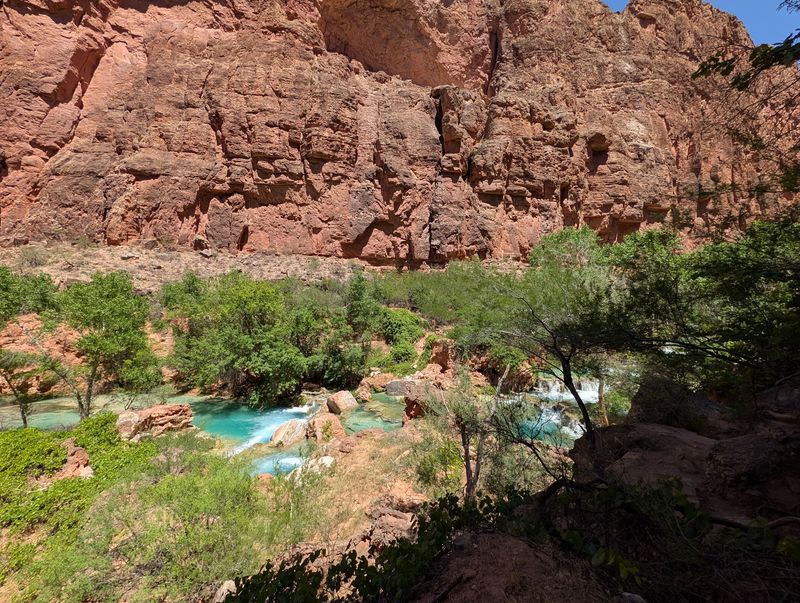
Turquoise water spills about 100 feet into a blue-green pool at the bottom of a desert canyon. Getting there takes roughly 10 miles of hiking each way.
Getting turned away takes one missing piece of paper.
That paper is a permit, and nobody here treats it as optional. There’s no day hiking.
Every visit is a fixed three-night stay, booked well in advance, and spots often vanish fast.
I can’t imagine anything worse than planning an Arizona adventure around this place, hauling a pack down the trail, and then getting sent back up. Checkpoints along the route make sure that happens to anyone without the right wristband.
So what does it actually take to reach those blue-green waters the right way? The answer starts long before the trailhead, and it’s more interesting than you’d think.
A Turquoise Oasis Sitting On Sovereign Tribal Land
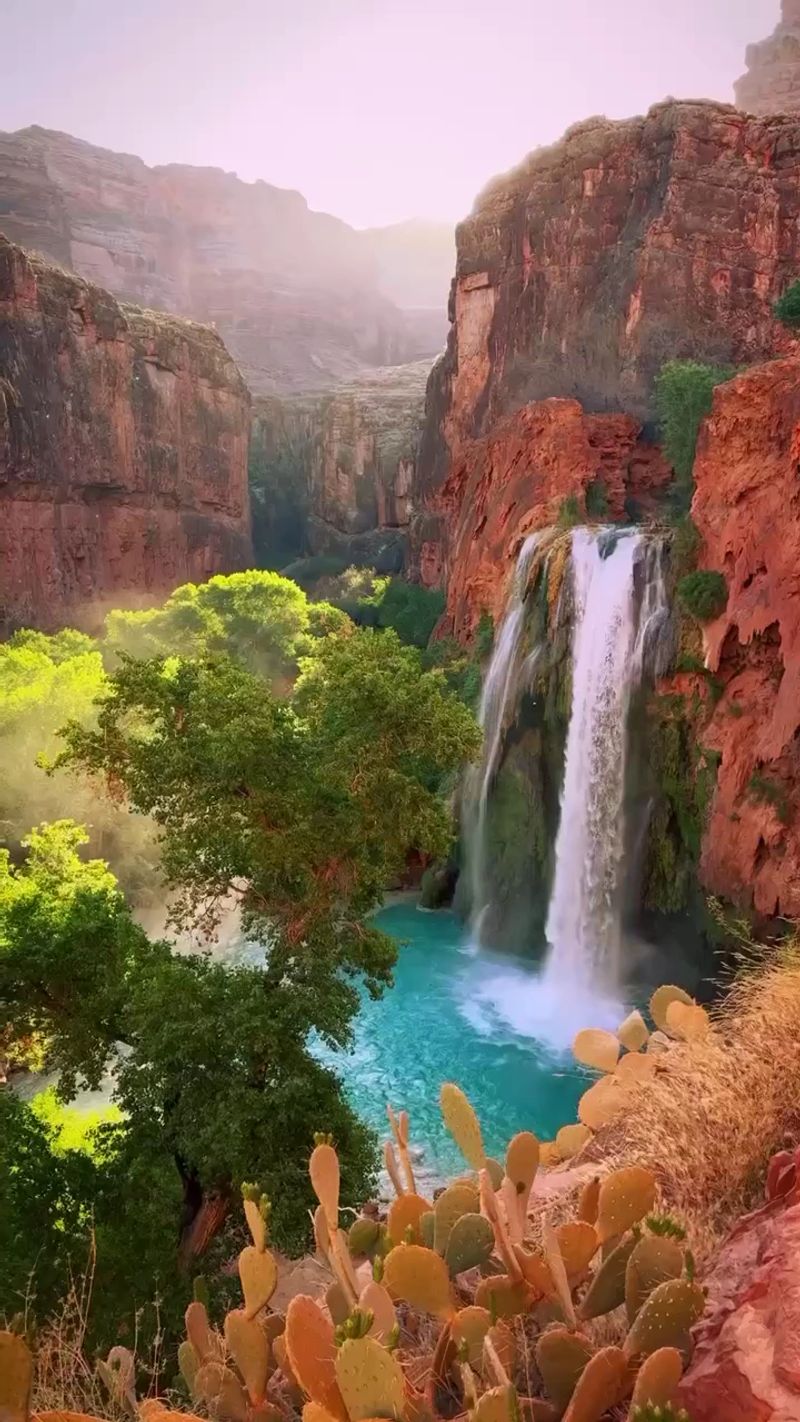
Blue-green water in the middle of red rock desert sounds made up. Havasu Falls is very real, and it sits deep in a remote side canyon of the Grand Canyon in northwestern Arizona.
The falls belong to the Havasupai Indian Reservation, not to Grand Canyon National Park. That detail matters more than any packing list.
The park surrounds the area, but the falls sit outside its jurisdiction.
Instead, the Havasupai Tribe manages everything as a sovereign nation with its own laws. Their name means people of the blue-green waters.
Honestly, it’s hard to think of a more fitting name for anyone, anywhere.
Because this is tribal land, the rules come from the Tribe alone. Entering for tourism without a valid reservation counts as trespassing.
Your national park pass won’t help you here.
That surprises a lot of first-time planners. Many assume the falls work like a typical park trail with a trailhead and a parking lot.
They don’t, and the difference shapes every step of your trip.
Think of it as visiting someone’s home rather than a public attraction. The Tribe opens the door by invitation, through a managed booking system.
Respecting that setup is the first step toward seeing those famous waters yourself.
Why Your Permit Matters More Than Your Hiking Boots
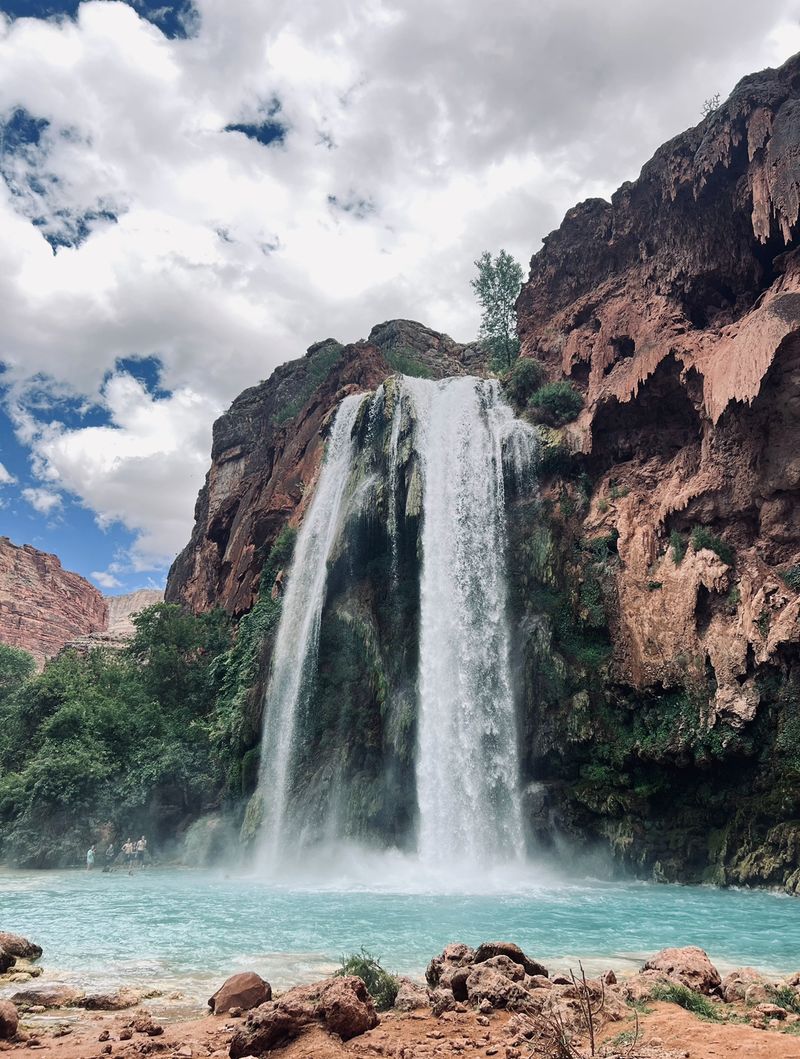
Every single person entering the reservation for tourism needs a valid permit. It has to be purchased through the Tribe’s official booking system, with no exceptions for friends, kids, or good intentions.
You won’t find a day-use option. Each permit covers a fixed stay of three nights and four days.
That structure keeps visitor numbers steady and the experience managed.
Reservations have historically opened on February 1 at 8 a.m. Arizona time.
Spots often sell out quickly, sometimes on the very first day. Planners who treat that date casually tend to miss out entirely.
The old lottery approach is gone. The Tribe also discontinued permit transfer options, so reselling or swapping reservations is prohibited.
Buying a spot from a stranger online is not a clever workaround.
Showing up and hoping for luck won’t work either. Multiple checkpoints along the route confirm that hikers carry proper permits and wristbands.
Without them, you’ll be turned around.
The consequences can go beyond a long walk back. Unauthorized visitors may face fines and even legal action.
That’s a steep price for skipping a booking step.
So the permit really is the ticket. Everything else, from your shoes to your snacks, comes second.
The Route 66 Check-In Most First-Timers Forget
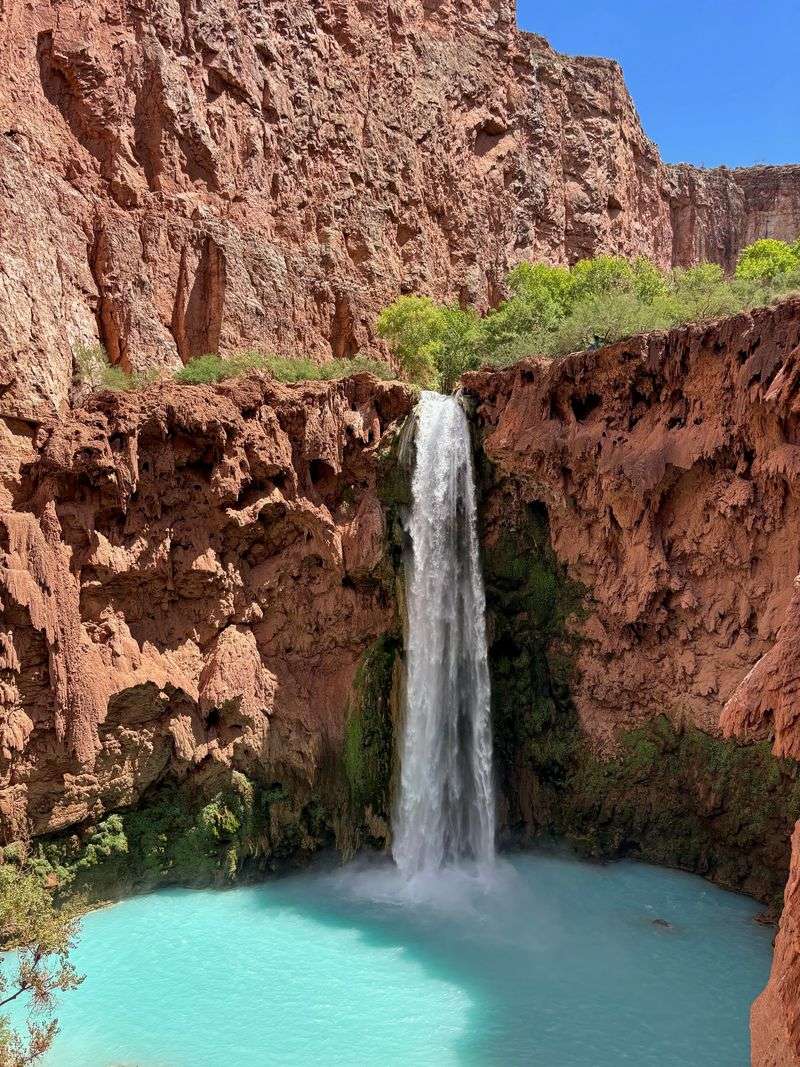
Here’s a twist many people miss. Before you even see the trailhead, you need to stop at Grand Canyon Caverns and Inn on Historic Route 66 near Peach Springs, Arizona.
All permit holders, or the designated trip leader, must complete a mandatory check-in there. You’ll show a valid photo ID along with your reservation information.
In return, you receive the wristbands and a parking pass.
Check-in happens on your permit start date or the day before. Confirm the operating hours ahead of time, since they can change.
Plan your drive so you arrive comfortably within that window.
Skipping this step is a costly error. A missed check-in means your booking gets canceled without a refund.
All that planning disappears in one afternoon.
Don’t drive straight to Hualapai Hilltop expecting to sort things out there. The trailhead is not the place to fix paperwork.
The inn comes first, every time.
Treat this stop as part of the adventure rather than a chore. Route 66 offers its own classic Arizona charm along the way.
A little patience at the counter keeps the rest of your trip on track.
Ten Miles Down, And Every One Of Them Earned
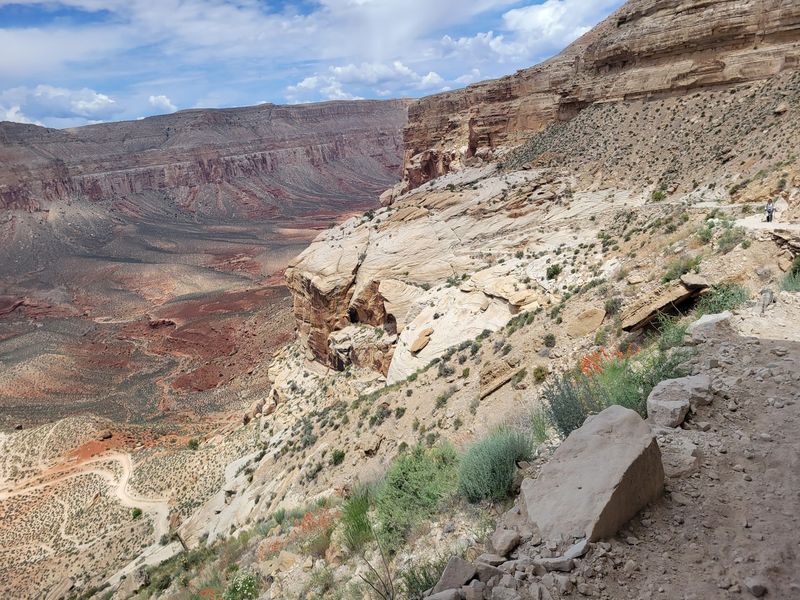
Hualapai Hilltop is where the real work begins. It’s the official trailhead, and the path drops into the canyon fast.
The hike to Supai Village runs about 8 miles. Along the way, it loses roughly 2,000 feet of elevation over rocky and sandy ground.
Your knees will notice, so hiking poles can help a lot.
Much of that first stretch is exposed to the sun. There are no water sources along it.
Carrying plenty of water is essential, and electrolyte tablets may help on hot days.
Many hikers start very early to beat the heat. Mornings at the hilltop can feel cold, though the canyon usually runs warmer.
Layers make that switch easier.
From the village, the campground sits about 2 more miles down canyon. That puts the total around 10 miles each way.
The climb back out waits at the end of your trip.
Desert storms deserve respect too. Rain from above funnels into the canyon, and flooding can close areas.
Watching the forecast before hiking in or out is a smart habit.
Nobody wins a prize for speed here. A steady pace and frequent breaks make the miles far more pleasant.
Supai Village, A Living Home Deep In The Canyon
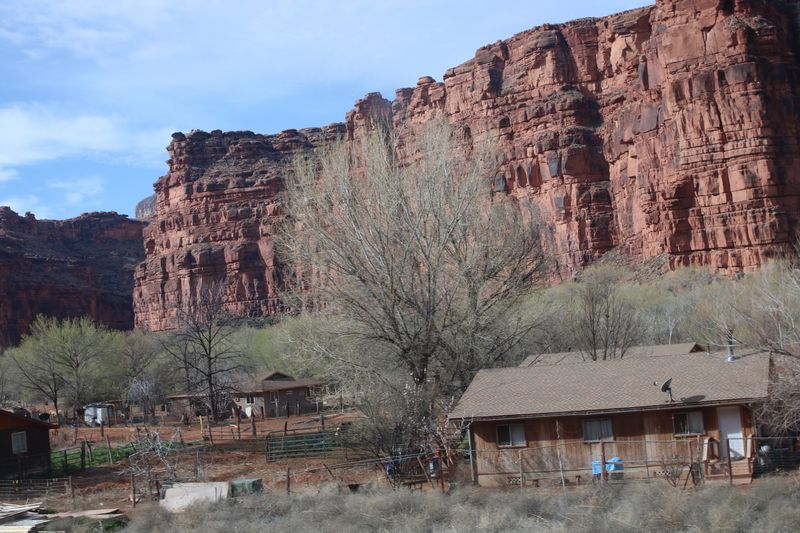
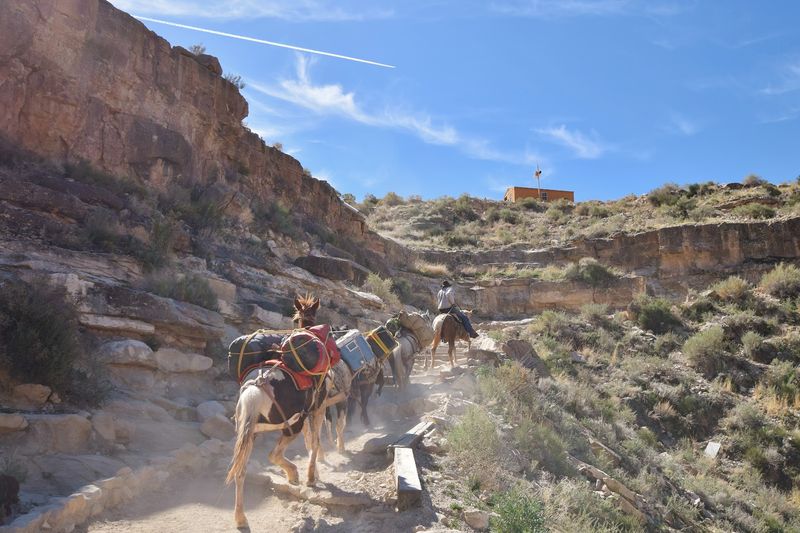
Few towns in the country receive their mail by mule. Supai Village does, which tells you plenty about how remote it is.
Supai is often called the most remote community in the contiguous United States. It’s home to the Havasupai Tribe, and it’s a living, sacred place rather than a tourist stop.
Visitors will find a cafe, a small store for basic supplies, and that famous post office. Amenities are limited, so it’s wise to bring what you need.
A lodge in the village offers an alternative to camping, and it must be booked ahead.
Respect is the main rule here. Photographing tribal members, homes, or anything in the village is prohibited without advance written permission.
Keep the camera tucked away until you reach the falls.
Stay on the main designated trails and avoid residential areas. Walking politely through someone’s neighborhood is simply good manners.
It also helps keep the visit welcoming for everyone.
The village is also where you check in with the tourism office for questions. Cell service is extremely limited farther down canyon.
Sorting out any issue in person may require walking back up here.
Two Waterfall Warm-Ups Before The Main Event
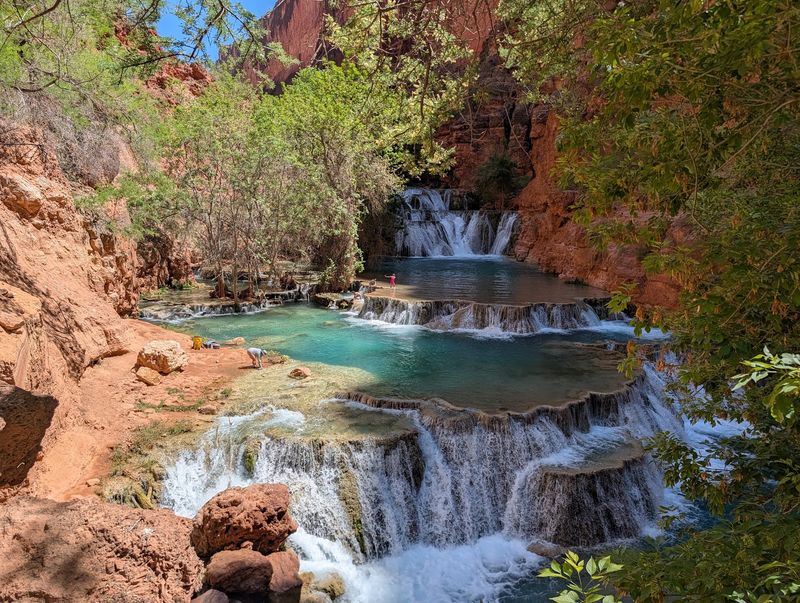
Good news for tired legs. Before reaching Havasu Falls, the trail passes Fifty Foot Falls and Navajo Falls.
These cascades often feel like a reward right when energy runs low. They signal that the campground is getting close.
Plenty of hikers snap a few photos and keep going.
That plan works well. You can always return the next day for a proper splash.
Both spots sit within reach of camp once your pack comes off.
The water here shows the same vivid blue-green color the canyon is known for. Natural travertine formations shape many of the pools and ledges.
The look is striking against the red rock.
Sturdy water shoes make a real difference. Rocky surfaces under the water can be rough and slippery.
Bare feet and travertine are not a great pairing.
These smaller falls also offer a calmer scene than the headliner. They’re a fine place to cool off and rest sore muscles.
Some visitors even find them just as charming as the famous ones.
Treat them as the opening act of a long show. The best is still ahead, but the warm-up deserves your attention too.
The Famous Blue-Green Plunge Worth Every Blister
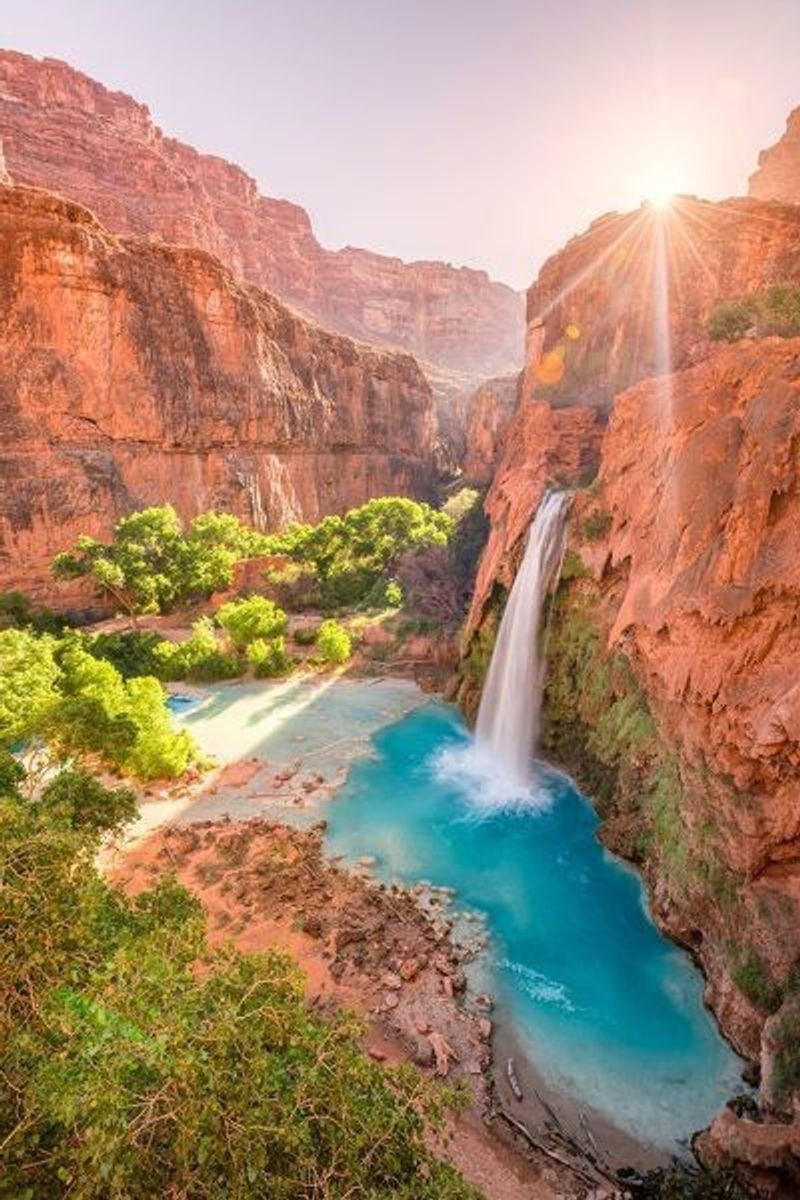
Around one bend, the canyon opens and there it is. Havasu Falls drops about 100 feet into a bright turquoise pool.
It’s the most photographed waterfall in the area, and for good reason. The color looks almost too vivid for a desert.
Red cliffs and green trees frame it like a postcard.
Swimming here is a highlight for many visitors. The water often feels comfortable during warmer months.
Late in the day, the pool can be pleasantly mild.
Photographers have a field day too. Long-exposure shots soften the falling water beautifully.
Morning sun reaches the falls early, which helps with light.
One catch involves weather. Storms and flooding can turn the water brown for a while.
Knowing that possibility helps keep expectations realistic.
Still, even a cloudy day here beats most sunny days elsewhere. The sound of the falls fills the whole area.
It’s the kind of view people talk about for years.
The campground sits just beyond the falls. That means this famous scene is basically your neighbor for three nights.
Not a bad backyard for a camping trip in Arizona.
Chains, Ladders, And The Thrill Of Mooney Falls
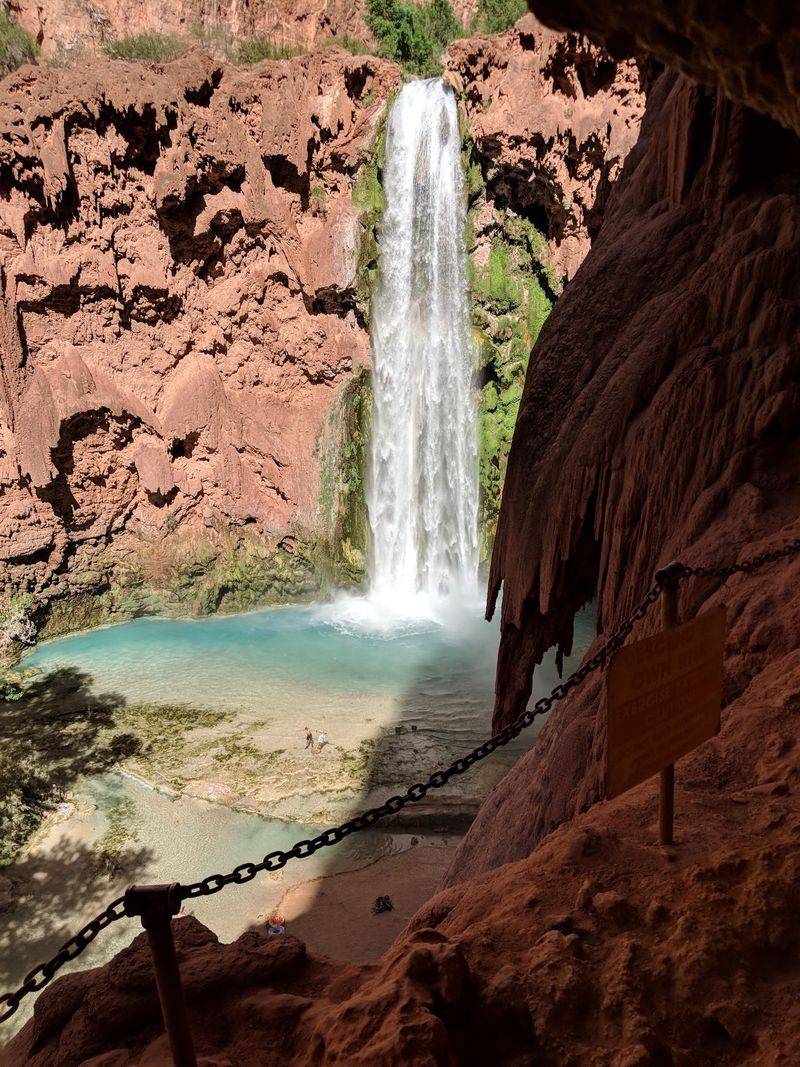
Mooney Falls is the tallest of the bunch, with a drop of about 200 feet. It sits roughly a mile or two past the campground.
Getting to the bottom is an adventure all its own. The route uses chains and ladders along steep, exposed rock.
Tunnels and narrow ledges add to the excitement.
Mist from the falls makes the rock slippery. Keeping three points of contact at all times is a smart rule.
Gloves can also help grip those chains.
Not everyone will want to make the descent, and that’s fine. The view from above is impressive by itself.
Knowing your comfort level matters more than bragging rights.
For those who go down, the payoff is huge. The base offers a close look at the powerful falls.
The pool below shines with that same blue-green color.
Plan a full day if you want to keep exploring beyond Mooney. The trail continues downstream toward even more water.
Packing snacks and water for the day makes it far easier.
Patience on the ladders helps everyone. Wait your turn, move carefully, and enjoy the climb back up.
A Wild Day Trip To Beaver Falls And Beyond
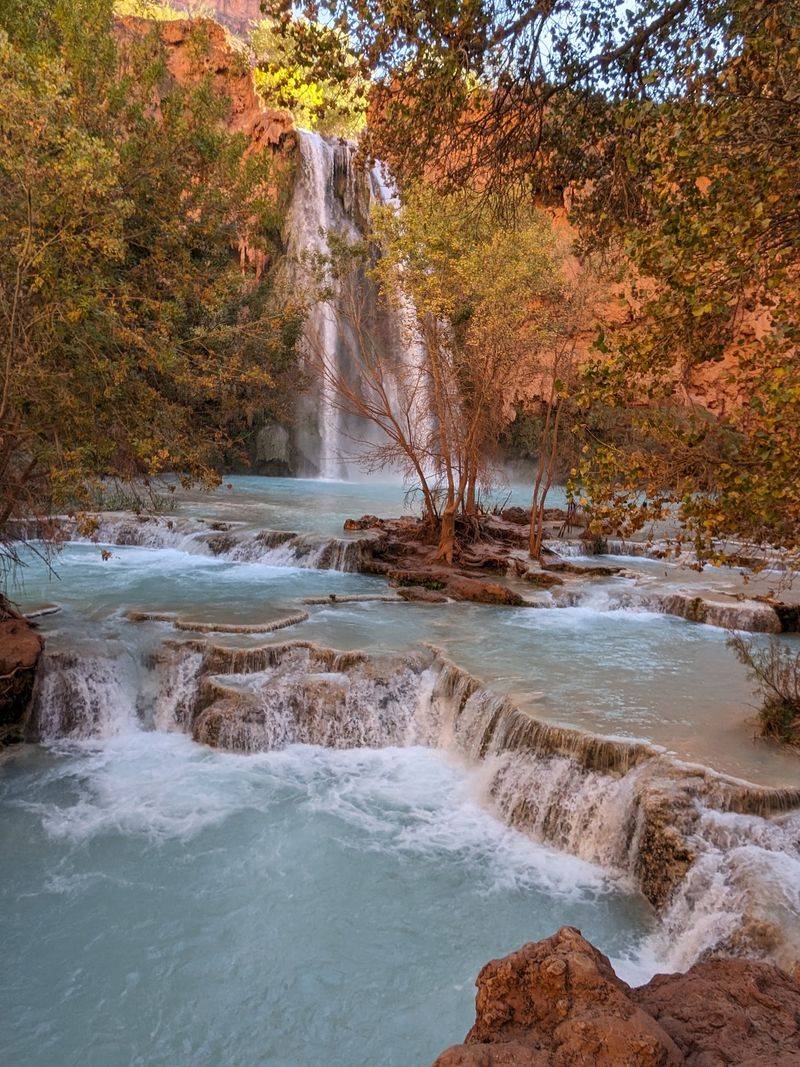
Some trails feel like a movie set. The path to Beaver Falls often earns comparisons to Jurassic Park thanks to its lush greenery.
Beaver Falls sits about 3 miles from the campground. Its terraced cascades step down through several blue-green pools.
It’s a lovely spot to swim and relax after the hike.
The trail involves creek crossings and some scrambling. Water shoes are especially handy here.
Expect to get your feet wet more than once.
Ambitious hikers can continue toward the Colorado River confluence. That trek can stretch to around 9 miles one way.
It’s a long day, so starting early is wise.
Conditions matter on this stretch. Areas may close after heavy rain or flooding.
Checking for closures before heading out can save frustration.
Honestly, this is where the three-night stay really shines. With a full day to spare, you can explore without rushing.
Many visitors set aside one entire day just for this outing.
Bring a lunch, a water filter, and sun protection. The farther you go, the quieter the canyon tends to feel.
It’s a peaceful kind of reward.
House Rules That Can End A Trip Early
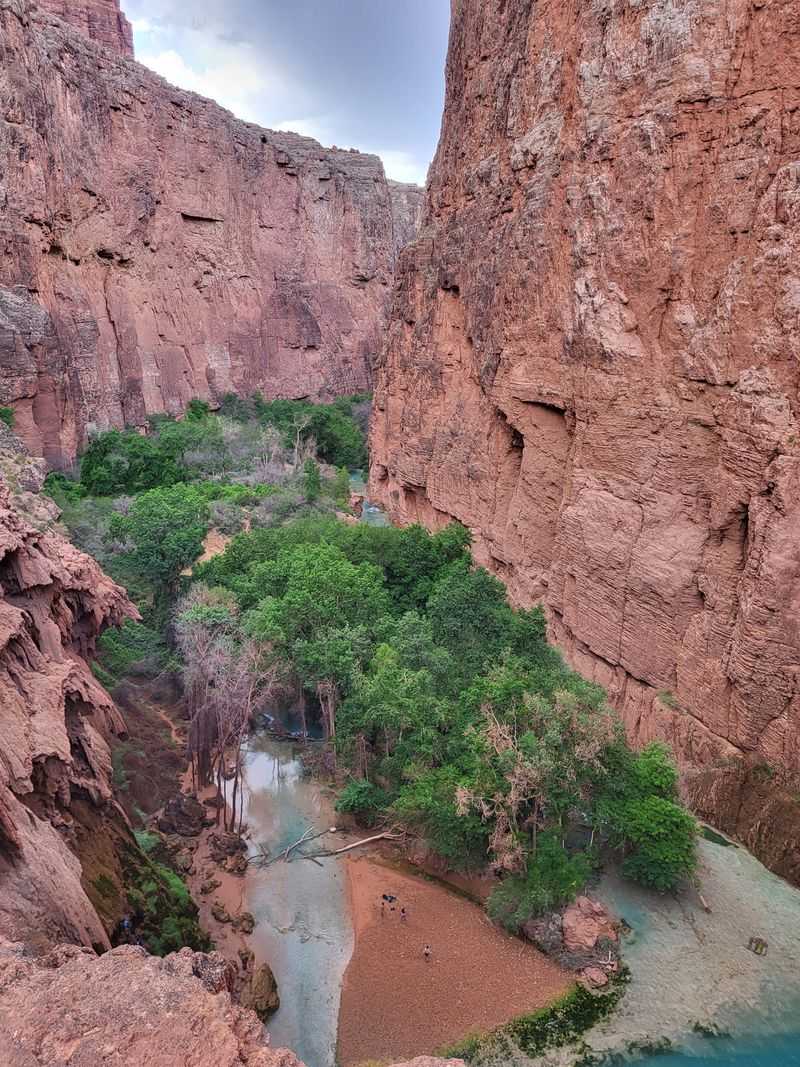
Breaking the rules here costs more than a scolding. Violations can end permits for your whole group, not just you.
The list is clear. Alcohol, drugs including marijuana, weapons, and public nudity are all forbidden on the reservation.
Campfires aren’t allowed either.
Penalties can include fines, exclusion from the reservation, and seizure of property. The Havasupai Tribal Court holds sole jurisdiction over tourism matters.
That’s serious, and it’s meant to be.
Pack out everything you bring in. Abandoned tents and sleeping bags create a real problem in the canyon.
Leftover gear can end up near the water.
Food storage deserves attention too. Local critters are skilled at raiding unattended supplies.
Hanging food or using secure containers keeps your meals yours.
Gear and mule bookings have their own rules as well. Keep every tag and receipt with you.
Weighing bags before drop-off and photographing the scale can help avoid disputes.
None of these rules are hard to follow. They simply ask visitors to act like thoughtful guests.
Do that, and the trip stays smooth for you and everyone around you.
The Golden Ticket Is Patience And A Little Planning
Self-reliance is the theme of a great Havasu trip. There are no public medical facilities in Supai Village.
Medical help or evacuation can take hours and cost a lot. It may not be available at night or in bad weather.
A solid first-aid kit belongs in every pack.
You’ll also bring all your own food. A spring near the campground provides drinking water, though a filter adds peace of mind.
Toilet paper is a small item that can save a big headache.
Mules and helicopter services can move gear or people, but they aren’t guaranteed. Waits can stretch for hours.
Never count on them as your only way out.
So is it worth the effort? Absolutely, for travelers willing to plan.
The turquoise pools, towering falls, and quiet canyon nights make a rare Arizona memory.
The secret is simple. Book through the Tribe, check in on Route 66, respect the village, and pack smart.
Skip the permit, and you’ll likely see nothing but the trail back up. Follow the process, and those blue-green waters are waiting for you.