
13 Historic Covered Bridges In Indiana That Look Like They Belong On A Postcard
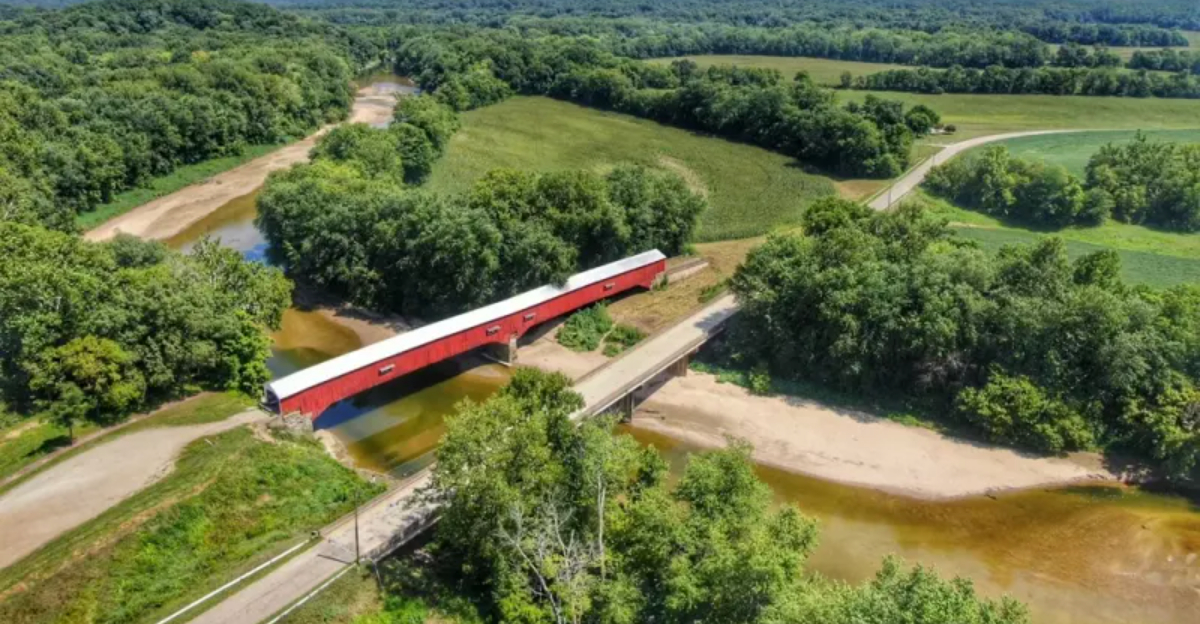
Indiana’s countryside is dotted with covered bridges that feel like time machines. Built in the 19th century, each one carries the stories of the communities it has connected for generations.
Nestled among the rolling hills of Brown County or spanning the calm waters of Sugar Creek, these wooden wonders aren’t just crossings – they’re living snapshots of Hoosier history waiting to be explored.
1. Medora Covered Bridge: America’s Longest Historic Covered Bridge
Standing proudly since 1875, this magnificent triple-span Burr arch bridge stretches an impressive length over the East Fork White River. Its vibrant red walls create a striking contrast against the green countryside surrounding it.
Visitors often marvel at how the morning light filters through its wooden beams. Now reserved for pedestrians only, you can stroll through this engineering marvel at your leisure while modern traffic crosses on a nearby concrete span.
2. Bridgeton’s Phoenix: The Reborn Mill Bridge
Rising from ashes after a devastating 2005 arson, the rebuilt Bridgeton Covered Bridge stands as a testament to community determination. The classic Burr arch design complements its picture-perfect setting beside the historic working mill.
The combination of the red wooden bridge, the rushing dam waterfall, and the vintage mill creates the quintessential Indiana postcard scene.
I still remember visiting shortly after its reopening, when locals shared stories of fundraisers and volunteer efforts that brought their beloved landmark back to life.
3. Narrows Bridge: Turkey Run’s Hidden Treasure
Tucked within dramatic sandstone gorges, the 1882 Narrows Bridge seems to belong in a fairy tale rather than rural Indiana. Built by master bridge builder Joseph A. Britton, this single-span Burr arch structure spans Sugar Creek with timeless elegance.
Hikers from Turkey Run State Park often discover this wooden wonder while exploring the park’s famous trails. The tight sandstone walls framing the bridge create natural frames for photographers seeking that perfect shot of Indiana’s rustic charm.
4. West Union Bridge: Parke County’s Longest Wooden Crossing
Stretching magnificently across Sugar Creek since 1876, West Union stands as Parke County’s longest remaining covered bridge. The two-span Burr arch design by J.J. Daniels showcases the golden age of wooden bridge craftsmanship.
The broad views of Sugar Creek from this vantage point captivate photographers year-round. During my autumn visit, the bridge’s weathered wood seemed to glow against the backdrop of brilliant fall foliage, creating a scene straight from a vintage travel poster.
5. Bean Blossom Bridge: Brown County’s Woodland Passage
Built in 1880, this rare Howe through truss design earned its place on the National Register in 2022. The one-lane approach winds through dense hardwood forests, creating a journey back in time for travelers.
Unlike many historic bridges, Bean Blossom still carries local traffic daily, though weight limits protect its aging timbers.
The creek’s gentle curves beneath the structure and the surrounding deep valley create stunning compositions during all four seasons, especially when autumn paints the hillsides in fiery hues.
6. Ramp Creek Bridge: Indiana’s Oldest Double-Lane Wooden Span
Dating back to 1838, this remarkable structure stands as Indiana’s oldest covered bridge and the only double-tunnel design in the state. Relocated to become Brown County State Park’s grand entrance in 1932, it welcomes nature lovers with historic charm.
The timber portals frame breathtaking views of Salt Creek and rolling hills beyond. What makes this bridge truly special is its continued daily use.
Unlike most historic spans that have been bypassed, Ramp Creek still carries regular vehicle traffic into one of Indiana’s most beloved parks.
7. Moscow Covered Bridge: The Tornado Survivor
The Moscow Bridge tells a remarkable tale of destruction and rebirth. Originally built in 1886 with a Kennedy-designed Burr arch, this beloved landmark was devastated by a 2008 tornado that scattered its timbers across the countryside.
The community rallied to salvage original materials and craft an authentic reconstruction. Reopened in 2010, its twin spans now cross the Big Flatrock River with renewed purpose.
The pastoral town backdrop completes a scene that feels suspended in time, making it a favorite subject for painters and photographers alike.
8. Westport Bridge: Limestone-Supported Woodland Crossing
Nestled in a quiet park setting since 1880, the Westport Bridge combines rustic wooden architecture with solid limestone foundations. Its single-span Burr arch design creates a perfect reflection in the waters of Sand Creek below.
Now preserved for pedestrians only, visitors can linger to appreciate craftsmanship that has withstood nearly 150 years of Indiana seasons.
The easy access from both banks makes this bridge particularly photographer-friendly, offering multiple angles to capture its timeless silhouette against changing skies.
9. Williams Bridge: Double-Span Giant of Lawrence County
Proudly holding the title of Indiana’s longest double-span covered bridge, this 1884 Howe truss masterpiece stretches impressively across the East Fork White River. Its National Register status recognizes both its historical significance and remarkable preservation.
The panoramic river views from this pedestrian-only bridge captivate visitors year-round. I once visited during a summer sunset when the golden light transformed the weathered timbers into what looked like burnished copper, while kayakers drifted beneath the massive wooden structure.
10. Shieldstown Bridge: The Newly Restored River Crossing
Following an extensive restoration completed in 2019, this 1876 gem now showcases the brilliance of builder J.J. Daniels in pristine condition.
The two-span, multiple-kingpost Burr arch design demonstrates the technical sophistication of 19th-century bridge builders. Long wooden walls stretch over the East Fork White River, creating dramatic shadows on the water below.
The surrounding farmland and tree lines frame this historic structure perfectly, offering a glimpse into rural Indiana’s past when these covered crossings were vital transportation links rather than nostalgic attractions.
11. Cataract Falls Bridge: The Waterfall Companion
Few covered bridges enjoy such a spectacular natural setting as this 1876 Smith Bridge Company truss near Indiana’s largest waterfall.
The wooden structure seems to have grown organically from the landscape surrounding the cascading Upper and Lower Cataract Falls. Bypassed by modern roads since 1988, visitors now enjoy the bridge on foot while exploring the falls.
The scene transforms dramatically with the seasons – spring’s rushing waters, summer’s lush greenery, autumn’s fiery colors, and winter’s delicate ice formations each create distinctly magical photographic opportunities.
12. Roann Bridge: Historic District’s Wooden Centerpiece
Since 1877, the Roann Bridge has served as the crown jewel of this charming town’s historic district. The 288-foot Howe truss design stretches elegantly across the Eel River, supported by a sturdy stone pier at its center.
The bridge’s distinctive silhouette against the historic streetscape creates a scene that seems frozen in time.
Every September, the bridge becomes the star attraction during the Roann Covered Bridge Festival, when thousands gather to celebrate Indiana’s wooden bridge heritage with music, food, and crafts beneath its protective roof.
13. Spencerville Bridge: DeKalb County’s Working Antique
Unlike many historic bridges relegated to pedestrian-only status, the 1873 Spencerville Bridge continues serving its original purpose.
The Smith Type-4 truss design by John A. McKay showcases tall timber engineering that has withstood nearly 150 years of daily use. The structure’s impressive height creates a cathedral-like feeling as you drive through its wooden portal.
Farm country views surround this crossing over the St. Joseph River, where ongoing maintenance ensures future generations will experience this living piece of transportation history firsthand rather than viewing it as a museum piece.