
11 Historic Dining Rooms In Illinois You Won’t Find In Travel Guides, Hidden In Plain Sight
Some dining rooms seem to hold their stories just beneath the surface, tucked under creaky floorboards and along polished banisters, waiting patiently until you slow down enough to notice how much has passed through the room before you arrived.
Across Illinois, I’ve found a handful of historic spots like this, places that don’t announce their age or importance, but quietly continue serving everyday plates with decades of memory folded into the napkins.
You won’t always see them featured in glossy roundups or shouted out by passing trends, yet locals point to them the way you point to a courthouse or a river bend, with the calm certainty that comes from familiarity rather than hype.
What keeps me coming back is how natural the continuity feels, fried chicken arriving the way it always has, light from a nearby river slipping through the same windows year after year, conversations layering themselves without erasing what came before.
These rooms don’t perform nostalgia, they simply live in it, offering food that does its job and spaces that make you feel briefly anchored.
Come hungry, yes, but also attentive, because part of the pleasure here is recognizing how comfort, routine, and place can quietly persist in a state built on movement, long roads, and stories that take their time to unfold.
1. The Village Tavern, Long Grove
Heavy wood beams and a century and a half of accumulated patina set the tone before a fork ever touches the table, establishing a feeling of calm permanence that resists being rushed or modernized.
At 135 Old McHenry Rd, Long Grove, IL, the dining room feels gently timeworn rather than preserved, with a long bar, mullioned windows, and small-town light settling naturally into corners.
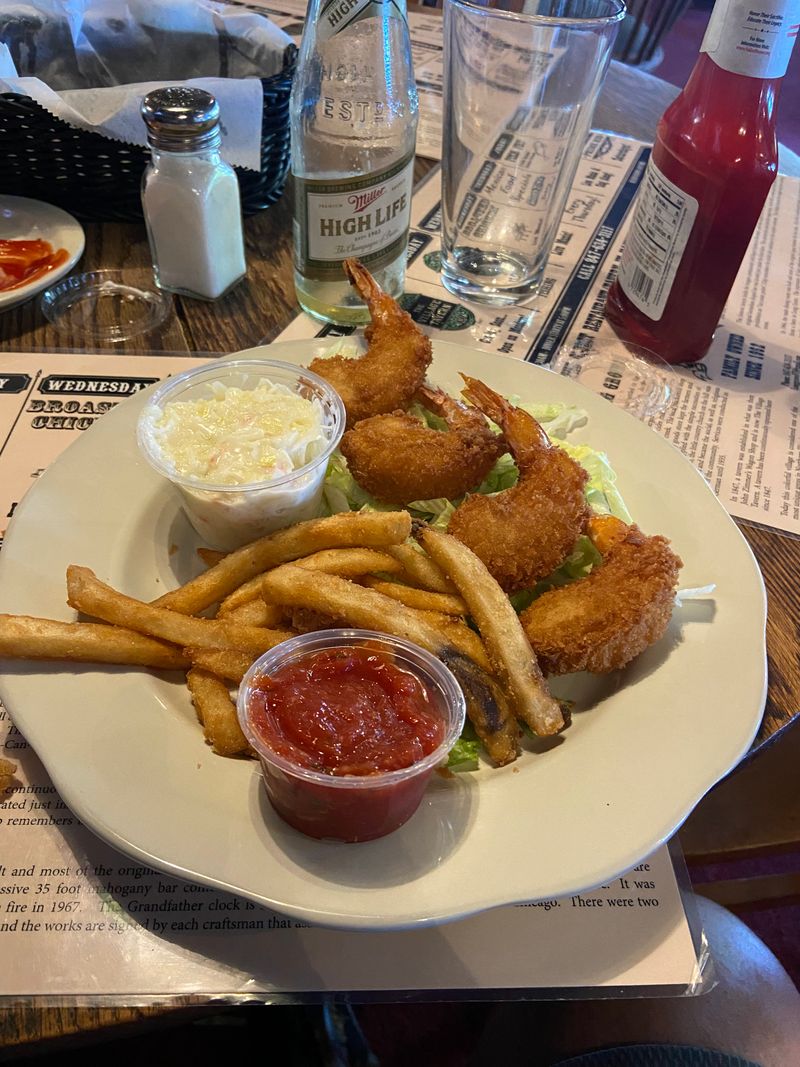
Cheese curds arrive crisp and squeaky, followed by pot roast and mashed potatoes that taste like they have seen winters come and go without needing reinterpretation.
Founded in 1847, the tavern stands as one of Illinois’s oldest continuously operating public houses, a lineage visible in framed photographs and the practiced steadiness of service.
The menu leans comforting and familiar, rewarding diners who understand restraint rather than novelty.
Locals arrive early to secure tables near the fireplace, especially when the weather cools and the room gathers itself inward.
A weekday lunch stretches generously here, often turning into a slow walk through Long Grove’s cobblestone streets afterward.
2. Dell Rhea’s Chicken Basket, Willowbrook
The neon chicken glowing along historic Route 66 announces itself from a distance, while the unmistakable aroma of hot oil and seasoning confirms that you made the correct turn.
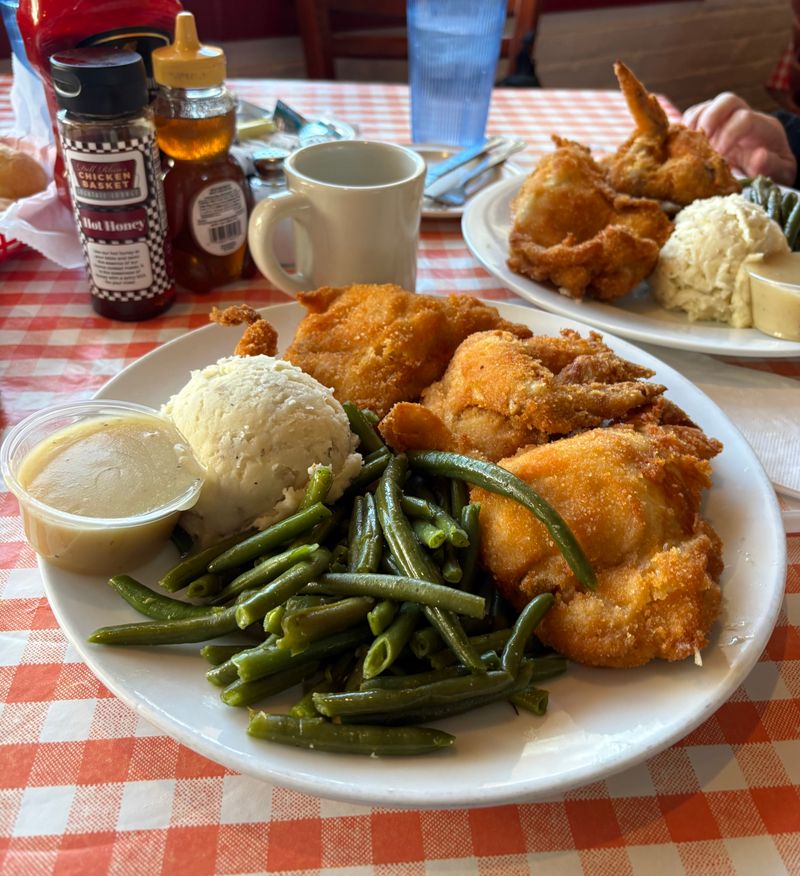
At 645 Joliet Rd, Willowbrook, IL, crackling golden fried chicken arrives alongside flaky biscuits and finely cut coleslaw that balances richness with crunch.
Chrome accents and curved booths place the dining room squarely between roadside nostalgia and ongoing family ritual.
Opened in the 1940s, the restaurant survives not as a novelty but as a genuine Mother Road institution whose recipe remains carefully guarded and generously applied.
Honey for the biscuits and gravy for dipping feel less like extras and more like expected accompaniments.
Weekend crowds swell quickly, compressing the room with conversation and appetite.
A midafternoon visit allows you to linger beneath the sign, absorb the Route 66 memorabilia, and let the experience unfold without hurry.
3. White Fence Farm, Romeoville
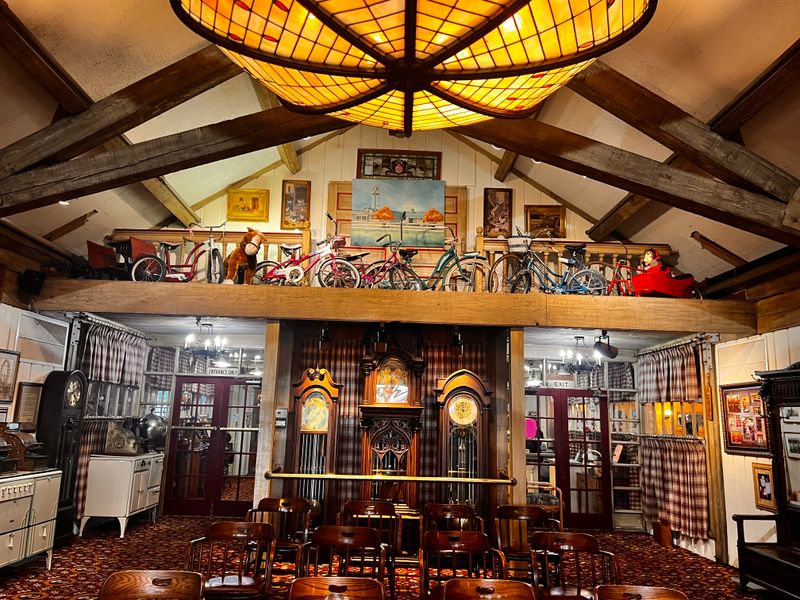
Dining rooms unfold one after another at White Fence Farm, creating the feeling of moving through a museum of American family gatherings rather than a single restaurant space.
At 1376 Joliet Rd, Romeoville, IL, fried chicken shatters audibly with each bite, immediately followed by an abundant procession of sides including cottage cheese, kidney bean salad, pickled beets, and corn fritters dusted with powdered sugar.
Seating spans multiple rooms filled with Americana displays that feel accumulated rather than curated.
Open since the 1920s, the farm has hosted generations celebrating milestones both large and small, embedding memory into the rhythm of service.
Ordering the half chicken is customary, but pacing becomes essential once the fritters begin arriving hot and without pause.
Lines move efficiently despite their length, though a late lunch softens both noise and tempo.
Before leaving, many visitors wander the on-site grounds in season, allowing nostalgia to complete the meal.
4. ROX City Grill At Hotel Baker, St. Charles

Soft river light filters through tall windows and settles across polished wood, marble, and cushioned booths, creating an atmosphere that feels quietly formal without stiffness, as if elegance here has learned how to relax.
At 100 W Main St, St. Charles, IL, the dining room opens directly onto the Fox River, letting moving water, slow boats, and evening reflections participate in the meal without ever demanding attention.
Plates arrive composed and restrained, with seared scallops meeting silky risotto, steaks landing precisely cooked, and cocktails like Manhattans feeling not optional but inevitable in the setting.
Hotel Baker opened in 1928, and its Spanish Revival details still whisper Jazz Age confidence through arched lines, warm tones, and a sense of proportion that modern dining rooms often forget.
Service moves with an unspoken understanding of pacing, allowing conversations to stretch naturally rather than being steered by courses.
Reservations become especially valuable on nights when nearby concerts at the Arcada Theatre release a crowd hungry for something calm and grounding afterward.
Catching sunset here before dessert, when the river darkens and the room draws inward, makes the entire experience feel gently complete.
5. Maldaner’s, Springfield
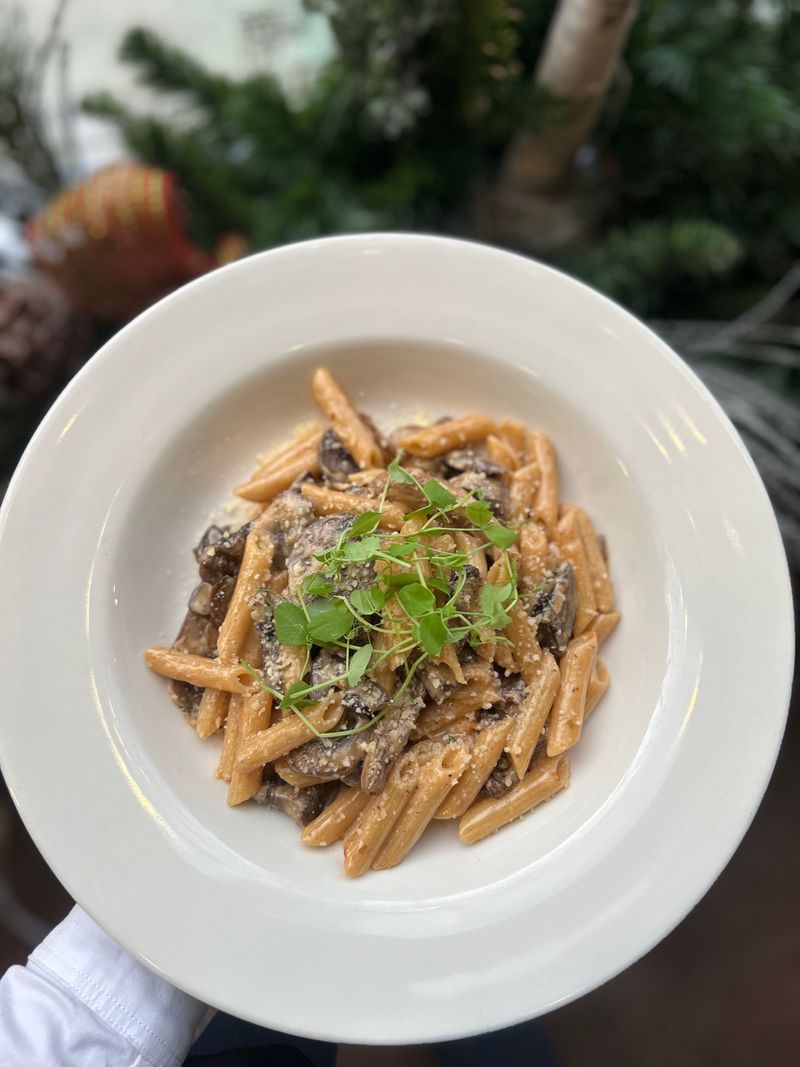
An old mirror reflects lamplight and quiet motion inside a dining room that carries its late nineteenth-century grace without leaning on nostalgia or ceremony.
At 222 S 6th St, Springfield, IL, linen-draped tables and warm wood frame a menu rooted in seasonal Midwestern cooking that values clarity, balance, and restraint.
Roasted chicken arrives lacquered with pan jus, beet salads balance earthiness with acidity, and desserts like lemon tart finish with brightness rather than excess.
Founded in 1884, Maldaner’s holds its place as one of the city’s oldest restaurants, quietly adapting through decades without abandoning its core identity.
A rooftop green garden supplies herbs directly to the kitchen, tightening the connection between plate and place.
Legislative days can fill the room quickly, making reservations more than a courtesy and turning lunch into a shared civic ritual.
You leave feeling carefully tended rather than dazzled, which suits a capital city that runs on steadiness, conversation, and long afternoons.
6. Cozy Dog Drive In, Springfield
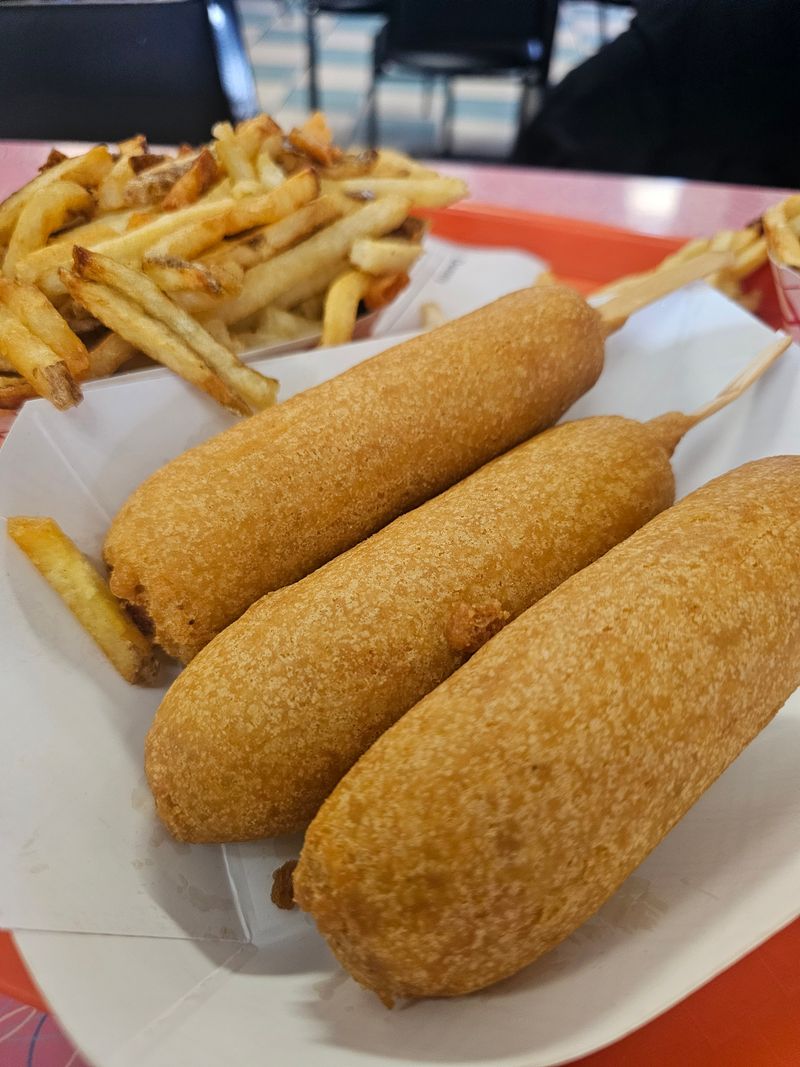
The first sensation is always crunch, arriving immediately and decisively before nostalgia has time to catch up.
At 2935 S 6th St, Springfield, IL, batter-fried hot dogs on sticks are cooked to order and handed over fast, their crisp shells giving way to simple, satisfying interiors.
The dining room faces walls packed with memorabilia that read like a cheerful scrapbook rather than a curated exhibit.
Since the 1940s, this Route 66 original has remained a working roadside stop rather than a preserved relic, serving locals and travelers with the same directness.
Ordering a Cozy Dog with mustard only, curly fries, and a thick shake feels less like a choice and more like participation in tradition.
Window seats offer a view of travelers photographing the sign, swapping road stories, and consulting maps.
Lunch moves quickly here, but it leaves behind a lightness that somehow shortens the afternoon.
7. Ariston Cafe, Litchfield
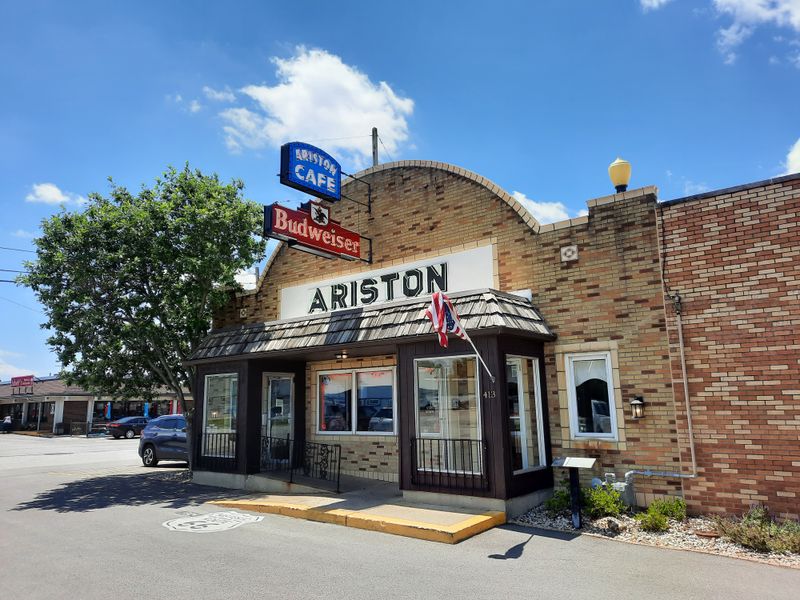
Polished booths, tiled floors, and the low murmur of steady conversation welcome you into a dining room that feels practiced in the art of endurance rather than performance, as if time itself has learned how to behave once inside.
At 413 Old Rte 66, Litchfield, IL, the menu spans Greek-American comfort in generous arcs, from gyro platters and chicken fried steak to house-made pies that slice cleanly and land with reassuring weight.
Coffee tastes actively fresh rather than habitual, refilled with attention instead of automation, while service follows a neighborly rhythm that resists hurry.
Opened in 1924 and relocated here in 1935, the cafe stands among the oldest operating stops on Route 66, carrying its history in structure rather than signage.
Updates over the years respect the bones of the space, allowing vinyl, tile, and lighting to age honestly instead of being disguised.
The pork tenderloin sandwich rewards commitment, especially when paired with a wedge of coconut cream pie that understands restraint as well as indulgence.
You leave feeling restored in a specific, road-tested way, as though the highway and the cafe reached a quiet agreement.
8. Weezy’s Route Sixty Six Bar and Grill, Hamel
A neon glow settles over the building as evening approaches, signaling not spectacle but continuity, the kind that accumulates naturally at a reliable roadside stop.
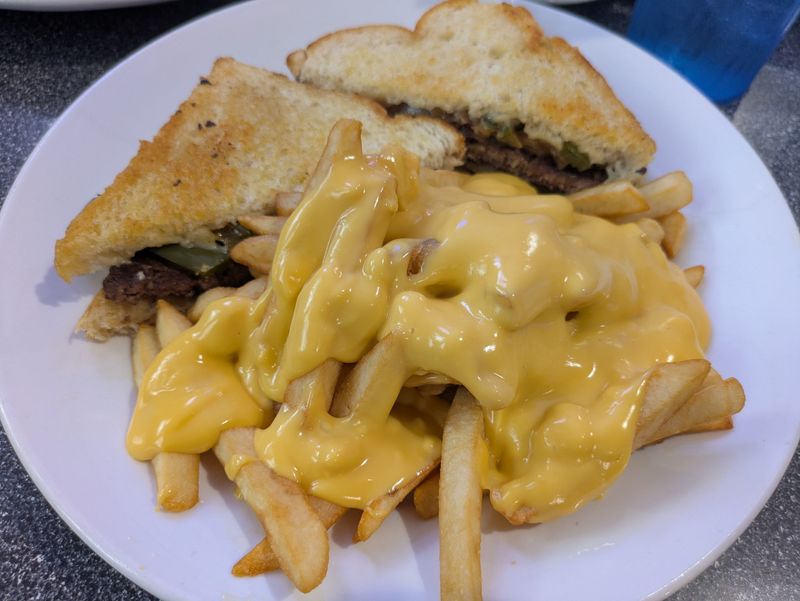
At 108 S Old U.S. 66, Hamel, IL, burgers arrive smashed with lacy, caramelized edges, fries stay hot and assertive, and milkshakes win over even reluctant skeptics.
The room balances bar energy with diner ease, creating a space where solo meals feel as welcome as group tables.
Route 66 lineage runs through the building without being staged, present in the layout, pacing, and unforced memorabilia.
Patty melts benefit from extra grilled onions, their sweetness settling into the bread with practiced ease.
Service stays quick and direct, making it an ideal midpoint between longer stretches of driving.
Conversations drift easily across tables while the jukebox leans classic, keeping time like a quiet metronome.
9. Pere Marquette Lodge Restaurant, Grafton
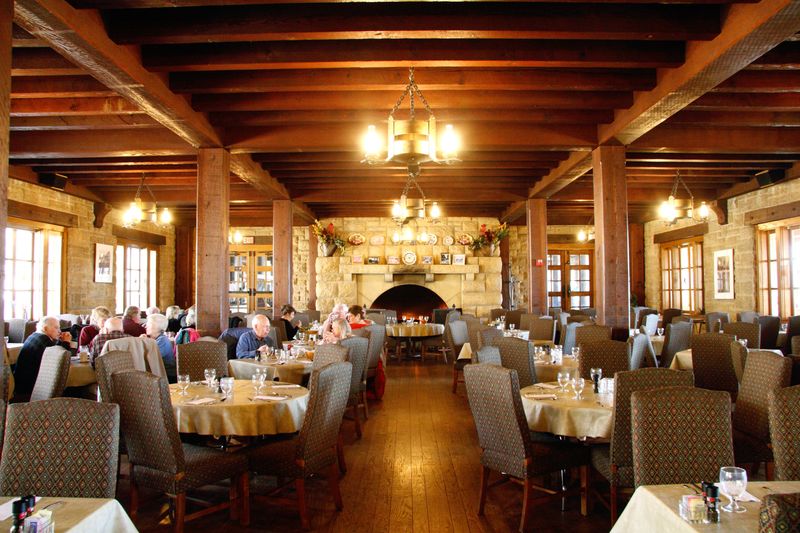
Massive timber trusses and a broad stone hearth give the dining room cathedral-like warmth, encouraging voices to soften and movements to slow without instruction.
At 13653 Lodge Blvd, Grafton, IL, morning light carries the smell of coffee and river air, while plates lean hearty with trout when available, fried chicken, and biscuits that break cleanly rather than crumble.
The lodge, built by the Civilian Conservation Corps in the 1930s, anchors the surrounding state park with a sense of deliberate permanence.
Meals here pair naturally with hiking, bluff overlooks, and long drives along the river road.
Fall visits bring color to the bluffs and extra depth to the experience, especially when soup precedes pie.
Cold days reward seats near the fireplace, where lingering feels earned rather than indulgent.
Weekends book quickly, but parking remains easy, letting the visit unfold without logistical friction.
10. Abigail’s Dining Room At The Ruebel Hotel, Grafton
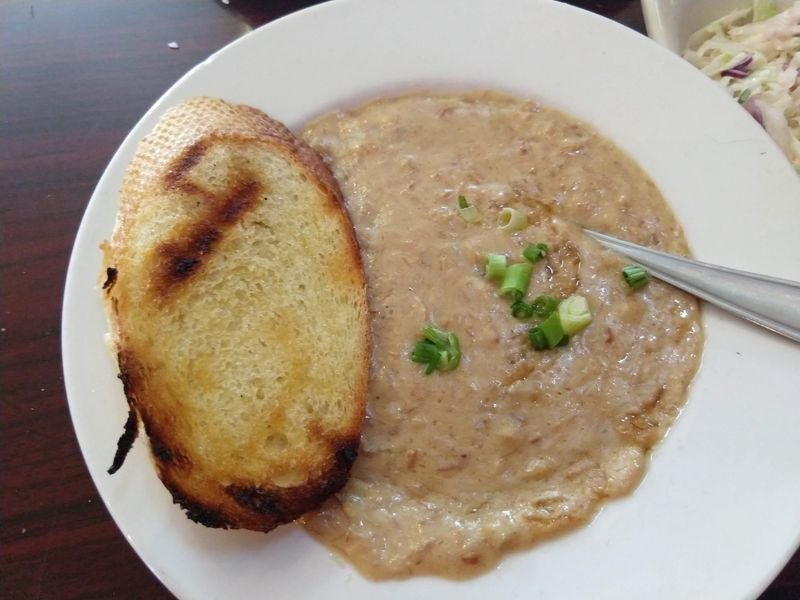
The dining room at Abigail’s Dining Room at the Ruebel Hotel unfolds with a quiet, river-town elegance, where white tablecloths, tall windows, and softened historic details create a space that encourages slower conversation rather than spectacle or culinary theatrics.
Seasonal Midwestern ingredients guide the menu, resulting in composed plates like seared duck breast, thoughtfully balanced salads, and restrained sauces that aim for clarity and depth rather than visual excess or trend-driven flourishes.
Because the Ruebel Hotel traces its roots back to the nineteenth century and was rebuilt after a devastating fire in 1912, the room carries history gently, allowing its past to support the experience instead of overwhelming it.
Service here moves with calm confidence, offering guidance on daily specials and wine pairings without intrusion, which makes the room feel suitable for anniversaries, reflective dinners, or evenings when attention belongs to the table.
Timing dinner near sunset adds a subtle ritual, as guests often arrive after a walk along the Great River Road, carrying the quiet of the river directly into the dining room atmosphere.
Portions favor balance over abundance, encouraging diners to linger through multiple courses rather than rushing toward fullness, which suits the room’s unhurried cadence and mature sensibility.
The overall experience feels intentionally composed, offering refinement without stiffness, and leaving diners with the sense that the room has been waiting patiently for exactly this kind of evening.
11. Wittmond Hotel Restaurant, Brussels
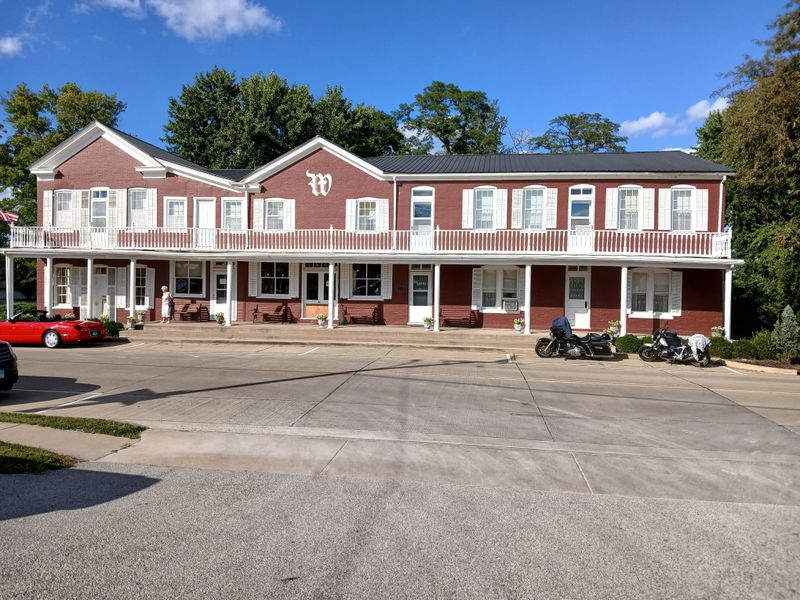
Reaching Wittmond Hotel Restaurant requires a small act of commitment, often involving a ferry crossing, and that gentle separation from routine seems to prepare guests for a dining room where time slows and familiarity replaces performance.
Inside, shelves of old-time goods, wooden floors, and closely set tables give the room the feeling of a communal dining hall, where conversations drift easily between tables and nobody seems rushed to leave.
The menu centers on family-style Midwestern comfort, with fried chicken, roast beef, real mashed potatoes, and gravy served generously, reinforcing the idea that abundance here means hospitality rather than indulgence.
Dating back to the mid-nineteenth century, the Wittmond Hotel has long anchored this Illinois River town, and the restaurant continues that role by feeding locals and travelers with the same steady rhythms.
Meals unfold without ceremony, as dishes arrive when ready, refills appear quietly, and dessert seems to materialize as a natural conclusion rather than a calculated upsell.
Seasonal hours and ferry schedules require a bit of planning, but that effort becomes part of the pleasure, sharpening awareness that this is a place reached intentionally, not accidentally.
By the time coffee is poured and plates are cleared, the room has done its work, leaving guests feeling briefly folded into the life of a small river town that measures time differently.