
10 Historic North Carolina Train Stations That Deserve A Second Look
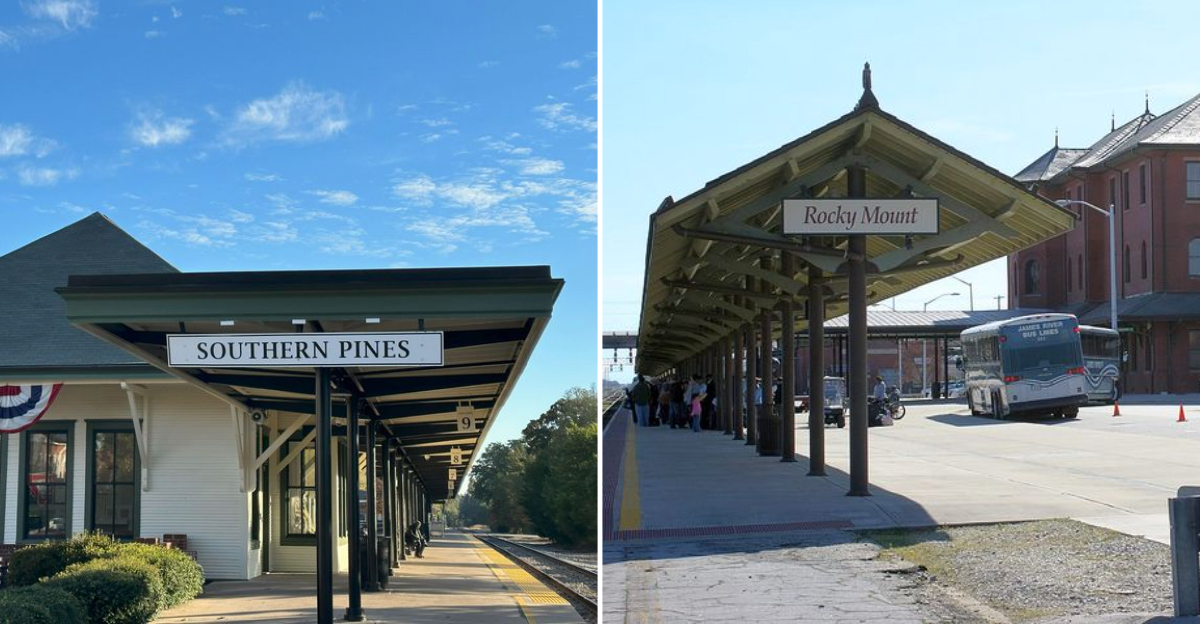
North Carolina’s historic train stations are more than brick and mortar. They’re storytellers of a bygone era. Once humming with passengers and luggage, these hubs linked communities and carried the rhythm of daily life across the state.
Majestic city terminals stand alongside quaint small-town depots, each one offering a window into the Tar Heel State’s rich rail heritage and the journeys that helped shape it.
1. J. Douglas Galyon Depot: Greensboro’s Majestic Gateway
Standing proudly since 1927, this magnificent Beaux-Arts masterpiece welcomes visitors with its imposing classical facade and soaring main hall. The spectacular mural depicting the Southern Railway network offers a glimpse into North Carolina’s transportation history.
After extensive restoration work, the depot reopened in 2005 as a modern intermodal transportation center. Today, passengers can catch Amtrak’s Carolinian, Piedmont, or Crescent trains while admiring the building’s preserved architectural details.
2. Salisbury Station: Spanish Mission Splendor
Architect Frank P. Milburn created this 1908 Spanish Mission Revival gem that stretches impressively across two city blocks. The striking red tile roof and elegant arcades make it one of North Carolina’s most ambitious railway buildings.
Film crews frequently choose this photogenic station for its cinematic appeal and wonderfully preserved waiting room.
Lovingly restored in the 1990s, the station continues serving rail passengers while maintaining its distinctive architectural character.
3. High Point Station: The Railway Canyon
Built in 1907, this Richardsonian Romanesque beauty holds a unique secret. A 1930s engineering marvel created a below-grade “trench” for the tracks, giving High Point Station its distinctive urban canyon atmosphere.
The meticulously restored depot welcomes passengers from an elevated position above the sunken platforms.
Rail enthusiasts particularly appreciate this unusual configuration that offers dramatic views of arriving and departing trains from Amtrak’s Carolinian, Piedmont, and Crescent routes.
4. Helen P. Gay Station: Rocky Mount’s Three-Story Landmark
Rising impressively since 1893, this Romanesque Revival station underwent significant expansions between 1911 and 1916. The three-story brick building commands attention in downtown Rocky Mount with its distinctive architectural presence.
A comprehensive restoration from 1997 to 2000 breathed new life into this transportation hub. Now named for civil rights activist Helen P. Gay, the station efficiently combines rail and bus service under one historic roof at 101 Hammond Street.
5. Selma Union Depot: Junction Jewel
Railway enthusiasts flock to this compact 1924 Mission-style depot situated at a strategic junction where multiple rail lines converge. A.M. Griffin’s design created a distinctive circular arrangement with tracks surrounding the station building.
Restored in 2002, the depot now houses fascinating railway exhibits alongside its functioning Amtrak facilities.
Located at 500 E Railroad Street, this station serves as a stop for the Carolinian and Palmetto routes while celebrating Selma’s important place in North Carolina’s transportation network.
6. Fayetteville Station: Dutch Colonial Surprise
Unlike most commercial railway buildings of its era, this 1911 depot features an unexpected Dutch Colonial Revival style.
The distinctive gambrel roof creates an immediately recognizable silhouette that earned the station a place on the National Register of Historic Places. The handsome long platform canopy provides shelter while highlighting the station’s architectural uniqueness.
Located at 472 Hay Street, the building continues serving Amtrak passengers while standing as a testament to early 20th-century architectural diversity.
7. Southern Pines Station: Small-Town Charm
Originally built as a wooden depot in 1898, this station received a stylish modernization in 1948. A careful 2004 restoration project preserved that mid-century aesthetic while ensuring the building meets contemporary needs.
Nestled in the heart of downtown at 235 NW Broad Street, the station doubles as a welcome center for visitors.
Train enthusiasts appreciate the classic Seaboard Air Line Railway charm that permeates this active Amtrak stop, now serving passengers on the Silver Star route.
8. Hamlet Depot & Museums: Queen Anne Railroad Royalty
Crowned with distinctive turrets, this 1900 Queen Anne style passenger depot stands as architectural royalty among North Carolina’s railway buildings.
In a remarkable preservation effort, the entire structure was moved intact about 210 feet across the tracks to a new foundation near its original site in 2003.
Now functioning as both an active Amtrak stop and museum campus, the depot celebrates the rich heritage of the Seaboard Air Line Railway.
Rail enthusiasts consider Hamlet a must-visit destination, with the ornate depot at 2 Main Street serving as the crown jewel.
9. Bryson City Depot: Gateway to Mountain Adventures
Nestled among the stunning Smoky Mountains, this 1895 depot launched countless adventures after its thoughtful restoration.
The station now serves as headquarters for the Great Smoky Mountains Railroad’s popular excursion trains through breathtaking mountain scenery. Surrounded by Bryson City’s walkable downtown district, the depot anchors a delightful railway experience.
Train enthusiasts should make time for the adjacent Smoky Mountain Trains Museum at 100 Greenlee Street to complete their visit to this charming mountain railway hub.
10. Barber Junction Depot: Museum Centerpiece
Rescued and relocated to the sprawling Spencer Shops complex, this authentic 1898 Southern Railway depot now welcomes visitors to North Carolina’s premier transportation museum. The crisp restoration showcases the typical small-town station architecture of the late 19th century.
Functioning as the museum’s visitor center and train-ride boarding point, the depot launches guests on a journey through railway history.
The surrounding 57-acre museum campus features an impressive roundhouse, numerous historic railcars, and regular train rides around the property.