
12 Historic Places In California That Have Seen Generations Come And Go
California loves a good story, and boy, does it have some amazing ones to tell.
Long before the state became famous for movie stars, tech billionaires, and traffic jams that deserve their own documentary, people were building communities, chasing gold, crossing new frontiers, and leaving pieces of their lives behind.
Some historic places have survived it all, quietly watching generations come and go while the world around them kept changing. That’s what makes them so fascinating.
You can walk through an old building, wander a centuries-old settlement, or stand in a place where people lived, worked, celebrated, struggled, and dreamed long before any of us showed up.
And honestly, that beats reading a dusty paragraph on a plaque.
These California landmarks still have the kind of stories that make history feel less like homework and a whole lot more like gossip from someone who was actually there.
1. Old Town San Diego State Historic Park
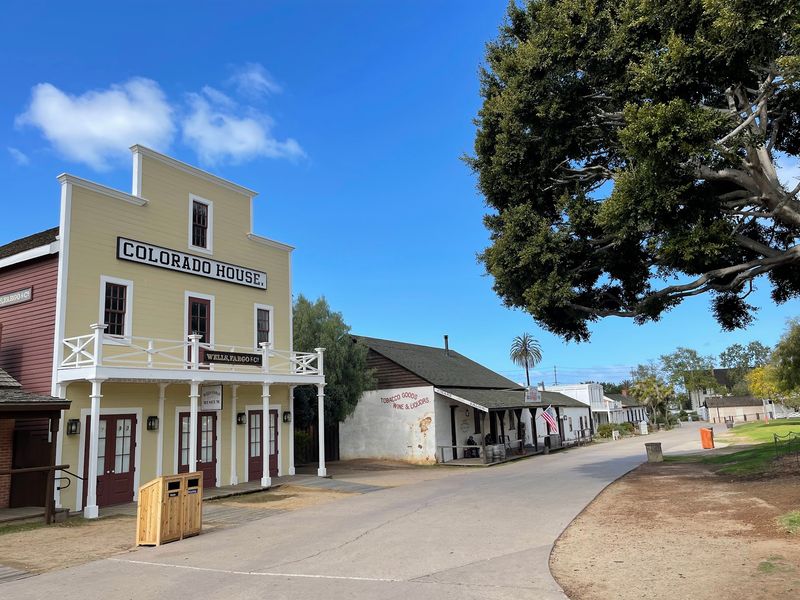
Picture a plaza where the ground itself has been hosting gatherings for two centuries. Old Town San Diego started as the first Euro-American settlement in the city, taking shape in the 1820s when the region belonged to newly independent Mexico.
You will find it at 4002 Wallace St, San Diego, CA 92110, tucked between busy freeways yet somehow completely calm. The state park was created in 1968 to protect what remained, and the effort paid off beautifully.
Five original adobe buildings still stand here, joined by careful reproductions that fill in the gaps. A working blacksmith shop clangs away, museums explain the shift from Mexican pueblo to American town, and small shops sell candles, pottery, and sweets.
The food situation deserves a mention. Tortillas get pressed by hand nearby, and the smell of warm corn drifts across the plaza like a friendly invitation.
Music often floats through the afternoon air, and demonstrations show how daily chores actually worked back then. Come hungry, stay curious, and give yourself two hours minimum.
Few places let you eat lunch on the exact spot where a city first learned to breathe.
2. Mission San Juan Capistrano
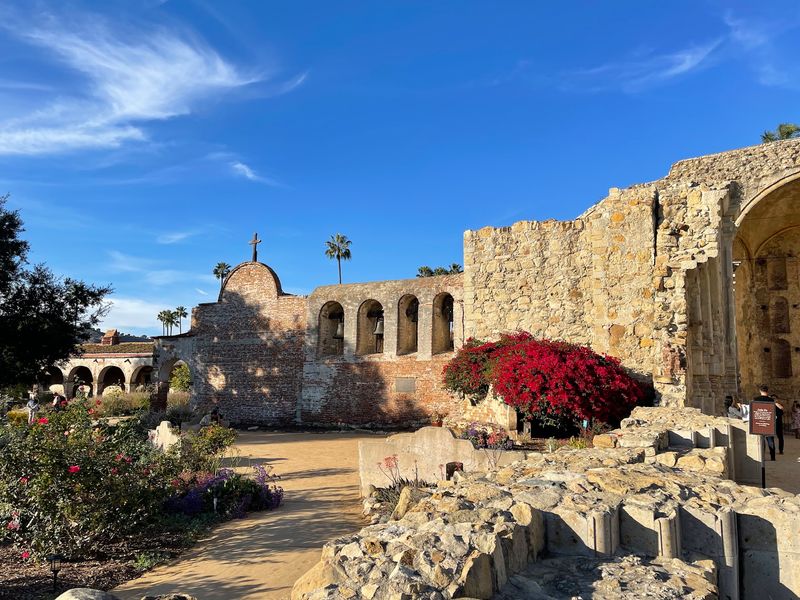
Swallows have a favorite California address, and it is this one. Founded in 1776, this mission was the seventh of the twenty-one Spanish missions built across California, and it wears its age with real elegance.
The grounds sit at 26801 Old Mission Rd, San Juan Capistrano, CA 92675, wrapped in bougainvillea and the sound of trickling fountains. Arched corridors frame photo after photo without even trying.
The Great Stone Church stands partly in ruins after an 1812 earthquake, and honestly, the remaining arches feel more moving than a perfect building would. Nearby sits Serra Chapel, the oldest structure in California still used today.
Gardens invite slow walking. Koi drift in the ponds, roses climb the walls, and benches appear right when your legs start hinting.
Stories here belong to Spanish settlers and to the Acjachemen people whose lives changed profoundly when the mission arrived. Exhibits handle that history thoughtfully.
Spring brings the legendary return of the swallows, celebrated every March with a whole festival.
Bring a hat, arrive early, and let the bells set your pace for the morning.
3. La Purísima Mission State Historic Park
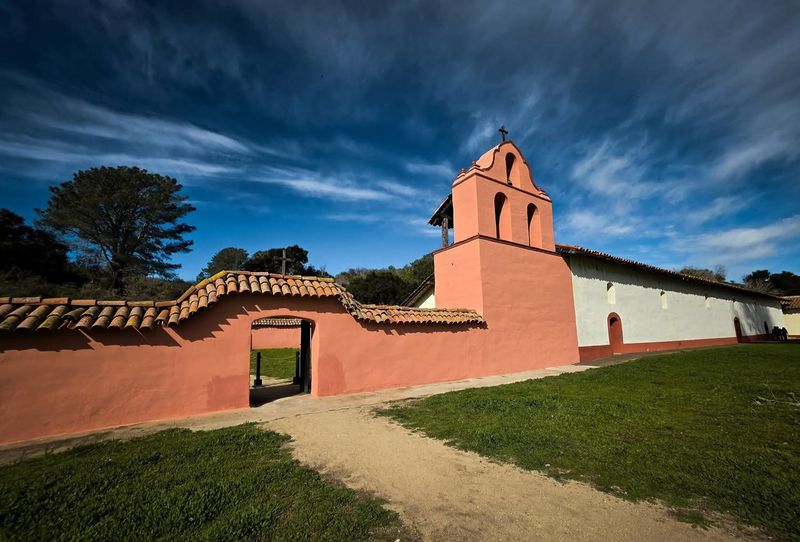
Restoration nerds, this one is your happy place. La Purísima is widely considered the most completely restored mission in California, and standing inside it feels startlingly close to the 1820s.
The park spreads across gentle hills at 2295 Purísima Rd, Lompoc, CA 93436, surrounded by open country rather than city streets. That isolation is part of the magic.
Father Presidente Fermin de Lasuén founded the mission in 1787 as the eleventh of twenty-one Franciscan missions in Alta California. After the 1812 earthquake caused major damage, it was relocated and re-established in 1813.
Then came 1934, when the Civilian Conservation Corps began rebuilding. Ten original buildings returned to life, fully furnished, including the church, workshops, living quarters, and a blacksmith shop.
Look for the reconstructed water system, a clever bit of engineering that carried water where it needed to go. The gardens showcase one of the finest collections of early California plants anywhere.
Self-guided tours work well, though living history days add candle dipping, weaving, and bread baking.
Pack a picnic and plan to linger, because this place rewards unhurried visitors.
4. El Presidio De Santa Barbara State Historic Park
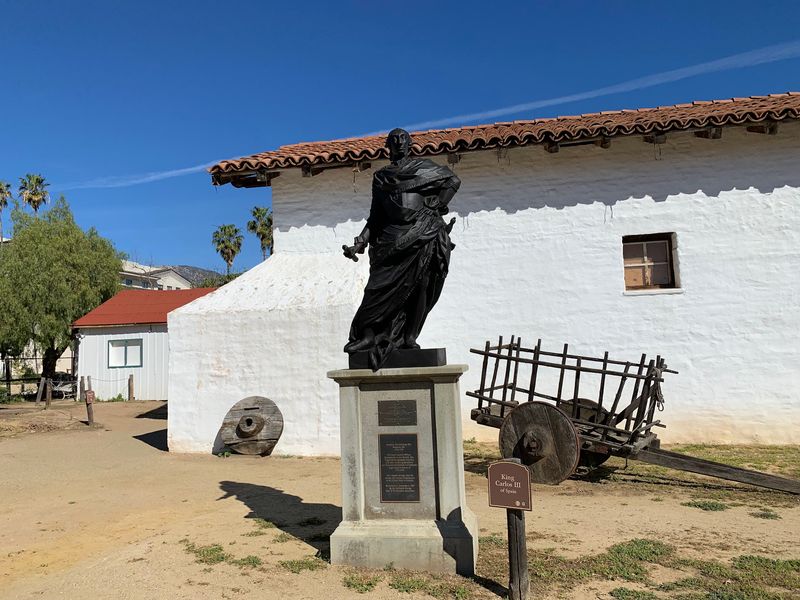
Downtown Santa Barbara hides a fortress in plain sight. El Presidio preserves the last Spanish fortress built in Alta California, founded on April 21, 1782, and it sits right among shops and cafes.
The entrance is at 123 E Canon Perdido St, Santa Barbara, CA 93101, an easy stroll from State Street. You could walk past it while holding an ice cream cone and never guess its age.
Originally the presidio worked as a cultural, social, and administrative hub for settlers, while also guarding the Santa Barbara Mission and the coastline.
Two original buildings survive, including El Cuartel, the oldest building in Santa Barbara and the second oldest in the entire state. Others have been carefully reconstructed around the quadrangle.
Local Chumash workers built much of the original fort, and the park tells that story alongside Chinese and Japanese community histories that later shaped the same neighborhood.
Rooms are small, thick-walled, and surprisingly cool on warm afternoons. Interpretive panels explain daily routines without drowning you in dates.
Consider it the ideal history stop between a pastry run and the beach.
5. Hearst Castle
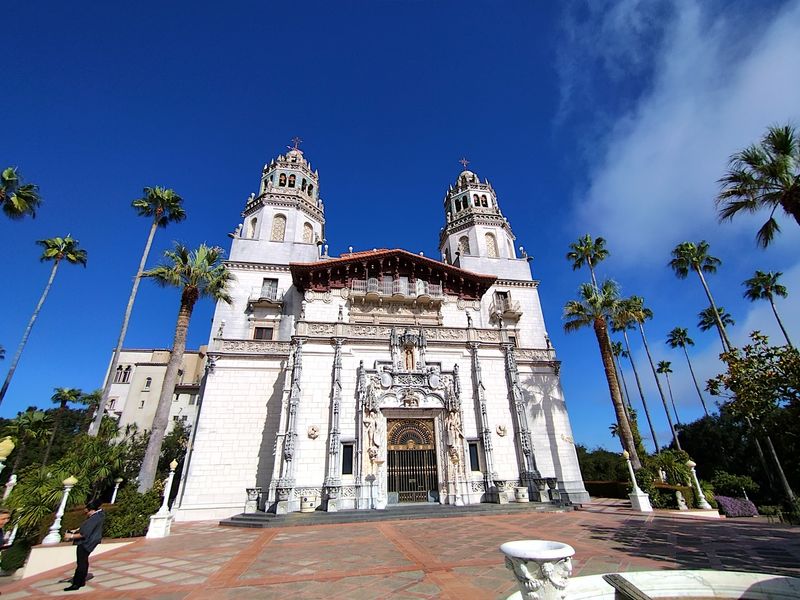
Some houses whisper. This one announces itself with towers, terraces, and a marble pool that looks borrowed from ancient Rome.
Hearst Castle crowns a hilltop at 750 Hearst Castle Rd, San Simeon, CA 93452, with the Pacific stretching out below like a painted backdrop. The drive up alone earns its own photo stop.
Newspaper publisher William Randolph Hearst dreamed it up, and architect Julia Morgan brought it to life across three decades, from 1919 into the late 1940s. Her fingerprints are everywhere, from staircases to ceiling beams.
The numbers are wild: 165 rooms plus 127 acres of gardens, terraces, pools, and walkways. Art fills nearly every corner, gathered from across the globe and spanning ancient to modern.
Guided tours cover different sections, so pick your favorite theme before booking. Tickets sell out on weekends, especially in summer.
Wandering the halls, you can almost hear the murmur of famous guests admiring the tapestries and the tilework.
Wear shoes made for stairs, because there are many.
Ambition built this hilltop, and generations keep climbing it just to see how far imagination can stretch.
6. Monterey State Historic Park
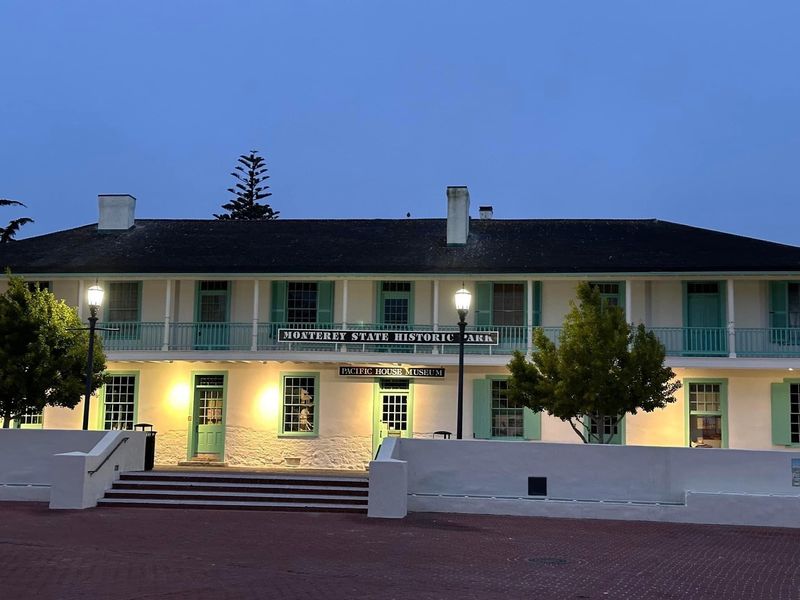
California once ran its government from a small coastal town, and the paperwork proves it. Monterey served as the state’s first capital, and the park protects the buildings where that chapter unfolded.
Headquarters sit at 20 Custom House Plaza, Monterey, CA 93940, steps from the harbor where salt air still hits you square in the face.
Rather than one site, this is a scattered collection of historic buildings and gardens across downtown. The Path of History walking route stitches them together, threading through Spanish, Mexican, and early American eras.
The Custom House holds the title of California’s oldest public building, and the American flag was first raised there in 1846. Colton Hall, up the hill, is where the state’s first constitution was drafted.
Adobe walls, plank floors, and period furnishings make the past feel oddly ordinary, which is exactly the charm.
Between stops you get seafood shops, sourdough, and clam chowder served in bread bowls. History and lunch, nicely combined.
Grab a route map at the plaza and follow the numbered markers.
Monterey proves a capital city does not need skyscrapers to matter.
7. Fort Point National Historic Site
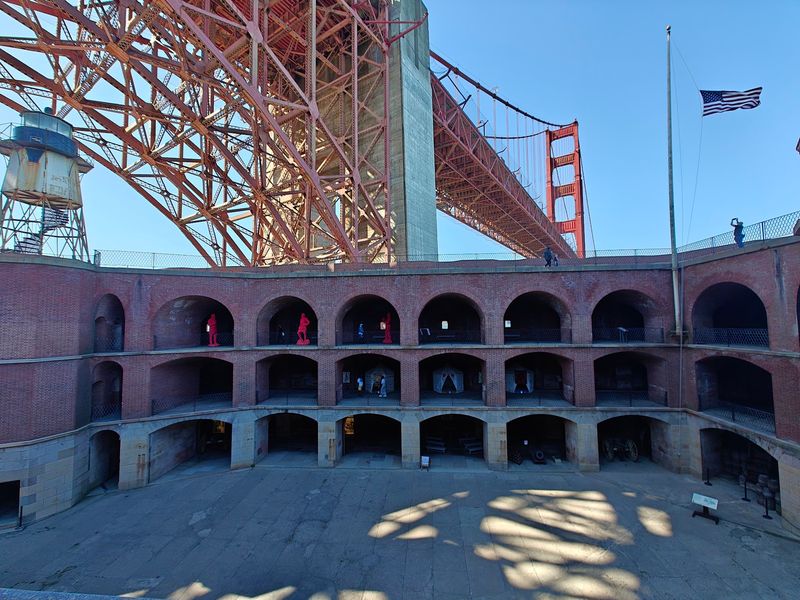
Here is a fun bit of engineering trivia: the Golden Gate Bridge arches over a brick fort on purpose. Fort Point was considered too historically valuable to remove, so the bridge design curved gracefully above it.
The site sits at Building 999, Marine Dr, San Francisco, CA 94129, right at the water’s edge where the fog rolls in like clockwork.
Builders worked from 1853 to 1861, during the Gold Rush years, aiming to guard San Francisco Bay from naval attack.
It became the only Third System fort constructed on the West Coast.
Walls run seven feet thick, and three tiers of casemates create long arched hallways that echo wonderfully. Despite all that muscle, the fort never fired a shot in battle.
Spiral granite staircases lead to rooftop views of the bridge towers overhead and Alcatraz across the water.
Bring a jacket.
The wind here treats every season like winter, and locals are not exaggerating about that.
Photographers love the framing, since few angles beat orange steel seen through a brick archway.
Sturdy, silent, and still standing, it guards a view instead of a coastline now.
8. John Muir National Historic Site
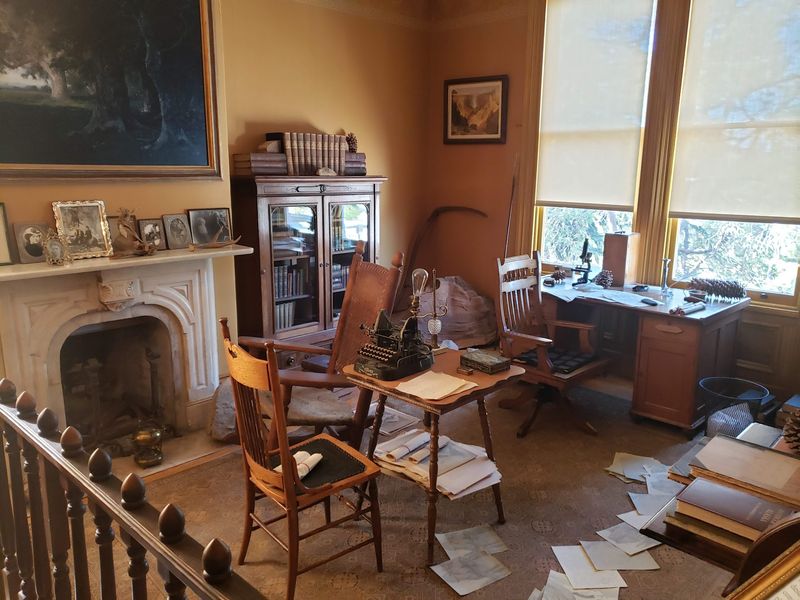
Imagine writing the words that helped save Yosemite while sitting upstairs in a tall Victorian house. That actually happened in Martinez.
The site protects the home at 4202 Alhambra Ave, Martinez, CA 94553, where the naturalist lived from 1890 until 1914. Fruit orchards still surround the property, heavy with pears and cherries in season.
Inside, the room known as the scribble den is the highlight. Papers, a desk, and a fireplace mark the spot where many influential books and articles took shape.
His advocacy helped establish national parks including Yosemite and Sequoia. He also co-founded the Sierra Club and served as its first president, a role that shaped conservation for generations.
The house itself is worth the visit even without the legacy: seventeen rooms, ornate woodwork, and a bell tower you can peek into.
Outdoors, short trails wind past the orchards toward Mount Wanda, named for one of his daughters. Wildflowers appear in spring.
Admission is free, and parking is simple, which makes an afternoon here refreshingly easy.
One quiet desk in one quiet town changed how a whole country sees wilderness.
9. Sutter’s Fort State Historic Park
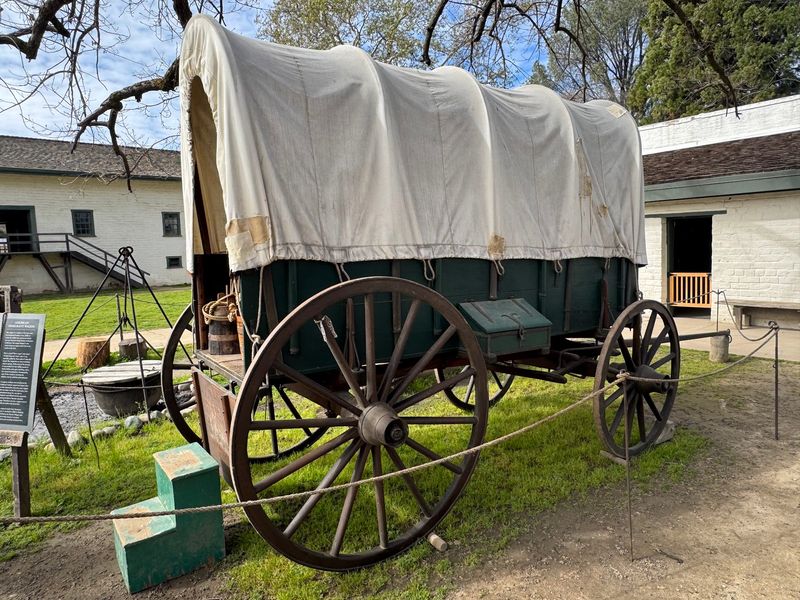
Sacramento grew up around a trading post, and the post is still there behind thick white walls. Sutter’s Fort was established in 1839 by a Swiss immigrant as the center of a vast Mexican land grant called New Helvetia.
You will find it at 2701 L St, Sacramento, CA 95816, surrounded now by leafy midtown streets and coffee shops.
The fort became the first non-Indigenous community in California’s Central Valley and a crucial stopover for pioneers heading west. It also played a part in the rescue of the Donner Party.
Only the two-story central adobe building, raised between 1841 and 1843, survives from the original structure. Everything else is careful reconstruction, which honestly works well.
Exhibit rooms show a blacksmith shop, living quarters, a bakery, and cooper’s tools. Living history days fill the courtyard with the smell of woodsmoke and fresh bread.
News of gold found at Sutter’s Mill in 1848 was announced within these walls, and California was never the same again.
Shade, benches, and picnic space make it an easy stop.
Walls this modest rarely launch a stampede, yet these did.
10. Marshall Gold Discovery State Historic Park
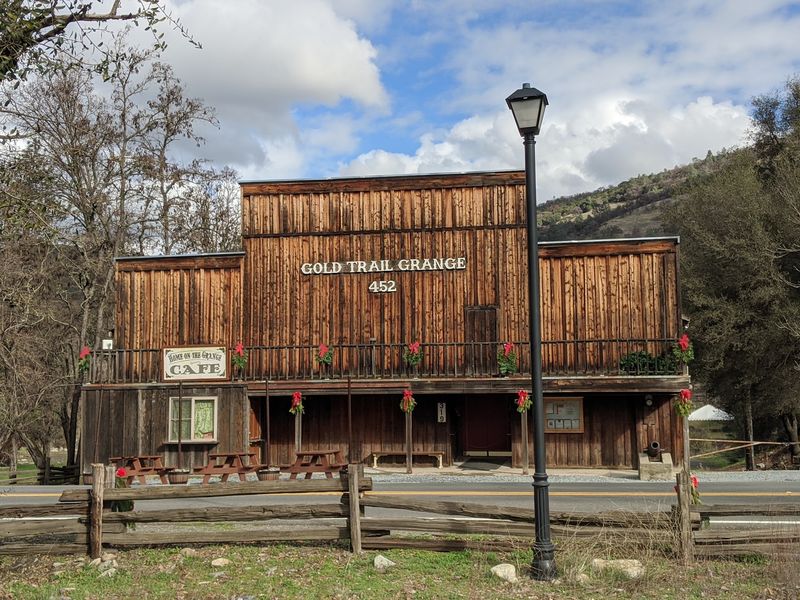
January 24, 1848 was a Monday that rearranged a continent. Flecks of gold spotted in the American River at Sutter’s Mill set off the California Gold Rush.
That riverbank is preserved at 310 Back St, Coloma, CA 95613, where oaks lean over the water and the current still runs clear and cold.
The park covers much of the historic town of Coloma, which ballooned to roughly 10,000 people almost overnight. Over twenty historic buildings remain, including a schoolhouse, a mining exhibit, and old storefronts.
A full replica of Sutter’s Mill turns beside the river, complete with its wooden waterwheel. Nearby, a tall monument points toward the discovery site.
Gold panning lessons are the real crowd pleaser. You crouch in the shallows, swirl a pan, and suddenly understand why so many people abandoned everything for this.
Living history events bring the 1850s forward with period trades and demonstrations. Shaded picnic tables sit close to the parking areas.
Bring water shoes and sunscreen, since summer here gets genuinely toasty.
One glint in a river channel, and California’s future arrived without asking permission.
11. Columbia State Historic Park
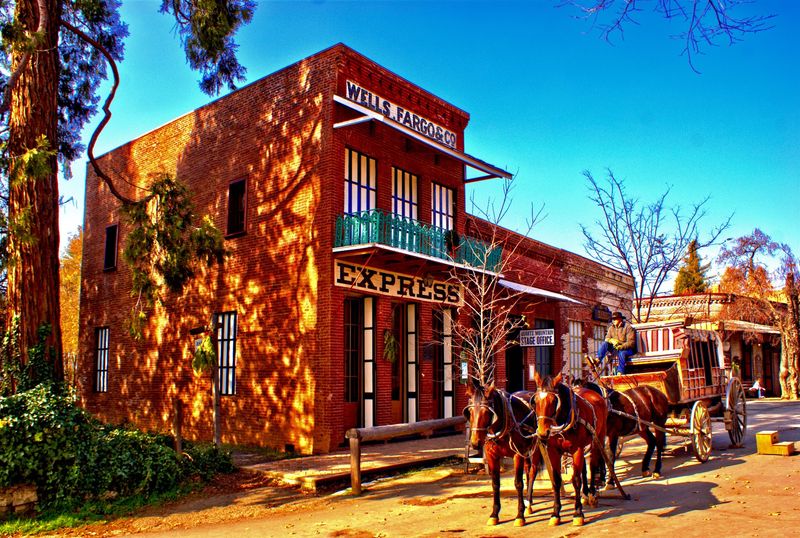
Cars stay out, horses come in, and the whole street sounds like 1855. Columbia is a preserved Gold Rush town that operates as a living museum rather than a static display.
Main Street runs through 22708 Broadway St, Columbia, CA 95310, deep in the Sierra foothills where pines meet brick facades.
Gold found by the Hildreth party in 1850 launched the town, and at its peak Columbia ranked as California’s second largest city. Remarkable, considering how peaceful it feels today.
The park holds the largest single collection of surviving Gold Rush era brick buildings, many well past 150 years old. Costumed interpreters work in period shops, running trades rather than simply narrating them.
You can ride an authentic stagecoach, watch candy being pulled by hand, or sip a cold sarsaparilla soda at an old-fashioned counter. The soda comes in a heavy glass, which somehow improves it.
A working blacksmith, a print shop, and a schoolhouse round out the experience. Weekends bring extra demonstrations.
Boardwalks creak underfoot in the most satisfying way.
Columbia does not reenact the past so much as keep it politely employed.
12. Fort Ross State Historic Park
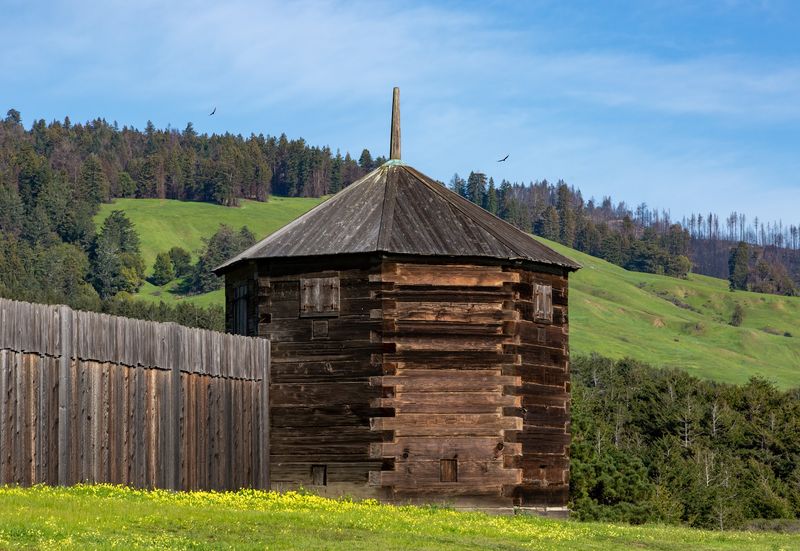
Russia once had an address on the Sonoma coast, and the stockade proves it. Fort Ross operated as a Russian-American Company settlement from 1812 to 1841, the southernmost Russian outpost in North America.
The park perches above the ocean at 19005 Coast Highway 1, Jenner, CA 95450, with bluff trails and crashing surf just beyond the walls.
Its purpose was agricultural, supplying food to Russian colonies in Alaska. California’s first windmills turned here, and shipbuilding happened on the cove below.
Inside reconstructed stockade walls you will find a Russian Orthodox chapel, barracks, officials’ quarters, and two blockhouses with sweeping views. The Rotchev house, renovated in 1836, is believed to be one of the only surviving original structures from the Russian period.
What sticks with visitors is the mix of people: Russians, Alaska Natives, and local Native communities living and working side by side.
The chapel’s wooden interior is small, simple, and quietly beautiful. Sound carries oddly well inside.
Fog often rolls through by afternoon, so mornings offer clearer photos.