
Illinois Caverns Hides an Underground Stream You Wade Through, Not Float
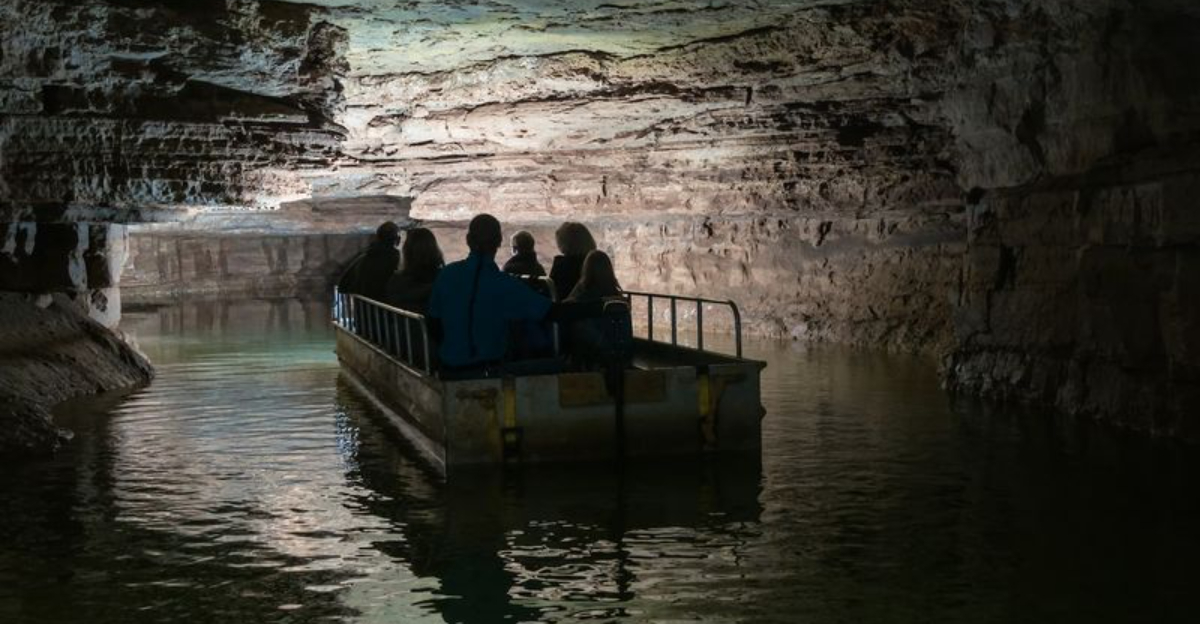
Somewhere beneath the cornfields and limestone bluffs of southwestern Illinois, a cave stream flows through miles of dark, muddy passages that most people have never heard of. A popular claim suggests you can actually float through an underground river in Illinois, which sounds like the adventure of a lifetime.
The reality is more nuanced, and honestly, still pretty remarkable. Illinois Caverns State Natural Area near Waterloo offers a genuine wild-cave experience with a real underground stream, but the floating part belongs to a different story entirely.
The Float Claim Does Not Describe Illinois Caverns
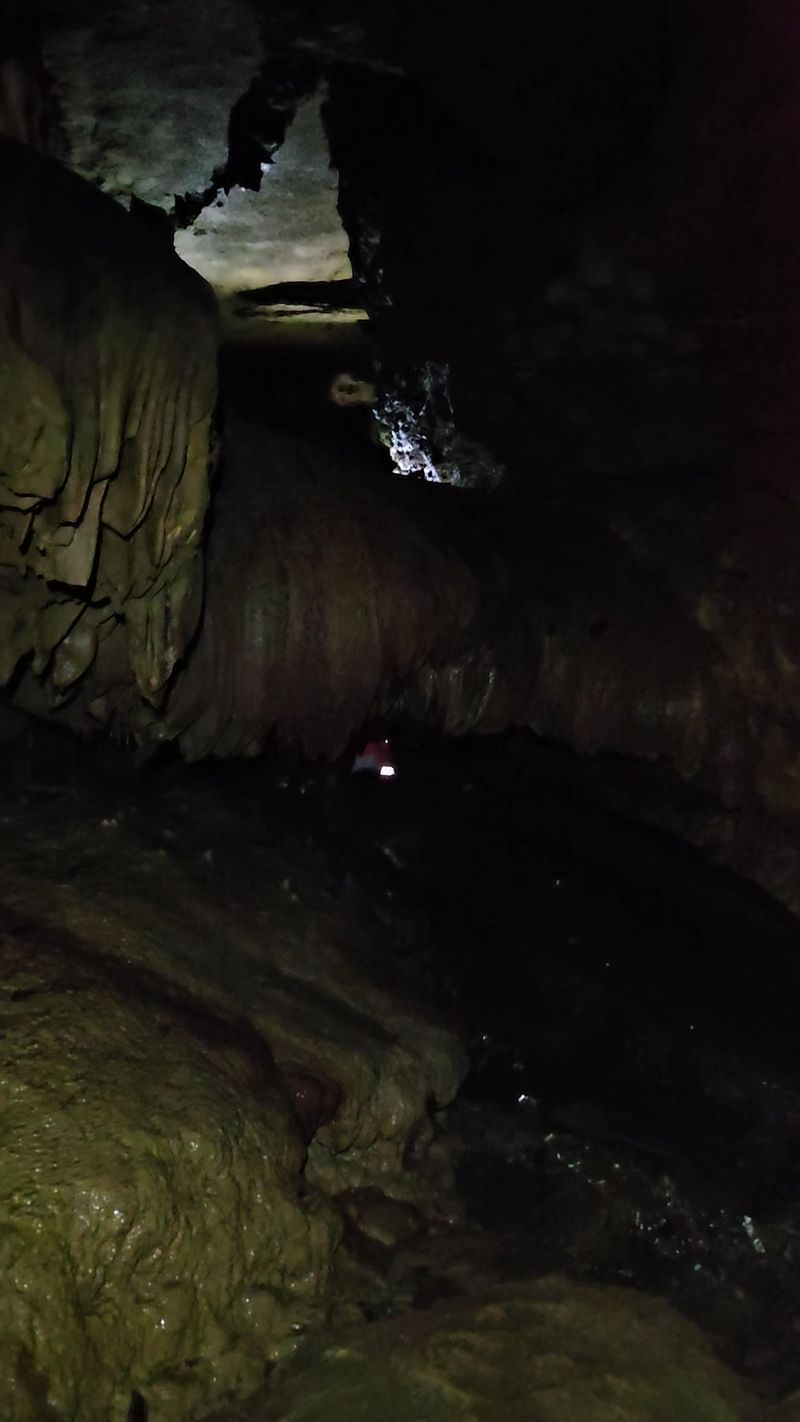
Somewhere in the karst sinkhole plain of Monroe County, about 35 miles south of St. Louis, a genuine underground stream flows through one of the Midwest’s most unusual natural spaces. Illinois Caverns State Natural Area near Waterloo contains approximately six miles of mapped cave passage and a real underground stream that visitors actually encounter during exploration.
That much of the viral claim is accurate. The rest needs some straightening out.
The premise that you can “float through” an underground river in Illinois does not match what the Illinois Department of Natural Resources documents about this site. Official state sources describe Illinois Caverns as an unimproved, wild cave where visitors explore on foot and wade through portions of the stream.
There is no public boat ride, no tubing operation, and no standardized floating route offered at the cave.
Whether Illinois Caverns was the original inspiration for the float claim cannot be established from the available evidence. The cave fits the general description of an Illinois site with an underground water feature, so it may have been confused with commercial cave attractions elsewhere.
What the state’s own materials make clear is that the experience here is self-equipped, unpaved, and decidedly wet in a boots-and-headlamp way rather than a sit-back-and-drift way.
IDNR’s visitor guidance consistently frames Illinois Caverns as a wild-caving destination, not a developed attraction. The cave sits within Illinois’ southwestern karst landscape, a region shaped by dissolving limestone that produces sinkholes, springs, and cave systems.
That geology is real, the stream is real, and the adventure is real. It just looks very different from floating on a tour boat.
What the Cave Stream Actually Is
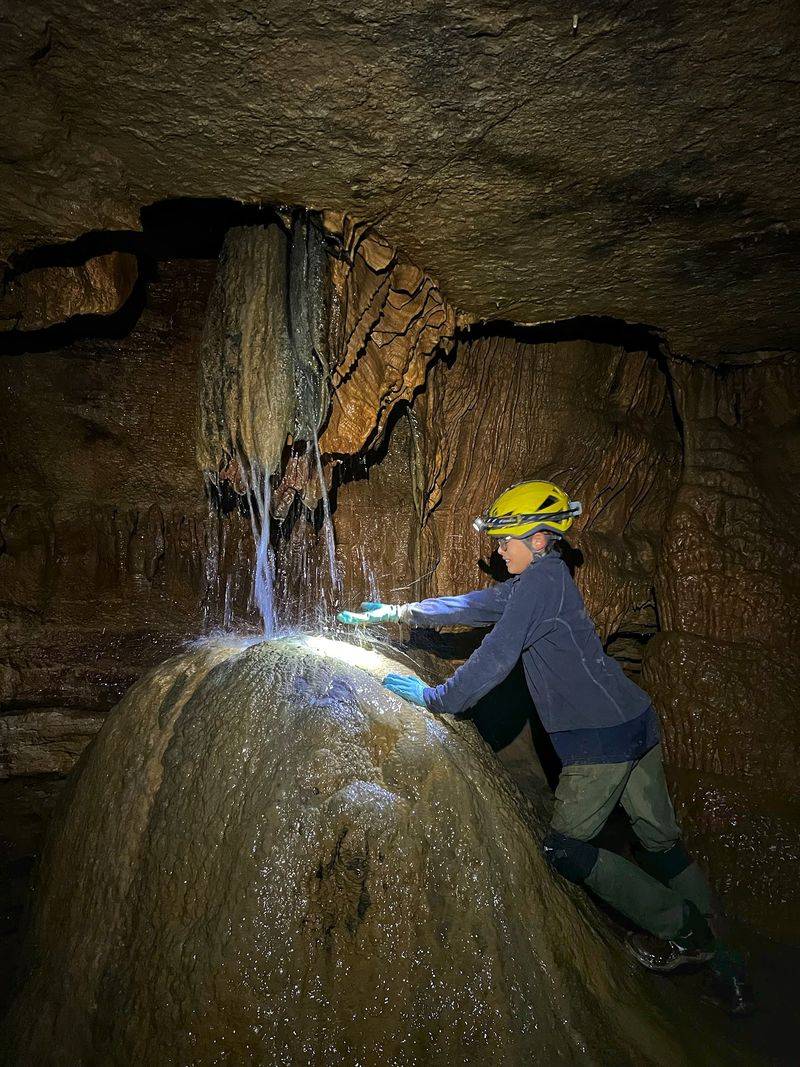
The underground stream at Illinois Caverns is not a broad, navigable river. IDNR describes it as a stream that meanders through the cave, which is a more accurate picture than the word “river” tends to conjure.
Cave streams in Illinois karst systems are typically small flows running along the bottoms of passages, not wide channels with enough depth and width to carry boats or recreational floaters.
A University of Illinois field guide to the cave describes the stream as an active part of the cave’s ecosystem. That means it supports living organisms adapted to the dark, cold environment, including cave-dwelling invertebrates, salamanders, and other species that depend on the water.
The stream is not a decorative feature or a stagnant pool. It flows, it fluctuates with rainfall and groundwater, and it is biologically significant.
What the sources do not establish is a fixed water depth, a measurable current speed, or a documented float distance. Those numbers do not exist in the official record because the stream varies with conditions and was never designed or measured as a recreational waterway.
Illinois State Geological Survey material on cave systems describes cave streams in the state’s karst landscape as small flows at passage bottoms, reinforcing the picture of a wading-scale feature rather than a river.
Calling it an “underground river” is a shorthand that can stick because it captures the drama of finding flowing water hundreds of feet underground. Used carefully, with the understanding that it describes a cave stream rather than a navigable channel, the phrase is not entirely wrong.
Used to imply a boat ride or a float trip, it misleads. The stream is one of the most interesting things about Illinois Caverns, but its appeal is ecological and geological, not nautical.
Visitors Walk and Wade Instead of Floating
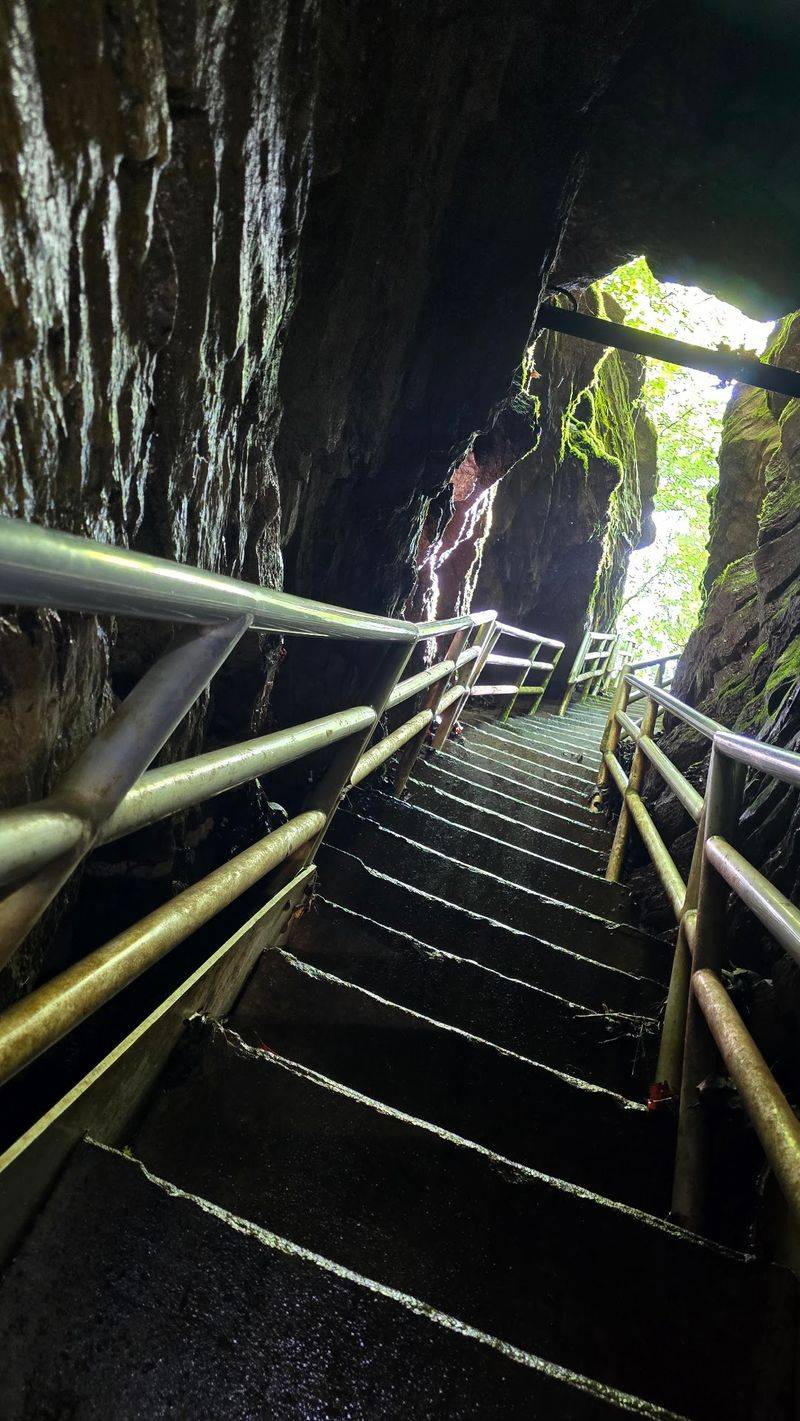
A camp program that uses Illinois Caverns describes the outing plainly as an “underground creek walk,” and that phrase does more accurate work than almost anything else written about the cave. Visitors walk through the passages on their own two feet, and where the stream crosses the path, they wade.
That is the documented experience.
Nothing about that description is a disappointment once you understand what the cave actually offers. Navigating six miles of unmapped, unlit, muddy limestone passages while a real stream runs past your ankles is a genuinely unusual adventure.
IDNR’s spotlight on the site makes clear that this is wild caving, not a staffed attraction with paved paths, handrails, and ambient lighting. There are no guides waiting at the entrance, no gift shop at the exit, and no numbered formations with plaques.
That distinction matters when planning a visit. A developed show cave, like the commercial attractions in Indiana, provides boats, lighting rigs, trained guides, and controlled passenger operations.
Illinois Caverns provides a permit and a cave entrance. The experience inside depends entirely on the group’s preparation, equipment, and judgment.
Readers who arrive expecting to hop into a tube or rent a kayak will find none of that. The state’s cave permit does not mention flotation devices because they are not part of the experience.
Bringing improvised floats into an unimproved cave with elevated bacterial levels in the water and unpredictable stream conditions is not a safe or sanctioned activity. The honest version of this adventure is a wet, cold, muddy walk through one of Illinois’ most striking underground environments, and that version is worth doing.
Prepare for an Unimproved Cave
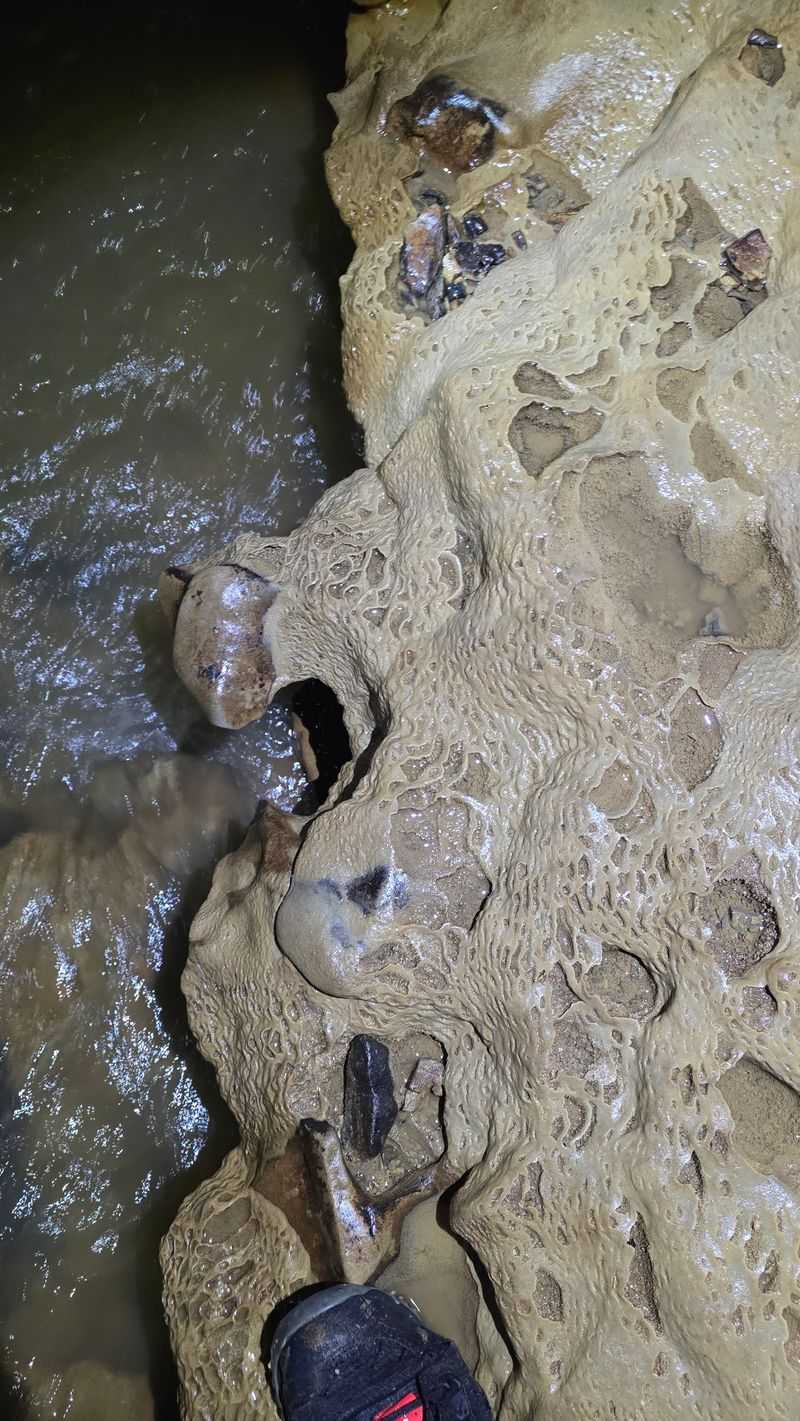
Getting into Illinois Caverns requires more preparation than showing up and buying a ticket. IDNR requires visitors to obtain a permit before entering, and the permit comes with conditions that are worth reading carefully before the trip.
The cave is not self-service in a casual sense. It is self-equipped in a serious one.
One of those conditions is group size. A minimum of four people must enter together, and solo exploration is not permitted.
That rule exists for practical safety reasons: if one person is injured or becomes disoriented underground, the others can seek help without leaving anyone completely alone. In an unimproved cave with no cell service, no staff, and no emergency lighting, group travel is a real safeguard, not a bureaucratic formality.
Equipment requirements are equally specific. The state’s cave permit requires a hard hat, protective clothing, sturdy footwear, and at least three independent light sources per person.
Three lights per person sounds like a lot until you consider what losing your only flashlight means in a cave where zero ambient light exists. A dead battery or a dropped headlamp in total darkness, with a stream underfoot and no trail markers, is exactly the scenario redundant lighting prevents.
Protective clothing and footwear are not suggestions. The cave is muddy, the stream is cold, and the passages are tight in places.
Clothing that can get soaked and muddy without becoming dangerous, paired with boots or sturdy closed-toe shoes that grip wet rock, makes the difference between a manageable adventure and a miserable one. None of this equipment is provided at the cave.
Visitors bring everything they need, which means planning ahead is not optional. Arriving underprepared at the entrance does not result in a modified experience.
It results in turning around.
Cold Water and Changing Conditions Matter
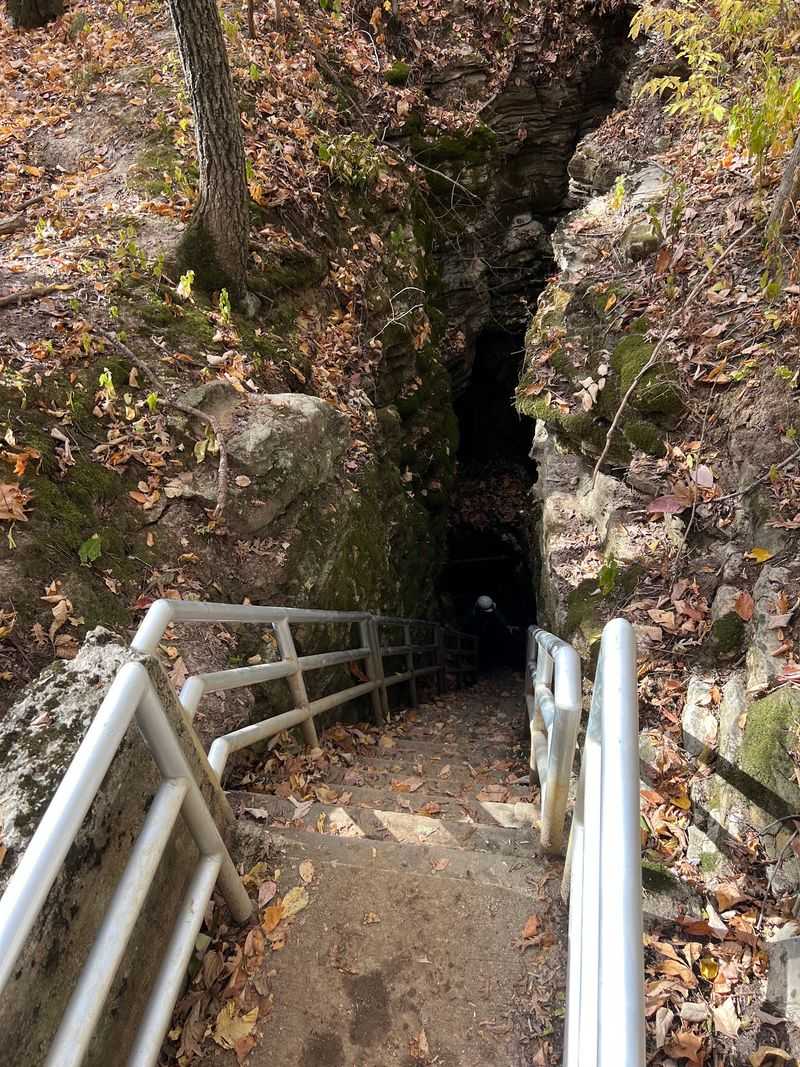
Year-round, the temperature inside Illinois Caverns holds at about 58 degrees Fahrenheit. IDNR notes this stable temperature as a defining feature of the cave environment, and it has a direct effect on how visitors should dress.
Fifty-eight degrees feels cool when you are moving but becomes genuinely cold when you stop, when your clothes are wet, or when you are standing in stream water that has been sitting underground at that temperature all year.
Wet and muddy are the two words that appear consistently in descriptions of the Illinois Caverns experience. IDNR’s visitor guidance states directly that visitors should expect to get wet and muddy, which is practical information rather than a warning to be taken lightly.
Clothing suited to cold water immersion, boots with ankle support and grip on wet rock, and a complete change of dry clothes waiting in the car are all sensible preparations. The dry clothes at the car are not required by the state, but anyone who has walked out of a wet cave in mid-October will confirm their value.
Conditions inside the cave are not fixed. The stream responds to rainfall and groundwater levels above the surface, which means a cave that was passable last weekend may be flooded or partially blocked after a heavy rain.
The cave permit reserves the right for officials to close the cave when conditions are unsafe, and that authority is exercised. Visitors who drive to Monroe County without checking current conditions first risk finding a locked gate.
Checking the IDNR closures page before traveling takes less than two minutes and saves a wasted trip.
Redundant lighting becomes especially important in variable conditions. If stream levels are higher than usual or a passage is more difficult to navigate, having three reliable light sources per person is the difference between adapting safely and being caught in the dark.
The Actual Underground Boat Rides Are in Indiana
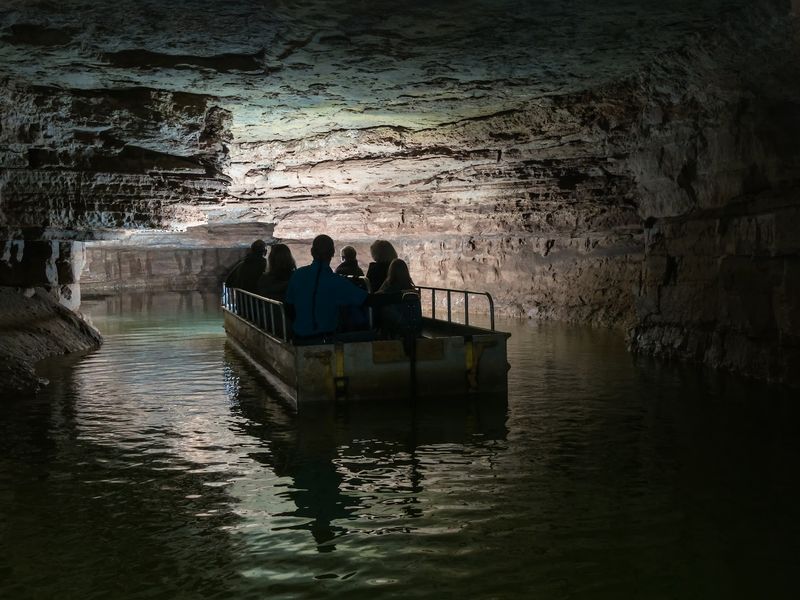
The genuine underground boat rides associated with the float premise are not in Illinois. Three separate attractions in southern Indiana advertise guided underground water tours, and each one offers something meaningfully different from the wild-cave experience at Illinois Caverns.
Indiana Caverns includes a 25-minute boat ride on an underground river as part of a roughly one-hour guided tour. The operation is commercial, staffed, and designed for general visitors who want a narrated underground experience without specialized caving equipment.
The boat ride is the centerpiece of the tour, not an incidental feature.
Twin Caves at Spring Mill State Park in Indiana offers a different kind of boat passage, where small boats are pulled through a stream passage running about 500 to 600 feet. The setting is a state park, but the boat tour is a managed, staffed attraction within it.
Visitors do not need to bring their own equipment or form a minimum group of four.
Bluespring Caverns in Indiana advertises an electric-boat tour on what it calls the longest navigable underground river in America. The one-hour tour runs on a developed waterway inside the cave, with electric boats, guides, and lighting provided.
That is the kind of experience the phrase “float through an underground river” most accurately describes.
None of these attractions are in Illinois. Mentioning them here is not an endorsement or a comparison of quality.
The point is geographic clarity: if someone read a story about floating through an underground river and assumed it described an Illinois cave, the most likely explanation is that the story was actually about one of these Indiana operations, or that the two regions were conflated somewhere along the way. Illinois Caverns and Indiana’s boat-tour caves are separate places offering genuinely different experiences.
Verify Access and Protect the Cave
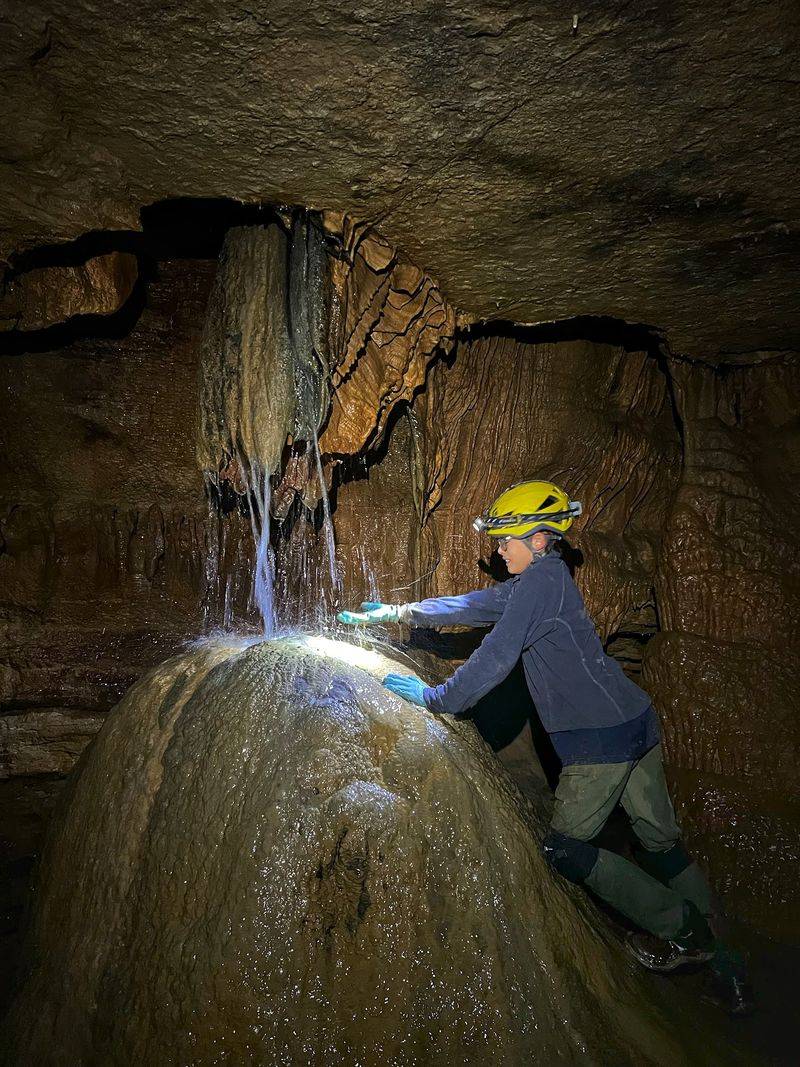
Before making the drive to Monroe County, a few minutes of verification can prevent a frustrating trip. Illinois Caverns is open seasonally, generally Thursday through Sunday from mid-April through late October, but those hours can change.
Obtaining a permit, confirming group size, and checking IDNR’s current closures page before traveling are the three steps most likely to prevent an unnecessary trip.
Once inside, the state’s cave permit carries a specific health warning: do not drink the cave water, and do not expose open wounds to it. Elevated bacterial coliform levels make the stream unsuitable for drinking or recreational contact beyond the wading that comes with navigating the passages.
That is not a precaution to skip based on how clear the water looks.
The cave’s living residents also deserve consideration. IDNR notes that Illinois Caverns supports cave-adapted invertebrates, salamanders, and bats.
Touching formations, disturbing wildlife, or contaminating the stream can cause lasting damage to an ecosystem that took thousands of years to develop. Staying on existing paths, keeping hands off the walls, and moving quietly near roosting bats are all habits that preserve the cave for the next group.
Taken together, Illinois Caverns offers something genuinely rare in the Midwest: an underground stream you can stand next to, listen to, and wade through, in a cave that has not been smoothed over for tourist convenience. That is not a float trip, but for the right group with the right gear and a properly pulled permit, it is one of the more honest wilderness experiences Illinois has to offer.