
13 Illinois Hikes Under Five Miles With Gorgeous Views
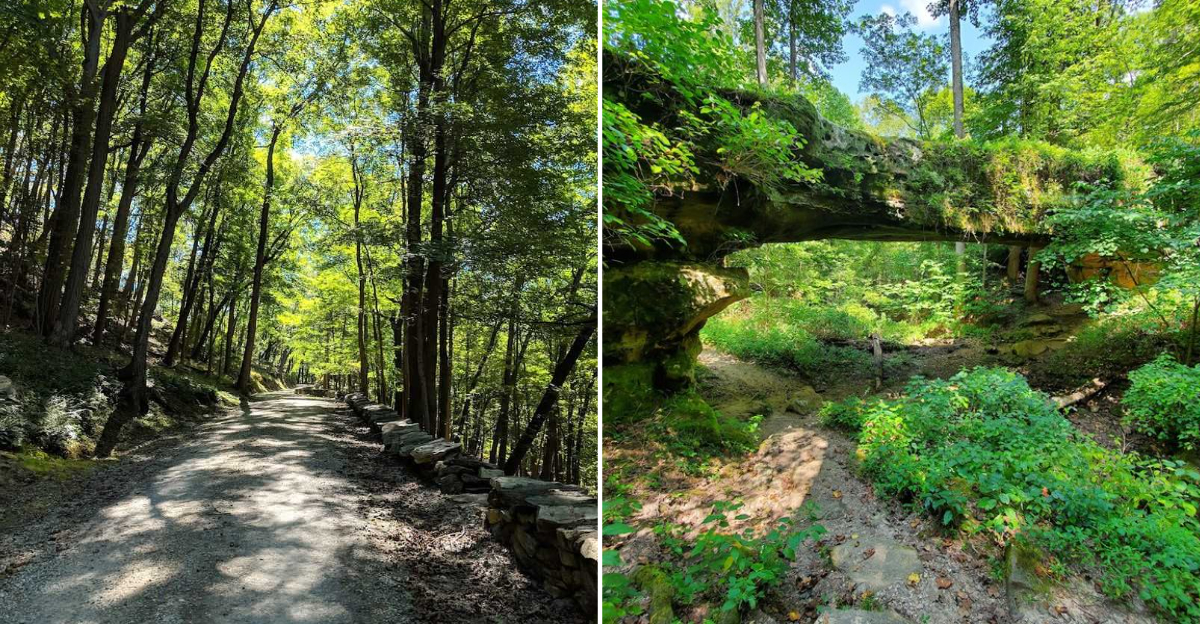
Illinois has a wild side hiding in plain sight, and the first good overlook can make the whole state feel like a secret.
Beyond the flat farmland stereotype, hikers can find sandstone bluffs, sculpted rock formations, shadowy canyons, cypress swamps, river valleys, waterfalls, and quiet woodland paths that feel far more dramatic than most visitors expect.
Some trails deliver huge views almost immediately, while others build the moment slowly through mossy ledges, boardwalks, or forested ridges. I have come back with muddy boots, a packed camera roll, and the same thought every time: Illinois deserves more credit as a hiking state.
These 13 short hikes offer big scenery without demanding a brutal climb, making them perfect for a free afternoon, a weekend reset, or anyone craving proof that the Prairie State has plenty of drama.
1. Garden of the Gods Observation Trail, Shawnee National Forest
Some trails make you work for the view. This one hands it to you almost immediately.
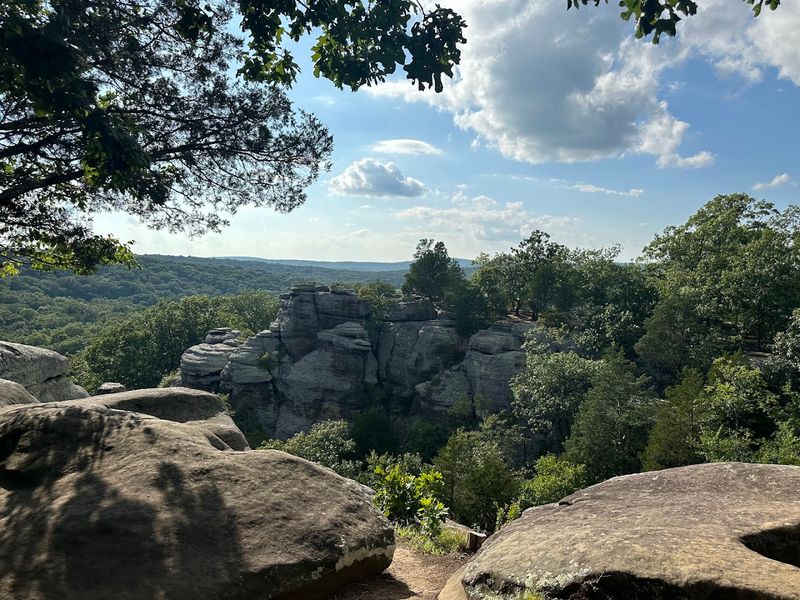
The Garden of the Gods Observation Trail in Shawnee National Forest near Herod, Illinois, covers just 0.25 miles, making it one of the shortest hikes on this list and easily one of the most rewarding in the entire state.
The trail winds around massive sandstone formations that have been sculpted by wind and rain over hundreds of millions of years.
You will find yourself climbing onto rock ledges with sweeping views of the Shawnee Hills and the surrounding forest canopy below. The names of the formations, like Camel Rock and Devil’s Smokestack, hint at just how wild the shapes get.
This spot is genuinely accessible for most fitness levels, and the paved sections near the overlook make it manageable for families with younger kids.
Fall is a spectacular time to visit when the trees turn every shade of orange and red. Arrive early on weekends to snag parking, because this one draws a crowd for very good reason.
2. Little Grand Canyon Trail, Shawnee National Forest
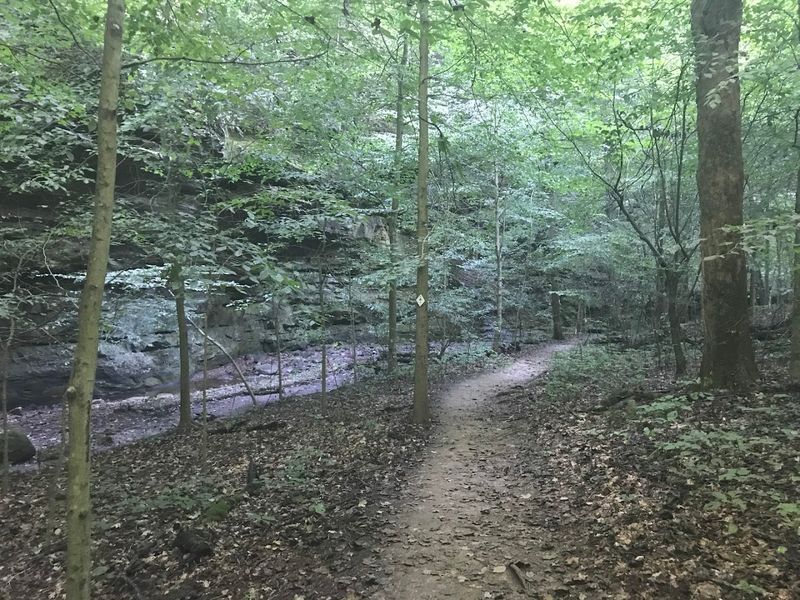
Standing at the rim of Little Grand Canyon for the first time genuinely stops you in your tracks. Located near Murphysboro in Shawnee National Forest, this 3.0-mile loop trail takes you along the edge of a dramatic box canyon carved by centuries of water erosion, with walls that drop sharply below your feet.
The trail has a few steep sections that will get your heart rate up, but nothing too technical. You will pass through dense hardwood forest, scramble over roots and rocks, and eventually reach a creek bed at the canyon floor.
The contrast between the cool, shaded canyon bottom and the wide-open ridge views is one of the most satisfying combinations I have experienced on an Illinois trail.
Spring is particularly magical here when wildflowers bloom along the canyon walls and the creek runs full and clear.
The canyon earned its nickname honestly, and while it is not quite as grand as the one in Arizona, the scale relative to the surrounding landscape is genuinely impressive. Wear sturdy shoes with good grip since some sections can get slippery after rain.
3. Pomona Natural Bridge, Shawnee National Forest
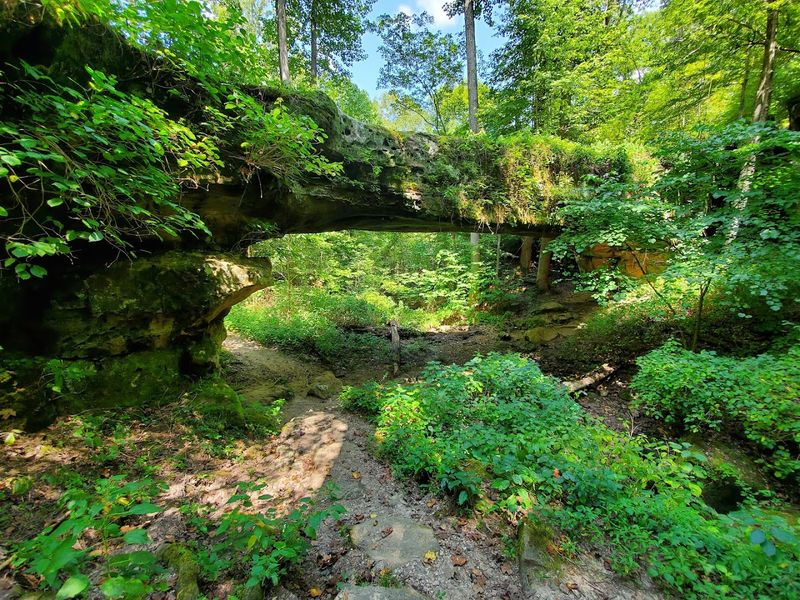
Not every great trail needs to be long to leave a lasting impression. The path to Pomona Natural Bridge near Pomona, Illinois, is only 0.3 miles round trip, but what you find at the end is one of the most unique geological features in the entire Midwest.
A 90-foot-long natural sandstone arch spans a small ravine, and it looks like something straight out of the American Southwest.
The arch was formed over millions of years as softer rock eroded away beneath a harder sandstone cap. Walking beneath it and looking up gives you a real sense of just how old and powerful natural forces can be.
The surrounding forest adds a lush, green framing that makes every photo look effortlessly good.
This is a wonderful spot for families, photographers, and anyone who wants a short but memorable outdoor experience. The trail itself is relatively easy, though the final approach to the arch involves a brief downhill scramble.
Visiting in the morning when light filters through the trees creates the most dramatic atmosphere. It is a quick stop that tends to stick with you long after you drive away.
4. Heron Pond Trail, Cache River State Natural Area
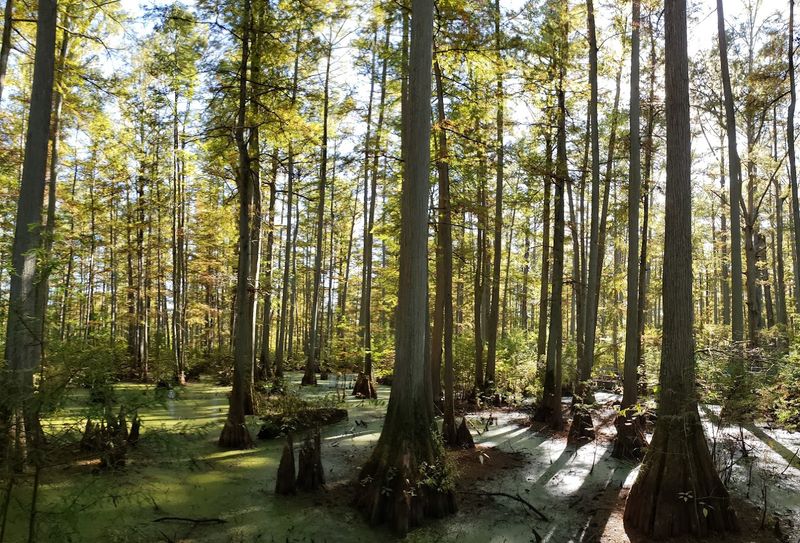
Walking the Heron Pond Trail feels like stepping into a completely different world.
Located within the Cache River State Natural Area near Belknap, Illinois, this 1.5-mile trail takes you through one of the most ecologically unique landscapes in the Midwest, a bald cypress and tupelo swamp that looks more like Louisiana than central Illinois.
The ancient bald cypress trees here are among the oldest living things in the state, with some estimated to be over 1,000 years old.
Wooden boardwalks carry you over the dark, mirror-still water, and the reflections of the gnarled tree trunks create an almost surreal visual experience. Great blue herons, wood ducks, and river otters are regular sightings along the trail.
The Cache River wetlands are a designated Wetland of International Importance, recognized for their biodiversity and ecological value.
That is not something most Illinois trails can claim. The best times to visit are spring and fall when wildlife activity peaks and the light is softer.
Bring insect repellent in summer, and keep your camera ready because the photo opportunities here are genuinely unlike anything else in the state.
5. Ferne Clyffe Waterfall Trail, Ferne Clyffe State Park
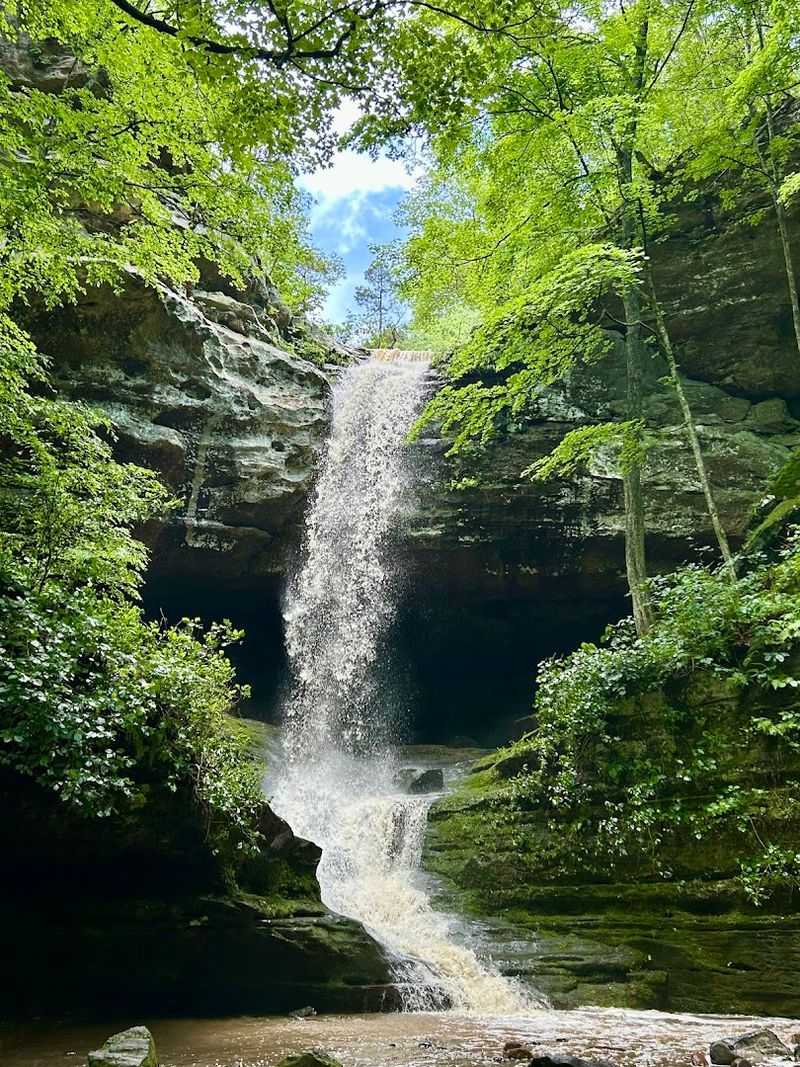
A trail named after ferns and cliffs has a lot to live up to, and this one delivers without hesitation. Ferne Clyffe State Park near Goreville in Johnson County, Illinois, is home to short waterfall hikes of about 0.75 miles that lead to some of the most photogenic spots in the southern part of the state.
The main attraction is a broad waterfall that spills over a curved sandstone ledge into a shallow pool below. The surrounding rock walls form a natural amphitheater draped in ferns, mosses, and wildflowers depending on the season.
After a good rain, the falls run full and powerful, and the mist in the air adds an extra layer of atmosphere that is hard to capture in photos.
The trail is relatively flat and well-maintained, making it a solid option for beginners and families. Hawks Cave, a large overhanging rock shelter reached by a separate short trail, is another highlight worth slowing down for.
Fall colors reflect beautifully in the pool at the base of the falls.
Pack a snack and plan to linger here because this is one of those spots that rewards anyone willing to sit still for a few minutes.
6. Matthiessen State Park Upper and Lower Dells, Matthiessen State Park
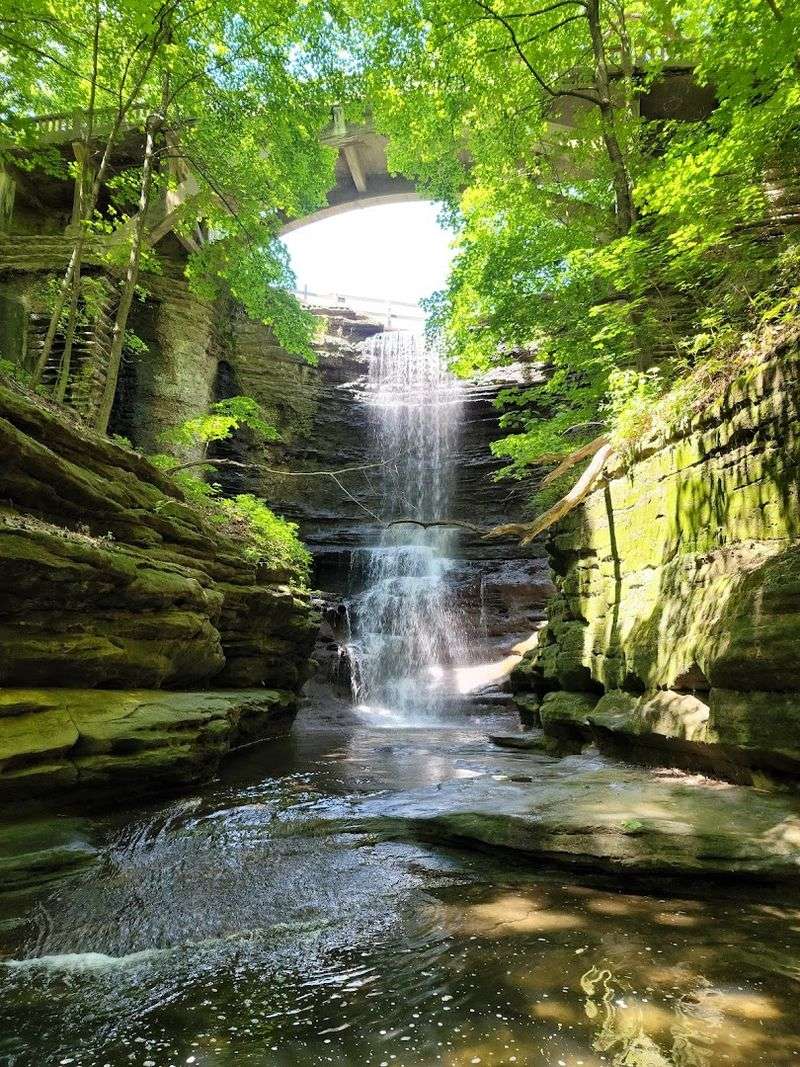
If you have been to Starved Rock and thought it could not get better, Matthiessen State Park near Utica, Illinois, is ready to change your mind.
The Upper and Lower Dells loop covers about 2.5 miles and takes you through a series of narrow sandstone canyons, past multiple waterfalls, and along ledge paths that require a little bit of careful footwork.
What makes Matthiessen feel different from its more famous neighbor is the sense of discovery. The park sees fewer visitors, which means you often have the canyon walls and cascades largely to yourself.
The water in the dells has carved out turquoise pools and moss-covered grottos that feel genuinely hidden from the rest of the world.
The trail involves some stairs and uneven terrain, so comfortable hiking footwear is a must. Spring snowmelt and post-rain visits offer the most dramatic waterfall displays, while summer brings lush greenery that softens the canyon walls beautifully.
This park tends to be underestimated by people who visit Starved Rock first. Do yourself a favor and add Matthiessen to the same trip because the two parks together make for one exceptional day outdoors.
7. Starved Rock and Sandstone Point Overlook, Starved Rock State Park
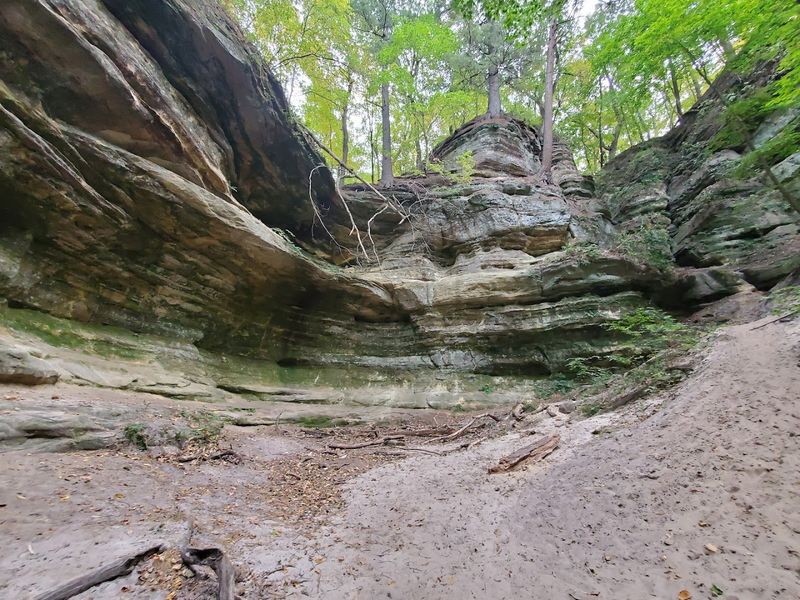
Few places in Illinois carry the kind of reputation that Starved Rock State Park near Utica has earned over decades of visitors returning year after year.
The trail connecting Starved Rock itself to Sandstone Point Overlook runs about 1.5 miles and rewards you with some of the most iconic river views in the entire state.
Standing on top of Starved Rock, a 125-foot sandstone butte, you look out over the Illinois River and the broad valley that stretches in both directions.
The history here adds another layer to the experience. The rock gets its name from a legendary account of a group of Illinois tribe members who took refuge on the butte during a conflict in the 18th century.
The park is busy year-round, so arriving early on weekends is strongly advised. Winter visits offer a uniquely beautiful experience when the canyon waterfalls freeze into dramatic ice formations.
The main trail to the overlook is well-marked and moderately easy, making it accessible to most hikers.
Bring layers in spring and fall because the wind off the river can be surprisingly brisk once you reach the top of the bluff.
8. Allerton Park Woodland Trails, Allerton Park
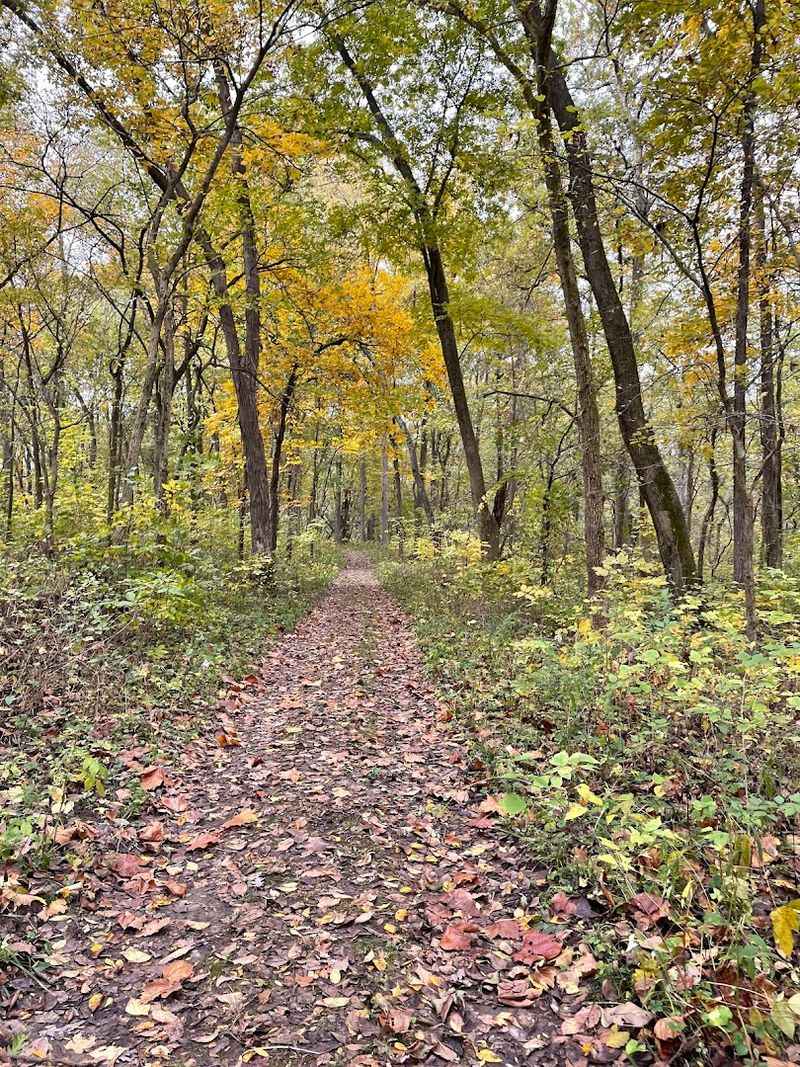
Most hiking lists skip Allerton Park entirely, and that is a mistake worth correcting.
Located in Monticello, Illinois, and managed by the University of Illinois, Allerton Park offers about 2.0 miles of woodland trails that combine natural beauty with something genuinely unexpected, an elaborate collection of outdoor sculptures and formal gardens set against a backdrop of old-growth forest.
The estate was donated to the university in 1946 by Robert Allerton, an art collector and philanthropist who spent decades curating the grounds with international sculptures, Chinese garden ornaments, and European statuary.
Walking through the woods and suddenly encountering a bronze figure or a formal allée lined with carved figures is a quietly surreal experience.
The woodland trails themselves are peaceful and well-maintained, winding through mature trees along the Sangamon River. Fall is stunning here when the forest canopy turns gold and the sculptures seem to glow against the warm colors.
The park is free to visit, though donations are appreciated. It is one of those rare places where art and nature share equal billing, and neither one overshadows the other.
Plan for at least two hours to do it justice.
9. Castle Rock Bluff Trail, Castle Rock State Park
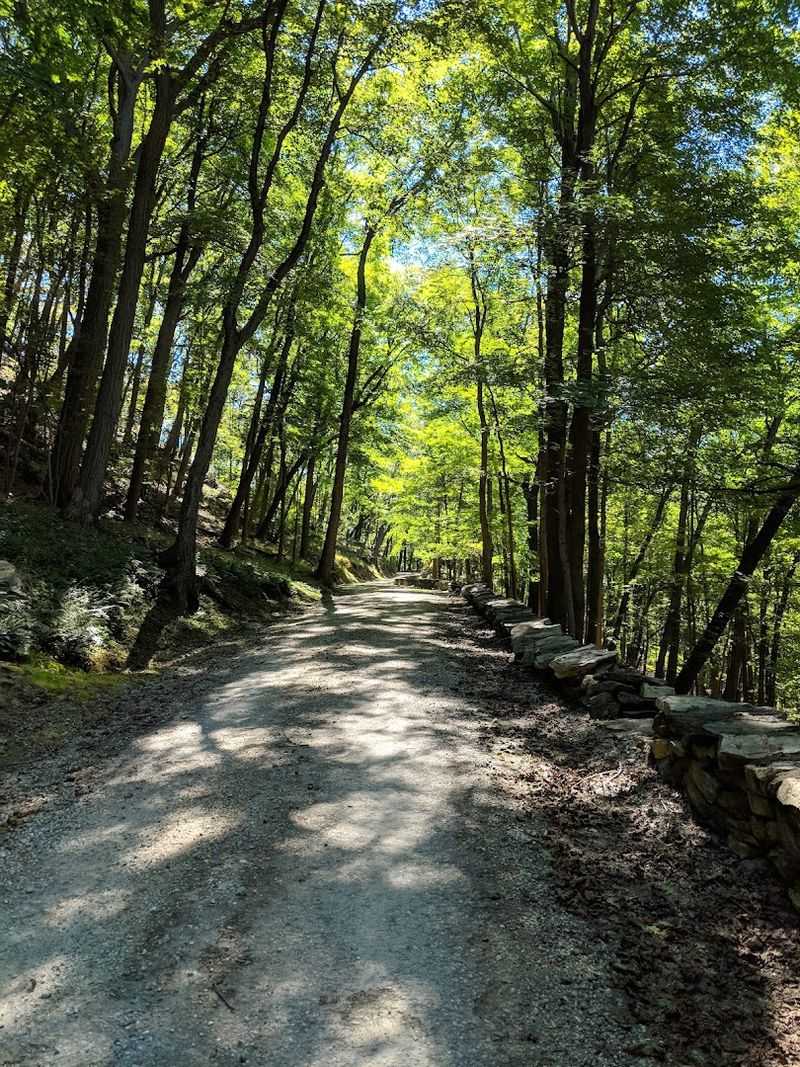
There is something deeply satisfying about a trail that gives you a river view from a rocky perch, and Castle Rock State Park near Oregon, Illinois, does exactly that.
The 1.0-mile Castle Rock Bluff Trail leads you through forest and up to a sandstone outcropping that sits high above the Rock River, offering one of the most picturesque views in northern Illinois.
The sandstone formations at Castle Rock are made of St. Peter Sandstone, the same geological material found throughout much of the upper Midwest, and the bluff has been eroded into dramatic shapes that make for great photos.
From the top, you can see the river winding through the valley below, with forested bluffs on both sides framing the scene perfectly.
The trail has some uneven rocky sections near the summit, but nothing that requires special equipment. It is a popular spot for families and photographers, especially during fall color season when the riverbanks turn brilliant shades of yellow and orange.
Early morning visits offer the best light and the fewest crowds. The park also connects to the White Pines Forest State Park nearby, making it easy to combine both into one worthwhile day trip.
10. Salt Lick Point Loop, Loud Thunder Forest Preserve
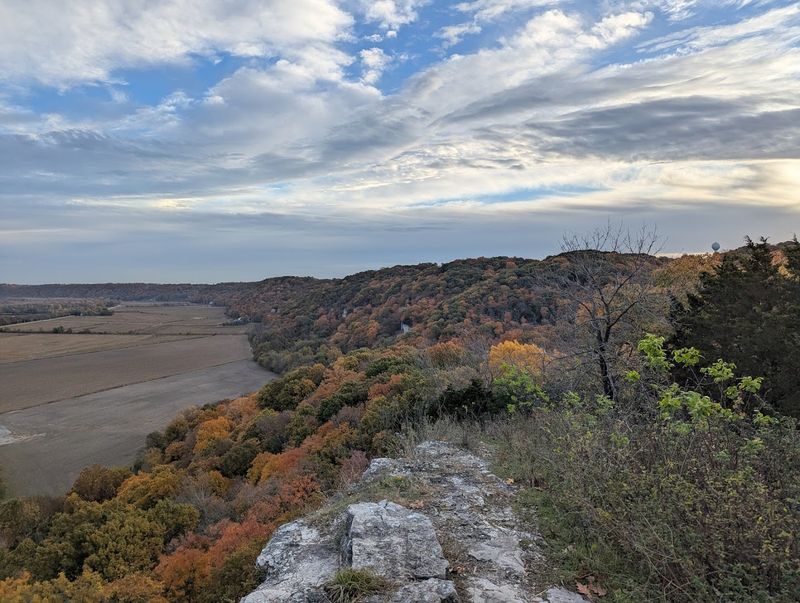
The Salt Lick Point Loop at Loud Thunder Forest Preserve near Milan, Illinois, is the kind of trail that feels like a local secret even though it absolutely deserves a wider audience.
At 4.0 miles, it is one of the longer hikes on this list, but the terrain is rolling and manageable, and the payoff views over the Mississippi River backwaters make every step worth it.
The trails climb through a mix of upland forest and restored natural areas before opening to bluff-top views across the American Bottoms toward the Mississippi River corridor. Bald eagles are a common sight here, especially in winter when they congregate along the Mississippi in impressive numbers.
The forest preserve also sits along a major migratory bird corridor, so birders will find plenty to keep them busy.
Deer, wild turkey, and fox are regularly spotted along the trail, giving the loop a strong wildlife-watching dimension beyond just the views. The name Salt Lick Point comes from natural mineral deposits that wildlife have historically sought out in the area.
Sunrise hikes here in autumn are particularly memorable when haze settles over the bottomlands and the trees are at peak color. Pack a trail snack and take your time.
11. Mississippi Palisades Sentinel Trail, Mississippi Palisades State Park
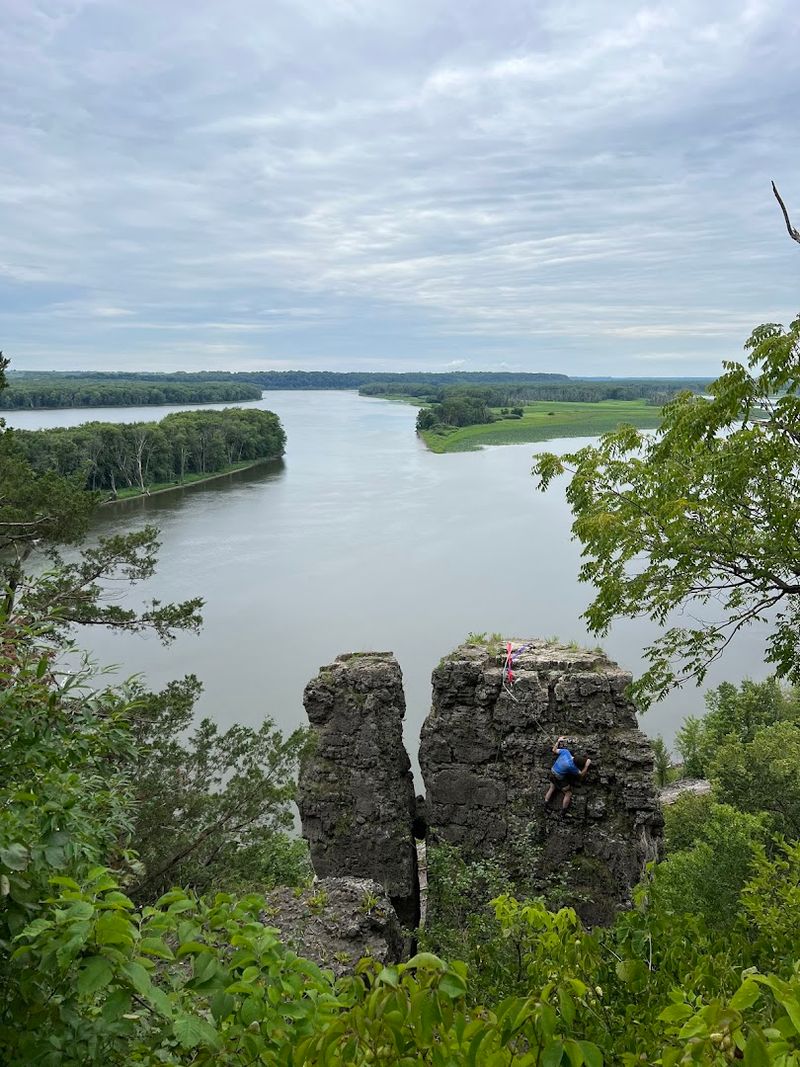
Towering limestone bluffs, sweeping river views, and a trail short enough to finish before lunch, Mississippi Palisades State Park near Savanna, Illinois, has all of it packaged into the 1.0-mile Sentinel Trail.
The trail climbs through hardwood forest to a series of overlook points perched high above the confluence of the Apple and Mississippi Rivers.
The limestone formations along this trail are genuinely dramatic. Twin Sisters, Indian Head, and Sentinel Rock are among the named formations you will pass, each one carved by centuries of erosion into recognizable shapes that give the park a slightly mythical quality.
The views from the bluff tops rank among the best river panoramas in Illinois without any debate. Fall is peak season here when the hillsides blaze with color and the river below catches the warm afternoon light.
The trail involves some elevation gain and rocky terrain, so good footwear is important. Wildlife is abundant throughout the park, with white-tailed deer, wild turkeys, and migratory songbirds frequently spotted along the route.
The park is located about three hours from Chicago, making it a solid destination for a weekend road trip with a proper outdoor itinerary.
12. Pere Marquette Bluff Trail, Pere Marquette State Park
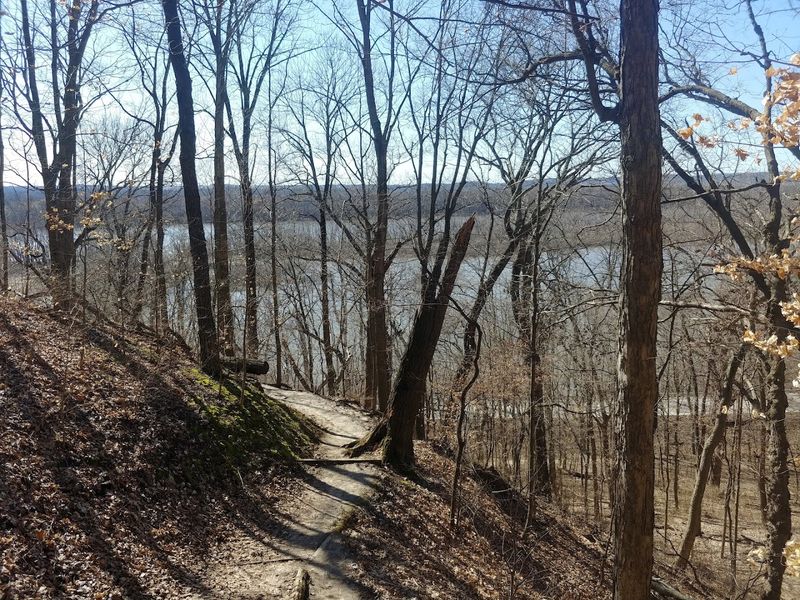
Pere Marquette State Park near Grafton, Illinois, holds the title of the largest state park in Illinois, and the Bluff Trail makes good use of that scale.
The 2.5-mile route climbs steadily through dense forest to reach McAdams Peak, where you are rewarded with one of the most expansive views in the entire state, the confluence of the Illinois and Mississippi Rivers spread out below you in a wide, shimmering panorama.
The park is named after French explorer Father Jacques Marquette, who traveled through this region in 1673 alongside Louis Jolliet.
Standing on that bluff and looking out over the same rivers they paddled adds a quiet historical weight to the experience that is hard to shake. The trail itself is moderately challenging with a consistent uphill grade on the way out.
Wildlife enthusiasts will appreciate that the park sits along one of the most important migratory routes in North America, the Mississippi Flyway.
Bald eagles, hawks, and dozens of songbird species pass through regularly. The historic Pere Marquette Lodge at the park entrance is a beautiful stone building dating to the 1930s and worth a stop before or after your hike.
Autumn views from the peak are simply unforgettable.
13. Moraine Hills Lake Defiance Loop, Moraine Hills State Park
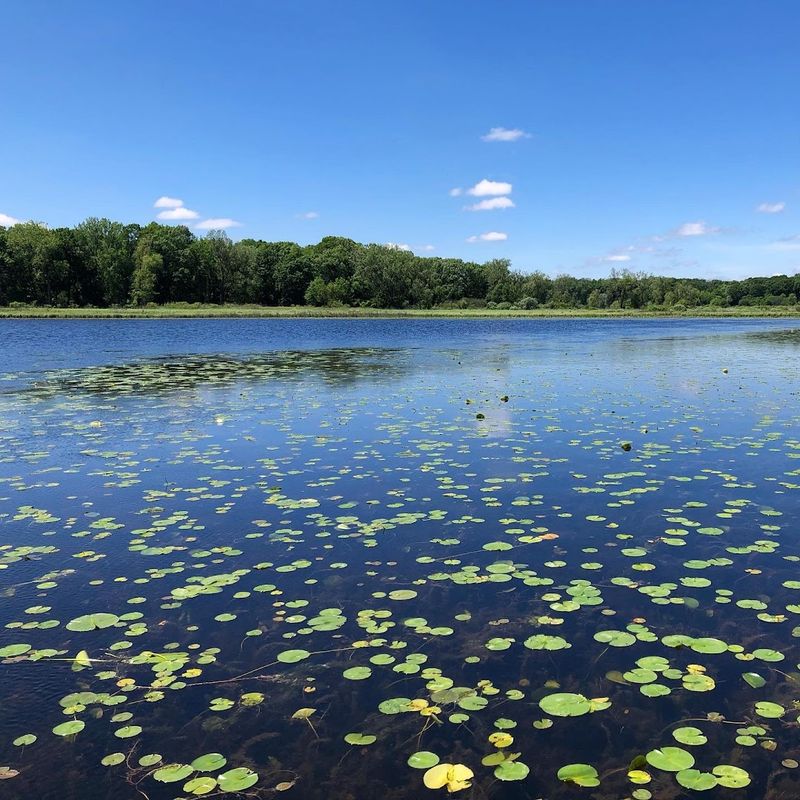
Northern Illinois has a completely different personality from the dramatic sandstone canyons of the south, and Moraine Hills State Park near McHenry makes a compelling case for why that quieter landscape deserves just as much attention.
The Lake Defiance Trail covers about 3.7 miles through a mosaic of glacial lakes, prairie, oak savanna, and wetlands left behind by retreating glaciers thousands of years ago.
Lake Defiance is a glacial lake in near-natural condition, surrounded by wetlands and rare plant communities that make it one of the park’s most distinctive features.
Wooden boardwalks carry you over the boggy shoreline sections, offering close views of the aquatic vegetation and the birds that depend on it.
The trail is largely flat and well-suited for beginners, families, and anyone looking for a peaceful walk without significant elevation changes. Sandhill cranes and great blue herons are regularly spotted here, and the fall prairie grasses turn beautiful shades of copper and gold that reflect in the lake surface.
The park is located about an hour northwest of Chicago, making it one of the most accessible natural escapes from the city for a quick weekend reset.