
13 Illinois Places That Feel Like You Escaped The Midwest In 2026
Illinois has a funny way of surprising you, especially when you think you’ve already figured it out. Most people picture flat fields and long highways, but that’s only part of the story.
There are spots here that feel completely out of place in the best way, like landscapes you’d expect much farther south or gardens that seem lifted straight out of another country. It’s the kind of thing that makes you stop and wonder how you’re still in Illinois.
Once you start looking, you realize just how much variety is hiding in plain sight. So if you’re up for something different, grab your camera and go explore a side of Illinois that most people never see.
1. Baha’i House of Worship, Wilmette
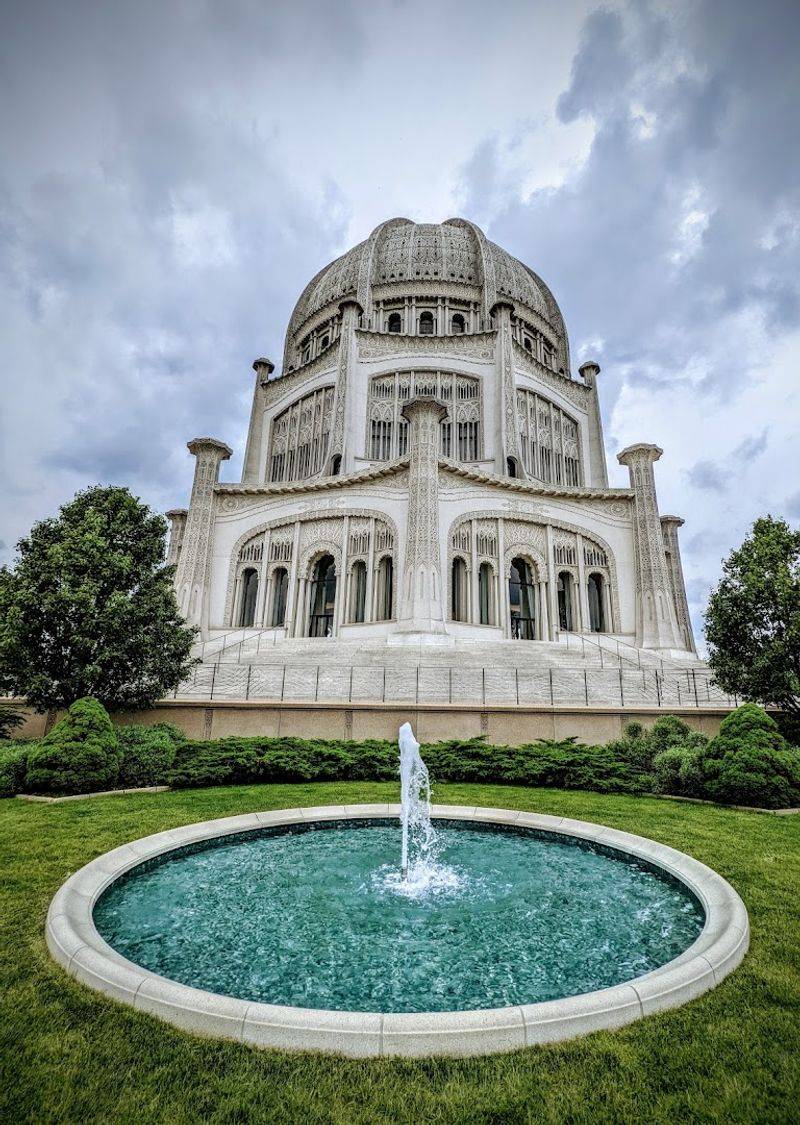
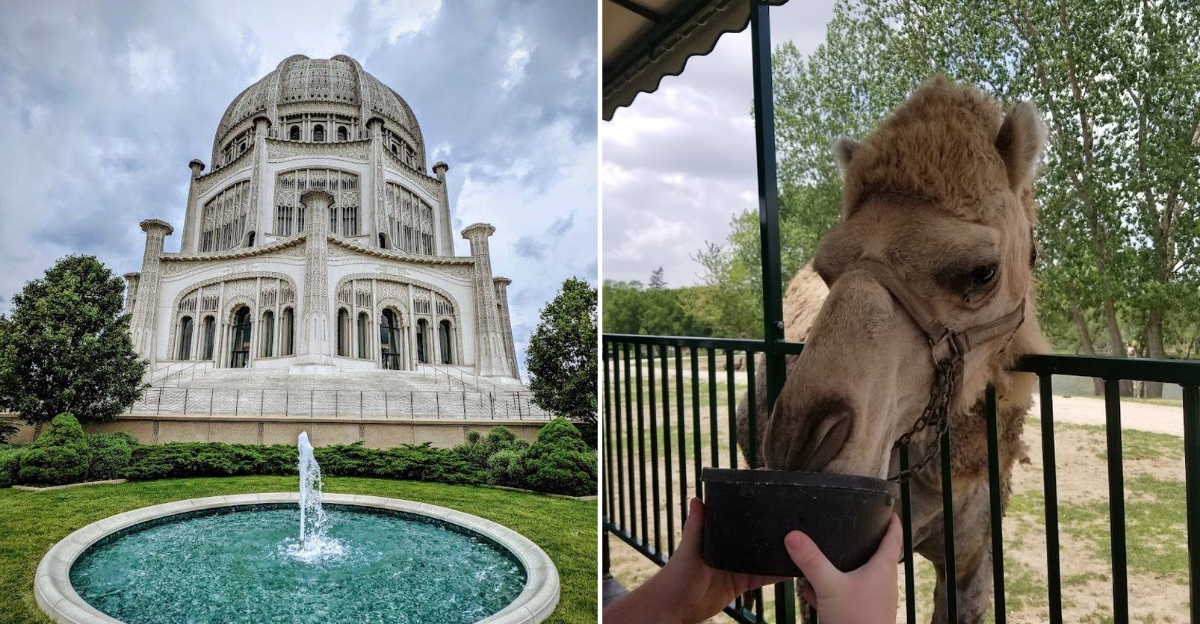
Few buildings in the entire country stop people in their tracks quite like this one. Rising above the quiet suburb of Wilmette, just north of Chicago, the Baha’i House of Worship looks more like something you would find in Istanbul or New Delhi than in northeastern Illinois.
Its nine-sided dome is covered in ornate concrete lacework that took nearly 30 years to complete, and on a bright day, the whole structure practically glows.
The surrounding gardens are immaculate and peaceful, with reflecting pools and sculpted hedges that make the grounds feel like a completely separate world from the surrounding neighborhoods. Admission is always free, and the interior is open for quiet meditation to people of all faiths and backgrounds.
The building was completed in 1953 and is one of the eight continental Bahá’í Houses of Worship, with additional temples now built in other parts of the world. Spring and early summer are ideal visiting times, when the gardens are in full bloom.
Even if architecture is not your thing, the pure scale and detail of this place will leave you genuinely speechless.
2. Anderson Japanese Gardens, Rockford
Rockford, Illinois is not the first place most people think of when they imagine a world-class Japanese garden, but that is exactly what makes Anderson Japanese Gardens such a rewarding find.
Regularly rated among the top Japanese gardens in North America by the Journal of Japanese Gardening, this 12-acre property in northern Illinois was designed with serious authenticity in mind.
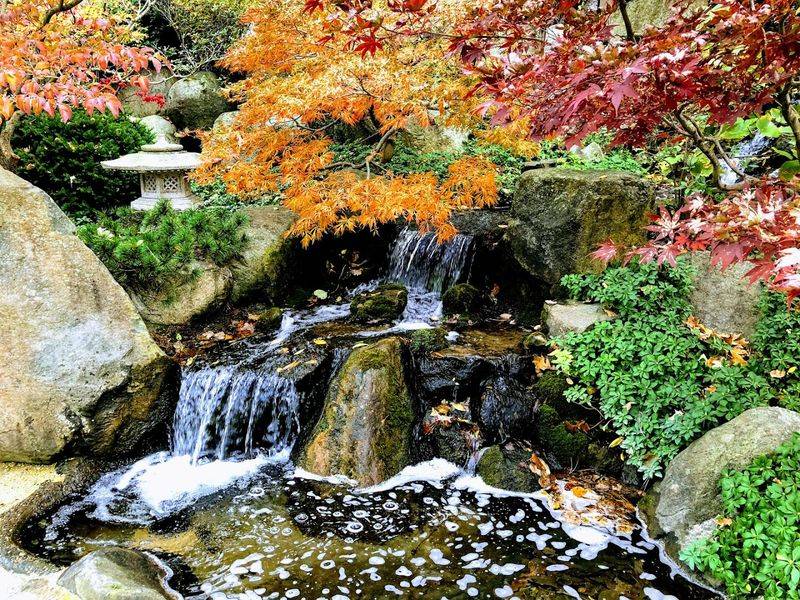
Waterfalls, koi ponds, tea houses, stone lanterns, and carefully pruned pines create an atmosphere that genuinely feels like a different continent.
The garden was started by businessman John Anderson in the 1970s after he fell in love with Japanese garden design during a trip abroad, and it has been growing and refining ever since.
Fall is a spectacular time to visit when the Japanese maples turn every shade of orange and crimson. Guided tours are available and worth booking in advance, since they offer fascinating context about the symbolism behind each design element.
The tea house experiences and seasonal events, including cherry blossom celebrations in spring, make this a destination worth the drive from anywhere in the region.
3. Illinois Beach State Park, Zion
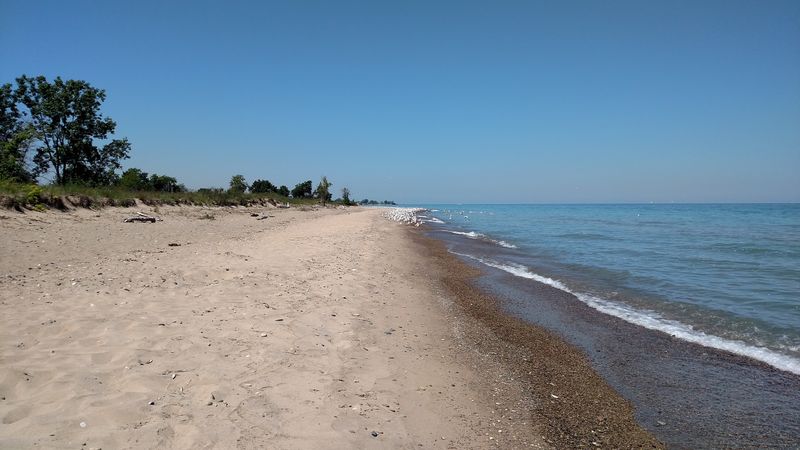
Sand dunes, crashing waves, and a shoreline that stretches for miles, this is not a scene most people associate with Illinois. Illinois Beach State Park in Zion sits right along Lake Michigan and covers over 4,000 acres, making it the largest remaining natural beach in the state.
The landscape here is genuinely surprising, with wetlands, prairies, dunes, and a sandy lakeshore all packed into one park.
Swimming, hiking, birdwatching, and kayaking are all popular activities, and the park draws visitors year-round. In winter, the frozen formations along the shoreline create an almost surreal icy landscape that photographers love.
The Dead River, a unique coastal stream that runs parallel to the beach before eventually meeting the lake, is one of the park’s most unusual natural features.
There is a lodge inside the park for overnight stays, which makes it easy to catch both sunset and sunrise over the water without rushing back to the city.
Located about 40 miles north of Chicago, this park is an easy day trip that consistently shocks first-time visitors who never expected to find a beach this impressive inside Illinois.
4. Fabyan Japanese Garden, Geneva
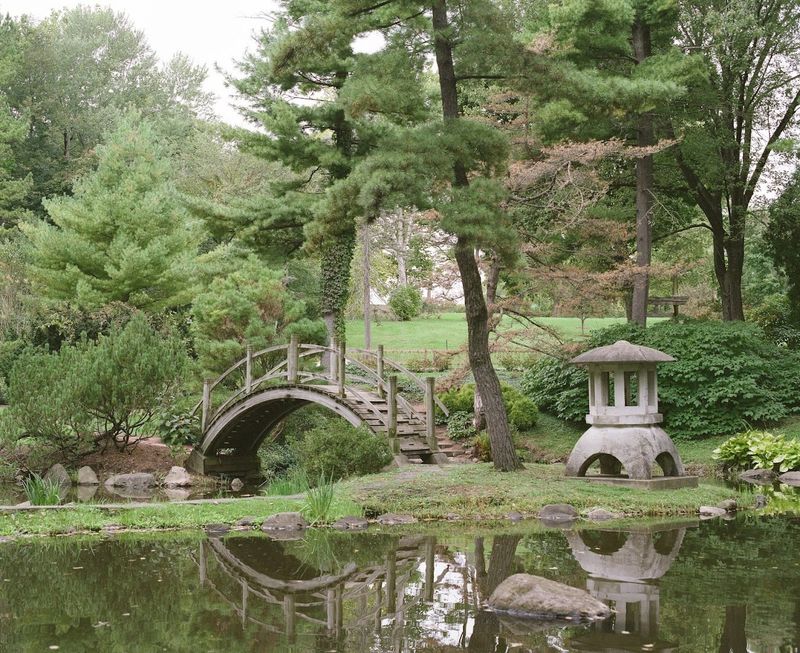
Tucked inside Fabyan Forest Preserve along the Fox River in Geneva, this small but genuinely beautiful Japanese garden has been enchanting visitors since it was first designed in the early 1900s.
Colonel George Fabyan commissioned a Japanese landscape architect to create the garden on his estate, and the result is a carefully composed space that feels worlds away from the surrounding Illinois suburbs.
A traditional arched bridge, stone lanterns, a pagoda, and a reflective pond form the heart of the garden. The surrounding trees, many of them decades old, add a sense of depth and permanence that newer gardens simply cannot replicate.
Admission to the preserve is free, which makes this one of the best-value escapes in the Chicago metropolitan area.
The garden is at its most photogenic in spring when the cherry trees bloom and in autumn when the maples shift color.
Beyond the garden itself, the Fabyan estate includes a restored Dutch windmill and a museum dedicated to the eccentric Colonel Fabyan, who had fascinating connections to World War I cryptography. Plan a full afternoon to explore everything the preserve has to offer.
5. Midewin National Tallgrass Prairie, Wilmington
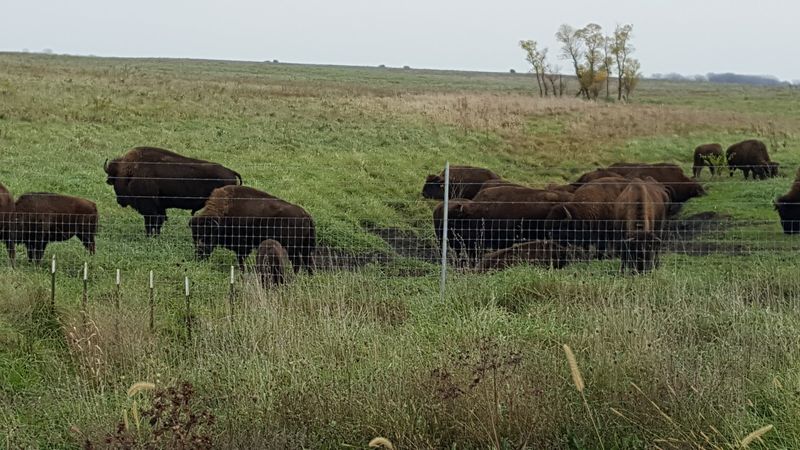
Standing in the middle of Midewin National Tallgrass Prairie feels like being transported back to a version of North America that most people have only seen in history books.
Located near Wilmington in Will County, this 19,000-acre preserve is the first national tallgrass prairie in the United States and one of the most ambitious ecological restoration projects in the country.
Bison were reintroduced here in 2015, and seeing a herd of these massive animals grazing across rolling grasslands against a big Illinois sky is a moment that genuinely resets your sense of where you are. Dozens of miles of trails wind through wildflower meadows, wetlands, and restored prairie habitat.
Spring and early summer bring incredible wildflower displays, while fall turns the grasses into a sea of gold and amber.
The prairie sits on land that was formerly the Joliet Army Ammunition Plant, and bunkers from that era are still visible along some trails, adding an unexpected layer of history to the experience. Ranger-led bison tours are offered seasonally and are highly recommended for anyone visiting for the first time.
6. Starved Rock State Park, Oglesby
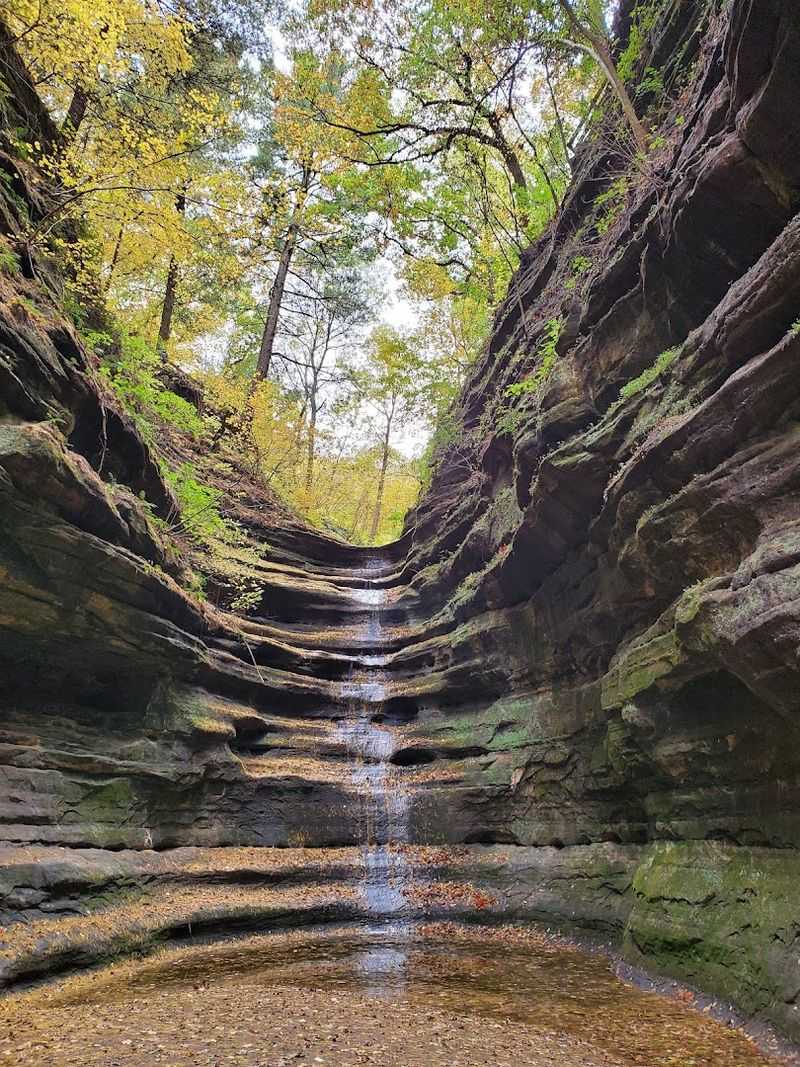
The canyons at Starved Rock State Park are the kind of thing that makes people pull out their phones and immediately text their friends.
Located near Oglesby along the Illinois River, this park features 18 canyons carved into St. Peter sandstone by glacial meltwater thousands of years ago. The canyon walls rise up to 100 feet and are draped with mosses, ferns, and seasonal waterfalls that turn into spectacular ice formations in winter.
Starved Rock is the most visited state park in Illinois, and for good reason. Trails range from easy riverside walks to more challenging routes that lead deep into canyons with names like French Canyon, St. Louis Canyon, and Wildcat Canyon.
Each one has its own distinct character and rewards explorers who take the time to wander. The park is beautiful in every season, but winter draws a particularly devoted crowd of hikers who come specifically to see the frozen waterfalls.
Summer brings lush greenery and the sound of rushing water after rain. A historic lodge dating to the 1930s sits within the park and serves as a comfortable base for multi-day visits to both Starved Rock and nearby Matthiessen State Park.
7. Matthiessen State Park, Oglesby
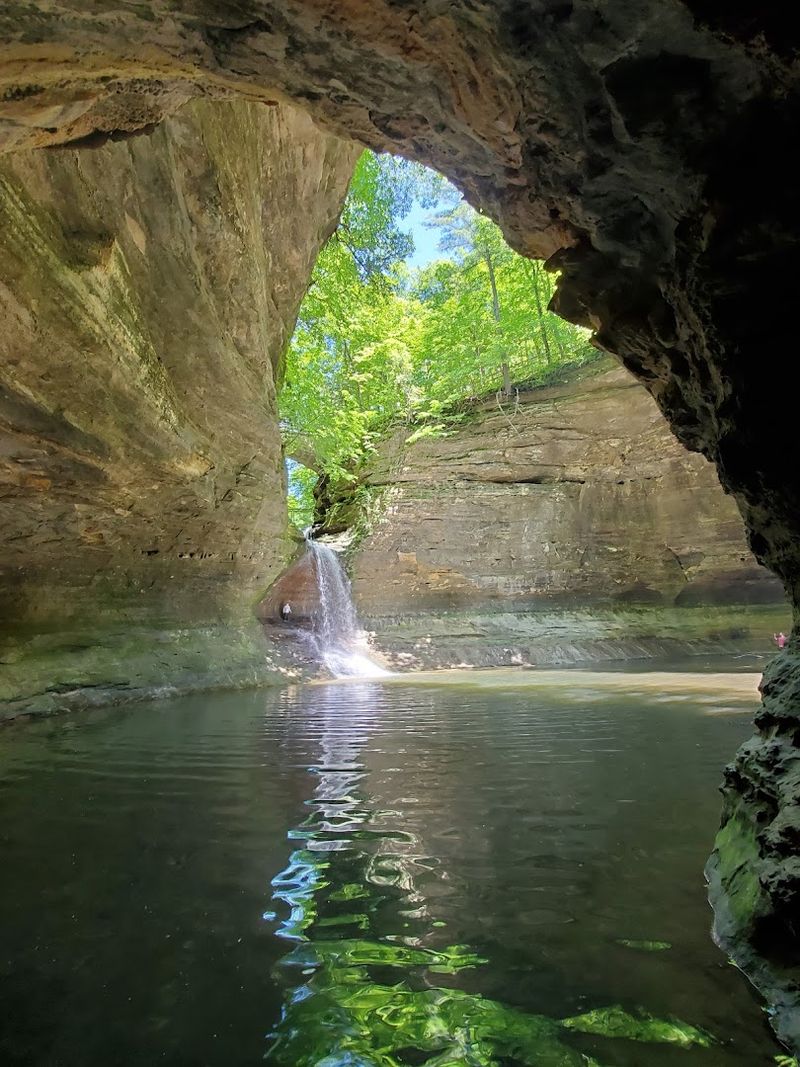
Right next door to Starved Rock but far quieter, Matthiessen State Park is the kind of place that feels like a personal discovery even though it has existed for decades.
The park features its own set of stunning dells and canyons, including a lower dells area with a waterfall that drops into a crystal-clear pool surrounded by sandstone walls.
The colors here, especially in summer when the moss is thick and the water is running strong, genuinely feel more like a scene from a fantasy novel than central Illinois.
Because Matthiessen draws fewer visitors than its famous neighbor, it is possible to stand at the waterfall in near silence, which only adds to the sense that you have found somewhere secret.
The trails are well-maintained and connect to scenic overlooks, wooded bluffs, and open meadow areas that attract a wide variety of birds.
The park also features an equestrian area and a cedar trail loop through mature forest. Visiting in May or June after a good rain gives you the best chance of seeing the waterfalls at full force.
Combining Matthiessen with a visit to Starved Rock on the same trip is the smartest way to experience both parks without feeling rushed.
8. The Morton Arboretum, Lisle

Covering 1,700 acres in Lisle, just west of Chicago, The Morton Arboretum is one of the most impressive living collections of trees and plants in the world.
Founded in 1922 by Joy Morton of the Morton Salt family, the arboretum holds more than 222,000 living plants representing over 4,300 species from around the globe. Walking its trails feels less like a stroll in Illinois and more like a tour through forests of every continent.
The seasonal changes here are genuinely dramatic. Spring brings clouds of flowering crabapples and magnolias, summer turns the meadows lush and green, and fall transforms the entire property into a canvas of red, orange, and gold that draws visitors from across the Midwest.
Winter has its own charm, with frost-covered branches and the annual Illumination light show making it a magical evening destination.
Children love the interactive exhibits and the Children’s Garden, while serious plant lovers can spend hours in the specialty collections dedicated to oaks, conifers, and maples.
A tram tour is available for those who prefer a guided overview. The arboretum’s cafe and gift shop are worth stopping in before you leave, rounding out a full and genuinely memorable day.
9. Allerton Park and Retreat Center, Monticello
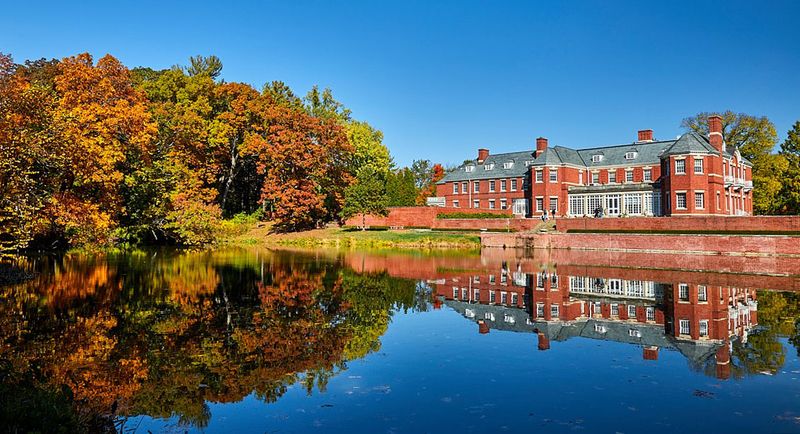
Imagine wandering through a formal European estate garden and then remembering you are in central Illinois.
That is exactly the feeling Allerton Park delivers. Located near Monticello in Piatt County, this 1,500-acre property was developed by Robert Allerton in the early 20th century as a private art collection and garden retreat, and he eventually donated the entire estate to the University of Illinois.
The formal gardens are filled with classical sculptures sourced from around the world, including Chinese fu dogs, Japanese garden ornaments, and European stone figures, all arranged within rooms of manicured hedges and flowering borders.
The Fu Dog Garden and the Sunken Garden are two of the most photographed spots on the property. Beyond the formal areas, miles of trails wind through old-growth forest along the Sangamon River, offering a completely different experience just steps from the manicured gardens.
The brick mansion at the center of the estate is stunning and hosts events and retreats throughout the year. Visiting on a weekday in spring or fall gives you the best chance of having the gardens nearly to yourself, which makes the whole experience feel even more like a private discovery.
10. Aikman Wildlife Adventure, Arcola
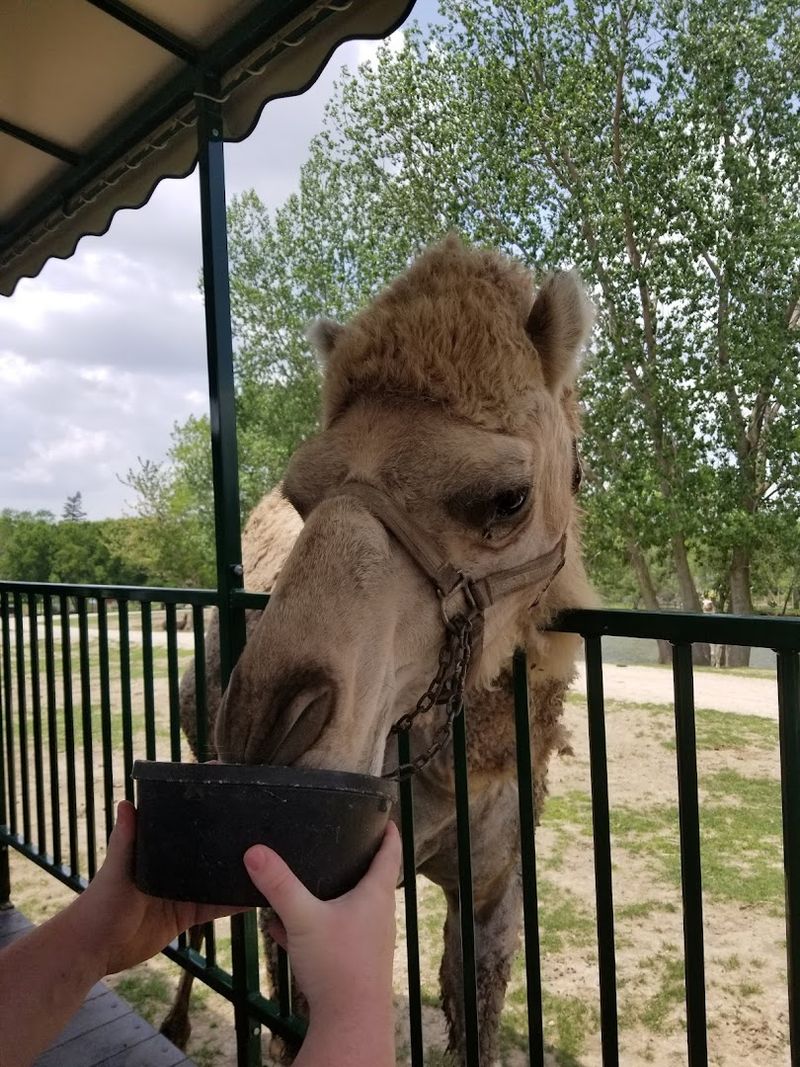
Driving through central Illinois farm country and suddenly spotting a giraffe is not something most people put on their Illinois bucket list, but Aikman Wildlife Adventure in Arcola makes it a completely normal afternoon.
This family-owned wildlife park offers a drive-through experience to observe animals from your car, along with opportunities to feed and interact with them during guided experiences.
Zebras, camels, bison, water buffalo, and various exotic deer species wander freely around the property, often approaching vehicles closely enough to eat directly from your hand.
The park provides feed buckets at the entrance, and the animals are clearly accustomed to friendly visitors. A walk-through section features additional animals including kangaroos, wallabies, and birds in an enclosed area.
Aikman is a working farm as well as a wildlife park, and the combination gives the whole place a genuine, unhurried character that feels refreshingly different from larger commercial attractions. It is an ideal stop for families traveling between Chicago and southern Illinois.
The park operates seasonally, so checking their schedule before visiting is a smart move to avoid disappointment.
11. Garden of the Gods Recreation Area, Shawnee National Forest
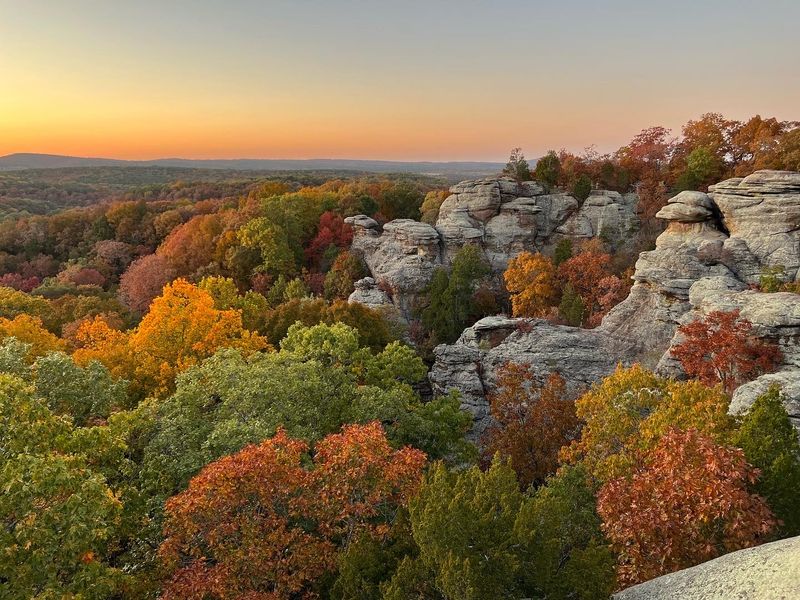
The rock formations at Garden of the Gods look like they belong in the American Southwest, not southern Illinois.
Located within the Shawnee National Forest near Elizabethtown, this recreation area features ancient sandstone outcroppings with names like Camel Rock, Anvil Rock, and Mushroom Rock, all of which have been sculpted by 320 million years of wind, water, and time into shapes that seem almost intentional.
The Observation Trail is a short but spectacular loop that takes you right along the edge of the ridge, with views across the forested valleys of the Shawnee Hills stretching for miles in every direction.
Sunrise and sunset visits reward photographers with light that turns the orange sandstone into something glowing and almost otherworldly.
Camping is available nearby at Camp Cadiz and Pharaoh Campground, making it easy to spend a full weekend exploring the area. The Garden of the Gods is also a popular spot for rock climbing and bouldering among more adventurous visitors.
Spring wildflowers and fall foliage both add extra color to the already dramatic landscape. This corner of Illinois genuinely earns the title of the state’s most visually dramatic natural destination.
12. Cache River State Natural Area, Cypress/Belknap
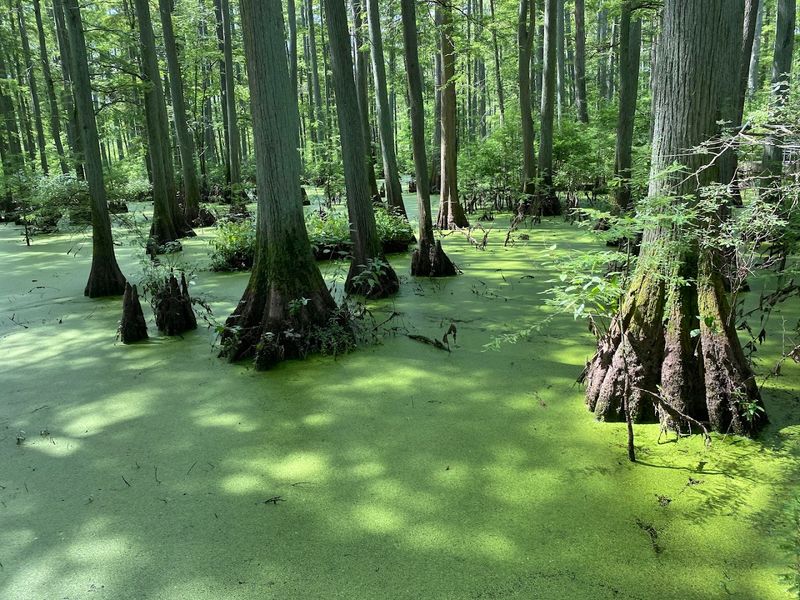
Southern Illinois hides one of the most surprising ecosystems in the entire Midwest, and Cache River State Natural Area is its crown jewel.
Straddling the communities of Cypress and Belknap in Johnson and Pulaski counties, this protected wetland is home to ancient bald cypress trees that have been growing in the swampy water for over 1,000 years. Walking the boardwalk trails here, surrounded by massive flaring tree trunks rising from dark, still water, feels unmistakably like the bayous of Louisiana.
The area is part of a globally important wetland system designated by the Ramsar Convention, recognizing its ecological significance for migratory birds and rare plant species.
Over 100 species of birds have been recorded here, making it a serious destination for birdwatchers. Great blue herons, wood ducks, and prothonotary warblers are among the regulars.
Guided canoe tours through the swamp are available seasonally and offer an up-close look at the cypress knees and wildlife that line the waterways. Spring and early fall are the best times to visit for comfortable temperatures and active wildlife.
The combination of ancient trees, mirror-calm water, and near-total silence creates an atmosphere that is genuinely unlike anything else in Illinois.
13. Giant City State Park, Makanda
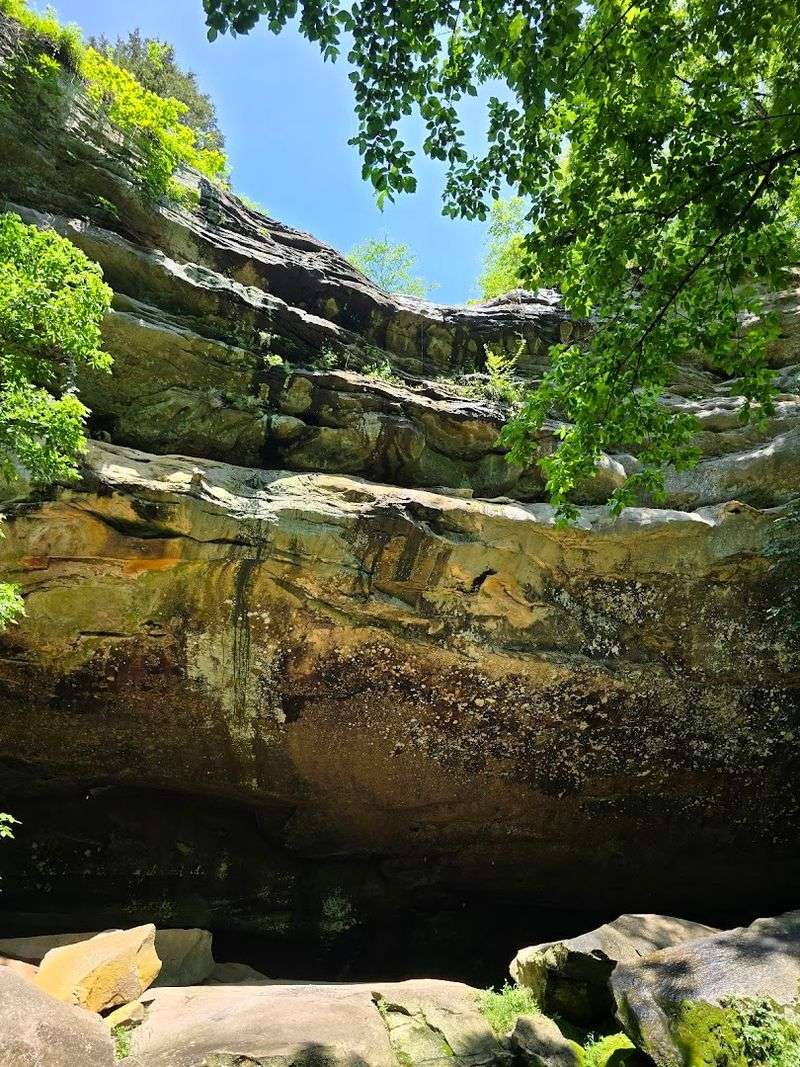
The name Giant City comes from the way the massive sandstone bluffs here create what looks like the streets of an ancient stone city, and once you walk between those towering walls, the name makes complete sense.
Located near Makanda in Union County in southern Illinois, Giant City State Park features some of the most dramatic rock formations in the Midwest, with sandstone blocks up to 20 feet tall lining narrow passageways that feel genuinely prehistoric.
The Giant City Nature Trail is the park’s signature walk and takes visitors directly through the iconic stone formations in about one mile. Beyond the bluffs, the park offers over 15 miles of additional trails through dense hardwood forest, open glades, and along creek beds that harbor wild orchids and rare ferns.
A beautiful stone lodge built by the Civilian Conservation Corps in the 1930s anchors the park and serves food daily, making it easy to fuel up before or after a long hike. Rock climbing is permitted in designated areas and draws climbers from across the region.
The park sits close to Makanda, a quirky small arts community worth exploring after a day on the trails, turning the whole trip into a genuinely well-rounded southern Illinois adventure.