
13 Incredible Ohio Historic Sites For An Unforgettable 2026 Day Trip
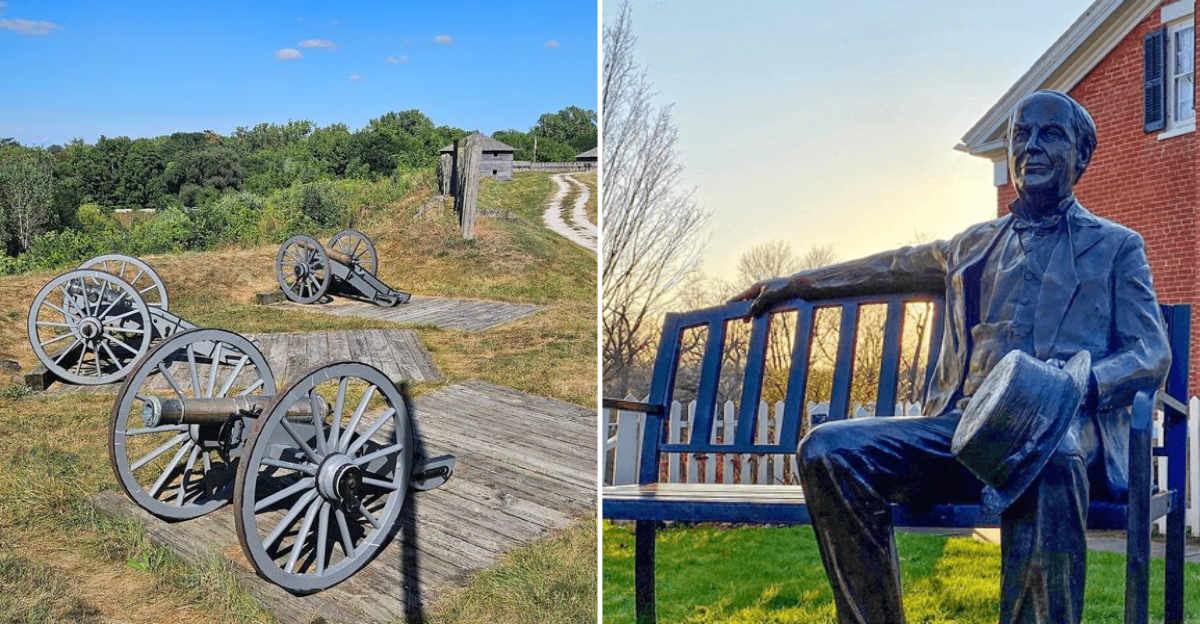
Ohio has a way of surprising me every time I think I have it figured out. Beneath wide skies and rolling farmland, you will run into ancient earthworks built thousands of years ago, presidential birthplaces, and museums packed with stories most of us never heard in school.
Planning a day trip here turns into a delightful struggle, because you are choosing between a Civil War-era fort, a literary legend’s home, or a mysterious serpent-shaped mound that stretches nearly a quarter mile long.
I have personally explored all thirteen of these spots, and each one delivered something I did not expect in the best possible way.
Bring family, a curious friend, or just yourself and a packed lunch, because these Ohio historic sites can make a 2026 road trip feel like a real adventure. Read on to see which ones deserve the top spots on your list.
1. Fort Meigs Historic Site, Perrysburg, Ohio
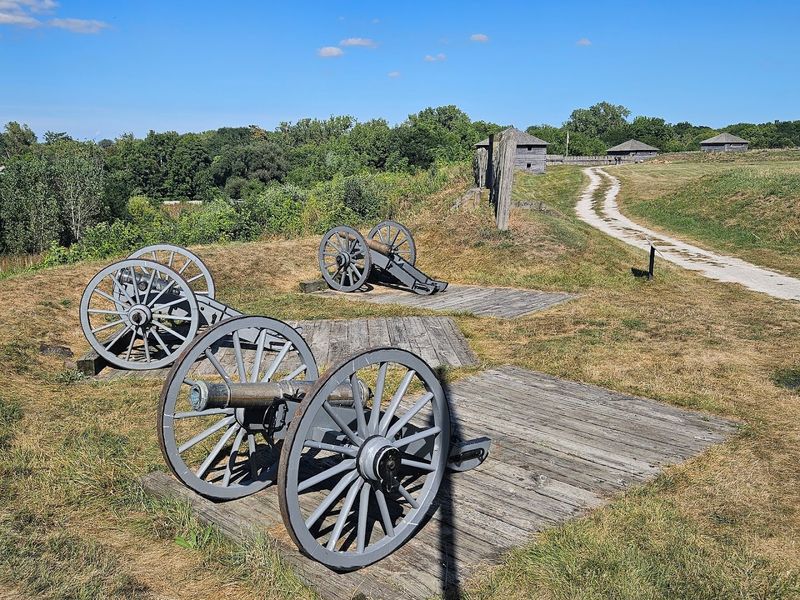
Standing inside the massive reconstructed walls of Fort Meigs feels like stepping straight into the War of 1812.
Located at 29100 West River Road in Perrysburg, Ohio, this site preserves one of the largest wooden walled forts ever built in North America.
The fort played a critical role in defending the Northwest Territory, and the story of its two sieges in 1813 is genuinely gripping.
You can walk through blockhouses, explore artillery exhibits, and watch living history demonstrations that bring the period to life in a way no textbook ever could.
The grounds are beautifully maintained, and interpretive signs throughout make it easy for visitors of all ages to follow along.
Kids especially love seeing the cannons up close, and the museum inside offers detailed displays about the soldiers, Native American allies, and commanders who shaped the battle.
Plan to spend at least two to three hours here. Fort Meigs rewards every curious visitor who walks through its gates.
2. James A. Garfield National Historic Site, Mentor, Ohio
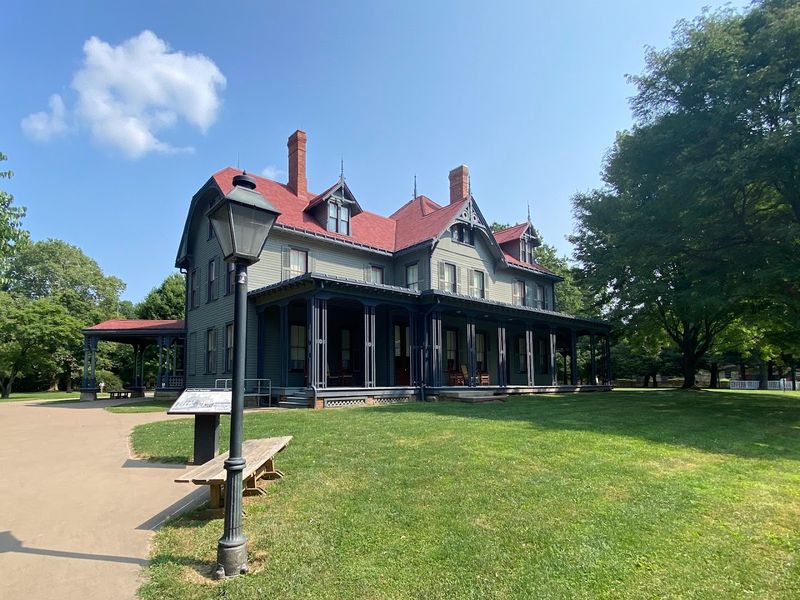
Not every president gets a Victorian mansion that doubles as a campaign headquarters, but James A. Garfield did.
Lawnfield, as locals call it, sits at 8095 Mentor Avenue in Mentor, Ohio, and it is one of the most important presidential homes in the state.
Garfield actually ran his famous “Front Porch Campaign” of 1880 from right here, greeting thousands of supporters on this very property.
Guided tours take you through beautifully restored rooms filled with original furnishings, family portraits, and personal artifacts that reveal the man behind the presidency.
The carriage house has been converted into a visitor center with engaging exhibits about Garfield’s rise from a log cabin childhood to the White House.
The grounds are peaceful and well-kept, making it a lovely spot to linger between tours.
History lovers and casual visitors alike tend to leave with a newfound respect for a president who is often overlooked. Garfield’s story deserves far more attention than it typically gets.
3. National McKinley Birthplace Memorial Museum, Niles, Ohio

Few small Ohio towns carry the presidential pride that Niles does, and this stunning neoclassical building is the reason why.
The National McKinley Birthplace Memorial Museum at 40 North Main Street in Niles, Ohio, honors William McKinley, the 25th President of the United States and a native son of this northeast Ohio community.
The marble structure itself is worth the visit before you even step inside, with its grand columns and sweeping stone staircase creating an impression that feels almost Roman.
Inside, the museum holds exhibits covering McKinley’s political career, his time during the Civil War, and his two terms in the White House.
The memorial room at the center of the building is especially moving, with a large bronze statue of McKinley standing in quiet dignity.
The attached library and research center make it a destination for history enthusiasts who want to go deeper.
Admission is very affordable, and the staff are passionate guides. You will leave Niles knowing far more than when you arrived.
4. National First Ladies Library & Museum, Canton, Ohio
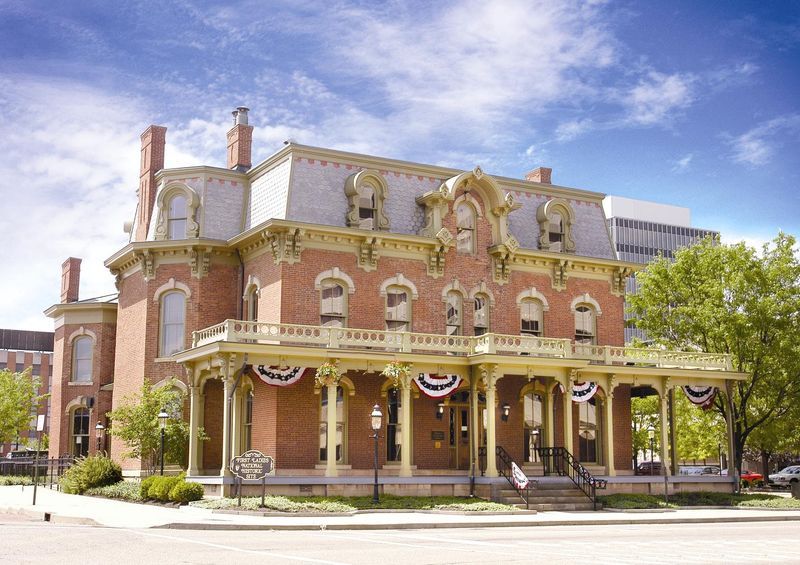
There is no other museum quite like this one anywhere in the country, and that alone makes it worth the drive to Canton.
The National First Ladies Library and Museum at 205 S. Market Ave. in Canton, Ohio, is dedicated entirely to the women who stood beside America’s presidents and shaped the nation in their own powerful ways.
The nearby Saxton-McKinley House at 331 S. Market Ave. is the beautifully restored Victorian home with direct ties to Ida Saxton McKinley, wife of President William McKinley, giving the site itself a rich personal history.
Exhibits highlight the accomplishments, advocacy work, and personal stories of every First Lady from Martha Washington to the present day.
The museum includes exhibit galleries and research resources, making it a valuable destination for students and historians.
Guided tours are available and highly recommended, as the docents bring each story to life with warmth and detail.
Canton is already known for the Pro Football Hall of Fame, but this museum proves the city has serious historical depth beyond the gridiron.
5. Harriet Beecher Stowe House, Cincinnati, Ohio
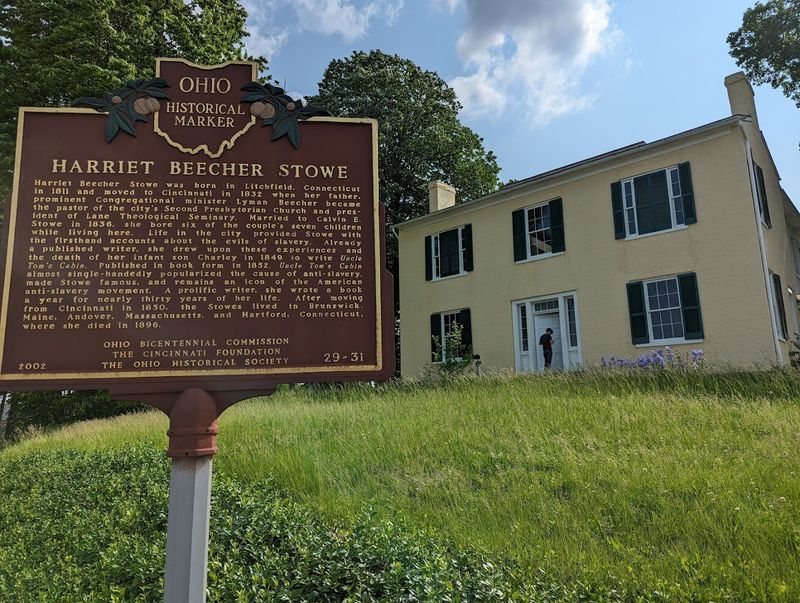
A book written by a woman living in this Cincinnati home helped change the course of American history, and that is not an overstatement.
The Harriet Beecher Stowe House at 2950 Gilbert Ave. in Cincinnati, Ohio, is where the author of “Uncle Tom’s Cabin” lived during one of the most formative periods of her life.
Stowe witnessed the harsh realities of slavery firsthand while living near the Ohio River, and those experiences deeply shaped the novel that sparked national outrage over the institution of slavery.
The house has been carefully restored and now serves as a cultural center and museum dedicated to Stowe’s legacy and the broader abolitionist movement.
Exhibits inside explore her writing process, family life, and lasting influence on American literature and civil rights history.
The neighborhood itself carries layers of history, and the museum staff do a wonderful job connecting Stowe’s story to the present.
Visiting here is a quiet but powerful experience that stays with you long after you have driven home.
6. Ohio Statehouse, Columbus, Ohio

Right in the heart of Columbus, a building that has witnessed over 150 years of Ohio history still stands as one of the finest examples of Greek Revival architecture in the entire country.
The Ohio Statehouse at 1 Capitol Square in Columbus, Ohio, is an active government building and a free public museum all at once, which makes it a uniquely accessible historic destination.
The rotunda is breathtaking, with its soaring ceilings, intricate stonework, and stained glass details that catch the light in remarkable ways.
Free guided tours are offered regularly and cover the building’s construction history, the legislative chambers, and the stories of the people who have shaped Ohio’s government over the decades.
The grounds feature impressive monuments and sculptures honoring Civil War soldiers and other historical figures connected to the state.
Because admission is free, it is an ideal stop for families traveling on a budget who still want a rich historical experience.
Columbus is a vibrant city with plenty to explore nearby, making the Statehouse a perfect anchor for a full day of adventure.
7. Hopewell Culture National Historical Park, Chillicothe, Ohio
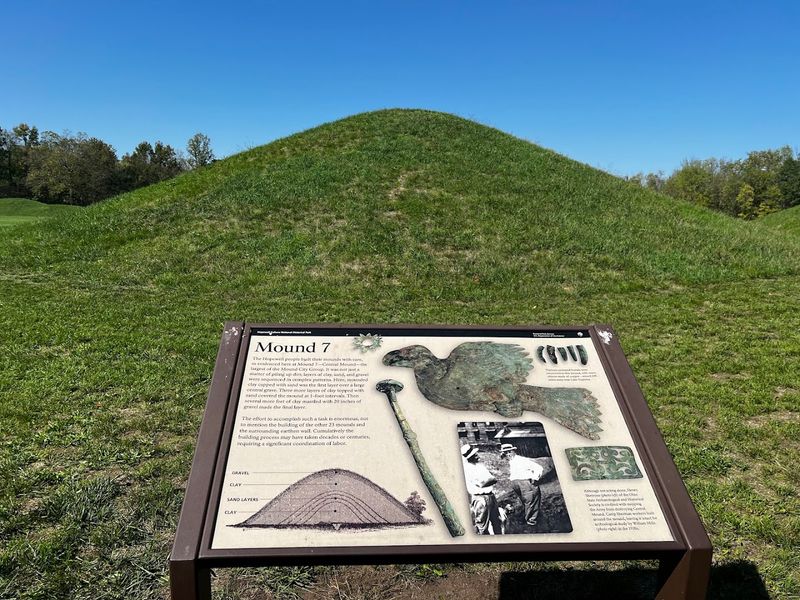
Long before European settlers arrived, a sophisticated civilization was building massive ceremonial earthworks across southern Ohio that still leave archaeologists in awe today.
Hopewell Culture National Historical Park at 16062 State Route 104 in Chillicothe, Ohio, protects some of the most significant prehistoric earthworks in North America.
The Hopewell people constructed these geometric mounds between roughly 100 BCE and 500 CE, and their engineering precision without modern tools is staggering to consider.
The park’s visitor center features excellent exhibits explaining who the Hopewell people were, how they lived, and what the earthworks were likely used for in their ceremonial life.
Walking the mound trails gives you a real sense of the scale and intentionality behind these ancient structures, which are now part of a UNESCO World Heritage Site designation.
The surrounding landscape of rolling hills and open fields adds to the sense of stepping into a distant past.
Morning visits are especially atmospheric when low mist sometimes lingers across the grounds, making the whole scene feel almost otherworldly.
8. Fort Ancient Earthworks & Nature Preserve, Oregonia, Ohio
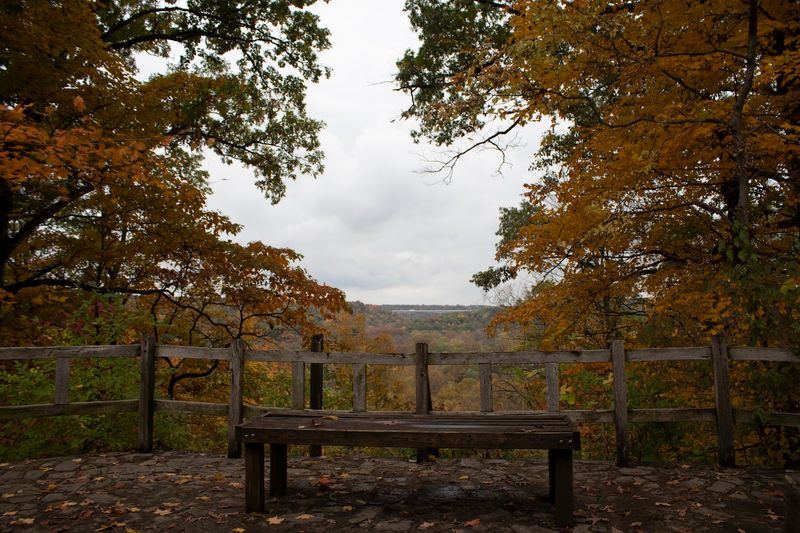
Perched dramatically on a bluff above the Little Miami River, this site has been drawing curious visitors for centuries, and it is easy to understand why.
Fort Ancient Earthworks and Nature Preserve at 6123 State Route 350 in Oregonia, Ohio, encompasses over 3.5 miles of earthen walls built by the Hopewell people nearly 2,000 years ago.
Despite its name, Fort Ancient was never actually a military fort. The walls were likely used for ceremonial and astronomical purposes, and the alignment of certain gateways with sunrise and sunset events is fascinating.
The on-site museum does an excellent job explaining the difference between the ancient Hopewell builders and the later Fort Ancient culture that also occupied the area.
Hiking the trails through the preserve is a genuine pleasure, with scenic overlooks of the river valley rewarding those who take their time.
The combination of natural beauty and deep historical significance makes this one of the most layered destinations on this entire list.
Pack comfortable shoes and a water bottle, because you will want to explore every trail available.
9. Serpent Mound, Peebles, Ohio
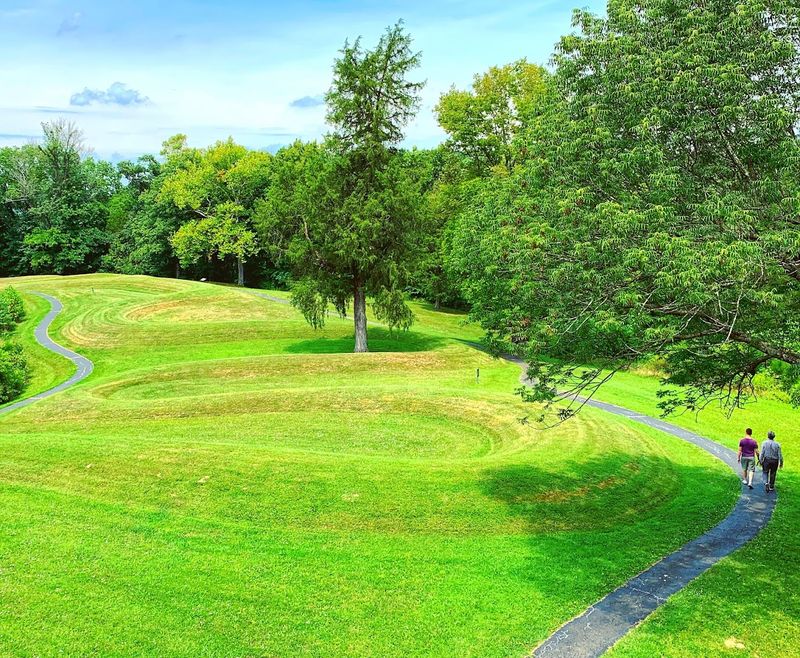
Stretching nearly 1,348 feet across a ridge in Adams County, this ancient effigy mound is one of the most visually striking prehistoric sites in the entire world.
Serpent Mound at 3850 State Route 73 in Peebles, Ohio, was built by ancient American Indian cultures of Ohio and has puzzled researchers for generations with its precise serpentine shape and astronomical alignments.
The mound depicts a giant uncoiling serpent, and the full scale of the design becomes truly jaw-dropping as you explore the site and surrounding viewpoints.
A museum near the entrance provides helpful context about the various theories surrounding the mound’s construction, purpose, and the people who built it.
The surrounding park features pleasant walking paths along the ridge, with lovely views of Brush Creek in the valley below.
Visiting during the summer solstice is particularly popular, as the serpent’s head aligns with the setting sun in a way that feels intentional and awe-inspiring.
Few historic sites in Ohio spark the imagination quite as powerfully as this one does.
10. Newark Earthworks (Great Circle), Heath, Ohio
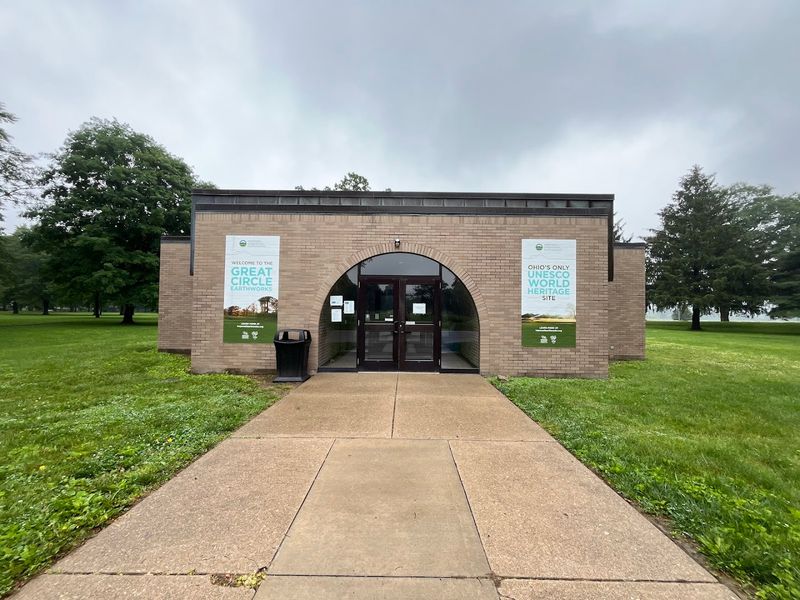
Built over 2,000 years ago, the Newark Earthworks represent one of the largest geometric earthwork complexes ever constructed in human history, and the Great Circle is its most accessible centerpiece.
Located at 455 Hebron Road in Heath, Ohio, the Great Circle Earthworks features walls that reach up to 14 feet high and enclose an interior space of about 30 acres.
Walking along the top of the earthen walls gives you a perspective that photographs simply cannot capture. The sheer size of the enclosure becomes real only when you are standing inside it.
The on-site museum offers thoughtful exhibits about the Hopewell people who built these structures, along with artifacts recovered from nearby excavations.
The Newark Earthworks are now part of the Hopewell Ceremonial Earthworks UNESCO World Heritage Site, adding international recognition to what Ohioans have long treasured.
The site is well-maintained and easy to navigate, making it a great stop for families with younger children who can run across the wide open interior.
Few places in Ohio make ancient history feel so immediate and so vast at the same time.
11. Campus Martius Museum, Marietta, Ohio
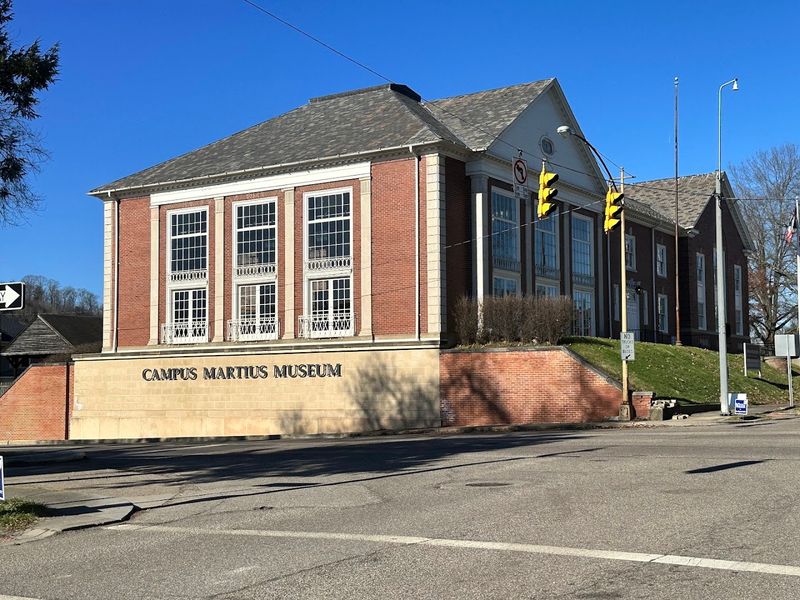
Marietta holds a special distinction that most Ohioans know but many visitors miss: it was the first permanent American settlement in the Northwest Territory, established in 1788.
The Campus Martius Museum at 601 Second Street in Marietta, Ohio, tells that founding story with remarkable depth and detail, covering the brave settlers who crossed the Ohio River and built a new life from scratch.
The museum preserves an actual portion of the original Campus Martius fortified settlement, including a surviving structure from Rufus Putnam’s original compound, which is genuinely rare.
Exhibits cover everything from Native American history in the region to the lives of early pioneers, the flatboat era on the Ohio River, and the political vision behind the Northwest Ordinance.
The Ohio River Museum, located nearby and managed by the same organization, pairs beautifully with a Campus Martius visit for a full day of exploration.
Marietta itself is a charming small city with great food options and a walkable historic downtown that rewards those who linger.
This is a spot that earns its place on any serious Ohio history itinerary.
12. Paul Laurence Dunbar House Historic Site, Dayton, Ohio
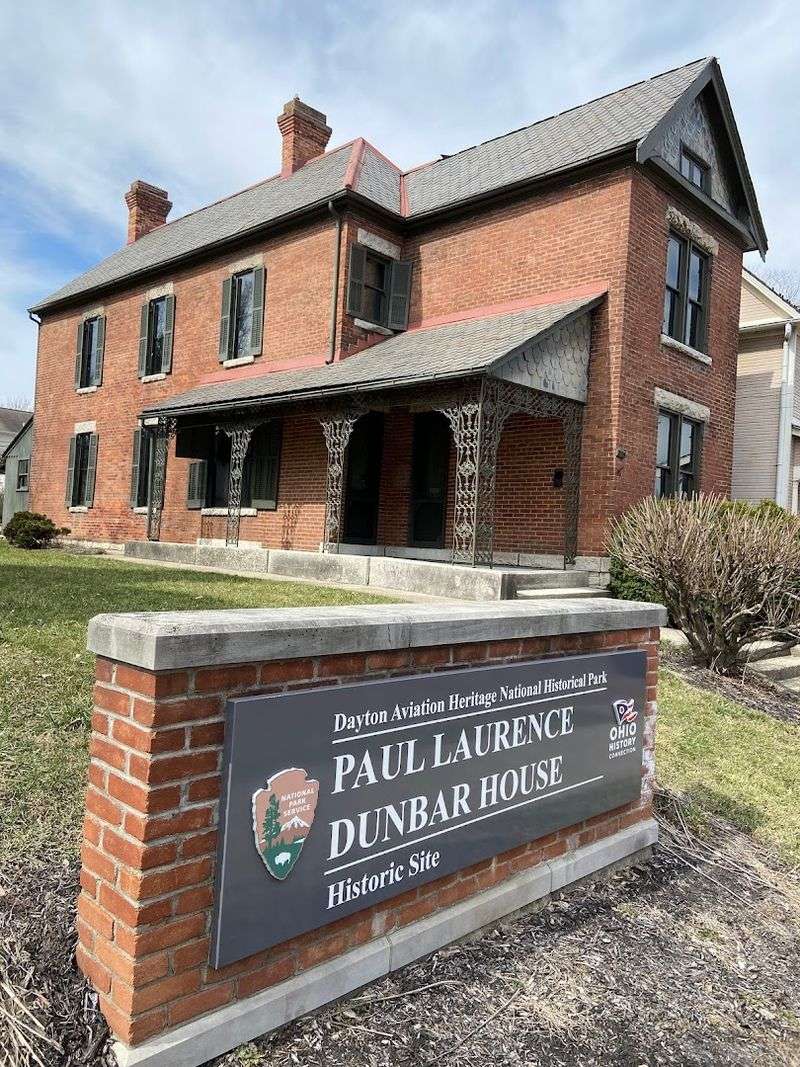
Poetry has the power to capture an entire era, and few American poets captured the late 19th century Black experience with as much beauty and honesty as Paul Laurence Dunbar.
The Paul Laurence Dunbar House Historic Site at 219 North Paul Laurence Dunbar Street in Dayton, Ohio, preserves the home where the celebrated poet spent the final years of his short but extraordinary life.
Dunbar was born in Dayton in 1872, the son of formerly enslaved parents, and rose to national and international fame before the age of 30 through his dialect poetry, novels, and essays.
The house has been restored to reflect how it looked when Dunbar lived there, complete with original furnishings, his writing desk, and personal belongings that create an intimate portrait of the man.
Guided tours are offered by knowledgeable rangers who share stories about Dunbar’s friendships, including his connection to the Wright Brothers, who also called Dayton home.
The site is managed by the Ohio History Connection and offers a moving, thoughtful experience that celebrates a literary legacy long overdue for wider recognition.
13. Thomas Edison Birthplace Museum, Milan, Ohio
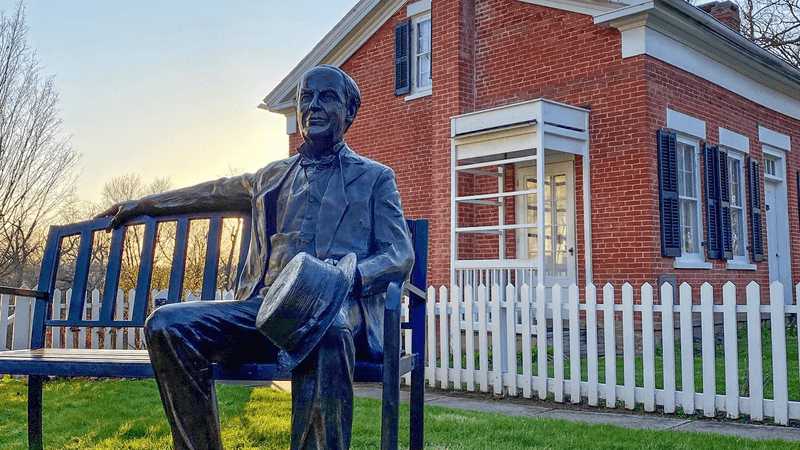
Before the light bulb, the phonograph, and over a thousand other patents, there was a small brick house in Milan, Ohio, where one of history’s most inventive minds took his first breath.
The Thomas Edison Birthplace Museum at 9 N. Edison Dr. in Milan, Ohio, is a charmingly preserved seven-room home where Edison was born in 1847 and spent his earliest childhood years.
The house is furnished with period-appropriate pieces and displays some original Edison family belongings, giving visitors a genuine sense of the modest beginnings behind a towering legacy.
Guided tours led by enthusiastic docents explain Edison’s early life, his family’s history, and the surprising story of why the family eventually left Milan for Michigan.
The village of Milan itself is beautifully preserved, with a historic town square and other 19th-century buildings that make the whole area feel like a living postcard from another era.
The museum gift shop carries Edison-themed books, educational toys, and souvenirs that make for excellent keepsakes.
Spark your curiosity and spend an afternoon here. Milan rewards visitors who appreciate the quiet power of a great origin story.