
It’s Easy To Walk Right Past This Free Illinois Landmark Hiding The World’s Largest Tiffany Dome
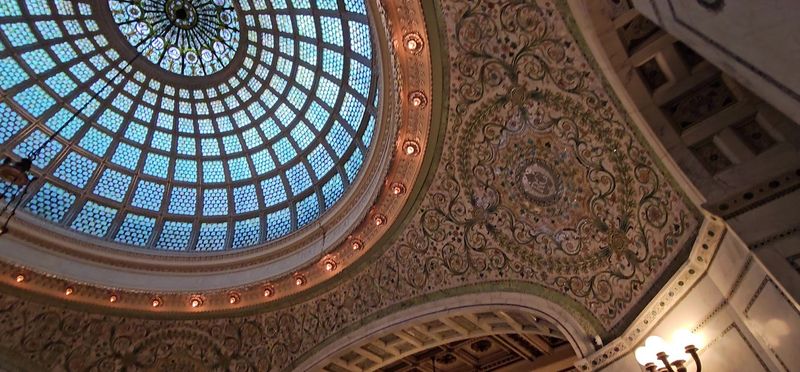
Roughly 30,000 pieces of glass, each cut like a fish scale, hang over one room in Illinois. Nobody charges you a dime to stand under them.
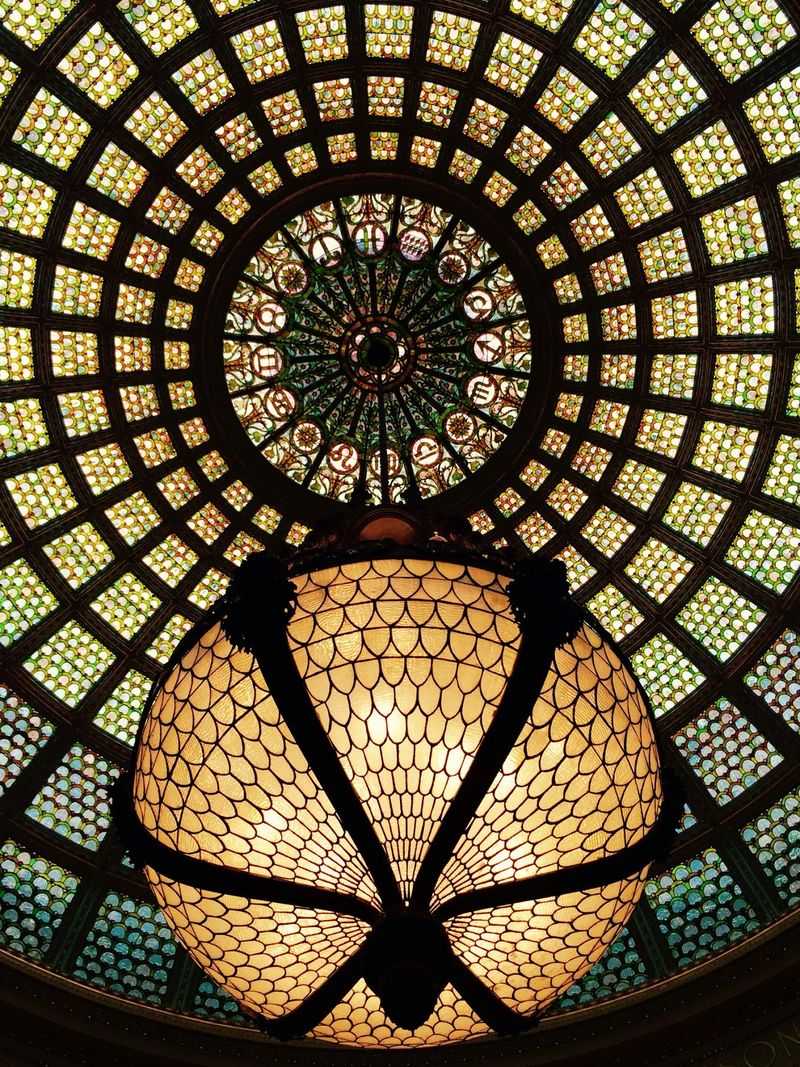
The dome stretches 38 feet across. It holds the title of the largest Tiffany glass dome on Earth.
Yet the building around it looks calm and serious from the sidewalk, so plenty of folks stroll by without a clue.
I like how this treasure started out as a place to pick up library books. Ordinary people came here for reading material and got a ceiling fit for royalty.
That spirit of sharing beauty with everyone still holds today.
The best part might be how quick it is. You can go from the front door to full view in about half a minute.
So why have so many Illinois families never looked up?
A Free Masterpiece Waiting Right Across From Millennium Park
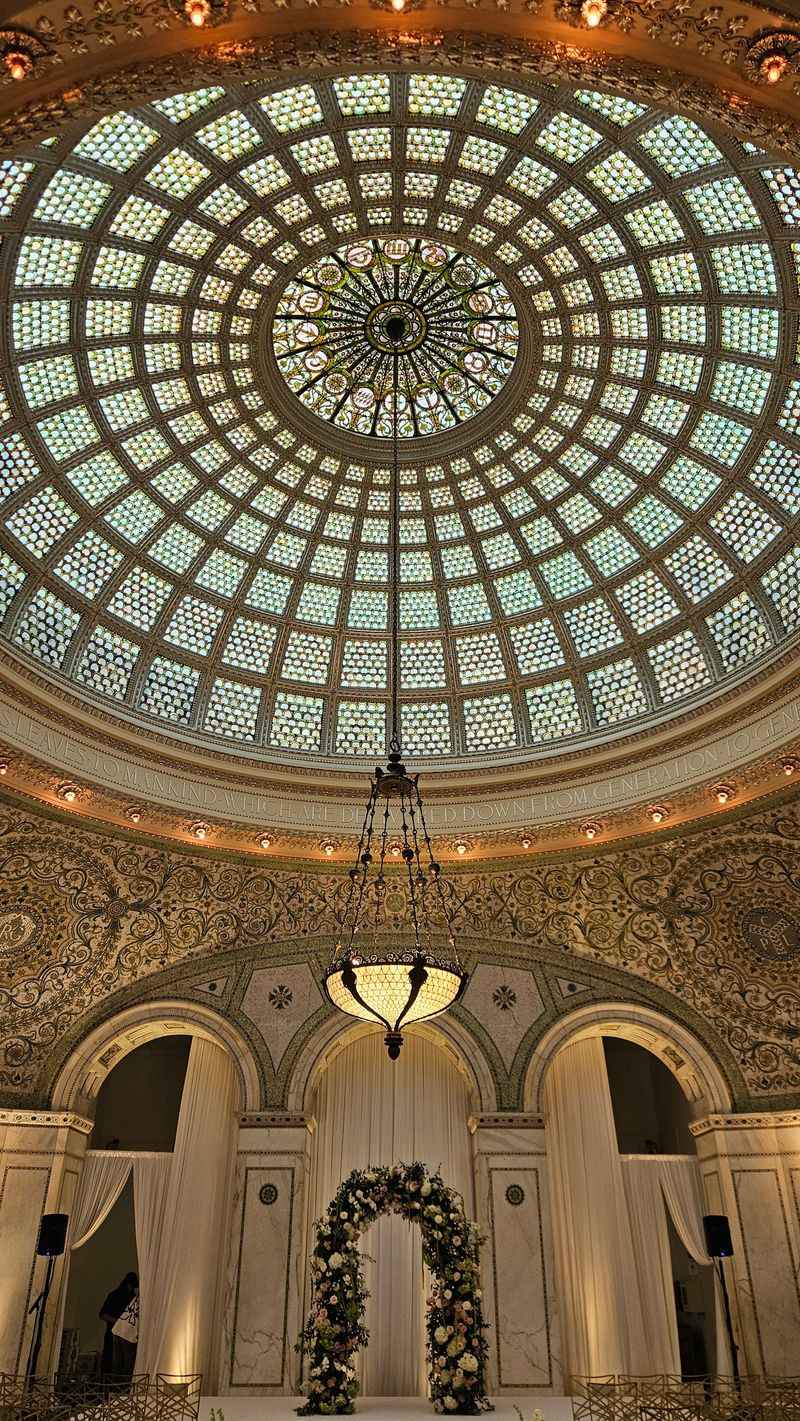
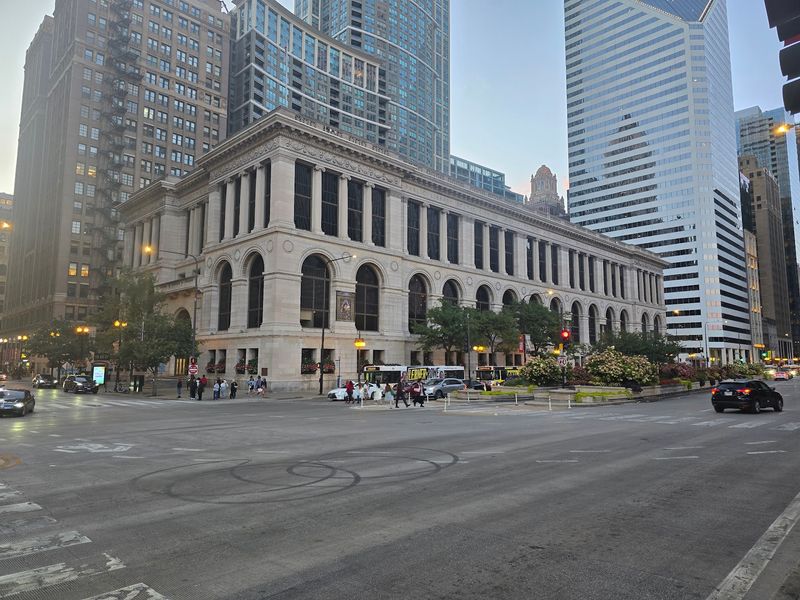
Sitting quietly in the Chicago Loop, the Tiffany Dome lives inside the Chicago Cultural Center. The building faces Michigan Avenue, right across the street from Millennium Park.
That location makes it almost too easy to overlook. Crowds rush toward the Bean and the Crown Fountain, while this pale stone landmark just waits politely.
Inside, the reward is wild. The Chicago Cultural Center holds the largest Tiffany glass dome in the world, and admission is free.
No tickets, no timed entry, no awkward wallet moment at the door. You simply walk in and head upstairs.
The building runs as a civic landmark for the City of Chicago. It also hosts exhibitions, music, dance, films, and family events throughout the year.
Still, the dome is the headliner. It sits in a grand space called Preston Bradley Hall, and getting there takes almost no effort.
For Illinois families hunting for an outing that costs nothing, this is a rare find. You get world-record art in the middle of downtown Chicago.
And honestly, bragging rights come included. Few people can say they’ve stood under the biggest Tiffany dome anywhere.
Library Books Once Changed Hands Under All That Glass
Back in 1897, this building opened as Chicago’s central public library. The room now called Preston Bradley Hall served a very practical purpose.
Residents came here to pick up the books they had requested. Think about that for a second.
Checking out a novel under a glass masterpiece sounds like a fairy tale.
The city clearly wanted its library to feel important. Building something this lavish for everyday readers sent a message about knowledge belonging to everyone.
Times changed, though. The building was once considered for demolition, which feels hard to believe today.
Thankfully, it survived. In 1978, the old library became the nation’s first free municipal cultural center.
That shift kept the doors open to the public. The same idea that drove the original library still guides the place now.
I believe that history makes a visit feel richer. You aren’t just admiring a pretty ceiling.
You’re standing in a room built so regular Chicagoans could enjoy beauty without paying for it. More than a century later, that promise still holds.
Not many buildings can say that.
Thirty Thousand Fish Scales Of Glass Overhead
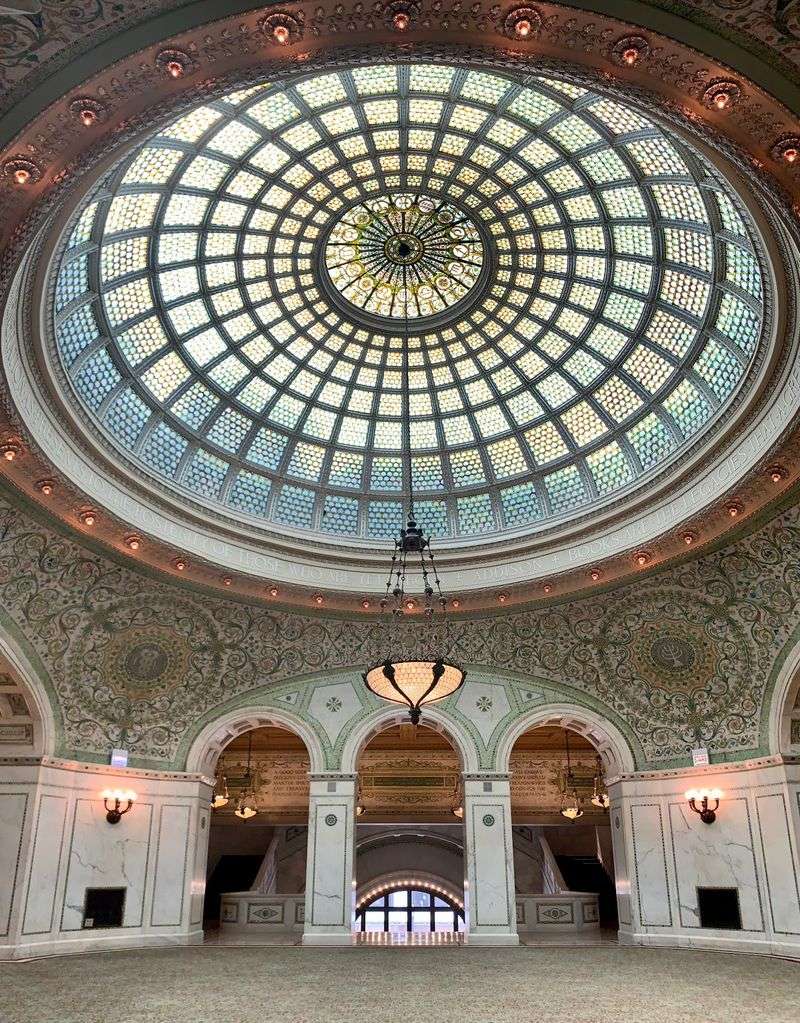
Count them if you dare. The dome holds roughly 30,000 individual pieces of glass.
Each piece was cut into the shape of a fish scale. Together they form a shimmering pattern that seems to ripple above the room.
The numbers keep getting bigger. The dome measures 38 feet in diameter and covers more than 1,000 square feet.
An ornate cast iron frame holds every piece in place. The result looks delicate, yet it has stayed up there since the 1890s.
The glass itself is Tiffany Favrile glass. That special type gives the dome its glowing, layered color.
Natural light plays a big role in the show. The colors can look different depending on the weather outside.
Bright days tend to bring out the most dazzle. On a gray afternoon, the glow feels softer and more muted.
So if you can plan around the forecast, aim for sunshine. Your neck will get a workout either way.
Kids especially love the scale idea. Tell them it looks like a giant glass fish swam onto the ceiling, and watch them stare.
The Mosaic Wizard Behind The Design
Jacob A. Holzer is the name to remember here.
He served as Tiffany’s leading mosaicist in the late 1800s and designed this dome.
His work showed off what Tiffany’s glassmaking could really do. The secret was a method called favrile.
Patented in 1894, the favrile technique mixes glass of different colors while it’s still molten. That blending creates a luminous, almost pearly shimmer.
The effect looks a lot like paint. Shades melt into each other instead of sitting in flat, separate blocks.
That’s why the dome feels alive. The colors don’t just sit there.
They seem to shift as light moves across them.
Holzer’s dome became a showcase for the whole process. It proved stained glass could reach the same subtle depth as a painting.
Here’s a fun bit for curious kids. Every piece overhead was made by hand, then fitted into place one at a time.
That’s a staggering amount of patience. Next time someone complains about a 500-piece puzzle, point them toward this ceiling.
It puts every rainy-day project in perspective.
Tiles, Quotes, And Marble Wrapping The Whole Room
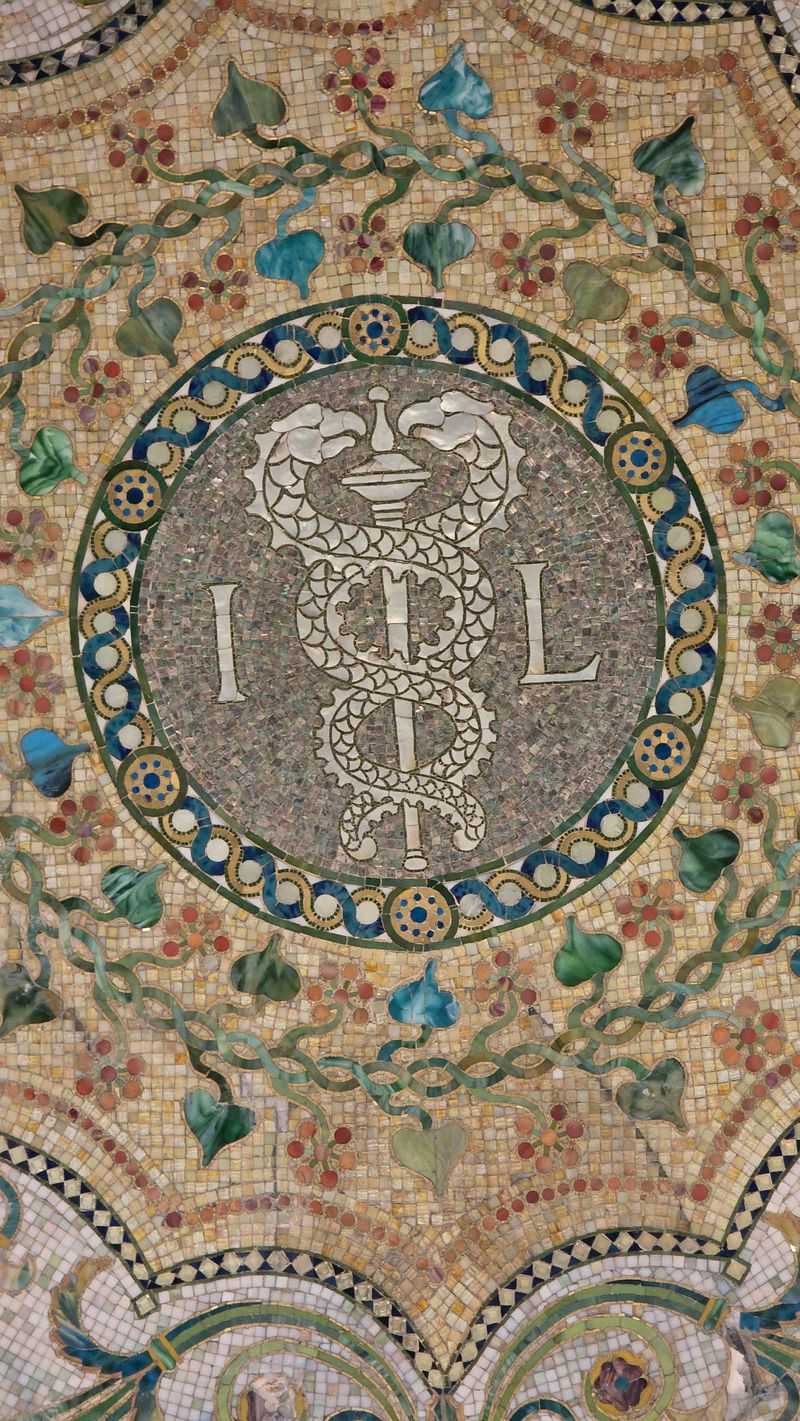
Look down from the dome for a moment. The walls around it deserve their own spotlight.
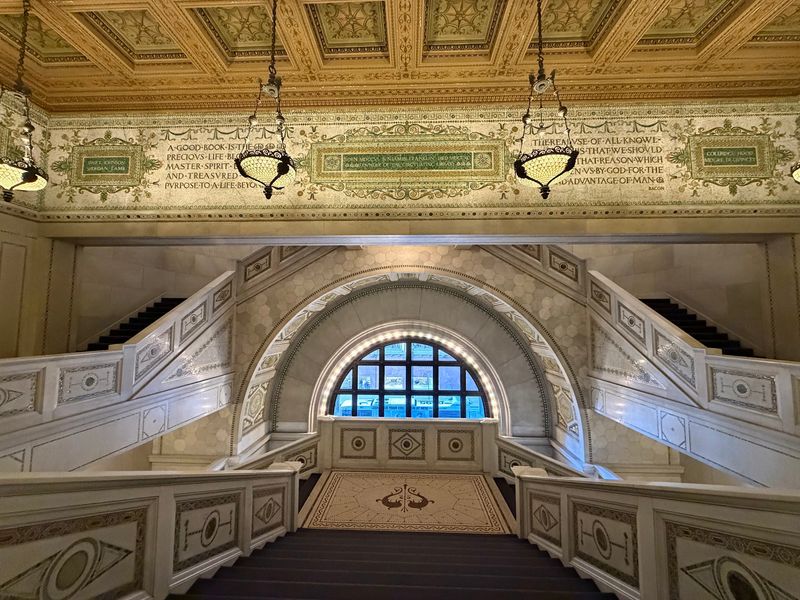
Intricate mosaic tiles cover the interior with detailed designs. Symbols, names, and quotes surround the dome, all crafted in tile.
It’s easy to lose track of time studying them. The tile work alone could hold your attention far longer than you planned.
The outside of the building tells a calmer story. Its neoclassical facade wears Indiana limestone in a compact, symmetrical shape.
Inside, the mood flips completely. The interior shows off rich materials from the moment you enter.
The staircases are another highlight. They’re large, grand, and built with easy steps that make the climb pleasant.
That contrast is part of the charm. A sensible stone exterior hides a jewel box of glass, marble, and mosaic.
Families can turn the walls into a game. Ask kids to find a symbol, a name, or a quote hidden in the tiles.
Grandparents might enjoy reading the inscriptions slowly. Everyone ends up noticing something different, which keeps the visit lively.
Surprise, There’s A Second Glass Dome Too
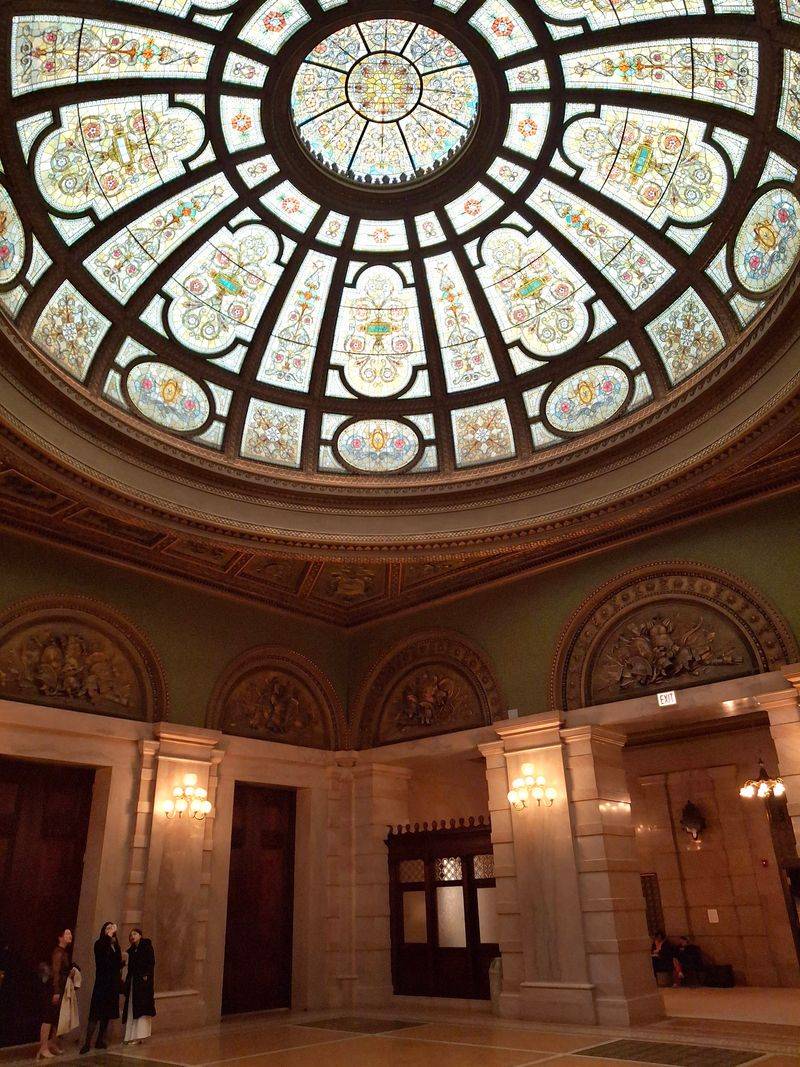
One world-record dome would be plenty for most buildings. The Chicago Cultural Center decided to have two glass domes anyway.
The second one sits in the Grand Army of the Republic Hall. Louis J.
Millet created it.
Millet was a contemporary and rival of Tiffany Studios. So in a sense, two glass titans share one roof.
The room itself carries real weight. It was built as a Civil War memorial, with military motifs worked into the design.
Green, veined Vermont marble adds to the striking look. The space feels different from Preston Bradley Hall, more solemn and stately.
Visiting both domes makes a fun comparison. You can decide which style speaks to you more.
That turns a quick stop into a mini art lesson. Kids can vote for a favorite, and parents can quietly pick their own.
Most people come only for the Tiffany Dome. Seeing the Millet dome gives you a little extra Illinois trivia to share later.
Two domes, zero dollars. That’s an easy win for any budget-minded day trip.
Sunlight Came Back After A Careful Restoration
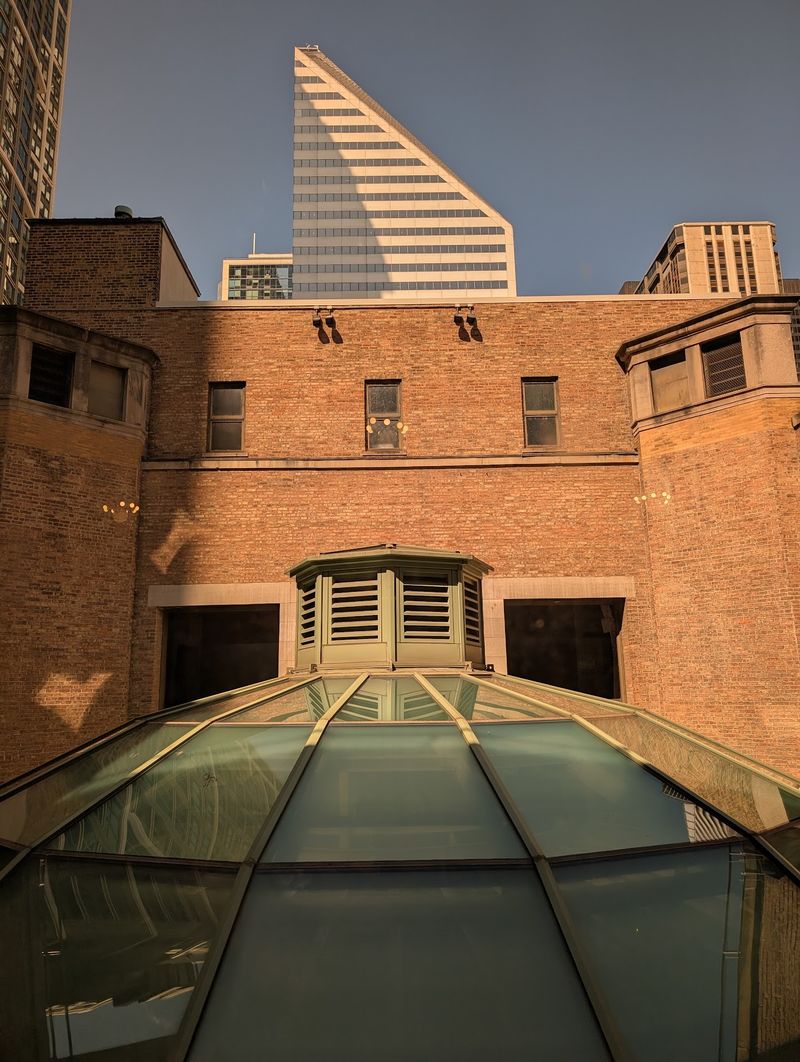
For years, the dome didn’t glow the way Tiffany intended. An older, opaque exterior dome blocked the natural light.
A major restoration finished in 2008 fixed that. Crews replaced the outer covering with a translucent, energy-efficient one.
Daylight finally reached the glass again. The dome returned to the look its makers originally pictured.
The care didn’t stop there. Between 2021 and 2022, another extensive renovation brought out more of the building’s original beauty.
That project focused on the Tiffany Dome. It also restored decorative finishes in the Grand Army of the Republic rooms.
Thanks to that work, the building looks fully restored today. Considering it once faced demolition, the turnaround feels remarkable.
This is a story Illinois can be proud of. A city chose to save and polish its treasure rather than lose it.
Now visitors get the full effect. When the sun cooperates, the colors pour down across the hall.
It’s a good reminder that patience pays off. Sometimes old things just need a little light to shine again.
Concerts, Ballet, And Exhibits Share The Spotlight
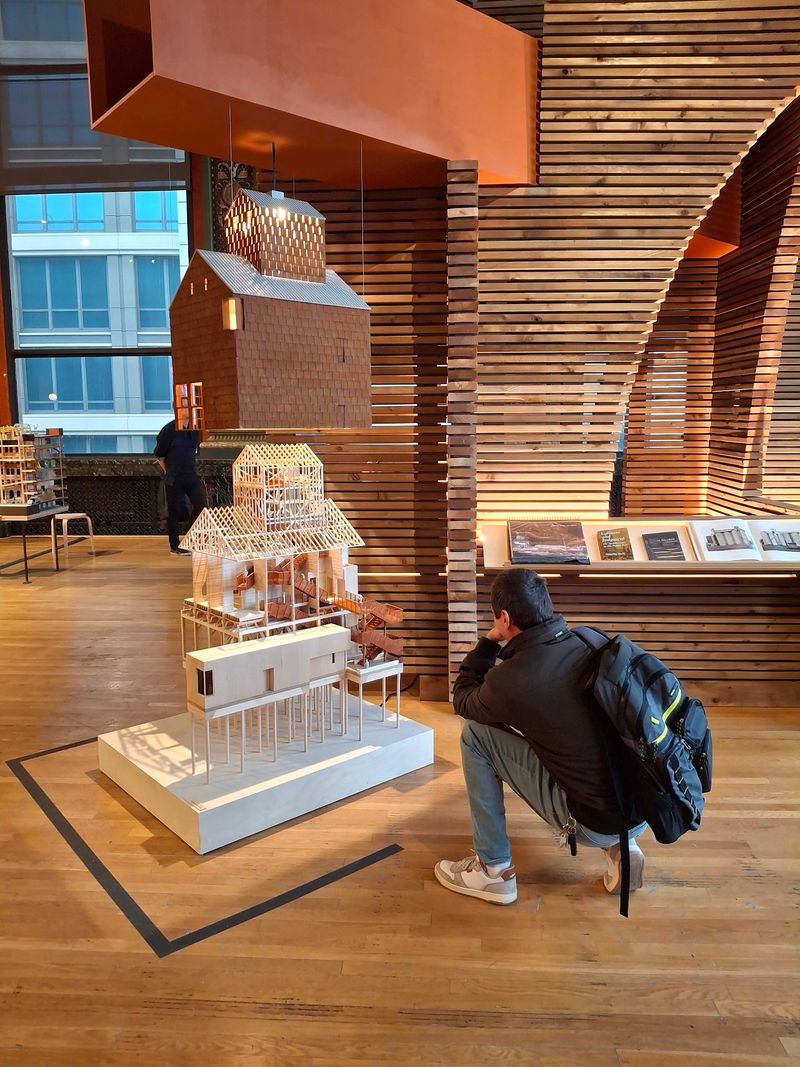
Timing can turn a quick peek into something memorable. The building hosts a full calendar of free exhibitions, music, dance, films, and family events.
Performances sometimes happen right beneath the glass. Free afternoon ballet and a candlelit holiday string quartet concert have both filled the space.
Hearing music under that dome sounds unforgettable. It’s the kind of outing kids might talk about long after.
Temporary exhibitions also sit on the same level as the dome. They’re worth wandering through while you’re up there.
Guided tours have been offered too. They’re a great way to learn the stories behind the details.
One heads-up helps. Preston Bradley Hall hosts private events like weddings, so access under the dome can be limited at times.
Photo rules can also change depending on what’s happening. Checking the schedule before you go saves disappointment.
For those who love a peaceful mood, calm moments here feel almost magical. For those who love a show, events add extra sparkle.
Either way, the dome sets an elegant stage for whatever unfolds below.
Plan A Breezy Visit And Pair It With The Lakefront
Good news for busy schedules. This visit doesn’t eat your whole day.
The Chicago Cultural Center sits at 78 E Washington St, Chicago, IL 60602. Hours run 10 AM to 5 PM every day of the week.
Head up to the third floor and you’ll spot the dome right away. Most people spend about 15 to 30 minutes enjoying it.
That short stay makes pairing easy. Millennium Park waits across the street with Cloud Gate, the Frank Gehry-designed pavilion, and the Crown Fountain.
The Art Institute of Chicago is just a few blocks south. Walk farther and you’ll reach Grant Park and Buckingham Fountain.
Parking in the nearby Millennium Park Garage, Grant Park North, puts you close when you return to street level. Reserving ahead can help.
So is it worth the trip? For a free stop with world-record art, I can’t imagine skipping it.
Bring the grandparents, the kids, or just yourself. Aim for a sunny day, look up, and let Illinois surprise you.
Just don’t walk right past it.