
17 Kansas Dinner Table Traditions From The 1960s That Would Leave Today’s Kids Wondering
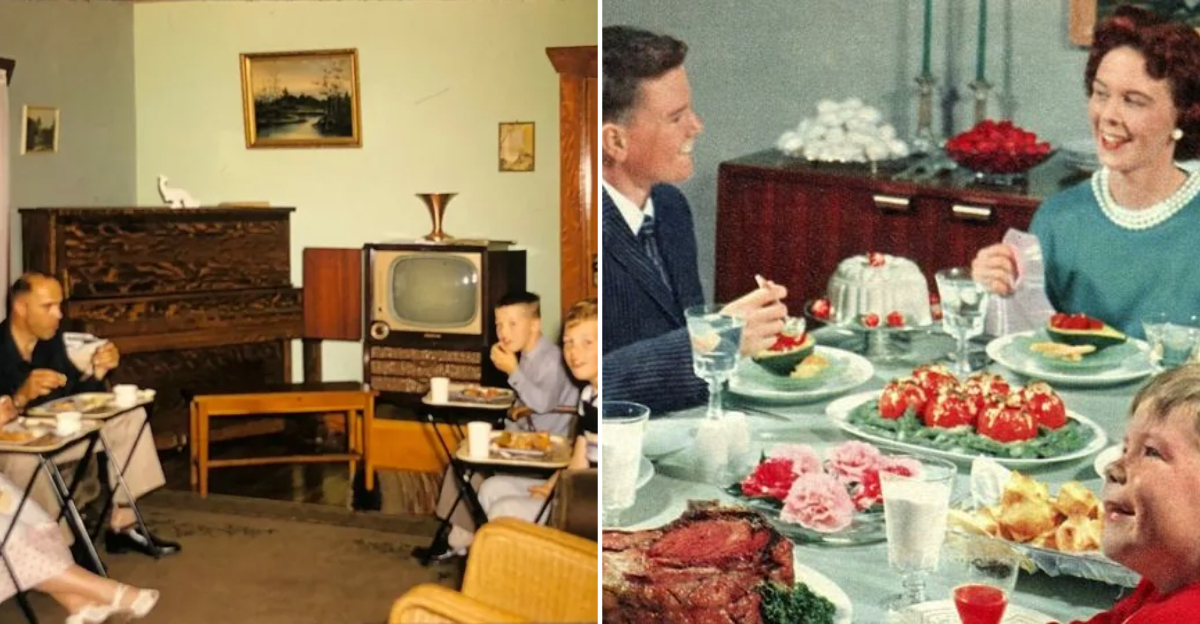
Kansas dinner tables in the 1960s ran on rhythms kids today would barely recognize. Prayers came before forks moved. Relish trays took center stage. Jell-O was considered a salad, and nobody questioned it.
Casseroles traveled to church basements in Pyrex dishes, and cinnamon rolls showed up next to chili like they belonged there all along. Farmhouse kitchens smelled like percolator coffee, Sunday roast, and yeast rolls cooling under tea towels.
These traditions shaped how families gathered, ate, and connected around simple, hearty food that stretched budgets and filled bellies after long days in the wheat fields.
Grace before plates
Hands folded, heads bowed, one short prayer for rain on the wheat and thanks for what sat steaming on the table. Silence lasted a breath, then serving spoons started moving. My grandma never let anyone grab a roll before the amen landed.
Gratitude felt as routine as setting the table. Kids learned early that patience came before potatoes. Nobody scrolled phones or rushed the moment, because phones stayed attached to kitchen walls and reverence mattered more than speed.
Friday night fish and church potlucks
Neighborhoods mixed casseroles and conversation in fellowship halls. Pyrex cornflower dishes lined long tables while kids traded brownies like baseball cards.
Someone always brought tuna-noodle, and someone else brought ambrosia salad that wobbled under Cool Whip.
Fridays meant fish sticks at home or fried catfish at church suppers. Recipes got swapped over coffee, and leftovers rode home in foil-covered plates.
Community tasted like green bean casserole and felt like belonging.
Chili with cinnamon rolls
Bowls of chili arrived first, warm and savory. Cinnamon rolls followed as the sweet sidekick, a Kansas school-lunch habit that snuck into home kitchens and stayed. I remember dunking mine into the broth when my mom looked away.
Teachers served both without apology, and nobody questioned the pairing. Sweet met spicy in a way that made perfect sense to Midwestern palates. Today’s kids would stare at the combo like it landed from Mars.
Chicken and noodles over mashed potatoes
Double-carb comfort felt perfectly normal. Slow-simmered noodles blanketed fluffy potatoes, a farmhouse fix for cold snaps and long homework nights. My aunt made hers every Sunday after church, and we scraped our plates clean every time.
Chicken simmered for hours, then got shredded back into the broth. Egg noodles went in last, thick and chewy. Carbs on carbs fueled chores and growing kids without a single complaint.
Bierocks on baking day
Volga German heritage met Kansas wheat. Yeasted pockets stuffed with beef, cabbage, and onion cooled on tea towels while everyone circled like hawks. My mom made two dozen at a time, and they vanished before they hit room temperature.
Dough rose twice, filling simmered low, and the house smelled like butter and onions for hours. Bierocks traveled to harvest fields wrapped in wax paper. Portable, filling, and proof that Kansas food history ran deep.
Relish trays in the center
Cut-glass platters held celery sticks, radishes, carrot coins, dill spears, and bread-and-butter pickles. Crunch between bites counted as manners and a palate cleanser. Every dinner table featured one, whether company came or not.
Kids crunched radishes while waiting for the roast to finish resting. Adults nibbled pickles between conversation. Relish trays added color, texture, and a touch of elegance to everyday suppers without extra cooking required.
Milk for kids, percolator coffee for adults
Tall glasses of cold milk clinked beside plates, while a percolator gurgled on the counter. The kitchen smelled like roast beef, Folgers, and freshly baked rolls. I drank three glasses every night and still had room for pie.
Coffee brewed strong and hot, refilled throughout the meal. Milk came straight from the fridge, sometimes from a neighbor’s dairy farm.
Beverages stayed simple, predictable, and perfectly suited to hearty Midwestern cooking.
Passing dishes clockwise
No reaching across. Serving bowls traveled to the right, one at a time, so every plate caught a fair scoop of corn, green beans, and noodles. My dad enforced the rule like a referee, even when only four of us sat down.
Order mattered. Manners mattered. Kids learned patience while the mashed potatoes made the full lap. Today’s buffet-style free-for-alls would have scandalized every Kansas grandma at the table.
Clean-plate club
Vegetables needed finishing before dessert. Not one pea left behind if cherry pie waited on the sill. I pushed lima beans around my plate until my mom gave me the look that meant business.
Waste felt wrong when farms fed families and budgets stretched thin. Clean plates honored the work that brought food to the table. Dessert arrived only after proof of effort, and nobody argued the rule.
Harvest suppers in the field
During wheat harvest, dinner rode out in the pickup. Fried chicken, potato salad, and jars of sun tea fed dusty crews perched on tailgates. My grandpa ate standing up, wiping sweat and grease on the same bandana.
Combine engines cooled while families gathered under the open sky. Food tasted better outdoors, seasoned with exhaustion and satisfaction.
Harvest suppers built memories between rows of golden wheat and long summer evenings.
Jell-O and salad that was not salad
Molds shimmered with grated carrots, pineapple, or cottage cheese. Kids poked the wobble, adults called it salad, and everyone ate two spoonfuls. Lime Jell-O with shredded cabbage showed up at every potluck without fail.
Gelatin counted as a vegetable serving in some mysterious 1960s logic. Recipes came from church cookbooks and magazine clippings.
Today’s kids would need a full explanation before taking a single bite of anything that jiggles.
Sandwich bread with butter at every meal
A stack of sliced white bread sat near the butter dish. One swipe kept gravy honest and stretched suppers just a little further. I built tiny butter sandwiches while waiting for the pot roast to get passed my way.
Bread soaked up sauce, filled gaps, and cost almost nothing. Every meal featured it, whether spaghetti or pork chops landed on the plate. Carbs fueled long days, and nobody counted calories or carbs back then.
Aluminum TV trays for Sunday shows
Bonanza or Disney meant living-room nights. TV dinners showed up sometimes, yet plenty of families plated homemade meatloaf on those same fold-up trays. I balanced mine on my knees while Lassie ran across the screen.
Sunday evenings loosened the rules just enough. Trays wobbled, but nobody minded as long as the gravy stayed in bounds. Television brought families together in a new way, and dinner adapted to fit the moment.
Tupperware parties fueling leftovers
Pastel burp-lids sealed tomorrow’s lunches. Moms swapped recipes for tuna-noodle casserole while coffee cake perfumed the room. I played under the table while ladies oohed over lettuce crispers and cake carriers like they struck treasure.
Leftovers became an art form once airtight storage arrived. Tupperware parties mixed socializing with practical shopping, and every kitchen ended up stocked with matching bowls.
Food waste dropped, and lunch boxes got better because of it.
Sunday pot roast with all the fixings
Sunday meant pot roast, slow-cooked until the meat fell apart with a fork. Carrots, potatoes, and onions soaked up every bit of flavor while the whole house smelled like comfort. My job was peeling potatoes, and I hated it until I tasted the reward.
Church ended, and the roast finished at the same time. Timing felt like magic, but it was just practice and a reliable oven. Sundays centered around that one meal, and nobody rushed through it.
Hand-cranked ice cream on the porch
Summer evenings meant taking turns at the crank. Rock salt, ice, and patience turned cream into dessert while fireflies blinked across the yard. I cranked until my arm ached, then ate two bowls to make the effort worth it.
Homemade vanilla beat anything from the store. Neighbors wandered over when they heard the crank going. Ice cream tasted like summer, teamwork, and the satisfaction of making something from scratch together.
Casseroles named after the cook
Every cook had a signature dish that bore her name. Aunt Betty’s chicken casserole, Grandma Ruth’s noodle bake, Mrs. Johnson’s mystery hotdish that nobody could replicate. Recipes traveled by word of mouth, scribbled on index cards, and jealously guarded.
Casseroles fed crowds cheaply and reheated beautifully. One dish meant less cleanup and more time visiting.
Fame came not from fancy techniques but from consistency, and everyone knew whose casserole they wanted at the potluck.