
16 Kentucky Dishes That Locals Swear Should Never Be Changed
What makes a dish sacred?
In Kentucky, it’s a potent blend of tradition, comfort, and fierce local pride. We’re not talking about fleeting food trends here; we’re diving into a realm of culinary bedrock, the kind of meals that evoke memories of Sunday dinners, bustling church potlucks, and the unwavering belief that “this is just how it’s done.”
If you’re a foodie who loves a good debate, or simply someone curious about the soul of a state expressed through its food, you’ve come to the right place. We’ve rounded up 16 Kentucky dishes that are so beloved, so ingrained in the bluegrass identity, that any alteration is met with a resounding “Bless your heart, but no.”
1. Hot Brown Sandwich
Created at Louisville’s Brown Hotel in 1926, this open-faced turkey sandwich stands as Kentucky’s culinary masterpiece. The original recipe combines thick-sliced turkey on toast points, smothered in creamy Mornay sauce, topped with crispy bacon and tomato slices, then broiled until bubbly.
My grandmother would slap away any hand that tried adding avocado or substituting the sauce. Local diners across the state maintain strict adherence to the traditional preparation, though heated debates persist about whether mushrooms belong.
The sandwich’s perfection lies in its balance of textures and flavors – the crunchy bacon against creamy sauce, the savory turkey complemented by the slight acidity of tomatoes.
2. Burgoo Stew
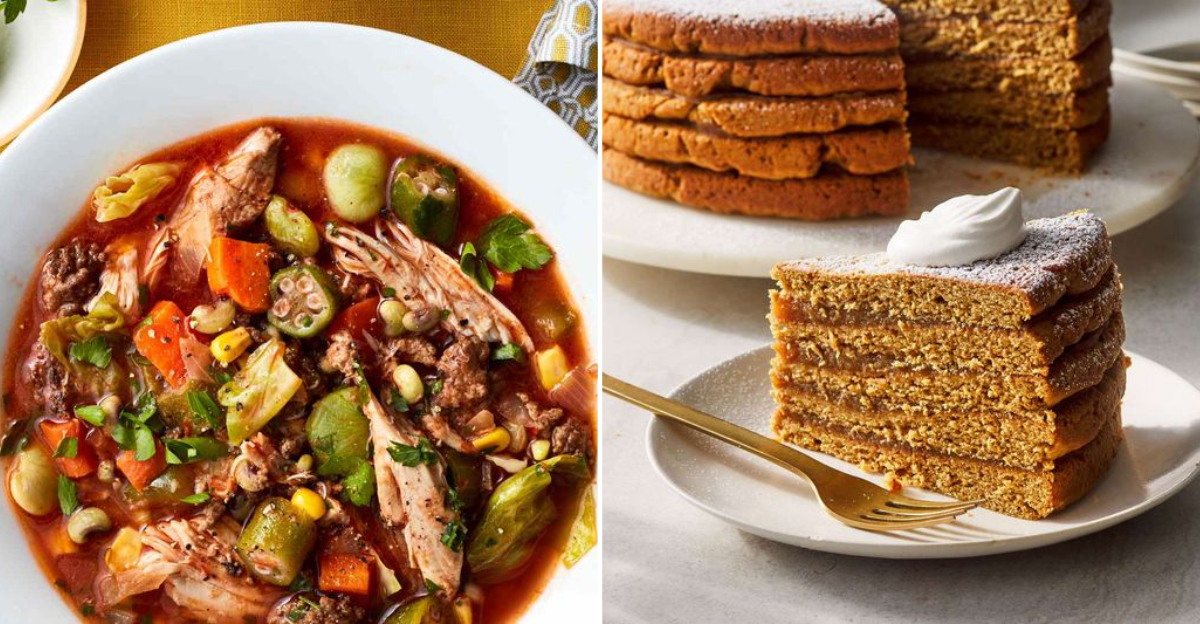
Kentucky’s answer to Brunswick stew, burgoo represents communal cooking at its finest. This thick, slow-cooked mixture traditionally contains at least three meats (often mutton, chicken, and beef) alongside whatever vegetables are available – typically corn, okra, lima beans, and potatoes.
The consistency should allow a spoon to stand upright. Every Kentucky family guards their recipe like thoroughbred training secrets. At the Derby Festival cookoff last year, I watched two cousins nearly come to blows over whether adding garlic was sacrilege.
The stew’s origins trace back to French chef Gustave Jaubert who cooked for Confederate soldiers during the Civil War.
3. Fried Catfish
Fried Catfish is a beloved staple in Kentucky, cherished for its crispy exterior and tender, flaky interior. It’s a tradition that echoes the state’s rich fishing culture. Often caught fresh from local waters, the catfish is coated in a seasoned cornmeal batter before being fried to perfection.
The preparation of Fried Catfish is an art form passed down through generations, each family adding their unique twist. Whether enjoyed at a local fish fry or a family gathering, it brings people together through its comforting taste.
Beyond its flavor, Fried Catfish represents a way of life in Kentucky, symbolizing community, shared experiences, and the simplicity of enjoying nature’s bounty. Locals are passionate about maintaining its classic preparation.
4. Benedictine Spread
This cucumber and cream cheese spread gets its distinctive pale green color naturally, not from food coloring as some outsiders mistakenly add. Created by Louisville caterer Jennie Benedict in the early 1900s, proper Benedictine combines cucumber juice, cream cheese, onion juice, and a touch of salt.
I remember watching my aunt carefully strain cucumber seeds before mixing her famous spread for Derby parties. She’d have fainted at the thought of adding dill or garlic. The texture should be creamy but substantial enough to hold its shape when spread.
Traditionally served on crustless white bread triangles or with crudités, this refreshing spread remains a staple at Kentucky tea parties, wedding showers, and Derby celebrations.
5. Kentucky Country Ham
Salt-cured, aged, and often smoked, Kentucky country ham demands respect and proper preparation. Unlike its city ham cousin, this intensely flavored meat undergoes months of aging, creating a concentrated saltiness and distinctive funk that newcomers sometimes find challenging.
The proper serving includes thin slicing – almost translucent – and often pairing with biscuits and red-eye gravy made from ham drippings and black coffee. Some families maintain ham-aging traditions that span generations, with secret curing recipes passed down like valuable heirlooms.
The aging process creates complex flavors that develop over months, resulting in a product that bears more resemblance to prosciutto than grocery store ham.
6. Spoonbread
Neither bread nor pudding but somehow both, spoonbread represents the pinnacle of corn-based cuisine. The authentic version relies on white cornmeal, butter, eggs, and buttermilk, creating a soufflé-like dish that must be served with a spoon while still warm from the oven.
Growing up, my grandfather would pace the kitchen while it baked, warning us not to slam doors lest the delicate creation fall. The texture should be creamy and moist inside with a slightly firmer golden crust on top.
Berea College hosts an annual Spoonbread Festival celebrating this humble dish. Purists insist nothing should be added to the basic recipe – no cheese, no peppers, and certainly no sugar.
7. Derby Pie
A delectable dessert synonymous with Kentucky’s culinary scene, is a must-try for anyone visiting the state. Originating in the mid-20th century, this pie combines the rich flavors of chocolate and nuts, enveloped in a buttery crust.
It’s a treat traditionally associated with the famous Kentucky Derby, enjoyed by locals and visitors alike. The story behind Derby Pie is as captivating as its taste. Created by the Melrose Inn’s Kern family, the recipe is a well-guarded secret, adding an element of mystery to its allure.
Each bite offers a taste of Kentucky’s hospitality, making it a dessert that locals vow to keep unchanged. While some may attempt to recreate it, the original Derby Pie remains unmatched, a testament to its creators’ culinary prowess.
8. Transparent Pie
Predating the more famous Derby Pie, this simple dessert features a filling of eggs, sugar, butter, and vanilla baked in a flaky crust until it develops a caramelized top and custard-like interior. The name comes from its somewhat translucent appearance when held to light.
My first taste came from Magee’s Bakery in Maysville, where they’ve been making them since the 1940s. The owner told me they hadn’t changed the recipe once in all those decades. Unlike pecan pie, transparent pie contains no nuts or corn syrup.
The dessert’s charm lies in its straightforward ingredients creating complex flavors through the magic of caramelization and the Maillard reaction.
9. Kentucky Burgoo
A hearty stew that carries the spirit of communal cooking in every spoonful. Traditionally made with a blend of meats such as pork, beef, and chicken, along with a medley of vegetables, this dish is a staple at social events and gatherings.
The origins of Burgoo are rooted in the need for a communal meal that could feed large crowds, often prepared in huge pots over open flames. Its robust flavors and diverse ingredients reflect the state’s agricultural abundance and cultural diversity.
As a symbol of unity and community, Burgoo is an experience. Locals are fiercely protective of its traditional recipe, viewing any alteration as a disruption of its historic and cultural significance. It’s a culinary treasure that continues to bring people together.
10. Goetta
Though most associated with Cincinnati’s German heritage, Northern Kentucky claims equal ownership of this breakfast staple. Authentic goetta combines steel-cut oats with ground pork, beef, onions, and spices, formed into sliceable loaves and fried until crisp on the outside.
The ratio of meat to grain proves critical – too much oat creates mushiness, while too little fails to hold together. Local butcher shops compete for the best recipe, with families remaining loyal to their preferred source for generations.
Covington hosts an annual Goettafest celebrating this humble dish. Proper serving requires slicing thin and frying until the edges develop a lacy crispness, while the interior remains tender.
11. Beaten Biscuits
Before modern leavening, Kentucky cooks created flaky biscuits by beating air into dough. Traditional preparation involves striking the dough with a rolling pin or specialized beaten biscuit tool for at least 500 strokes until it blisters and pops.
At the Kentucky State Fair’s heritage cooking demonstration, I watched an 80-year-old woman beat biscuit dough for fifteen minutes straight without pausing. The resulting biscuits should be cracker-crisp outside with a slightly dense, layered interior.
These labor-intensive creations were once status symbols, as only households with servants could afford the time required for proper preparation. Today, they’re primarily served at historic dinners and by families preserving culinary traditions.
12. Ale-8-One Soda
Ale-8-One, affectionately known as “A Late One,” is more than just a beverage in Kentucky; it’s a cherished emblem of local culture. Crafted in Winchester since 1926, this ginger and citrus-flavored soda is a refreshing companion on a hot summer day.
The story of Ale-8-One is interwoven with Kentucky’s history, reflecting the spirit of innovation and tradition. Its unique taste has garnered a devoted following, often passed down through generations as a family favorite.
In a world of ever-changing beverage trends, Ale-8-One stands its ground as a symbol of Kentucky’s steadfast commitment to its roots. Locals cherish this fizzy delight, ensuring its recipe remains untouched, preserving its legacy for future generations.
13. Rolled Oysters
Louisville claims this unique preparation as its own invention. Traditional rolled oysters feature fresh oysters wrapped in a seasoned cornmeal batter, then deep-fried until golden brown. The proper version contains three oysters per roll, creating a baseball-sized delicacy.
The exterior should be crispy while protecting the tender, juicy oysters inside. Mazzoni’s Café popularized them in the 1880s, and though the restaurant has closed, the tradition continues in other Louisville establishments.
Locals debate whether sauce or tartar sauce makes the proper accompaniment. The dish represents Louisville’s historical connection to oyster shipments that traveled up the Mississippi and Ohio rivers when the city served as a major inland port.
14. Stack Cake
Appalachian ingenuity shines in Kentucky’s stack cake, traditionally assembled at community gatherings where each family would bring a single thin layer. The authentic version features six to eight spiced, molasses-tinged layers separated by cooked dried apple filling.
The cake must rest at least overnight – preferably longer – allowing moisture from the filling to soften the firm cookie-like layers. At my cousin’s wedding in Eastern Kentucky, her grandmother supervised the assembly of a twelve-layer version using century-old cast iron skillets to bake each layer.
Unlike modern layer cakes, stack cake wasn’t originally intended to be tall and showy, but rather to stretch limited resources by combining contributions from multiple households.
15. Chess Pie
Chess Pie is a quintessential Southern dessert, with deep roots in Kentucky’s culinary tradition. Known for its simple yet indulgent filling made of sugar, butter, eggs, and cornmeal, this pie epitomizes the beauty of uncomplicated flavors.
The origins of Chess Pie are shrouded in mystery, with various theories about its name’s origin, adding to its enigmatic charm. Whether it’s enjoyed warm or cold, its smooth, custard-like texture is a delight to the palate.
For Kentuckians, Chess Pie is a cherished heirloom, a sweet reminder of family gatherings and festive occasions. Its enduring appeal lies in its straightforward preparation and the nostalgic comfort it brings, a dish that locals insist should never change.
16. Modjeskas
Named after a Polish actress who performed in Louisville in the 1880s, these confections feature a butter-soft caramel wrapped around a pillowy marshmallow center. The authentic version uses vanilla-flavored homemade marshmallow, though commercial varieties have become acceptable in modern preparations.
The caramel should be soft enough to yield easily when bitten, but firm enough to hold its shape at room temperature. Bauer’s Candy in Lawrenceburg has made them since 1889 using the original recipe.
During a factory tour there last summer, the owner explained that they still use copper kettles for cooking the caramel. The candy represents Louisville’s cultural aspirations during the Gilded Age, when the city sought to establish itself as a center for arts and culture.