
10 Legendary Historic Places In Arkansas Every Architecture Lover Needs On Their Bucket List
A great building can stop a road trip in its tracks. One minute, you are following the route.
The next, you are staring at a glass chapel, an old courthouse, or a grand public building that looks even better than it did in photos. Arkansas is filled with places like that.
Their stories live in carved stone, tall windows, and carefully preserved rooms, but the real appeal is how they make you pause. Some feel light enough to disappear into the trees.
Others stand firmly in the center of town, still shaping daily life around them. Each stop on this list offers a different reason to look closer.
You might notice an original ticket booth, a sweeping staircase, or the way afternoon light changes a facade. These are not background buildings.
They are destinations in their own right, and they make every mile of the road trip feel more rewarding.
1. Mildred B. Cooper Memorial Chapel, Bella Vista
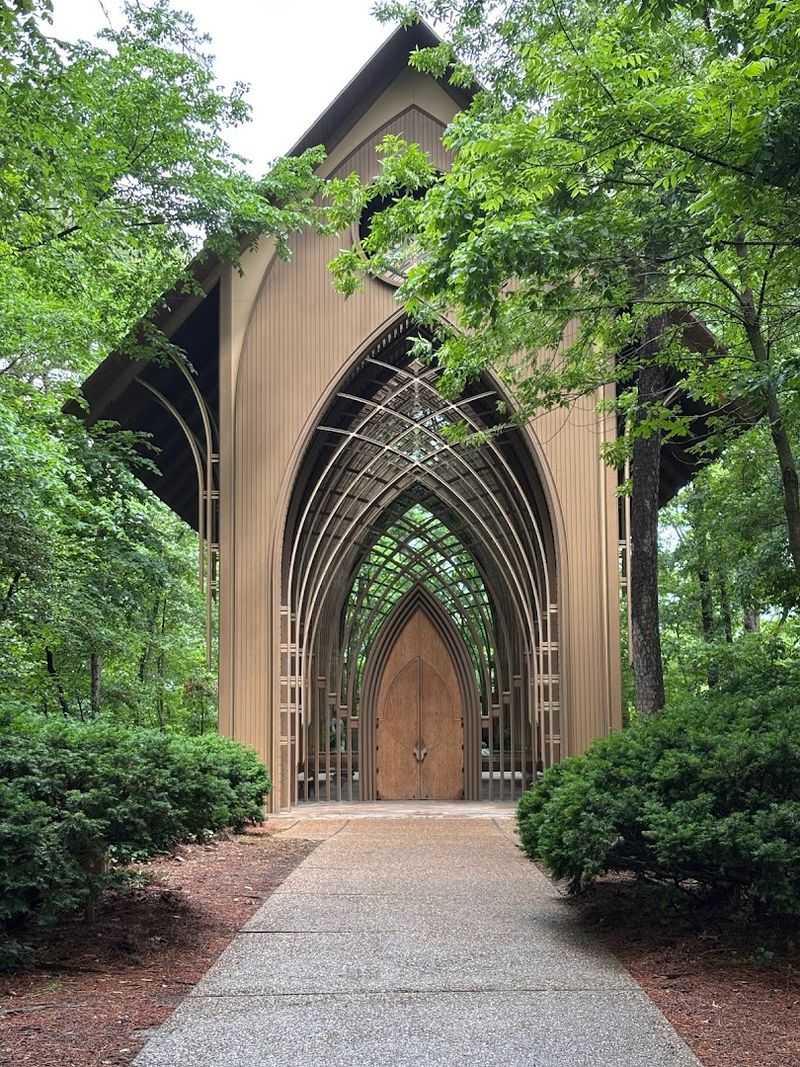
Steel arches rising through a canopy of trees is not something you expect to find tucked beside Lake Norwood, but that is exactly what waits at 504 Memorial Drive, Bella Vista, AR 72714.
The Mildred B. Cooper Memorial Chapel was designed by architects E.
Fay Jones and Maurice Jennings, and the result is nothing short of breathtaking.
Thirty-one tons of steel form fifteen repeating Gothic arches that frame over four thousand square feet of cut sheet glass, giving the entire structure a sense of weightlessness that makes you feel like the forest is part of the room.
Natural light filters through the glass and lands on a floor made from native limestone and flagstone, casting leaf-shaped patterns that shift as the sun moves.
The chapel holds up to one hundred twenty guests and is open to visitors when no private events are scheduled, so I always recommend calling ahead before making the drive.
People often describe this spot as the most beautiful place in Arkansas, and after standing inside it on a bright morning, I have absolutely no argument to offer against that claim.
Plan your visit for a sunny weekday and arrive early to catch the light at its most spectacular.
2. Thorncrown Chapel, Eureka Springs
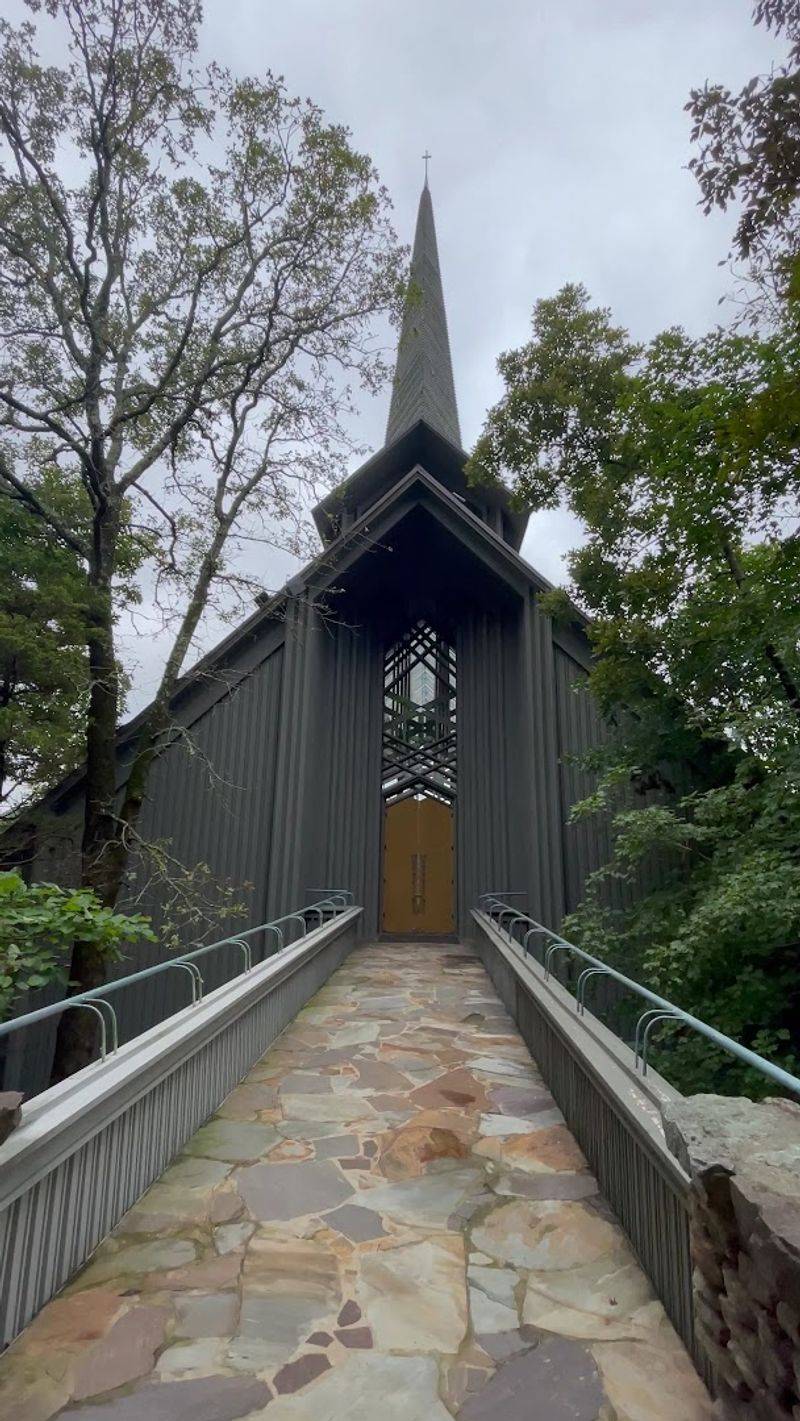
Wood, glass, and forest light combine at 12968 Highway 62 West, Eureka Springs, AR 72632 to create a chapel that feels less like a building and more like a conversation between architecture and nature.
Thorncrown Chapel was designed by E. Fay Jones in a style sometimes called Ozark Gothic, and it rises forty-eight feet into the Ozark woodland with four hundred twenty-five windows and more than six thousand square feet of glass wrapping its frame.
The construction team used pressure-treated Southern pine throughout, and every single piece was sized so that two people could carry it through the woods without disturbing the surrounding trees.
More than one hundred tons of native stone and colored flagstone anchor the structure to the forest floor, making it look as though it simply grew there over centuries.
Throughout the day, the trusses and surrounding trees cast ever-changing patterns of light and shadow across the interior, so no two visits look exactly the same.
Thorncrown is open from March through December, and millions of visitors have made the pilgrimage since it first opened its doors.
Arriving at golden hour in autumn, when the leaves turn and the filtered light goes warm and amber, is an experience that genuinely earns the word unforgettable.
3. Historic Greyhound Bus Depot Visitor Center, Blytheville
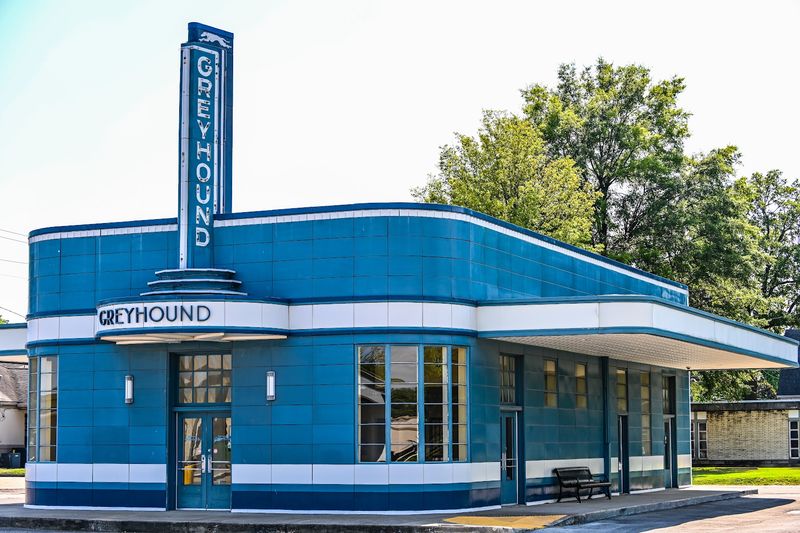
Not every architectural treasure announces itself with columns and domes, and the Historic Greyhound Bus Depot at 109 N 5th Street, Blytheville, AR 72315 proves that point with style.
Built in 1937 and designed by William Nowland Van Powell and Ben Watson White, this compact building is a sharp example of Streamline Moderne design, a cousin to Art Deco that traded ornate detail for smooth curves, horizontal lines, and a look that felt thrillingly modern for its era.
The blue and white paneled exterior, curved corners, and a bold blade sign extending over a semi-circular canopy give the facade a graphic energy that still turns heads today.
Step inside and you will find a partially restored interior complete with original wooden trim, linoleum floors, and Art Deco light fixtures that make the decades melt away.
The original ticket booth remains in place, and the divided waiting rooms stand as a sobering reminder of the segregation era that shaped so much of American public space.
Listed on the National Register of Historic Places since 1987, the depot now serves as a visitor center and home to Main Street Blytheville, an organization committed to downtown preservation.
This is the kind of stop that rewards the curious traveler who is willing to look past the expected landmarks.
4. Old Main, University of Arkansas, Fayetteville
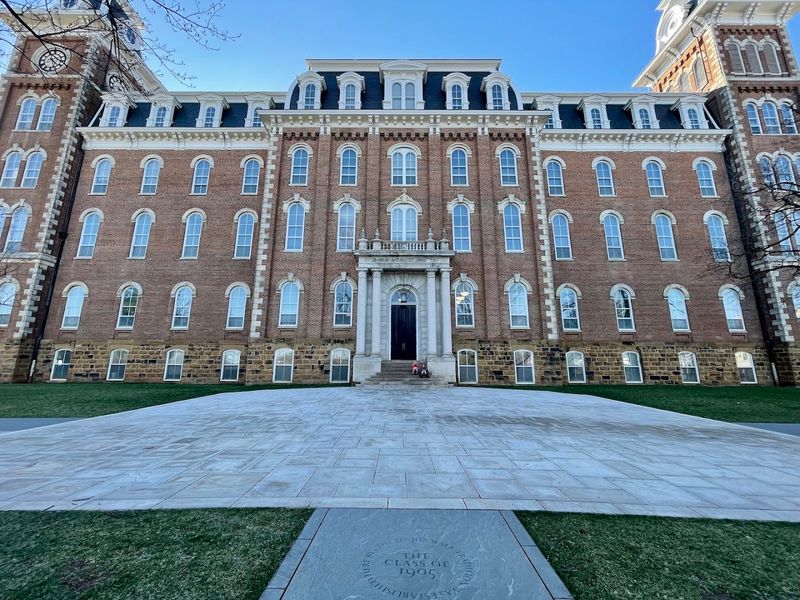
Two towers rising above a tree-lined campus have been the defining image of the University of Arkansas since 416 Campus Drive, Fayetteville, AR 72701 first welcomed students in the 1870s.
Old Main was designed by Chicago architect John Mills Van Osdel in the Second Empire style, a look defined by its dramatic mansard roof and stately symmetry that was enormously fashionable in the years following the Civil War.
What makes the building especially compelling is how locally it was built, with bricks fired from campus clay, lumber from a nearby sawmill, and sandstone and limestone pulled from quarries just down the road.
The front doors still swing on their original hinges, and the building’s wings still hold nineteenth-century Corinthian iron columns that were reinforced and encased during a major renovation completed in the early 1990s.
Old Main was the first structure in Fayetteville to earn a spot on the National Register of Historic Places, a distinction it has carried since 1970.
I love walking the campus at dusk when the towers catch the last of the afternoon light and the whole building takes on a warm, amber glow that makes the 1870s feel surprisingly close.
Students pass through here every day, which gives the place a living energy that purely preserved museums rarely match.
5. Old State House Museum, Little Rock
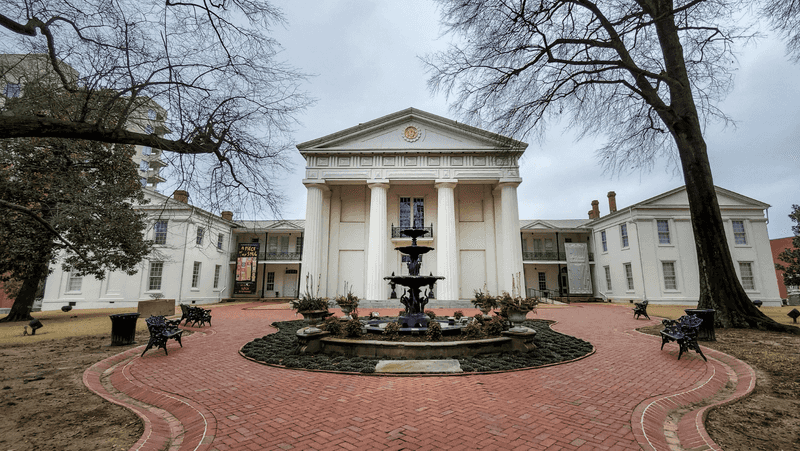
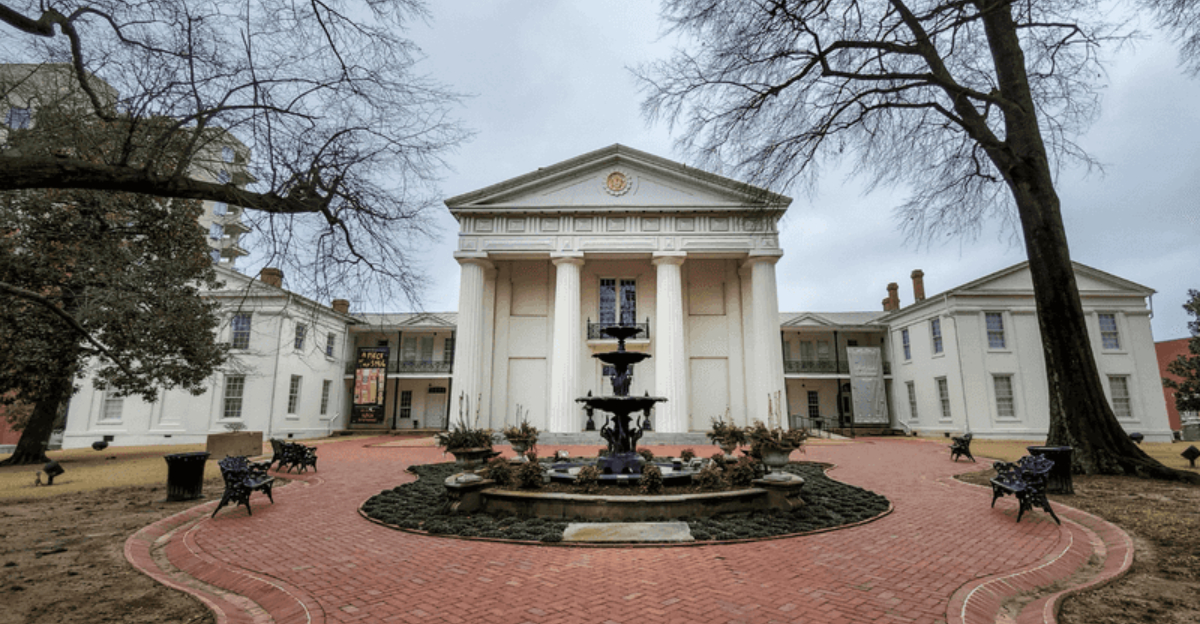
The Old State House Museum stands at 300 W Markham Street in Little Rock, AR 72201. It holds a record that still impresses architecture enthusiasts today as the oldest surviving state capitol building west of the Mississippi River.
Architect Gideon Shryock designed the structure in the Greek Revival style, aiming for bold Doric columns and a classical pediment that would project the confidence of a young American state finding its footing.
Construction began in 1833, and the building was largely complete by 1842, though modifications by George Weigart swapped stone for stucco-covered brick and introduced clever faux finishes on interior doors and mantles that still fool the casual eye.
An 1885 expansion brought Victorian flourishes into the mix, including curving staircases, decorative skylights, ornate iron grillwork, and statues of the Three Graces that add an unexpected elegance to the interior.
Outside, the grounds feature a three-tiered fountain recast from an original that debuted at the 1876 Philadelphia Centennial Exposition, alongside a Civil War-era cannon that anchors the lawn with quiet gravity.
The museum inside does a wonderful job of connecting the building’s physical beauty to the political history that unfolded within its walls over more than a century.
A slow afternoon here, moving from room to room, feels like a genuinely rewarding way to spend a few hours in Little Rock.
6. Little Rock Central High School National Historic Site, Little Rock
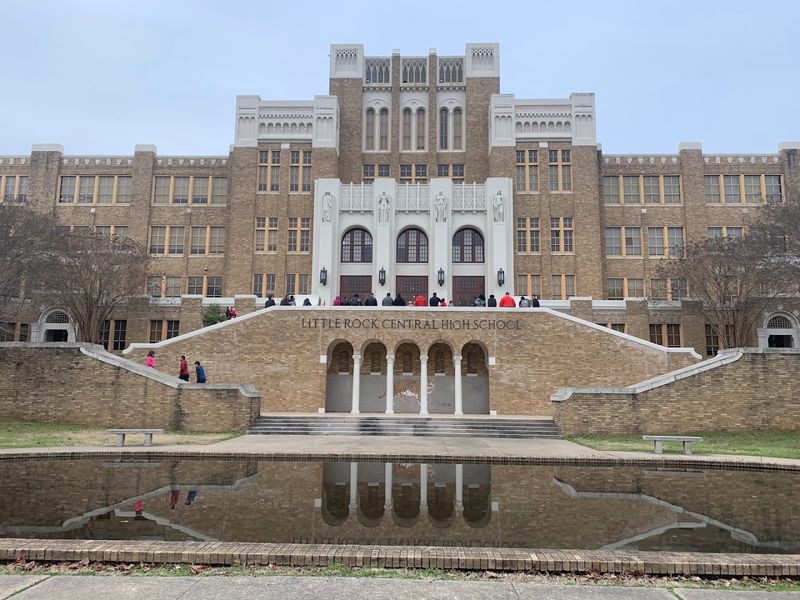
Few school buildings in America carry the architectural ambition and the historical weight of Little Rock Central High School at 2120 W Daisy L. Gatson Bates Drive, Little Rock, AR 72202.
Completed in 1927 and designed by a team that included George Mann, Eugene Stern, and Lawson Delony, the building fuses Neo-Gothic Revival and Art Deco styles into a composition that the American Institute of Architects once called America’s Most Beautiful High School.
The main structure uses steel framing and brick, and double staircases sweep up to a grand second-floor entrance that commands attention from across the street.
Four statues representing Ambition, Personality, Opportunity, and Preparation stand at the facade pilasters, turning the entry into something closer to a classical monument than a school doorway.
Behind that entrance, a dominant central block holds a two-thousand-seat auditorium, and four classroom wings fan out around a reflecting pool in the foreground that doubles the building’s visual impact on clear days.
What makes this site truly singular is that it remains a fully operating high school, the only one in the country designated as a National Historic Site.
Visiting here means standing at the intersection of architectural achievement and American history, and that combination is genuinely hard to find anywhere else on this list.
7. Boone County Courthouse, Harrison
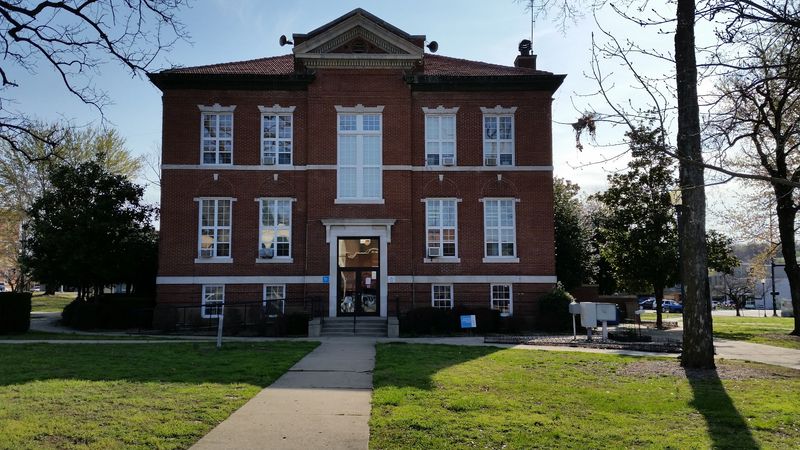
Red brick and cast stone do a lot of the talking at 100 N Main Street, Harrison, AR 72601, where the Boone County Courthouse has anchored the town square since 1909.
Designed by Charles L. Thompson, one of Little Rock’s most prolific architects of the era, the two-story Georgian Revival building replaced an earlier courthouse lost to fire and has been turning heads ever since.
The red tiled gabled roof, dentiled cornice, and horizontal bands of cast stone give the exterior a crisp, layered quality that reads as both sturdy and refined from every angle.
Projecting bays on the north and south sides, each marked by four evenly spaced cast stone pilasters, add depth and rhythm to what could easily have been a flat, forgettable facade.
The main entry features wooden double doors with beveled glass panes framed by cast stone and topped with a segmental-arch pediment supported by scroll brackets, a detail that rewards anyone who stops to look closely.
Inside, marble dog-leg stairs, colorfully patterned ceramic tile floors with marble baseboards, and well-preserved original oak woodwork create an interior that feels like a time capsule in the best possible way.
Harrison is a relaxed, welcoming town, and spending a morning photographing this courthouse before exploring the surrounding square makes for a satisfying half-day stop.
8. Judge Isaac C. Parker Federal Building and Courthouse, Fort Smith
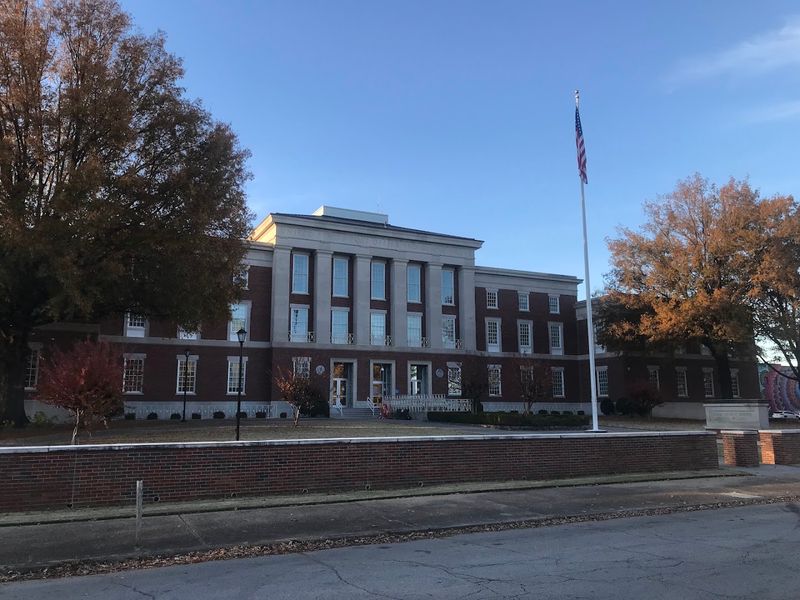
Fort Smith has always carried a reputation as a gateway to the American West, and the federal building at 30 S 6th Street, Fort Smith, AR 72901 wears that history on its limestone-trimmed facade.
Built in 1937 in the Classical Revival style, the structure served as both a United States District Court and a post office, and it handles both roles with architectural authority.
Red brick laid in a common bond pattern rises from a smooth limestone base, while six engaged pilasters topped with Doric capitals climb two full stories to a plain limestone cornice and frieze.
The words UNITED STATES POST OFFICE AND COURT HOUSE are incised into the entablature, a declarative inscription that still reads with quiet confidence from the sidewalk below.
In 1964, two wings were added to expand the building, and they were designed carefully enough to complement the original 1937 structure without feeling like an afterthought bolted onto the back.
This building replaced an earlier Romanesque structure and represents the long, continuous federal presence in a city that once served as the last stop before wild frontier territory began.
Walking the perimeter and reading the building’s details feels like a short course in how American civic architecture expressed power, permanence, and purpose in the mid-twentieth century.
9. Arkansas State Capitol, Little Rock
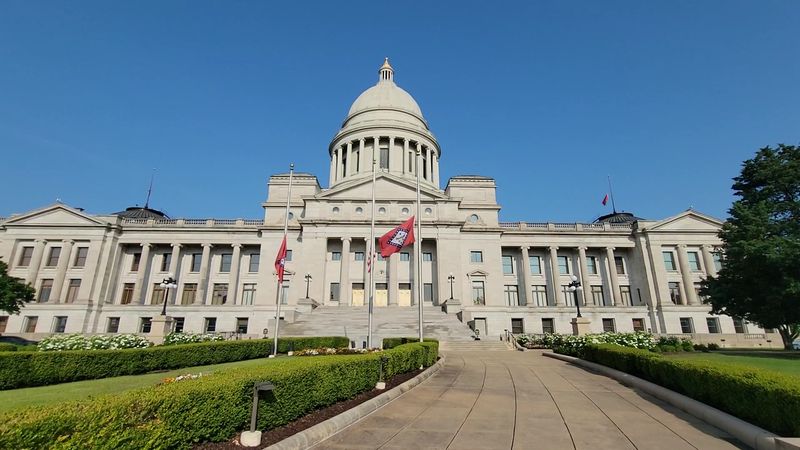
A gilded lantern cupola catching the afternoon sun above a neoclassical limestone dome is a sight that stops traffic on Woodlane Street, and the Arkansas State Capitol at 500 Woodlane Street, Little Rock, AR 72201 earns every second of that attention.
Construction stretched from 1899 to 1915, and the result is a cross-shaped building elongated along its north-south axis.
Limestone quarried near Batesville covers the upper stories, while Indiana limestone was used for the ground-floor walls and dome, giving the exterior a warm, creamy tone that changes character throughout the day.
Inside, the material choices become even more impressive, with Vermont marble, Colorado columns, and Alabama staircases combining to create an interior that feels like a geography lesson in American stone.
Six bronze doors and three chandeliers crafted by Tiffany’s of New York add a layer of opulence that surprises most first-time visitors who expect a solemn government building and get something far more dazzling.
The grounds outside feature a curved Grand Promenade that connects the building to the street and host test gardens with fifty-one varieties of roses that bloom in spectacular color each spring.
This structure took over from the Old State House as the seat of state government in 1911, and it has presided over Arkansas public life with authority ever since.
Free guided tours are available, and I strongly suggest taking one to catch the interior details that are easy to miss on a solo walk-through.
10. Fordyce Bathhouse Visitor Center And Museum, Hot Springs
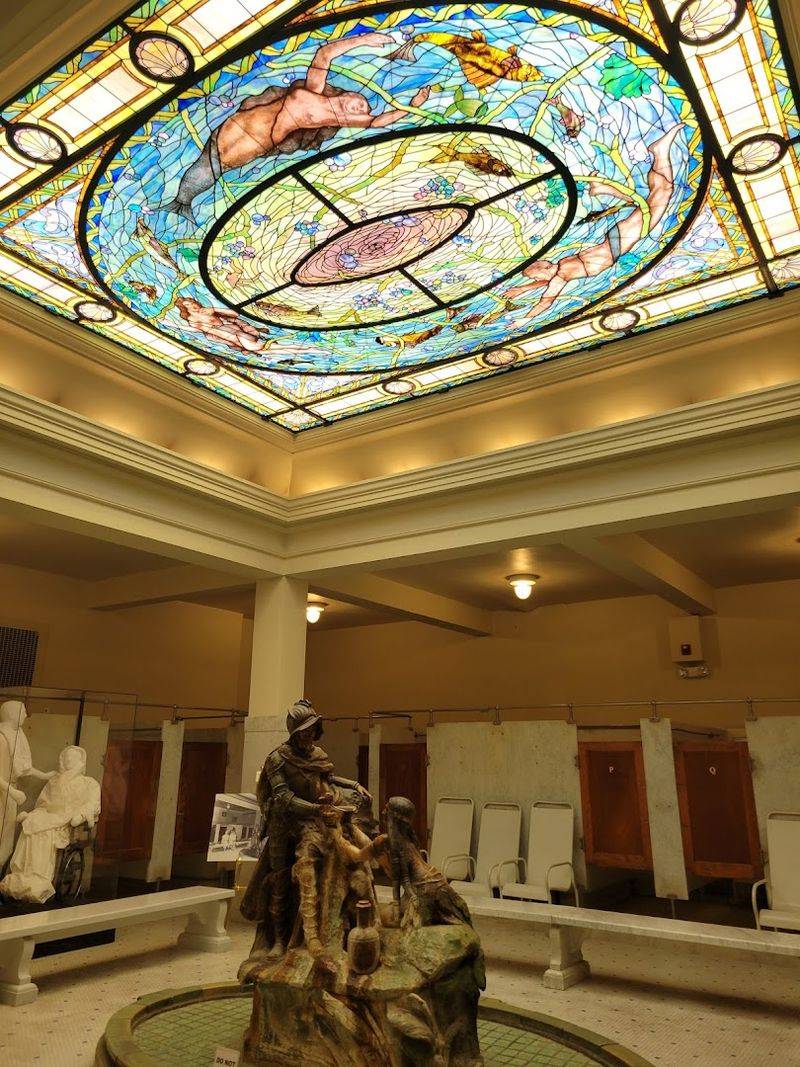
Bathhouse Row on Central Avenue in Hot Springs is one of those stretches of street that makes you slow your pace instinctively, and the Fordyce at 369 Central Avenue, Hot Springs, AR 71901 is the undisputed showpiece of the lineup.
Opened in 1915 and designed by Little Rock architects Mann and Stern, the Fordyce Bathhouse is the largest structure on the Row and represents Beaux-Arts design at its most confident and lavish.
Three main floors, two courtyards, and a basement spread across a building whose interior is dressed in stunning stained glass windows, soaring ceilings, and marble details that make every room feel like a small event.
The exterior carries intricate ornamentation that reflects the golden age of bathing culture, when Hot Springs drew visitors from across the country seeking the restorative powers of its natural thermal springs.
After closing in 1962 as the first bathhouse on the Row to cease operations, the Fordyce was painstakingly restored and reopened in 1989 as the Hot Springs National Park Visitor Center and Museum.
Today, period rooms, interactive exhibits on the history of bathing, and a display of the Fordyce Spring make the museum one of the most engaging free attractions in the region.
Save this one for your last stop of the day, because the stories inside have a way of keeping you longer than you planned.