
11 Little-Known Places In West Virginia That Are Surprisingly Fascinating
Some places make you stop and look twice. A house covered in thousands of pumpkins.
A massive telescope quietly listening to the universe. An old prison with enough history to make you wonder what those walls have seen. Sounds made up, right?
It isn’t.
These are the kinds of places hiding across West Virginia, where the most interesting discoveries can show up when you least expect them. And that’s what makes exploring here so much fun.
You might pass a quiet road without giving it a second thought, never realizing there’s something genuinely fascinating waiting at the other end.
So what else is hiding out there? That’s the part we’re about to find out.
1. Trans-Allegheny Lunatic Asylum
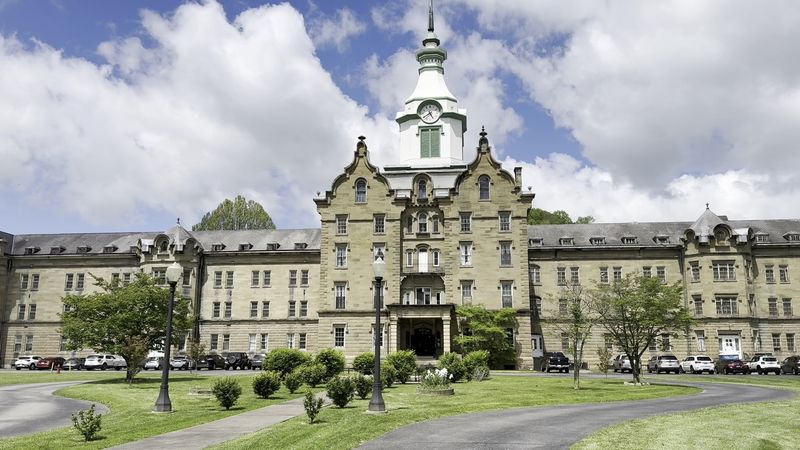
Few buildings in America carry as much history inside their walls as this one. The Trans-Allegheny Lunatic Asylum in Weston, West Virginia, is considered the largest hand-cut stone masonry building in all of North America.
Sitting at 71 Asylum Dr, Weston, WV 26452, this enormous structure was built between 1858 and 1881 and opened its doors in 1864.
Originally designed to house around 250 patients, the facility eventually held over 2,400 people by the 1950s.
That kind of overcrowding tells a complicated and deeply human story about how society once approached mental health care. The building itself was designed using the Kirkbride Plan, which was actually meant to create a peaceful, healing environment.
Today, the asylum offers historic and paranormal tours that attract curious visitors from all over the country. It has earned a reputation as one of America’s most fascinating and reportedly haunted landmarks.
Walking through those long stone corridors genuinely feels like stepping through a portal into another era entirely.
2. Kenova Pumpkin House
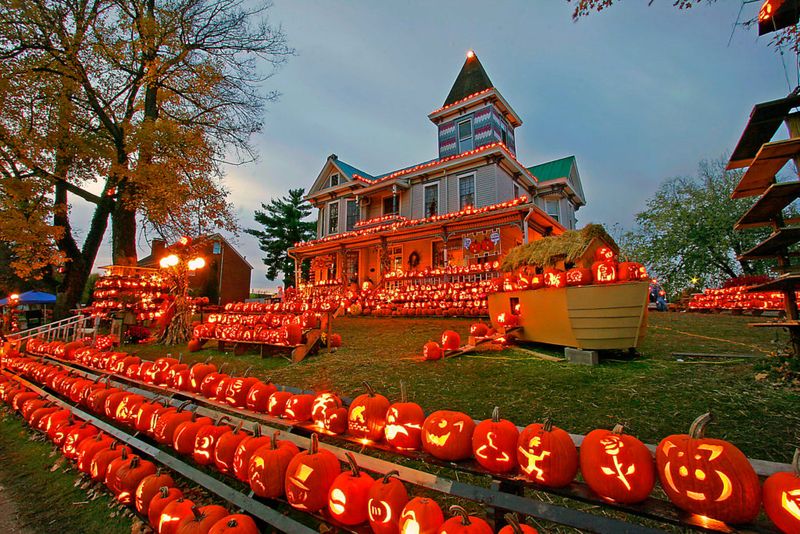
Imagine driving through a quiet neighborhood and suddenly spotting a house absolutely buried under more than 3,000 glowing carved pumpkins.
That is exactly what happens every October at the Kenova Pumpkin House, located at 748 Beech St, Kenova, WV 25530. This legendary Halloween display started back in 1978 with just five modest carved pumpkins.
Over the decades, it grew into something that genuinely defies imagination. Hundreds of volunteers pour their time and creativity into carving every single pumpkin by hand before the big reveal.
The Pumpkin House serves as the glowing centerpiece of the annual Ceredo-Kenova AutumnFest, drawing tens of thousands of visitors each season.
The display has even caught national television attention, which is impressive for a small West Virginia neighborhood tradition that started so humbly. Each year brings new designs, new themes, and new reasons to make the trip.
There is something genuinely magical about standing in front of that house when all those carved faces light up at once.
3. Blennerhassett Island Historical State Park
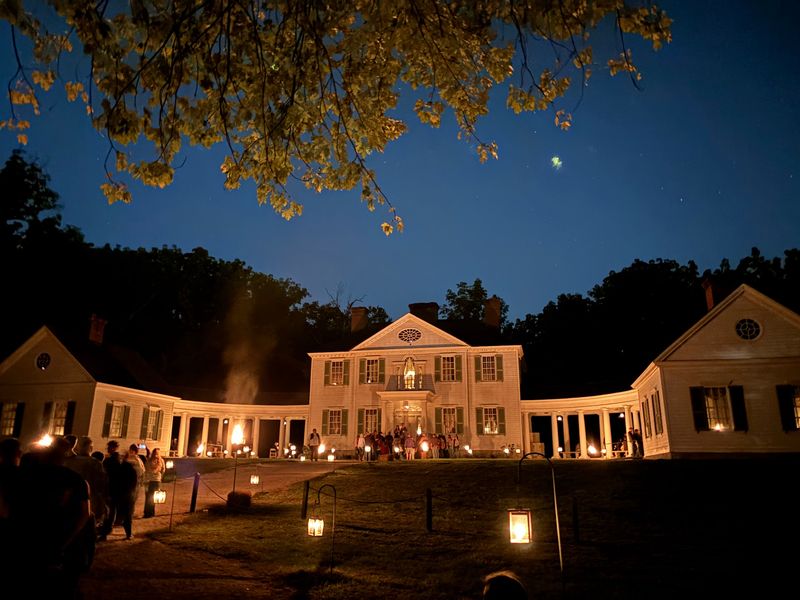
Getting to this park is half the adventure, because the only way to reach it is by boarding a sternwheeler boat on the Ohio River.
Tickets are available at 137 Juliana St, Parkersburg, WV 26101, and the ride itself already sets a pretty spectacular tone for the whole visit. Blennerhassett Island was first settled in 1789 by wealthy Irish aristocrats Harman and Margaret Blennerhassett.
Their grand Palladian mansion quickly became known as the most beautiful home in the entire western frontier. The estate then gained national attention in 1805 when it served as a base for Aaron Burr’s famous military expedition.
That alone makes this island one of the most historically layered spots in the entire state.
Today, visitors can explore a stunning replica of the original mansion, wander through beautifully kept gardens, and even take horse-drawn wagon rides across the island.
The park also offers biking, fishing, and hiking trails. One of the largest yellow poplars east of the Mississippi River grows right here on this island, which is a pretty remarkable bonus.
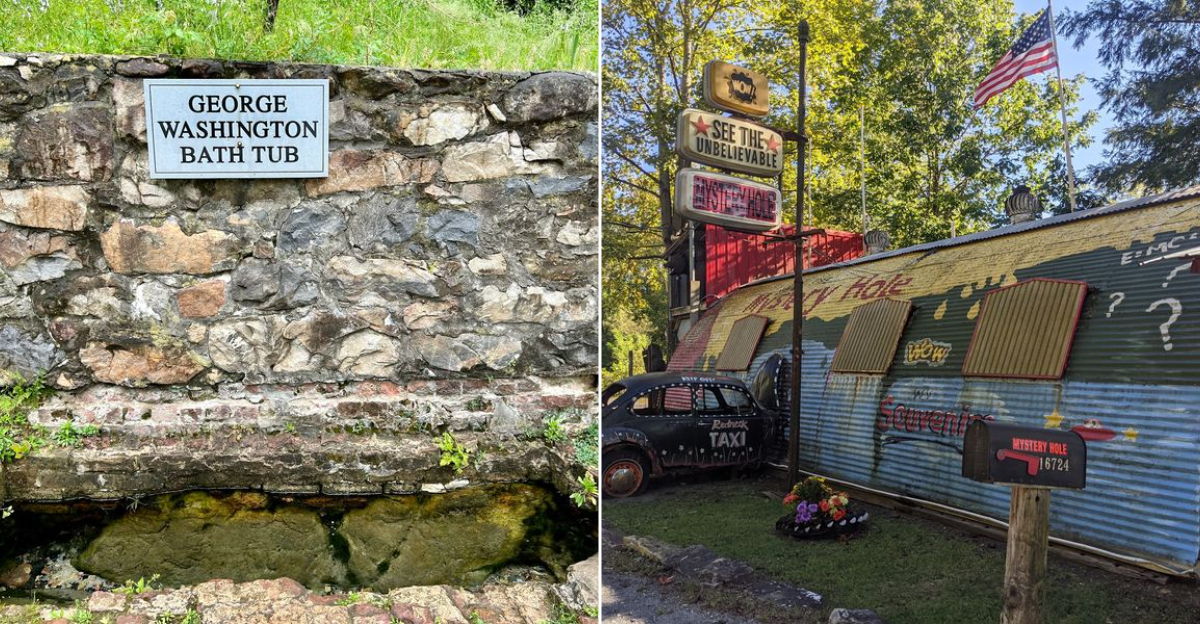
4. Mystery Hole
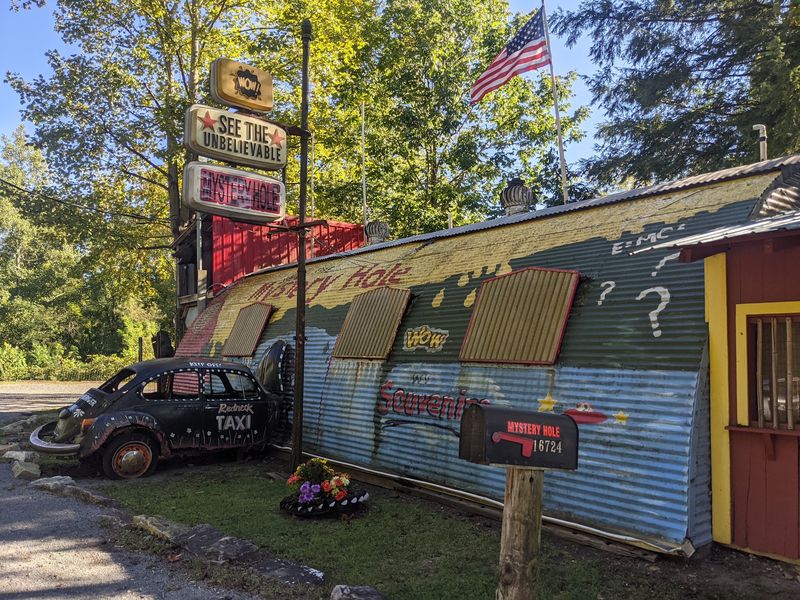
There is a Volkswagen Beetle sticking out of the side of a building, and a gorilla is staring you down from above the front door.
Welcome to the Mystery Hole, one of West Virginia’s most gloriously weird roadside attractions. Located at 16724 Midland Trail, Ansted, WV 25812, this place has been bending minds and confusing eyeballs since it opened in 1973.
The original concept came from Donald Wilson, who claimed to have discovered an underground area where gravity seemed to behave in completely unexpected ways.
Inside, balls appear to roll uphill, chairs balance at impossible angles, and your brain quietly starts questioning everything it thought it knew about physics.
Spoiler: it is all optical illusions, but incredibly convincing ones.
The attraction closed in 1996 and was brought back to life in 1999 by new owners who wisely kept all the retro charm intact.
Nothing has been modernized or polished up, and that is exactly what makes it so endearing. The Mystery Hole is proof that sometimes the most unforgettable experiences come wrapped in the most wonderfully strange packaging.
5. Cathedral State Park
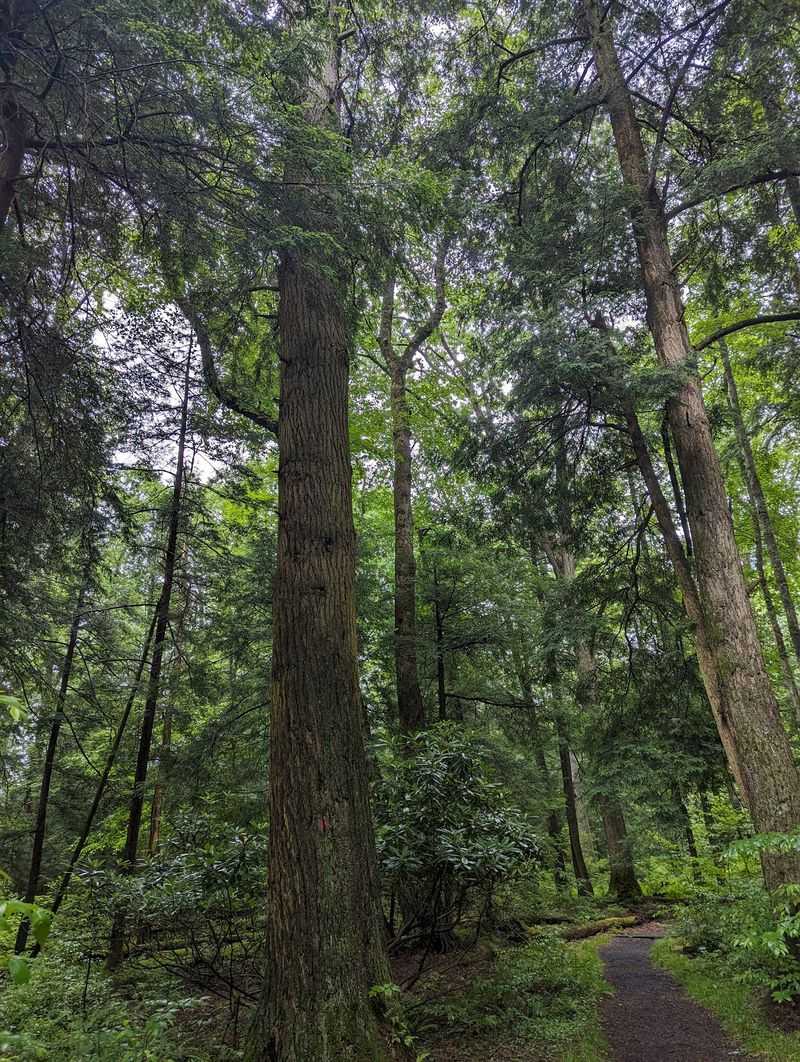
Walking into Cathedral State Park feels like the forest is swallowing you whole in the most peaceful way possible.
Located on Hwy 24, Aurora, WV 26705, this is West Virginia’s largest surviving old-growth forest, and it earned National Natural Landmark status back in 1965. The park was established in 1942 and has been quietly growing more impressive ever since.
The star attractions here are the eastern hemlock trees, some of which stretch up to 90 feet tall with circumferences reaching an astonishing 16 feet.
Within its 133 acres, over 170 species of vascular flora thrive, including ferns, club mosses, more than 30 tree species, and over 50 types of wildflowers. The biodiversity packed into this relatively small space is genuinely remarkable.
Six miles of peaceful hiking trails wind through the park, offering visitors a chance to truly get lost among the ancient trees.
The canopy is so thick in places that sunlight filters through in soft, cathedral-like beams, which is exactly how the park got its name. Standing beneath these trees puts the entire concept of time into a very different perspective.
6. Green Bank Observatory
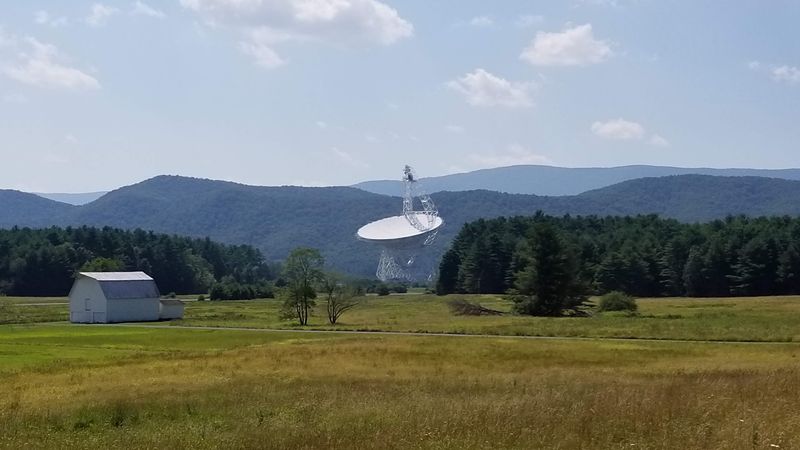
Somewhere in the quiet hills of West Virginia, one of the world’s most powerful scientific instruments is listening to the universe.
The Green Bank Observatory at 155 Observatory Rd, Green Bank, WV 24944, is home to the Robert C. Byrd Green Bank Telescope, which holds the title of the world’s largest fully steerable radio telescope.
It was established in 1956 and has been making discoveries ever since.
The facility sits inside the United States National Radio Quiet Zone, a federally protected area where radio interference is kept to an absolute minimum.
That means no cell signals, no WiFi, and no distractions, just the telescope quietly scanning the cosmos for signals that most of us never even think about. Scientists here study everything from galaxy formation to mysterious Fast Radio Bursts.
One of the observatory’s most remarkable achievements was discovering formaldehyde, the first complex organic molecule ever detected in interstellar space. Visitors can tour the facility, learn about cutting-edge astronomy, and get a sense of how small and wonderfully curious humans really are.
Green Bank is the kind of place that makes you look up at the night sky completely differently afterward.
7. Thurmond Ghost Town
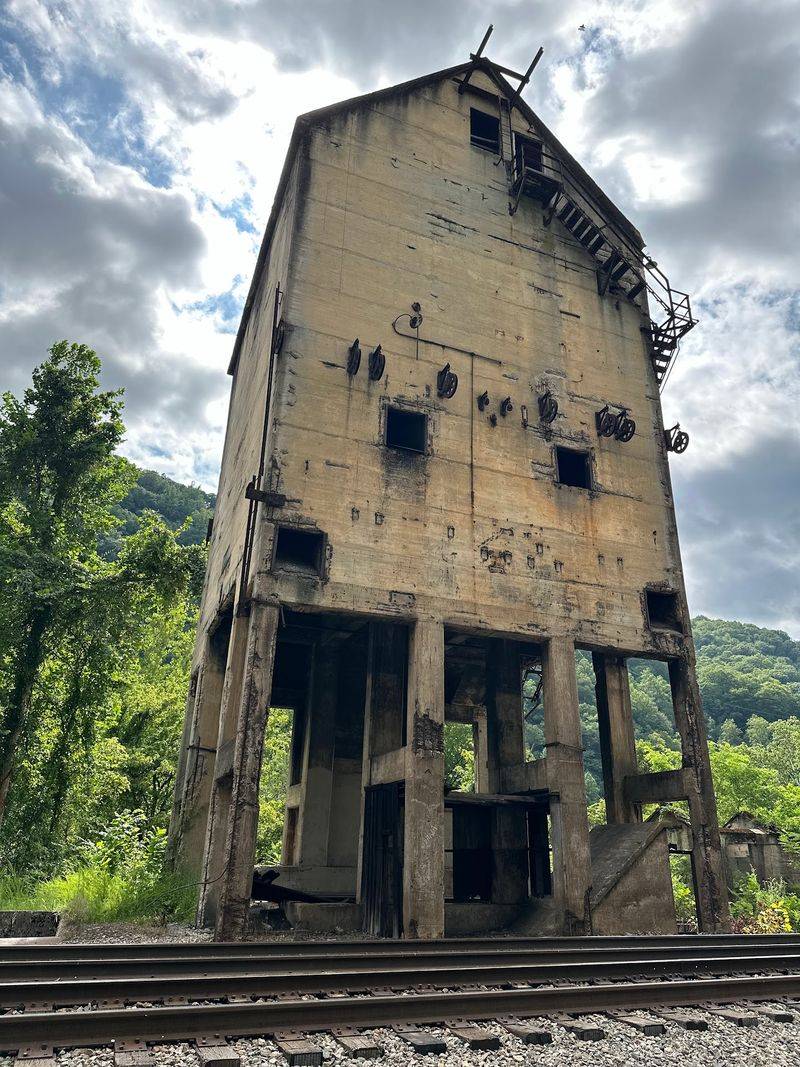
Once upon a time, Thurmond was absolutely buzzing with energy as a major railroad and coal hub along the Chesapeake and Ohio Railway.
Today, the population has dwindled to just five residents, and the town has become one of the most hauntingly beautiful ghost towns in the entire eastern United States. Thurmond, WV 25936, sits deep inside the New River Gorge, surrounded by dense forest and dramatic cliffs.
The National Park Service began preserving the historic depot in 1995, followed by additional buildings in 2003.
Thurmond was officially recognized as a historically significant site in 1982, cementing its place in the story of American industrial heritage. The restored depot now serves as both a visitor center and a small museum filled with fascinating artifacts from the town’s prosperous peak years.
Beyond the history, the area around Thurmond is a playground for outdoor adventure, with white water rafting and kayaking drawing thrill-seekers to the gorge.
Walking through the preserved buildings gives you this eerie, cinematic feeling that time simply forgot to keep moving here. Thurmond is the kind of place that stays with you long after you have driven back out through those forested hills.
8. West Virginia Penitentiary
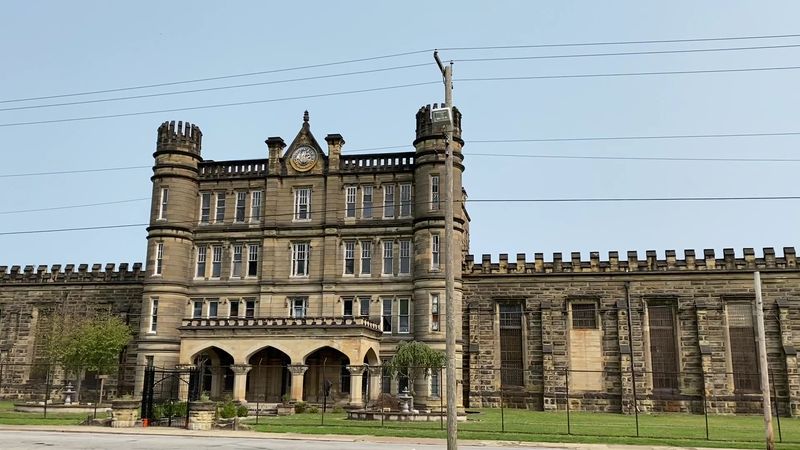
You can feel the weight of history the moment you look up at those 24-foot stone walls. The West Virginia Penitentiary at 818 Jefferson Ave, Moundsville, WV 26041, is a dramatic Gothic-style structure that was constructed between 1866 and 1876.
It operated for 129 years before finally closing its doors in 1995.
Originally designed to hold around 700 inmates, the facility eventually packed in over 2,700 prisoners at its most crowded point. The tiny cells measured just 5 by 7 feet, and at times, three people shared that impossibly tight space.
The physical conditions alone tell a story about a system that was stretched far beyond its original design.
Today, the penitentiary welcomes visitors through historical and paranormal tours, including dedicated ghost hunt experiences that have made it famous nationwide.
The architecture is genuinely stunning in a severe, imposing way that makes every hallway feel dramatic. Exploring the cell blocks, the north hall, and the old recreation yard offers a thought-provoking look at how incarceration has evolved over more than a century of American history.
9. Beckley Exhibition Coal Mine
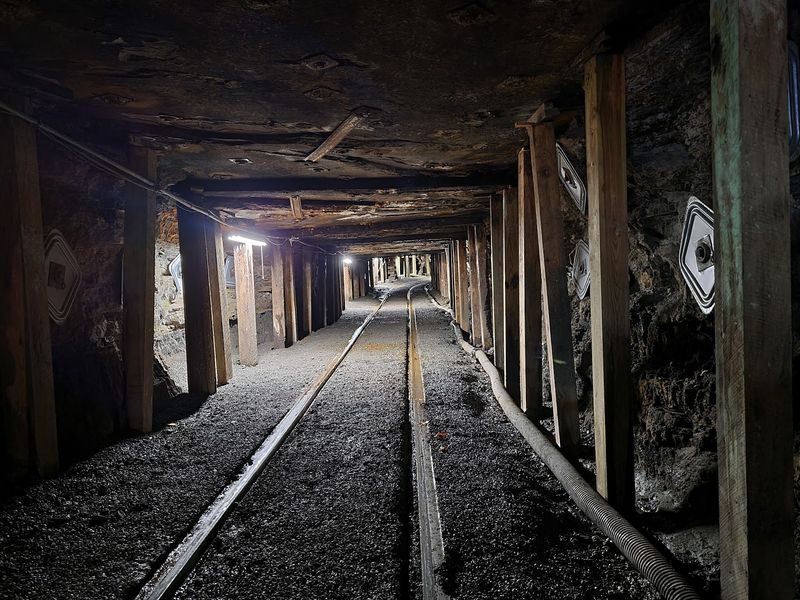
Climbing into an old mining car and rolling 1,500 feet underground is not your typical afternoon activity, but at the Beckley Exhibition Coal Mine, it is absolutely the main event.
Located at 513 Ewart Ave, Beckley, WV 25801, this attraction offers a genuinely immersive journey into the heart of West Virginia’s coal mining heritage.
The original Phillips-Sprague Mine began commercial operation in 1906.
After nearly five decades of production, it closed in 1953, and the City of Beckley transformed it into an educational experience that opened to visitors in 1962. The underground temperature stays at a steady 58 degrees Fahrenheit year-round, so bring a light jacket even in the middle of summer.
Tours are led by veteran miners who share firsthand knowledge about what daily life underground actually looked and felt like.
Above ground, a recreated coal camp brings the surface side of mining history to life through restored buildings including a company house, a church, and a schoolhouse.
The combination of underground exploration and surface history makes this one of the most complete and compelling heritage experiences in the entire state. It changes the way you think about the energy that built modern America.
10. Seneca Rocks Discovery Center
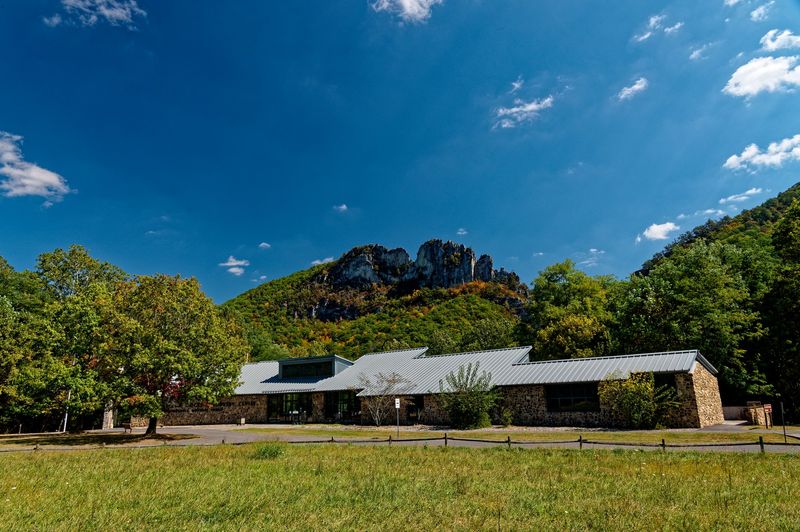
Rising nearly 900 feet straight up from the North Fork Valley, Seneca Rocks is the kind of geological formation that makes you stop the car and just stare for a while.
The Seneca Rocks Discovery Center at 13 Roy Gap Rd, Seneca Rocks, WV 26884, is the ideal starting point for understanding exactly what you are looking at when those jagged quartzite fins come into view. The rocks and the nearby Spruce Knob became part of a federal national recreation area back in 1965.
Inside the Discovery Center, exhibits cover geology, local history, and the fascinating evolution of rock climbing as a sport in this region.
Ranger programs and educational presentations run throughout the busy season, making it a genuinely enriching stop for curious visitors of all ages. The center does a wonderful job of giving context to the dramatic landscape that surrounds it.
Seneca Rocks also serves as the gateway to Spruce Knob, which is the highest point in all of West Virginia. Expert climbers travel from across the country to tackle the vertical rock faces here, and watching them work their way up the cliff is thrilling all on its own.
The whole area feels like nature decided to show off.
11. George Washington Bathtub
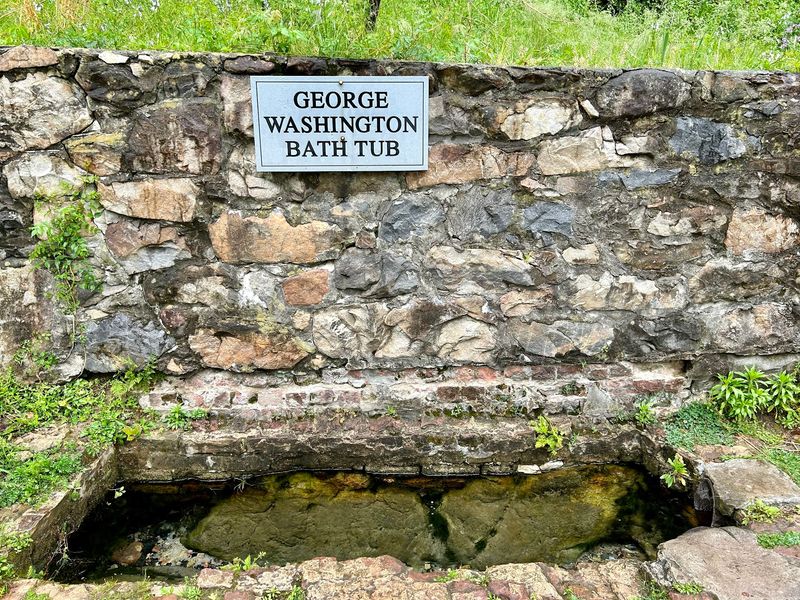
There is exactly one outdoor presidential bathing monument in the entire United States, and it lives in Berkeley Springs, West Virginia.
The George Washington Bathtub at 2 S Washington St, Berkeley Springs, WV 25411, sits inside Berkeley Springs State Park, which holds the distinction of being America’s very first spa. The natural mineral springs here maintain a constant warm temperature throughout the year.
George Washington was a frequent visitor to these springs, coming as a young surveyor and returning throughout his life.
The stone tub itself was built to represent the kind of primitive bathing conditions he would have experienced in the 1700s, using scooped-out natural pools rather than modern fixtures. He never actually used this specific tub, but it captures the spirit of those early visits beautifully.
Every year in mid-March, the town celebrates with an annual George Washington’s Bathtub Celebration that brings the whole community together in a genuinely fun and quirky way.
Berkeley Springs is a charming town full of art galleries, spring-fed pools, and warm community energy. Have you ever visited a place so specific and so wonderfully strange that it somehow becomes your favorite story to tell?