
11 Louisiana Institutions Kept In One Family For Four Generations And Still Hopping
Louisiana’s dining traditions are carried by families who have been cooking in the same kitchens for decades. These restaurants hold more than recipes; they hold the stories of those who built and kept them alive.
Generations have worked side by side, passing down the rhythm of service, the seasoning of a sauce, the way to welcome a guest. Across the state, from the shaded streets of the French Quarter to the slower pace of Bayou towns, these dining rooms remain steady parts of their communities.
Menus shift only slightly, guided by memory as much as taste. The result is food that feels familiar, enduring, and connected to place, a living reminder of Louisiana’s deep culinary roots.
1. Antoine’s Restaurant (New Orleans)
The dining room feels like stepping into another century; high ceilings, gold light, and a hum that never rushes. Waiters glide through narrow aisles carrying silver trays, polished by habit more than necessity.
The atmosphere is dignified but not stiff, like an old uncle who’s learned to wink. Then comes the food: buttery oysters Rockefeller, soufflé potatoes that crackle under your fork, and sauces so rich they seem to have their own pulse.
Everything whispers of Creole precision. I couldn’t help smiling. Some meals remind you that tradition isn’t about staying still, it’s about staying true.
2. Arnaud’s (New Orleans)
You can hear Arnaud’s before you see it, music from the jazz bistro filters through the Quarter, beckoning with brass and laughter. Inside, white tablecloths and mirrored walls set a formal tone that somehow feels alive, not frozen in time.
Their shrimp Arnaud has been on the menu since 1918, the tang of remoulade holding steady through four generations. The Casbarian family guards it carefully, balancing modernity with respect.
Tip: stay for dessert. Bananas Foster under dim chandeliers might be one of New Orleans’ finest finales.
3. Café Du Monde (New Orleans)
Powdered sugar floats in the air like soft ash, coating everything—including you, before you’ve even ordered. It’s part of the ritual. The café’s green awnings hum with morning energy as locals and travelers share tight tables.
The menu hasn’t changed since 1862: beignets, café au lait, and conversation. The simplicity feels deliberate, not limited.
I love how you leave dusted in sugar, like proof you were really there. A tiny badge of joy earned before the day properly begins.
4. Mandina’s Restaurant (New Orleans)
The scent of frying shrimp mingles with garlic and butter long before you step inside. Pink neon spills through the windows onto Canal Street, announcing Mandina’s with the same confidence it’s had for generations.
Families fill booths, forks clinking in rhythm with conversation. Their turtle soup and shrimp remoulade taste like they were born here, Creole, Italian, and deeply local.
Recipes haven’t drifted far from John Mandina’s 1930s originals. You should go early for dinner. Once the after-work crowd rolls in, the line can feel like half of Mid-City waiting its turn.
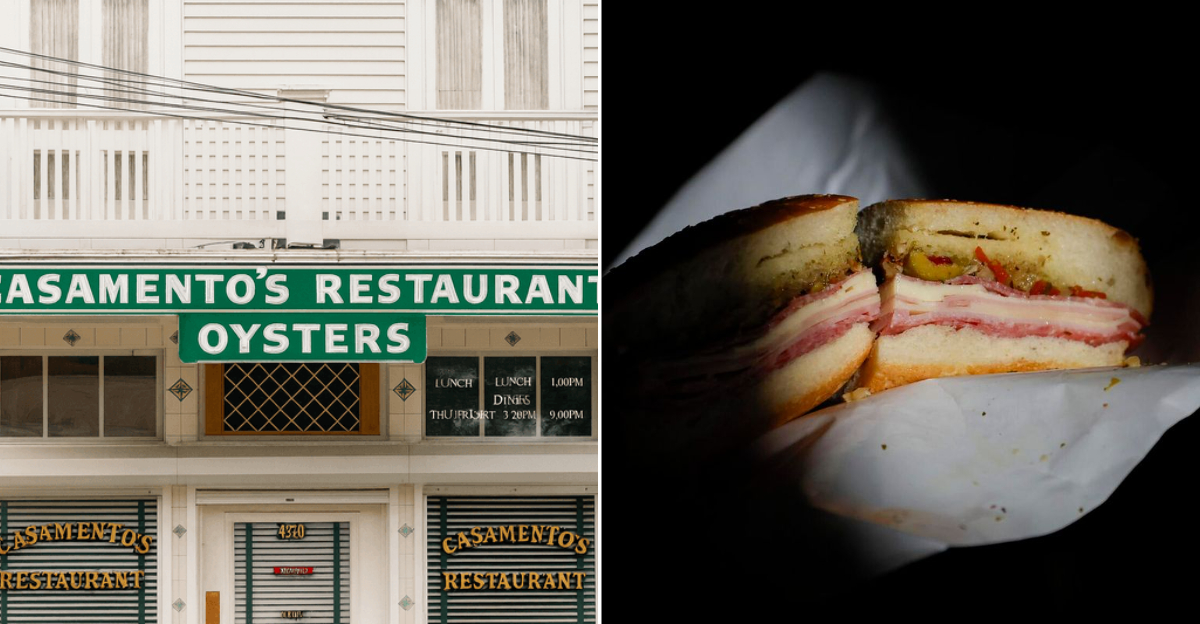
5. Casamento’s Restaurant (New Orleans)
Rows of white tiles stretch across the walls and ceiling, giving Casamento’s the odd charm of a gleaming oyster shell. It’s spotless, bright, and almost disorienting, like dining inside the sea itself.
That clean-cut aesthetic matches the food. Raw Gulf oysters taste icy and alive; the oyster loaf, fried golden and tucked between thick toast, is pure satisfaction.
I left convinced no city reveres oysters like New Orleans. Casamento’s doesn’t just serve them, it builds a temple around them.
6. Central Grocery & Deli (New Orleans)
Olive oil glistens across the counter, perfuming the air with garlic and spice. You’re not here for décor, you’re here for the muffuletta.
Invented by Sicilian immigrants in 1906, this sandwich layers salami, ham, mortadella, provolone, and briny olive salad between sesame bread. It’s a compact history lesson in one bite.
Visitor tip: order a half. It’s still huge, and the flavors only deepen as it rests. Take it to the levee nearby and watch the river drift by, it’s the right way to eat it.
7. Don’s Seafood (Lafayette)
Steam rolls off platters as servers weave through tables covered in red-check cloths and ice-filled buckets. The place hums with that mix of conversation and clinking forks only family joints can create.
Founded by Don Landry in 1934, this restaurant remains a Lafayette landmark, run by the Landry family through four generations. Their crawfish étouffée and fried catfish haven’t strayed far from the originals.
But show up hungry and patient. When crawfish season peaks, the line stretches out the door, but the first bite makes time irrelevant.
8. Chicken Shack (Baton Rouge)
The smell of peppered fried chicken hits first: loud, unmistakable, irresistible. Inside, counter chatter mixes with gospel radio, and everything feels unpretentious and alive.
This family-run spot has been feeding Baton Rouge since 1935. The recipe, handed down and never written out, builds layers of crunch and heat that leave your fingers shining.
I tried one bite before driving off and ended up finishing the box in the parking lot. It’s the kind of food that ends all arguments about “best chicken.”
9. Roman Candy Company (New Orleans)
A striped wooden wagon still rolls through Uptown streets, carrying a hand-cranked machine from another century. The smell, vanilla, chocolate, strawberry, drifts behind it like memory itself.
Since 1915, the Cortese family has made taffy on that same wagon, twisting each stick by hand for over four generations. Their process is simple, almost meditative.
You might want to buy one of each flavor and stash them in your glove box. Days later, they’ll still taste faintly of the city’s sweetness and persistence.
10. Zuppardo’s Family Market (Metairie)
The aisles smell faintly of roasted coffee and bakery yeast, the kind of scent that belongs to a store that’s seen generations grow up around it. Neighbors greet each other by name as carts clatter over old tile.
Opened in 1947 by the Zuppardo family, this was Louisiana’s first self-service grocery. The shelves still carry a mix of imported Italian goods and local produce.
Grab a muffuletta loaf from the deli before you shop. It’s a quiet reminder that groceries here still mean gathering, not rushing.
11. Langenstein’s (New Orleans)
If New Orleans had a family pantry, it would look like Langenstein’s. The store hums with steady purpose, families picking up gumbo ingredients, workers grabbing lunch plates.
Founded in 1922 and still family-run, it’s the city’s oldest full-service grocery. Recipes for shrimp Creole, turtle soup, and crawfish pie have survived through handwritten notes and repetition.
Reaction: I stopped in for milk and left with red beans, cornbread, and an odd sense of belonging. It’s hard to leave this place without something warm, literal or not.