
10 Maine Hiking Trails Locals Avoid In October Because Snakes Are Still Active
Nothing tests your love of fall hiking quite like discovering that the stick beside your boot has a tongue. I nearly jumped out of my shoes when a garter snake slithered past me on a crisp October afternoon in Maine.
Meanwhile, the snake couldn’t have cared less. Apparently, I was the one interrupting its afternoon plans.
As it turns out, Maine’s snakes don’t disappear the moment the leaves change color. They can still be active on milder October days, especially where rocks catch the afternoon sun.
Thankfully, all of the state’s native snakes are nonvenomous, so there’s no reason to panic.
Still, that little encounter taught me to watch where I put my feet. Here are ten beautiful Maine hiking destinations where a sunbathing snake might make an unexpected appearance during your fall adventure.
Range Pond State Park, Poland
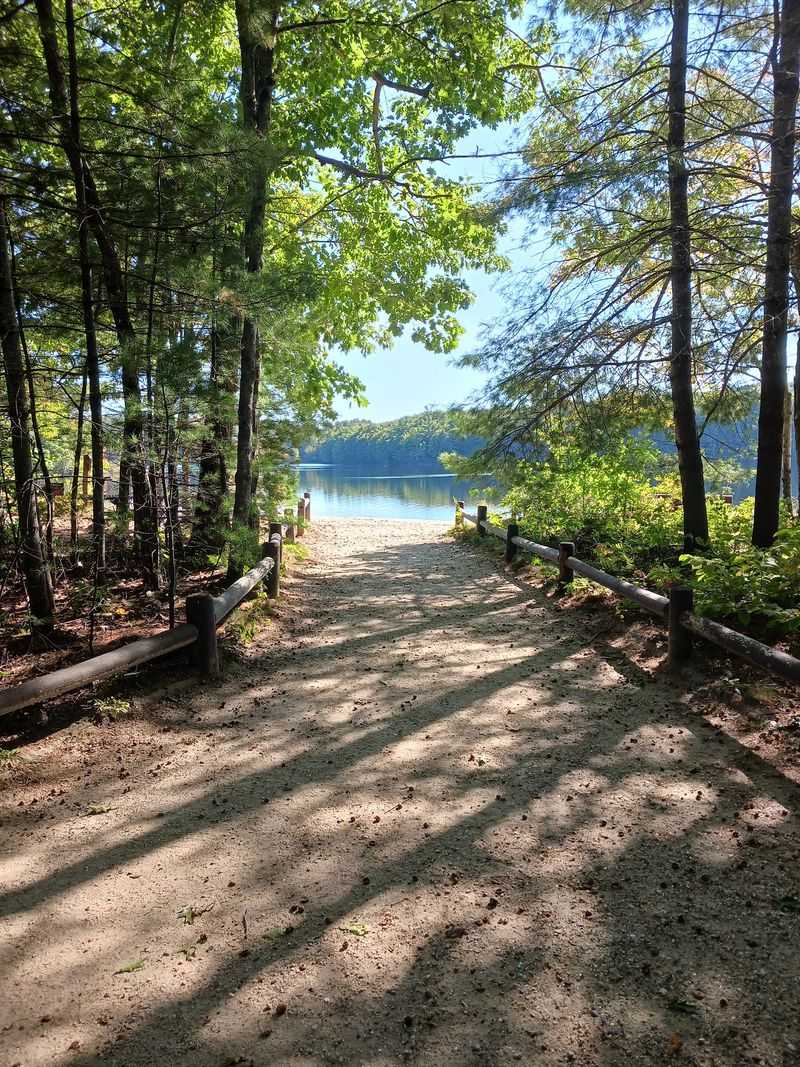
Fishing fans know Lower Range Pond for its brook trout, brown trout, and bass, but October brings a different kind of local onto the shore. Range Pond State Park sits at 26 State Park Road in Poland, Maine, in Androscoggin County, just a short drive from Lewiston and Auburn.
The park opened in 1965 on land bought from Hiram Ricker and Sons, the family famous for bottling Poland Spring Water. Today it covers roughly 740 acres, with a wide sandy beach and a smooth 1,000-foot promenade that lets wheelchairs roll right up to the water.
Hikers can choose from about 2 to 5.5 miles of easy trails built on old logging roads and railroad beds. The Old Camp Trail hugs the pond for 2 miles, while the Old Fields Trail loops through mixed forest.
The shady, gravel Railbed Trail is wide enough to spot anything sunning itself ahead of you.
Those sunny pond edges and leafy woods are just the kind of places where garter snakes and northern water snakes warm up on cool fall days. They are harmless, but they do startle people.
Watch your step, keep dogs leashed, and the only thing likely to make a splash is a jumping trout.
Sebago Lake State Park, Casco
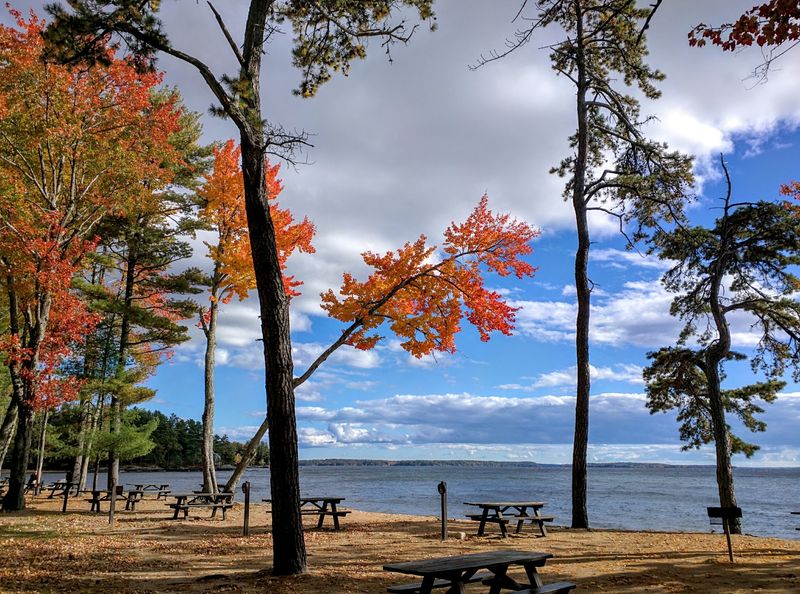
Ask Maine snake watchers where to look, and Sebago Lake often tops the list. Sebago Lake State Park, with its day-use entrance at 11 Park Access Road in Casco, Maine, covers about 1,400 acres on the northern shore of the state’s deepest lake, which plunges 316 feet.
Opened in 1938, it was one of Maine’s five original state parks. The lake itself was carved by Ice Age glaciers, and its water is so pure it serves as an unfiltered drinking source for many Mainers.
More than 5 miles of trails wind through the park. The three-mile Songo Wilderness Trail follows stretches of the Songo River and Horseshoe Bog, while the Beaver Lodge Trail offers a gentler 1.5-mile loop through woodland near the bog.
Want a workout? The Lookout Trail climbs to 499 feet.
All those bogs and wetlands help explain the park’s notable snake population. Eastern ribbon snakes slip along the marsh edges, northern water snakes bask on logs, and common garter snakes handle cool weather better than most, so they stay active late in the season.
Water snakes can nip if cornered, so give them space and back away slowly. Fall foliage here is stunning, so keep one eye on the leaves and one on the logs.
Mount Agamenticus Conservation Region, York
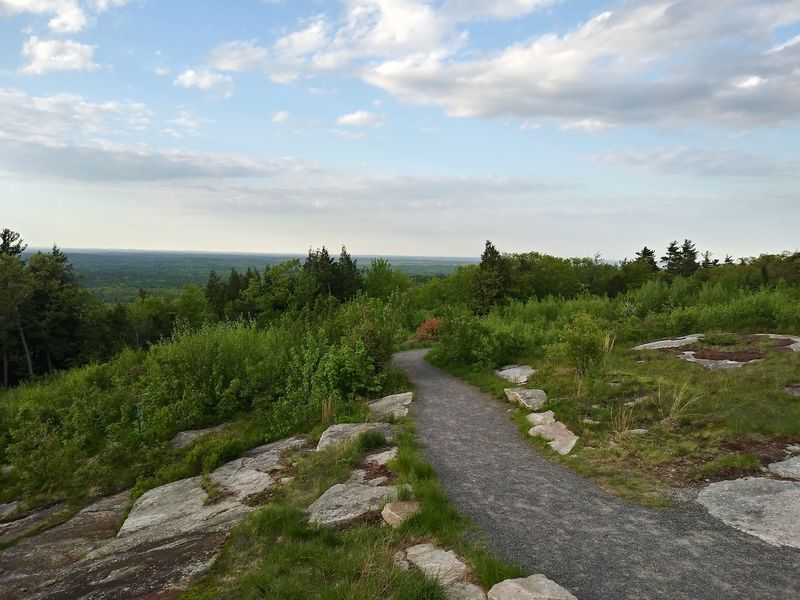
Long ago, the Abenaki called this hill Agamenticus, meaning the other side of the York River. The Mount Agamenticus Conservation Region, at 21 Mount Agamenticus Road in York, Maine, protects over 10,000 acres of forests, ponds, streams, and wetlands in York County.
Its history reads like a scrapbook. A World War II radar base once stood here, and the Big A ski area ran from 1964 to 1974, leaving old ski runs you can still spot today.
From the 691-foot summit, clear days reveal the Atlantic, the Isles of Shoals, and even Mount Washington.
Over 40 miles of trails cover everything from easy to tough. The Big A Trail is a one-mile accessible summit loop, while the Ring Trail circles the mountain over rocky terrain.
Blueberry Bluff Trail is short, steep, and full of exposed bedrock.
The popular Carson Trail is located off Port Road in Wells, Maine, while the refuge’s administrative office is in Kennebunk. Its protected habitats extend along the coast through York and Cumberland counties.
Those pools feed rare ribbon snakes, along with spotted and Blanding’s turtles. In October, sun-warmed rocks become popular basking seats.
Check the Summit Access Road hours, which shorten in fall, and enjoy the hawk watching from a respectful distance.
Bradbury Mountain State Park, Pownal
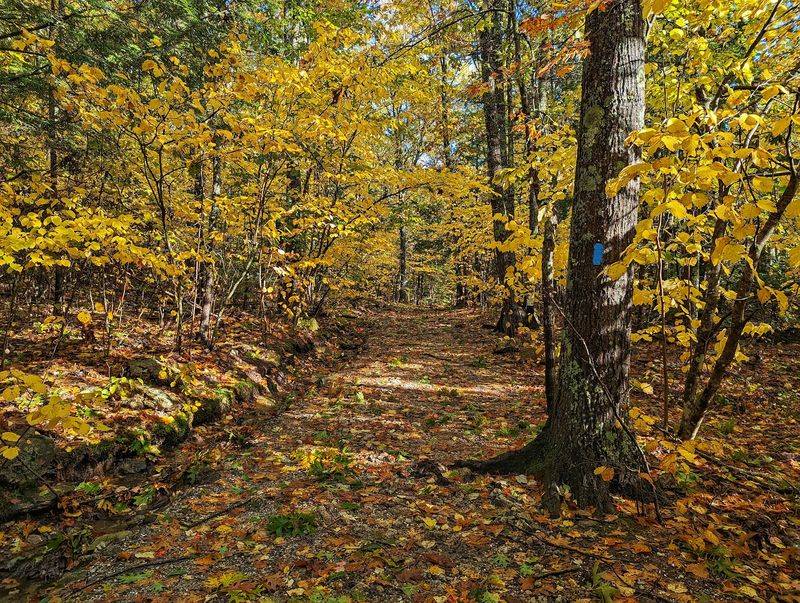
At just 485 feet tall, Bradbury Mountain is proof that small hills can deliver big views. Bradbury Mountain State Park sits at 528 Hallowell Road in Pownal, Maine, in Cumberland County, less than fifteen minutes from downtown Freeport.
History pops up everywhere here. The first sermon by an ordained minister on the summit took place in 1798, feldspar was mined near today’s ball field in the 1920s, and a rope tow once pulled skiers uphill in the 1940s.
The park was among Maine’s original state parks.
More than 20 miles of trails crisscross about 800 acres. The Summit Trail is a steep 0.3-mile scramble up rock staircases, while the Northern Loop Trail takes a gentler route.
The Switchback Trail passes the old feldspar quarry, and the Boundary Trail features rock ledges and a large vernal pool.
The common garter snake is the park’s most frequent reptile visitor, with red-bellied snakes, ringneck snakes, and eastern milksnakes showing up now and then. Sunny granite at the top makes a cozy October hangout for them.
Autumn brings colorful foliage and opportunities to spot migrating birds, while the park’s organized Hawk Watch takes place in spring.
Rachel Carson National Wildlife Refuge, Wells
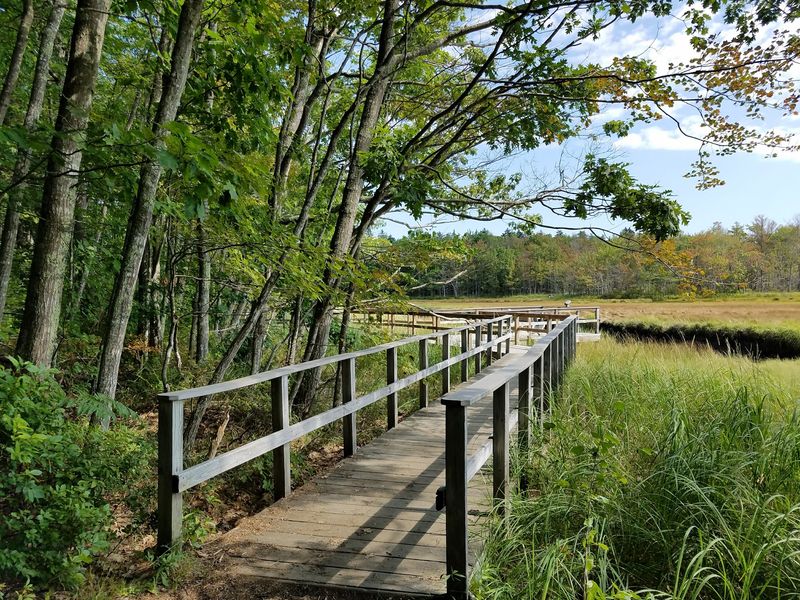
Named for the scientist who wrote Silent Spring, this refuge feels like a quiet thank-you note to nature. The Rachel Carson National Wildlife Refuge headquarters sits at 321 Port Road in Wells, Maine, and its divisions stretch along 50 miles of coast in York and Cumberland counties.
Founded in 1966 as the Coastal Maine National Wildlife Refuge, it took Carson’s name in 1970. Its main job is protecting salt marshes and estuaries that migrating birds depend on.
The Carson Trail is a one-mile, mostly level loop with gravel and boardwalk sections and 11 interpretive stops. It winds through pine woods and opens onto wide salt marsh views.
Peak foliage usually arrives around October 10, painting the uplands in warm colors.
Garter snakes are documented here, and the mix of marshes, shrubland, and forest suits other Maine species too. Herons have even been seen snacking on snakes, which shows how lively this food web is.
Stay on the trail, move slowly, and you might catch a ribbon of stripes sliding into the grass. Trails are open dawn to dusk year-round, perfect for a calm fall walk with binoculars in hand.
Vaughan Woods State Park, South Berwick
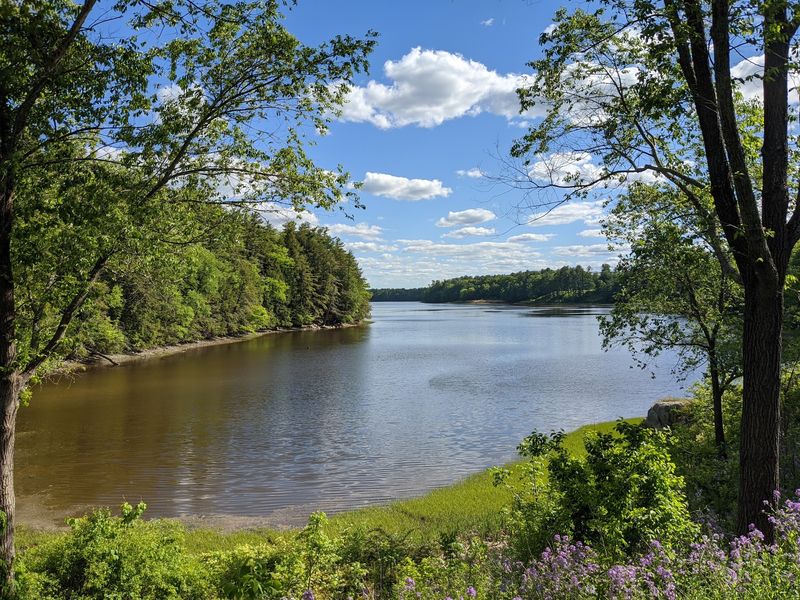
In 1949, Elizabeth Vaughan left her land to Maine with a lovely request: make it a forever wild sanctuary for birds and beast. Vaughan Woods State Park, at 28 Oldfields Road in South Berwick, Maine, honors that wish along the Salmon Falls River, right on the New Hampshire border.
Next door stands Hamilton House, built in 1785 by Jonathan Hamilton and now cared for by Historic New England. The river once powered timber harvesting and early sawmills, and the Western Abenaki farmed this land long before European settlers arrived.
Roughly 3 miles of wide trails roam through towering old-growth pine and hemlock. The River Run Trail follows the riverbank for 0.8 miles, and the Bridle Path drops 150 feet toward the water.
Charming bridges, including the Hamilton House Bridge, add storybook flair.
Riverbanks and leafy forest floors make fine snake country. One October visitor even reported brown snakes on a deer path, likely hunting for winter dens.
In the off-season, park outside the gate and pay at the self-service canister. Wear sturdy shoes for slippery roots, check for ticks afterward, and let the slithering locals have the right of way.
Wolfe’s Neck Woods State Park, Freeport
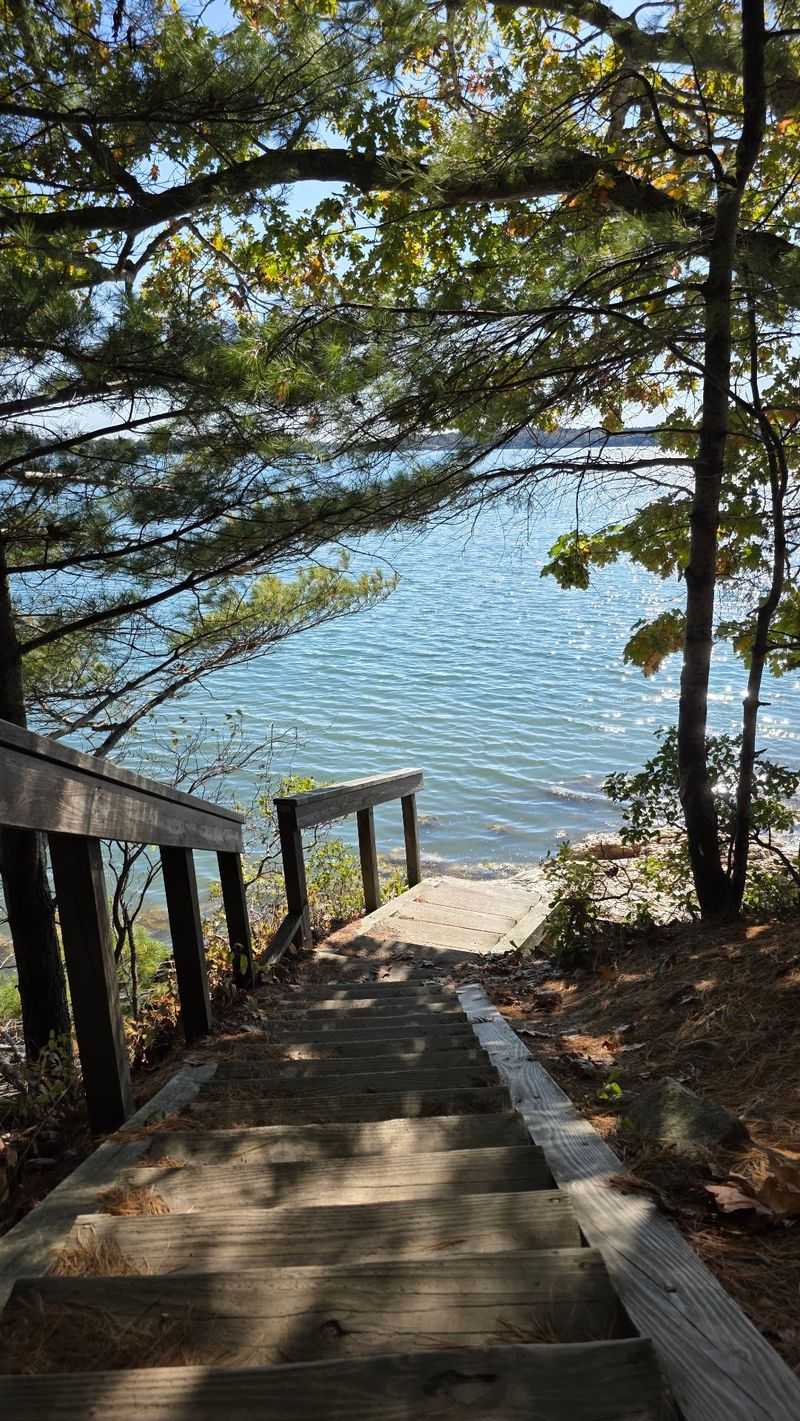
Shoppers flock to downtown Freeport, but just 10 minutes away, ospreys and snakes run a quieter show. Wolfe’s Neck Woods State Park sits at 426 Wolfe’s Neck Road in Freeport, Maine, on a wooded peninsula between Casco Bay and the Harraseeket River.
The neck is named for Henry and Rachel Woolfe, who settled here in 1733. Later, Lawrence and Eleanor Smith raised organic beef on the land before donating over 200 acres to the state.
Native Americans fished and gathered shellfish here for thousands of years.
Over 5 miles of trails cover forest, marsh, and shore. The White Pines Trail is a barrier-free gravel path with views of the osprey nest on Googins Island.
The Harraseeket Trail is a 1.8-mile moderate loop, and the Casco Bay Trail leads down wooden stairs to tide pools at low tide.
Four of Maine’s nine snake species are common here: the common garter snake, northern water snake, northern red-bellied snake, and brown snake. They like the salt marsh edges and sunny ledges as much as visitors do.
Come for the brisk foliage hikes, and consider the snakes a bonus nature lesson.
Ferry Beach State Park, Saco
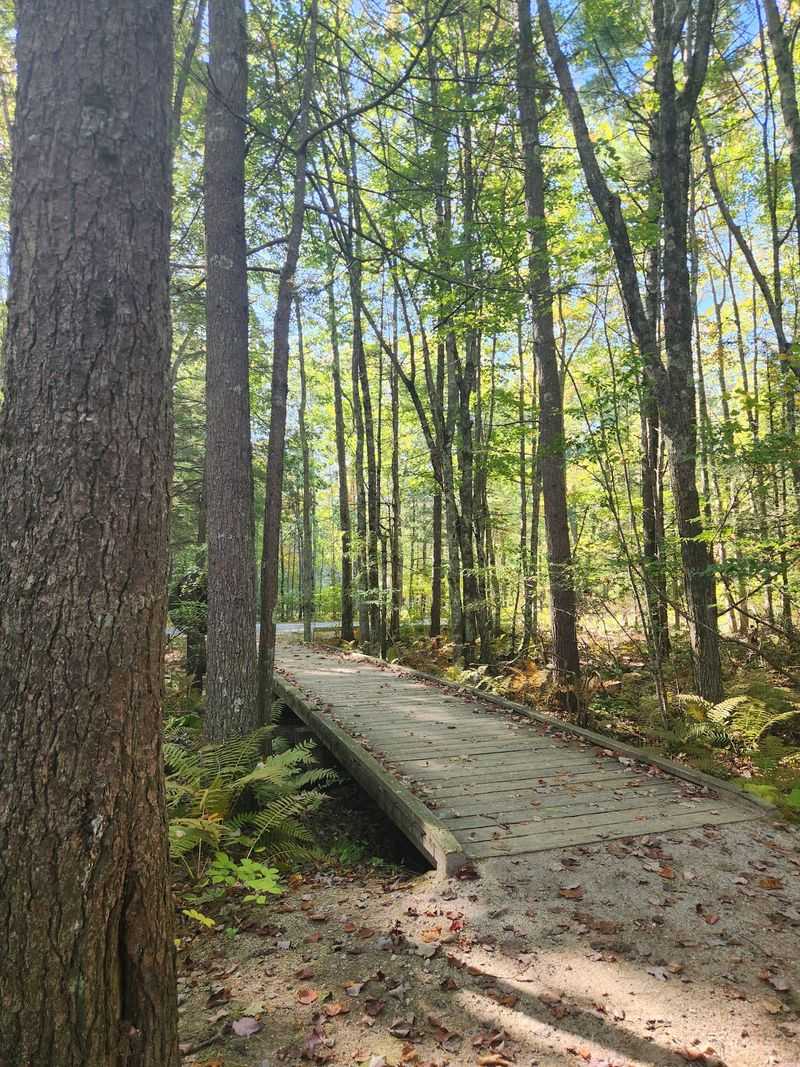
Crimson leaves in a swamp are not something you expect on the Maine coast, yet here they are. Ferry Beach State Park, at 95 Bayview Road in Saco, Maine, sits on Saco Bay between Old Orchard Beach and Camp Ellis in York County.
The name comes from an old ferry crossing on the Saco River that carried beachgoers before highways took over. A Dummy Railroad also shuttled travelers here from 1880 to 1923, and the park was protected in 1967 after a push to stop commercial building.
Its 1.7 miles of flat trails pack a lot into a small space. The Tupelo Trail is a raised boardwalk through a pocket swamp full of black gum trees, which are rare this far north and glow red in October.
The Red Oak and White Oak trails offer shady loops, and the short Beach Trail leads to soft white sand.
That mix of swamp, dunes, and forest is ideal habitat for garter snakes and water snakes. In October, facilities close, but you can park outside the gate and walk in by daylight.
Dogs on leashes are welcome on the beach then too, so bring your pup and keep sharp eyes on the boardwalk.
Camden Hills State Park, Camden
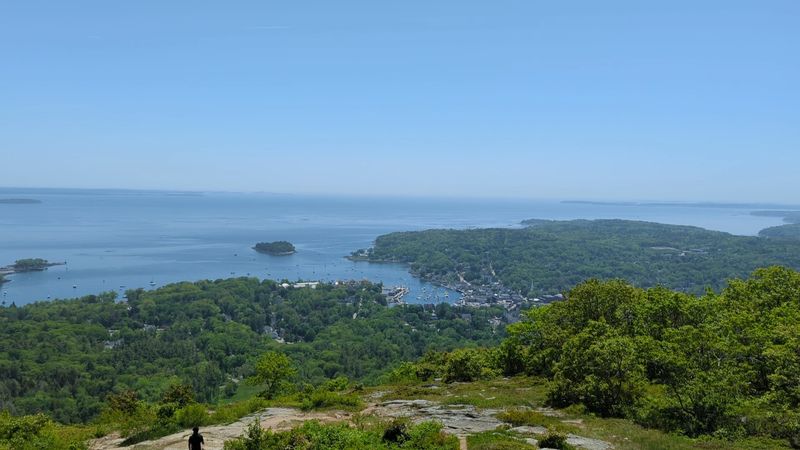
Poet Edna St. Vincent Millay looked out from Mount Battie and wrote her famous poem Renascence. Camden Hills State Park, at 280 Belfast Road on US Route 1 in Camden, Maine, still delivers those inspiring views across Camden Harbor and Penobscot Bay in Knox County.
The Civilian Conservation Corps built roads and trails here between 1935 and 1941. The stone tower on Mount Battie went up in 1921 to honor World War I soldiers, and a hotel called the Summit House once stood nearby in the late 1800s.
With over 30 miles of trails across about 5,700 acres, choices abound. The Mount Battie Trail is short but steep, while the Megunticook Trail climbs nearly 1,000 feet to the park’s 1,385-foot high point.
The Maiden Cliff Trail ends 800 feet above Megunticook Lake.
People often spot snakes here, especially garter snakes basking on rocks in early fall. Northern water, red-bellied, ringneck, and smooth green snakes also call the park home.
Wear blaze orange during hunting season, watch for ticks, and pause before sitting on a sunny ledge. Someone scaly may have claimed it first.
Mackworth Island Trail, Falmouth
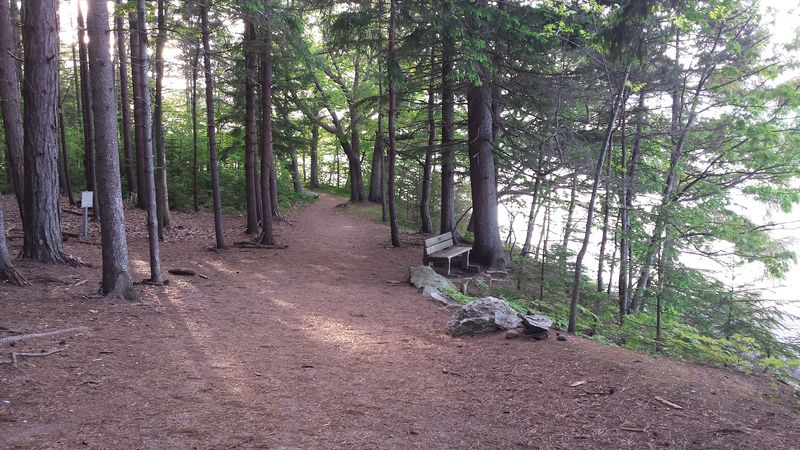
Tiny houses made of bark, moss, and pinecones greet hikers at the Fairy Village, and that sets the playful mood for Mackworth Island. Reach it via Andrews Avenue off Route 1 in Falmouth, Maine, where a causeway leads to this 100-acre island in Casco Bay.
The island got its name in 1631, when Sir Ferdinando Gorges gave it to Arthur Mackworth. Governor Percival Baxter later donated it to the state as a sanctuary for wild beasts and birds.
His beloved Irish setters and his horse, Jerry Roan, rest in a small fenced plot on the north end.
The Mackworth Island Trail is a flat, 1.25-mile loop around the shoreline. Expect views of the Portland skyline, nearby islands, and sometimes the White Mountains.
Look for granite pier remains from Camp Berry, where Union soldiers were stationed during the Civil War.
Wooded slopes and rocky shores offer sunny basking spots for garter snakes and other harmless species on warm October days. Parking holds only about 20 cars, so arrive early and bring a few dollars for the entry fee.
Then stroll, peek into tide pools, and wrap up your snake-season trail tour with a seat on a swinging bench.