
Maine Is Home To A One-Of-A-Kind Granite Bridge You Need To See
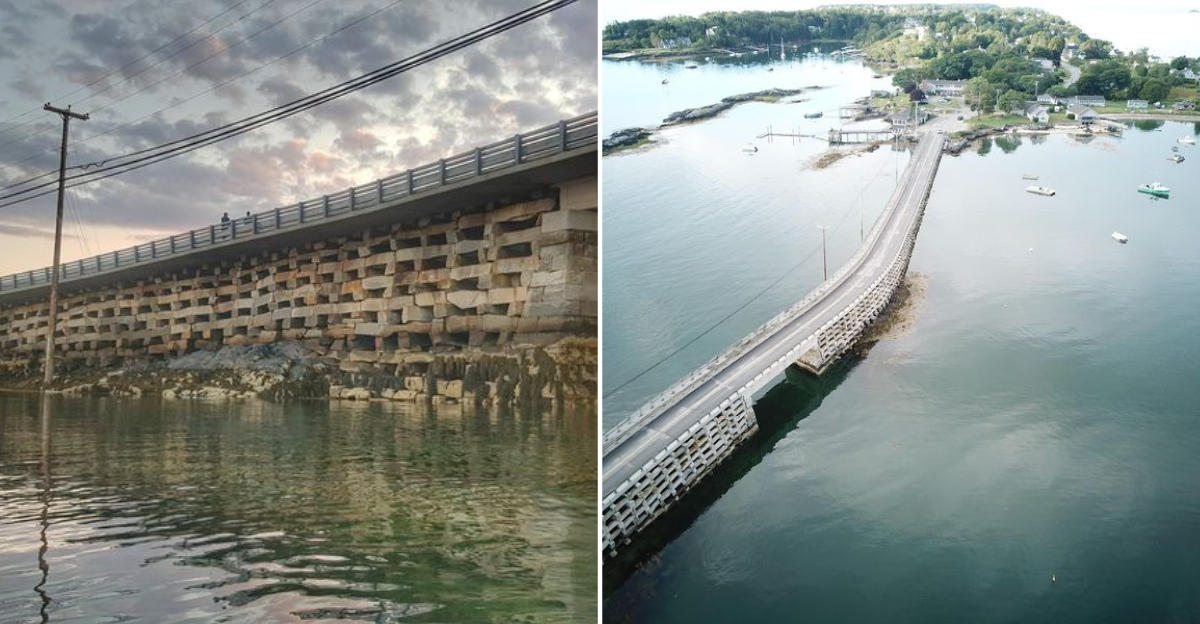
Along Maine’s rugged coastline sits a bridge unlike anything else in the United States. Built from stacked granite blocks with open gaps that let ocean tides move freely, it looks more like a carefully fitted puzzle than a typical roadway.
Set within the coastal town of Harpswell in Cumberland County, this unusual structure has been turning heads since 1928. Its design, known as cribstone construction, uses interlocking stone in a way that feels both simple and ingenious.
Even at a glance, it challenges expectations of what a bridge should look like. For anyone unfamiliar with this rare style, it quickly becomes clear why it stands out as one of Maine’s most fascinating and quietly remarkable landmarks.
America’s Only Cribstone Bridge
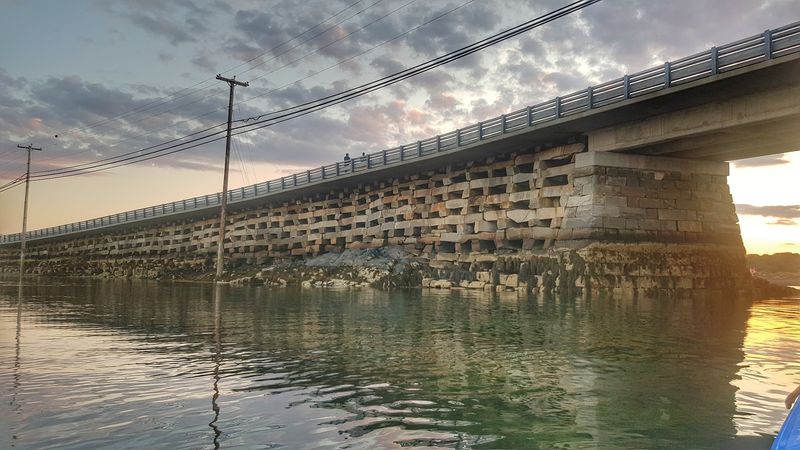
It is widely recognized as the only granite cribstone bridge in the United States and likely the only one of its kind in the world.
The Bailey Island Bridge uses a construction method called cribstone, where large granite blocks are stacked in a honeycomb or log-cabin pattern, leaving deliberate open spaces between them. Those gaps are not a flaw or a sign of wear.
They are completely intentional.
The design allows ocean tides to pass through freely rather than building up pressure against the structure. This was a brilliant solution for a coastal environment where tidal forces are powerful enough to destroy conventional bridge designs.
The method was borrowed from old fishing weir construction techniques that Maine fishermen had used for generations.
Standing on the shore and looking at the bridge from the side, it almost seems impossible that this open lattice of stone could support vehicle traffic. Yet it has done exactly that for nearly a century, making it one of the most quietly remarkable feats of engineering on the entire East Coast.
Built In 1928 With Local Maine Granite
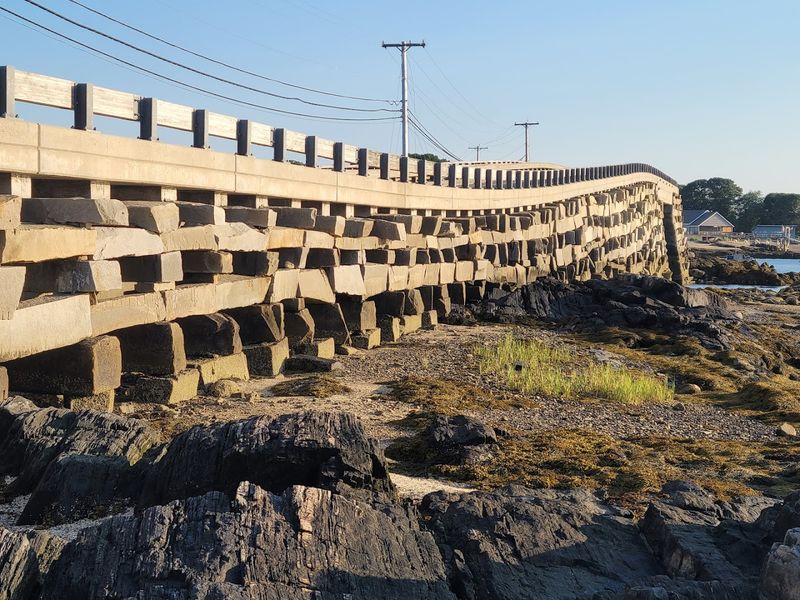
Back in 1928, building a bridge in coastal Maine was no small task. Workers sourced granite from quarries in Yarmouth and Pownal, using durable Maine stone already proven in buildings, lighthouses, and seawalls across the state.
Maine granite has a reputation for being exceptionally hard and weather-resistant, which made it the obvious material of choice.
The blocks were cut and fitted by hand, shaped to interlock without mortar or cement. Each piece had to be precisely sized so that the cribstone pattern would hold together through weight, geometry, and the use of stabilizing elements such as wooden wedges.
The craftsmanship required was extraordinary, and the result has lasted nearly a hundred years through brutal Maine winters, nor’easters, and relentless tidal action.
Considering that modern concrete bridges often need significant repairs within a few decades, the durability of this hand-laid granite structure is genuinely impressive. The year 1928 feels distant, but the bridge itself feels as solid and permanent as the coastline it crosses.
How Tides Flow Through It
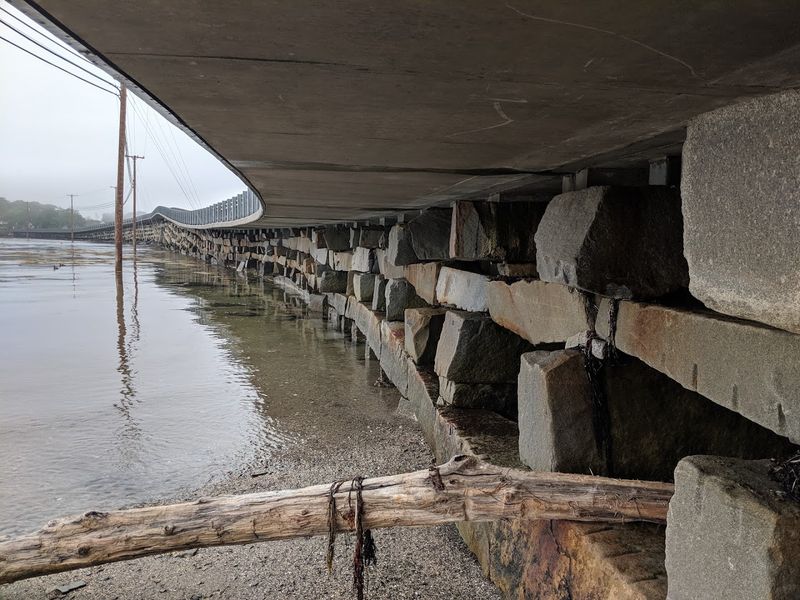
One of the most fascinating things about this bridge is watching what happens when the tide moves. Unlike a solid bridge that blocks water flow and forces it around or underneath through a narrow channel, the cribstone design lets tidal water pass through the entire width of the structure.
At both high and low tide, you can see the ocean moving freely through those open granite gaps.
This matters more than it might seem at first. The tidal range in this part of Casco Bay is typically around eight feet and can approach nine feet at nearby measurement stations.
That volume of moving water creates enormous force. A solid structure would have to be massively reinforced to resist that pressure, but the cribstone design simply sidesteps the problem by letting the water do what it wants.
Watching the tide pour through those stone gaps on a clear day is oddly hypnotic. The sound of water rushing through the honeycomb of granite blocks adds a rhythm to the crossing that you will not find on any other bridge in the country.
Linking Two Maine Islands
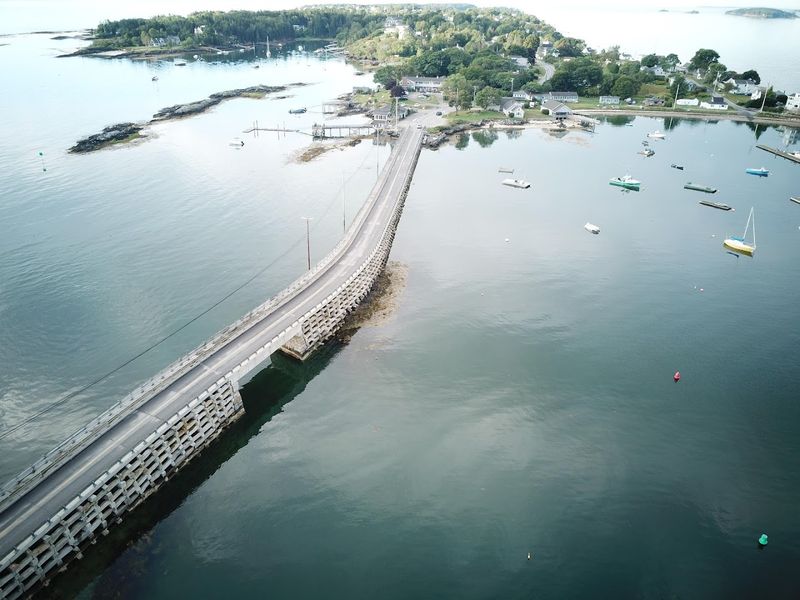
Geography plays a big role in why this bridge exists at all. The structure spans a channel between Orr’s Island and Bailey Island, two of the many island communities that make up the town of Harpswell in Cumberland County, Maine.
Before the bridge was built, residents had to rely on boats to move between the two islands, which made everyday life considerably more complicated.
Harpswell is one of Maine’s most distinctive communities because so much of it is spread across peninsulas and islands rather than on a single continuous landmass.
Connecting these communities required creative infrastructure solutions, and the cribstone bridge was the answer for this particular channel crossing.
Today, driving across the bridge takes only a matter of seconds, but it is worth slowing down and taking in the view from both sides. The water stretches out in both directions, and on a clear day the horizon seems to go on forever.
Pulling over at either end to walk the bridge on foot gives you a completely different and far more rewarding perspective.
Coastal Views Worth The Trip
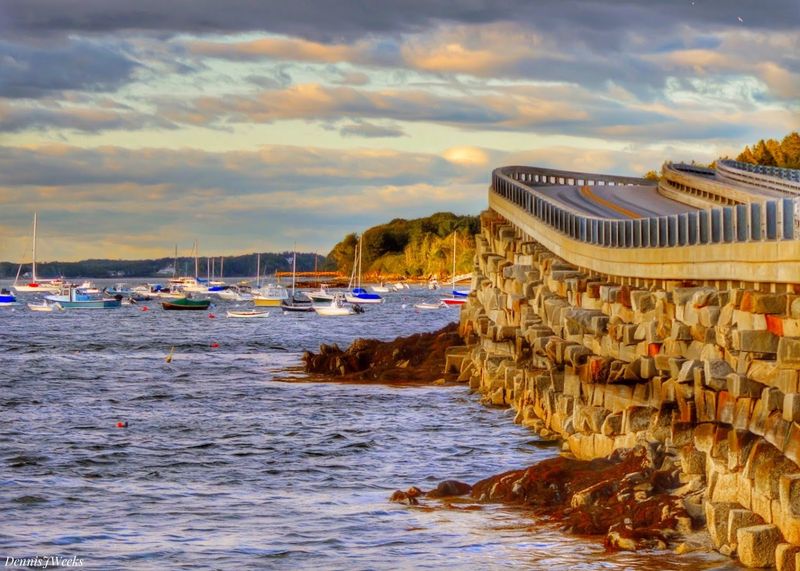
Even if the bridge itself were completely ordinary, the scenery around it would still make the trip worthwhile. The channel it crosses opens up into Casco Bay, and on a clear day you can see lobster boats dotting the water, distant islands shimmering on the horizon, and the kind of raw New England coastline that travel magazines spend entire issues trying to capture.
The rocky shores at both ends of the bridge are worth exploring carefully. At low tide especially, the exposed granite ledges reveal tide pools filled with sea urchins, periwinkles, mussels, and small crabs.
Sea glass hunters have found this stretch particularly rewarding, with smooth frosted pieces of old glass polished by years of tidal action.
Sunrise and sunset both put on remarkable shows here. The way the light hits the water and reflects off the wet granite blocks creates a visual experience that photographs well but feels even better in person.
Coming at different times of day reveals how dramatically the light and mood of this place can shift.
Wildlife Around The Bridge
The surrounding coastal waters and shoreline may offer opportunities to observe a variety of marine and bird life common to the Maine coast.
Common loons are frequent visitors to the channel, and they have a habit of surfacing right alongside the granite blocks as if they enjoy the company. Spotting a loon in its striking black-and-white breeding plumage while standing on an ancient stone bridge is the kind of moment that sticks with you.
Harbor seals occasionally haul themselves onto the exposed rocks near the bridge, particularly at low tide. Great blue herons stalk the shallows with their signature slow-motion patience.
Cormorants spread their wings on rocky outcrops nearby, drying off after a dive.
Ospreys are known to fish the channel as well, and if you are patient enough, you might catch one plunging feet-first into the water after a catch.
Birdwatchers have found that parking at either end of the bridge and simply waiting quietly for fifteen or twenty minutes produces surprisingly rich results. The combination of open water, rocky shore, and tidal movement creates ideal habitat for a wide variety of coastal species.
Free And Open Year-Round
One of the most refreshing things about this destination is that it costs absolutely nothing to visit and is accessible at any hour of the day or night.
There are no gates, no admission fees, and no seasonal closures. The bridge carries Maine Route 24 and is typically accessible at all hours as part of the public road network, though conditions may vary due to maintenance or weather.
Visiting in the off-season has its own appeal. Winter strips away the summer crowds and leaves you with the bridge almost entirely to yourself.
Seeing those granite blocks dusted with snow while cold grey water moves through the gaps below is a completely different experience from a warm July afternoon, and not a lesser one.
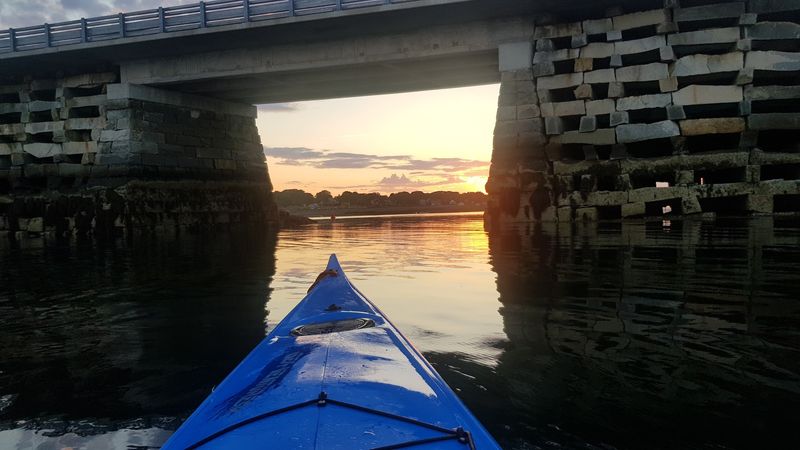
Summer brings more activity, with kayakers paddling the channel and boats passing through. Spring and fall offer mild temperatures and quieter roads.
The bridge itself changes character with every season, which is a good argument for visiting more than once.
Crossing The Narrow Lanes
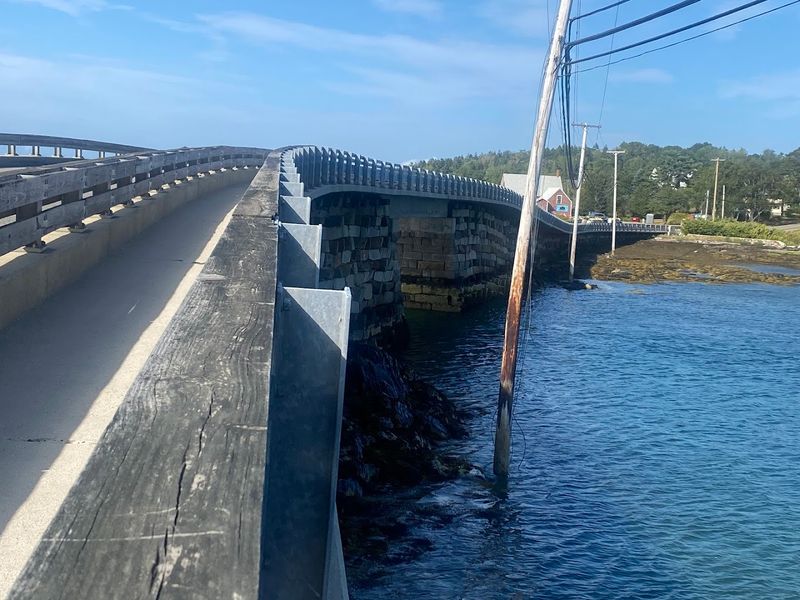
Fair warning before you cross: the lanes on this bridge are noticeably narrow. Two vehicles can technically pass each other, but it requires both drivers to slow down and pay attention.
Larger trucks, RVs, or vehicles towing trailers need to be especially careful, and it is worth checking oncoming traffic before committing to the crossing.
The narrowness is not a modern oversight but rather a reflection of the bridge’s age. In 1928, vehicles were smaller and road standards were very different.
The structure has been maintained faithfully to its original dimensions, which means the tight squeeze is an authentic part of the experience rather than something that can be easily fixed.
Most visitors find the narrow crossing adds a small element of adventure to the trip rather than being genuinely problematic.
Driving slowly also happens to be the best way to take in the view, so the tight lanes effectively force you to appreciate the scenery. Pulling over at either end to walk across on foot eliminates the driving concern entirely and is honestly the better option anyway.
Why It Was Built
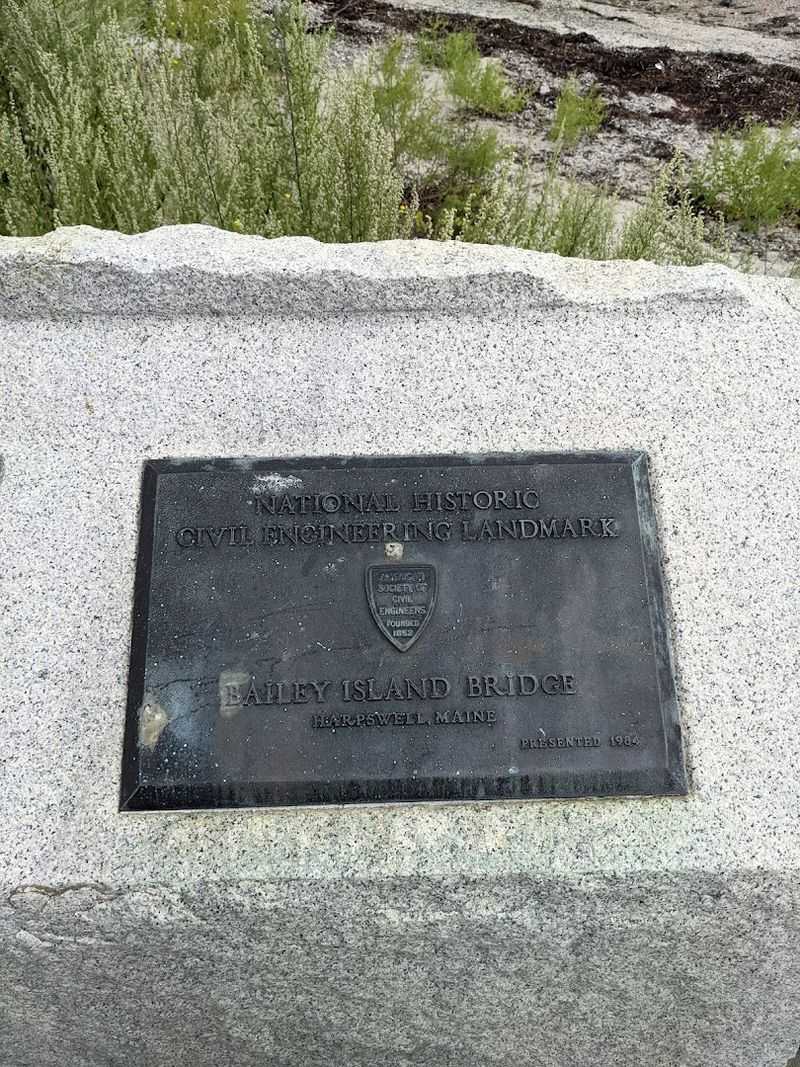
The bridge was completed in 1928 through a collaboration involving the Maine State Highway Commission, Cumberland County, and the town of Harpswell following state legislation that enabled shared funding.
At the time, connecting the island communities of this area was a practical necessity for residents who needed reliable year-round access to the mainland. The cribstone design was chosen specifically because it suited both the available local materials and the demanding tidal environment.
A commemorative plaque near the bridge honors the story of its construction and the people involved in making it happen. Reading that plaque while standing on the bridge itself gives the whole visit a more meaningful dimension.
You are not just looking at an interesting piece of engineering but at a community’s decision to solve a real problem in a genuinely creative way.
The bridge was added to the National Register of Historic Places, a recognition that acknowledges both its architectural uniqueness and its cultural significance to the region. That designation helps ensure the structure will be preserved and maintained for future generations to experience and appreciate.
Make The Most Of Your Visit
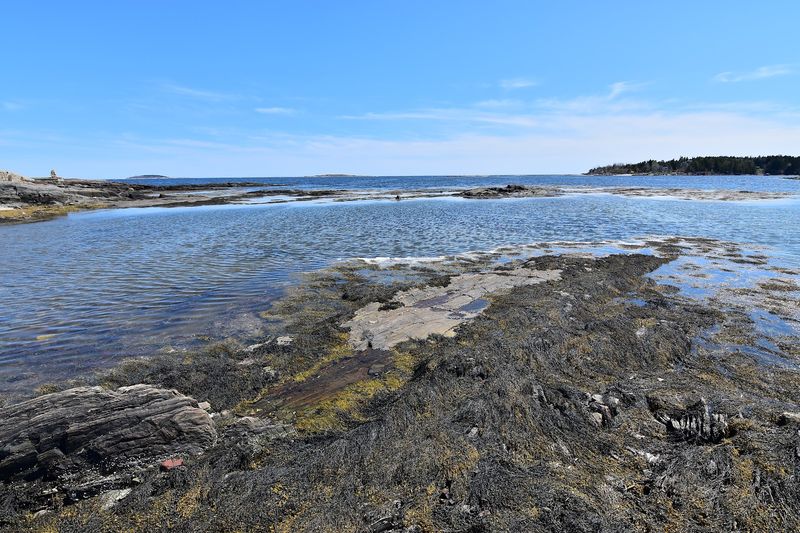
If you can, try to time your visit for low tide, it really makes a difference. When the water pulls back, the rocky shoreline on both sides opens up, and you can wander around tide pools and areas that are completely underwater just a few hours later.
It’s one of those small things that totally changes the experience, and checking a tide chart only takes a minute.
Parking around the bridge is pretty limited, so it’s best to stick to clearly marked spots nearby. Once you’re there, it’s definitely worth getting out and walking instead of just driving across.
You can look down through the gaps in the granite, hear the water moving beneath you, and really take in how unusual the structure is from different angles.
If you happen to have binoculars, bring them along. There’s usually enough going on in the water and along the shoreline to make them worth it.
And if you’re into photography, a wide-angle lens does a great job of capturing both the bridge and the surrounding coastline in one shot.