
Maine’s Eerie Abandoned Hospital Holds A Fascinating Piece Of History
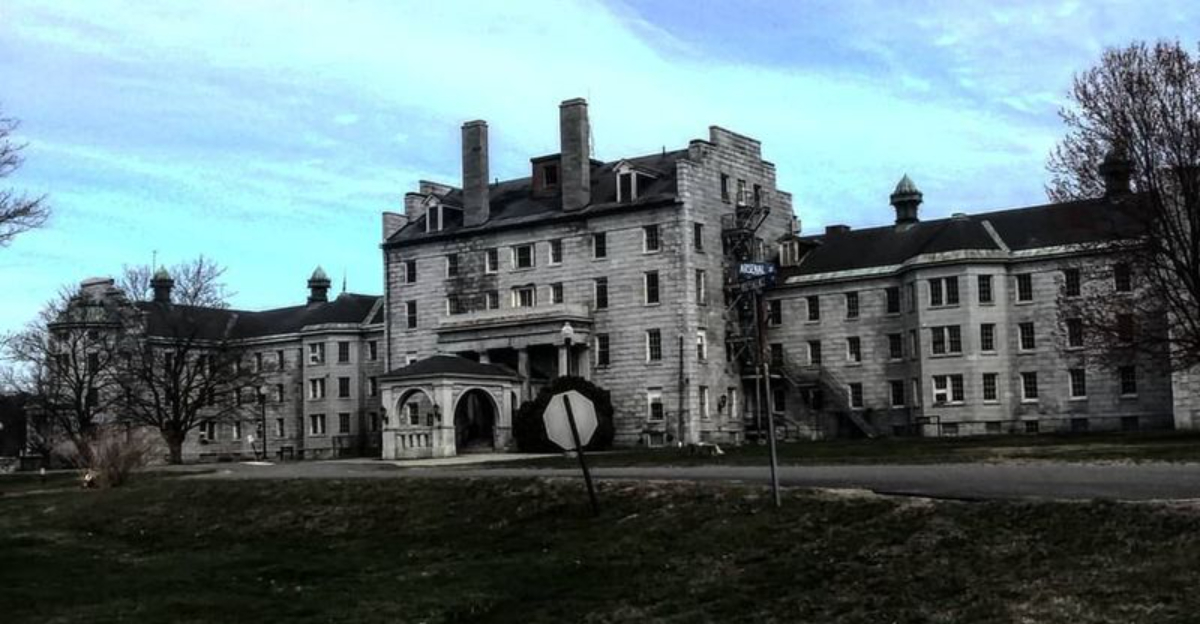
Behind a quiet Maine campus sits a place with a past far deeper than its weathered brick walls suggest. It began as one of the state’s major psychiatric institutions and served patients for about 164 years before closing as a medical facility in 2004.
Today, parts of the campus have found new uses, while older historic buildings remain preservation concerns. Its grand 19th-century architecture, reform-era ideals, farmland, crowded wards, and long institutional timeline all reveal a complicated chapter in Maine’s public health history.
This was never just a hospital. It was a self-contained world shaped by hope, hardship, changing treatment ideas, and debates that still matter today.
A Hospital Built On Hope

When the Maine Insane Hospital, as it was originally called, opened its doors in 1840, it was built on a philosophy that felt almost revolutionary for its time.
The idea was called “moral treatment,” and it centered on the belief that people with mental illness could recover if they were treated with kindness, structure, and dignity rather than punishment.
Patients were encouraged to work on the hospital’s farm, participate in activities, and live in a calm, orderly environment. The approach was a dramatic shift from the brutal conditions found in many institutions of that era.
Reformers across the country looked to facilities like this one as models for humane care. The grounds were designed to feel peaceful and therapeutic, not clinical or punishing.
That original vision shaped the physical layout of the campus in ways that are still visible today, making it a rare surviving example of 19th-century psychiatric design philosophy in New England.
Dorothea Dix Played A Key Role
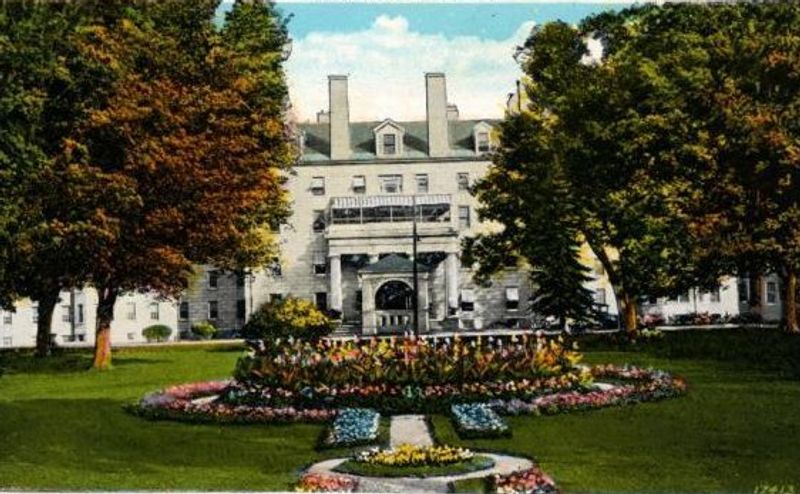
Few names carry more weight in the history of American mental health care than Dorothea Dix, and her connection to this site is a big part of what makes it so historically significant.
Dix was a tireless advocate who spent decades traveling across the United States documenting the horrific conditions in which people with mental illness were being kept.
Her reports to state legislatures helped push through funding for proper psychiatric facilities, and Maine was among the states that responded to her campaigns.
She directly influenced the expansion and improvement of the Augusta hospital during the mid-1800s, helping secure resources that made the facility larger and more capable of providing genuine care.
Dix’s association with the hospital reflects her broader influence on 19th-century mental health reform in Maine and across the United States.
Her legacy is woven into the very walls of this campus, and understanding her role adds a powerful human dimension to what might otherwise seem like just an old building.
A City Within The City
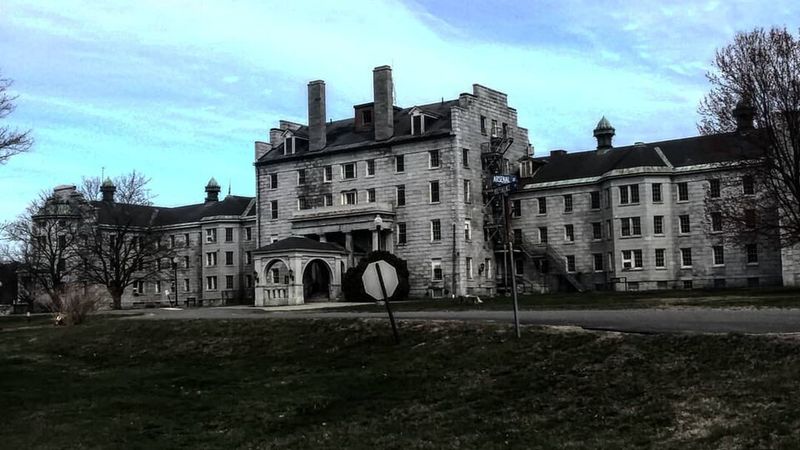
At its peak, the Augusta Mental Health Institute was not just a building. It was an entire self-contained world.
The broader hospital property once included hundreds of acres of farmland and support facilities, while the National Register historic district today covers about 90 acres.
This kind of setup was intentional, reflecting 19th-century beliefs that rural surroundings, work, fresh air, and orderly routines could support treatment. Patients contributed to running the farm and other operations as part of their therapy, and the institution produced much of its own food and supplies.
Walking through what remains of the campus today, you can still sense the scale of what once existed here. The sheer number of structures, roads, and open spaces tells a story of a community unto itself.
It is the kind of place where the landscape does as much storytelling as any written record ever could, quietly holding decades of human experience in its soil.
Kirkbride Architecture Still Stands
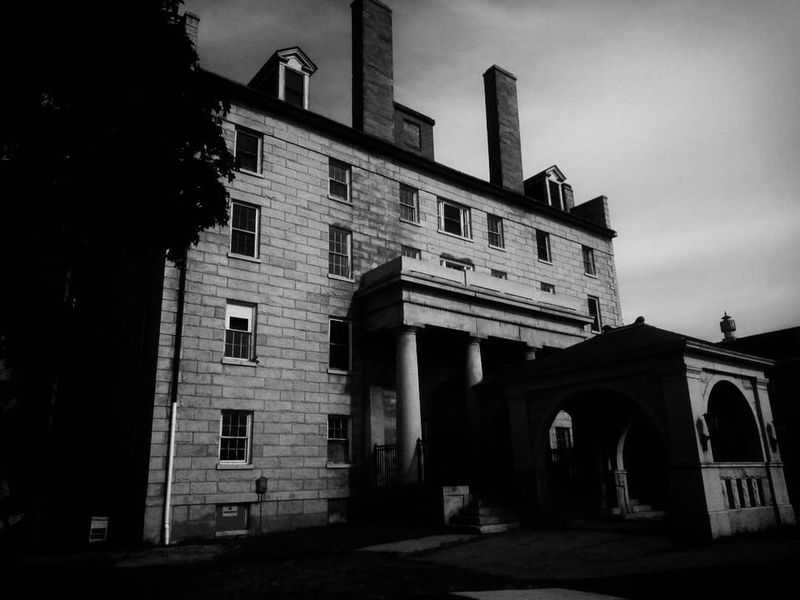
One of the most visually striking things about the Augusta Mental Health Institute Historical Area is its architecture.
The original central building predates the formal Kirkbride Plan, but later wings and additions incorporated Kirkbride principles, including staggered layouts meant to maximize sunlight and fresh air for patients.
Kirkbride buildings were designed to be beautiful as well as functional, based on the theory that a pleasant environment could aid in recovery. Later additions gave the Augusta complex the kind of stepped, winged layout associated with Kirkbride-style asylum design.
Only a small number of Kirkbride buildings survive in the United States today, which makes the Augusta example genuinely rare. Preservationists and architecture enthusiasts from across the country have taken an interest in the site precisely because structures like this are disappearing rapidly.
Standing in front of the building, it is hard not to feel the weight of its presence, even in its current state of disrepair.
164 Years Of Care
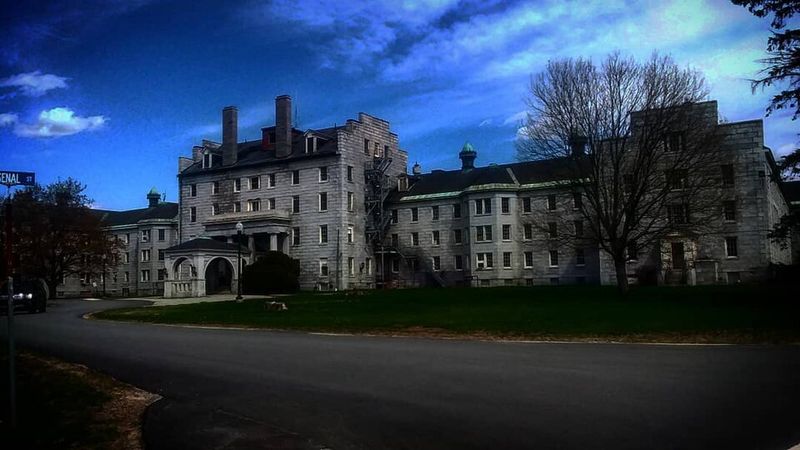
Longevity alone is enough to make a place historically remarkable, and the Augusta Mental Health Institute certainly qualifies on that front. From its opening in 1840 until its closure as a medical facility in 2004, the institution served patients for about 164 years.
Over those decades, the institution went through dramatic transformations. It expanded rapidly in the late 1800s as Maine’s population grew.
It adopted new treatment methods as psychiatry evolved through the 20th century.
It weathered overcrowding crises, funding battles, and shifting public attitudes toward mental health care.
Each era left its mark on the physical campus in the form of new buildings, additions, and modifications that tell the story of changing priorities and changing times.
Few historical sites offer such a compressed and readable timeline of social history. Visiting the campus is almost like reading a 160-year-long story written in brick and mortar rather than ink and paper.
When Crowding Took Over

By the mid-20th century, the Augusta Mental Health Institute was severely overcrowded. At its mid-20th-century peak, the hospital housed about 1,800 patients, far beyond what the facility had originally been designed to accommodate.
This overcrowding was not unique to Augusta. Psychiatric hospitals across the United States were overwhelmed during this period, partly because there were few alternatives for people with serious mental illness.
The conditions that resulted from this overcrowding were troubling by any standard. Staff were stretched thin, resources were limited, and the kind of individualized care that had been the original vision of the institution became nearly impossible to deliver at that scale.
This chapter of the hospital’s history is an uncomfortable one, but it is also an important one. It reflects a nationwide failure to adequately fund and staff mental health services during a critical period.
The story of overcrowding at Augusta mirrors similar stories playing out at institutions from coast to coast, making it a window into a much larger national conversation about mental health care and public responsibility.
The Emptying Of The Wards

Starting in the 1960s and accelerating through the 1970s and 1980s, a major shift in American mental health policy called deinstitutionalization began reshaping facilities like the Augusta Mental Health Institute.
The basic idea was that patients were better served in community-based settings than in large state hospitals, and new medications made it more feasible to manage conditions outside of institutional walls.
The result was a dramatic reduction in the patient population at Augusta and hospitals like it across the country.
Wards that had once been filled to capacity were gradually emptied. Buildings that had been central to the institution’s daily life were closed off one by one.
For the Augusta campus, deinstitutionalization meant a slow, decades-long process of scaling back that eventually led to the closure of most of its operations.
The policy itself remains debated by historians and health professionals to this day, since the community support systems meant to replace institutional care were often underfunded. The campus stands as a physical artifact of that complicated transition.
A Landmark With Loose Ends

Today, the site at 67 Independence Dr, Augusta, ME 04330 is recognized as the Augusta Mental Health Institute Historical Area, a designation that acknowledges its significance while also raising ongoing questions about what should be done with what remains.
The State of Maine has maintained some level of oversight over the property, though the future of the surviving buildings has been a subject of debate for years.
The historical area designation helps protect the site from being completely erased, which is meaningful given how many similar facilities across the country have been demolished without any formal recognition of their place in history.
Some of the original buildings remain standing, though many are in serious disrepair after years of limited maintenance.
Preservationists have pushed for a more robust plan to stabilize and potentially repurpose the surviving structures.
The site occupies a unique position in Maine’s historical landscape, representing both the promise and the failures of more than a century of mental health policy, and that dual legacy makes its preservation all the more worth fighting for.
The Stories After Dark

It would be impossible to talk about a place like this without acknowledging the other crowd it attracts.
Alongside historians and preservationists, the Augusta Mental Health Institute Historical Area has drawn significant interest from ghost hunters, paranormal enthusiasts, and urban explorers fascinated by its crumbling interiors and layered past.
The combination of Victorian architecture, a history connected to human suffering, and decades of abandonment makes it exactly the kind of location that captures the imagination of people drawn to eerie and atmospheric spaces.
Photographs taken inside the surviving structures show peeling paint, collapsed ceilings, rusted fixtures, and long corridors bathed in dust and shadow.
It is worth noting that unauthorized entry into the abandoned sections of the campus is not permitted, and visitors should always respect any posted restrictions or access rules.
The site’s official historical area status means there are proper ways to engage with its legacy without putting yourself or the preservation effort at risk. Curiosity is understandable, but respecting the site matters just as much.
Preservation Efforts

The future of the Augusta Mental Health Institute Historical Area is still being written, and that is actually one of the most compelling things about the site right now.
Preservation advocates in Maine have been working for years to document the surviving structures, raise awareness about their historical significance, and push for a long-term plan that keeps the campus from disappearing entirely.
Some proposals have suggested adaptive reuse, which means converting the old buildings into housing, offices, or community spaces while preserving their historic character.
This approach has worked successfully at former Kirkbride hospitals in other states, giving new life to structures that might otherwise face the wrecking ball.
Funding and political will are the biggest obstacles, as they tend to be with historic preservation projects of this scale. But the conversation is active, and the designation of the site as a historical area gives advocates a meaningful foothold.
Every year that the buildings survive intact is another year that the option to restore them rather than lose them remains on the table. That matters enormously.