
Maine’s Most Photographed House Is Even More Charming In Person
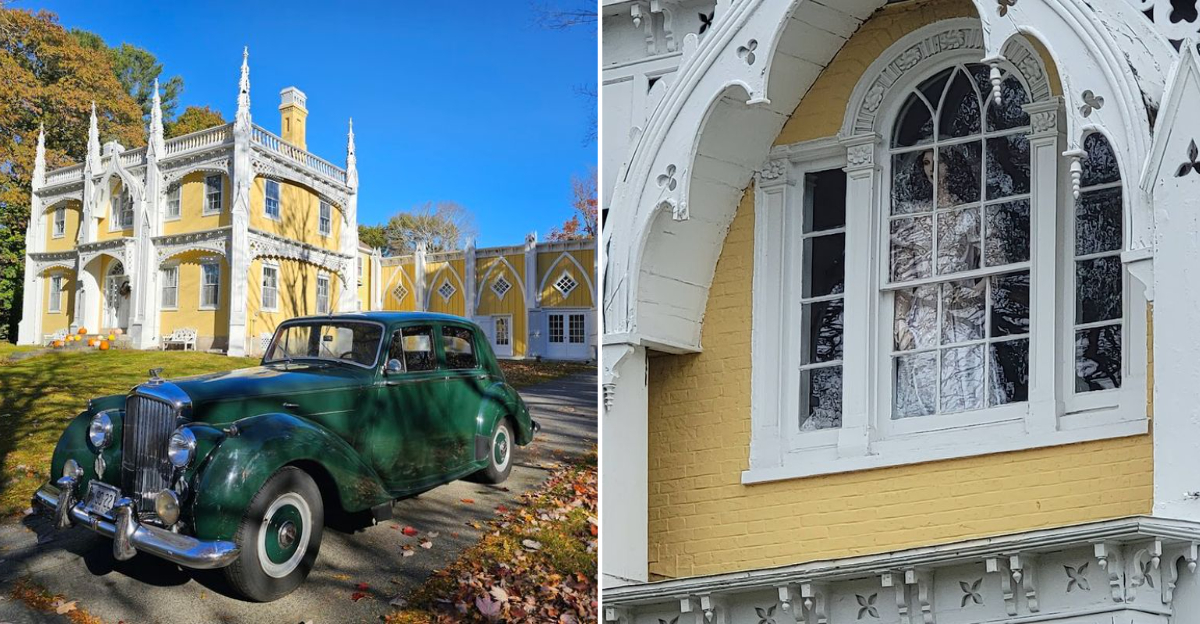
Some houses whisper history. This one practically shouts it in lace-trimmed wood. Along Summer Street in Kennebunk, Maine, a wildly ornate historic home makes drivers slow down, cameras rise, and first-time visitors stare longer than planned.
Its facade is wrapped in delicate white carvings that look like frosting piped onto an extravagant cake, giving the whole place a storybook quality that feels almost unreal.
On a bright autumn afternoon, the details become even more striking, with warm light catching every arch, pinnacle, and carved edge. The house carries a layered past tied to shipbuilding skill, Gothic Revival imagination, local legend, and one man’s remarkable creative ambition.
For anyone drawn to unusual architecture, small-town New England charm, or sights that feel wonderfully unexpected, this Maine landmark delivers a memorable roadside surprise.
The Origin Story Behind The Name
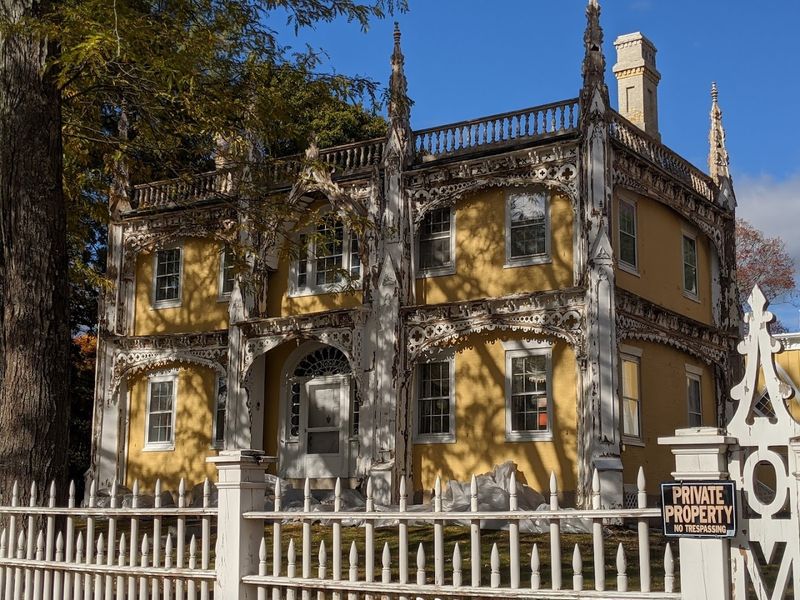
Few buildings earn a nickname as perfectly fitting as this one. The Wedding Cake House got its name simply from how it looks: layers of white, lacy wooden carvings draped over a solid brick Federal-style structure, resembling the elaborate decorative frosting on a grand Victorian wedding cake.
The house was built around 1825–1826 as a Federal-style brick home for shipbuilder George Washington Bourne and his wife, Jane. After an 1852 fire damaged the barn, Bourne began adding elaborate Gothic Revival wooden ornamentation, with the work extending to the house by about 1855.
Local tradition holds that Bourne was inspired by the great Gothic cathedrals of Europe, and he used his shipbuilding skills to carve the intricate woodwork himself.
The craftsmanship involved is extraordinary, with pointed arches, delicate tracery, and elaborate pinnacles covering nearly every surface. Standing in front of it, you quickly understand why the wedding cake comparison stuck so effortlessly and enduringly.
The Man Who Built It All
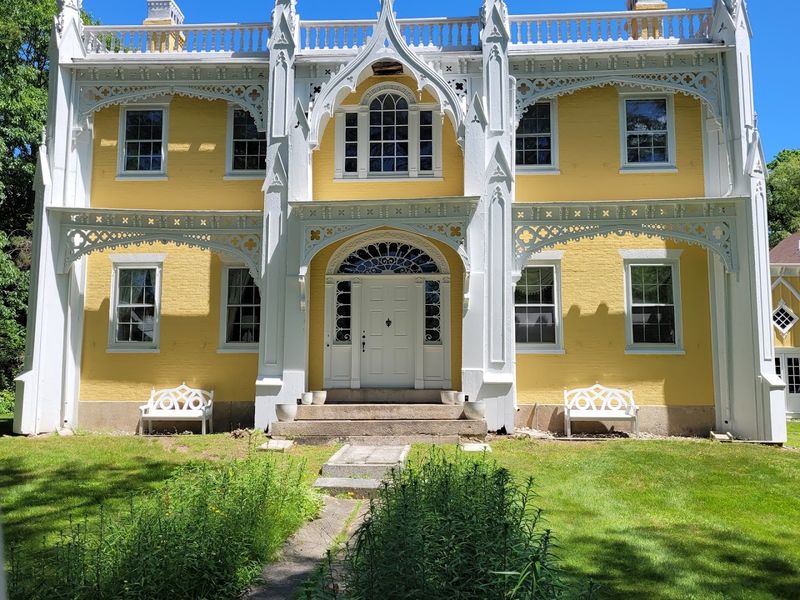
George W. Bourne was not an architect by trade, but you would never guess that from looking at his masterpiece.
He was a skilled shipbuilder, and the same precision and patience required to construct a seaworthy vessel went directly into every carved detail on this house.
Bourne lived in Kennebunk during a period when the town was thriving as a center of shipbuilding along the Maine coast. His profession gave him access to quality lumber, sharp tools, and an eye for intricate woodwork that most people of his era simply did not have.
What makes his contribution even more impressive is that the Gothic Revival ornamentation he added was entirely hand-carved. There were no machine-made parts, no shortcuts, and no pre-fabricated decorative panels.
Every arch, every pinnacle, and every lattice pattern was shaped by hand. That level of personal dedication to a creative vision is something that resonates powerfully even when you see the house for the very first time.
A Love Story Carved In Wood
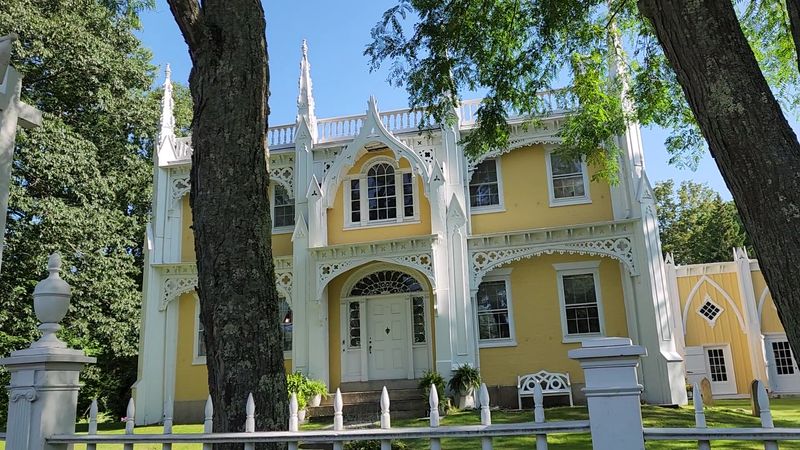
One of the most charming pieces of local lore surrounding this house involves a romantic gesture on a grand scale. The story goes that George Bourne added the elaborate wooden ornamentation as a gift to his new bride, wanting to give her a home as beautiful and special as their wedding day.
Whether every detail of that story is historically verified or not, the spirit of it fits perfectly with what you see. This is not a house that was decorated out of obligation or social pressure.
It feels personal, expressive, and genuinely joyful in the way that only a labor of love truly can.
Wandering around the exterior on that autumn afternoon, I kept thinking about what it must have felt like to see this transformation taking shape, watching a plain brick house slowly become something extraordinary. The romantic backstory adds a warmth to the experience that makes the intricate woodwork feel even more meaningful and human than it already does.
The Architectural Style That Makes It Unique
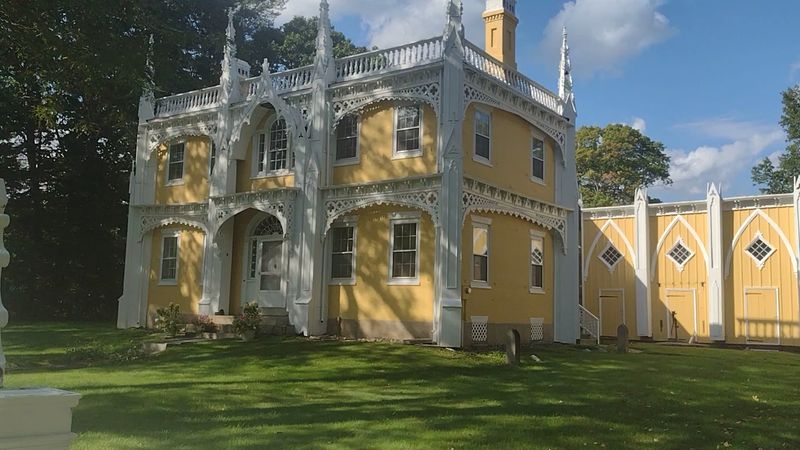
Gothic Revival architecture was a popular movement in 19th-century America, but most examples involved stone churches or large public buildings. Applying that same dramatic style to a private residential home was unusual, and doing it entirely in carved wood made it even rarer.
The house sits on a Federal-style brick base, which provides a solid, symmetrical foundation.
Over that foundation, Bourne layered pointed Gothic arches, decorative pinnacles, intricate tracery patterns, and elaborate wooden screens that catch light and shadow in constantly shifting ways depending on the time of day.
The contrast between the sturdy red brick and the delicate white woodwork is part of what makes the visual effect so striking. It is a building that manages to feel both grounded and whimsical at the same time, serious in its craftsmanship but playful in its decorative ambition.
Architecture enthusiasts will find it genuinely fascinating, and even casual visitors tend to linger longer than they planned.
Its Place On The National Register
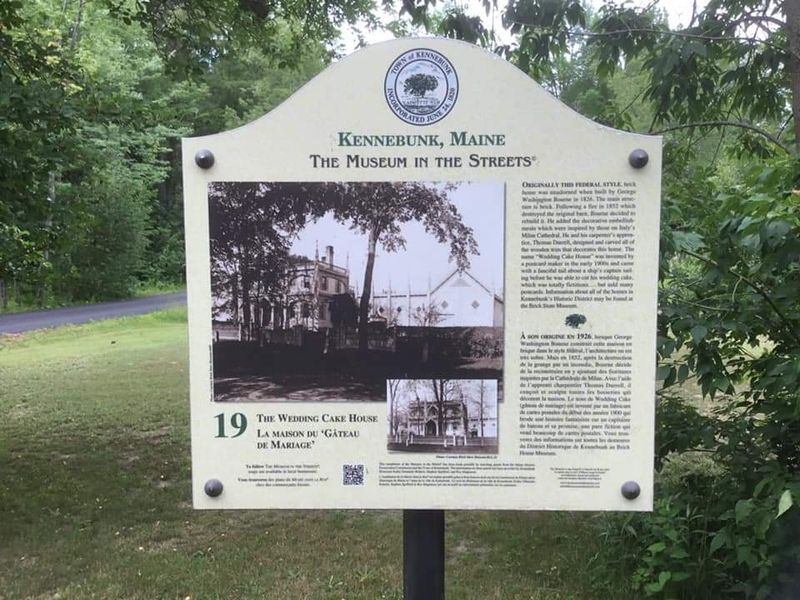
The Wedding Cake House is not just a local curiosity. It holds a place on the National Register of Historic Places, which means the federal government officially recognizes its cultural, architectural, and historical significance to the broader story of American heritage.
That designation carries real weight. It means the property is acknowledged as irreplaceable, and any changes to the structure must be handled with careful attention to preservation standards.
For a building this intricate, that level of protection matters enormously.
The house sits in a residential neighborhood (104 Summer St, Kennebunk, ME 04043) that still retains much of its 19th-century character, making the surrounding streetscape feel almost as historically rich as the house itself.
Knowing that this landmark is officially protected gives visitors a sense of reassurance that future generations will be able to experience the same remarkable sight. It is genuinely comforting to know that something this special is being taken seriously.
What The House Looks Like Up Close
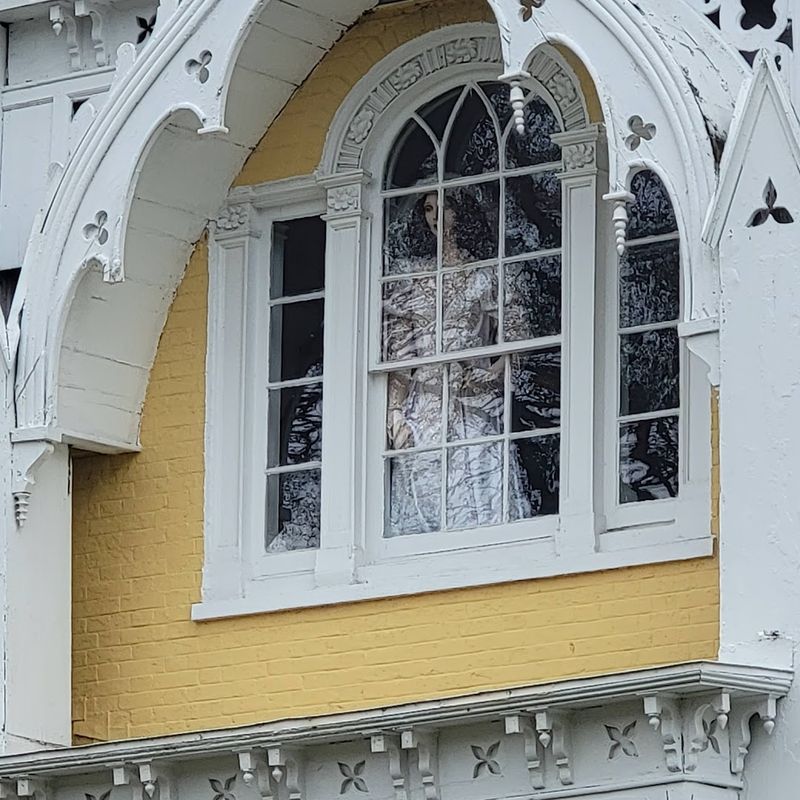
Photographs do a decent job of capturing the overall shape of the Wedding Cake House, but they cannot fully prepare you for the level of detail you notice when you are standing just a few feet away.
The woodwork is astonishingly fine, with delicate lattice patterns and carved edges that seem almost impossibly precise for hand tools.
Up close, you can see how the decorative elements are layered, with one carved piece sitting in front of another, creating depth and shadow that changes as the light shifts throughout the day.
Morning light creates long, sharp shadows across the tracery, while afternoon sun softens the whole composition into something warmer and more inviting.
I spent a solid twenty minutes just slowly walking along the front of the property, moving from one section to another and noticing new details each time.
The carved pinnacles at the roofline are particularly impressive, standing tall like tiny cathedral spires and giving the house its unmistakable skyline silhouette that photographs so beautifully from nearly every angle.
Visiting As A Private Property
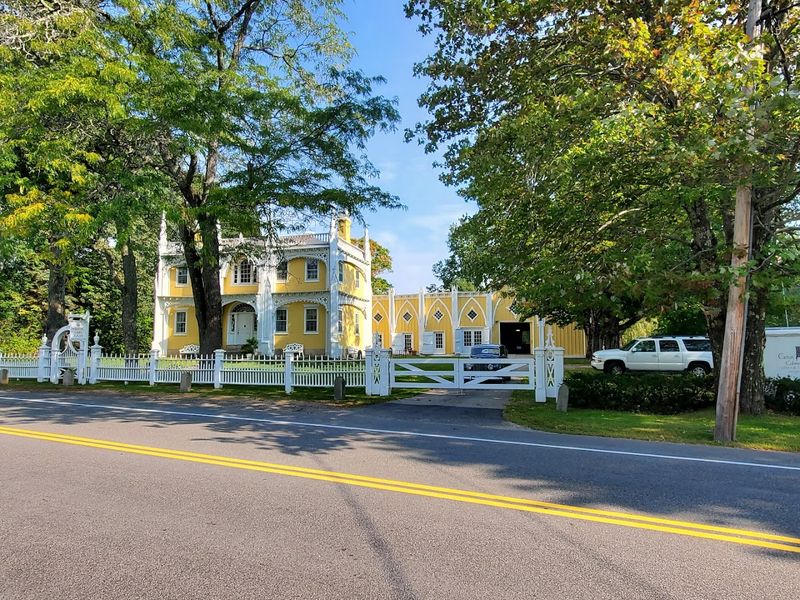
Here is something worth knowing before you make the trip: the Wedding Cake House is a privately owned residence, not a public museum or ticketed attraction. You cannot walk up to the front door, and the grounds are not open for self-guided tours without prior arrangement.
That said, the house is fully visible and highly photogenic from the public sidewalk along Summer Street. Most visitors park nearby and take a short walk to the property, snapping photos from the street while taking in the full visual impact of the facade.
Respecting the private nature of the property is important, and the current owners have made clear that the house is a home first and a landmark second.
The good news is that the exterior is so richly detailed that a sidewalk view genuinely satisfies. You do not need to step onto the property to feel like you have experienced something truly remarkable.
The house gives plenty from a respectful distance.
The Best Time To Visit And Photograph It
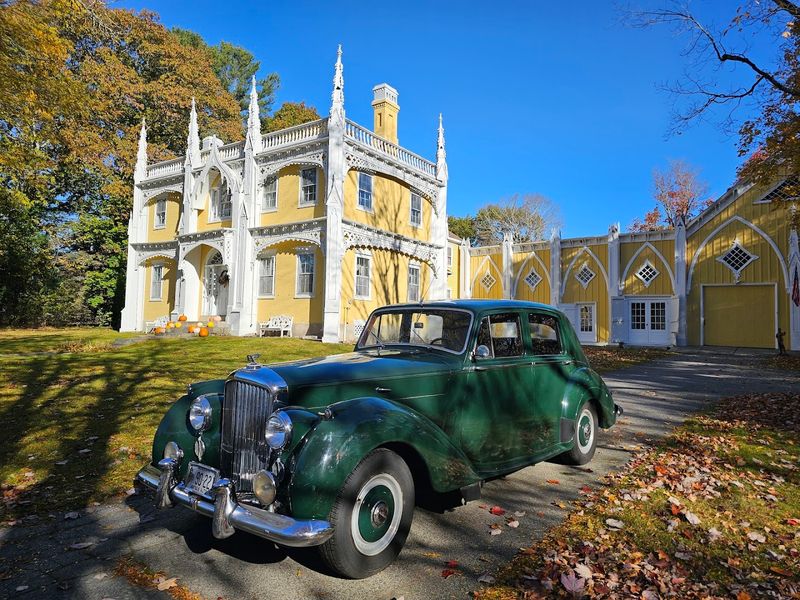
Timing your visit makes a real difference when it comes to experiencing this house at its most photogenic. Golden hour, the period shortly after sunrise or just before sunset, bathes the white woodwork in warm amber tones that make every carved detail pop with extraordinary clarity and depth.
Autumn is a particularly magical season to visit. The surrounding trees along Summer Street turn shades of orange, red, and gold, framing the house in a natural display that feels almost theatrical.
The contrast between the colorful foliage and the white Gothic ornamentation is the kind of scene that makes photographers genuinely excited.
Summer mornings are also excellent, with soft light and relatively quiet streets before the day gets busy. Midday on a bright summer day can create harsh shadows that flatten the carved details a bit, so arriving early or late tends to produce the most satisfying photographs.
Either way, plan to spend at least thirty minutes here because the light keeps changing and so does the scene.
The Neighborhood Around The House
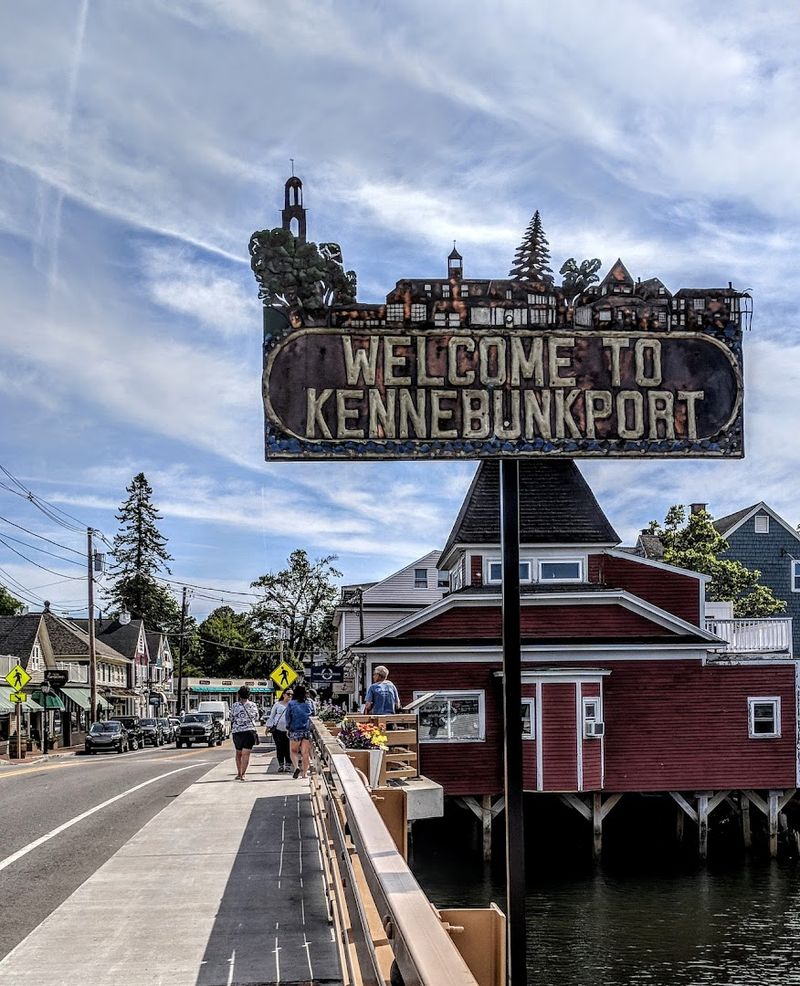
One of the pleasant surprises about visiting the Wedding Cake House is discovering that the surrounding neighborhood is genuinely worth a slow stroll.
Summer Street in Kennebunk is lined with handsome 19th-century homes that reflect the town’s prosperous shipbuilding past, and the overall streetscape has a quiet, well-preserved quality that feels almost cinematic.
Walking a few blocks in either direction from the house gives you a sense of what Kennebunk looked like during its most prosperous era. The homes are well-maintained, the trees are mature and generous with shade, and the whole area has a calm, unhurried atmosphere that encourages you to slow down.
Downtown Kennebunk is just a short drive or a pleasant walk away, offering locally owned shops, bakeries, and cafes where you can extend your visit into a relaxed half-day outing.
The combination of architectural sightseeing and small-town New England charm makes the area feel like a genuinely satisfying destination rather than just a quick roadside stop.
Why It Remains Maine’s Most Photographed House
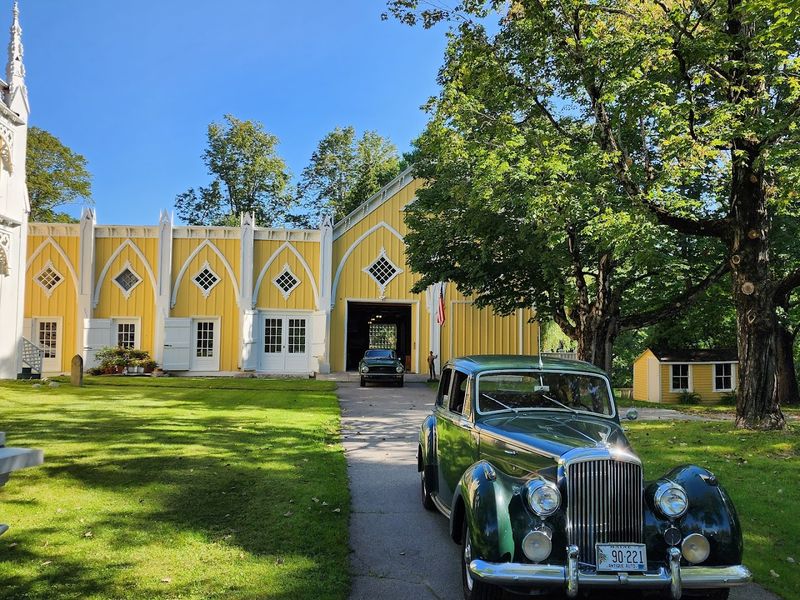
Maine has no shortage of beautiful architecture, historic lighthouses, and picturesque coastal scenery, yet this one house on a quiet residential street consistently earns the title of the most photographed building in the entire state. That is a remarkable achievement for something that was built as a private home.
The reason it resonates so widely comes down to the combination of surprise and craftsmanship. You do not expect to turn a corner in a small New England town and encounter something this elaborate.
The element of unexpected discovery is a big part of what makes people reach for their cameras so instinctively.
There is also something emotionally satisfying about a building that was created out of genuine personal expression rather than commercial ambition.
The Wedding Cake House feels alive in a way that purely functional architecture rarely does. Every visit feels a little different depending on the light, the season, and your own mood, and that quality of being endlessly interesting is exactly what keeps people coming back.