
Maine’s Strangest Museum Feels Like Walking Into An X-Files Episode
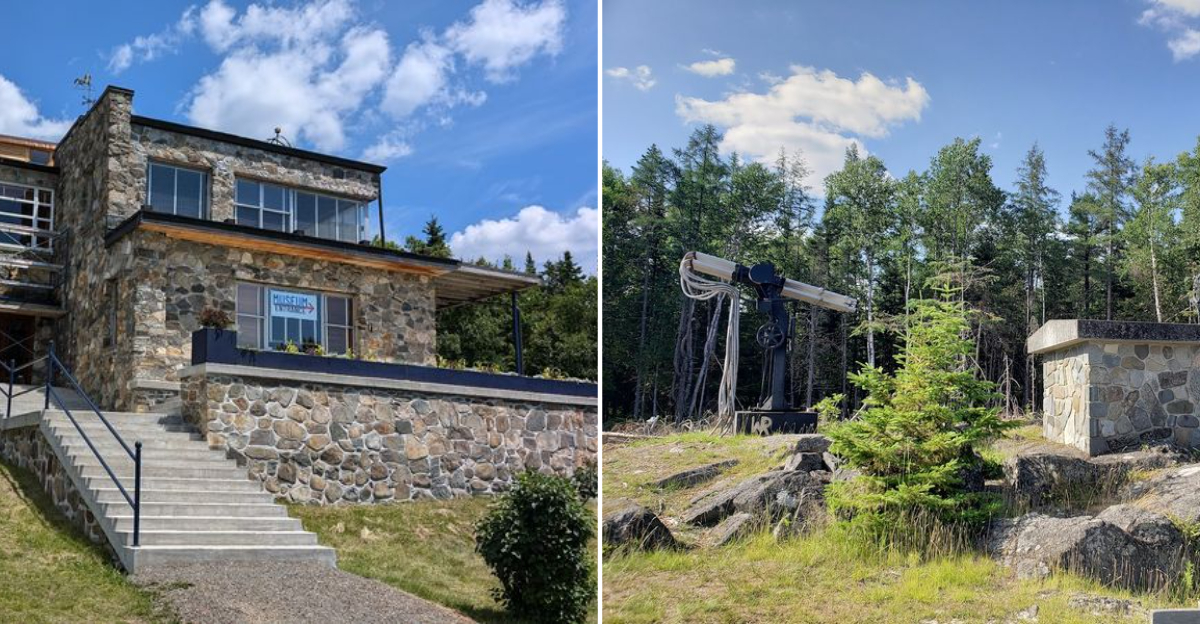
A stone building hidden in the forested hills above Rangeley, Maine, holds one of the strangest scientific stories in America. It looks peaceful at first with lakes that glimmer below and mountain ridges that rise in the distance.
Then the story begins. Inside, visitors step into the world of Wilhelm Reich, a psychiatrist, researcher, and inventor whose ideas about energy, health, and human nature pushed far beyond accepted science.
His theories made him famous, ridiculed, investigated, and eventually imprisoned by the U.S. government. Few places blend beauty, brilliance, and controversy so sharply.
This hilltop site is not just a museum stop; it feels like the physical remains of a question nobody ever fully answered.
The Man Behind The Mystery

Not many scientists get their books burned twice, once by the Nazis and once by the U.S. government. Wilhelm Reich was a student of Sigmund Freud who went on to develop his own bold theories about human psychology, body energy, and the nature of life itself.
Born in Galicia, then part of Austria-Hungary and now in Ukraine, in 1897, he trained as a physician and psychoanalyst before his ideas began taking him into territory that made the mainstream scientific world deeply uncomfortable.
Reich believed that emotional and physical health were directly connected, a concept that was radical for his time but has since influenced many areas of modern therapy. His work on body-centered psychotherapy laid groundwork that therapists still reference today.
By the time he settled in Maine in the late 1940s, he had survived war, exile, and professional rejection. Standing in the museum’s main hall, surrounded by photographs and documents from his life, you get a real sense of just how complex and driven this man truly was.
A Hilltop Laboratory Like No Other
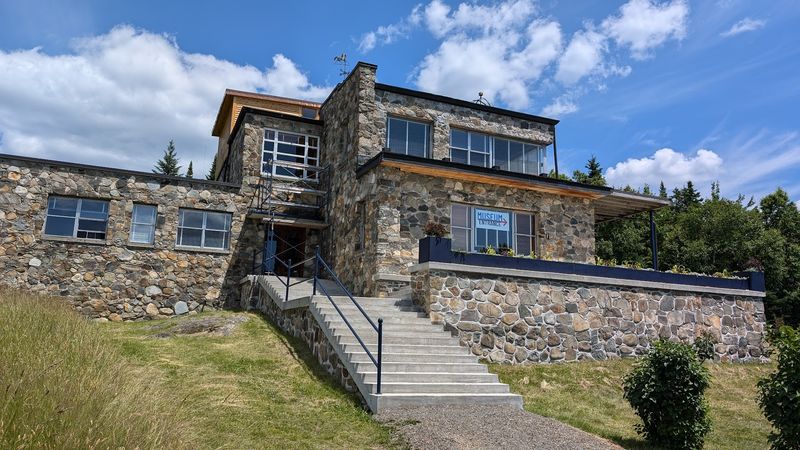
Perched on a hilltop with sweeping views of Rangeley Lake and the surrounding mountains, Orgonon feels more like a retreat for a visionary thinker than a typical research facility.
Reich bought the Orgonon property in 1942, built a Students’ Laboratory there in 1945, and began construction of the Orgone Energy Observatory in 1948.
The building is constructed from local fieldstone and features large windows that frame the kind of views that make you stop mid-sentence. Reich chose this remote Maine location specifically because he believed the natural environment supported his research into what he called orgone energy.
Walking the grounds, you pass through meadows and forest trails that feel genuinely untouched. The whole property covers about 200 acres, and the combination of open sky, mountain air, and quiet wilderness gives Orgonon an atmosphere that is hard to describe but easy to feel.
It is one of those rare places where the setting and the story are equally compelling.
The Orgone Energy Theory
Orgone energy was Reich’s central and most controversial idea. He proposed that a universal life energy existed in all living matter and in the atmosphere itself, and that this energy could be measured, accumulated, and directed.
To most scientists of his era, this was pure fantasy. To Reich, it was the foundation of everything.
He built devices called orgone accumulators, essentially boxes made from alternating layers of organic and metallic materials, which he believed could concentrate this energy.
Patients would sit inside these boxes as part of a therapeutic process, and Reich claimed measurable health benefits resulted from the treatment.
The U.S. Food and Drug Administration saw things very differently and eventually took legal action against him.
Inside the museum, you can read the original court documents and scientific correspondence that show just how heated this battle became.
Whether you believe in orgone energy or not, the story of how one idea sparked a federal investigation is genuinely gripping from start to finish.
A Machine Meant To Make It Rain
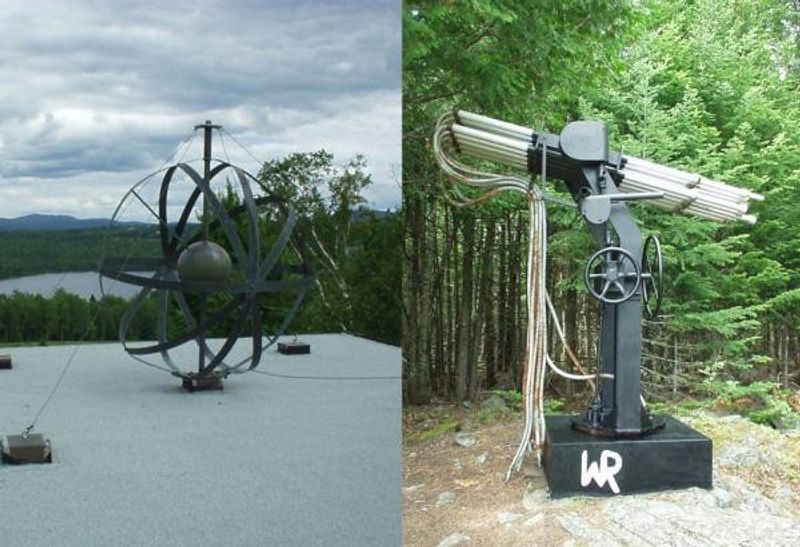
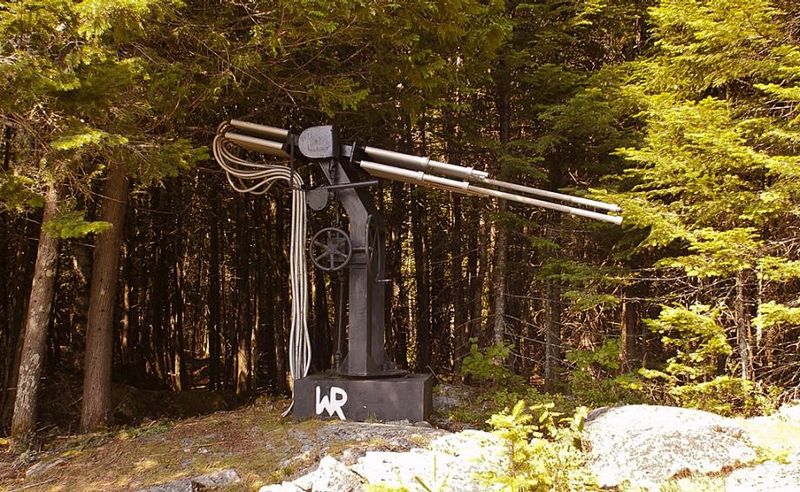
One of the most striking objects on the Orgonon grounds is a large metal device pointing toward the sky called a cloudbuster. Reich developed the cloudbuster in the early 1950s with the belief that it could draw orgone energy from the atmosphere and influence weather patterns, including rainfall.
It sounds like something from a science fiction film, but Reich’s best-known rainmaking claim involved Maine blueberry farmers during a 1953 drought, and he later conducted desert-related work in Arizona. Whether the rain that followed was connected to his device remains a matter of serious debate.
Standing next to the cloudbuster on the museum grounds, the machine has an undeniable visual presence. The long hollow tubes and mechanical framework look both primitive and strangely purposeful.
It is the kind of object that makes you pause and ask questions, which is exactly the mood the whole museum seems designed to create. You leave with far more curiosity than answers.
Audio Guides That Let You Hear Reich Speak
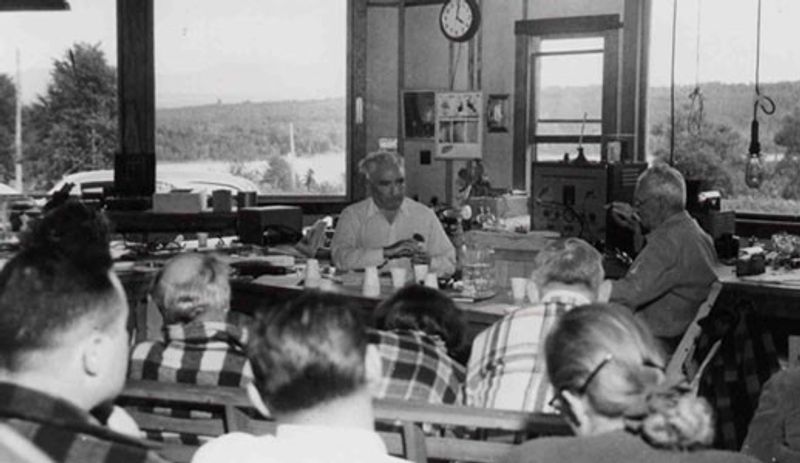
One of the most memorable parts of touring the museum is the audio guide system. At the entrance, you receive a small handheld device that plays recorded audio clips when held near small yellow markers placed throughout the exhibits.
There are dozens of these markers spread across the building, each one unlocking a different piece of the story.
Some of the recordings are narrated explanations of Reich’s work and life events. Others are actual recordings of Reich himself speaking, which adds a layer of intimacy to the experience that printed labels simply cannot match.
Hearing his voice while standing in the room where he once worked creates a genuinely unusual connection to the past.
The system works smoothly and makes it easy to move through the exhibits at your own pace. Admission is $10, which feels fair given the depth of material covered.
For anyone who appreciates history told through personal voices rather than just text panels, this audio format transforms the visit into something far more personal and engaging.
Reich’s Personal Library
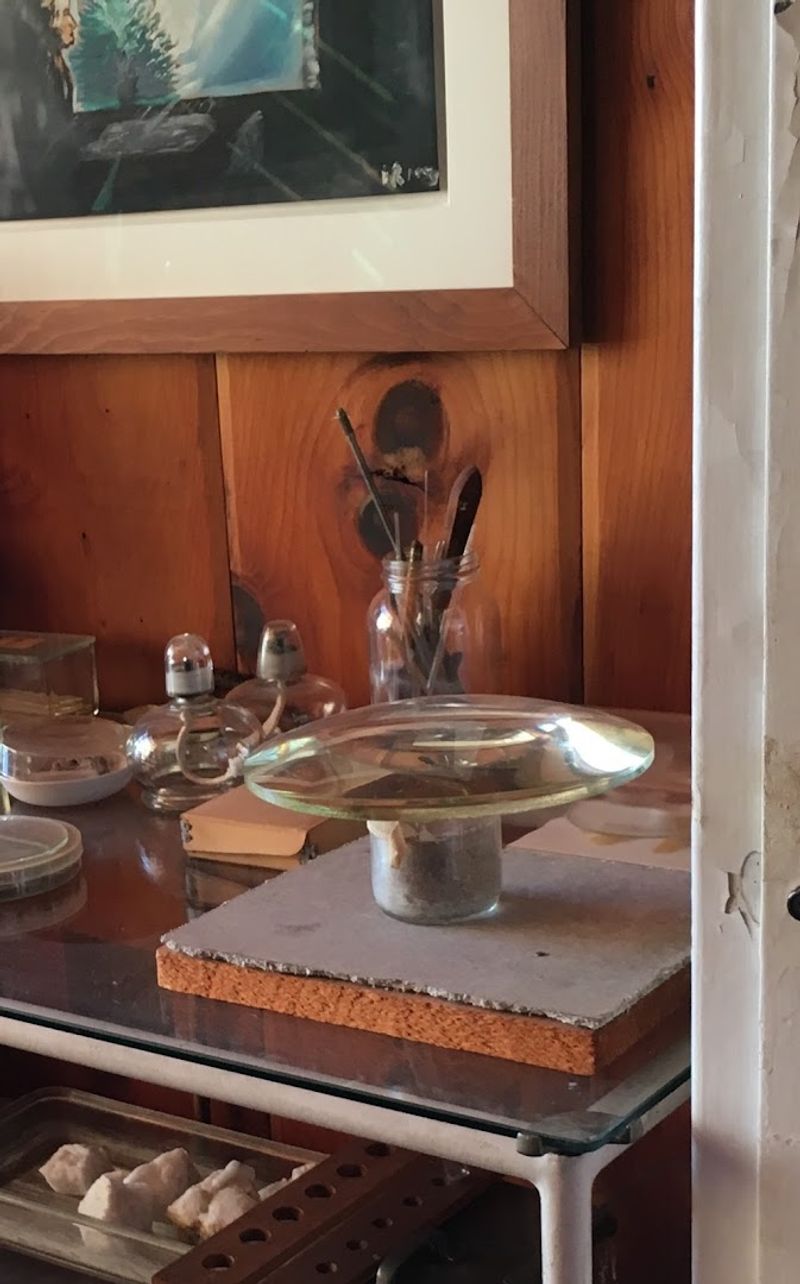
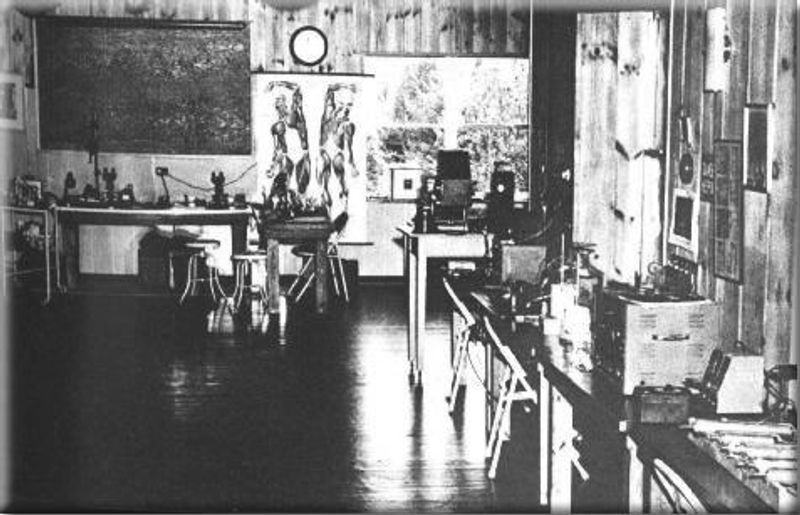
Reich’s home at Orgonon was also his working laboratory, and the museum preserves that dual identity beautifully.
The rooms contain his personal library, filled with books on psychiatry, physics, biology, and philosophy that reflect the extraordinary range of his intellectual interests. Browsing the titles gives you an immediate sense of a mind that refused to stay in one lane.
Alongside the books, original laboratory instruments are displayed throughout the building. These include equipment Reich used in his orgone energy experiments, some of it custom-built to his own specifications.
The craftsmanship on certain pieces is impressive, especially considering how much of it was developed in a relatively remote Maine location during the late 1940s and 1950s.
Photographs lining the walls show Reich at work, with colleagues, and in the landscape surrounding Orgonon. The overall effect is less like a formal museum and more like stepping into someone’s life mid-experiment.
Every room adds a new detail to the portrait of a man who was simultaneously a trained scientist and a deeply unconventional thinker.
The Federal Crackdown
Few chapters in American scientific history are as strange as the legal case against Wilhelm Reich. The U.S.
Food and Drug Administration began investigating him in the late 1940s, focused primarily on his orgone accumulator devices and the health claims associated with them.
The case dragged on for years before resulting in a court injunction ordering the destruction of his equipment and publications.
Reich refused to comply, arguing that a court had no authority over scientific research. He was charged with contempt of court and sentenced to federal prison in 1956.
He passed away at Lewisburg Federal Penitentiary in Pennsylvania in 1957, before completing his sentence.
The museum dedicates significant space to this legal battle, displaying original documents, correspondence, and timelines that walk you through the sequence of events. Reading through this material, you are left with a complicated mix of feelings.
The case raises real questions about the boundaries between scientific freedom, public safety regulation, and institutional overreach that still feel relevant today.
The Rooftop View
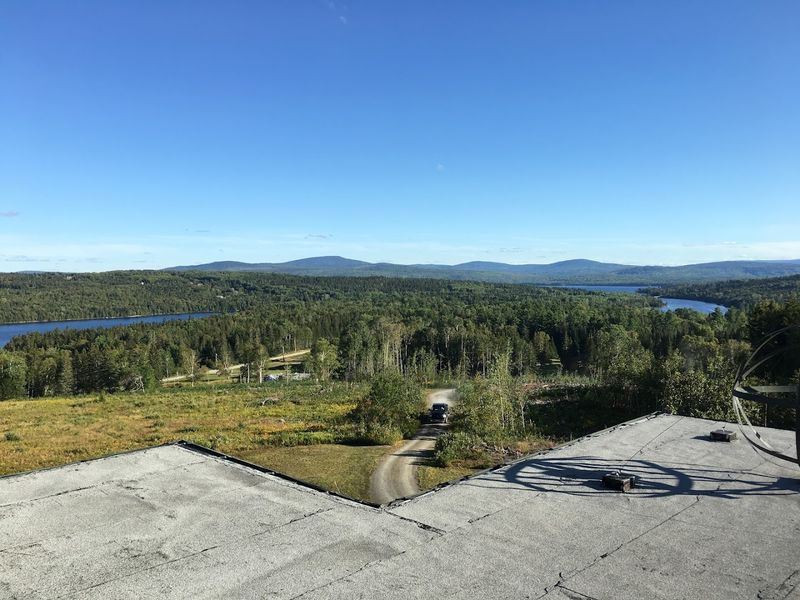
Near the top of the museum building, a rooftop observation area offers one of the most rewarding views in the entire Rangeley Lakes region.
On a clear day, you can see across Rangeley Lake toward the Saddleback Mountain ridgeline, with forests stretching in every direction and the kind of silence that only truly remote places produce.
Reich chose this hilltop location deliberately, and standing on that roof, the reasoning becomes obvious. The landscape has a grand, open quality that feels both energizing and calming at the same time.
It is easy to understand why someone with big ideas about nature and energy would want to live and work in a place like this.
Many visitors mention this rooftop moment as a highlight of their trip, separate from the museum content itself.
Even if the scientific theories leave you skeptical, the physical experience of standing above the Maine wilderness with that view spread out before you is something genuinely difficult to forget. Bring a camera, because the panorama earns its own visit.
Trails Through Reich’s Woods
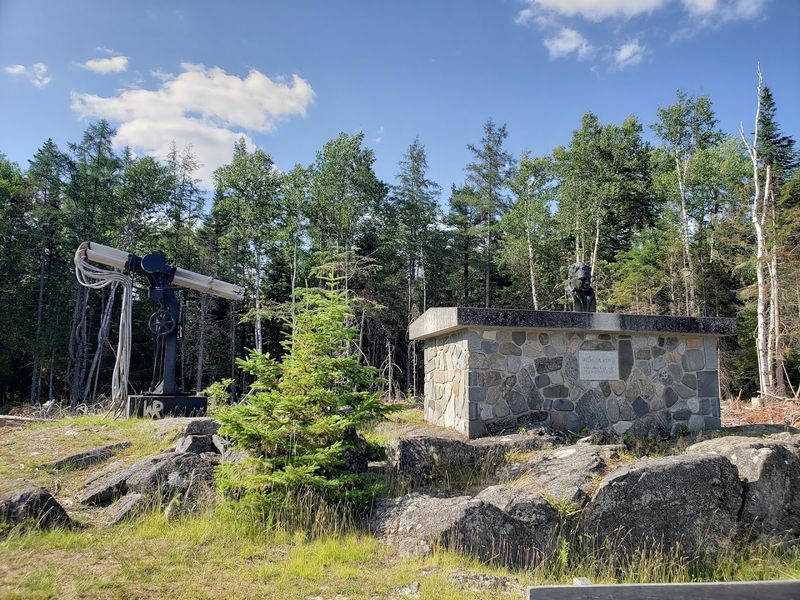
The museum is only one part of what makes a visit to Orgonon worthwhile. The surrounding 200 acres include hiking trails that wind through meadows and dense forest, passing through some of the most undisturbed natural landscape in western Maine.
Even when the museum building is closed during off-season months, the trails remain open to anyone who wants to explore.
Wildlife is a constant presence here. Deer tracks appear regularly along the paths, and the quiet of the forest makes it easy to spot birds and small animals going about their routines.
In autumn, the foliage turns the hillside into a patchwork of orange, red, and gold that frames the stone building in an almost theatrical way.
Scattered along the trails are personal quotes from Reich displayed on signs, offering philosophical and scientific reflections as you walk.
It adds an unexpected intellectual dimension to what would otherwise be a straightforward nature hike. The combination of wilderness, history, and ideas makes this trail system unlike anything else in the region.
Planning Your Orgonon Visit

Planning ahead is genuinely important for a visit to the Wilhelm Reich Museum. The museum operates on a seasonal schedule, typically open from late spring through early fall, and hours can be limited.
Checking the official website at wilhelmreichmuseum.org before making the trip will save you from arriving to find the building closed, which has happened to more than a few visitors based on the number of people who mention it.
The $10 admission fee is reasonable for what you get, and the audio guide system is included. Comfortable walking shoes are a smart choice since the grounds cover a lot of terrain and the trails can be uneven.
The drive to Rangeley is itself a scenic reward, passing through classic Maine countryside with lakes and forested hills at every turn.
The museum sits at 19 Orgonon Cir in Rangeley, and the surrounding town offers good spots to stop before or after your visit. Allow at least two to three hours to fully explore both the building and the grounds without feeling rushed.