
Many People Spend Their Lives In South Carolina Without Ever Discovering These 6 Enchanting Places
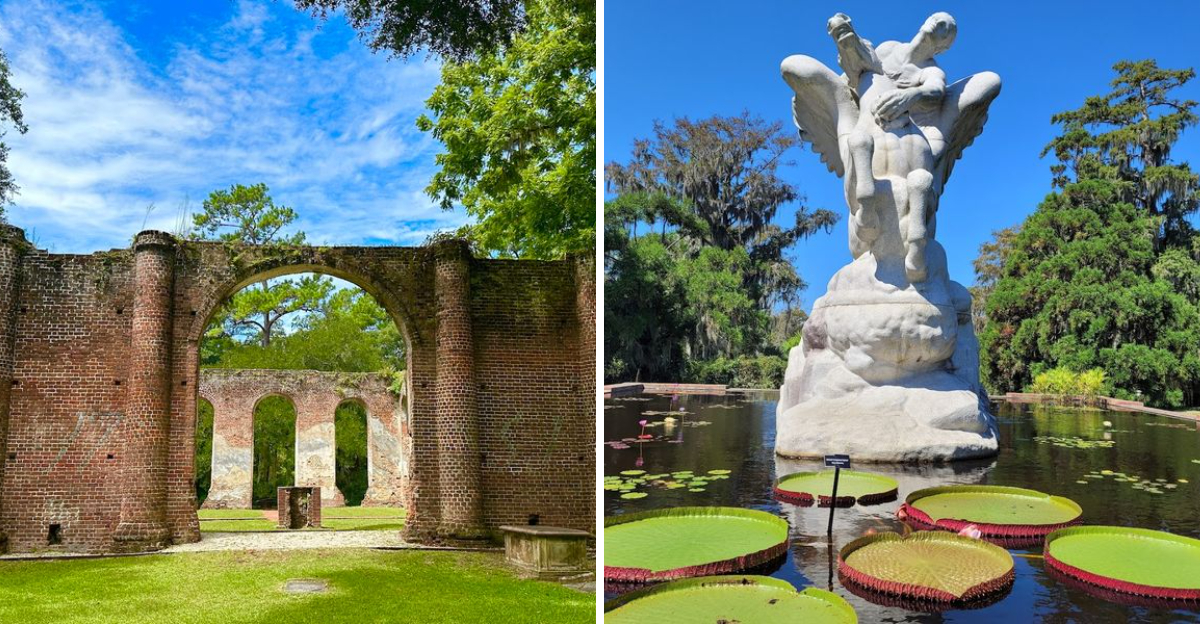
Some of South Carolina’s most magical places are hiding in plain sight.
Most people never find them.
They drive the same highways. Visit the same beaches.
And return home without realizing they passed some of the state’s most remarkable destinations along the way.
That is what makes this list so special.
Beyond the famous landmarks, South Carolina is filled with forgotten ruins, peaceful gardens, mysterious forests, hidden springs, and natural wonders that rarely appear in travel brochures. These are the places locals stumble upon by accident and never forget.
Every stop tells a different story.
Every visit feels like a discovery.
If you think you’ve already seen the best of South Carolina, these hidden gems are about to change your mind.
Sometimes the greatest adventures begin where the guidebooks end.
1. Old Sheldon Church Ruins, Yemassee
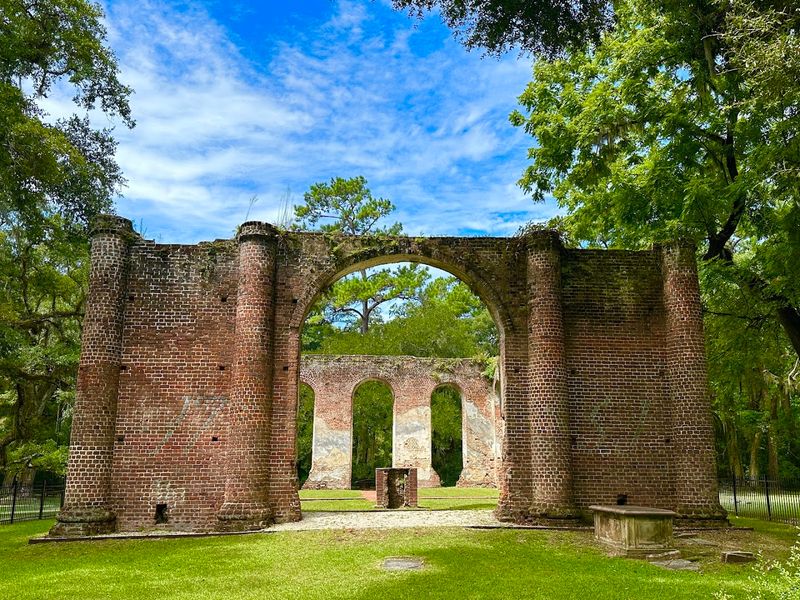
Standing beneath those skeletal brick arches on Old Sheldon Church Rd in Yemassee, SC 29945, I felt time collapse in the most beautiful way.
The ruins of this 1750s church rise from the ground like a memory that refused to fade, with columns reaching toward the sky and empty window frames that now hold nothing but clouds and oak branches.
British troops torched the original structure during the Revolutionary War, locals rebuilt it, and then Sherman’s forces burned it again during the Civil War, leaving behind what you see today.
Spanish moss drapes from the live oaks surrounding the site, creating an atmosphere that photographers and history lovers find irresistible, especially during golden hour when the light slants through those empty arches.
I’ve visited on quiet weekday mornings when the only sounds were birds and rustling leaves, and the sense of peace mixed with melancholy felt almost sacred.
The brick walls, weathered by nearly 150 years of exposure, have developed a patina that no modern construction could replicate.
Locals sometimes hold outdoor events here, and I’ve heard that spring weddings among the ruins create unforgettable backdrops.
Every visit reminds me that some places become more powerful in their broken state than they ever were whole.
2. God’s Acre Healing Springs, Blackville
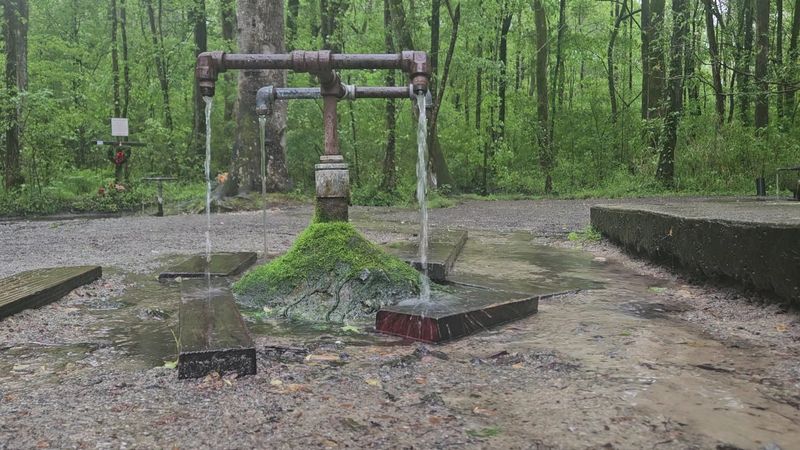
Pulling up to 1211 Springs Ct in Blackville, SC 29817, I wasn’t sure what to expect from a spring that locals claim has healing properties.
God’s Acre Healing Springs flows from the ground at a steady rate, filling a small pool where visitors have been collecting water in jugs and bottles for generations.
The legend attached to this spot tells of a Native American chief who discovered the spring’s restorative powers, though the real magic might just be the quiet ritual of stopping, filling a container, and believing in something larger than yourself.
A simple pavilion shelters the spring, and handwritten signs share testimonials from people who swear the water helped them with various ailments.
I filled a bottle myself, more out of curiosity than faith, and the water tasted clean and slightly mineral-rich, noticeably different from what flows through city pipes.
The surrounding area remains undeveloped, with tall pines providing shade and a sense of remoteness that makes the fifteen-minute drive from the highway feel like a journey to another era.
Whether the spring actually heals or simply provides a moment of hope and reflection, people keep returning, and that persistence speaks to something meaningful.
I left with my bottle and a strange sense of calm that lasted the entire drive home.
3. Campbell’s Historic Covered Bridge, Landrum
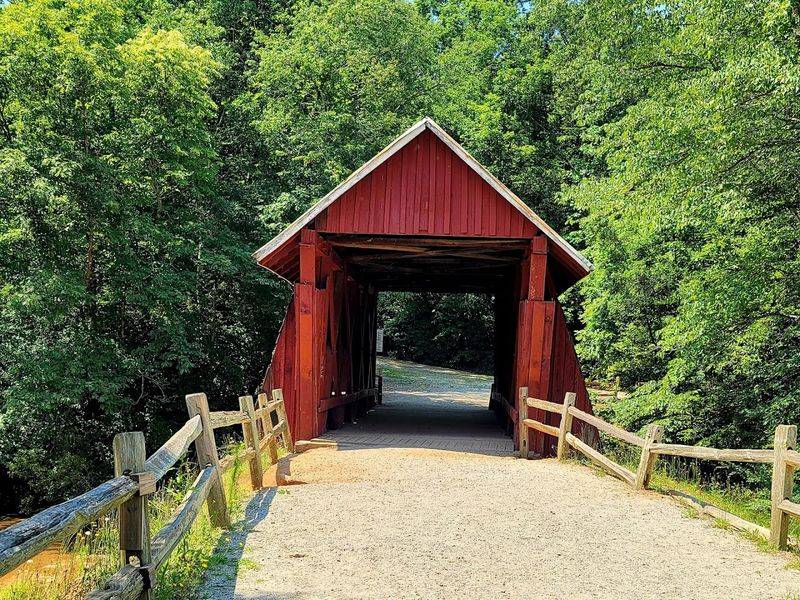
Crossing the wooden planks at 171 Campbell Covered Bridge Rd in Landrum, SC 29356, I could hear Beaverdam Creek flowing beneath my feet.
This 1909 covered bridge stretches 38 feet and represents one of South Carolina’s last remaining examples of this once-common rural architecture.
The red exterior and weathered interior beams show their age in the best possible way, with each creak and groan telling stories of horse-drawn wagons, Model Ts, and countless locals who used this crossing as part of their daily routines.
Campbell’s Bridge sits in a peaceful setting where you can park nearby and walk the surrounding trails, though the bridge itself no longer carries vehicle traffic.
I visited on a cool autumn afternoon when fallen leaves created a carpet of gold and crimson along the creek banks, and the whole scene looked like something from a different century.
The bridge’s construction used a simple kingpost truss design, and examining the joinery up close reveals the craftsmanship that allowed this structure to survive more than a century of weather and use.
Local preservation efforts have kept the bridge stable and accessible, turning what could have been a forgotten relic into a cherished community landmark.
Standing inside the covered span, looking out at the water and woods, I understood why people fought to save this place.
4. Bald Rock Heritage Preserve, Cleveland
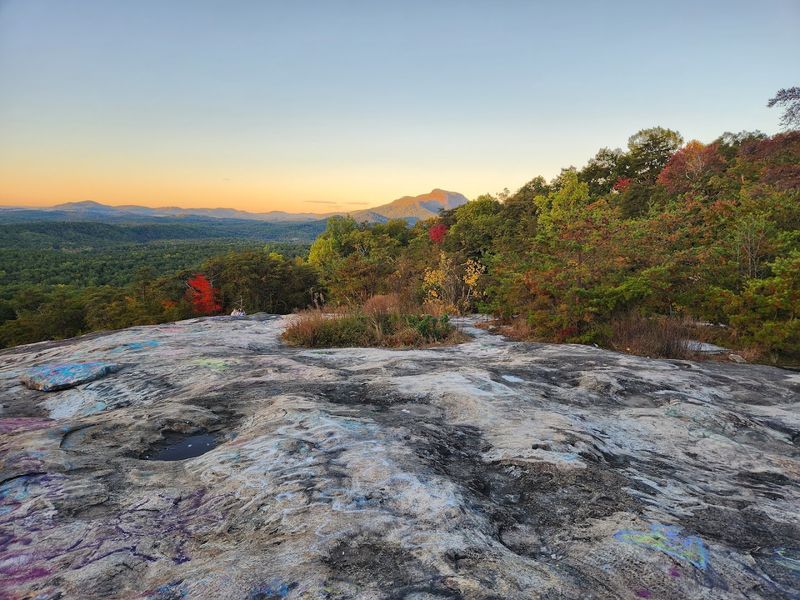
Hiking up to the exposed granite face at 280 Persimmon Ridge Rd in Cleveland, SC 29635, I realized why this 1,139-acre preserve remains one of upstate South Carolina’s best-kept secrets.
Bald Rock itself is a massive granite outcrop that offers sweeping views of the Blue Ridge foothills, and reaching the top requires a moderately challenging trail that winds through mixed hardwood forests.
The preserve protects rare plant communities that thrive on and around the rock, including species that have adapted to the harsh conditions of exposed granite slopes where soil barely exists.
I made the climb on a clear spring morning when wildflowers dotted the trail, and reaching the summit felt like discovering a natural observation deck that few people know exists.
The rock face itself heats up quickly in summer sun, so I learned to visit during cooler months when the temperature on the granite stays comfortable and the views stretch even further through leafless trees.
Trail markers keep you on the designated path, which is important because the preserve’s ecological sensitivity means staying on established routes protects the very features that make this place special.
From the top, you can see for miles across a landscape that still looks largely undeveloped, a reminder of what much of the region looked like before roads and subdivisions.
I’ve returned multiple times, and each visit reveals something new in the changing seasons and shifting light.
5. Brookgreen Gardens, Murrells Inlet
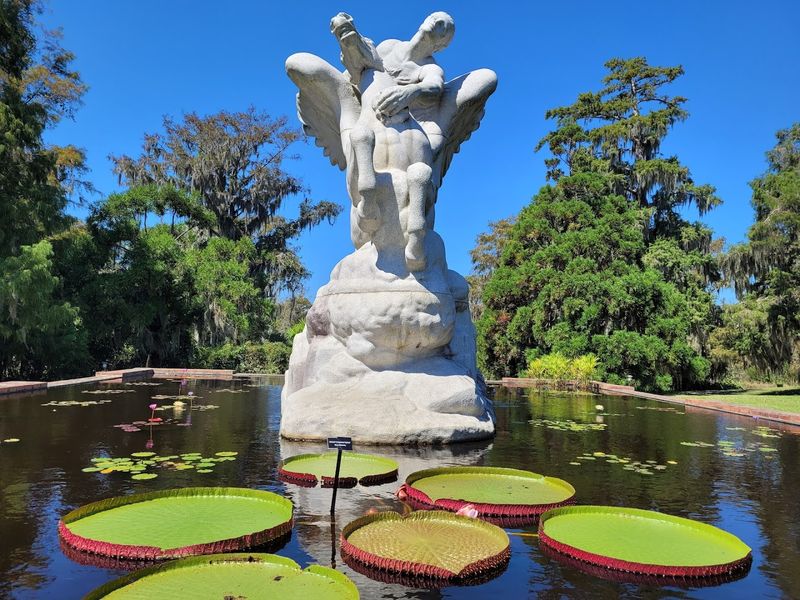
Walking through the gates at 1931 Brookgreen Garden Dr in Murrells Inlet, SC 29576, I entered what might be the most sophisticated outdoor space in the entire state.
Brookgreen Gardens sprawls across 9,100 acres and houses the largest collection of American figurative sculpture in the country, with more than 2,000 works displayed among formal gardens, nature trails, and preserved Lowcountry landscape.
The original garden areas were designed in the 1930s on the site of four former rice plantations, and the layout blends classical formality with the wild beauty of live oaks, Spanish moss, and native vegetation.
I’ve spent entire afternoons wandering from one sculpture to another, each piece positioned to interact with its natural surroundings in ways that indoor museums could never achieve.
The property also includes a Lowcountry Zoo featuring animals native to the Southeast, plus a wildlife preserve where alligators, herons, and egrets go about their business seemingly unbothered by human visitors.
Spring brings an explosion of azaleas and camellias, while summer means the gardens stay open for evening programs when the light turns golden and the heat finally breaks.
Despite its size and significance, Brookgreen often gets overshadowed by beach destinations just minutes away, which means you can explore world-class art without fighting crowds.
Every visit leaves me wondering why this place isn’t mentioned in the same breath as the state’s most famous attractions.
6. Angel Oak Tree, Johns Island
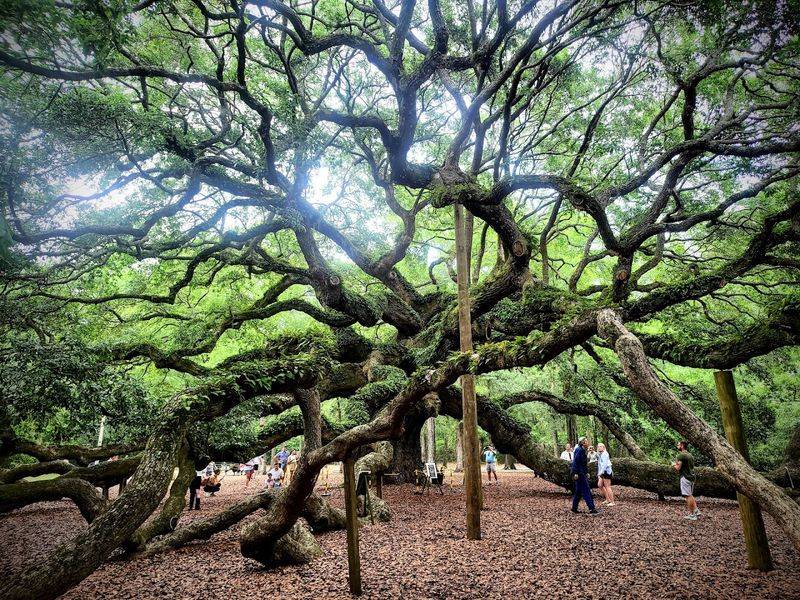
The first time I stood beneath the Angel Oak at 3688 Angel Oak Rd on Johns Island, SC 29455, I couldn’t quite process what I was seeing.
This Southern live oak measures roughly 65 feet tall, but height tells only part of the story when the canopy spreads over 17,000 square feet and the longest branch stretches 187 feet from end to end.
Estimates place the tree’s age somewhere between 400 and 500 years old, meaning it was already a substantial oak when the first European settlers arrived in the Carolinas.
The massive limbs, some as thick as normal tree trunks, dip down to touch the ground before rising again, creating a structure so complex it looks more like a living sculpture than a single organism.
I visited on a quiet Tuesday morning when few other people were around, and walking the circular path beneath those branches felt like entering a natural cathedral where time moved differently.
The property surrounding the tree has faced development pressure over the years, but preservation efforts have protected this giant and the small park that now ensures public access.
Spanish moss drapes from every branch, and in certain light, the whole tree seems to glow with an otherworldly presence that no photograph quite captures.
Leaving always feels harder than arriving, as if the Angel Oak creates its own gravitational pull on anyone who spends time in its shade.