
9 Massachusetts Historic Places With Stories You Never Learned In School
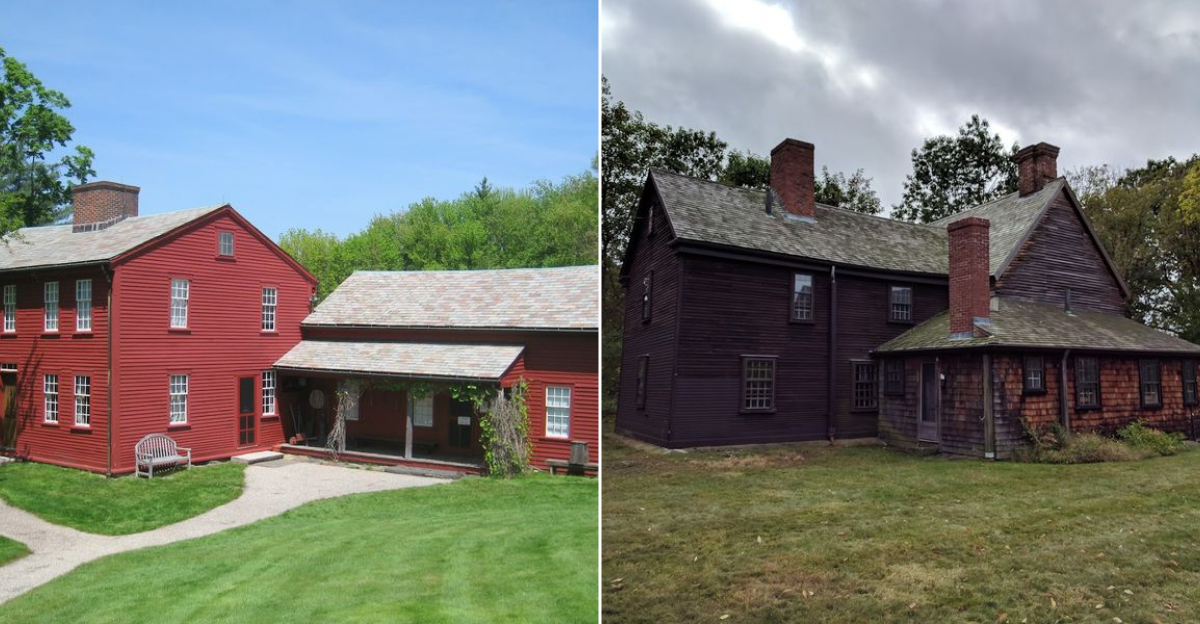
History class usually gives you the big moments. The dates.
The famous names. The events that fit neatly into a textbook.
But the most fascinating stories are often hiding in places you’ve never heard about.
Across Massachusetts, old buildings, museums, and landmarks hold forgotten chapters about freedom, industry, art, and everyday people who helped shape the country.
Behind quiet doors are stories of communities fighting for change, workers transforming America’s economy, and homes filled with personalities as unforgettable as their architecture.
These places aren’t just frozen pieces of the past. They’re reminders that history happened everywhere.
Not only on battlefields or in government halls, but in neighborhoods, factories, and ordinary rooms where extraordinary things took place.
From Boston to coastal towns and former mill cities, these historic spots reveal the side of Massachusetts that never made it onto the classroom chalkboard.
1. African Meeting House, Boston
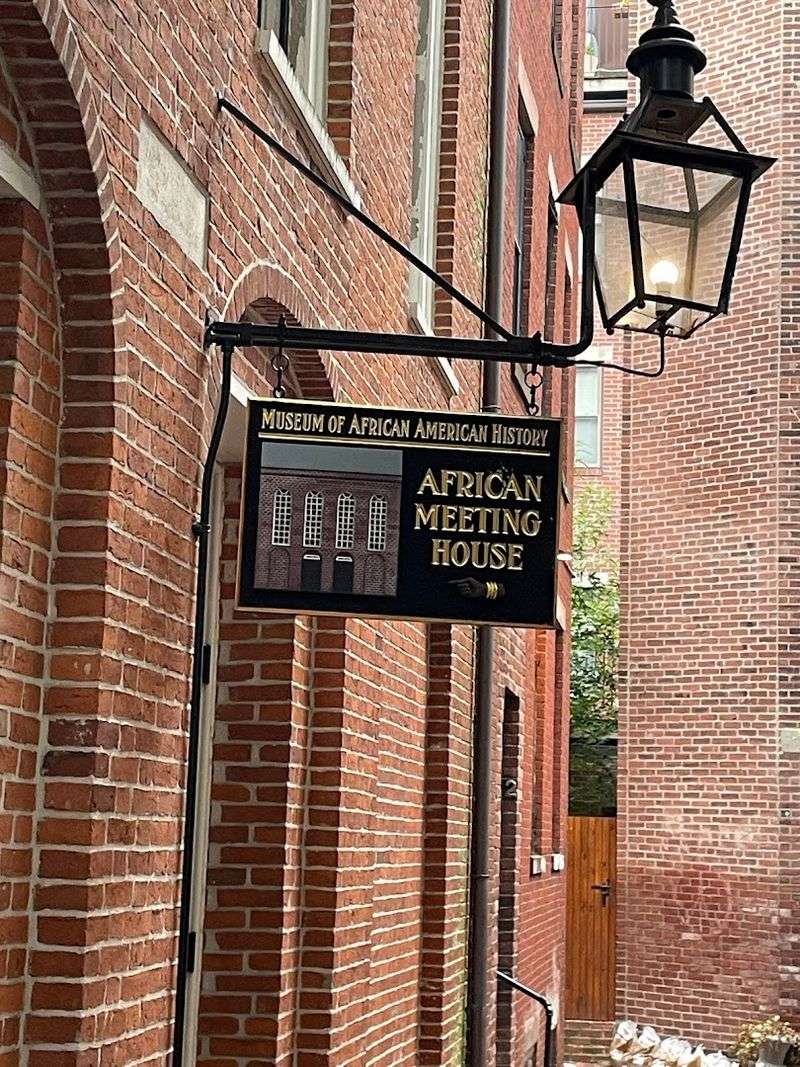
Before there were hashtags and megaphones, there was a brick building on Beacon Hill that changed everything. The African Meeting House, standing at 46 Joy Street in Boston, Massachusetts, is the oldest surviving Black church building in the entire United States.
Built in 1806, it was constructed almost entirely by skilled African American artisans, which makes the building itself a statement of craftsmanship and pride.
This was not just a place of worship. It was the beating heart of Boston’s Black community for decades.
The African School operated here, giving children access to education at a time when that was a radical act.
The building quickly became a gathering place for some of the most powerful voices of the abolitionist movement.
William Lloyd Garrison founded the New England Anti-Slavery Society right here in 1832. Frederick Douglass and Maria W.
Stewart both spoke from this very podium, their words landing like thunderclaps. Then in 1863, the building served as a recruitment post for the 54th Massachusetts Volunteer Regiment, one of the first African American military units in the Civil War.
Every corner of this place holds a story that rewrites the American narrative. If walls could talk, these walls would have an entire podcast series worth of episodes.
2. Ashley House, Sheffield
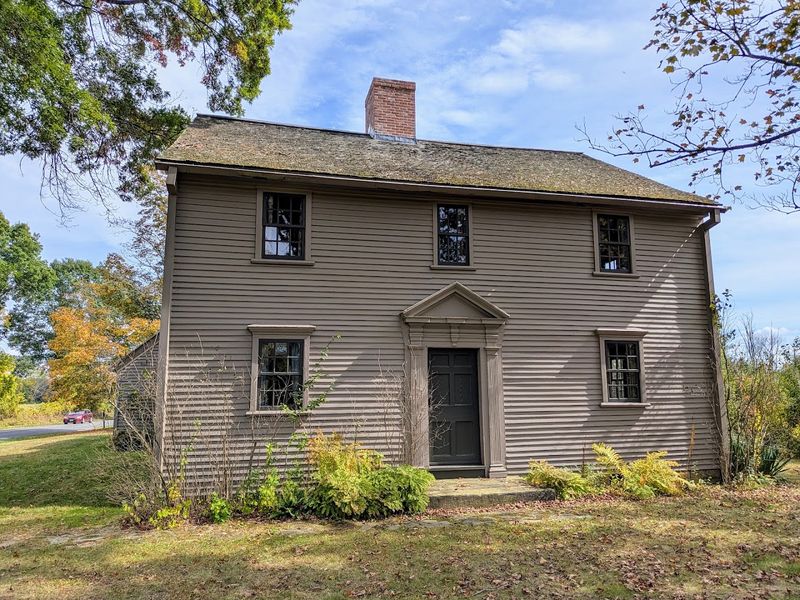
Here is a story that history class somehow always manages to leave out. The Ashley House at 117 Cooper Hill Road in Sheffield, Massachusetts, is the oldest standing house in Berkshire County, built in 1735.
It looks like a charming colonial saltbox home, and it absolutely is, but the story happening inside its walls is anything but ordinary.
In 1773, a group of men gathered in an upstairs study here and drafted the Sheffield Resolves. This document boldly declared individual rights and protested British rule, three full years before the Declaration of Independence.
That alone would make this house extraordinary. But the real jaw-dropping story belongs to someone who was not invited to those meetings.
An enslaved woman named Elizabeth Freeman, known as Mum Bett, worked in this household. She overheard those conversations about liberty and freedom and thought, logically, that those ideas should apply to her too.
So in 1781, she sued for her freedom in a Massachusetts court and she won. Her legal victory set a precedent that effectively ended slavery in the state.
The Ashley House holds two completely opposite stories under one roof, and honestly, that tension is exactly what makes American history so complicated and so worth understanding.
3. Saugus Iron Works National Historic Site, Saugus
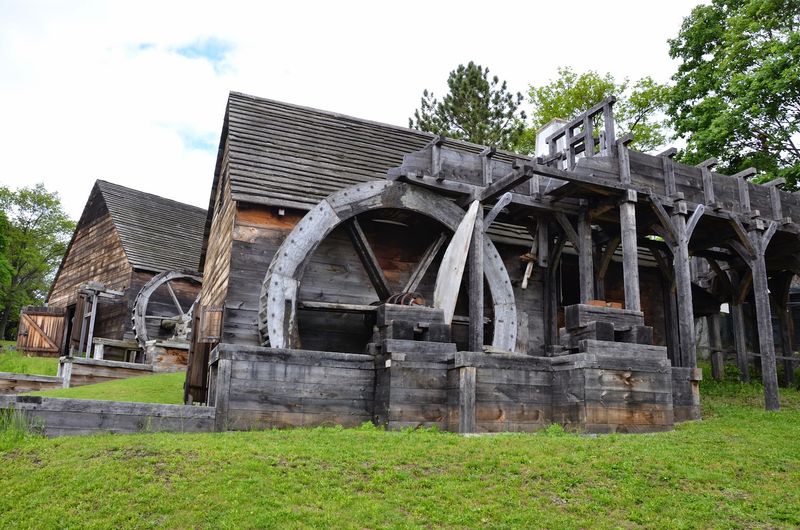
Picture this: it is 1646, and somewhere north of Boston, a furnace is roaring loud enough to rattle the trees. The Saugus Iron Works National Historic Site at 244 Central Street in Saugus, Massachusetts, was North America’s first fully integrated ironworks, and it was absolutely wild for its time.
This place had a blast furnace, a forge, a rolling mill, and a quarter-ton trip hammer, all powered by the Saugus River.
Skilled British and Scottish ironworkers were brought over to run the operation, and they found themselves completely at odds with the surrounding Puritan community.
The work was brutal and relentless, with molten metal and heavy machinery creating constant hazards. Despite all of that, the ironworks pumped out roughly one ton of cast iron every single day during its operation from 1646 to around 1670.
What you see today is actually a meticulous reconstruction completed in the 1950s, built from extensive archaeological findings. Only the Iron Works House, dating from the late 1600s, is an original structure still standing on the property.
The whole site is part of the National Park Service now, which means you can walk through a recreated industrial revolution from nearly four centuries ago. It is loud, it is smoky in your imagination, and it is genuinely thrilling to stand in the birthplace of American industry.
4. Boott Cotton Mills Museum, Lowell
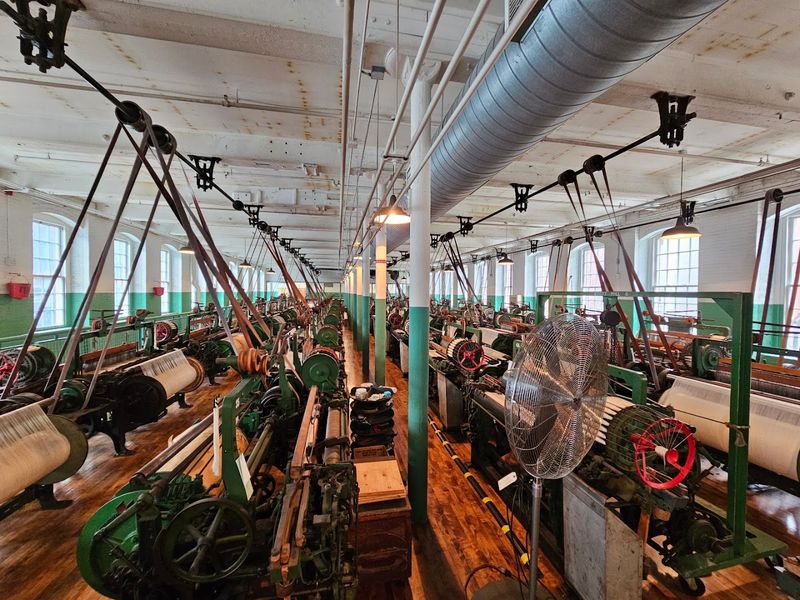
Nothing prepares you for the sound. The moment you step into the weave room at the Boott Cotton Mills Museum at 115 John Street in Lowell, Massachusetts, over eighty operating power looms from the 1920s hit you with a wall of rhythmic, thunderous noise.
It is overwhelming in the best possible way, because that sensory overload is exactly the point.
Lowell holds a remarkable distinction as America’s first successfully planned industrial city.
The Boott Mill itself is a stunning piece of renovated industrial architecture, now part of Lowell National Historical Park. The museum tells the story of the young women, known as mill girls, and immigrant laborers who powered the American Industrial Revolution throughout the 19th century.
Their lives were shaped entirely by these machines. Exhibits walk you through their working conditions, their boarding houses, and their growing push for labor reform.
These were teenagers and young adults who moved far from home to work grueling hours in deafening spaces, and their experiences directly shaped American labor laws.
Standing in that weave room, the machines still churning, you feel the weight of their contribution in a way no textbook ever quite captures. Lowell is not just a city, it is a living argument that the real American story belongs to the workers.
5. Fruitlands Museum, Harvard
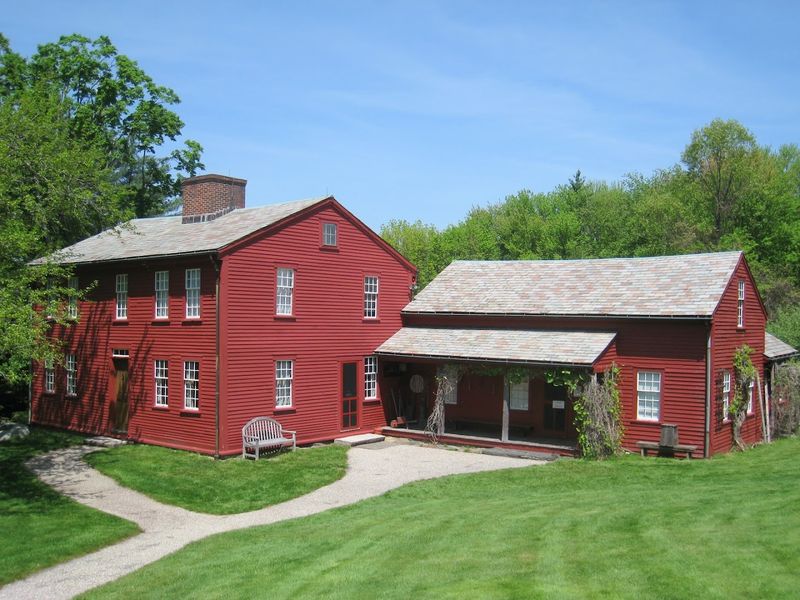
Imagine convincing a group of idealists to move to a Massachusetts hilltop, give up meat, animal labor, and basically anything comfortable, and call it paradise.
That is exactly what happened at Fruitlands, tucked away at 102 Prospect Hill Road in Harvard, Massachusetts. In 1843, Amos Bronson Alcott and his colleague Charles Lane launched one of the boldest utopian experiments in American history.
The commune lasted exactly seven months before collapsing under the weight of its own ambitions and a brutal New England winter. A young Louisa May Alcott lived here during that chaotic period, and she later drew on those memories in her writing.
Decades later, in 1910, a preservationist named Clara Endicott Sears discovered the abandoned farmhouse and made it her mission to save it.
She opened it as a museum in 1914, and today the 210-acre site has grown into a fascinating cultural complex. There is a Shaker Museum, the first of its kind in the United States, alongside a Native American Museum and an Art Museum.
Each collection represents a completely different vision of how humans should live. Fruitlands is essentially a museum about big ideas and the beautiful, sometimes chaotic, process of chasing them.
That feels more relevant today than ever.
6. Gropius House, Lincoln
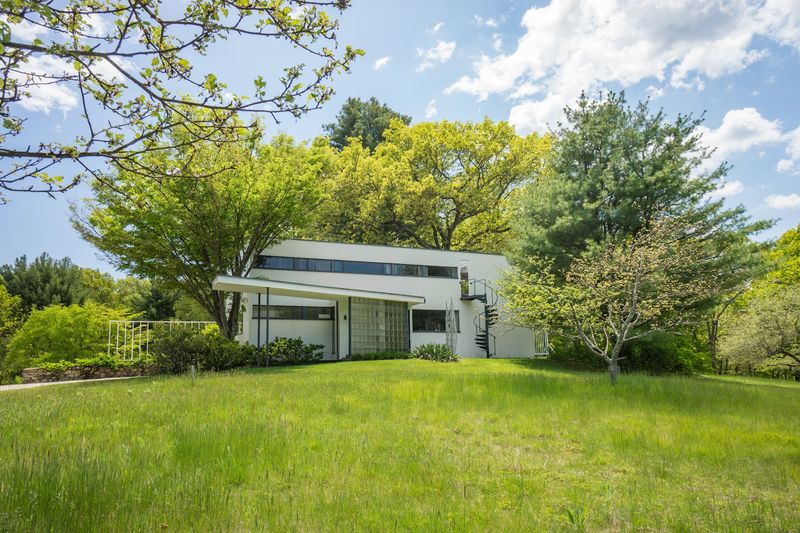
In 1938, a German architect showed up in the quiet town of Lincoln, Massachusetts, and quietly started a design revolution.
Walter Gropius, founder of the legendary Bauhaus school, built his family home at 68 Baker Bridge Road, and the neighbors definitely did a double take. This was modernism landing in the middle of conservative New England, and it did not apologize for a single clean line.
What makes the Gropius House genuinely brilliant is how it refused to be a showoff. Gropius blended traditional New England materials like wood, brick, and fieldstone with ultra-modern touches like glass blocks, chrome banisters, and acoustical plaster.
He had recently fled Germany and wanted to show that modern design could belong in any landscape, even one full of white clapboard farmhouses.
The house is filled with tubular steel furniture designed alongside his collaborator Marcel Breuer, and every room feels like a quiet manifesto.
There is even a private spiral staircase that leads directly to his daughter’s room, a small but meaningful design choice about independence and individuality.
Historic New England now preserves the property, and it remains almost entirely intact. Walking through it feels like stepping into the mind of someone who genuinely believed that the way you design a space changes the way you think inside it.
He was probably right.
7. Beauport, The Sleeper-McCann House, Gloucester
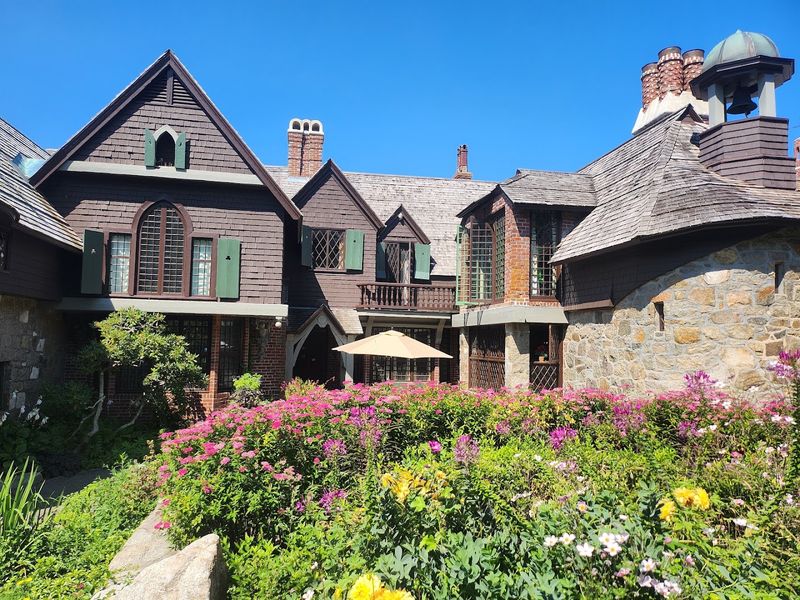
Some houses are built to shelter people. Beauport was built to tell stories.
Perched at 75 Eastern Point Boulevard in Gloucester, Massachusetts, this extraordinary National Historic Landmark was the summer home of Henry Davis Sleeper, one of America’s earliest professional interior designers, and it is unlike anything else in New England.
Construction began in 1908, and Sleeper kept adding to it obsessively for decades. The result is a rambling coastal fantasy with somewhere between 40 and 56 rooms, depending on how you count them.
Each room was designed around a specific historical or literary theme, filled with colored glass, folk art, and salvaged architectural fragments collected from across the country. Stepping from one room to the next feels like flipping through chapters of an extremely eccentric novel.
The exterior hints at the Arts and Crafts movement, but inside, all bets are off.
Sleeper had an eye for the unexpected, layering textures and objects in ways that felt theatrical and deeply personal at the same time. Beauport has been called a magical architectural collage, and that description earns its keep.
Gloucester Harbor glitters through the windows, adding a real-world backdrop to all the fantasy. If you have ever wished a house could feel like a living piece of art, Beauport delivers on that wish completely and without reservation.
8. Hancock Shaker Village, Pittsfield
Before minimalism became a design trend, the Shakers were already living it with total conviction.
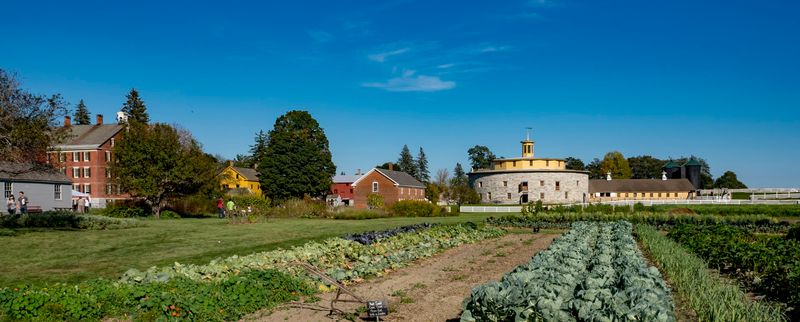
Hancock Shaker Village at 1843 West Housatonic Street in Pittsfield, Massachusetts, is considered the most comprehensively interpreted Shaker site in the entire world, and it earns that title in every direction you look.
The community thrived here from 1790 all the way until 1960, which is a remarkable run for any intentional community.
The Shakers held some genuinely radical beliefs for their era, including pacifism, gender equality, and racial equality.
Their spiritual practice involved ecstatic singing and movement so distinctive that outsiders called them Shaking Quakers, which eventually just became Shakers. At their peak in the 1840s, the village had over 300 members and more than 3,000 acres of land.
Today the 750-acre property features 20 historic buildings, and the crown jewel is the Round Stone Barn, built in 1826. That circular design was pure functional genius, allowing one person to feed an entire herd of cattle from the center.
Heirloom gardens and a working farm complete the picture. Hancock Shaker Village is not just a museum, it is a living argument that simplicity, equality, and craftsmanship can build something extraordinary.
Have you ever wondered what the world might look like if more communities had taken those values seriously?
9. Browne House, Watertown
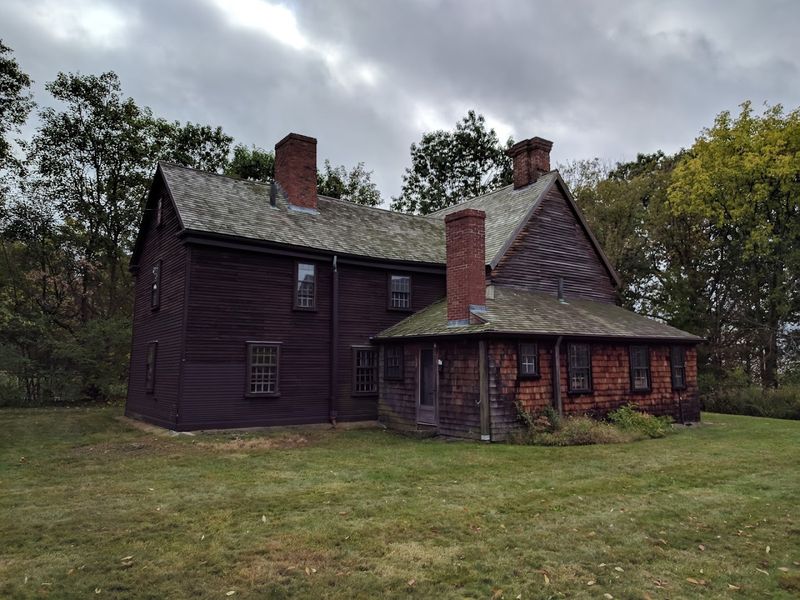
Most people drive past the Browne House on 562 Main Street in Watertown, Massachusetts, without realizing they just passed one of the most significant surviving colonial structures in America.
Built between 1694 and 1701 for a farming family, this modest wooden house looks unassuming from the outside. But inside, it holds some of the rarest surviving architectural details from the late 1600s anywhere in the country.
Originally it was a one-over-one dwelling, meaning just one room downstairs and one room upstairs. That single ground floor room handled everything: cooking, eating, sleeping, and living.
It is a humbling reminder of how different daily life was for early Massachusetts settlers, where simplicity was not a lifestyle choice but a practical necessity.
When Historic New England founder William Sumner Appleton acquired the property in 1919, it was in serious disrepair.
What followed was a landmark moment in American preservation history. The restoration of the Browne House became the first fully documented, methodical restoration of a 17th-century building in the United States.
Every layer of original finish uncovered was carefully recorded and preserved. That meticulous approach set the standard for historic preservation work that followed across the country.
Sometimes the quietest buildings carry the biggest legacies, and the Browne House is living proof that the most important stories do not always announce themselves loudly.