
6 Massachusetts Pizza Spots That Locals Say Put The Big Names To Shame
When it comes to pizza in Massachusetts, the real flavor lies far beyond the reach of national chains. Across the Bay State, family-run pizzerias and neighborhood institutions have been perfecting their pies for generations, serving slices so good they put the big names to shame.
From century-old ovens in Boston’s North End to unassuming suburban storefronts, these spots have built loyal followings by staying true to tradition and quality.
After years of exploring Massachusetts’ pizza scene, I’ve found six legendary destinations where every bite tells a story of local pride, history, and irresistible flavor.
1. Santarpio’s Pizza: East Boston’s Crown Jewel
My first bite at Santarpio’s nearly brought tears to my eyes. This East Boston institution has been slinging pies since 1903, and their no-nonsense approach to pizza-making borders on religious experience. The interior looks like it hasn’t changed in decades—because it hasn’t.
What makes their pizza magical isn’t fancy toppings or gimmicks. It’s the perfect balance of their slightly charred, chewy crust, tangy sauce, and just the right amount of cheese. Locals don’t even call ahead; they just show up and wait because some things are worth it.
Cash only, paper plates, and occasionally gruff service are all part of the charm. Trust me, one visit and you’ll understand why taxi drivers, politicians, and celebrities all wait in the same line for a taste of Boston pizza royalty.
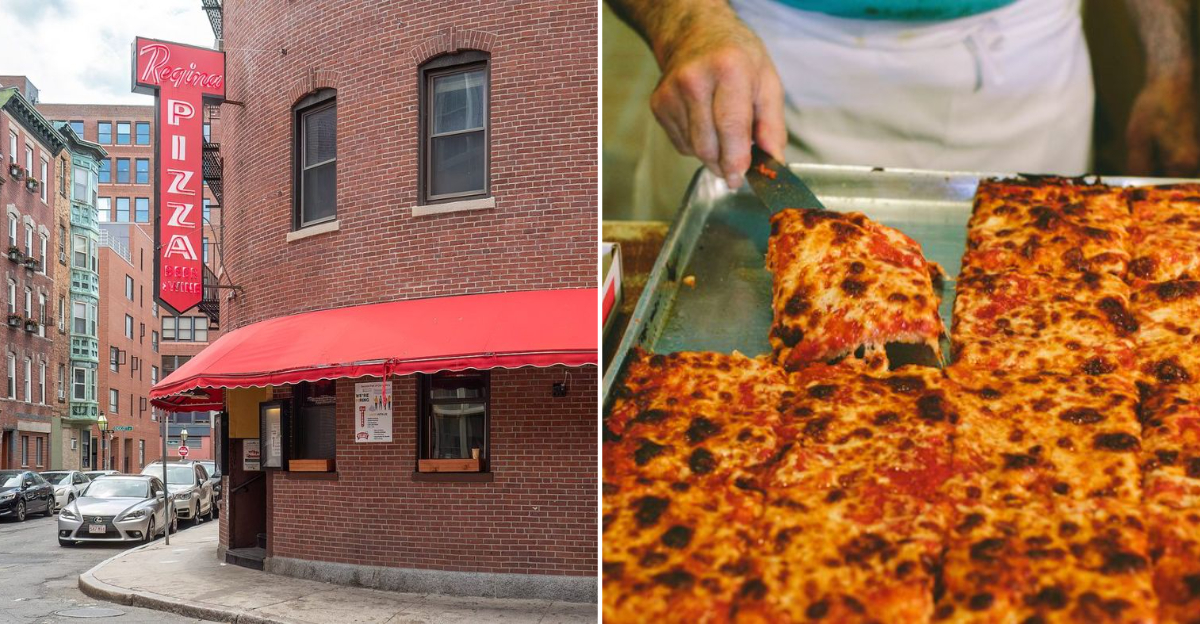
2. Regina Pizzeria: The North End Legend Since 1926
“You haven’t had Boston pizza until you’ve had Regina’s,” my Italian grandmother used to say. Standing in line outside the original North End location, I watch tourists mix with lifelong Bostonians—all united by the promise of pizza perfection.
Regina’s brick ovens create a magic that chain pizzerias can’t replicate. The crust emerges with that perfect combination of crispy exterior and chewy interior that makes you slow down and savor each bite. Their sauce, slightly sweet with a hint of herbs, comes from a recipe that’s remained unchanged for nearly a century.
Family photos line the walls alongside celebrity visitors, creating an atmosphere as rich as their toppings. Skip the newer mall locations—the original Thacher Street spot is where the true magic happens, and where you’ll taste why Regina’s has survived every food trend since Calvin Coolidge was president.
3. Galleria Umberto: Sicilian Slices Worth The Wait
“Closed when we run out” reads the sign at Galleria Umberto, and run out they do—usually by early afternoon. I learned this lesson the hard way after showing up at 2 PM to find locked doors and disappointed faces. This North End institution doesn’t need fancy marketing; their Sicilian squares speak for themselves.
The menu is gloriously simple: thick, rectangular slices with a focaccia-like base, topped with tangy sauce and just enough cheese to complement without overwhelming. At around $2 per slice, it might be the best food bargain in Boston.
Lines form before they open, a mix of construction workers, office folks, and in-the-know visitors all practicing the Umberto shuffle—cash ready, orders memorized. Their James Beard Award as an “American Classic” merely confirmed what locals already knew: pizza perfection doesn’t need frills.
4. Monte’s Restaurant: Lynn’s Perfect Score Pizza
“Did you hear Dave gave Monte’s a perfect 10?” That text from my pizza-obsessed cousin sent me racing to Lynn faster than you can say “One bite, everybody knows the rules.” When Barstool Sports’ notorious pizza critic Dave Portnoy awards his first perfect score in Massachusetts, pizza lovers take notice.
Monte’s doesn’t look special from outside—just another neighborhood joint in an old industrial city. But that first bite explains everything: a crust with structural integrity yet delicate chew, sauce with bright acidity balanced by sweetness, and cheese that stretches just right.
The owners work the counter themselves, greeting regulars by name and first-timers with equal warmth. I’ve driven 45 minutes in Boston traffic just for a Monte’s pie, passing countless other pizzerias along the way. Some things simply can’t be duplicated, and Monte’s pizza magic is definitely one of them.
5. Rosie’s Pizzeria: Braintree’s Hidden Spot
“You’re not a true South Shore pizza connoisseur until you’ve tried Rosie’s,” declared my brother-in-law during a family gathering. Tucked away in a Braintree strip mall, this unassuming spot has zero pretension and 100% pizza perfection.
Rosie’s crust achieves what scientists might call impossible—simultaneously light and substantial, with bubbles that create pockets of flavor. Their sauce recipe remains a closely guarded secret, though locals speculate about everything from imported tomatoes to secret spice blends.
The dining room feels like someone’s living room, with sports memorabilia covering the walls and friendly staff who remember your order from last time. While pizza chains focus-group their recipes to appeal to the widest audience, Rosie’s simply makes pizza the way they think it should taste—and generations of South Shore families wholeheartedly agree.
6. Papa Gino’s: The Hometown Chain That Started It All
Mentioning Papa Gino’s alongside artisanal pizzerias might raise eyebrows, but this regional chain holds a special place in Massachusetts pizza history. My first job was at the Dedham location, where I witnessed firsthand the almost fanatical consistency in their pizza-making process.
Founded in East Boston as “Piece O’ Pizza” before expanding throughout New England, Papa Gino’s offers something the national chains can’t—a taste of local nostalgia. Their thin crust has a distinctive cracker-like quality, while their sauce carries a sweetness that’s unmistakably their own.
Birthday parties, post-game celebrations, and family dinner nights have centered around Papa Gino’s tables for generations. While food snobs might scoff, true Massachusetts natives know the comfort of walking into any location and finding the exact pizza taste they remember from childhood—a consistency that’s increasingly rare in our changing culinary landscape.