
11 Massachusetts Small-Town Foods That Never Leave New England
Massachusetts is home to some of the most unique and delicious foods you’ll never find anywhere else in the country.
These small-town treasures have been passed down through generations, creating flavors that locals guard fiercely and visitors crave long after leaving.
From coastal clam shacks to inland diners, these regional specialties tell the story of New England’s rich culinary heritage and why Bay Staters wouldn’t dream of sharing them with the rest of America.
1. Clam Chowder
Creamy, chunky, and absolutely sacred to Massachusetts residents, this soup represents everything right about coastal cooking. The thick, milk-based broth loaded with tender clams and potatoes has sparked debates that would make political arguments look tame.
While every coastal town serves its own variation, the classic New England clam chowder—especially along the North Shore and Cape Cod—remains the benchmark, and anything with tomatoes is considered “Manhattan style,” not local tradition.
Restaurants serve it piping hot in bread bowls or traditional crockery. The debate over bacon bits continues to divide families at Sunday dinners across the state.
2. Fried Clams
Whole-belly beauties reign supreme at roadside shacks dotting Route 133 and beyond. These crispy morsels pack a briny punch that transports you straight to the Atlantic Ocean with every bite, no matter how far inland you’ve wandered.
Strips exist for tourists, but locals know the belly holds all the flavor and that sweet, slightly chewy texture that makes these irresistible.
Summer wouldn’t be complete without grease-stained paper boats filled with these golden nuggets. Pair them with tartar sauce and watch seagulls circle overhead jealously.
3. Johnnycakes
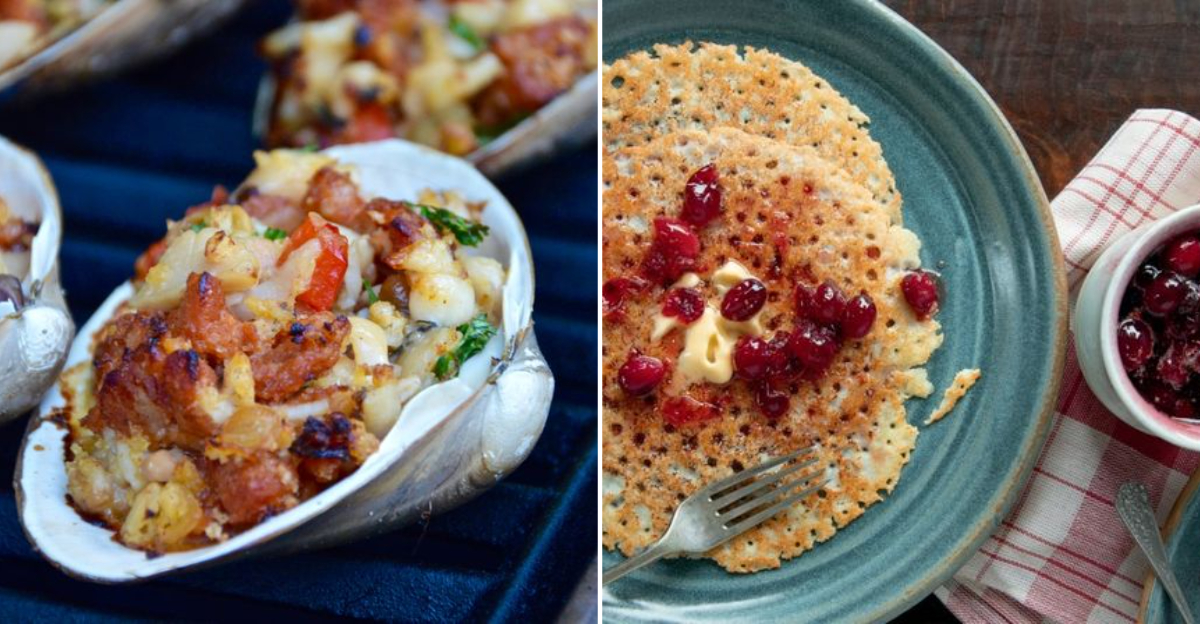
Cornmeal pancakes with attitude, these griddle cakes have fed New Englanders since colonial times. The name supposedly comes from “journey cakes” because travelers packed them for long trips, though nobody agrees on the true origin story anymore.
Though most closely associated with Rhode Island, versions of Johnnycakes still appear in parts of southeastern Massachusetts, particularly near the Rhode Island border, where cornmeal traditions remain strong.
Some folks like them thin and lacy-edged, while others prefer thick and cake-like. Butter and maple syrup are mandatory, though some rebels add bacon or berries for extra flair.
4. Stuffed Quahogs
Affectionately called “stuffies” by everyone who matters, these oversized clam shells arrive at your table loaded with a savory mixture that defines coastal comfort food. The pronunciation alone separates locals from tourists—it’s “KO-hog,” not “kwa-hog,” thank you very much.
Typical recipes mix chopped quahog meat with breadcrumbs, onions, and peppers, sometimes Portuguese chouriço, especially around New Bedford or Fall River, where Portuguese influence runs deep.
They’re baked until golden and crusty on top, then served at beach parties, family gatherings, and any self-respecting clambake worth attending.
5. Fluffernutter Sandwich
Marshmallow Fluff was invented in Somerville in 1917, making this sticky combination a point of Massachusetts pride. Spreading peanut butter on one slice and marshmallow fluff on another creates a sandwich that’s simultaneously lunch and dessert, defying all nutritional logic.
School cafeterias across the state serve these without apology, while parents debate whether they count as actual meals. The sweet, gooey texture contrasts perfectly with creamy or crunchy peanut butter, depending on your allegiance in that eternal debate.
Some fancy folks toast the bread or add banana slices, but purists insist on keeping it simple. Either way, napkins are absolutely non-negotiable when eating these messy masterpieces.
6. Turkey Pies
Not your average pot pie, these Massachusetts versions transform leftover Thanksgiving turkey into something spectacular. Some small-town diners and bakeries, especially on the North Shore, serve turkey pies year-round, though they’re most popular around the holidays.
Flaky, buttery crust encases chunks of turkey, vegetables, and rich gravy that somehow tastes better than the holiday meal itself. The secret involves roasting turkey specifically for pies rather than just using dried-out leftovers from last week’s dinner.
Individual servings arrive bubbling hot, requiring strategic cooling time unless you enjoy burning the roof of your mouth. Some bakeries ship them frozen for homesick Massachusetts natives living elsewhere.
7. Minnie’s Whoopie Pies
Two soft chocolate cake rounds sandwich a mountain of sweet cream filling in this handheld dessert that Maine and Pennsylvania also claim to have invented. Massachusetts bakeries, such as Minnie’s Homemade Whoopie Pies in South Deerfield, keep the tradition alive with locally made versions.
The name supposedly comes from children shouting “Whoopie!” when finding these treats in their lunch boxes, which sounds adorable whether it’s historically accurate or not. Local bakeries craft them in sizes ranging from cookie-sized to requiring both hands and serious commitment.
The filling varies from traditional buttercream to marshmallow fluff to peanut butter depending on the baker’s mood. They’re messy, indulgent, and absolutely worth the sugar rush that follows.
8. Cape Cod Cranberry Relish
Fresh cranberries grown in Cape Cod bogs get transformed into this tangy-sweet condiment that makes canned versions taste like sad imitations. The berries grow in flooded fields that turn brilliant red during harvest season, creating Instagram-worthy landscapes that tourists flock to photograph.
Massachusetts (especially Plymouth and Wareham) is one of the nation’s top cranberry producers, and Cape Cod family farms still use traditional wet-harvest methods each fall.
Traditional recipes grind raw cranberries with whole oranges and sugar, creating a bright, fresh relish with serious attitude. The texture stays chunky, and the flavor packs enough tartness to wake up your taste buds from their turkey-induced coma.
Thanksgiving tables across Massachusetts feature this ruby-red condiment alongside turkey and stuffing. Some families add walnuts or substitute honey for refined sugar, sparking friendly debates about authenticity.
9. Mayflower Hoppin’ John
While Hoppin’ John is a Southern dish, the so-called “Mayflower” version is more legend than local staple. Some Colonial reenactments in Plymouth may serve a variation with salt pork and herbs, but it isn’t a traditional Massachusetts small-town food.
Unlike its Southern cousin loaded with bacon and spice, the Massachusetts version stays more restrained, letting the ingredients speak for themselves. Salt pork replaces bacon, and the seasoning leans toward herbs rather than heat, reflecting Yankee cooking sensibilities.
Small-town diners serve it as a hearty side dish or main course, especially during winter months. The name references the Mayflower, though historians remain skeptical about any actual Pilgrim connection to the recipe.
10. Scrod with Ritz Cracker Crust
Young cod or haddock gets crowned with crushed Ritz crackers and butter before baking into something magical. The term “scrod” itself is uniquely New England, referring to small, young white fish that’s perfect for this simple yet elegant preparation.
This classic preparation—baked white fish topped with buttery Ritz crackers—remains popular in coastal Massachusetts seafood restaurants from Boston to Cape Ann.
Crushed crackers mixed with melted butter create a golden, crispy topping that contrasts beautifully with tender, flaky fish underneath. The buttery, salty crunch elevates basic fish to dinner party status without requiring culinary school training or fancy ingredients.
Every Massachusetts grandmother has her own ratio of crackers to butter, guarded as carefully as any family heirloom. Restaurants from Boston to the Berkshires feature this dish, proving simplicity never goes out of style when executed perfectly.
11. Maple Cream Doughnuts
Fluffy yeast doughnuts get injected with maple cream filling and glazed with more maple, creating a sugar bomb that Bostonians line up for at 6 AM. Western Massachusetts bakeries, especially in towns near Shelburne Falls and Deerfield, often feature maple cream doughnuts made with syrup tapped from local sugarhouses.
The filling stays light and airy, almost mousse-like, rather than the heavy pastry cream found in regular doughnuts. Each bite delivers maple flavor without being cloying, a delicate balance that separates amateur bakers from true artisans.
Fall brings peak maple doughnut season when fresh syrup hits the market. Bakeries sell out by mid-morning, so early birds really do get the sweetest worm in this case.