
12 Michigan Day Trips That Promise Unforgettable Summer Adventures
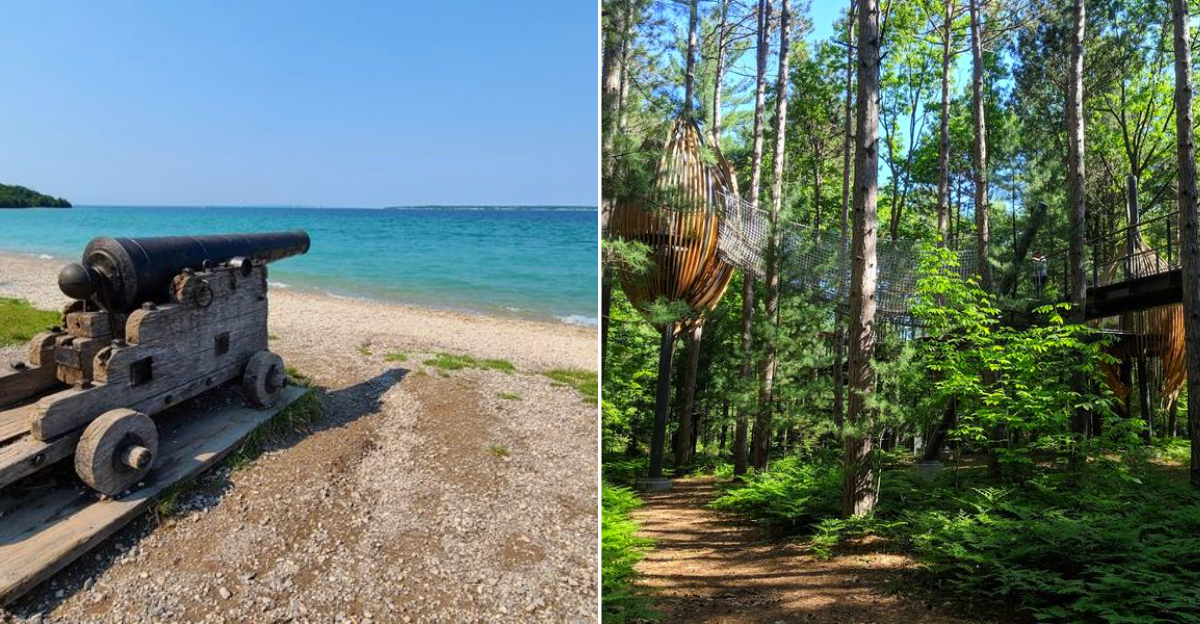
Summer in Michigan does not ask permission before it disappears, so the smart move is to fill every warm weekend with a trip that makes the drive home feel shorter than the drive there.
The state packs an unreasonable amount of variety into a single tank of gas: dunes that drop straight into turquoise water, waterfalls you can hear before you see them, a rock formation that looks like it was carved by hand sticking out of Lake Huron.
Some trips take you underground through caves that stay cool no matter how hot July gets. Others leave you standing on a pier watching freighters drift past close enough to wave at the crew.
Whether you prefer hiking boots or flip-flops, Michigan keeps the distances short enough that you can leave after breakfast and still catch the sunset somewhere unforgettable on the other side of the state.
12. Sleeping Bear Dunes National Lakeshore
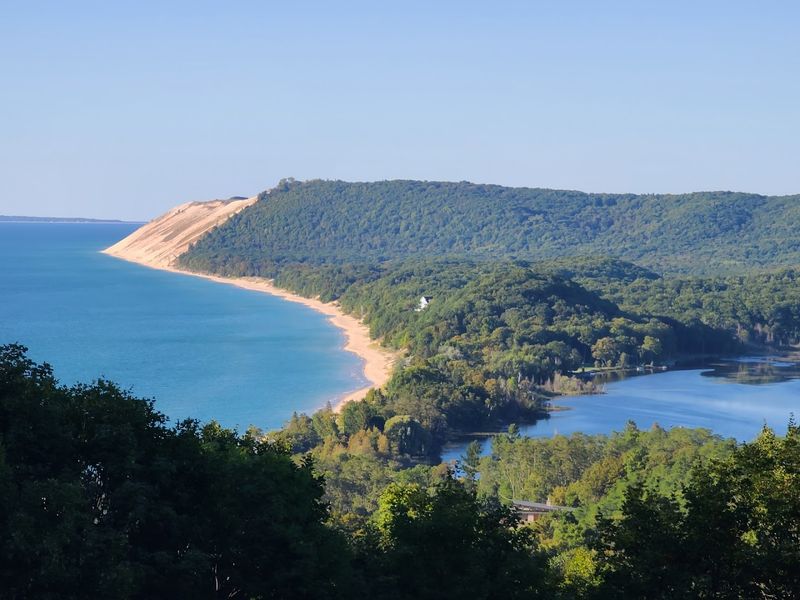
The first thing that hits you at Sleeping Bear is scale. Sand rises in pale, steep walls above Lake Michigan, while Glen Lake flashes blue and green inland like enamel.
Near Empire, this national lakeshore packs huge views into a day trip that still leaves time for a swim.
The famous Dune Climb is the obvious starting point, but trails like Empire Bluffs and Pyramid Point give a better sense of the landscape’s drama. Empire Beach is an easy cool-down after hiking, and Platte Beach offers tubing where the Platte River reaches the lake.
What stays with you is the contrast: strenuous climbs, sudden water, and long horizons that make even a crowded summer afternoon feel spacious. It is one of those places where effort pays off almost immediately, then keeps paying off after you leave.
Bring water, sun protection, and shoes that can handle loose sand, because distances often feel longer than expected. Early morning brings cooler trails and softer light, while sunset turns the dunes gold and gives the shoreline an almost unreal calm.
11. Pictured Rocks National Lakeshore
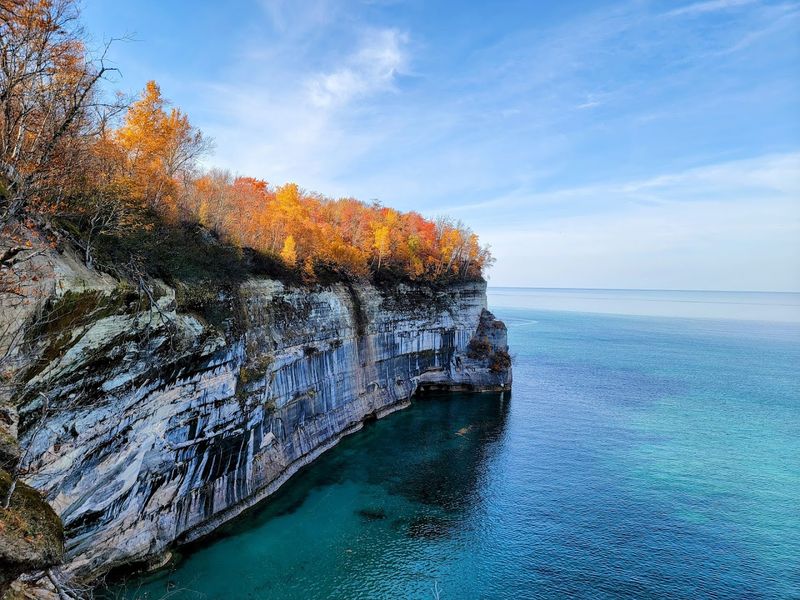
Lake Superior has a way of making every color look more serious, and nowhere is that clearer than Pictured Rocks. Between Munising and Grand Marais, the cliffs layer mineral stains, sculpted arches, and dark shadow lines into a shoreline that feels almost theatrical.
Even on a sunny day, the place keeps a slightly wild edge.
Kayaking is the most intimate way to understand the formations, especially the sea stacks and caves, though boat tours are a practical choice if you want the big picture without committing your shoulders. Glass-bottom shipwreck tours add another dimension, and nearby waterfalls keep the itinerary flexible.
What I appreciate here is the variety packed into one stretch of coast. It is scenic, yes, but not passive.
You move through it by paddle, trail, or boat, and each option reveals a different mood of the same remarkable landscape.
10. Mackinac Island
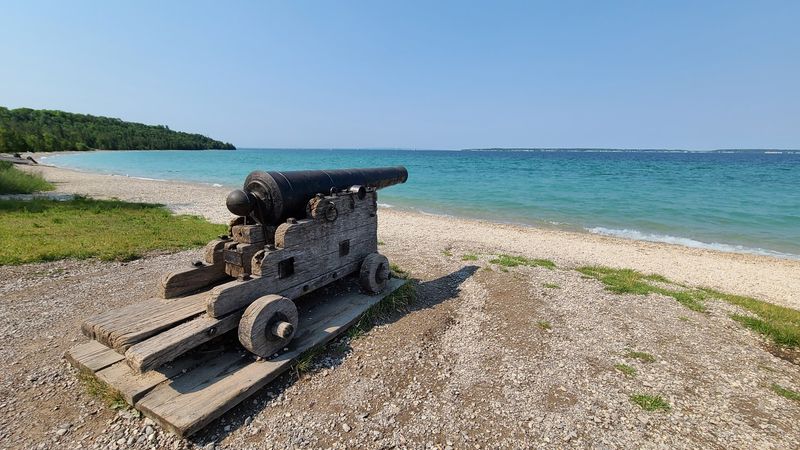
The oddest luxury on Mackinac Island is silence. Without cars, you notice hoofbeats, bike tires, gulls, and the soft churn of ferries pulling away from the dock in Lake Huron.
That small change rewires the pace of the day almost immediately.
The 8.2-mile Shoreline Trail is an easy way to circle the island by bike, and the ride keeps serving up views of limestone bluffs, water, and grand old hotels. Fort Mackinac adds real historical weight, while Arch Rock is worth the stop even if you have seen a hundred photographs already.
Fudge shops, including Murdick’s, provide the expected sweet punctuation. This place could have tipped into nostalgia theater, but it does not.
The Victorian texture feels lived in, not staged, and the lack of traffic makes the whole island feel surprisingly fresh rather than frozen.
9. Tahquamenon Falls State Park
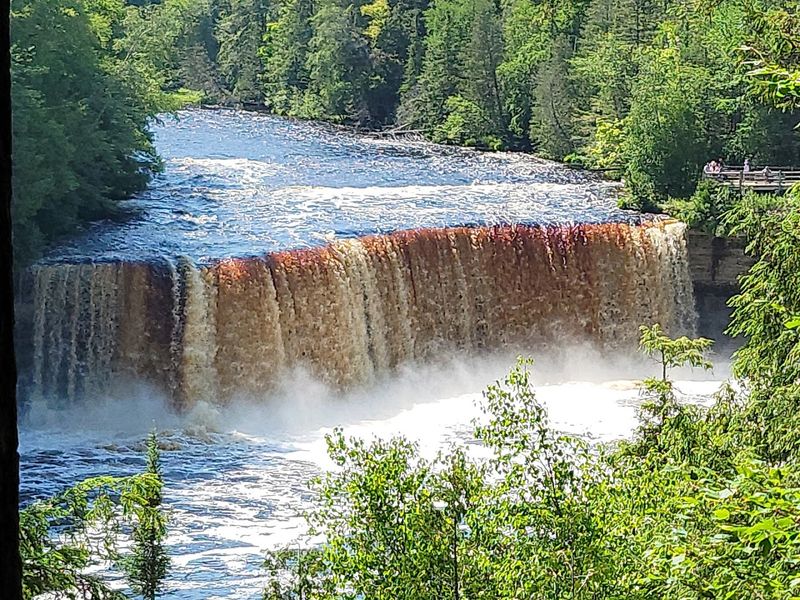
Tahquamenon Falls looks almost unreal at first glance, especially when the water runs that deep amber-brown color against bright green forest. The tint comes from tannins released by cedar and hemlock in the watershed, which somehow makes the falls feel even more rooted in the landscape.
Near Paradise, this park offers the kind of day trip that gently pushes you to put the phone away.
The Upper Falls are the headliner, broad and forceful, but the surrounding trails matter just as much. More than thirteen miles of routes move through wooded sections that feel cool even in midsummer, and the Lower Falls area offers a different rhythm.
You are not chasing one single viewpoint here. The pleasure comes from walking, pausing, and letting the scale settle in.
By afternoon, the sound of moving water starts to feel less like background and more like the point. Bring sturdy shoes, insect repellent, and enough water for the longer routes, especially if humidity is high.
Arriving early gives you quieter overlooks and cooler trails, while autumn adds fiery color that makes the copper-toned water look even more dramatic.
8. Warren Woods Natural Area
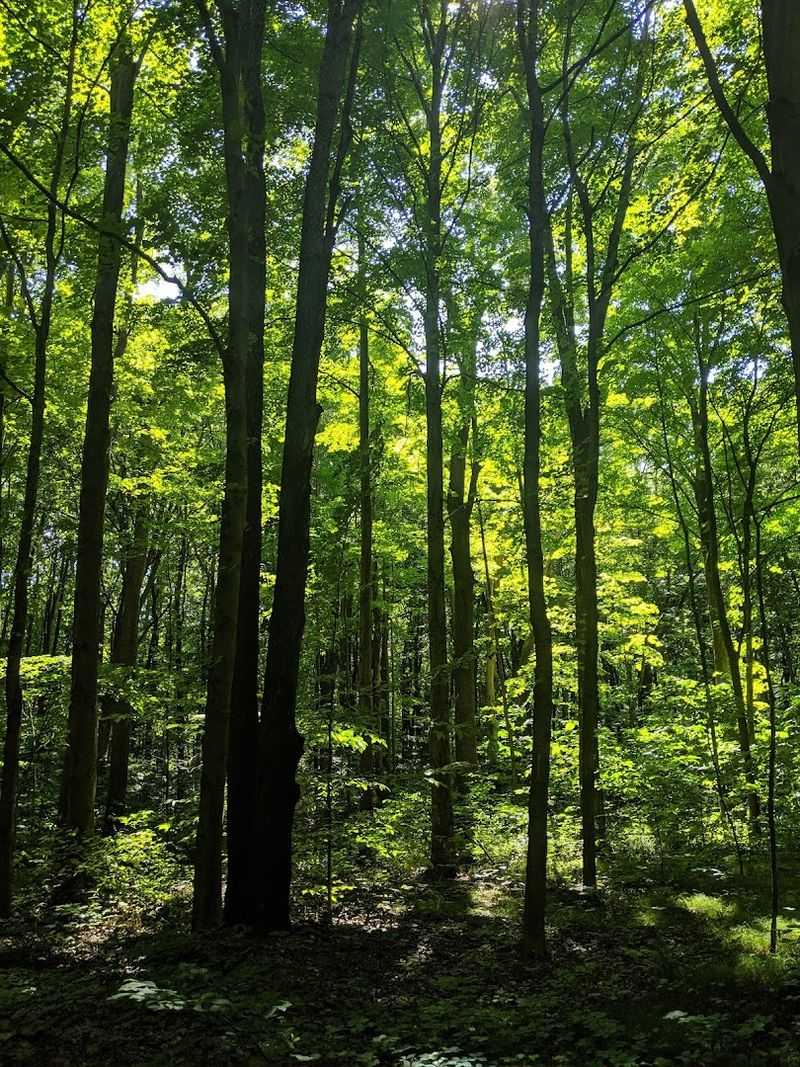
Not every unforgettable summer day trip needs a huge overlook or a famous beach. Warren Woods Natural Area, in southwest Michigan, is quieter than the state’s marquee destinations, but its old-growth forest has a presence that changes your pace the minute you step under the canopy.
The air feels cooler, the light softer, and the ground somehow more deliberate.
This preserve protects a remnant beech-maple forest, including notably tall tulip trees, and that age gives the place a gravity you do not get from newer woods. The trails are modest, which is part of the appeal.
You come here for shade, bird sound, and the rare experience of being in a forest that has largely been allowed to remain itself. I would pair it with nearby Lake Michigan stops, but Warren Woods holds its own.
It is subtle, restorative, and refreshingly unconcerned with spectacle.
7. Silver Lake Sand Dunes

Silver Lake Sand Dunes is what happens when a beach day develops an engine. Near Mears, the dunes spread across more than 2,000 acres, and the energy is unmistakably different from quieter stretches of the Lake Michigan shore.
You hear motors, feel windblown grit, and get the sense that summer here is meant to be played at full volume.
Dune buggy tours are the easiest way to sample the terrain without any planning stress, while the ORV area draws people who want to drive the sand themselves. There is also a pedestrian zone if you prefer your adventure on foot, plus shoreline access for swimming when the heat catches up with you.
Little Sable Point Lighthouse is close enough to round out the day with something more still. That contrast works beautifully.
Silver Lake is thrilling, yes, but it also knows when to hand you a horizon.
6. Turnip Rock At Port Austin
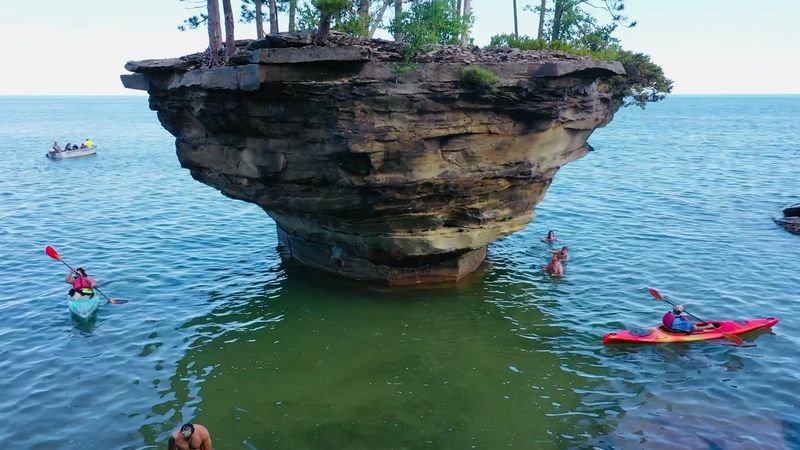
Turnip Rock wins points before you even arrive, simply because the name sounds made up. Off the Port Austin shoreline in Lake Huron, the small rock formation really does resemble a turnip balanced on a stem, topped with stubborn greenery.
Its odd proportions give the whole outing a sense of cheerful improbability.
You generally reach it by kayak, which is part of the charm and part of the planning. Conditions on Lake Huron matter, so checking weather and launching with care is essential, but on a calm summer day the paddle is manageable for many visitors.
The water can look brilliantly clear, and the approach lets the formation reveal itself gradually rather than all at once. I like that the destination is visually strange without being grandiose.
It is a compact little adventure, the sort that earns conversation later because it was both beautiful and slightly ridiculous.
5. Kitch-Iti-Kipi (Palms Book State Park)
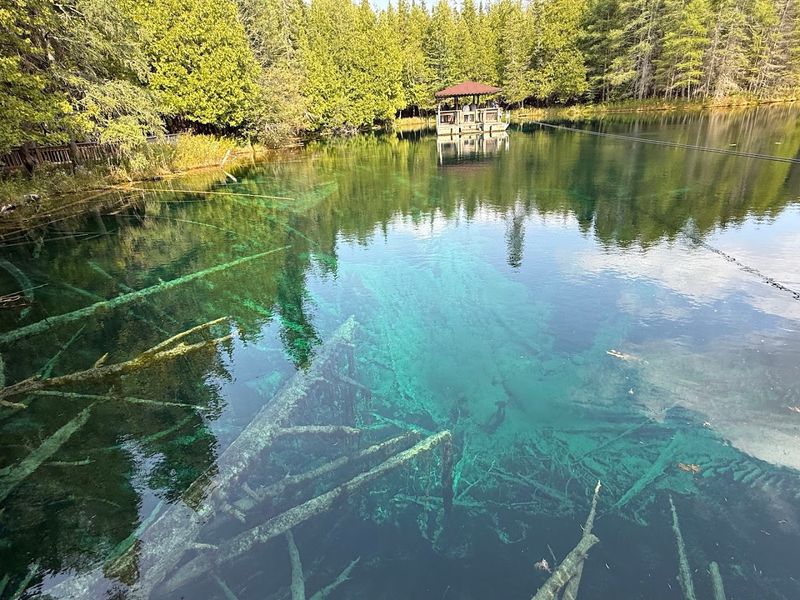
Kitch-iti-kipi does not look like normal freshwater. Michigan’s largest spring glows in shades of blue and green so clear that submerged logs, pale sand, and drifting trout stay visible far below the surface.
The water holds at about 45 degrees year-round, which only adds to the uncanny feeling that this pool belongs to its own private climate.
Inside Palms Book State Park in the Upper Peninsula, the main experience is wonderfully simple: a self-propelled observation raft that visitors move across the spring by hand. There is no complicated itinerary to manage, just a slow crossing and a chance to look straight down into forty feet of clarity.
Because the site is compact, it works especially well paired with other Upper Peninsula stops. Still, it never feels like a mere add-on. The spring is brief to visit, but it lingers in your mind much longer.
4. Grand Haven Lighthouse And Pier
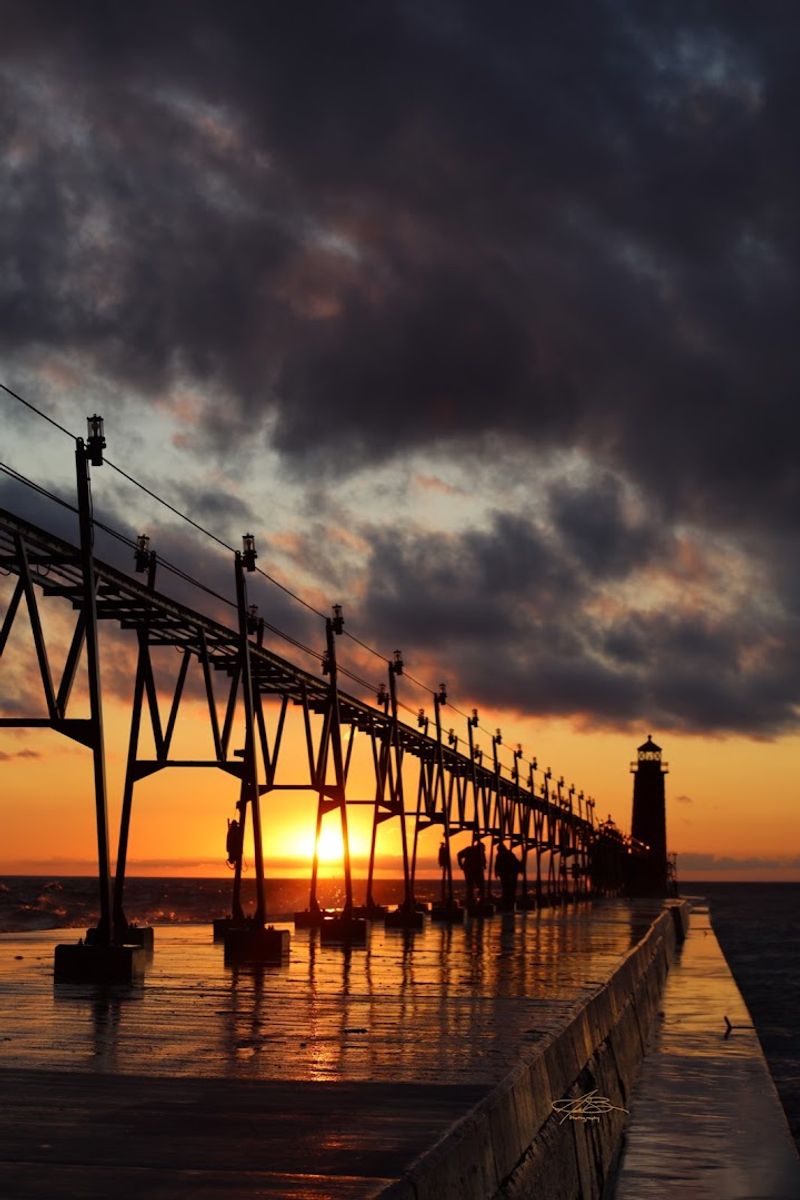
Grand Haven understands the theater of arrival. The long pier pulls your eye straight toward the red lighthouse, and by late afternoon the whole waterfront starts arranging itself for evening light.
It is a classic Lake Michigan scene, but the town gives it enough life and movement that it never feels like a static postcard.
You can walk the boardwalk, spend time on the beach, or climb nearby dunes for a broader look at the shoreline. The lighthouse is the visual anchor, yet the town keeps adding small pleasures around it, from beach volleyball to the casual buzz of families drifting between sand and ice cream.
If you stay through dusk, the Grand Haven Musical Fountain remains a local summer ritual and an easy finale. What works here is balance.
The place is lively without becoming frantic, and iconic without turning stiff. It feels built for an unforced, genuinely satisfying summer day.
3. Belle Isle Park
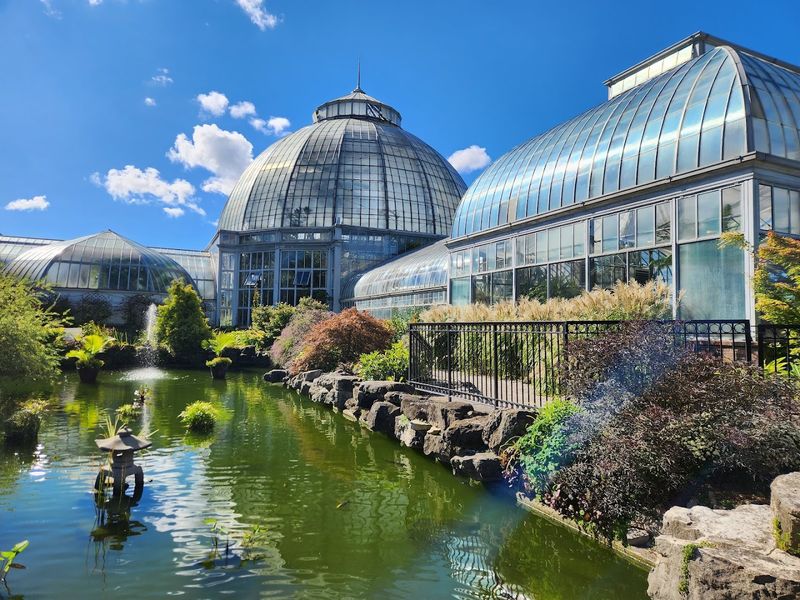
Belle Isle feels delightfully improbable: a large island park in the Detroit River where formal landscapes, water views, and city energy coexist without much friction. The setting alone makes it memorable, especially when the skyline reminds you that this leafy escape still belongs to Detroit.
Summer brings cyclists, walkers, picnickers, and just enough breeze to make the island feel open on every side.
Designed in part by Frederick Law Olmsted, Belle Isle carries real planning history, but it never feels museum-like. You can move between broad lawns, the James Scott Memorial Fountain area, shoreline lookouts, and cultural stops like the Anna Scripps Whitcomb Conservatory or the Belle Isle Aquarium, depending on current hours and access.
I admire how democratic the place feels. You can structure a full itinerary or simply roam, and either choice makes sense. It is urban, historic, and surprisingly calming all at once.
2. Dow Gardens And Whiting Forest
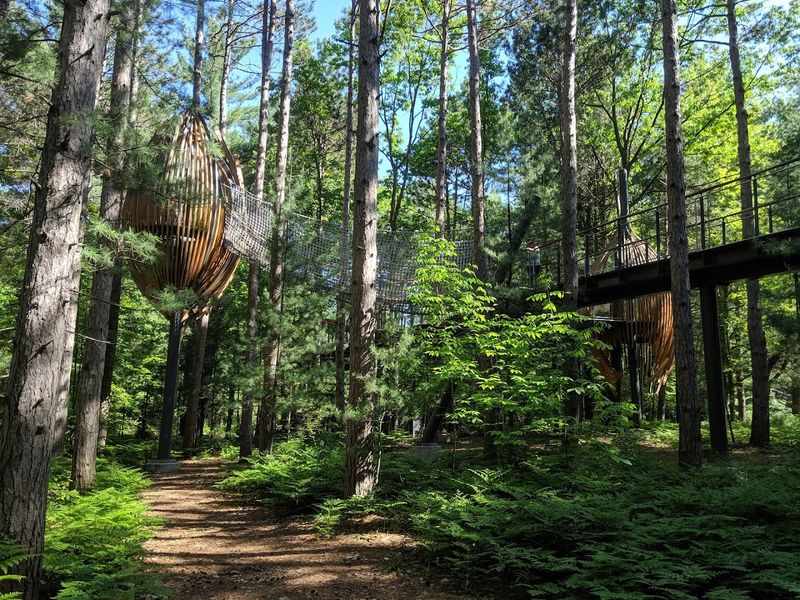
Dow Gardens and Whiting Forest make a persuasive case for designed nature. In Midland, the gardens offer carefully composed plantings and paths, while Whiting Forest adds a more adventurous layer with its elevated canopy experience.
The combination feels polished without losing the pleasure of being outdoors on a warm summer day.
The standout feature is the Whiting Forest Canopy Walk, one of the longest in the nation, which lifts you into the treetops and changes your perspective in the most literal way possible. Below and beyond it, trails and woodland areas keep the visit from becoming a single-attraction stop.
Dow Gardens contributes quieter beauty through curated landscapes that reward slower observation. This pairing works especially well for mixed groups because it balances novelty with ease.
You get architecture, horticulture, and movement in one trip, which is a neat trick for a place that never seems to strain for attention.
1. Fayette Historic Townsite
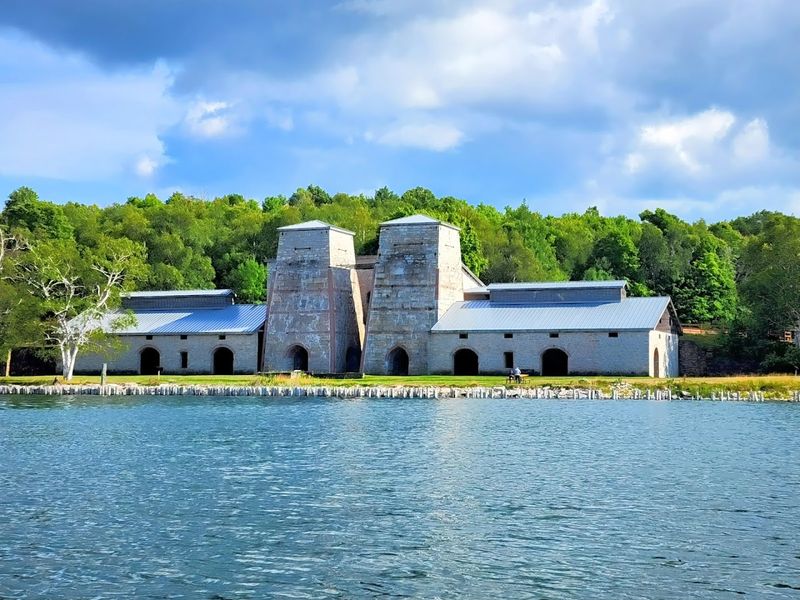
Fayette Historic Townsite has one of the strangest and most appealing settings in Michigan. A preserved nineteenth-century industrial village sits beside intensely blue water on the Garden Peninsula, with limestone bluffs rising behind it as if scenery had been assigned by an overly generous set designer.
The result is beautiful, but also slightly eerie in the best way. Fayette was once a busy iron smelting community, and many buildings remain, giving the site unusual clarity for anyone curious about how place and industry shaped each other.
Walking through the town, you move between restored structures and open views of Snail Shell Harbor, which keeps the visit from feeling sealed off in history.
There is room here for both learning and lingering. You read the landscape as much as the signage. By the end, the combination of labor history and calm shoreline feels unexpectedly moving, even a little haunting.