
12 Michigan Desserts Generations Still Bake At Home
Michigan’s sweets feel stitched into the seasons. I think of handwritten cards tucked in kitchen drawers, recipes carried through families and still pulled out when the weather shifts.
Winter meant fudge bubbling slow in heavy kettles, while spring brought jam cookies to church tables. Summer stretched with cherry pies cooling on porches and ice cream dripping down cones at lakefronts.
These desserts aren’t just sugar, they hold geography, memory, and the hands that made them. What follows are twelve Michigan treats that taste like place, tradition, and the comfort of something both ordinary and enduring.
1. Mackinac Island Fudge
Shops along Mackinac’s Main Street stay busy with trays of fudge cooling on marble slabs, where staff cut neat blocks as crowds watch. The rhythm is steady and practical.
The island’s fudge-making tradition began in the late 1800s, when confectioners like the Murdick family introduced recipes that soon became a regional draw. Today, more than a dozen shops keep the practice alive.
Visitors often line up early, especially in summer when demand peaks. I prefer a plain chocolate slice, still slightly warm, when the texture feels soft and true.
2. Sanders Bumpy Cake
Imagine a cake so iconic it could define a city. Sanders Bumpy Cake does just that for Detroit. With ridges of buttercream and a luscious chocolate coating, it’s a slice of history.
Fred Sanders founded his Detroit confectionery company in 1875, and by the early 20th century Bumpy Cake had become one of its signatures. Many families across Michigan still serve it as a holiday or birthday dessert.
A helpful tip: slice with a warm knife if you want clean cuts. The frosting sets firmly, and neat edges make the bumps even more inviting.
3. Paczki (Hamtramck Style)
Powdered sugar dusts hands quickly when you pick up a paczki, the dough soft and dense with a rich, eggy base. Fillings range from plum and raspberry to custard and lemon.
Polish immigrants brought paczki to Michigan, and Hamtramck became the center of the tradition. Fat Tuesday lines at places like New Palace Bakery often stretch down the block.
Locals recommend ordering early or pre-paying for boxes. The shelves empty quickly, and by noon, the best flavors are usually gone.
4. Michigan Cherry Pie (Montmorency)
Tart cherries from the Traverse City area give Michigan cherry pie its sharp brightness, a flavor that sets it apart from sweeter varieties. The crust balances with buttery heft.
Commercial orchards of Montmorency cherries grew through the 20th century, cementing Michigan as a leading cherry producer. Festivals in Traverse City celebrate the harvest each July.
I think this pie works best without added frills. The tart fruit doesn’t need extra sugar or elaborate toppings, a simple lattice crust lets the filling shine.
5. Apple Cider Donuts
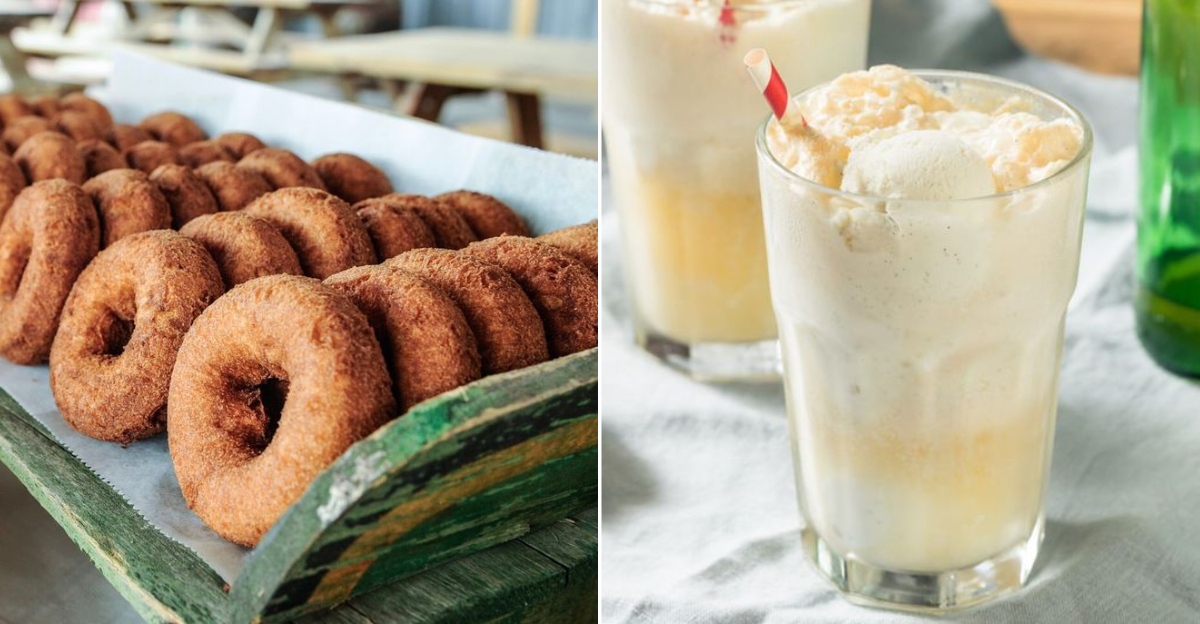
The scent of cinnamon and fried dough rises outside cider mills each fall, where racks of donuts cool beside presses turning apples into cider.
Apple cider donuts became a seasonal tradition in Michigan, especially tied to orchards in places like Franklin and Yates. The recipe often folds cider into the batter for depth.
Weekends at the mills bring steady crowds. People carry cups of hot cider in one hand and bags of donuts in the other, eating them before they even reach the car.
6. Boston Cooler (Vernors Float)
Foam rises quickly when Vernors ginger ale hits vanilla ice cream, creating a float with sharp spice and creamy sweetness in balance.
The drink dates back to Detroit in the early 1900s, despite its Boston name. The Vernors brand, founded in 1866, remains tied closely to Michigan identity.
Locals often insist on using only Vernors, not any other ginger ale. The flavor is bolder and more aromatic, and it’s that intensity that makes the float distinct.
7. Superman Ice Cream
Scoops of bright blue, red, and yellow make Superman ice cream instantly recognizable. The flavor varies, but usually mixes blue moon, lemon, and cherry or red pop.
It first appeared in Michigan in the 1920s, credited to Stroh’s Ice Cream Company in Detroit. Since then, it’s been served in parlors statewide.
Kids still line up for cones, while adults order it for nostalgia as much as taste. The colors may draw attention, but it’s the memory that lingers.
8. Blue Moon Ice Cream
A bowl of pale blue ice cream looks almost unreal, smooth and oddly luminous under parlor lights. Its flavor has been described as citrusy, marshmallow-like, or almond-tinted.
Though its exact origin is debated, Blue Moon is firmly tied to the Upper Midwest, especially Michigan and Wisconsin, where parlors guard their recipes.
In Michigan, it’s often one of the first flavors to run out on hot days. Fans return year after year, treating it like a seasonal rite of passage.
9. Dutch Banket (Almond Pastry)
Golden pastry logs filled with almond paste appear on bakery trays during the holidays, their flaky layers giving way to a fragrant, nutty center.
Brought by Dutch immigrants to western Michigan, banket became a staple in towns like Holland and Grand Rapids. Families often bake it for Christmas gatherings and church events.
Sharing slices feels essential. The pastry is rich, but when passed around a table, it softens into something communal, a reminder of how food binds traditions together.
10. Caramel Apples (Cider Mill)
Glossy caramel apples line wooden stands at Michigan cider mills each fall, their sticky surfaces catching bits of peanut or sprinkles.
The tradition of dipping apples in caramel dates to the early 20th century, but in Michigan it’s tied most closely to orchard visits and cider mill weekends.
I like them best outdoors, where the crunch of the apple meets cool air. Eating one feels less like dessert and more like marking the season with a small ceremony.
11. Thimbleberry Jam Thumbprints
Deep red jam pools in the center of buttery thumbprint cookies, staining the edges slightly as it bakes. The flavor is tart, almost floral.
Thimbleberries grow in Michigan’s Upper Peninsula and have been used in jams and preserves for generations. Local bakeries and home kitchens use the jam in simple cookie dough.
Biting into one is bright and surprising, sharper than a strawberry or raspberry version. It’s a taste that ties cookies directly to the landscape of the U.P.
12. Maple Sugar Candy
Pale amber maple sugar candies, molded into leaves or small blocks, dissolve slowly on the tongue with deep caramel notes. The texture is firm at first, then softens quickly.
Michigan’s maple sugaring tradition runs strong in the northern counties, where sap collection and sugar making have been practiced for centuries. Families still boil sap in small batches each spring.
Eating one feels grounding. It’s sweet, yes, but also earthy, as if the trees themselves left a signature on the dessert.