
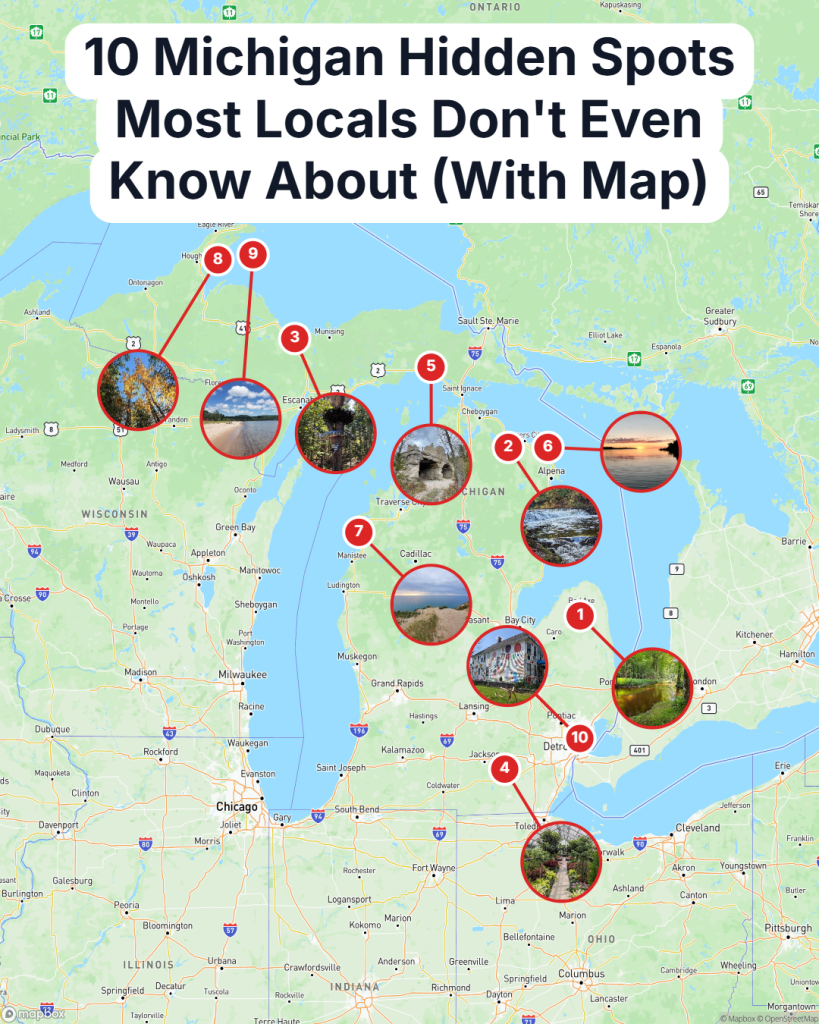
10 Michigan Hidden Spots Most Locals Don’t Even Know About (With Map)
Michigan is one of those states that people think they know well, but scratch the surface and you will find places that even lifelong residents have never visited. I grew up making the usual stops and road trips, assuming I had a solid grasp on what the Great Lakes State had to offer.
Then I started taking side roads, following small brown highway signs, and lingering in places most drivers pass without a second glance. That is when Michigan really opened up to me.
I have stood in front of ancient carvings etched into sandstone in the Thumb and wandered a Detroit neighborhood transformed into a living art environment. I have driven north with no agenda and came home with stories I did not expect to tell.
The deeper I looked, the more I realized how much stays off the typical travel radar.
1. Sanilac Petroglyphs Historic State Park, Cass City
Carved into a flat sandstone outcrop deep in the Thumb region, the petroglyphs at Sanilac Historic State Park tell a story that stretches back roughly 1,000 years.
Located at 8251 Germania Road, Cass City, MI 48726, this site preserves Michigan’s largest known collection of Native American rock carvings. The figures include humans, animals, and abstract symbols etched by ancient Algonquian peoples, and standing over them feels genuinely humbling.
The park is small and quiet, which means you will rarely share the experience with a crowd. A wooden walkway surrounds the main carving area to protect the rock surface, so you can get close without causing damage.
Rangers and interpretive signs help explain what researchers believe the symbols represent, though some meanings remain a mystery.
Best time to visit is late spring through early fall, when the park is open and the forest canopy makes the walk in feel cool and peaceful.
Bring bug spray because the surrounding woods can get buggy in summer. Admission is included with a Michigan Recreation Passport, making this one of the most affordable and underrated day trips in the entire state.
2. Ocqueoc Falls, Millersburg
Most people chasing Michigan waterfalls head straight for the Upper Peninsula, completely overlooking a perfectly lovely cascade hiding in the northern Lower Peninsula.
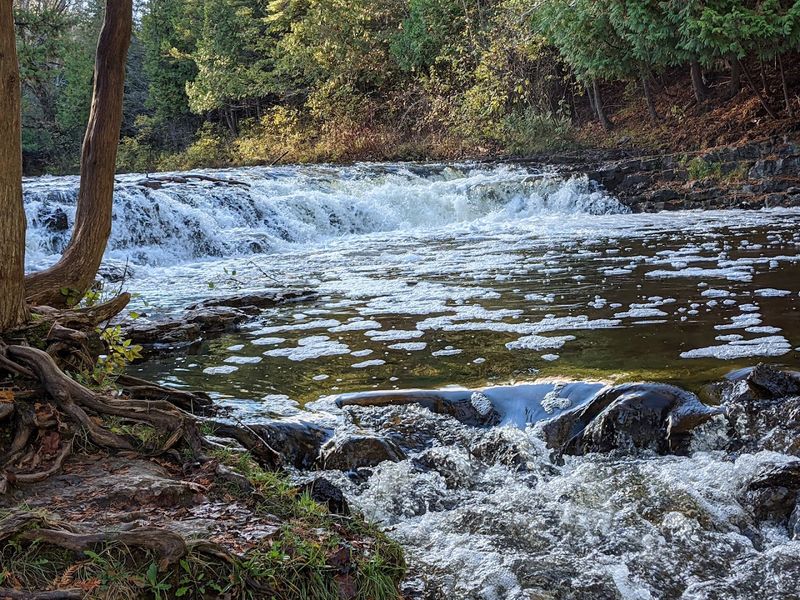
Ocqueoc Falls, located along the Ocqueoc Falls Bicentennial Pathway near Millersburg, MI 49759, is the largest and only named waterfall in Michigan’s Lower Peninsula, which alone makes it worth a detour.
The falls are wide and shallow rather than dramatically tall, spreading across tiered limestone ledges that invite wading on a warm afternoon. Kids especially love splashing around in the knee-deep pools, and the water stays surprisingly clear throughout the summer.
The surrounding pathway offers a well-maintained loop trail through northern hardwood forest, adding a solid hike to the experience.
Camping is available at the nearby Ocqueoc Falls State Forest Campground, a rustic campground managed by the Michigan Department of Natural Resources. Waking up to the sound of moving water just steps from your tent is the kind of simple pleasure that recharges you completely.
The falls are free to visit and rarely packed, even on summer weekends, which is honestly shocking given how accessible and genuinely beautiful the spot is. Go before everyone else figures it out.
3. Lakenenland Sculpture Park, Marquette
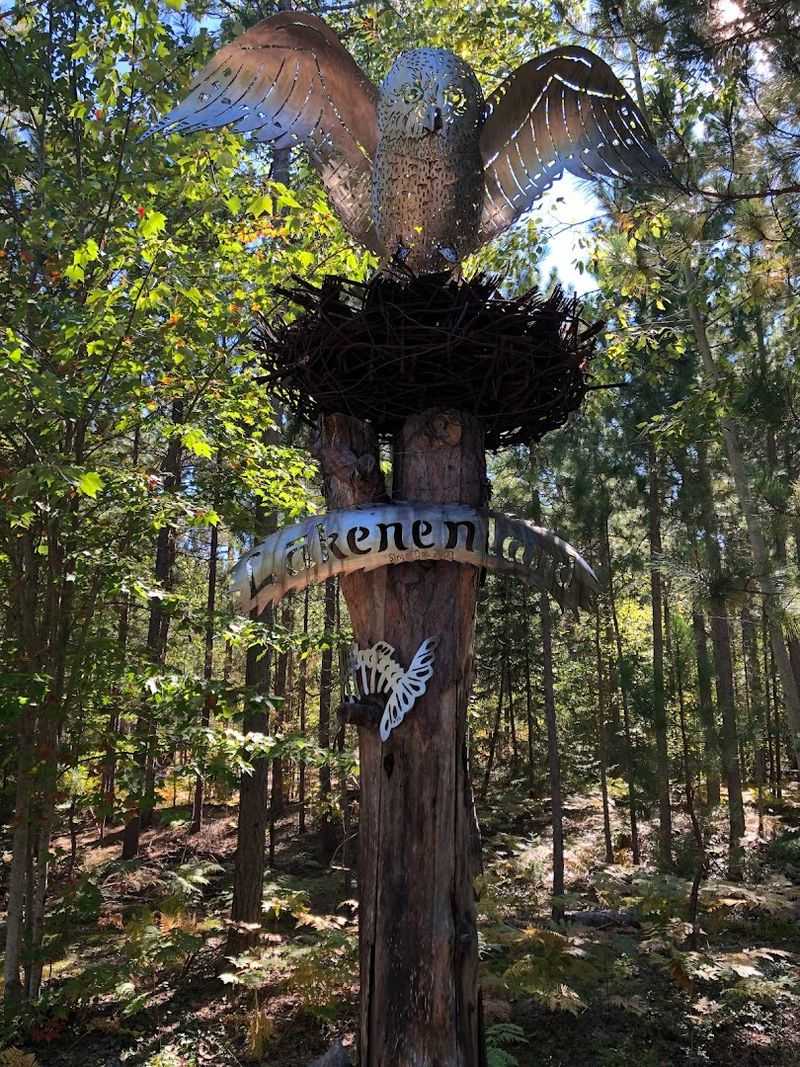
Picture a retired ironworker with a wild imagination, a massive property along M-28, and absolutely no intention of charging you admission.
That is the story behind Lakenenland Sculpture Park at 2800 M-28 E, Marquette, MI 49855, created by local artist Tom Lakenen entirely from salvaged metal and pure creative energy.
The park features over 100 large-scale sculptures spread across a looping trail through the Upper Peninsula woods. You will encounter dragons, dinosaurs, cartoon characters, political figures, and inventions that defy easy categorization.
Each piece is crafted from welded scrap metal, and the detail work up close is genuinely impressive. Tom still adds new pieces regularly, so repeat visits always turn up something fresh.
Entry is completely free, every single day of the year, which makes Lakenenland one of the most generous and unexpected cultural experiences in Michigan. The trail is mostly flat and easy to walk, making it accessible for families with young children.
Plan to spend at least an hour wandering around, because the sculptures keep revealing new details the longer you look. It is the kind of place that reminds you art does not need a gallery or a price tag to leave a real impression.
4. Hidden Lake Gardens, Tipton
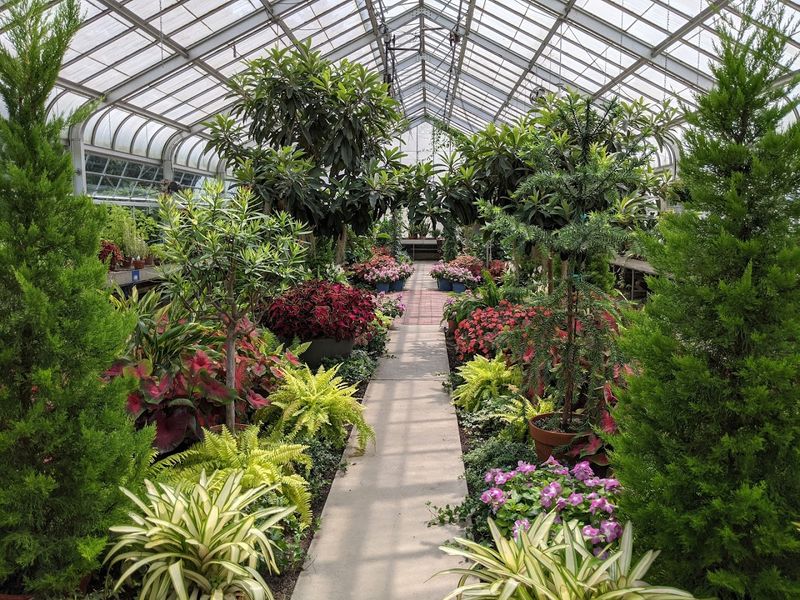
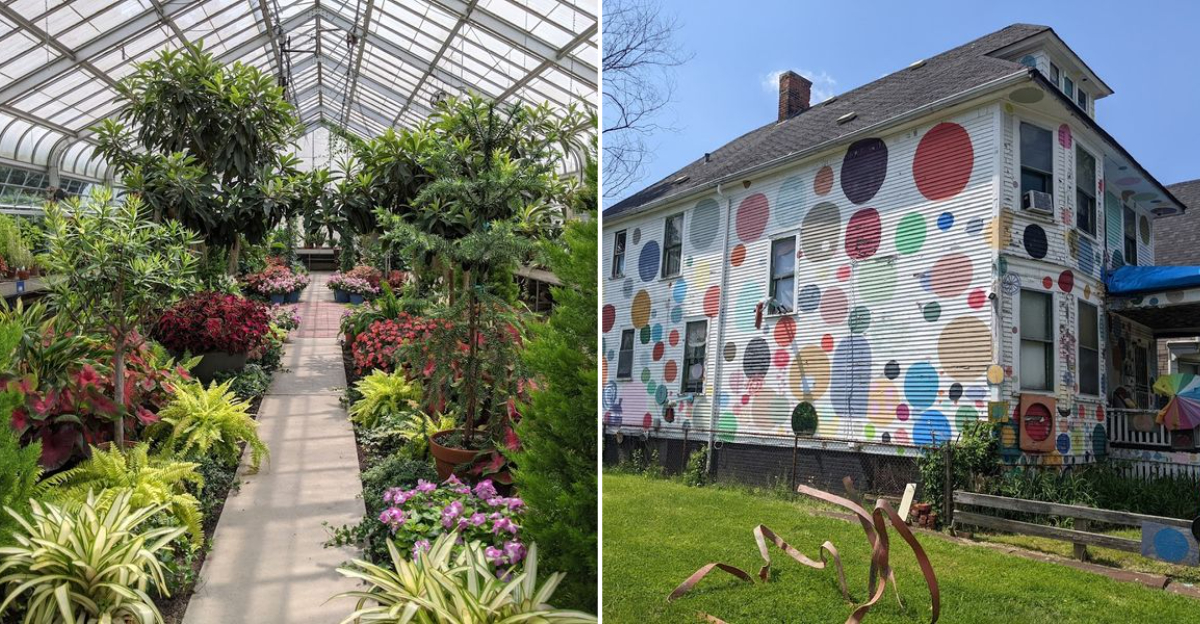
Run by Michigan State University and sitting quietly in the Irish Hills region, Hidden Lake Gardens at 6214 Monroe Rd is one of the most beautifully maintained public landscapes in the state. Despite being a genuine horticultural treasure, it consistently flies under the radar outside of the local gardening community.
The property covers 755 acres of rolling terrain, including manicured display gardens, a tropical conservatory, natural woodland trails, and a chain of small glacial lakes that give the place its name.
You can drive a winding road through the grounds or park and walk the paths on foot, and both options reward you with constantly changing views. Spring brings stunning blooms from the conifer and dwarf tree collections, while fall turns the whole landscape into a tapestry of warm color.
Admission is modest, and the conservatory alone is worth the trip, especially in winter when tropical plants thrive inside while everything outside is frozen. The staff is knowledgeable and genuinely enthusiastic about the collections, so do not hesitate to ask questions.
Hidden Lake Gardens is the kind of place that slows you down in the best possible way, encouraging you to notice details you might normally walk right past.
5. Fiborn Karst Preserve, Naubinway
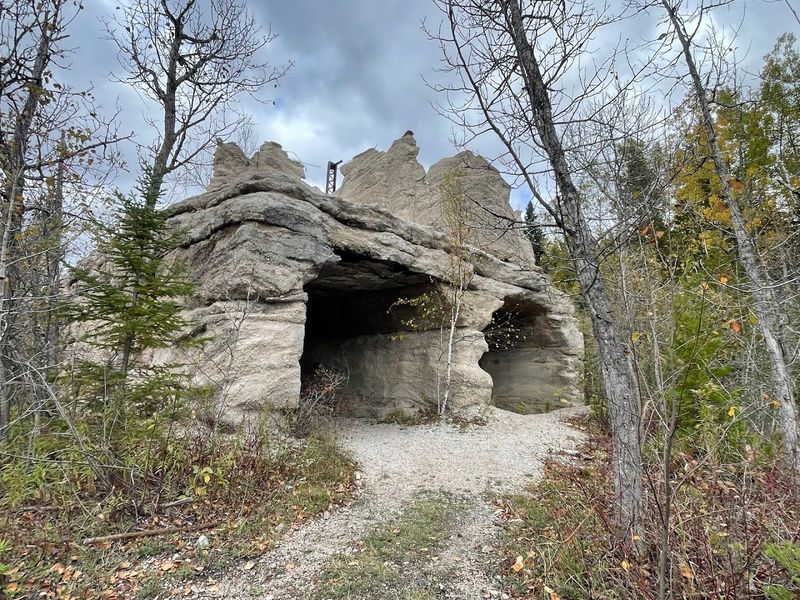
Geology enthusiasts, this one is for you. The Fiborn Karst Preserve along W Worth Rd in Naubinway, MI 49762 protects a rare landscape shaped entirely by dissolving limestone, resulting in a dramatic terrain of sinkholes, collapsed caves, and exposed bedrock that looks nothing like the rest of Michigan.
Karst landscapes form when slightly acidic groundwater slowly dissolves limestone over thousands of years, leaving behind depressions, underground voids, and unusual surface features.
At Fiborn, you can walk through a boreal forest punctuated by sudden sinkholes that drop several feet below the surrounding ground level. It is genuinely disorienting in a fascinating way, and the forest itself has a moody, primeval atmosphere that sets it apart from typical Upper Peninsula trails.
The preserve is managed by the Michigan Karst Conservancy and is free to visit, though the access road can be rough, so a vehicle with decent clearance is helpful. There are no formal facilities on site, so pack everything you need before heading out.
Visit in early morning when the low light cuts through the trees at sharp angles, highlighting the strange topography in ways that make the whole place feel almost prehistoric. Few Michigan residents even know this landscape exists.
6. Thompson’s Harbor State Park, Alpena
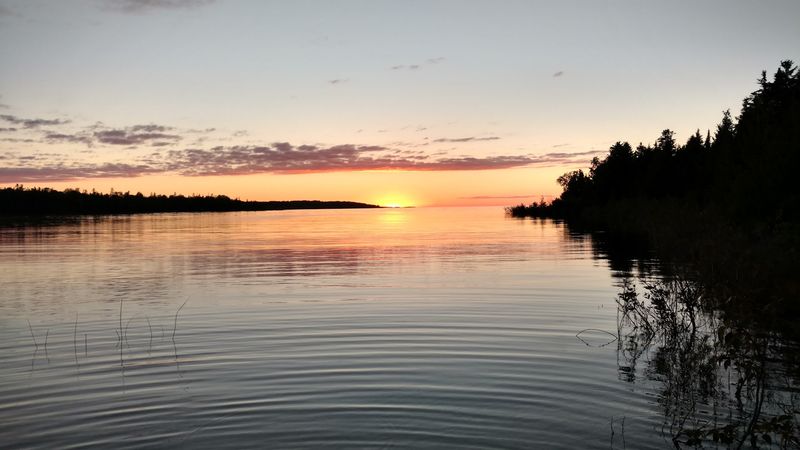
Most state parks in Michigan come equipped with parking lots, picnic tables, and crowds.
Thompson’s Harbor State Park, located about 24 miles north of Alpena near Rogers City along US-23, offers something rarer: genuine solitude along one of the most rugged and unspoiled stretches of Lake Huron shoreline you will find anywhere in the Lower Peninsula.
The park covers more than 5,000 acres of largely undeveloped land and protects several miles of rocky cobblestone beach, wetlands, and boreal forest. Amenities are minimal, with a small parking area, vault toilets, rustic cabins, and a trail system that winds through the landscape to reach the water.
The shoreline itself is wild and windswept, with driftwood scattered across wave-smoothed stones and views that stretch uninterrupted across the lake.
Pitcher’s thistle, a federally threatened plant species, grows in the coastal dunes here, making Thompson’s Harbor an important conservation site on top of being a beautiful one. Birding is exceptional during spring and fall migration, with shorebirds and raptors using the habitat regularly.
The park is free to enter with a Recreation Passport, and because it offers so little in the way of amenities, it self-selects for visitors who genuinely appreciate wild places. That means the peace and quiet here is practically guaranteed.
7. Arcadia Dunes, The C.S. Mott Nature Preserve, Arcadia

There is a ridge in northwestern Michigan that rewards a moderate uphill hike with one of the most jaw-dropping views in the entire state.
Arcadia Dunes, the C.S. Mott Nature Preserve in Arcadia, is managed by the Grand Traverse Regional Land Conservancy and protects nearly 4,000 acres of coastal dune habitat above the eastern shore of Lake Michigan.
The trail system here ranges from easy lakeside walks to a steep climb up the main dune ridge, where the view opens up across the lake to the west and over miles of forested hills to the east. On a clear day the panorama genuinely stops you in your tracks.
Wildflowers bloom along the trails from late spring through summer, and the fall color show from the ridgeline is the kind of thing people drive hours to see.
Arcadia Dunes is free and open year-round, though winter hiking here requires proper footwear for icy and snow-covered trails. The preserve also protects several rare plant communities found only in Great Lakes coastal dune ecosystems, adding ecological significance to the visual spectacle.
Pack a picnic and plan to spend a full afternoon here, because the scenery makes it very easy to lose track of time.
8. Estivant Pines Nature Sanctuary, Copper Harbor
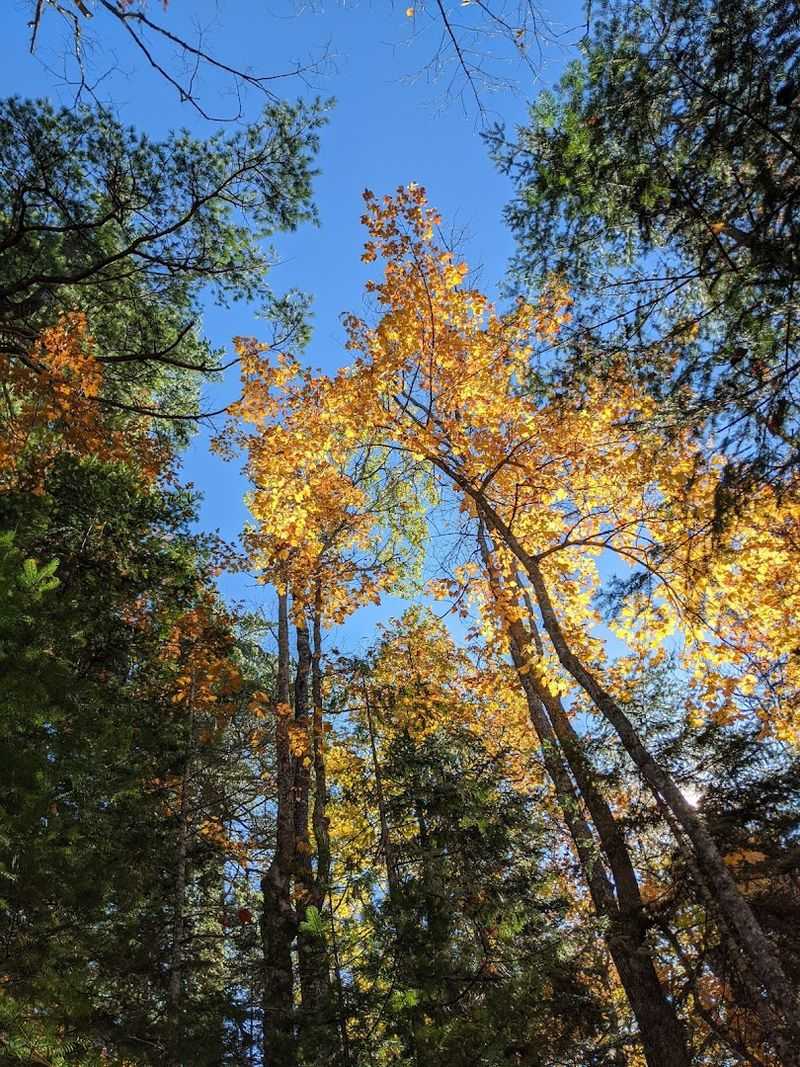
Walking into Estivant Pines feels like stepping through a door into Michigan as it looked centuries ago. Located off M-26 in Copper Harbor, MI 49918, this sanctuary protects one of the last stands of old-growth white pine in the Upper Peninsula, with individual trees reaching heights over 100 feet and trunk diameters that make you feel genuinely small.
The Michigan Nature Association manages the sanctuary and has kept it beautifully wild. Two loop trails wind through the grove, and the forest floor is carpeted with ferns and mosses that thrive under the dense canopy.
The silence inside the old-growth section is profound. Without the usual sounds of traffic or development, you become acutely aware of wind moving through the high branches and birds calling from places you cannot quite pinpoint.
Estivant Pines is free to visit and open during daylight hours throughout the year, though the access road can get muddy after rain. The sanctuary sits near the northern tip of the Keweenaw Peninsula, so it pairs perfectly with a visit to Copper Harbor itself.
Seeing trees this old and this large puts a lot of things in perspective. Come ready to walk slowly, look up often, and appreciate something that almost did not survive.
9. Bete Grise Wetlands Preserve, Mohawk
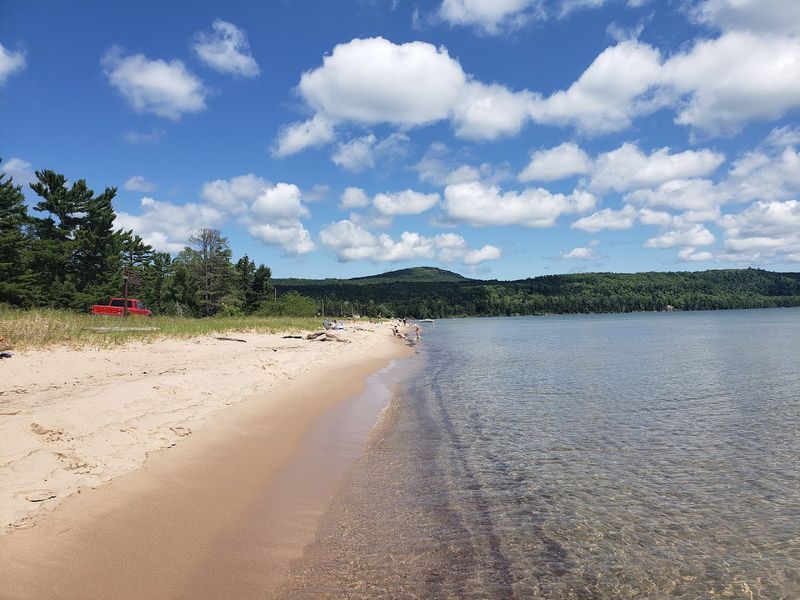
At the far northeastern tip of the Keweenaw Peninsula sits a place that feels genuinely remote even by Upper Peninsula standards.
The Bete Grise Wetlands Preserve along Bete Grise Rd in Mohawk, MI 49950 protects a rare combination of sandy beach, shallow bay, and extensive wetland habitat that supports an extraordinary variety of wildlife.
The bay here is sheltered and shallow, with water that turns a striking shade of blue-green on sunny days. The sandy beach along the preserve is undeveloped and uncrowded, making it one of the quietest swimming spots in Michigan during summer.
Birders come specifically for the wetland complex, which attracts migrating waterfowl, shorebirds, and wading birds in impressive numbers during spring and fall.
The wetlands preserve is protected in partnership with regional conservation groups including The Nature Conservancy and the Huron Keweenaw Conservancy District and is free to visit for day use.
Because Bete Grise sits well off the main tourist routes of the Keweenaw, you can realistically have the whole place to yourself on a weekday.
The drive out through the peninsula’s back roads is scenic in its own right, passing through small communities and copper-country history at every turn.
Pack a lunch, bring binoculars, and clear your schedule for the afternoon. Bete Grise is the kind of place that earns a permanent spot on your personal favorites list.
10. The Heidelberg Project, Detroit

On an ordinary residential block on the east side of Detroit, artist Tyree Guyton has spent decades turning an entire neighborhood into a living, breathing work of art.
The Heidelberg Project at 3600 Heidelberg St, Detroit, MI 48207 began in 1986 as a response to urban blight and has grown into an internationally recognized outdoor art environment that draws visitors from around the world.
Houses, trees, sidewalks, and vacant lots are covered in painted polka dots, discarded shoes, vintage clocks, stuffed animals, and found objects arranged with an internal logic that rewards careful looking. The project is not static.
It changes constantly as Guyton adds new elements and the community interacts with the space. Some structures have been removed over the years, and new ones appear in their place, making every visit genuinely different from the last.
The Heidelberg Project is free to visit and open to the public daily. You can check the Heidelberg Project’s official website for current information on tours and programming before planning their visit.
What started as one man’s protest against neglect has become a story about creativity, community, and the stubborn insistence that beauty matters even in difficult circumstances. Few places in Michigan carry this much heart in such a concentrated space.