
10 Michigan Islands That Are So Remote, Even GPS Doesn’t Always Find Them
Michigan’s waters conceal secret worlds that feel almost untouched by time. Scattered across the vast Great Lakes are remote islands so isolated that even modern technology struggles to chart them with precision.
I’ve always been fascinated by these forgotten places, where dense forests, rugged shorelines, and wild creatures outnumber people and human footprints are rare. Visiting them feels like stepping into another era, a reminder of how untamed the natural world can be when left to its own rhythm.
For those willing to brave the journey, these ten islands promise true wilderness adventures—just don’t rely on your smartphone to find the way.
1. Isle Royale: America’s Least Visited National Park
Last summer, I stood on Isle Royale’s rocky shore after a three-hour ferry ride from Copper Harbor, feeling deliciously disconnected from civilization. This 45-mile wilderness island sits in Lake Superior’s vastness, accessible only by seaplane or seasonal ferry service to Rock Harbor or Windigo.
No roads cross this rugged landscape – just 165 miles of footpaths where moose and wolves roam freely. The island closes entirely from November through April, making summer visits precious.
Cell service? Forget about it. Bring paper maps and tell someone your hiking plan before disappearing into the backcountry. The isolation here isn’t just geographic – it’s a complete mental reset from our connected world.
2. Rabbit Island: The Artist’s Wilderness Retreat
Floating in Keweenaw Bay’s cold waters, Rabbit Island represents Michigan wilderness at its most pristine. I remember watching this 91-acre forested gem emerge from morning mist during my research trip – completely untouched by development and accessible only by private charter when specifically permitted.
The island operates as an exclusive artist residency program where creators live off-grid in simple wooden structures. No electricity, no running water, just creative inspiration surrounded by ancient trees and lapping waves.
What makes this place magical is its intentional inaccessibility. The foundation managing it maintains strict environmental protections, ensuring this forest will remain undisturbed for generations.
3. South Manitou Island: Sleeping Bear’s Hidden Treasure
My boots crunched on South Manitou’s sandy paths as I explored abandoned farmsteads slowly being reclaimed by nature. Part of Sleeping Bear Dunes National Lakeshore, this island sits 16 miles offshore in Lake Michigan, requiring a 90-minute ferry ride from Leland – weather permitting.
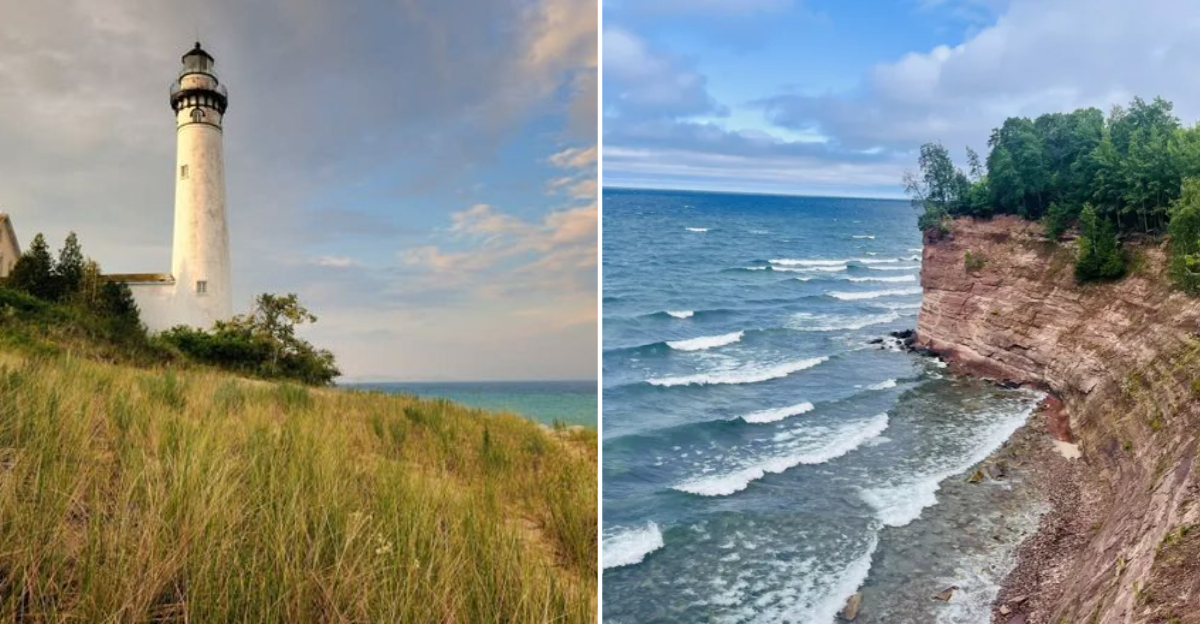
The island’s 300-foot perched dunes and ghost forest of cedar trees create an otherworldly landscape. A 100-foot lighthouse stands sentinel, while inland, historic farms tell stories of hardy settlers who once called this place home.
Camping here means true self-sufficiency – no stores, no services beyond primitive outhouses. The ferry only runs seasonally, and sometimes rough waters cancel trips entirely, stranding visitors for extra nights.
4. Garden Island: The Sacred Wilderness
Shrouded in mist and mystery, Garden Island holds spiritual significance for Anishinaabe people that resonates through its quiet forests. When I paddled here from nearby Beaver Island, the eight-mile journey felt like traveling back in time.
No permanent residents occupy this 5,000-acre wilderness anymore. Ancient burial grounds and stone structures hint at centuries of Native American presence, demanding respectful exploration.
The island remains blissfully undeveloped – no docks, no facilities, not even a designated camping area. Reaching its shores requires favorable weather and serious watercraft skills. GPS often fails along its heavily wooded interior, where deer paths provide the only routes through thick forest.
5. High Island: Dunes and Religious History
Massive sand dunes rise like golden mountains from High Island’s eastern shore – I nearly lost my breath climbing them during my Lake Michigan island-hopping expedition. This uninhabited gem in the Beaver Archipelago holds fascinating remnants of the House of David religious colony that once thrived here.
Abandoned lumber mill equipment rusts quietly in forests now managed by Michigan’s Department of Natural Resources. Wildlife thrives in this remote sanctuary – bald eagles nest in towering pines while deer swim between islands.
Getting here requires chartering a boat from Beaver Island, then timing your landing perfectly on beaches with no docks or infrastructure. The reward? Having miles of pristine shoreline entirely to yourself.
6. South Fox Island: Lighthouse Ruins and Wild Beaches
Wind-whipped and weather-battered, South Fox Island guards its secrets fiercely. I’ll never forget anchoring offshore, watching massive waves crash against its lighthouse ruins during my Great Lakes expedition.
This 3,400-acre island sits 17 miles from the Leelanau Peninsula’s tip, requiring experienced sailors and perfect weather conditions to reach its unprotected shores. Half the island remains private property while the other half is state-managed wilderness.
The crumbling lighthouse complex tells tales of hardy keepers who once maintained this vital navigation aid. Today, foxes, coyotes and deer roam freely across beaches where shipwreck remains occasionally surface after storms. Cell service vanishes miles before reaching the island.
7. North Fox Island: Michigan’s Ultimate Isolation
North Fox Island represents Michigan wilderness in its purest form. When my research boat circled its shoreline, I couldn’t help feeling we’d discovered someplace time forgot – five miles of untamed beaches with absolutely no infrastructure.
Located even further offshore than its southern counterpart, this island presents extraordinary navigation challenges. Shifting sandbars surround its perimeter, ready to ground unwary vessels.
Split between private ownership and state wildlife areas, North Fox sees perhaps a dozen human visitors annually. Eagles soar above pristine dunes while coyotes patrol beaches strewn with driftwood sculptures created by wind and water. The silence here feels absolute – broken only by waves and wildlife.
8. Big Charity Island: Saginaw Bay’s Hidden Gem
Sunlight glinted off Charity Island’s lighthouse as our charter boat approached its rocky harbor – the only safe entry point to this remote Saginaw Bay outpost. Standing ten miles offshore, this 300-acre island feels impossibly far from mainland Michigan.
Charter companies occasionally run day trips during perfect summer conditions, but operations constantly change based on water levels and dredging status. Most visitors never venture beyond the lighthouse area.
Inland forests hide remnants of logging camps and limestone quarries from the 1800s. The island’s interior remains wonderfully wild, with no maintained trails or facilities. Weather changes rapidly here – sunny mornings can transform into dangerous conditions within hours, stranding unprepared visitors.
9. Huron Islands: Lake Superior’s Wildlife Sanctuary
Fierce winds whipped spray across our small boat as we navigated toward Lighthouse Island – the only publicly accessible piece of this remote archipelago. Located three miles off Big Bay in Lake Superior, these eight rocky islands form a National Wildlife Refuge where humans remain rare visitors.
Landing requires perfect conditions and experienced boating skills. No docks exist – just slippery rocks that must be navigated carefully.
The 1868 lighthouse stands as the only human structure, surrounded by nesting grounds for gulls, cormorants and bald eagles. Most boaters circle the islands without landing, respecting the wilderness designation. GPS signals bounce confusingly off cliff faces, making navigation by traditional methods essential.
10. Grand Island: Munising’s Wild Backyard
Standing atop Grand Island’s 300-foot sandstone cliffs, I watched waves crash far below while feeling wonderfully alone despite being just half a mile from Munising’s harbor. This massive island might seem accessible with its seasonal ferry service, but venture beyond the landing area and true wilderness emerges.
Twenty-one miles of rugged shoreline circle forests laced with two-track roads perfect for mountain biking or hiking. Historic farmsteads and an 1868 lighthouse tell stories of hardy settlers who once called this harsh place home.
Cell service disappears quickly as you move inland. The island’s north side feels particularly remote – miles from any services with Lake Superior’s legendary storms always possible. Winter transforms Grand Island into an ice-locked kingdom accessible only to the most adventurous.