
15 Michigan Places Everyone Should Experience In Their Lifetime
Being a true Michigander means knowing that “north” is a state of mind, not just a direction. I’ve spent my life watching our shorelines shift from a bruised plum at dawn to a Caribbean turquoise by noon, and I can tell you: the magic isn’t in the GPS coordinates, but in the grit.
Our towns are built on the whispers of history caught in timber and brick. One minute you’re lost in the silent, pine-shadowed cathedrals of the U.P., and the next, you’re standing slack-jawed before a 30-foot steel sculpture or a machine that changed the world.
It’s a landscape that demands you move with purpose and a high-quality raincoat. This insider’s guide to Michigan’s hidden gems highlights the best scenic Great Lakes shorelines, historic small towns, and unique cultural landmarks for an unforgettable Midwest road trip.
Whether you have a single weekend or an entire season to burn, consider this your formal invitation to wander with intention.
1. Pictured Rocks National Lakeshore
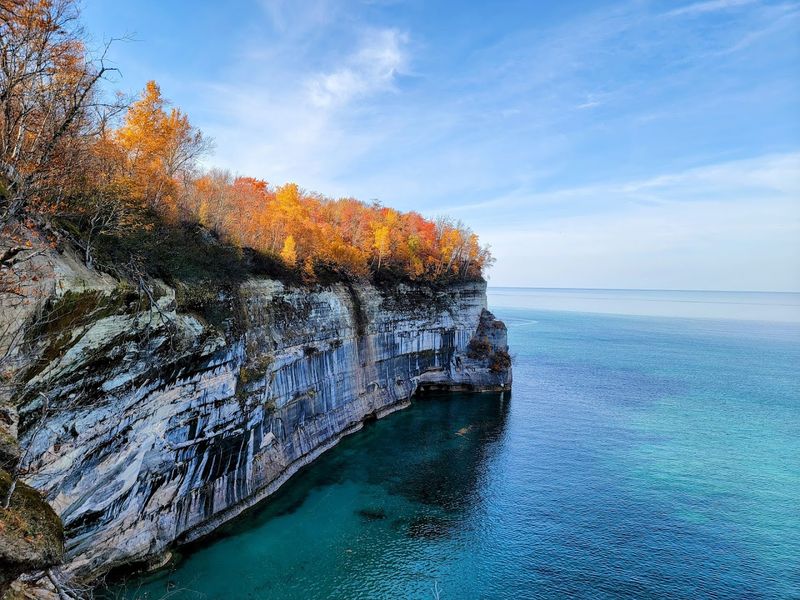
There is a specific kind of alchemy that happens when Lake Superior decides to show off. Along the Pictured Rocks National Lakeshore, color bands of red, orange, and blue streak the sandstone cliffs like a watercolor painting set against a backdrop of glassy, impossible turquoise.
As you move along the water, waves slap against hollowed-out caves and throw a cool mist into the air that smells faintly of minerals and fresh pine. The vibe here is a strange, beautiful contradiction, cathedral-still in hidden coves and roar-loud near exposed points, depending entirely on what the wind is doing that hour.
The history of these cliffs is as deep as the lake itself. Ojibwe stories echo along these shores, and by the 19th century, hardy loggers and dedicated lightkeepers were carving out a precarious, lonely life among the jack pines.
Today, preservation feels refreshingly pragmatic. National Park staff work tirelessly on trail maintenance and boat restrictions to balance human curiosity with the shoreline’s inherent fragility.
2. Sleeping Bear Dunes National Lakeshore
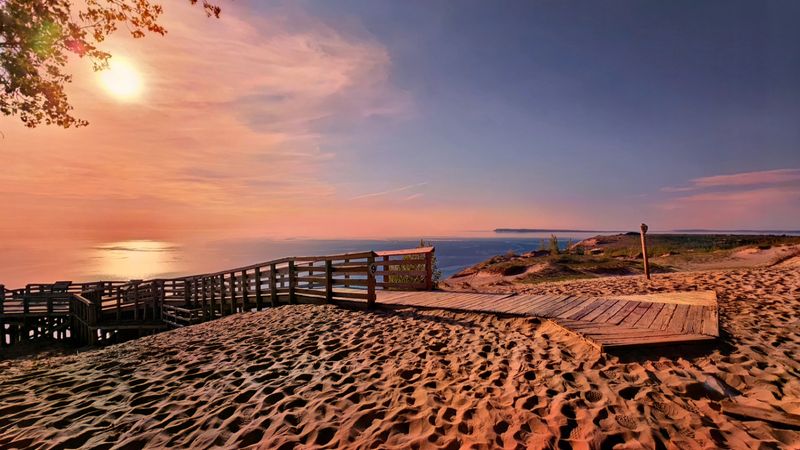
Standing at the edge of the dunes, you’ll watch the wind draw delicate ripples across massive slopes that plunge hundreds of feet toward a blue so wide it feels like the sky has been inverted. The sand at Sleeping Bear Dunes National Lakeshore has a magical quality, it holds the daytime heat and releases it slowly.
Even as the sun dips, the ground glows warm under your bare feet. Despite the popularity of the place, there is a persistent hush that settles over the landscape, even when you can hear faint laughter rolling down the Dune Climb in the distance.
The name itself is a tribute to Anishinaabe legend, the story of a mother bear and her cubs crossing the lake. The history continues in weathered barns and early homesteads that still stand along the Heritage Trail.
Preservation here is a beautiful blend of natural wonder and cultural archive. The Port Oneida Rural Historic District feels like stepping into a nineteenth-century photograph.
The lake has a way of keeping everything honest, scouring the dunes and reshaping the coastline with every winter gale. When you head out to tackle the sand, skip the sandals, they’ll just act as anchors, and opt for bare feet or sturdy hikers.
3. Mackinac Island
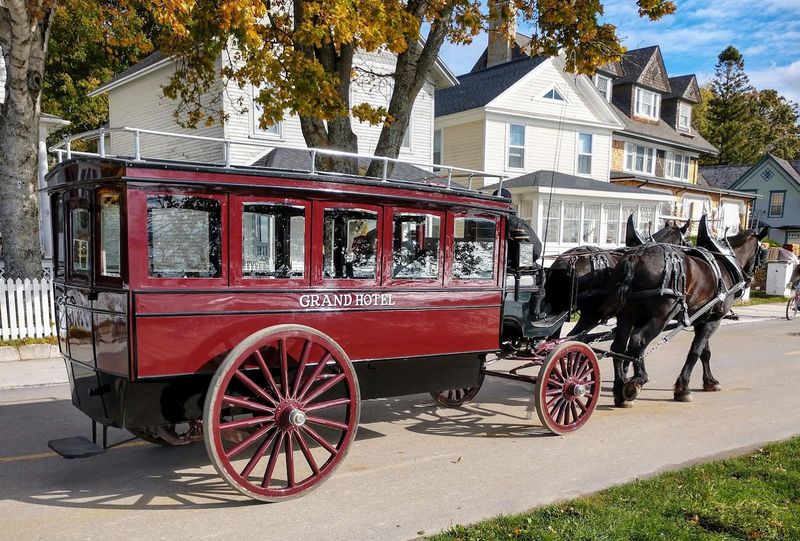
On the island, the tempo is set by the rhythmic clip-clop of hoofbeats rather than the hum of an engine. Bicycle bells provide the punctuation, and the scent of World Famous Fudge sweetens the air as soon as you step off the ferry onto Main Street.
The whole place feels like a well-kept time capsule, with the glittering blue of the Straits of Mackinac visible at every turn. While the downtown area is a hive of activity, the quiet back alleys reveal cool cedar shade and sudden, towering glimpses of the fort’s limestone bluff.
Fort Mackinac dates back to the Revolutionary War, and the 19th-century resort culture is what polished the island’s massive, flower-lined verandas. Preservation on the island is a deliberate, community-wide effort, most famously seen in the strict ban on motor vehicles that has been in place for over a century.
History isn’t just in the books here. It lives in the snap of a wool uniform and the pristine white clapboard of the Grand Hotel.
4. Isle Royale National Park
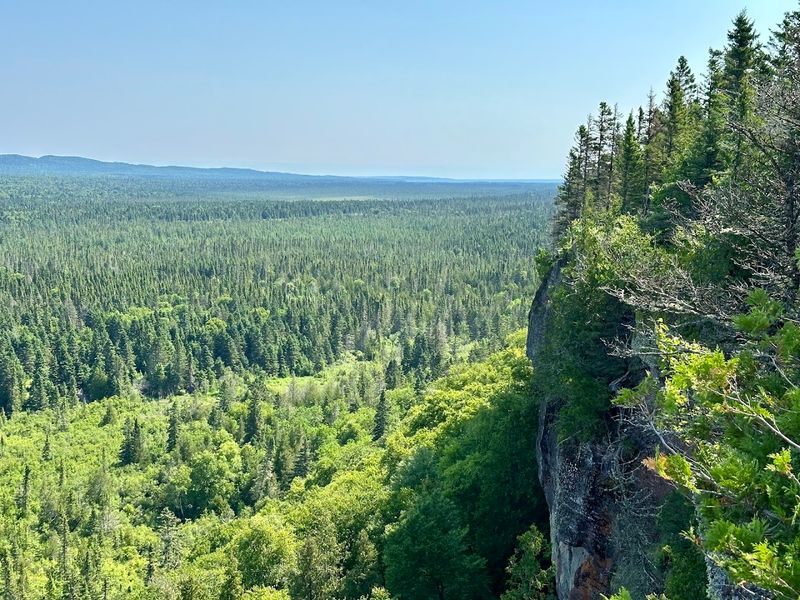
There is a point during the ferry ride to Isle Royale National Park where the mainland disappears and you realize you are heading toward one of the most isolated places in the lower 48 states. Loons call across tannin-dark inland lakes while deep spruce shadows stitch the shoreline together.
Once the ferry engines fade into the distance, what remains is the sound of the wind. You hear the pad-thud of your own steps on the needle-strewn trail and the metallic, cold smell of wet basalt rock.
The nights here are properly dark, the kind of dark where the stars look as sharp and cold as frost on a windowpane. This island is a living laboratory, famous for the longest-running study of wolves and moose in wildlife science history.
Beneath the moss and lichen, you can still find the scars of prehistoric and 19th-century copper mining, a somber reminder that human extraction once outpaced environmental caution. Today, park management keeps the footprint small, trails are lean, signage is spare, and the wilderness is allowed to be exactly that.
5. Tahquamenon Falls State Park
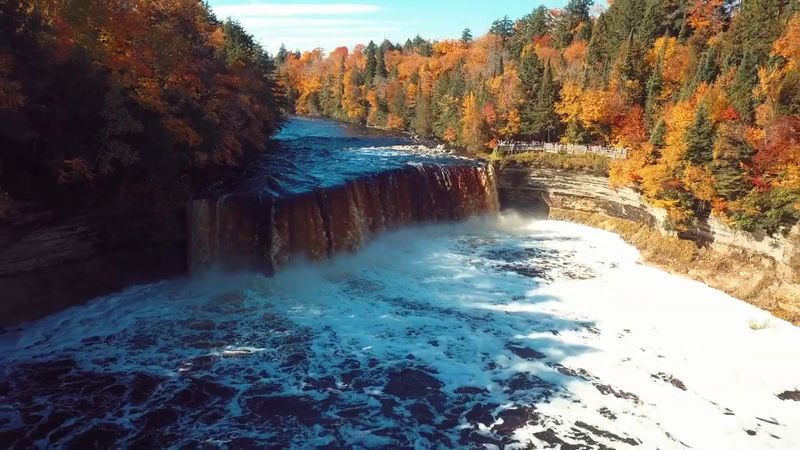
The water at Tahquamenon Falls State Park looks like a giant pour of artisanal root beer, running a deep tea-brown from the cedar tannins. It foams into a bright gold against the sandstone as it fans wide over the drop.
As you stand at the brink of the Upper Falls, mist beads on your eyelashes while the boardwalk planks thrum under the weight of steady foot traffic. The surrounding forest has a permanent, ancient scent, wet leaves, pine needles, and the ghosts of a thousand campfires.
In the 1800s, the lumber industry used this river as a highway for white pine, but conservation eventually reframed the Tahquamenon River as a public treasure rather than a resource to be spent. The park’s stair-heavy overlooks are a feat of thoughtful engineering that keeps the mud at bay while getting you close enough to feel the power of the water.
Each platform captures a different cadence of the falls, from the thunderous drop of the upper section to the gentler multiple tiers of the Lower Falls. Both sections deserve your time, and if you can visit in winter, the ice sculptures formed by the spray are quietly astonishing.
6. Porcupine Mountains Wilderness State Park
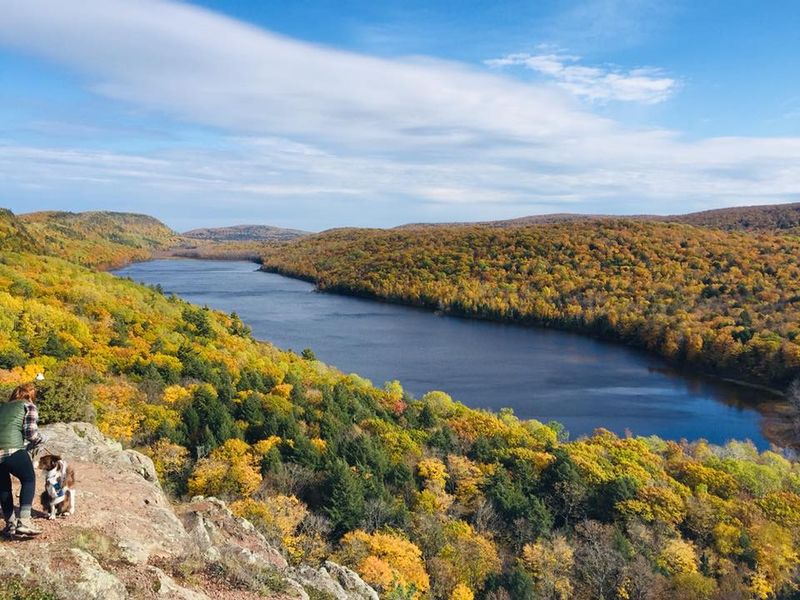
Looking out from the overlook at Lake of the Clouds, the forest seems to pour toward the horizon in endless waves. It’s vibrant maple flame in the fall and deep hemlock shadow in the summer, and the trails smell resinous and earthy.
The rocky escarpment drops away with perfectly theatrical timing. Even in the height of a Michigan summer, the breeze up on the ridge keeps your thoughts tidy and your brow cool.
This park is a survivor. Large swaths of remnant old-growth forest escaped the timber rush of the last century, making this one of the rare cathedral forests left in the region.
The Civilian Conservation Corps left rugged fingerprints all over the park in the form of stone bridges and sturdy trail work. The backcountry cabins, which you can rent for a true off-grid experience, nod to a practical Michigan-style preservation ethic, nothing fancy, just exactly what you need.
Maps are your best friend here, as cell service vanishes the moment you pull off the main road. If you want to stay in one of those iconic cabins, you’ll need to book months in advance.
Always carry real rain gear, as clouds can stack up against the mountains and dump rain without warning.
7. Kitch Iti Kipi At Palms Book State Park
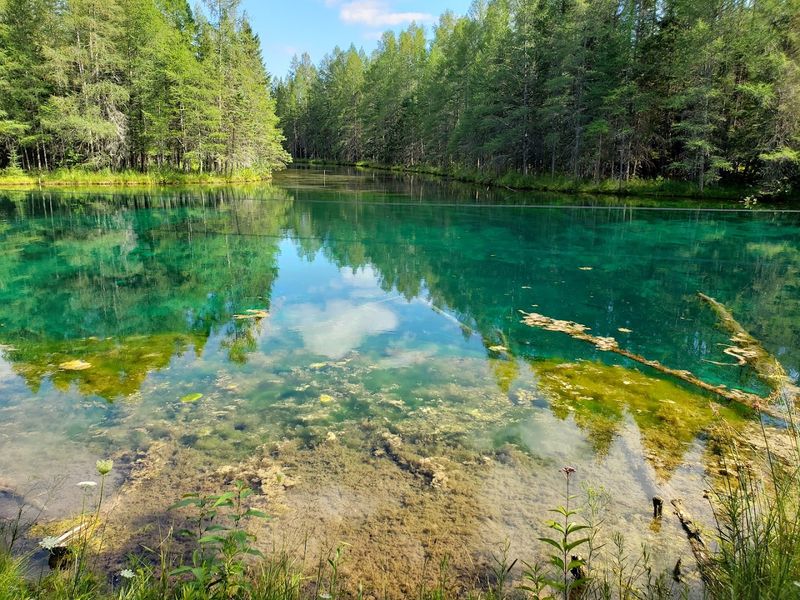
There are times when Michigan looks like a different planet, and Kitch-iti-kipi is one of them. The Big Spring looks unreal, an emerald-green lens of water that reveals ancient, sunken cedar logs etched with decades of clarity.
Huge sand boils bubble up from the bottom like quiet, slow-motion champagne from limestone vents forty feet below. As you pull the heavy cable of the observation raft, you glide silently over massive trout that appear suspended in mid-air.
The spring has been revered by local tribes for centuries, and its status within Palms Book State Park ensures the edges remain intact and the water stays motor-free. The interpretive signs are refreshingly simple, favoring measured storytelling over loud spectacle.
The raft itself is a satisfyingly low-tech mechanism that lets the water keep the center stage. It’s a place that proves you don’t need a lot of noise to create a profound experience.
If you want to beat the heat and the crowds, arrive as early as possible to watch the morning light shafts reach all the way to the bottom of the basin. This is a dream spot for photographers, so bring a polarizing filter if you have one.
8. The Henry Ford
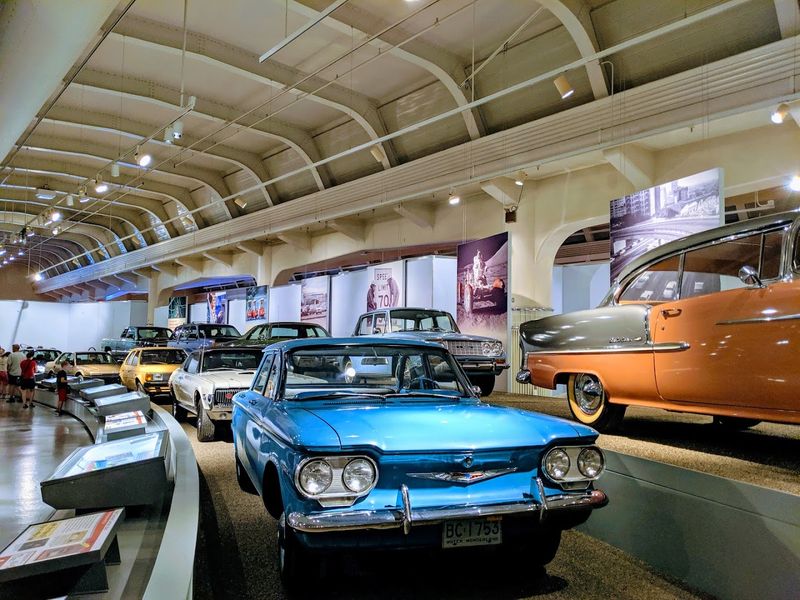
Engines, world-changing ideas, and stubborn American tinkering live shoulder to shoulder under the vaulted steel ceilings of The Henry Ford Museum of American Innovation. There is a weight to the air here.
You can stand on the very bus where Rosa Parks took her stand and feel the gears of history shifting under your feet. The massive hall smells faintly of old oil, vulcanized rubber, and polished surfaces of stories that refused to be forgotten.
Henry Ford was a collector on an industrial scale, and the museum eventually reframed that impulse into a coherent story of human progress. Adjacent Greenfield Village animates history with working trades, from glassblowing to printing presses.
Preservation here is hands-on, with real smoke from locomotives and real steam from boilers. It isn’t a stagnant display. It’s a functioning tribute to ingenuity.
If you want to see both museum and village, buy the combo ticket and wear your most comfortable shoes. Weekdays thin the crowds, especially mid-morning.
My favorite secret spot is the Dymaxion House. Take a quiet minute inside that brushed aluminum dream of the future and think about the alternative histories that almost happened.
9. Detroit Institute Of Arts
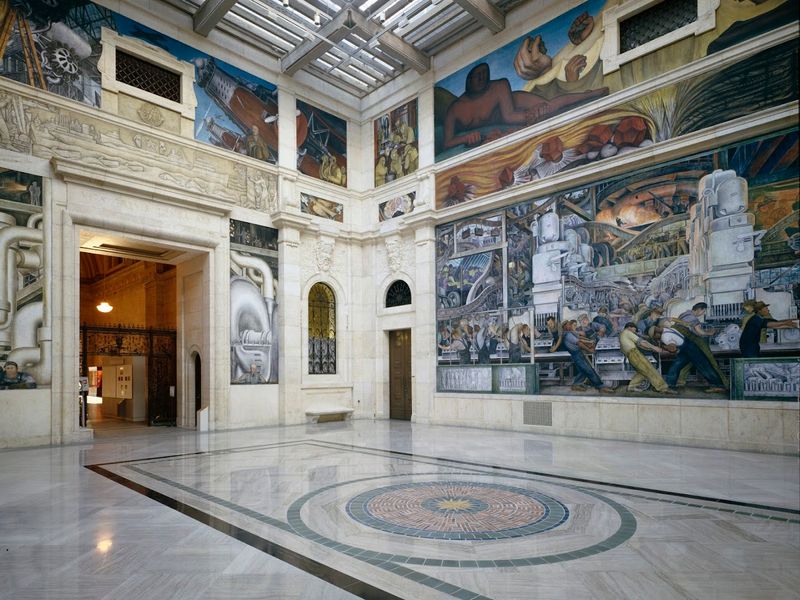
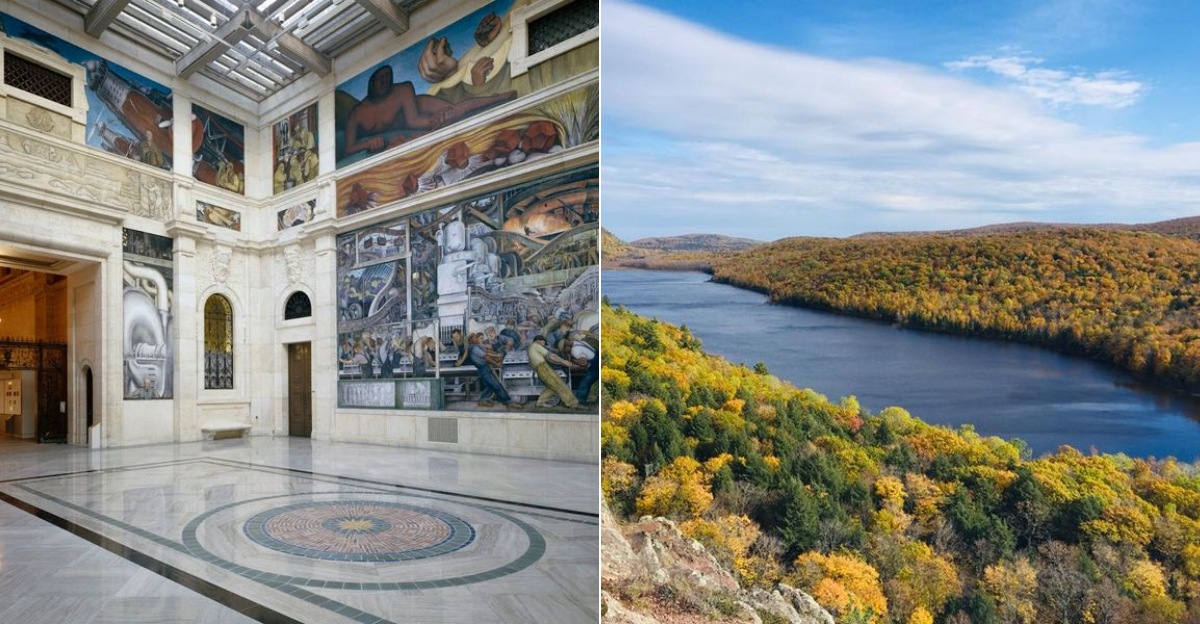
A dignified marble hush greets you at the Detroit Institute of Arts. Then, in the central court, Diego Rivera’s Detroit Industry Murals rise like a living engine room.
The pigments seem to hum with energy, and if you stand still long enough, you can almost hear presses thundering behind painted workers. In quieter galleries, a Vermeer or a Rembrandt glows with restrained power under perfectly tuned lighting.
It’s one of the best art collections in the world, housed in a building that feels like the city’s living room. Founded in 1885, the DIA weathered Detroit’s recent bankruptcy with community-backed resolve that made national headlines.
The collection is encyclopedic but deeply personal to Detroit, with strong African, Indigenous, and contemporary holdings. Docents invite questions and start conversations without sounding like a sermon.
Start in the Rivera Court before afternoon crowds gather so you can take in the scale. After that, drift outward by curiosity rather than following a map.
10. Frederik Meijer Gardens & Sculpture Park
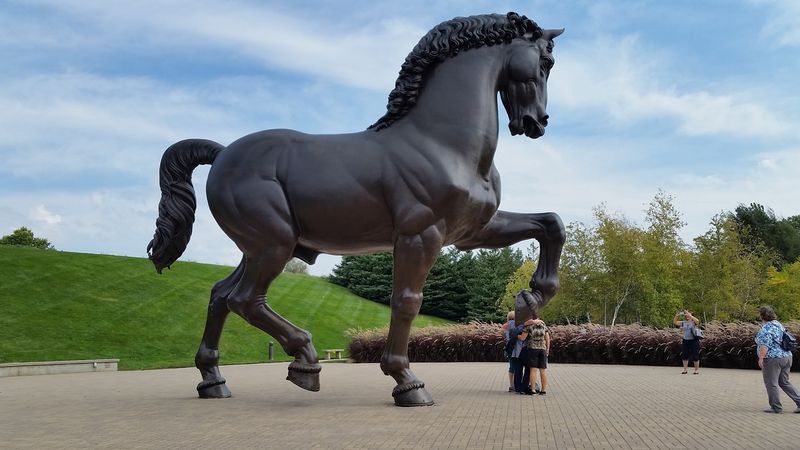
Steel, stone, and delicate leaves share the same conversational tone at Frederik Meijer Gardens & Sculpture Park. You might round a corner and see a massive bronze horse rearing against the Grand Rapids sky.
Native sedges and coneflowers knit the ground at its base, and inside the glass-walled conservatory the air is warm and humid, a welcome embrace for winter-weary shoulders. It’s where curated art and horticulture decide to get along.
Since opening in 1995, the gardens have built a world-class collection that ranges from playful smaller works to truly monumental pieces. The curation is smart, balancing plants and sculptures so neither feels like a backdrop.
Maintenance is meticulous, yet the park never loses its natural texture. It feels like a place that is constantly growing, both literally and artistically.
In spring, time your visit for the Fred & Dorothy Fichter Butterflies Are Blooming exhibition. The Richard & Helen DeVos Japanese Garden invites a slower gait, so budget extra reflection minutes.
Tickets move fast on weekends, so book ahead. Evening light turns the bronze sculptures mellow and photogenic, perfect for a travel album.
11. Mackinac Bridge
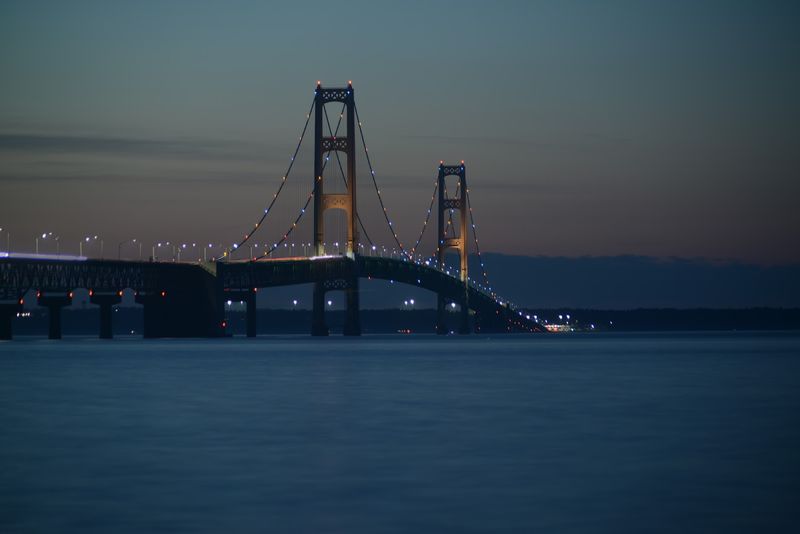
Cables sing a faint metallic song when wind works against the Mackinac Bridge. Gulls trace the rhythm of traffic five hundred feet above the water, and the towers glow pale sea-green against shifting straits blue.
From Mackinaw City or St. Ignace, the bridge looks mathematically improbable and exactly right. It is the Mighty Mac, the five-mile link that made one state out of two peninsulas.
Opened in 1957, it changed everything for Michigan’s economy and identity. Maintenance never ends, and you’ll see paint crews and inspection rigs moving along cables like patient high-altitude beetles.
While it’s vital infrastructure, the Annual Labor Day Bridge Walk turns it into a statewide celebration. If you’re driving a high-sided vehicle, check wind advisories before crossing, authorities take gusts seriously.
For the best photos, go to the viewing park on the St. Ignace side just after sundown. Night shots reward tripod patience, with bridge lights reflecting in dark water.
For a quick pause, the rest areas near the toll booths frame the span nicely with picnic tables and a big open sky.
12. Grand Haven South Pier And Lighthouses
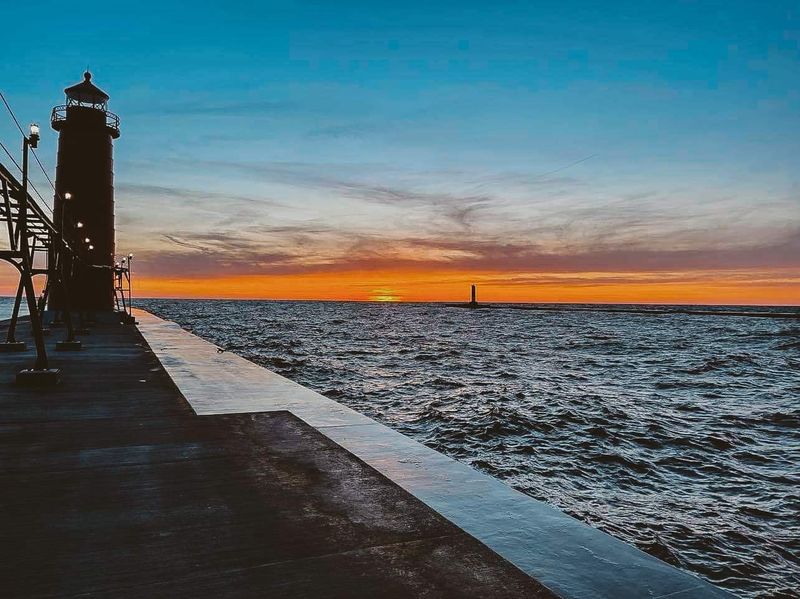
On a warm summer night, the elevated catwalk lights bead across the Grand Haven South Pier like patient fireflies. Waves slap weathered steel and sometimes throw a salty cold kiss over your shoes if you’re too close to the edge.
The twin red lighthouses at the end of the pier are iconic for a reason. They’re photogenic without trying, with wind in sailboat rigging completing the scene.
Harbor history runs deep, and the catwalk is a working relic from storms when keepers needed safe passage to reach the lights. Volunteers and city crews keep it sound, honoring a maritime work ethic that shaped this town.
Grand Haven leans into nautical identity without tipping into kitsch. It’s authentic, lake-driven, and welcoming.
Watch for red flags, and avoid the pier if waves are flexing over the concrete. Sunset crowds gather early in July and August, so park a few blocks inland and walk toward the water.
If wind cooperates, stay through blue hour after sunset. The catwalk lights come on, town hum softens, and the lake turns deep shimmering violet.
13. Holland State Park
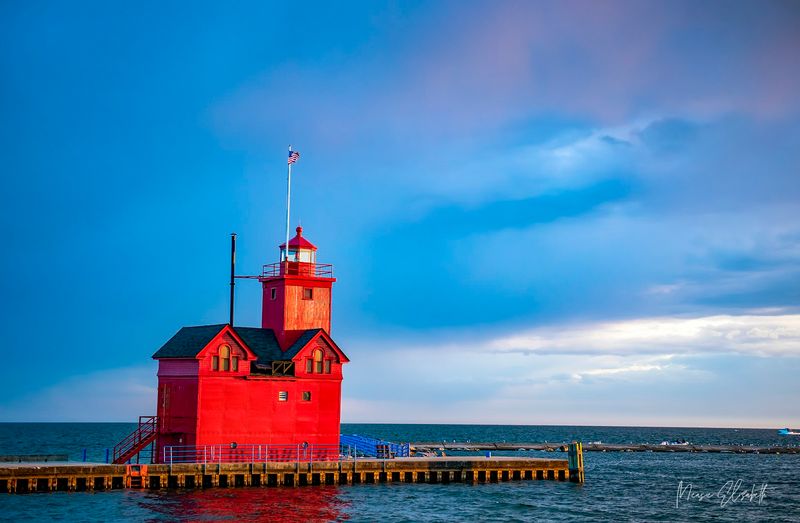
In summer heat, beach towels sprout from the sand like colorful flags. Across the channel, the Big Red Lighthouse poses proudly for every camera in sight.
The sand is fine and pale, holding the sun’s warmth, with dune grass sway and the rhythmic thumps of beach volleyball. Boats parade through the channel like clockwork on summer evenings, captains waving to crowds on the pier.
Holland’s Dutch heritage shows in tidy nearby streets, but the park is pure classic lake culture. Crews keep restrooms respectable and dunes protected with clear signage.
The parking lots say everything about popularity. This is where people go when the mercury rises.
To avoid the parking dance, arrive before lunch on fair-weather weekends, or bike in from nearby trails. Walk the pier for the best lighthouse views when waves behave.
Shoulder seasons bring pink skies, nearly empty sand, and sharp commentary from gulls that finally get the place back.
14. Saugatuck Dunes State Park
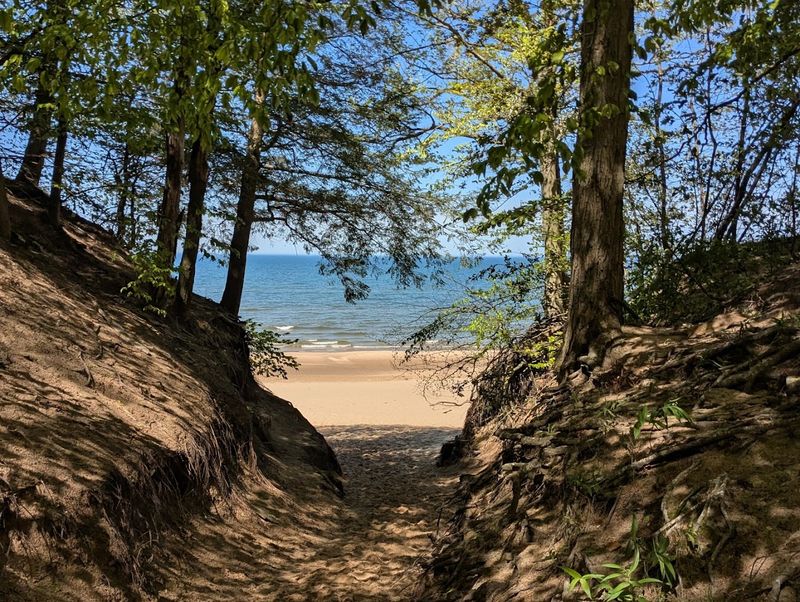
On Saugatuck Dunes trails, sand squeaks under your boots and dry beech leaves clatter like hushed applause. Dunes roll gently, trading deep forest shade for bright sun until Lake Michigan appears suddenly.
It’s intentionally unpolished and wild, the rugged quieter sibling to manicured beaches nearby. You can disappear here for hours and feel like the coastline belongs to itself again.
This land was saved from development by conservationists who valued fragile dunes over luxury condos. Old fence lines still hint at former farms now being swallowed by forest.
Preservation favors foot traffic and patience over amenities. It’s a place to remember what the shoreline looked like before everything got crowded.
Because trails aren’t always perfectly marked, bring a map or a screenshot of the system. Junctions can confuse first-timers, especially on the Beach Trail.
Mosquitoes can get opportunistic after summer rain, so bring repellent.
15. Frankenmuth
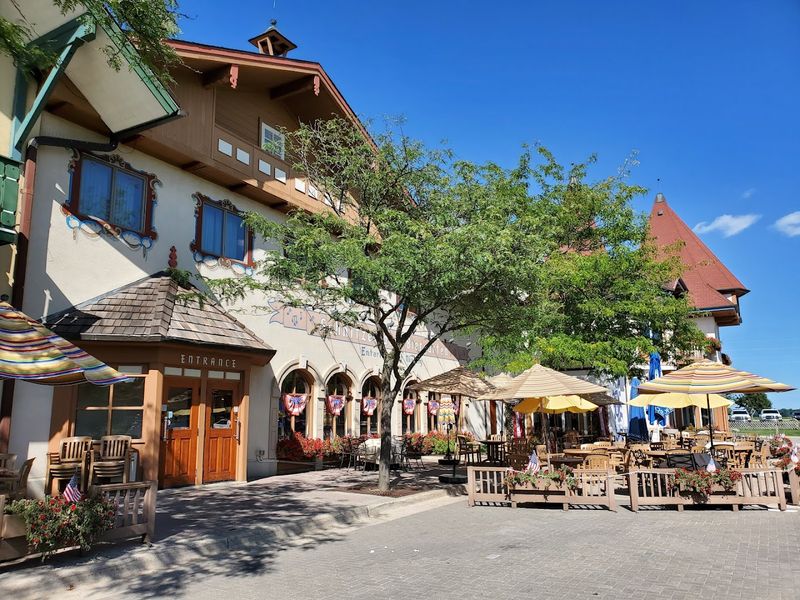
Half-timbered facades lean over window boxes of geraniums. The wooden covered bridge frames the Cass River like a Bavarian fairy tale set.
Frankenmuth is unabashedly themed, yet it has a sincerity that’s hard to resist. Pretzels are legit, polka bands are genuinely talented, and crowds orbit family-style chicken dinners with admirable focus.
German immigrants from the Franconia region shaped the town in the 19th century. Mid-20th-century branding amplified the Bavarian note into the destination it is today.
Preservation favors tidy storefronts and a nonstop calendar of seasonal festivals. Even the street signage carries practiced Old World charm.
For the best experience, visit midweek for easier parking and shorter waits at Zehnder’s or the Bavarian Inn. After a massive dinner, the riverwalk offers a quieter digestif and a view from the water.
December brings maximal sparkle at Bronner’s CHRISTmas Wonderland, and summer brings patio music and the logic of a warm pretzel. It’s a Michigan classic that usually ends with a souvenir hat and a very full stomach.