
10 Michigan Shore Towns Where Winter Sunsets Steal The Show
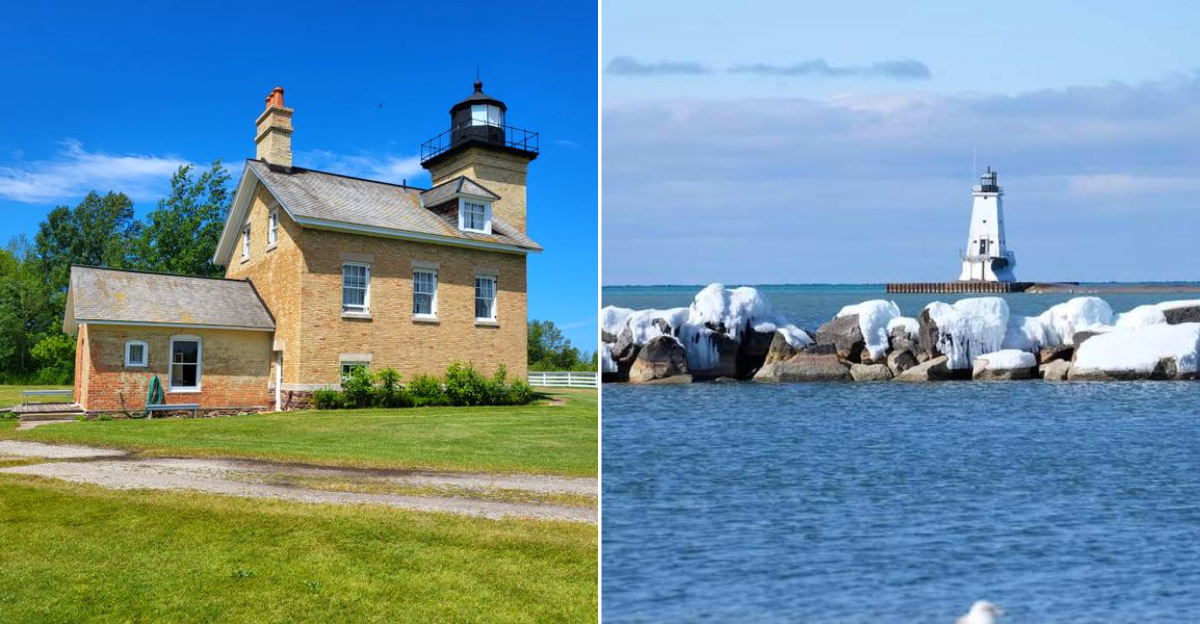
There is a moment in a Michigan winter, just after the snow has finished its latest performance and the wind has settled into a low, rhythmic hum, when the shoreline transforms into something otherworldly.
The water of the big lake stops looking like a summer playground and begins to resemble polished, dark stone. It’s a landscape of dramatic contrasts: the biting cold against the ruby warmth of the sinking sun, and the heavy silence of the dunes set against the thunderous groans of shifting ice.
In 2026, we’ve learned that the best shows aren’t always the ones with the loudest soundtracks. These sunset sessions are earned.
They are for the people willing to pull on three layers of wool, navigate a frosted pier, and stand in the sharpening cold for that five-minute window when the world turns cobalt and gold.
These ten frost-rimmed destinations provide the perfect stage for the most cinematic and soul-stirring light shows in the Great Lakes State.
These towns are the masters of the winter “afterglow,” providing the historic lighthouses, the high ridges, and the icy frames that turn a simple sunset into a major event.
I’ve identified the exact vantage points where the horizon feels endless and the colors are at their most vivid, so you can spend less time searching and more time witnessing the magic.
1. Grand Marais
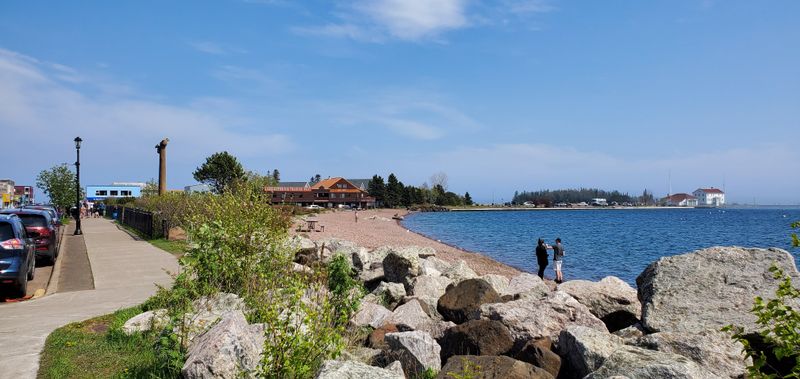
In Grand Marais, the winter wind has a habit of lifting tiny sparks of snow off the breakwall, creating a shimmering veil that dances in the fading light. When the sky begins its transition into shades of peach and sherbet, the harbor settles into a surface as smooth as glass.
Down the shoreline, the Au Sable Light Station stands like a solitary, dignified punctuation mark at the end of a very long sentence of lake ice. Your own footsteps become the only sound in a world that feels perfectly, beautifully frozen.
This is a place where the maritime history feels tangible, almost heavy. You can feel the weight of the shipwreck tales that haunt this stretch of the Pictured Rocks coast. The lighthouse remains a beacon of local pride, accessible via snowy trails that require a bit of grit and a good pair of boots.
A Sunset Insider Tip: Don’t pack it in the moment the sun dips below the horizon. The first burst of color is just the opening act. If you wait another ten minutes, a second wave often arrives, a deep, bruised violet that bleeds into indigo.
It reflects off the Superior ice with a hard, metallic sheen that will make you completely forget that you can no longer feel your toes.
2. Ontonagon
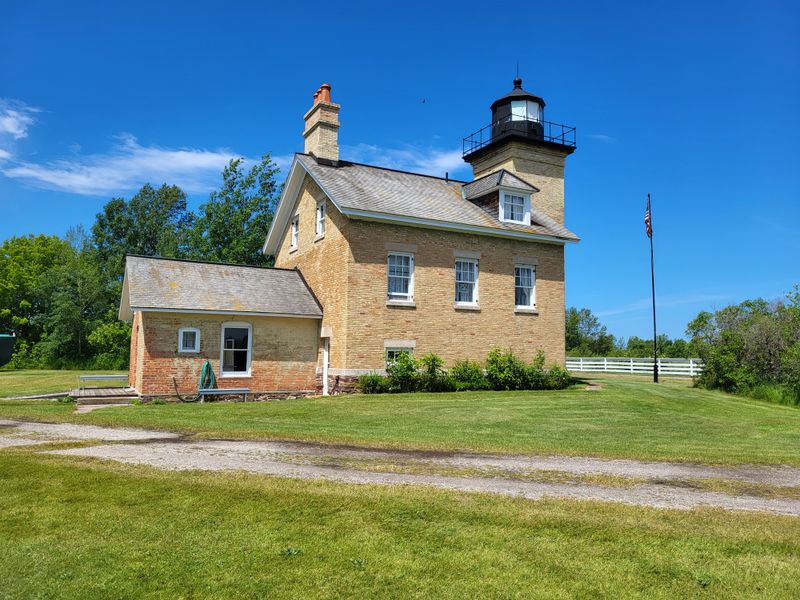
As the Ontonagon River spills into the icy embrace of Lake Superior, the winter sun pours a ribbon of pastel light over the water. To the west, the Porcupine Mountains create a low, dark silhouette that looks like a jagged line of ink on a watercolor canvas.
There is a specific sound here, a gentle, rhythmic creak of shore ice shifting against the banks, that acts as a soundtrack to the lights beginning to twinkle in the small-town windows behind you.
Ontonagon’s soul is built on copper and timber, a history you can still read in the murals downtown. The lighthouse at the river mouth, though moved inland for preservation, remains the spiritual anchor of the town’s memory. Winter here is quiet and generous, provided you keep an eye on the snow-stacking forecasts.
A Sunset Insider Tip: Find a spot near the riverfront boardwalk for a clear westward sightline. When the sun finally drops behind the “Porkies,” the afterglow doesn’t just fade, it blooms.
It’s a slow, deliberate transition that turns the open river water into a mirror of the sky.
3. Manistique
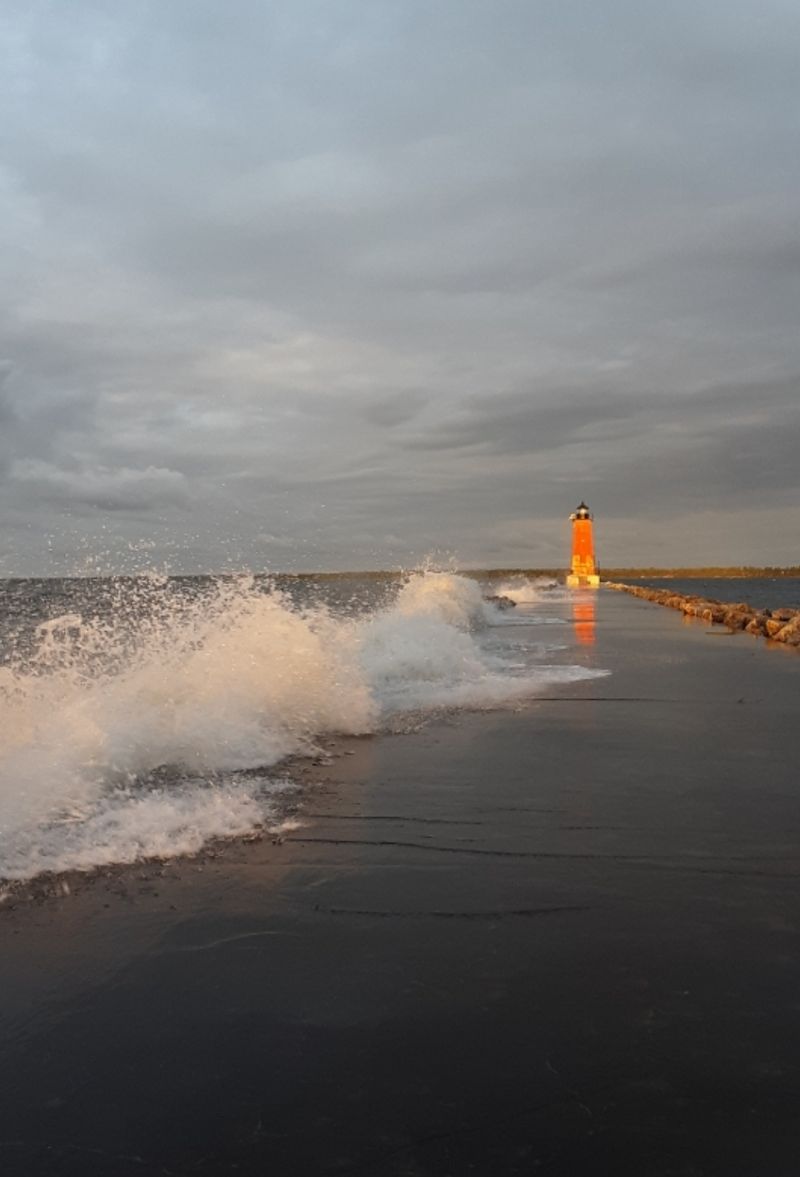
Winter in Manistique often begins with a subtle “clink”, the sound of ice plates tapping together along the breakwater like glass wind chimes. The East Breakwater Light, a brilliant red tower, begins to gather a thick coating of rime, making it look like a frosted holiday ornament.
The sky here doesn’t just change color, it wraps the town in a layered scarf of amber, pink, and cool gray, while the gulls hang suspended in the air as if they’re waiting for the grand finale.
This was a town built by lumber and paper, but today, the lighthouse is its most recognizable symbol. While the pier can be narrowed by deep drifts, the boardwalk along the river offers a much more sheltered and stable approach when the Lake Michigan gusts start to bite.
A Sunset Insider Tip: Only venture out onto the pier if the ice and wind look sane; Lake Michigan doesn’t negotiate. If it’s a “big wave” day, stay back at the river mouth park.
The red tower provides the perfect focal point for your photos, and when the sun finally kisses the horizon, the entire scene takes on a cinematic quality that no summer sunset can match.
4. St. Ignace
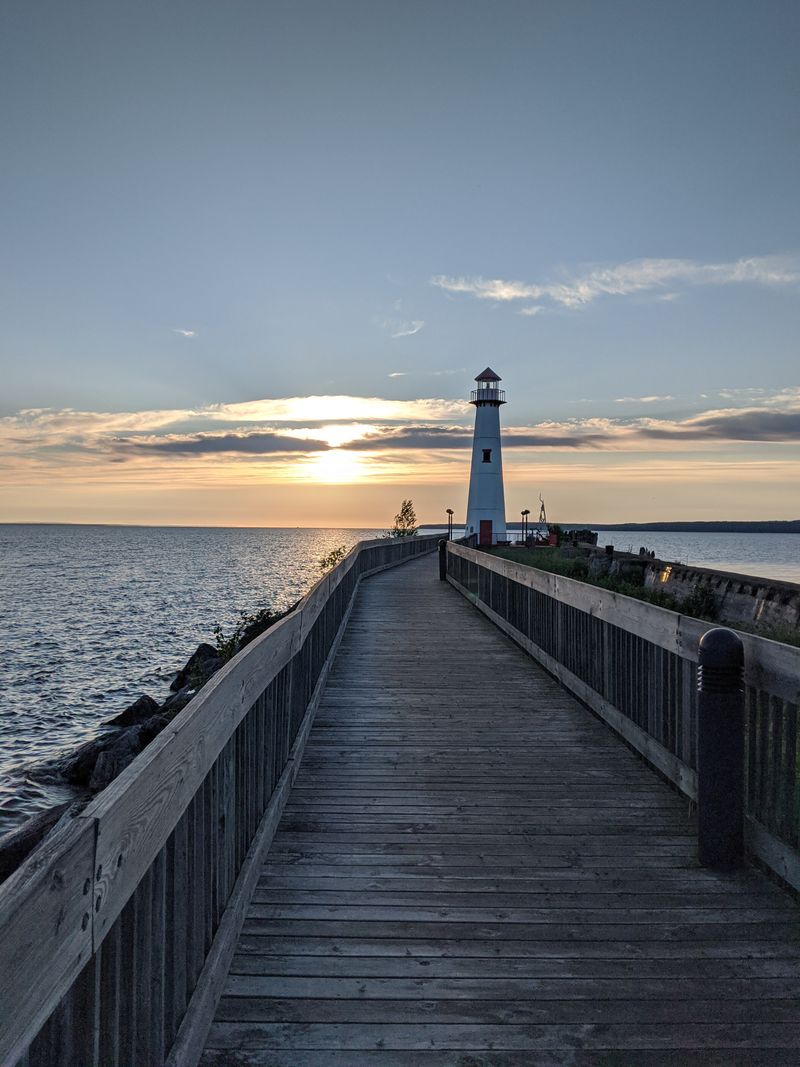
St. Ignace sits in a unique position, poised between the two Great Lakes, and in winter, it feels like the atmospheric center of the state. As a violet wash settles over the Straits of Mackinac, the Mackinac Bridge cuts a sharp, geometric silhouette against the sky.
Lake Huron pushes massive ice floes around like puzzle pieces, their edges glowing with a strange, internal light as the sun slips toward the Lake Michigan side.
The Anishinaabe heritage of this area provides a grounding presence that outlasts the tourist season. While the ferries are largely at rest, the town’s history remains vibrant in the local art and museum exhibits. The Huron Boardwalk is the best place to take it all in without having to trek through waist-deep snow.
A Sunset Insider Tip: Position yourself near American Legion Park around midwinter for the best sun alignment. When the bridge lights finally flicker on, the color lingers in the cracks and seams of the ice for what feels like an eternity.
It’s a sight that will leave you grinning, even as the temperature drops into the single digits.
5. Empire
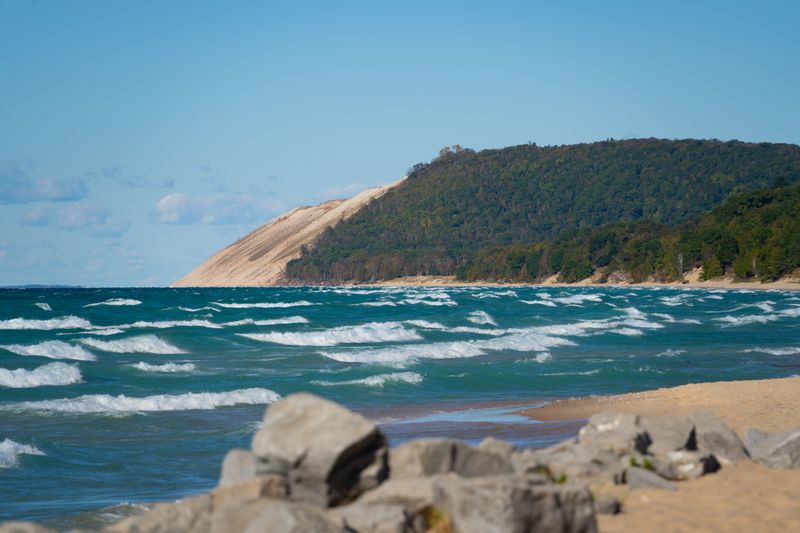
There is a profound hush that falls over Empire in the winter. The Sleeping Bear Dunes, usually a hive of summer activity, turn a deep, bruised blue as the sun goes down. Snow feathers around the base of the lone lifeguard chair, and Lake Michigan “exhales” through narrow leads in the ice.
The color palette here is a masterclass in subtlety, sliding from loud oranges to soft, whispered pinks in the span of a few breaths.
Empire is a village that grew from a sawmill era into a gateway for one of the most beautiful landscapes in the world. The National Park staff do a great job of keeping the access points near Empire Beach plowed, allowing for short, manageable walks that don’t overstay their welcome in the windchill.
A Sunset Insider Tip: Stand a bit to the north of the main beach access to get the perfect alignment of the dunes and the horizon. Even on overcast days, the afterglow here can be surprising.
If you see “lake smoke” (steam rising from the water), it has a way of threading the cold air with gold, making the entire beach look like it’s being lit from within.
6. Pentwater
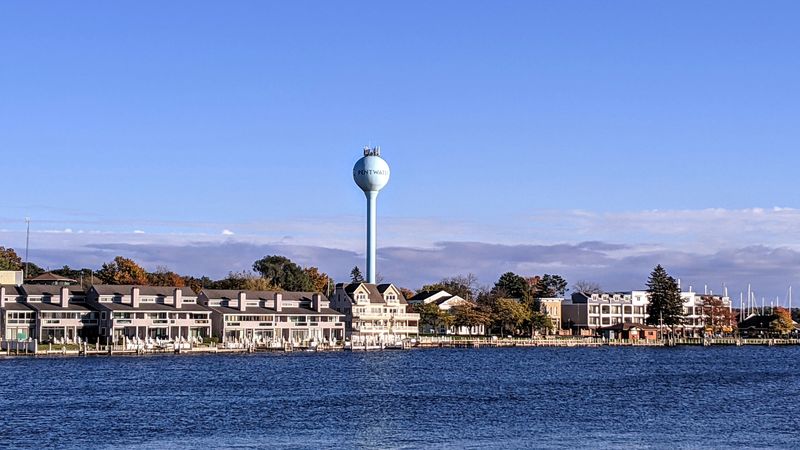
Viewed from the channel in Pentwater, the lake at dusk looks like a sheet of brushed metal. The dunes at Charles Mears State Park sit pale and tidy, catching the very last rays of light, while the faint threads of woodsmoke from village chimneys signal that the town is settling in for the night.
It’s a quiet, reflective scene that feels worlds away from the bustling schooner port this harbor once was.
Local volunteers and park staff work hard to keep the paths usable, though lake-effect drifts can appear overnight like small mountain ranges. The state park remains the best vantage point for those looking to see the sun disappear into the big lake.
A Sunset Insider Tip: Look for a wind-sheltered corner near the channel mouth to keep the lake spray from frosting over your camera lens. The channel creates a long, straight corridor of reflection that amplifies the sky’s colors.
Stay for the “blue hour” when the shop windows in town turn on; the water shifts to a silvery slate color that is arguably more beautiful than the sunset itself.
7. Ludington
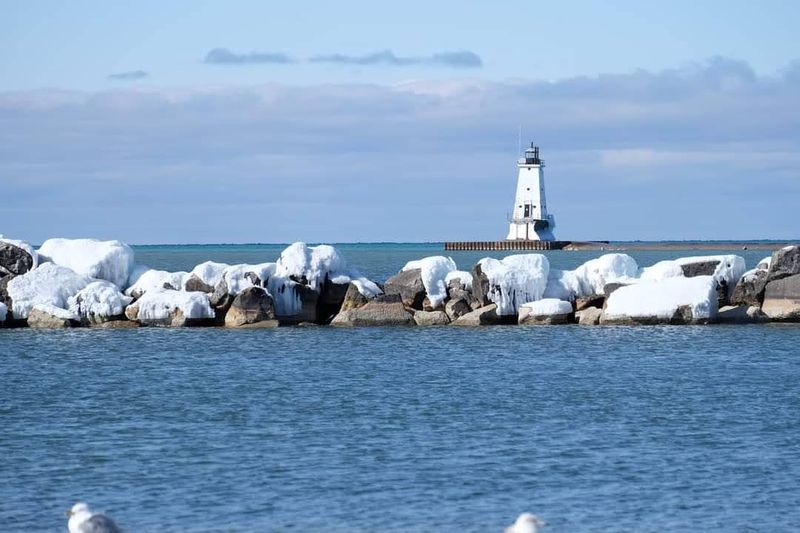
In the heart of winter, the Ludington North Breakwater Light becomes encased in glassy scales of frozen spray. As the sun sinks, it throws a concentrated beam of amber right down the length of the pier, while the waves test the gaps in the stone, flashing like quicksilver.
Stearns Park, usually filled with beachgoers, becomes a quiet, snow-covered grandstand for the greatest show on the lake.
Ludington’s identity is tied to the massive carferries and the timber trade, and while the SS Badger nips into its winter dock, the lighthouse becomes the undisputed star of the season. The city keeps the parking areas at the beach cleared, though the pier itself can become a treacherous ice rink after a big storm.
A Sunset Insider Tip: If the pier looks too sketchy, don’t risk it. The view from the snowy heights of Stearns Park is just as good, giving you the lighthouse, the horizon, and the massive winter sky in a single, safe frame.
After the colors cool, turn around and look at the town; the snowy grid of streets often catches the leftover pink light like scattered confetti.
8. South Haven
The iconic catwalk at South Haven ribs toward the red South Pierhead Light like a frozen spine. During a winter sunset, the harbor is rinsed in candy colors, vivid purples and oranges, before the lake answers with a darker, more somber echo.
Your footprints will crisp loudly in the frozen sand, only to be filled in by the next flurry of snow.
South Haven’s agricultural roots are still visible in the off-season, and the lighthouse remains a symbol of the community’s resilience. The city and its partners take great care of the catwalk, ensuring it remains one of the few surviving original structures of its kind in Michigan.
A Sunset Insider Tip: For the best silhouette, stand slightly to the side of the pier. If there’s a low ceiling of clouds, the reflections actually amplify under the arches of the catwalk.
Wait ten minutes after the sun vanishes; the catwalk lights will turn the surrounding ice into a field of tiny lanterns. It’s a surprisingly gentle effect for such a rugged environment.
9. Holland
At Holland State Park, the channel serves as a massive frame for “Big Red,” the state’s most photographed lighthouse. As the sun slides low, the snow curls around the dune grass like delicate brushwork on a canvas.
The lighthouse itself seems to soak up the light, glowing a deep, saturated brick-red against the violet-tinted water of the channel.
Holland’s Dutch heritage is always present, even when the tulips are sleeping under a foot of snow. The community’s dedication to preserving Big Red is evident in the neat approach and the well-maintained boardwalks.
A Sunset Insider Tip: Angle yourself so the channel draws a leading line directly toward the horizon. When the sun clears that last bank of clouds, the lighthouse throws a punch of color that feels almost impossible.
It’s the kind of view that makes you pull your scarf a little tighter and appreciate the way the cold sharpens your senses.
10. Grand Haven
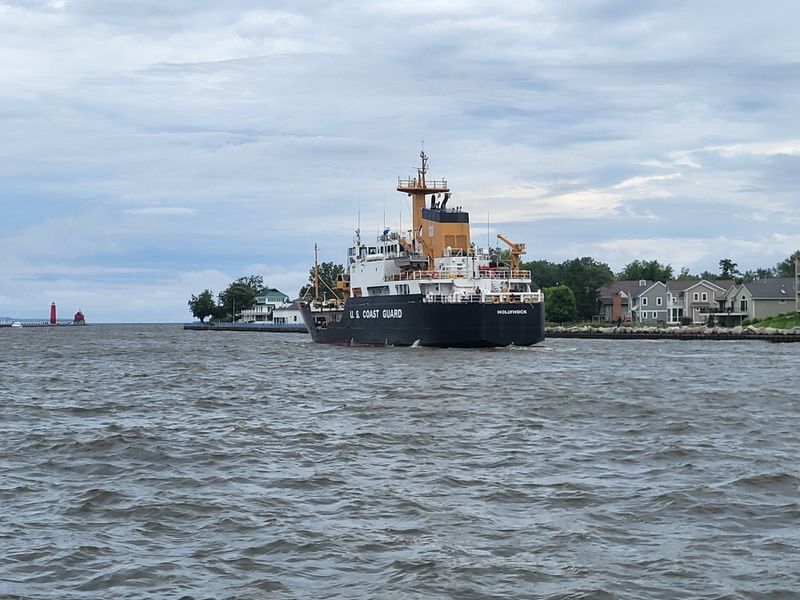
The twin lights of Grand Haven often wear “ice armor” by mid-January, catching every stray shade of the sunset. As dusk deepens, the lamps along the catwalk blink to life, drawing a dotted path of light into the deepening blue of the horizon.
The waves here are muscular, even in winter, sending breathy plumes of spray high into the air.
Grand Haven might be a festival town in the summer, but it turns solemn and magnificent in the winter. The pier structures are maintained with meticulous care, and the boardwalk provides a safe, elevated vantage point for those who want to watch the lake without getting their boots wet.
A Sunset Insider Tip: If the pier is too slick to walk, find a spot on the high snowbanks near the curve of the channel. You’ll get the entire line of catwalk lights, both lighthouses, and the massive, unobstructed sky.
Stay for the moment the orange light gives way to cobalt; it’s when the ice truly begins to glow with a life of its own.