
11 Michigan Travel Stops Worth Building A Day Trip Around
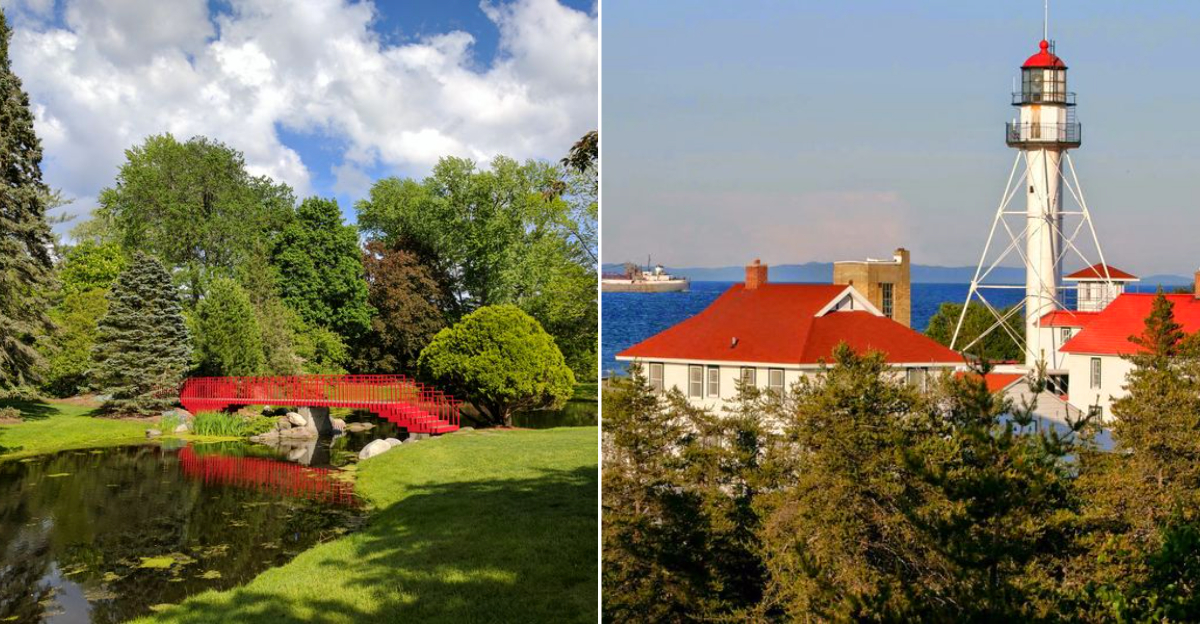
Michigan day trips always seem to reward the curious, whether you’re out chasing waves, wandering through quiet galleries, or just following that sharp scent of pine sap. I’ve found that the best days are the ones where you let the lake breeze dictate where you pull over.
This list stitches together the specific places where a single stop can anchor an entire afternoon without ever feeling rushed. It’s about finding those spots where the sand actually squeaks under your boots and the water looks like bits of tumbled, old glass.
I’ve included museums that somehow make massive engineering feel deeply human and approachable. When you’re packing, toss in a few extra layers and keep your phone charged for maps, but try to leave plenty of room for those unplanned turns.
In my experience, those accidental detours usually end up being the highlight of the entire trip. Traveling through the Mitten is really an exercise in appreciating scale, from the terrifying vastness of the inland seas to the tiny, intricate details of a Rivera mural.
These eleven destinations are what I consider the pinnacle of Michigan’s natural beauty and our weird, wonderful heritage. I chose them specifically because they offer a complete experience that makes you feel like you’ve actually been somewhere special.
Whether you are heading out solo or dragging the whole family along, these stops offer a real connection to that gritty Great Lakes spirit. I wanted to build a guide that helps you navigate these landmarks with the actual insight of someone who lives here.
I’ve focused on the stuff that matters: clear logistics and the kind of sensory details that make a place more than just a pin on a digital map. I want you to feel the history of the timber and the cold spray of the water before you even arrive.
Prepare to discover exactly why Michigan stays a top destination for anyone looking for something authentic. There is a certain magic in the way the light hits the dunes at dusk, and I can’t wait for you to see it for yourself.
It’s about the heavy silence of the north woods and the bustling, creative energy of our city centers. Every mile in this state tells a different story, and these locations are the chapters I find myself re-reading every single summer.
So, roll the windows down, grab a bag of local cherries, and get ready to see the best of what we have to offer. I promise that once you start moving at “Michigan speed,” you’ll find it very hard to ever want to go back to the fast lane.
1. Sleeping Bear Dunes National Lakeshore, Empire
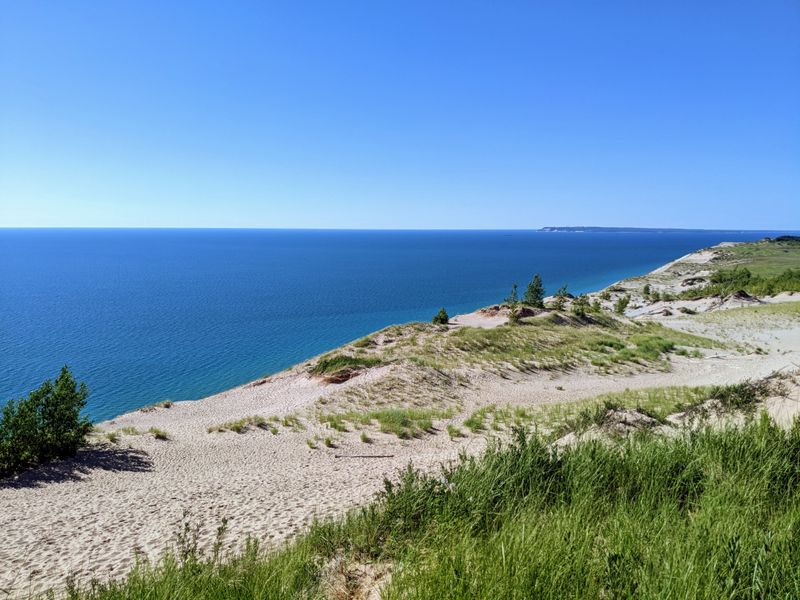
Your calves will notice the dunes before your eyes finish adjusting to the glare. Ridges roll toward Lake Michigan like a paused tide, and the wind carves ripples that look freshly combed.
It is a place where the earth seems to move in slow motion, shifting and sighing under the weight of the massive freshwater horizon.
On the Pierce Stocking Scenic Drive, overlooks frame the Manitou Islands and a horizon that feels absurdly far. Shipwrecks once hid in these waters, and the U.S.
Life-Saving Service patrolled here long before it was a national lakeshore. The history of the dunes is one of survival and the constant, patient work of the elements.
The 450-foot bluff is famous for steep scrambles, but rangers still warn that climbing down is quick while getting back up can require rescue. Start early to beat the afternoon heat and the summer crowds that flock to the Dune Climb.
Bring plenty of water, commit to sunscreen, and always respect the closed restoration zones.
2. Pictured Rocks National Lakeshore, Munising
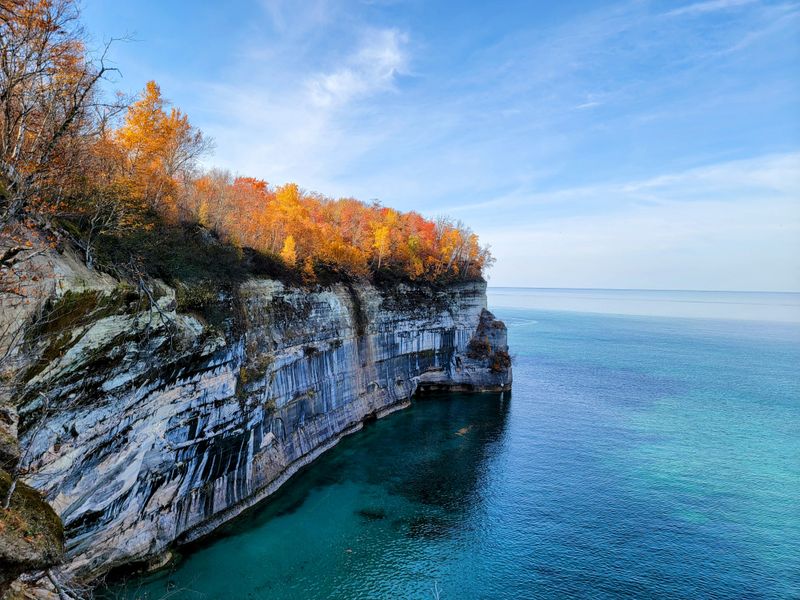
Color runs down the cliffs like watercolor left in the rain. Iron, copper, and manganese stain the sandstone, so a single cove can shift from honey to teal to burnt orange.
Waves clap under arches, and the sound bounces around your kayak like low thunder, creating a sensory oddity that feels both ancient and immediate.
These formations took shape over millions of years as groundwater carried minerals through the porous rock. The lakeshore protects beaches, dunes, and backcountry stretches where pitch pines lean into the wind.
It is a rugged landscape that demands respect, offering a glimpse into the raw power of Lake Superior’s relentless and cold surf.
Munising’s tour boats trace the marquee formations and give context you might miss from the shore. Reserve a sunset cruise in summer for the showiest hues as the light hits the minerals.
If you are paddling, always check the marine forecast, wear cold-water gear, and plan your shuttle logistics carefully before launching.
3. Tahquamenon Falls State Park, Paradise
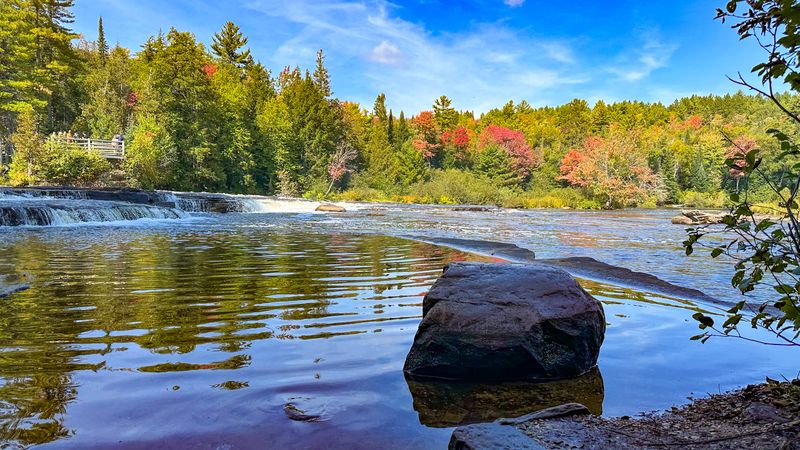
The water foams the color of root beer, thanks to tannins from cedar swamps upstream. Upper Falls spreads in a muscular sheet, while Lower Falls split into smaller cascades that invite lingering.
Mist pearls your skin, and boardwalks thread through ferns and hemlock shade, offering a cool respite from the humid Michigan summer air.
Lumber history runs through these woods, and the falls have been a waypoint for travelers long before state park status. Miles of trail connect overlooks to a brewery near the Upper Falls, a modern convenience with an old Northwoods vibe.
It is a place where the industrial past and the natural present exist in a damp, green harmony.
Black bears mind their own business here, so keep a respectful distance if you spot one. Plan extra time for the island loop at Lower Falls, especially now that rental rowboats make access simple.
Spring runoff roars loudest, but remember that bug spray becomes an essential survival tool once dusk begins to settle over the park.
4. Kitch-Iti-Kipi At Palms Book State Park, Manistique
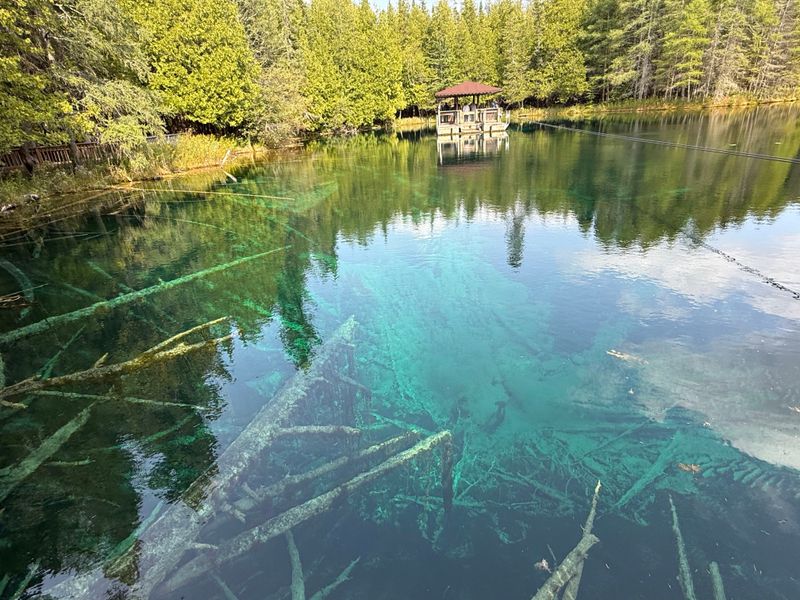
Water so clear it looks like air lifts fish in slow motion beneath your feet. The viewing raft glides by hand crank across a spring pool the size of a small lake, revealing white sand boils.
Everything below seems brighter than the surface, as 10,000 gallons a minute rise from the limestone floor in a silent, pulsing dance.
Long called the “Big Spring,” this is Michigan’s largest freshwater spring and a sacred place in local Indigenous narratives. The park built the raft with a central viewing well specifically to protect the fragile edges of the pool.
The focus remains on geology rather than spectacle, allowing the natural wonder to speak entirely for itself.
Arrive early for quiet and glassy reflections that make for the best viewing. Bring cash for the state park fee, as the self-service kiosks can sometimes be finicky with cards.
Your phone camera will rarely capture the true depth or the ethereal quality of the light, so let your eyes do the primary recording.
5. Great Lakes Shipwreck Museum, Paradise
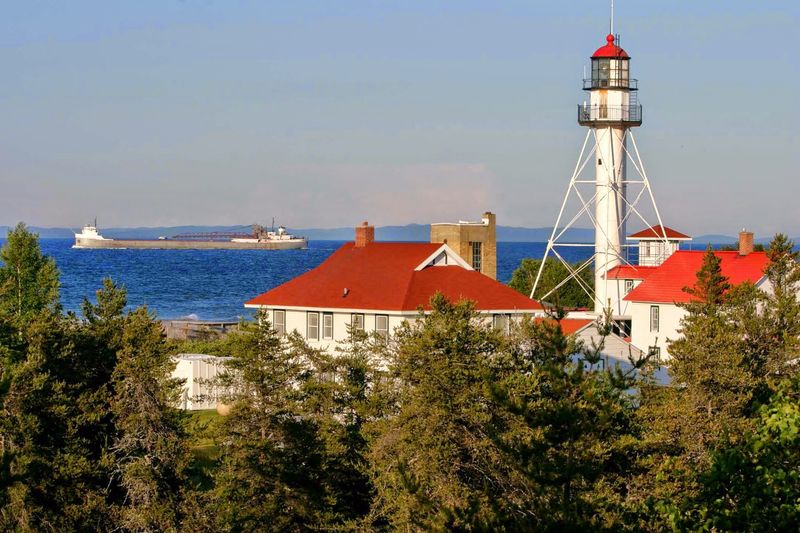
Fog can move in like stagecraft at Whitefish Point, and the bell from the Edmund Fitzgerald sits inside with a gravity you feel in your chest. The lighthouse and lifesaving station frame Lake Superior’s hardest truths.
Waves talk in pebbles here, grinding and hissing along the point in a constant, restless and rhythmic conversation.
More than 200 shipwrecks rest in the surrounding sanctuary, a notorious choke point near the busy Soo Locks. Exhibits explain navigation, storm patterns, and the technology behind discovery, making the loss of life feel personal.
You leave the museum understanding exactly why mariners called Lake Superior unforgiving and truly the Graveyard of the Great Lakes.
Layer up even in July, because the wind off the lake cuts quickly and can drop the temperature by twenty degrees. Respect all signage near the beach and take current warnings seriously, as the point is known for dangerous undertows.
Combine this visit with Tahquamenon Falls for a sober yet satisfying day anchored in Michigan’s real history.
6. Dow Gardens, Midland
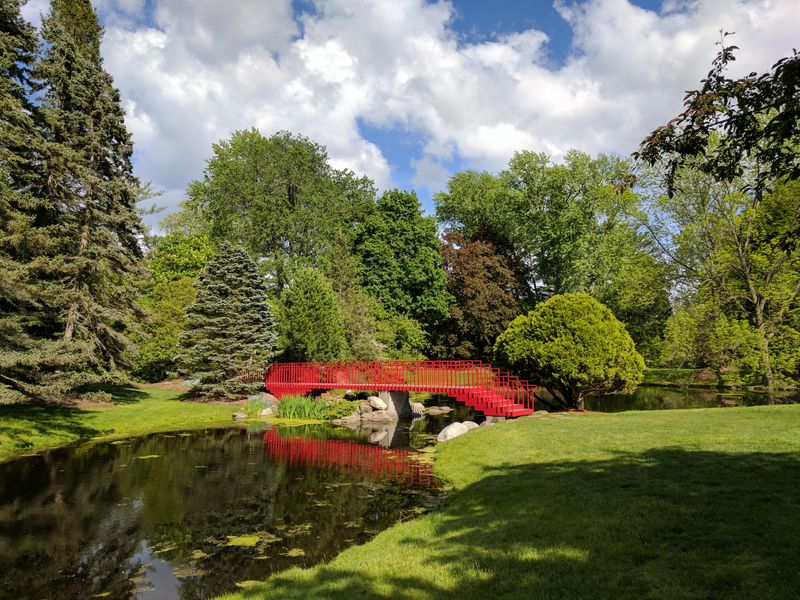
A breeze lifts the scent of peonies, and bees make the paths sound lightly electrified. Dow Gardens layers color the way painters do, with borders that unfold around curves instead of shouting from a single bed.
Bridges skim over water, and the towering pines add a hush between the bright bursts of the seasonal blooms.
The Dow family funded this living landscape, which is deeply connected to Midland’s history of chemistry and philanthropy. The adjoining Whiting Forest canopy walk floats you above maples and oaks, providing a rare Midwest perspective on the forest floor.
It is a place where the engineering of the city meets the artistry of nature.
Staff gardeners move with a quiet, practiced choreography, ensuring that every leaf and petal is in its place. Time your visit to seasonal displays, ranging from early spring tulips to the deep oranges of fall asters.
The canopy walk needs advance tickets on busy weekends, and comfortable shoes are a must for exploring the sightlines.
7. Cranbrook House And Gardens, Bloomfield Hills
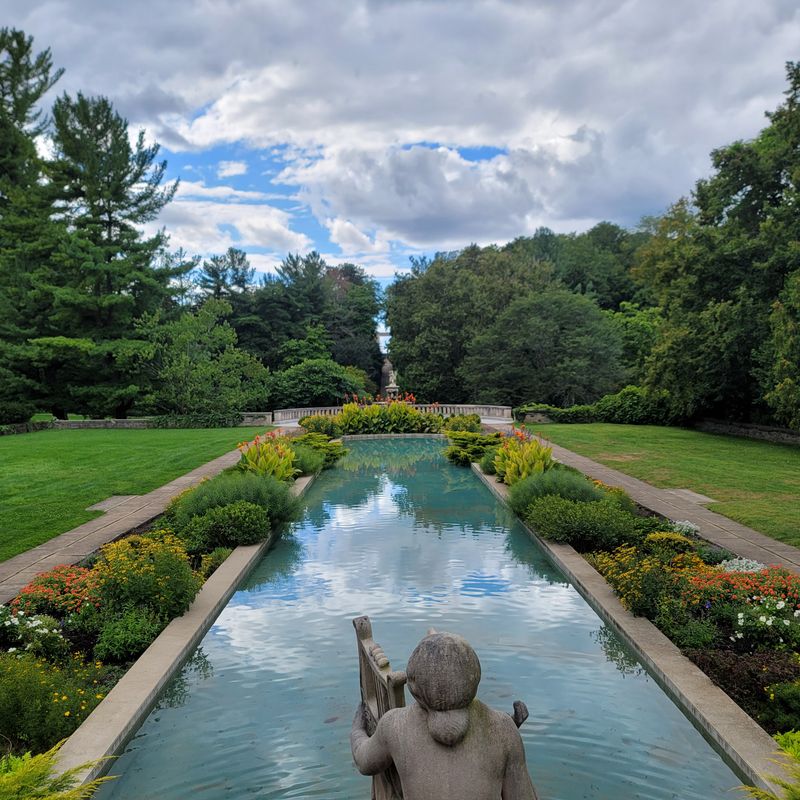
Stonework steps feel cool even in July, and ivy stitches the manor into its slope. Garden rooms unfold with fountains, urns, and sculpture placed the way a careful sentence lands.
Quiet corners give you the sense of being invited into someone’s well-kept confidence, away from the bustle of suburban traffic nearby.
Built in 1908 for George and Ellen Booth, Cranbrook sits at the heart of a campus shaped by Arts and Crafts ideals. Preservation here balances original materials with thoughtful restoration, so the patina reads as intentional rather than tired.
It is a masterpiece of design where every gate and fountain has a specific purpose.
Docents weave design talk with family anecdotes, giving life to the cold stone and manicured hedges. Check the tour schedules because interior access is seasonal and highly regulated to protect the artifacts.
Wander through the Sunken Garden first, then take the lakeside path for a sharp contrast in landscape architecture.
8. Air Zoo Aerospace and Science Museum, Portage

Neon galaxies glow across the walls while a Corsair hangs above like it just rolled off a carrier deck. The Air Zoo pairs serious aviation history with carnival-bright galleries, ensuring that learning sneaks up on you.
Hands-on labs hum with activity, and flight simulators coax nervous smiles into wide grins from visitors of all ages.
Founded by Pete and Sue Parish, the museum has restored dozens of aircraft that might have otherwise slipped into scrapyard oblivion. Volunteers share shop-floor stories about rivets and paint layers, giving these massive metal artifacts human fingerprints.
The restoration hangars show works in progress, highlighting the labor-intensive reality of preservation.
Buy your simulator slots early on weekends, as they are the first to sell out. Plan enough time to explore both buildings and the restoration floor to get the full story.
If you love technical details, ask a docent about paint schemes; they happily decode squadron markings and weathering choices.
9. The Henry Ford Museum Of American Innovation, Dearborn

Scale hits you first: massive locomotives shoulder next to classic cars and a fragile-looking plane that actually flew. The Rosa Parks bus sits quietly powerful in the center of the hall, and people lower their voices without being told.
Exhibits braid invention with social consequence rather than celebrating gadgets alone.
Henry Ford’s massive collecting impulse built a museum that now interrogates its own complex narrative. Curators place artifacts in dialogue with labor rights, accessibility, and the messy parts of American progress.
Greenfield Village next door extends the story outdoors with working shops that bring history to life.
Buy the combined ticket if your schedule allows, but know that the main building alone can fill an entire day. Comfortable pacing beats checklist speed when absorbing a century of innovation.
Sit in the bus, listen to the audio, and let the moment settle before moving on.
10. Frederik Meijer Gardens And Sculpture Park, Grand Rapids
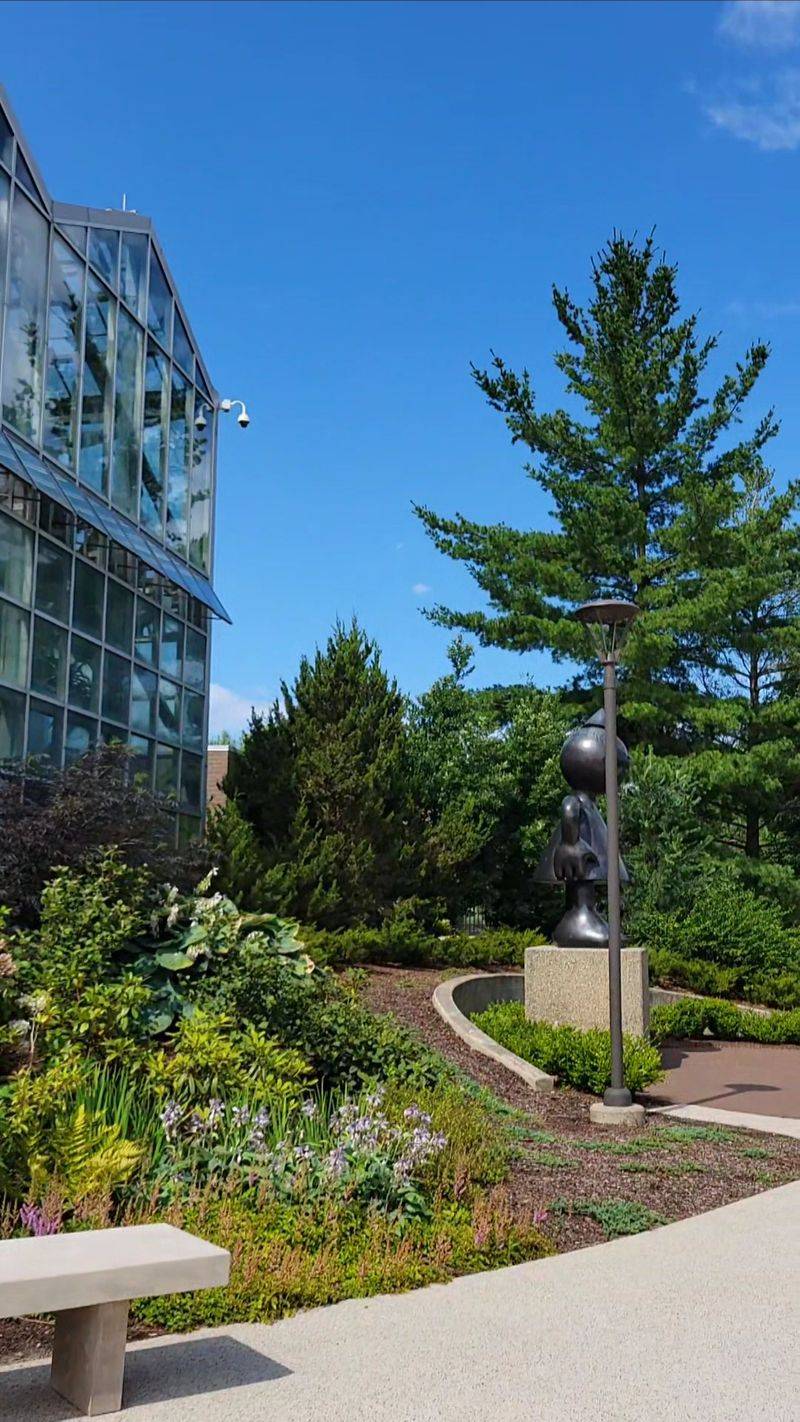
Steel, stone, and greenery hold a calm conversation along winding garden paths. One turn gives you monumental bronze figures, while the next reveals meadows that feel intentionally unkempt.
The Lena Meijer Children’s Garden hums with playful energy.
Opened in 1995, the institution pairs professional horticulture with a world-class sculpture collection. The conservatory’s tropical air fogs glasses instantly, transporting visitors far from Michigan winters.
Rotating exhibitions ensure the grounds are never experienced the same way twice.
Reserve timed tickets during popular shows to avoid long entry lines. The tram tour helps orient first-timers before exploring on foot.
If shade matters, arrive late afternoon when the light softens and breezes move through the grounds.
11. Detroit Institute Of Arts, Detroit

The Rivera Court hums with color and machinery, compressing the city’s industrial contradictions into a single space. Marble halls soften footsteps, and quiet corners spill into ancient gold or contemporary surprises.
It is a place that rewards lingering.
Founded in 1885, the DIA weathered financial storms to remain a cultural anchor in Midtown. Collections span Egyptian artifacts, African masks, and American painting, all maintained by world-class conservation labs.
Community partnerships make the art feel accessible and alive.
Parking is straightforward in nearby garages, and the museum is easily walkable from the Q-Line. Free admission for surrounding counties gives the crowd a local feel.
Pick a few galleries and the Rivera Court, then leave while curiosity is still pulling you forward.