
Michigan’s Hickory Corners Has One Of The Top 3 Car Museums In The U.S.
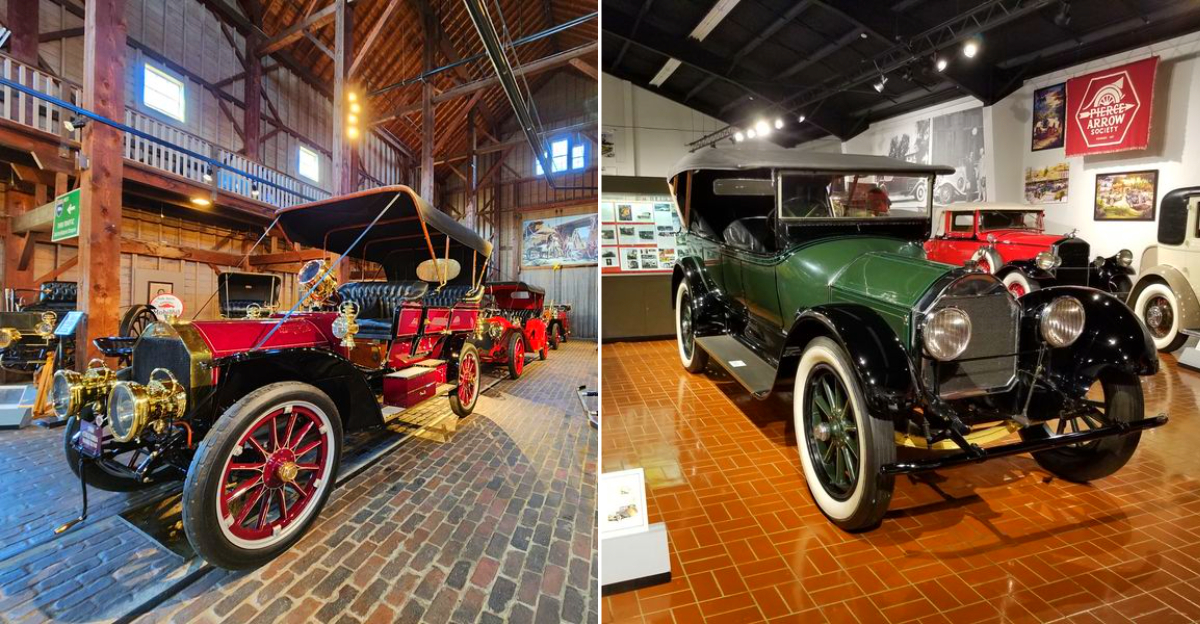
Most car museums park their vehicles in a single building and leave it at that. This one spreads its collection across a campus of historic structures so that walking from exhibit to exhibit feels like moving through time rather than moving through a room.
A gas station sits beside a diner where you can order a milkshake between a Packard and a Model A.
I spent an entire afternoon there without realizing it because each building reveals a different decade: muscle cars in one, brass-era touring cars in another, a barn filled with motorcycles I did not know I cared about until I stood right next to them.
The campus is big enough that you forget you are inside a museum at all. Walking through this museum feels less like touring a collection and more like stepping through decades of the open road in Michigan.
Explore The Campus Like A Village
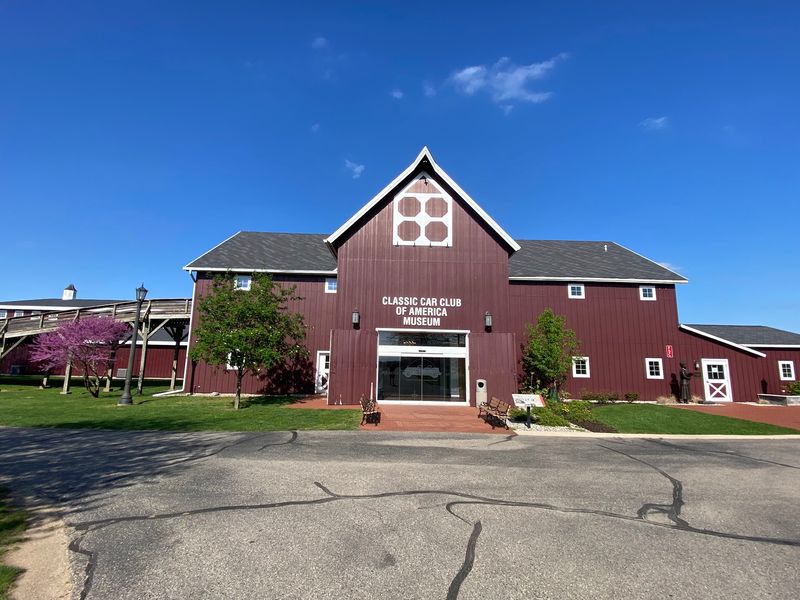
Eight restored 19th-century barns make the grounds feel delightfully unlike a standard museum complex. Cars appear within spaces once designed for rural work, and that contrast gives polished machines a warmer, more human setting.
Follow the campus map rather than assuming every major collection sits inside the main building.
Outdoor paths connect galleries devoted to different brands, periods, and parts of motoring history. Michigan weather can change quickly, so bring a light layer, sun protection, or an umbrella according to the forecast.
Benches and resting spots help visitors divide the campus into manageable pieces. Pause between buildings instead of racing onward, because the architecture, lawns, and vintage roadside details are part of the museum’s carefully preserved historical story as well.
Hickory Road Ends In A Sea Of Red Barns
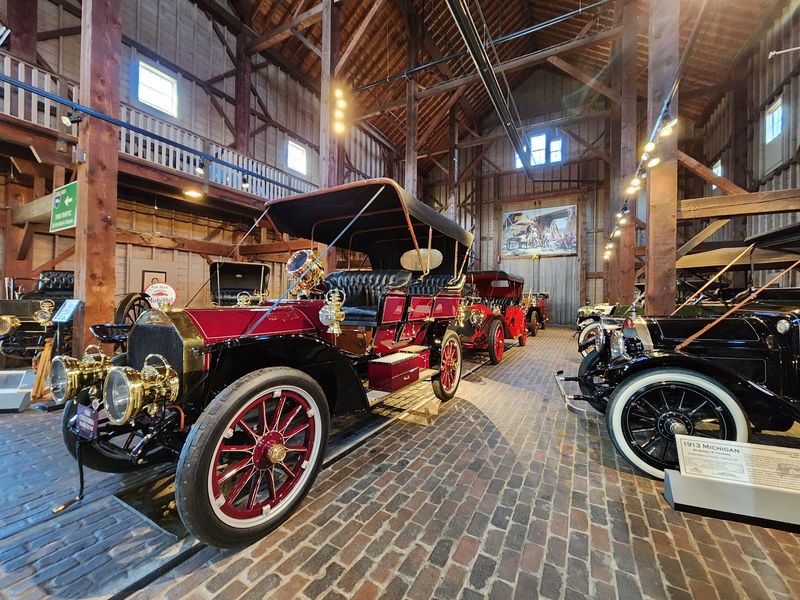
Gilmore Car Museum sits at 6865 W Hickory Road in Hickory Corners, Michigan, roughly 20 minutes from both I-94 and US-131. M-43 is the key regional approach before the final turn onto Hickory Road.
Turn east onto Hickory Road and continue toward the museum campus, where the collection of large red barns becomes the unmistakable arrival cue. The entrance is on the right, so once the barns fill the roadside view, there is very little hunting left to do.
Enter the museum grounds and follow the posted signs toward the visitor parking lots. Parking is free, and from the lot you can continue on foot toward the main museum entrance and begin exploring the campus.
Start With The Gilmore Story
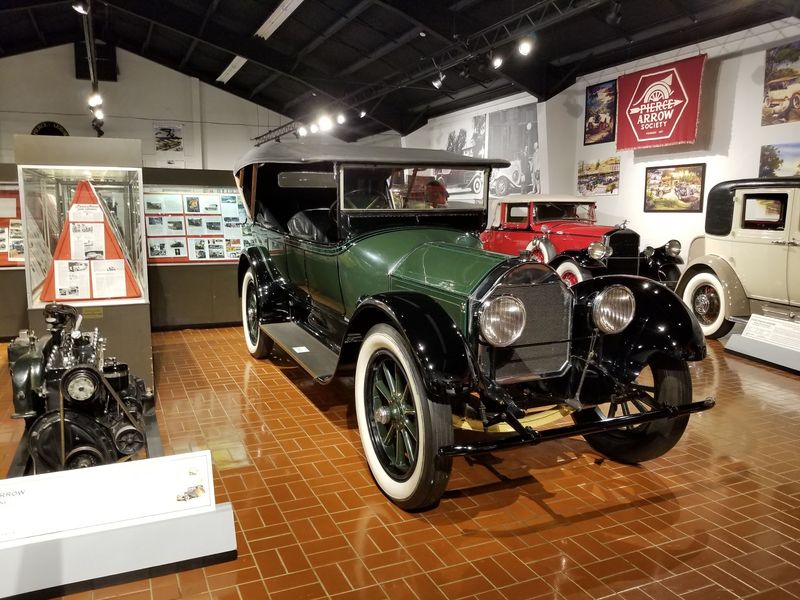
One restored Pierce-Arrow helped set an enormous idea in motion. Kalamazoo businessman Donald Gilmore began collecting vintage automobiles after working on a 1920 Pierce-Arrow at his Gull Lake home during the early 1960s.
His wife, Genevieve, suggested sharing the growing collection through a museum rather than keeping it private.
That suggestion eventually produced the nonprofit institution that opened on July 31, 1966, with 35 cars. Learning this history early adds meaning to everything that follows, especially the original Carriage House displays.
Look beyond dates and model names for stories about ownership, craftsmanship, travel, and changing daily life. What began as one family’s enthusiasm now preserves a broad account of American transportation, making the collection feel personal despite its remarkable size today.
Reserve A Model T Driving Lesson
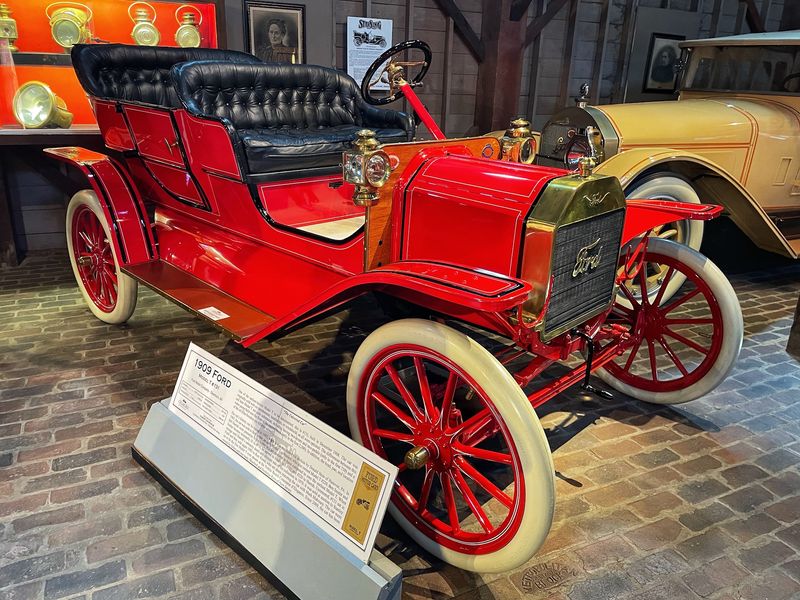
The controls of a Ford Model T are wonderfully strange to modern drivers, which makes operating one especially memorable. Gilmore offers scheduled lessons using authentic Model T vehicles from its collection, with an experienced instructor providing guidance.
Participants travel a three-mile course on the museum campus rather than merely posing behind the wheel.
Availability, eligibility rules, dates, and fees can change, so check the official museum website before making plans. Reserve ahead when possible because this is a distinctive program, not an ordinary daily exhibit.
Closed-toe shoes and careful attention to instructions are sensible choices. Even companions who stay on the sidelines gain a clearer picture of early motoring.
Watching the car move reveals sounds, motions, and mechanical habits that a parked example cannot explain fully.
Eat Inside The Blue Moon Diner
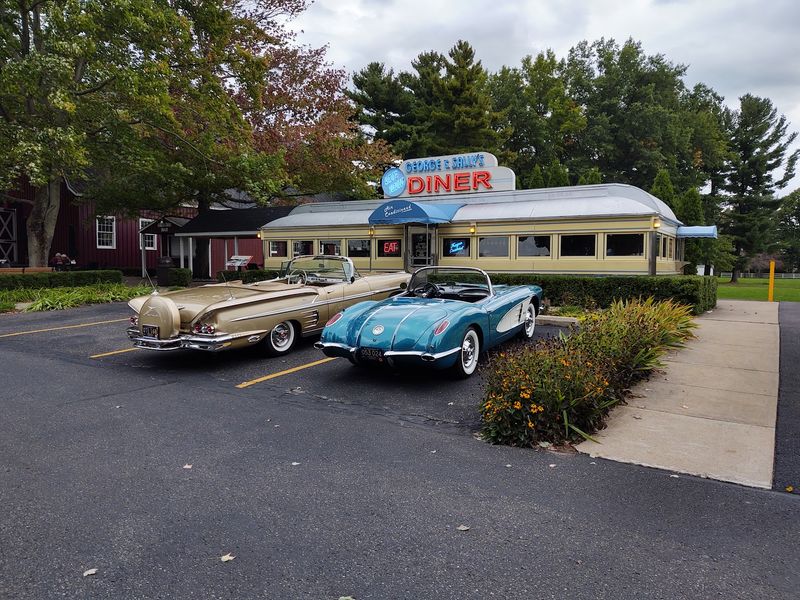
Chrome, counter stools, and the close quarters of the Blue Moon Diner provide a tasty change from long gallery aisles. Built in 1941 and restored as an operating restaurant, the diner serves classic fare in surroundings that belong to the same roadside era as many exhibits.
Seating may fill during busy events and popular meal periods.
Check current dining hours because they may differ from museum hours or vary by season. Eating earlier or later than the usual lunch rush can preserve more time for exploring.
A second food option may operate on campus, while outdoor tables offer useful breathing room in pleasant weather. Budget separately for meals, and remember that the diner is both a restaurant and an artifact.
Notice its compact design before returning to the cars.
Notice The Small Historical Details
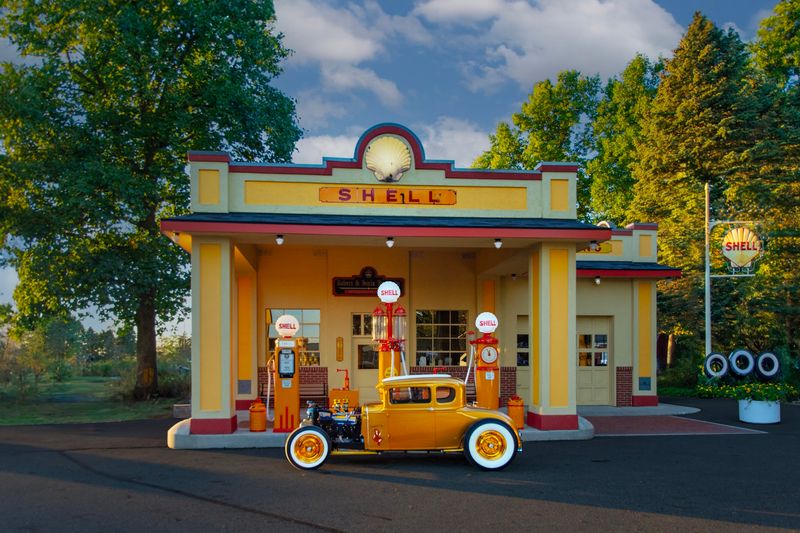
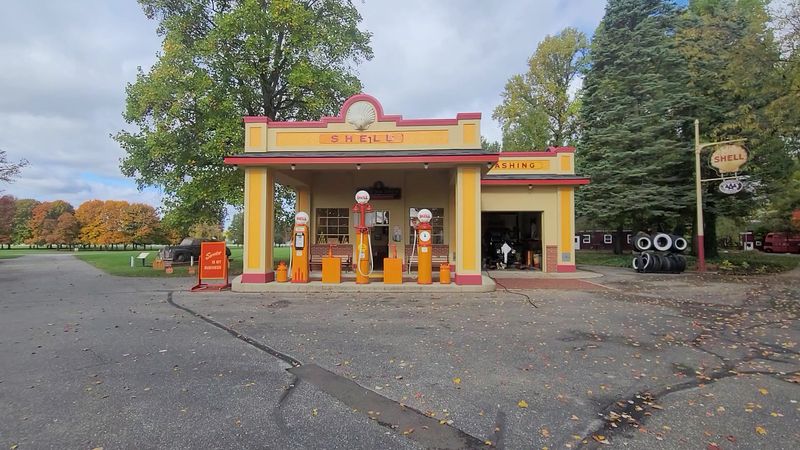
Gas priced at 18 cents per gallon sounds impossible until the re-created 1930s Shell station comes into view. Its pumps, signs, and service-station architecture turn an everyday roadside stop into a compact history lesson.
Rather than treating it as a quick photo backdrop, study how fuel was sold and how drivers received service.
Similar details appear throughout the campus, including period advertising, tools, clothing, music, and dealership materials. They place each automobile within the world that first surrounded it.
Younger visitors can hunt for changing license plates, headlamp shapes, spare-tire locations, or dashboard designs. Adults may recognize objects remembered from family garages.
Slowing down for such clues prevents the huge collection from becoming one long parade of polished hoods and turns observation into an easy game.
Look Beyond Famous Car Names
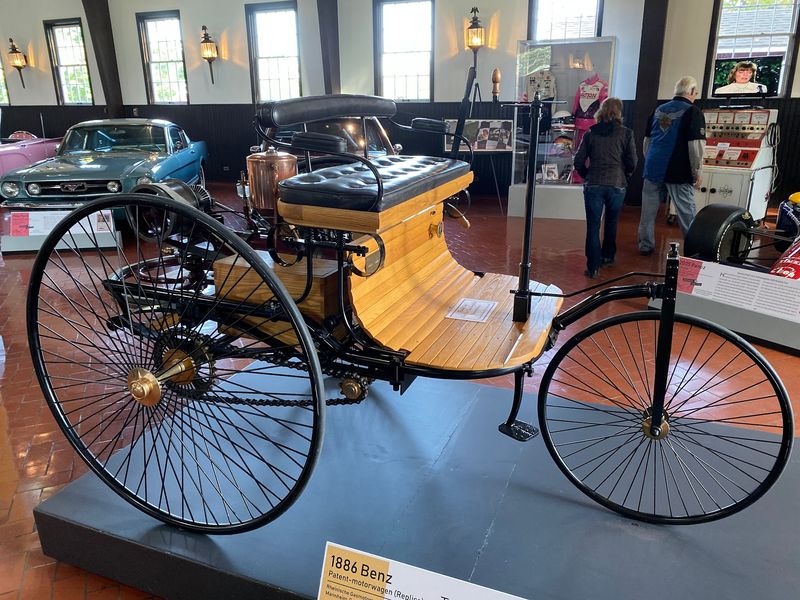
Familiar badges naturally grab attention, but lesser-known machines often tell the sharpest stories. The collection reaches from early horseless carriages through luxury models, everyday family transportation, motorcycles, and performance cars.
Brand-focused galleries also reveal how competing companies solved similar engineering and design problems in remarkably different ways.
Choose one feature to compare across several eras, such as headlights, tires, steering wheels, trunks, or passenger space. That simple habit turns casual looking into a clear lesson about changing technology.
Museum labels supply valuable context, while knowledgeable volunteers can often point out details that hurried eyes miss. Visitors arriving mainly for muscle cars or elegant classics should still sample unfamiliar sections.
An unexpected model, rather than the famous headliner, may become the vehicle discussed all the way home afterward.
Find The Unexpected Treasures
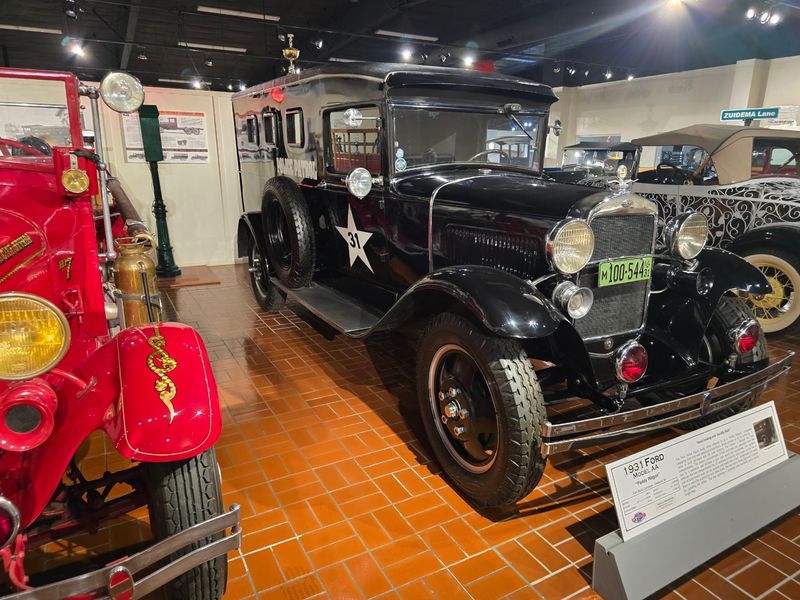
A movie prop and an early airplane replica make the Carriage House an entertaining detour from expected automotive displays. The museum holds the 1930 Rolls-Royce prop car known as the Gnome-Mobile, used in Walt Disney’s 1967 film.
Walt Disney donated the unusual vehicle, giving its fanciful appearance a documented link to movie history.
Nearby, an exact replica of the Wright Brothers’ Wright Flyer widens the transportation story beyond roads. Spend time with both objects instead of rushing toward another row of cars.
Their presence shows how invention, entertainment, and public imagination often overlap. The Carriage House also matters because Donald Gilmore used it as his original display gallery beginning in 1963.
Here, a quirky object can quietly explain how the larger institution grew.
Check The Events Calendar First
Rows of privately owned classics can change the campus completely on a summer Wednesday evening. From May through September, scheduled Wednesday Night Cruise-Ins bring automobiles, music, and local car culture onto the grounds.
Larger specialty shows also focus on particular makers, countries, vehicle types, or historical periods throughout the season.
Consult the official calendar before choosing a date, since an event can be either the main attraction or an unexpected crowd. Show days may affect parking, food lines, available activities, and the time needed to cross the campus.
Arrive early if seeing outdoor cars matters most, and prepare for sun on open lawns. Visitors seeking quiet galleries may prefer a regular weekday.
Either approach works, but knowing the schedule prevents avoidable surprises.
Match Your Visit To The Season
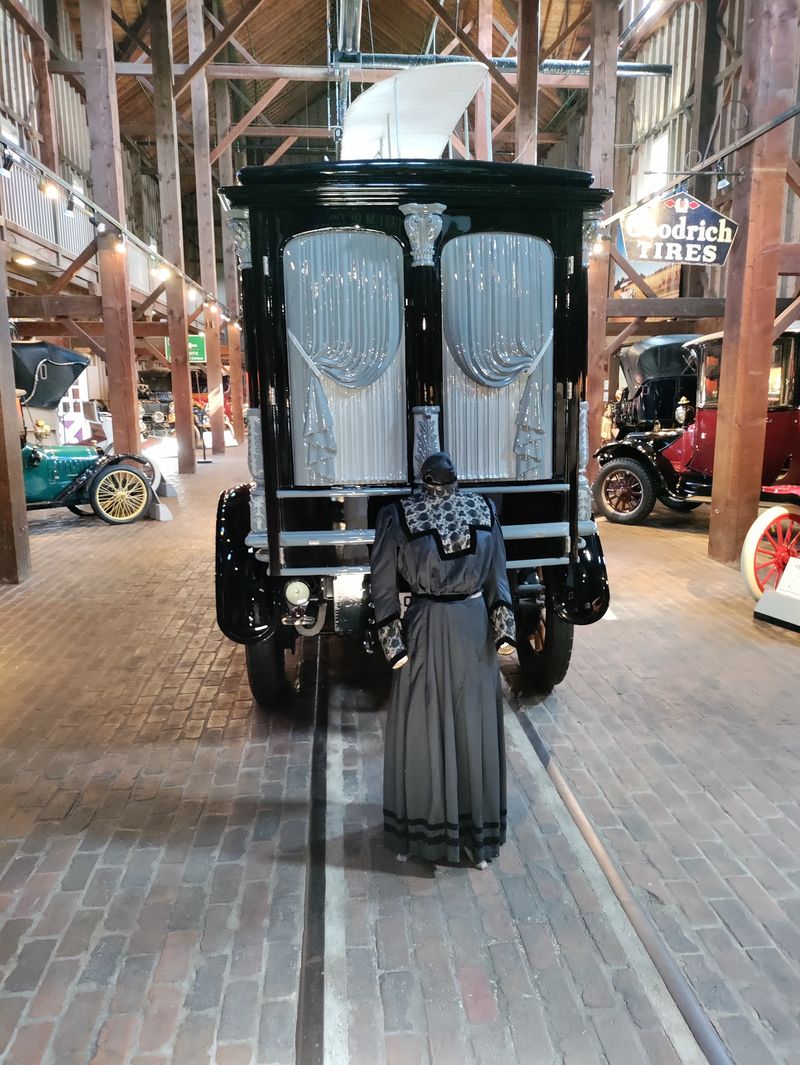
Snow and strings of lights give the old cars a completely different personality. During its scheduled Winter Wonderland Holiday Experience, the museum presents seasonal displays that have included decorated trees, vintage vehicle rides, illuminated outdoor scenes, and rooms showing Christmas through different decades.
Specific features and dates can change from year to year.
Summer provides broader access to outdoor activity, cruise-ins, and the green campus, while winter brings a quieter landscape and special holiday atmosphere. Some buildings or experiences may follow seasonal schedules, so verify current access before traveling.
Dress for outdoor walking even when most viewing happens inside. Returning in another season does not feel like repeating the same trip.
The architecture remains familiar, but weather reshapes the mood, pace, and photographs.
Confirm Hours And Daily Activities
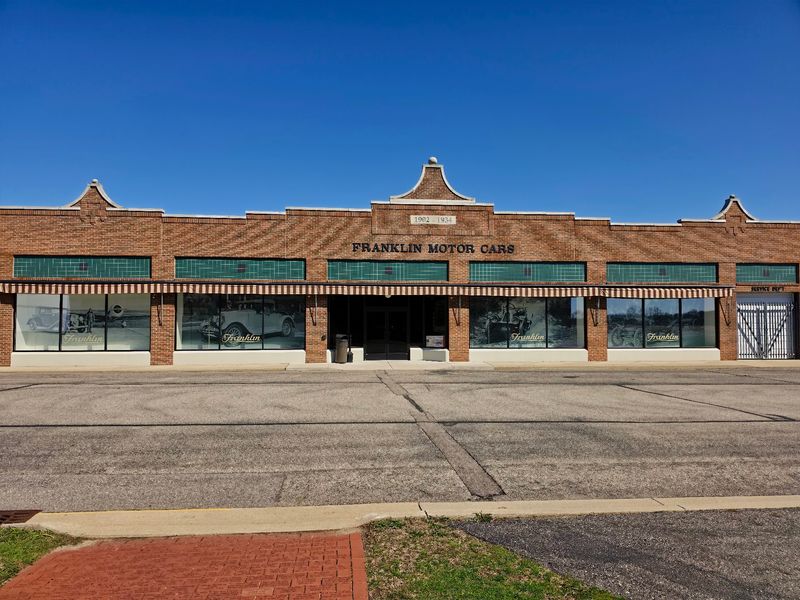
A little checking before departure protects a carefully planned day from seasonal surprises. Gilmore Car Museum operates year-round, but hours differ between its summer season, from April through November, and winter season, from December through March.
It also closes for certain holidays, including Thanksgiving, Christmas, and New Year’s Day.
Use the official website for current admission prices, opening times, dining schedules, special exhibits, and activity availability. Calling the museum can help when a vintage ride, accessibility need, or major event matters to your group.
Level routes and resting places make much of the large campus manageable, yet distances remain significant. Pick several must-see galleries before arriving, then leave room for discoveries.
Good preparation adds structure without draining the visit of spontaneity or roadside charm.