
Michigan’s Most Breathtaking Waterfall Is Hiding In The Upper Peninsula
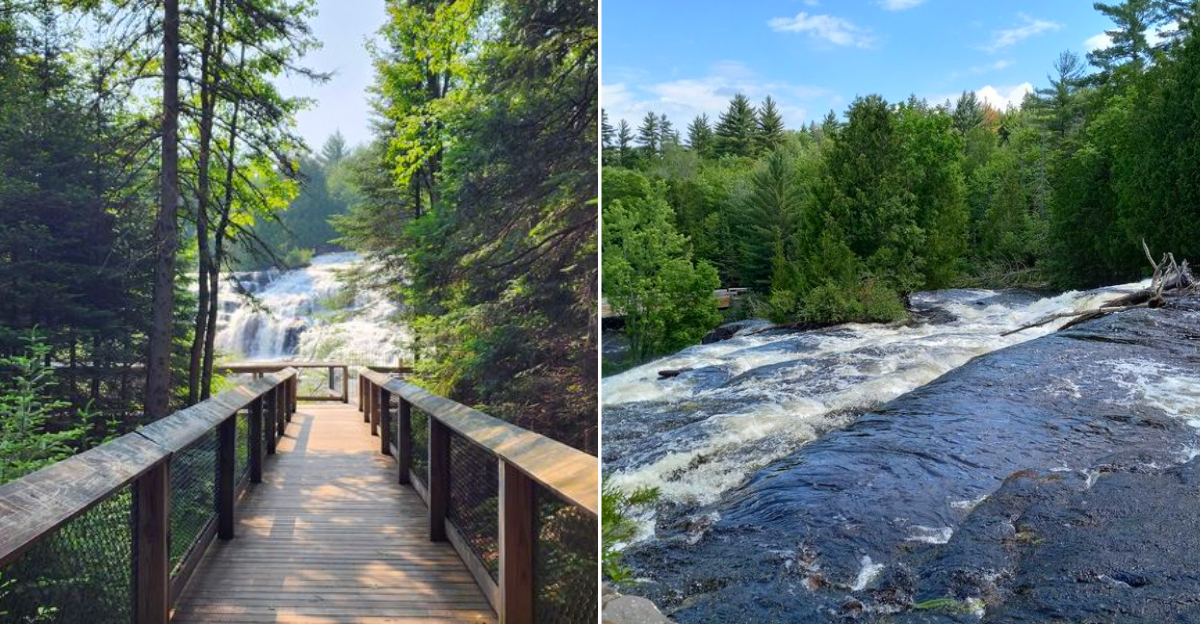
Tucked deep in the Ottawa National Forest, far from the crowded overlooks that define more popular destinations, a fifty-foot cascade spreads across ancient bedrock in a performance that feels almost private.
Water splits into countless rivulets, some pouring straight down in powerful columns, others spreading across the rock face in delicate, shimmering sheets.
Each level catches the light differently, creating a shifting display of sparkles, shadows, spray that no photograph could truly capture.
Spring snowmelt turns the entire face into a churning wall of whitewater, while summer mellows the flow just enough to reveal the geological formations underneath.
A well-maintained boardwalk with sturdy railings, multiple viewing platforms makes this wonder accessible to nearly everyone, from seasoned hikers to grandparents in sneakers. The mist rising from the base carries the clean, cold scent of the surrounding forest.
This is Michigan at its most quietly spectacular, waiting for those willing to venture beyond the obvious.
Arrive Early For The Full Soundscape
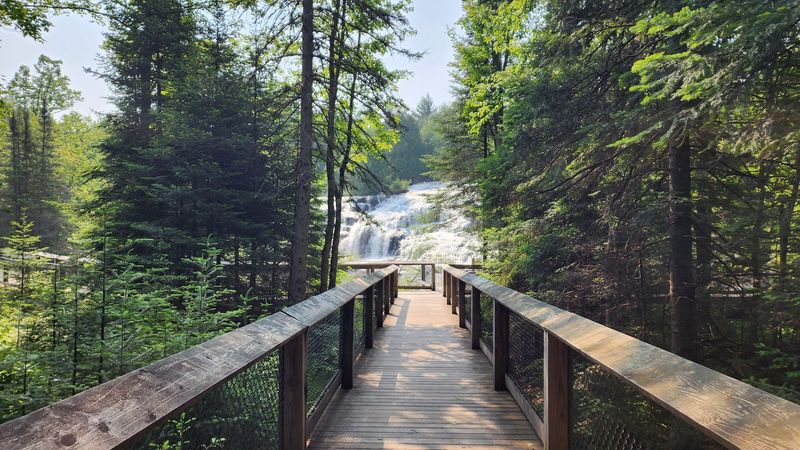
At Bond Falls, the sound arrives before the spectacle, and that is exactly why an early visit works so well. With fewer people on the boardwalk, the river’s constant rush feels bigger, almost architectural, filling the cedar and pine woods like a living ceiling.
Morning light also tends to be kinder, pulling texture from the broken rock instead of flattening everything into bright glare.
Park hours generally run from 8 a.m. to 10 p.m., so getting there near opening is a smart move. Weekdays are especially pleasant if you want room on the platforms.
I found that a quieter first look made the whole site feel less like a stop and more like an encounter.
Boardwalk To The Big Drop
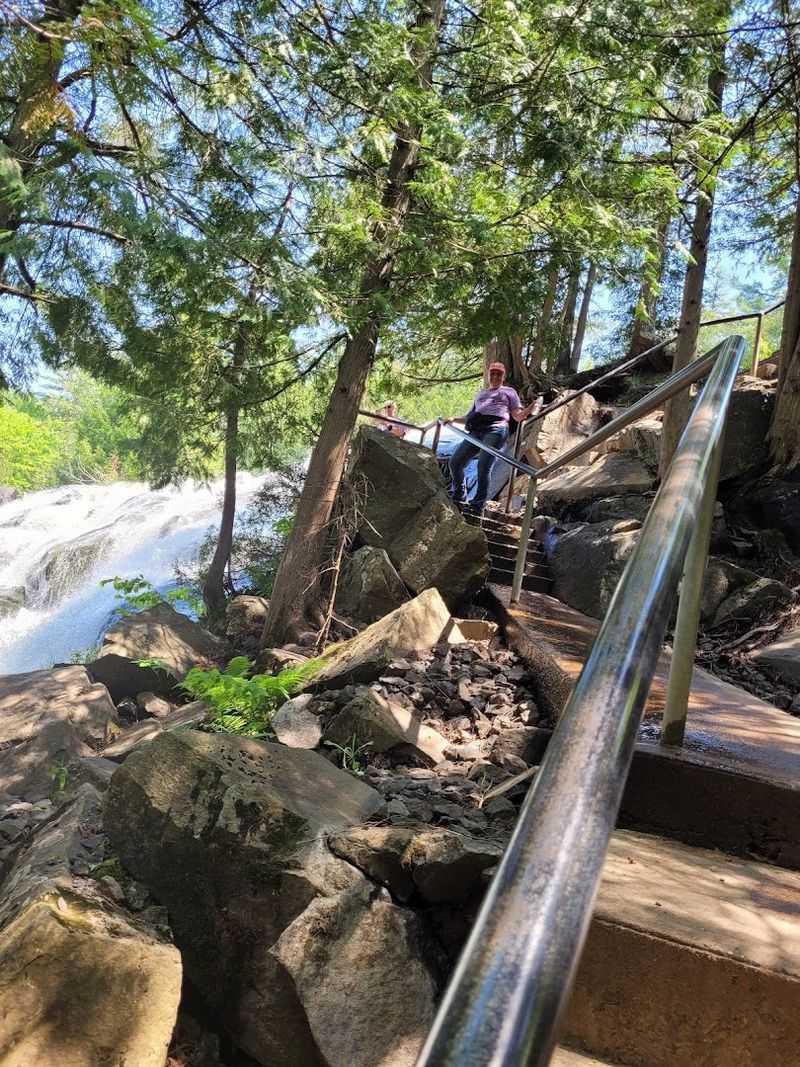
Bond Falls Scenic Site feels like one of those Upper Peninsula stops where the forest keeps the secret until the water suddenly gets loud. Michigan DNR lists the falls at about a 50-foot total drop, with roadside parking, picnic tables, and an accessible boardwalk.
You’ll find it off US-45 near Paulding, Michigan 49961, with access from Bond Falls Road and signs leading toward the main parking area.
Park, take the short walk to the boardwalk, and let the sound guide you before the view opens up. This is an easy arrival with a dramatic payoff: six viewing spots, dark rock, white water, and zero need to overcomplicate the stop.
Look For The Layered Geology
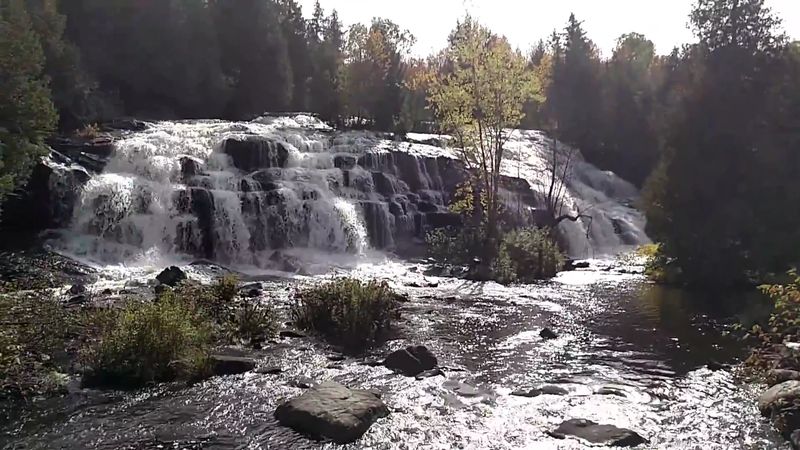
What makes Bond Falls memorable is not just height, but structure. The Middle Branch of the Ontonagon River spreads over a thick belt of fractured rock, splitting into many ribbons and chutes, so the whole waterfall reads like a broad staircase made by geology rather than a single dramatic drop.
It gives the scene movement in several directions at once.
That layered rock also changes how the water sounds and photographs. Some sections pour in smooth sheets, while others break into bright, restless seams.
If you pause at more than one platform, you will notice the falls never look exactly the same twice. I think that complexity is what keeps Bond Falls from feeling merely pretty and makes it genuinely absorbing.
Bring Bug Spray In Warm Months
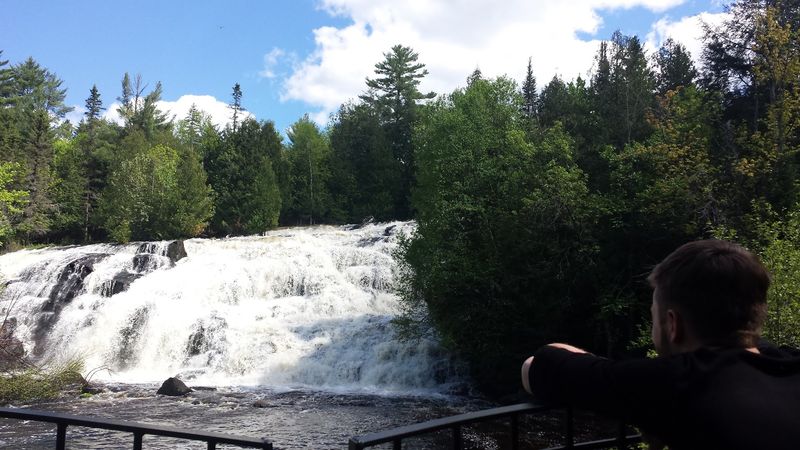
There is a small Upper Peninsula truth worth respecting here: if the air is warm and still, insects may audition for a major role in your outing. Bond Falls sits in rich, damp forest, and that lushness is part of its charm, but mosquitoes and gnats can be lively in late spring and summer.
A little preparation keeps the mood from slipping.
Pack bug spray before you leave town instead of hoping the problem will be minor. The payoff is simple: you will linger longer on the platforms, notice more along the river, and stop resenting every beautiful patch of shade.
That feels especially important at a site designed for slow looking, where the best moments often happen after the first photo, not before.
Walk The Loop Only If You Like Rougher Footing
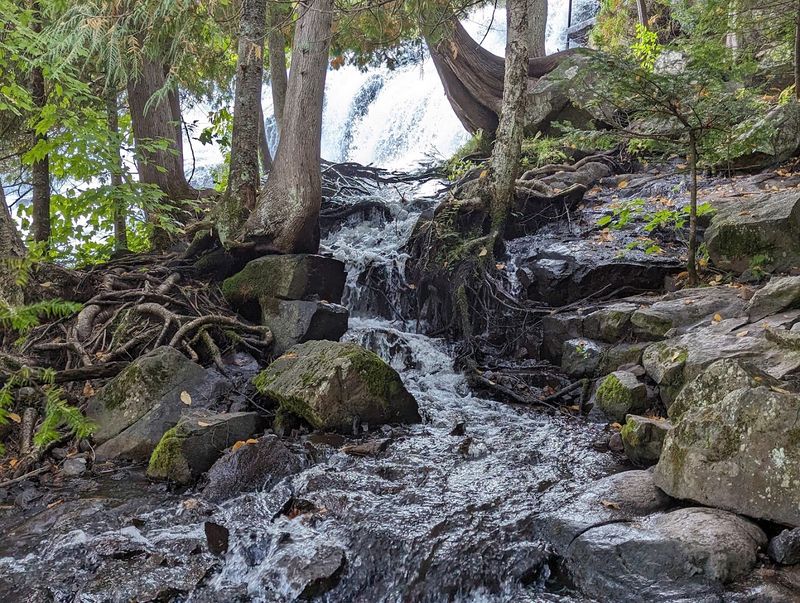
Beyond the easy boardwalk, Bond Falls offers a loop trail that feels more like the river’s backstory. One side climbs and wanders over rougher ground with rocks, roots, and changing elevation, while other sections bring you close to smaller cascades and upstream views.
It is rewarding, but not the sort of path to tackle absentmindedly in flimsy shoes.
If steady footing is not your favorite pastime, the main viewing areas already deliver an excellent experience. For hikers, though, the loop adds texture and scale, showing how the falls fit into the surrounding forest and flowage.
I would simply treat it as a separate phase of the visit: first the accessible overlooks, then the more uneven circuit if energy and weather cooperate.
Do Not Skip The Lower Platforms
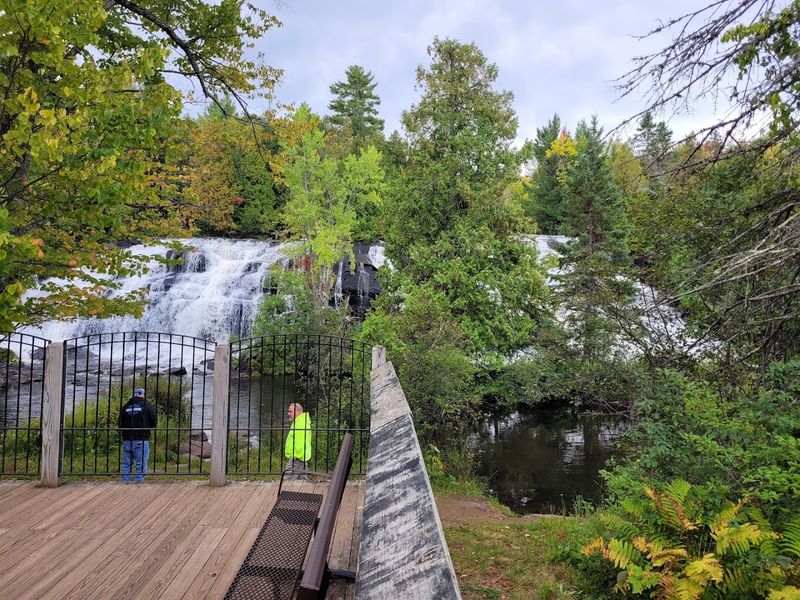
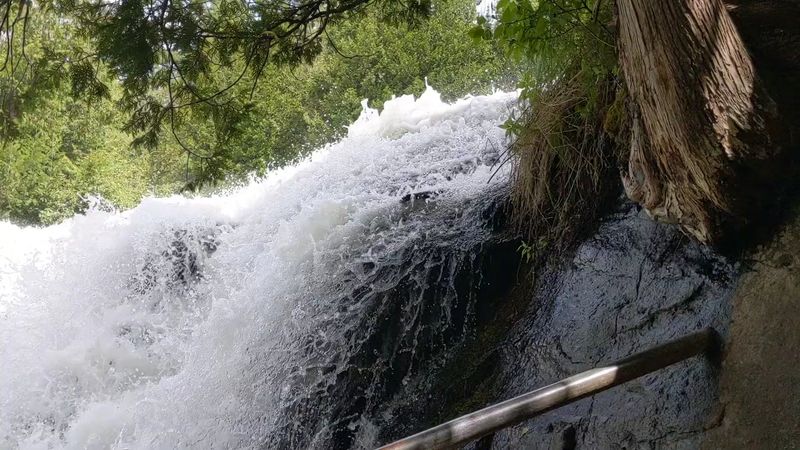
Some waterfalls are best appreciated from far back, but Bond Falls rewards a closer angle. The lower viewing platforms bring you near enough to feel the force in your chest, where the air cools suddenly and the separate strands of water become easier to track.
From there, the falls stop looking like a postcard and start behaving like weather.
The boardwalk includes several viewing locations and multiple platforms, each with a slightly different composition. Do not assume the first big reveal is the best one.
The lower perspectives are especially good for noticing how the river braids over the rock shelves. By the time you look up again toward the higher ledges, the whole formation tends to make more visual sense.
Bring Cash Or Plan For The Recreation Passport
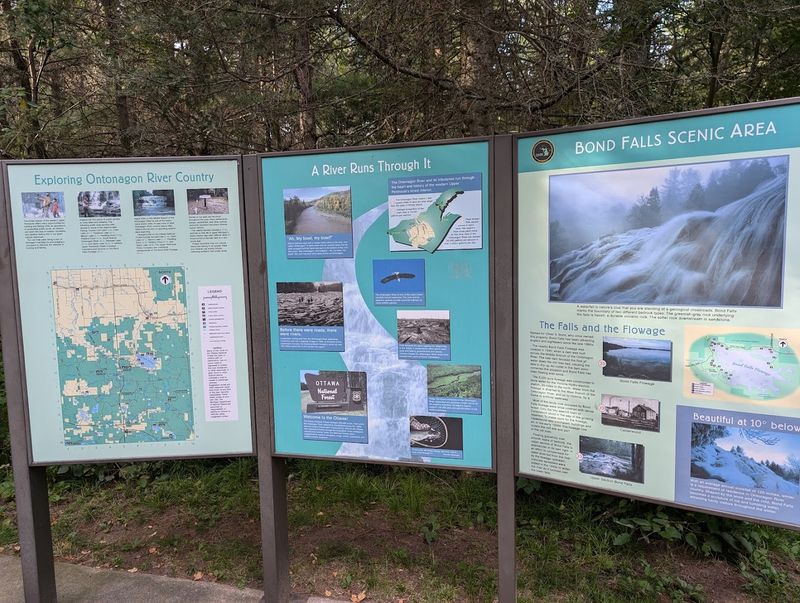
Bond Falls feels effortless once you are inside, but the practical part deserves a minute of attention. Vehicle entry to the state park area requires a Michigan Recreation Passport, and there is a self registration station on site for visitors who need to purchase access.
This is not complicated, but forgetting about it is an annoyingly easy way to start the day.
Check current fees and payment expectations before heading out, especially if you are driving a long Upper Peninsula route with spotty service. The main parking lot near the falls is the most convenient and the best choice for accessible access.
A little planning here preserves the pleasant rhythm of the visit, which should begin with trees and river noise, not administrative improvisation.
Treat Each Season As A Different Waterfall
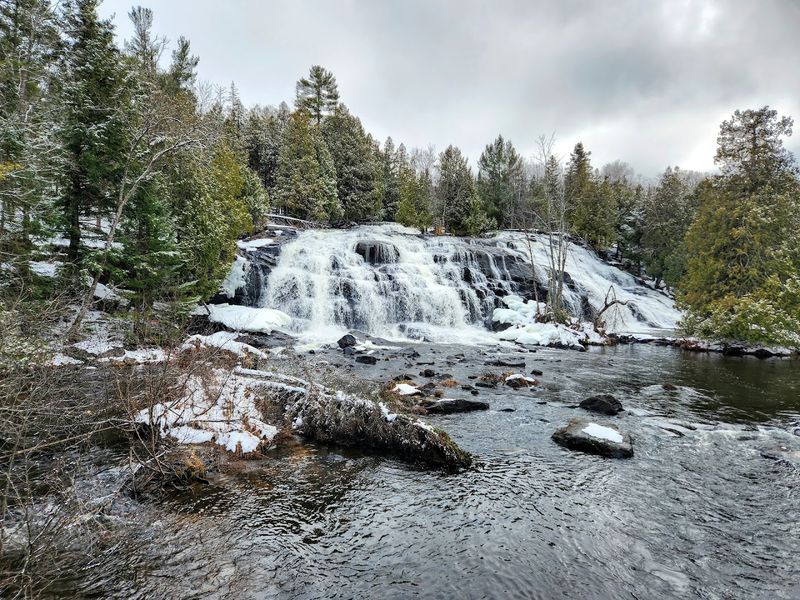
Bond Falls is one of those rare places that changes personality without losing its identity. In spring, snowmelt and rain can give the cascade extra muscle.
Summer brings deep green woods and a comfortable setup for picnics and leisurely walks. Fall sharpens everything with color, while winter turns the site into a quieter, icier study in shape and sound.
The practical details change with the seasons too. Vehicle access to the main lot is typically available from mid May through mid October, while winter access is more limited and trails are not groomed for snow and ice.
If you can choose only one season, pick according to temperament: spring for power, autumn for contrast, summer for ease, winter for stark beauty.
Notice The Dam, But Come For The River
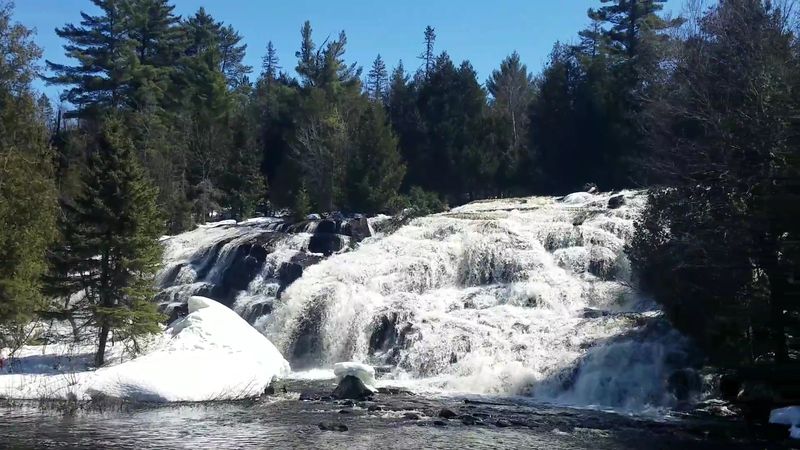
There is a useful tension at Bond Falls between managed infrastructure and wild appearance.
The steady flow over the falls is maintained by a hydroelectric dam operated by the Upper Peninsula Power Company, yet the cascade still reads as remarkably organic because the water spreads across so many natural ledges and seams.
That mix is part of what makes the site distinctive rather than diminished. Knowing this history adds context without draining the wonder. You are looking at a place where engineering and landscape now share the frame, and the result remains genuinely beautiful.
I like sites that let you hold two ideas at once: practical systems upstream, and a broad, thunderous waterfall downstream that still earns every superlative people give it.
Pack A Simple Picnic And Slow Down
Not every memorable stop needs a packed itinerary, and Bond Falls is especially good at rewarding unhurried people. The site has picnic areas, tables, grills, parking, and vault toilets, which means you can stay longer without turning the day into a logistical puzzle.
That may sound ordinary, but ordinary comforts matter when the scenery encourages lingering.
Bring water, a snack, and enough time to sit after the first round of photos. The waterfall’s appeal deepens with repetition: louder here, softer there, white water against dark rock, cedar shade shifting as clouds move through.
A brief visit will still impress you, but a slower one lets the place stop performing and simply settle around you, which is better.
Wear Shoes That Respect Wet Rock
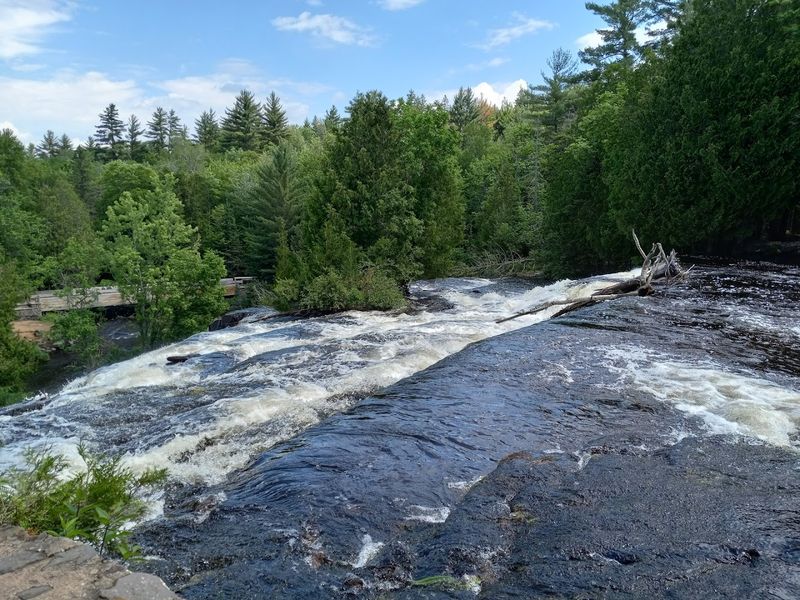
Bond Falls is accessible, but it is not entirely foolproof, and that distinction matters. Mist, spray, and uneven surfaces can make side trails, stone steps, and riverside edges slick, especially if you leave the boardwalk to explore more closely.
The safest strategy is wonderfully boring: wear decent shoes and resist any urge to improvise with fashion sandals or smooth soles.
This tip becomes more important if you want to hike around both sides of the river or climb to higher viewpoints. The main walkways are comfortable and straightforward, but the rougher sections deserve attention and balance.
I have found that proper footwear changes the whole mood of a waterfall stop, because caution becomes awareness instead of anxiety, and then you actually notice the place.