
10 Missouri Food Sayings That Sound Odd To Tourists (Until They Taste The Dishes Behind Them)
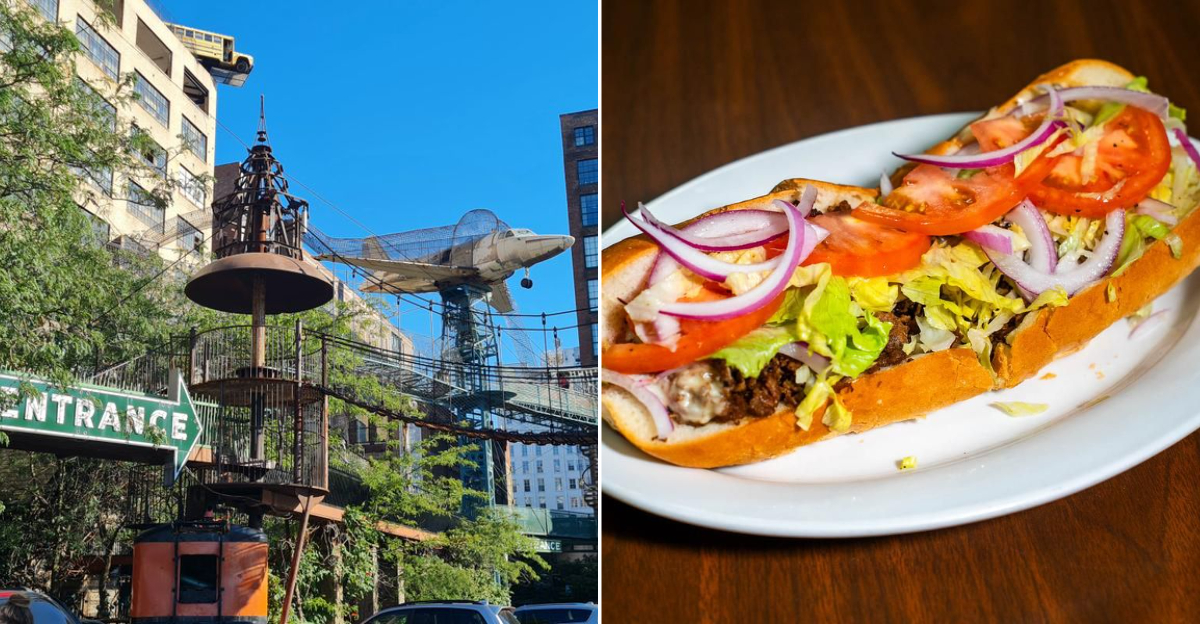
Tourists sometimes hear Missouri food talk and assume everyone is joking, mistaking the shorthand and half-serious slang for exaggeration or inside humor that can’t possibly be literal, right up until a plate actually lands in front of them and the first forkful rewires their understanding.
In that moment, the phrases stop sounding playful and start sounding precise, because the food does exactly what the language promised it would do.
What felt like folklore suddenly reads like instruction.
Across St. Louis and well beyond it, these sayings circulate the way recipes do, passed along casually at cookouts, counters, and neighborhood tables, carrying meaning that doesn’t need explaining once you’ve tasted the proof.
This list unpacks those expressions carefully, pairing the words you’ll hear with the dishes that give them weight, so the language doesn’t float free of its context.
You’ll start to notice how certain phrases only make sense after smoke has settled into the meat, how others rely on texture, heat, or timing, and why locals never bother translating them ahead of time.
Missouri’s food dialect isn’t ornamental, it’s functional, built to describe flavor, comfort, and ritual with efficiency and a wink. Read with curiosity rather than expectation, and something shifts.
You begin to taste the language alongside the food, understanding it as clearly as the smell of charcoal drifting from a backyard grill on a warm evening.
1. It’s A St. Louis Thing, You Wouldn’t Understand

What this phrase really does is compress decades of shared eating habits into a single shorthand, signaling that certain flavors and textures make sense only after you have stood at the counter, watched the plates go out, and accepted that this city learned to eat on its own terms rather than anyone else’s.
Behind the words sit toasted ravioli baskets arriving blistered from oil, gooey butter cake squares collapsing slightly under a snowfall of sugar, and cracker-thin pizza held together by a melt that behaves nothing like mozzarella yet somehow feels exactly right once you taste it.
To newcomers it sounds defensive or joking, but among locals it is usually said with amusement and affection, a reminder that food here is woven tightly into neighborhood memory and repetition.
The habits formed by Italian, German, and Midwestern working-class kitchens created rules that were never written down, only practiced and passed along over time.
Once a fork hits a plate in the right context, the phrase stops acting like a barrier and starts sounding like an invitation extended a little too fast to explain.
Watching what people order around you often teaches more than menus do, especially when each table seems to echo the next.
Understanding arrives quietly, sometime between the first bite and the realization that no one is joking at all.
2. Slinger
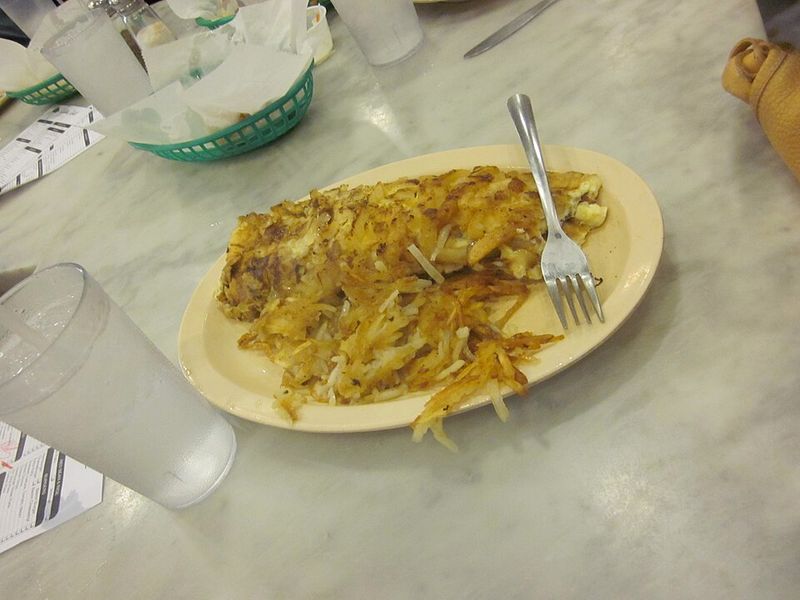
At diners that never quite close the door on late nights or early mornings, the slinger lands with the seriousness of something built to solve a real problem rather than impress anyone.
Eggs, hash browns, and a burger patty or sausage disappear under chili and melted cheese in a way that looks chaotic until hunger gives it structure.
What appears excessive is actually carefully practical, stacking protein, starch, and warmth into a plate that forgives exhaustion and bad decisions.
The dish earned its reputation feeding shift workers, bar crowds, and anyone else who needed recovery food without ceremony.
Hot sauce sharpens the sweetness of the chili, while toast becomes a tool for dragging yolk and gravy into one decisive bite.
Breaking the egg and letting it run turns the mess into balance, something you notice only after committing.
Once eaten in its intended moment, the slinger stops reading like excess and starts making undeniable sense.
3. Concrete (frozen custard)
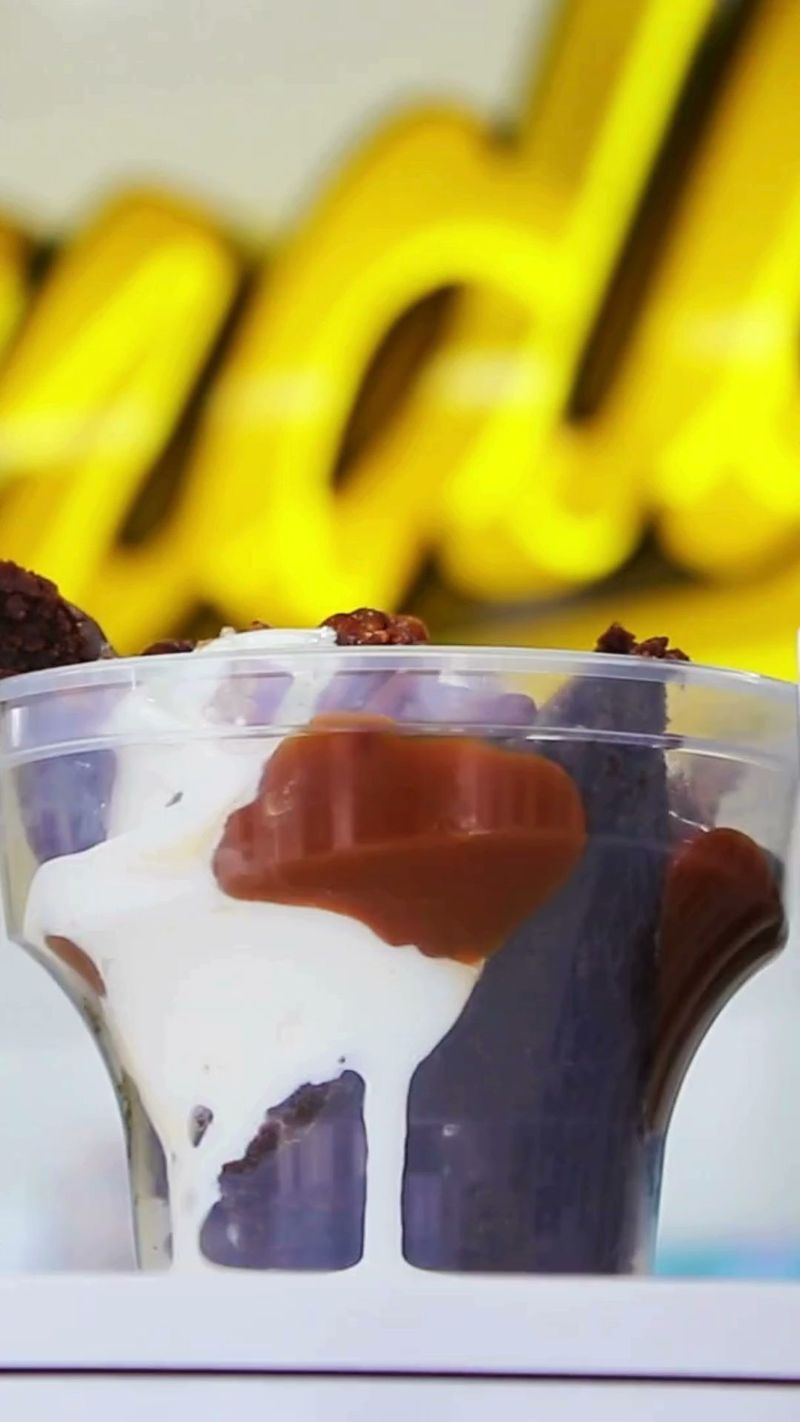
The word sounds industrial until the cup flips upside down without spilling, at which point curiosity replaces skepticism almost immediately.
Frozen custard thickened with egg yolks churns denser than ice cream, creating a base that carries mix-ins rather than dissolving under them.
At places like Ted Drewes, the ritual is familiar enough that watching the flip feels as important as the dessert itself.
Texture becomes the selling point, not temperature, with cold that lingers and weight that demands slow eating.
Mix-ins stay suspended, whether chocolate, fruit, or candy, turning each spoonful into the same composition rather than a chase.
Ordering small is wisdom rather than restraint, because richness accumulates quickly.
Once experienced on a humid night, the name stops sounding strange and starts sounding precise.
4. Toasted Ravioli
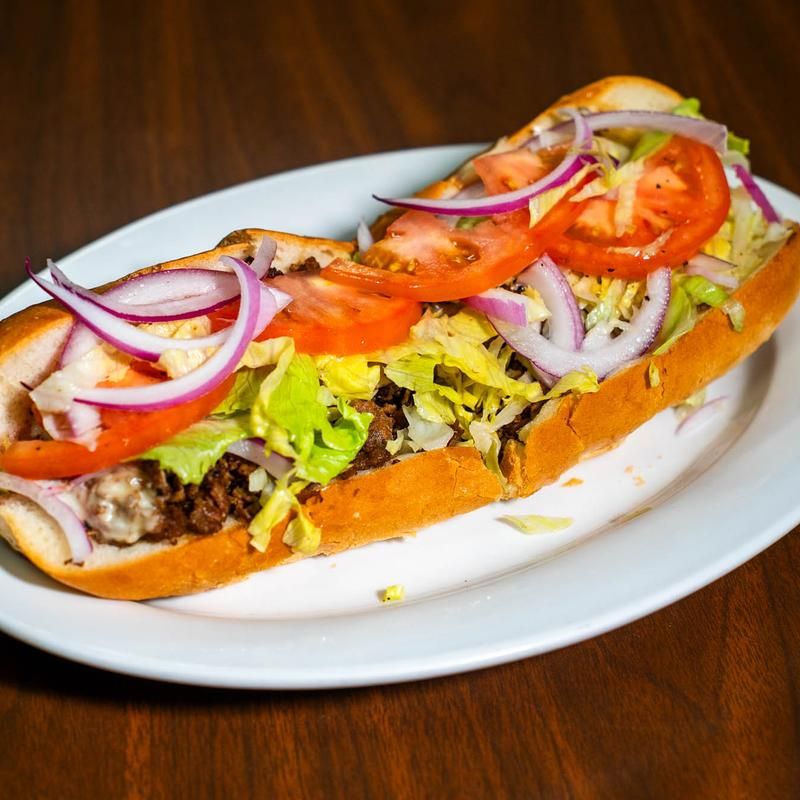
Despite the name suggesting dryness, the reality arrives audibly crisp, with breading that fractures at the bite to release steam and a meat filling that stays tender rather than tight or crumbly.
The origin story matters less than the outcome, which is that a ravioli meeting hot oil instead of water permanently altered how St. Louis approaches Italian appetizers.
Marinara on the side is not optional but structural, offering acid and heat that cut through fried richness without soaking the crust if used with restraint.
Good versions announce themselves through blistered surfaces and weight that feels substantial rather than hollow.
Neighborhood Italian restaurants treat it as a given rather than a novelty, serving baskets automatically to tables that did not even ask.
The first bite tends to make the name irrelevant, because language retreats once texture and temperature take over.
What remains is the realization that accident matured into tradition without ever bothering to rename itself.
5. Gooey Butter Cake
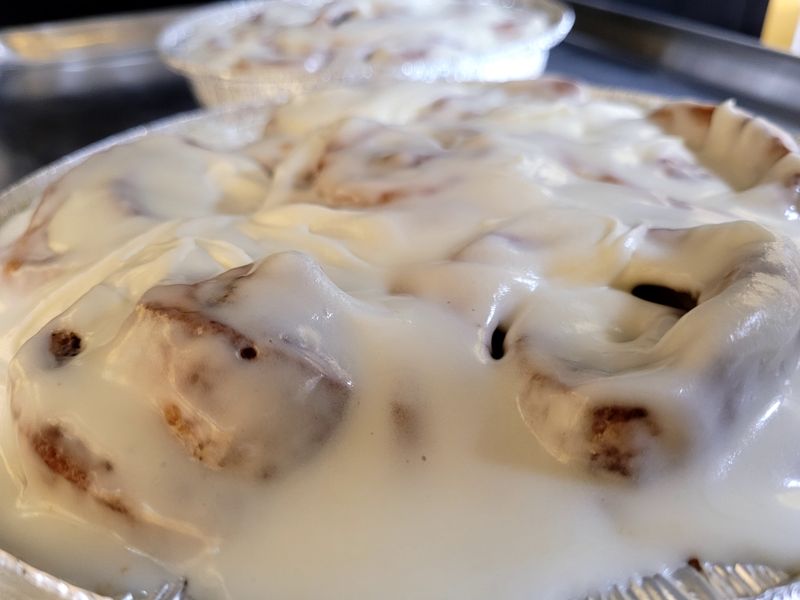
At first glance it appears unfinished, flat and pale under powdered sugar, which explains why outsiders hesitate before committing to a forkful.
The base behaves more like structure than cake, existing primarily to support a top layer that settles somewhere between custard and soft-set cream.
Born from a mixing mistake rather than a chef’s vision, it carries the strange confidence of foods that never needed refinement.
Warmth amplifies butter and vanilla without turning cloying, especially when the edges provide chew against the center’s collapse.
Morning versions pair naturally with coffee, while later hours encourage smaller squares eaten slowly.
Skepticism usually dissolves halfway through the first piece, when sweetness proves controlled rather than aggressive.
By the end, the mess on the plate feels intentional, as though neatness was never the goal.
6. Provel Cheese
This cheese confuses first-time eaters because it behaves unlike the stretchy standards used as reference, choosing melt over pull without apology.
Blended from cheddar, Swiss, and provolone, it was engineered for speed and surface coverage rather than showy elasticity.
On thin crust pizza it spreads evenly, sealing toppings in a glossy layer that cools quickly yet stays soft.
The flavor leans savory with faint smokiness, noticeable but not dominant once heat activates it.
Devotion and dislike coexist openly among locals, which may be its most honest endorsement.
Judgment changes when tasted fresh from the oven rather than cold or isolated.
Understanding comes not from comparison, but from accepting that it was built for this place and this style alone.
7. St. Paul Sandwich
What looks deceptively simple at first glance reveals itself as a highly specific local solution to hunger that values portability, contrast, and speed over presentation.
An egg foo young patty, hot and softly crisped at the edges, meets white sandwich bread dressed with mayo, lettuce, and pickles in a combination that sounds wrong until texture resolves it.
Chinese American takeout shops across St. Louis have treated it as a standard for decades, not advertising it so much as assuming you already know.
The sandwich works because soft crumb absorbs grease while pickles snap through richness with necessary acid.
Eating it quickly matters, since time is the one enemy that turns balance into sogginess.
Variants using shrimp or pork change the character without disturbing the structure.
It endures because it answers a specific need cleanly, without explanation or ceremony.
8. Pork Steaks On The Grill
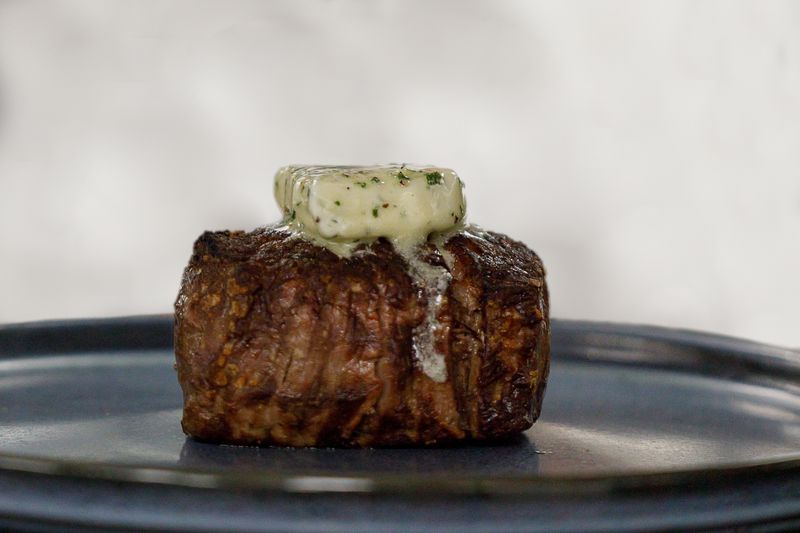
Summer in Missouri announces itself less through temperature than through smell, particularly when pork blade steaks hit charcoal and fat starts to render loudly.
Cut from the shoulder rather than the loin, these steaks forgive uneven heat and impatient timing in a way that reward-focused grilling cultures appreciate.
Heavy marbling keeps the meat moist through direct flame, then turns tender when nudged to the cooler side to finish.
Seasoning stays simple, because the cut already brings plenty of character to the fire.
Sauce appears only at the end, brushed late so sugars glaze instead of burn and bitterness never enters the conversation.
Backyards turn into informal kitchens where clocks are ignored and instinct replaces thermometers.
The result tastes inseparable from the setting in which it is cooked.
9. Maull’s On Pork Steaks
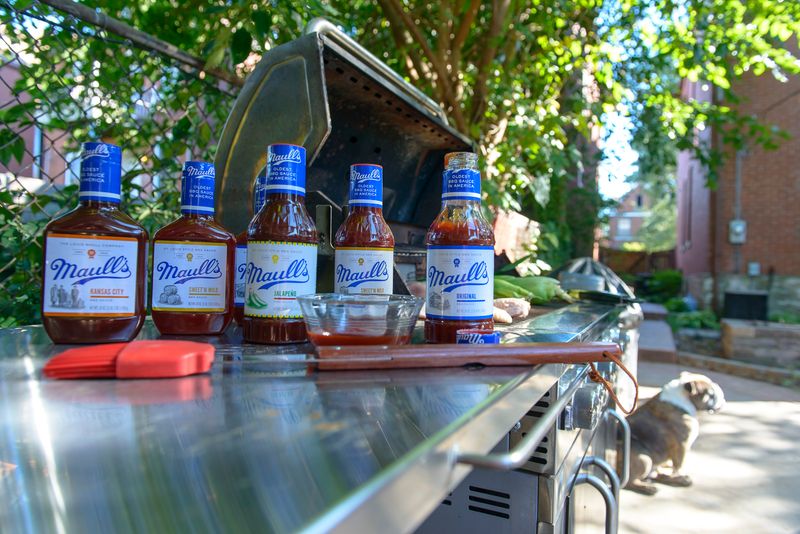
Mentioning pork steaks without specifying sauce often triggers immediate clarification, because in St. Louis the choice matters.
Maull’s arrives tangy-sweet with molasses depth and restrained smoke that caramelizes into a sticky finish rather than masking the meat.
Its consistency allows it to cling to edges and bone without running off into the fire.
Late application keeps sugars intact while still building surface complexity.
Some thin it down with beer or apple cider to stretch brushability and sharpen acidity.
For many locals the flavor operates as memory as much as seasoning, tied to cookouts rather than menus.
Visitors tend to recognize its role not intellectually, but through fingers coated in sauce and an empty plate arriving too soon.
10. St. Louis-Style Pizza With Provel
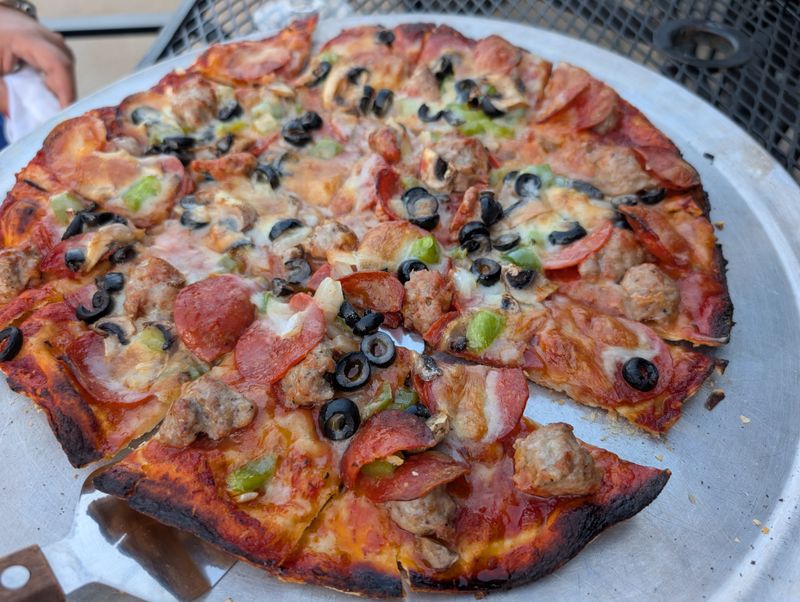
At first encounter, the thin, square-cut slices can feel almost confrontational to visitors expecting a foldable wedge, yet that initial surprise quickly gives way to an understanding that this pizza was never meant to mimic other regional styles but instead evolved to suit local preferences for crispness, balance, and easy sharing.
The cracker-thin crust snaps cleanly under pressure, offering structure without chew, which allows toppings and seasoning to stay sharply defined rather than melting into a single heavy bite.
Provel spreads across the surface in a smooth, low-string melt that coats rather than stretches, sealing sausage, onion, and pepper in place while delivering a gently smoky, savory profile that reads differently from mozzarella but intentionally so.
Because the dough stays restrained, seasoning matters more here, and small adjustments in sauce sweetness or spice register clearly on the palate.
The party-cut format turns the pie into a communal object, encouraging grazing rather than possession, with corners prized by some and center squares claimed by others without hierarchy.
Paired with a St. Louis-style salad topped with shredded Provel, the meal leans fully into regional logic rather than compromise.
Once expectations recalibrate, the style reveals itself as confident, specific, and uninterested in apology.