
9 Missouri Train Depots That Tell Stories Through Rust, Restorations, And Memory
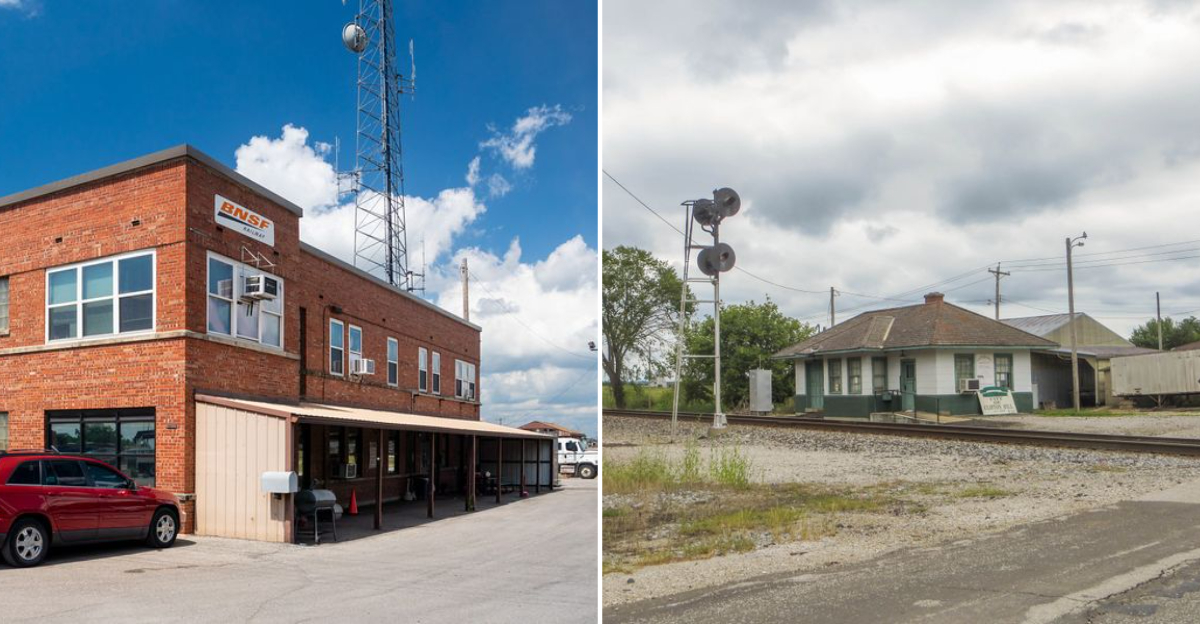
Missouri’s rail past lives on in many forms: silent depots, buildings reborn as museums, city halls, and veterans’ posts, and a few stations remembered only in photographs. Each place still carries the echo of whistles, timetables, and towns stitched together by steel.
Below are nine depots across the state – some abandoned, some restored or repurposed, some relocated, and a couple long gone – that continue to tell the story of Missouri’s railroad era.
1. Joplin Union Depot – Joplin
Built in 1911, this grand structure served passengers traveling through southwest Missouri for decades. The depot’s Beaux-Arts architecture features stunning brickwork and impressive arched windows that hint at its former glory.
Walking through the area, you can almost hear the conductor’s calls and the hiss of steam engines pulling into the station. Local historians have documented countless stories of families reuniting and soldiers departing from this very spot.
Plans for restoration have surfaced multiple times, keeping hope alive for preserving this landmark.
2. Meramec Highlands Frisco Station – Kirkwood
Nestled in a quiet neighborhood, this small depot once connected Kirkwood residents to the bustling St. Louis rail network. The Frisco Line brought both passengers and freight through this charming stop during its heyday.
Original wooden siding still clings to the structure, weathered by countless Missouri seasons. Photography enthusiasts frequently visit to capture the station’s rustic beauty against changing skies.
Nearby residents remember when the station bell would ring, signaling incoming trains that punctuated daily life with a reliable rhythm and purpose.
3. Shortline Railroad Depot – Center
Center’s tiny depot represents countless small-town stations that dotted Missouri’s rail map. Despite its modest size, this station played an outsized role in connecting rural communities to broader markets and opportunities.
The building’s compact footprint housed a ticket window, waiting area, and telegraph office that buzzed with communication. Farmers relied on this depot to ship their harvests and receive essential supplies.
Wildflowers now grow around the foundation, creating a picturesque scene that photographers and history buffs seek out during spring and summer visits.
4. CB&Q Depot – Turney
The Chicago, Burlington and Quincy Railroad brought prosperity to Turney through this sturdy depot. Constructed with a typical CB&Q standardized design, the station features characteristic elements found along this historic rail line.
Passenger service ended decades ago, but the structure remains remarkably intact considering years of exposure to the elements. Wooden platform boards still show wear patterns from countless footsteps and luggage carts.
Rail enthusiasts make pilgrimages here to photograph one of Missouri’s better-preserved examples of CB&Q architecture and engineering.
5. Wabash Depot – Clifton Hill
Perched in a small community, this Wabash station served as Clifton Hill’s connection to the wider world. The depot’s footprint may be modest, but its impact on local commerce and culture was substantial during peak railroad years.
Original window frames still hold wavy glass panes that distort views of the surrounding landscape. Telegraph wires once stretched from this building, carrying messages that coordinated train movements and business transactions.
The structure now stands silent, offering urban explorers and historians a glimpse into Missouri’s transportation heritage.
6. CB&Q Depot – Kearney
Kearney’s Chicago, Burlington and Quincy depot brought big-city connections to this Jesse James country town. The station’s strategic position made it a popular stop for travelers exploring Missouri’s colorful frontier history.
Brick construction has weathered admirably, maintaining structural integrity despite years without maintenance. Platform areas still show evidence of the bustling activity that once characterized daily operations.
Local preservation groups have expressed interest in saving this depot, recognizing its value as both a historical artifact and a potential community asset for future generations.
7. Rock Island Depot – Trenton
Trenton’s Rock Island depot served passengers traveling the Chicago, Rock Island and Pacific Railroad route. This north Missouri station buzzed with activity during harvest seasons when agricultural products moved through regional rail networks.
The depot’s waiting room once featured wooden benches and a pot-bellied stove that provided warmth during harsh winter months. Ticket windows bear scratches and wear marks from decades of transactions.
Photography workshops sometimes use this location to teach composition techniques, taking advantage of the dramatic textures and lighting opportunities the abandoned structure provides.
8. Hannibal Union Depot – Hannibal
Mark Twain’s hometown boasted this impressive union station that served multiple rail lines converging on the Mississippi River. The depot’s grand scale reflects Hannibal’s importance as a regional transportation hub during the railroad era.
High ceilings and expansive waiting areas accommodated crowds of travelers passing through this river city. Ornate architectural details showcase the civic pride invested in public transportation infrastructure.
Though trains no longer call here, the building remains a powerful reminder of Hannibal’s role in connecting Missouri to national rail networks.
9. Frisco Depot – Salem
Salem’s Frisco depot anchored this Ozark community to the St. Louis-San Francisco Railway system. The station facilitated passenger travel and timber shipments that drove the local economy throughout the early 1900s.
Original paint colors peek through layers of weathering, hinting at the depot’s former appearance. Platform areas extend along rusted tracks that once carried hundreds of trains annually.
Nature has begun reclaiming the site, with trees growing close to the building and vines creeping up exterior walls in a slow embrace.