
Most People Don’t Realize There’s A Giant Troll Lurking Under This Bridge In Washington
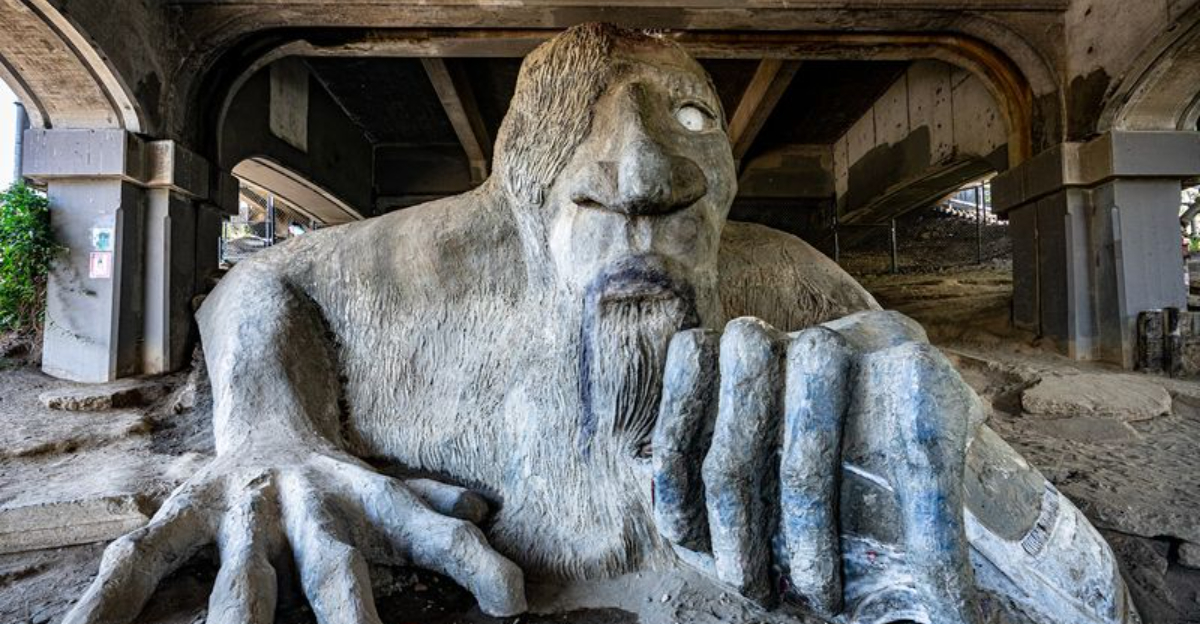
Yes, I’ve seen some strange things in my time, but nothing prepared me for the day I found a gargantuan hitchhiker waiting under a bridge.
Most people walk right past without ever looking down into the hollows of the earth, missing the sight of a creature so large he could probably crush my apartment with a single step. He’s got this wild, unkempt look, with one metallic eye that seems to track your every move.
It’s a quirky reminder that the spirit of Washington isn’t just about apple orchards or tech giants, but also about the beautiful weirdness that grows in the dark, rainy crevices of its cities.
Getting up close to those massive, dusty fingers made me feel like an extra in a fantasy movie. Trust me, you haven’t lived until you’ve stood in his shadow.
The Origin Story Behind The Troll
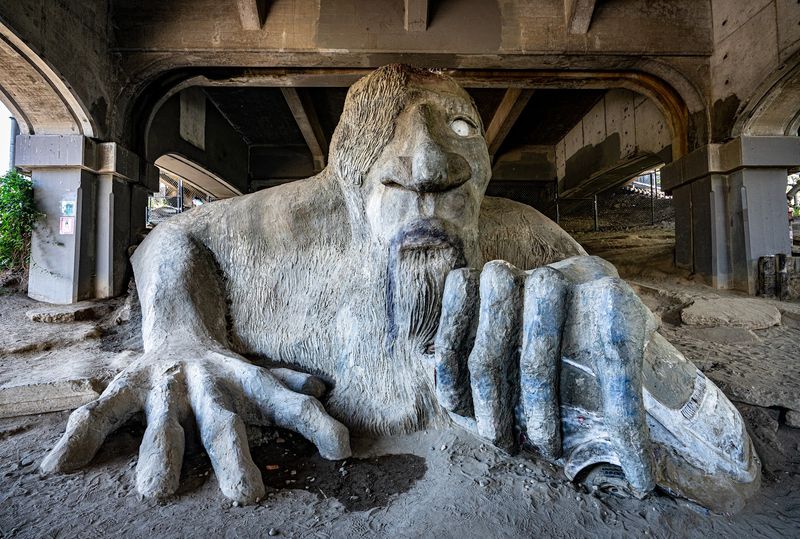
Back in the late 1980s, the space underneath Seattle’s Aurora Bridge was a neglected, trash-filled eyesore that nobody wanted to deal with. The Fremont Arts Council decided something bold had to be done, so they held a public art competition to transform the gloomy underpass into something worth visiting.
Four artists stepped up to the challenge: Steve Badanes, Will Martin, Donna Walter, and Ross Whitehead. Their winning concept was inspired by the Norwegian folktale “Three Billy Goats Gruff,” where a menacing troll lurks beneath a bridge waiting to confront travelers.
The folktale fit the location so perfectly it almost felt like destiny. The sculpture was completed and unveiled in 1990, and the community response was immediate and enthusiastic.
What had once been an ignored strip of urban land became a genuine neighborhood landmark almost overnight. The Fremont Troll did not just fill an empty space, it gave the entire neighborhood a personality, a story, and a reason to show up.
Even today, it still feels like one of those rare public art projects that completely changed how people see a place.
What The Troll Actually Looks Like Up Close
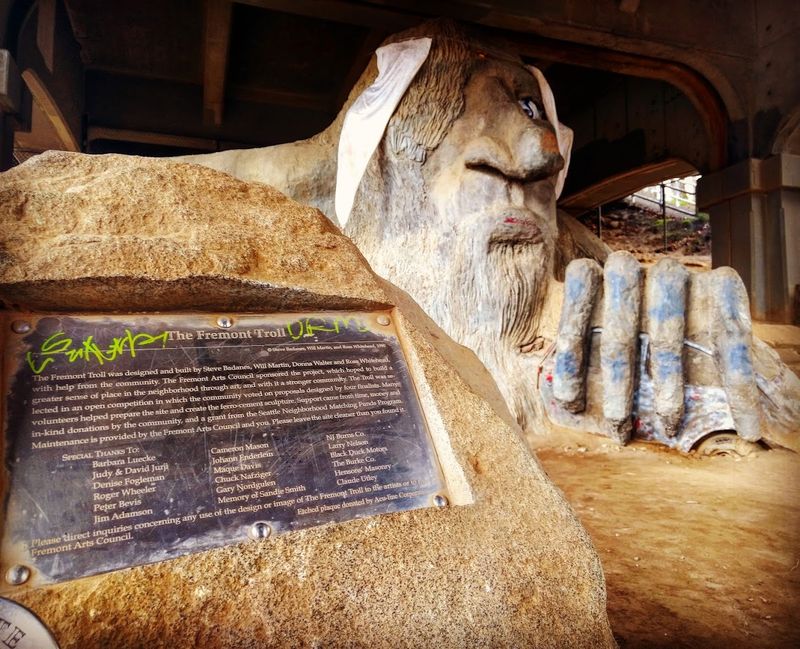
Standing 18 feet tall and tipping the scales at roughly 13,000 pounds, the Fremont Troll is not something you can describe as subtle. When you walk toward it for the first time, the sheer scale of the thing hits you before you even notice the details, and there are plenty of details worth noticing.
The troll’s face is rugged and expressive, carved from concrete to look weathered and ancient, with deep grooves and rough textures that make it feel like something that crawled up from a fairy tale. One eye is a shiny silver hubcap, which gives the sculpture an oddly winking, almost mischievous quality.
The other eye socket is hollow and shadowed, adding a sense of mystery.
In its left hand, the troll clutches a real Volkswagen Beetle, frozen mid-squeeze as if it just plucked the car from the road above. The car originally had a California license plate and was meant to hold a time capsule, but vandals got to it first.
The detail makes every visit feel like a discovery. It is the kind of sculpture that keeps pulling your eyes back because every angle seems to reveal something stranger or more playful than the last.
The Neighborhood That Built Its Identity Around A Troll
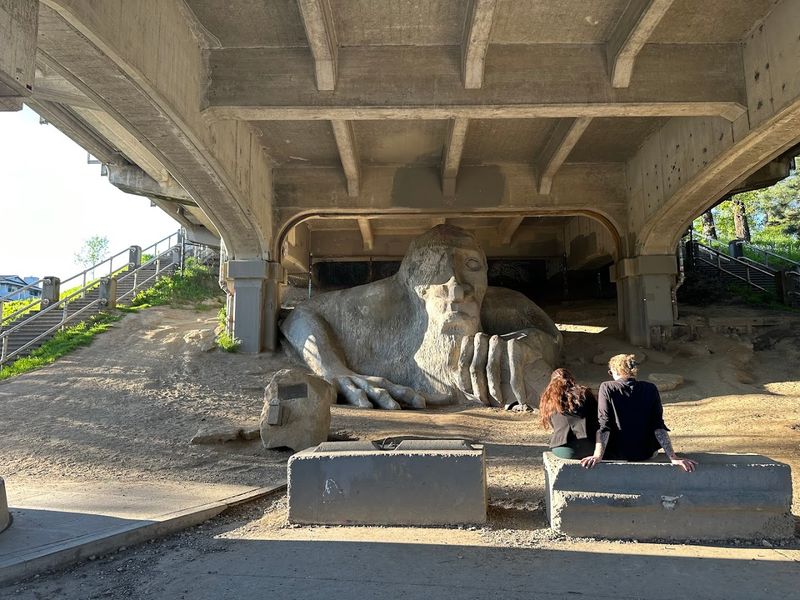
Fremont has long marketed itself as the “Center of the Universe,” a self-declared title that tells you everything you need to know about the neighborhood’s personality.
It is the kind of place where an 18-foot concrete troll feels completely at home, because the community around it is just as creative and unconventional.
Strolling through Fremont, you will find independent coffee shops, vintage clothing stores, weekend markets, and public murals tucked around nearly every corner. The street running directly beneath the Aurora Bridge has even been officially renamed Troll Avenue N., a nod to the neighborhood’s most famous resident.
Local businesses have fully embraced the troll as a symbol of Fremont’s identity. You can find troll-themed merchandise, artwork, and references scattered throughout the area. Every Halloween, the neighborhood throws a Troll-o-ween celebration that draws crowds from across Seattle.
The troll is not just a statue sitting in a corner; it is the living, breathing heart of a community that loves being a little different.
Why It Won The Best Public Artwork In The Mountain West
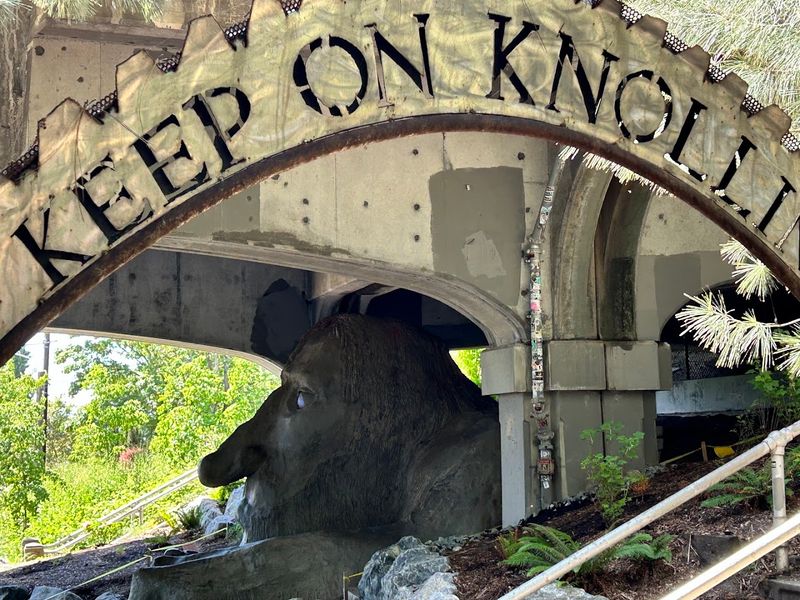
In 2025, Axios Local organized a regional contest to determine the best public artwork across the Mountain West, and the Fremont Troll came out on top by a wide margin. For Seattle locals, the result was not surprising at all.
For everyone else, it was a reminder that this concrete creature has a cultural pull that goes well beyond a fun photo stop. Public art is often judged by how well it integrates into its surroundings and how much meaning it carries for the people who live nearby.
The Fremont Troll checks both boxes with confidence. It transformed a forgotten urban space, anchored a neighborhood’s identity, and has kept people talking and visiting for over three decades.
Winning that regional title brought renewed national attention to the sculpture and sparked fresh conversations about what makes public art truly great. The troll does not sit behind a velvet rope or hang in a climate-controlled gallery.
It lives in the open, accessible to anyone willing to walk under a bridge, and that accessibility is a big part of why people love it so fiercely. That mix of whimsy, permanence, and everyday visibility is exactly what has helped the Fremont Troll endure as more than just a quirky local landmark.
Tips For Visiting The Troll Yourself
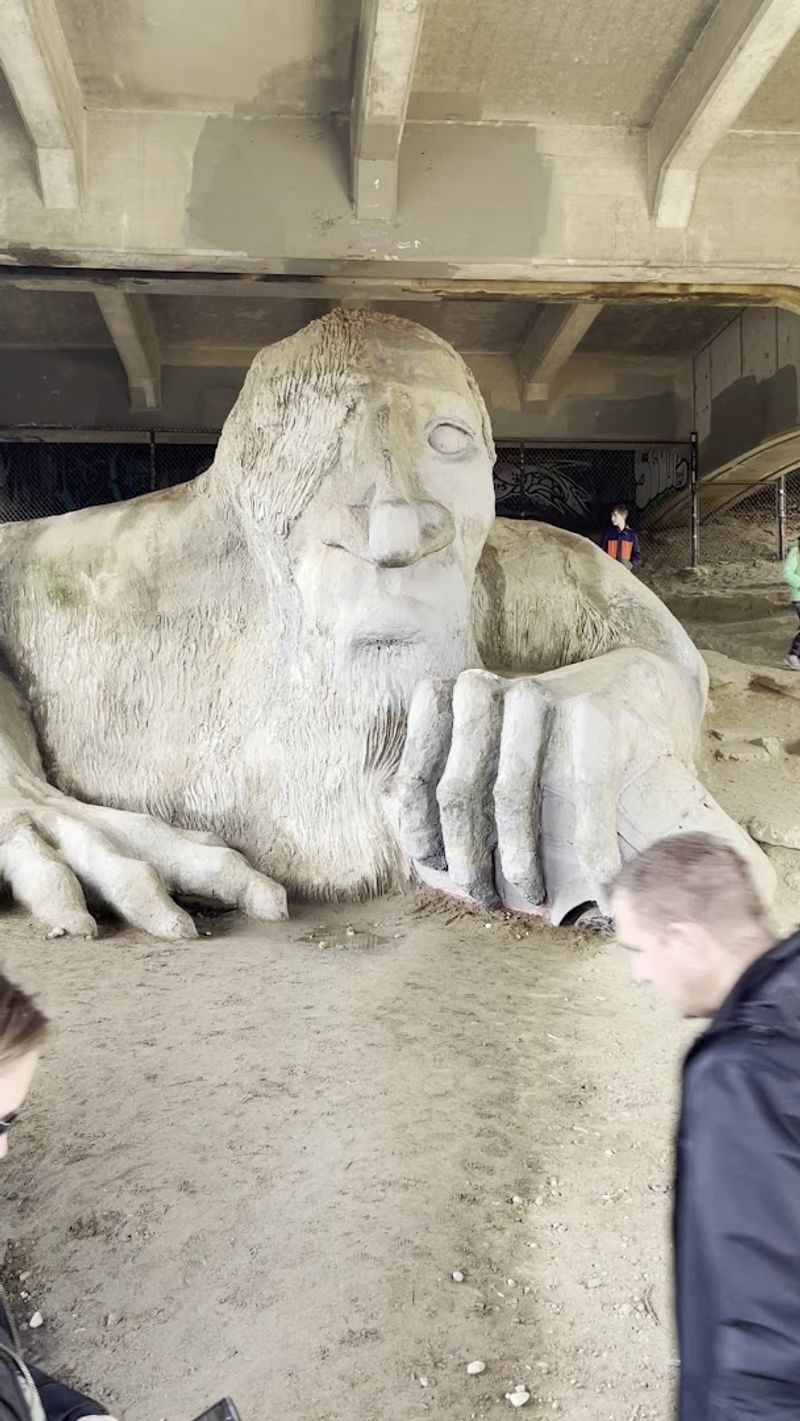
Finding the Fremont Troll is easier than you might expect. The sculpture sits at the intersection of N. 36th Street and Troll Avenue N. in Seattle’s Fremont neighborhood, directly beneath the north end of the Aurora Bridge.
Parking in the area can be a bit tight, so arriving by bus or rideshare tends to make the experience smoother. The troll is free to visit and accessible around the clock, which means early morning visits offer a quieter, more personal experience before the crowds arrive.
Weekends and summer afternoons tend to draw the biggest gatherings, especially families with kids who love climbing on the sculpture’s hands and arms. Yes, climbing is allowed and very much encouraged.
Bringing a camera is practically mandatory, since the troll makes for one of the most dramatic photo backdrops in all of Seattle. The shadows cast by the bridge overhead create interesting lighting at different times of day.
After your visit, the rest of Fremont is just steps away and well worth exploring on foot. The visit itself does not take long, but it is one of those stops that sticks with you long after you leave.
Between the troll, the bridge, and the artsy energy of Fremont all around it, the whole outing feels wonderfully and unmistakably Seattle.
The Volkswagen Beetle And The Lost Time Capsule
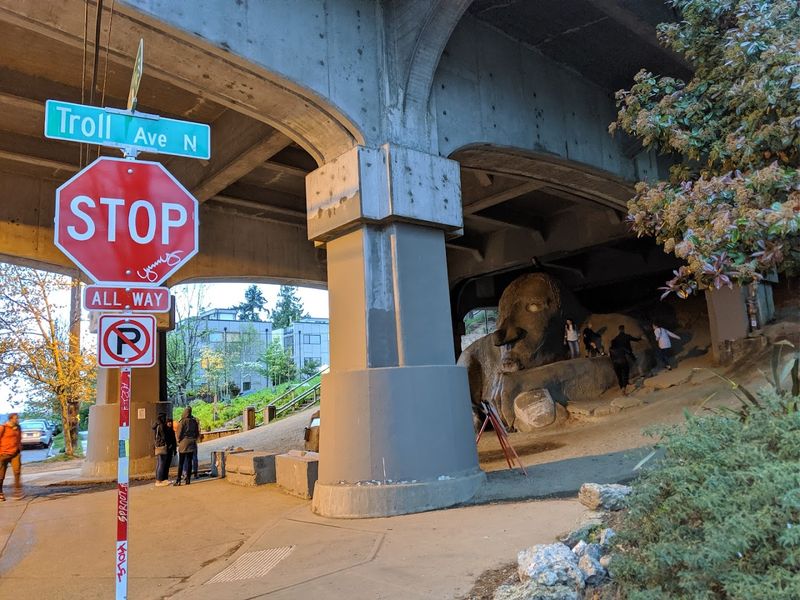
One of the most talked-about details of the Fremont Troll is the real Volkswagen Beetle embedded in its grip. The car was not added as a decorative afterthought; it was part of the original artistic vision from the very beginning.
The artists wanted something tangible and recognizable to ground the fantastical sculpture in everyday reality. When the troll was first installed, the Beetle still had its California license plate attached, and the plan was to use the car’s interior as a time capsule filled with Elvis Presley memorabilia.
The idea was charming and a little offbeat, which fit perfectly with the Fremont spirit. Unfortunately, vandals broke into the vehicle not long after the unveiling and made off with everything inside.
Despite that setback, the car itself has remained exactly where it was placed in 1990, slowly becoming part of the sculpture’s legend rather than a footnote. People still peer into the windows and wonder what might have been.
The story of the lost time capsule has become one of those small, human details that makes the troll feel like it has a real history worth uncovering.
What The Troll Means To Seattle’s Creative Culture
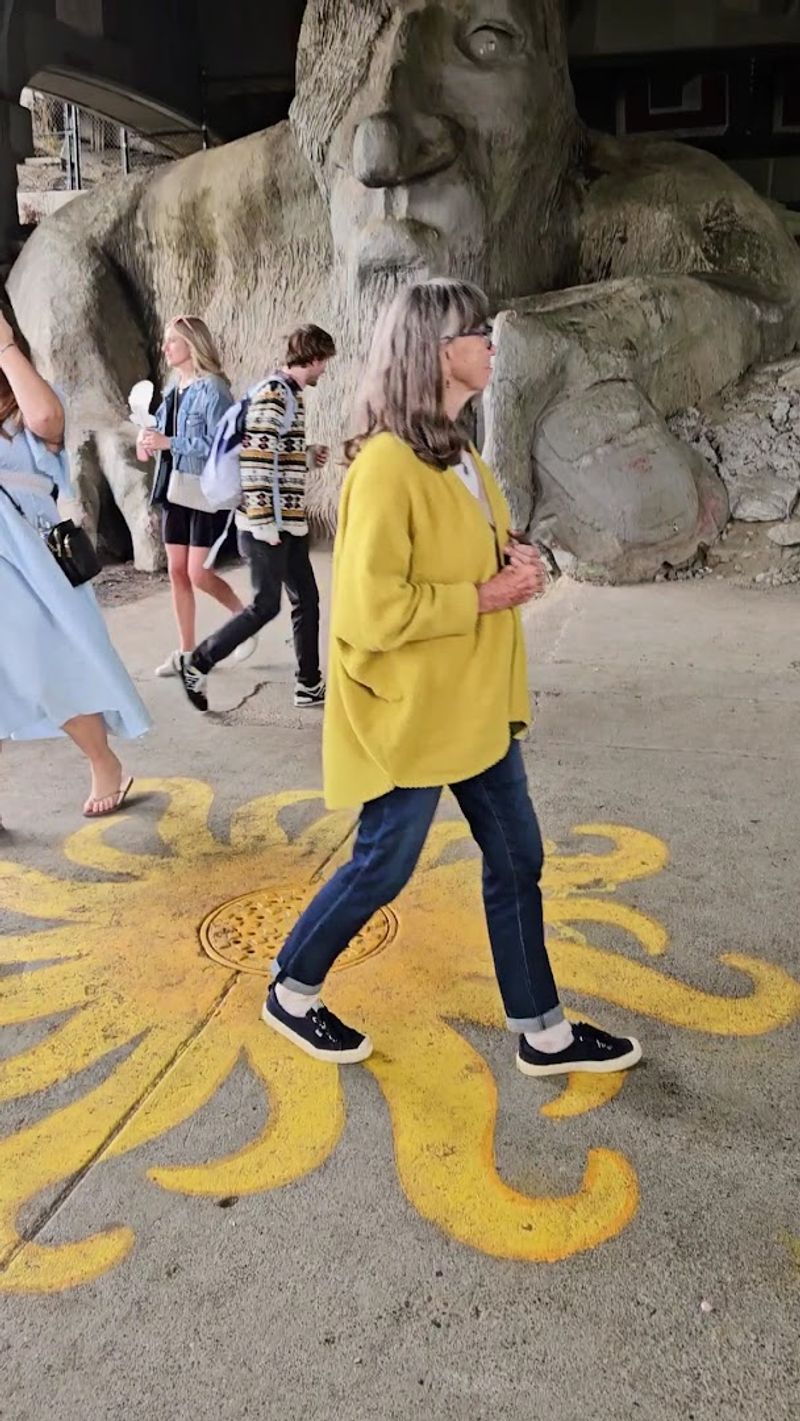
Seattle has no shortage of cultural landmarks, from the Space Needle to Pike Place Market, but the Fremont Troll occupies a special category all its own.
It represents something that polished tourist attractions rarely manage to capture: a genuine sense of community imagination that grew from the ground up rather than from a corporate planning meeting.
Artists, residents, and city officials came together around a shared vision, and the result has outlasted trends, economic shifts, and changing neighborhoods by more than thirty years. That kind of staying power says something real about the connection people feel toward the sculpture.
It is not just a curiosity; it is a source of local pride that crosses generational lines. For travelers visiting Seattle, the troll offers a window into the city’s creative soul that no museum exhibit or guided tour can fully replicate.
Standing beneath the Aurora Bridge, looking up at that enormous concrete face, you get the distinct feeling that Seattle is a city that takes its imagination seriously and has the giant concrete proof to show for it.