
Most People Drive Right Past Illinois’ Garden Of The Gods, Where Sandstone Bluffs Glow In Late Fall
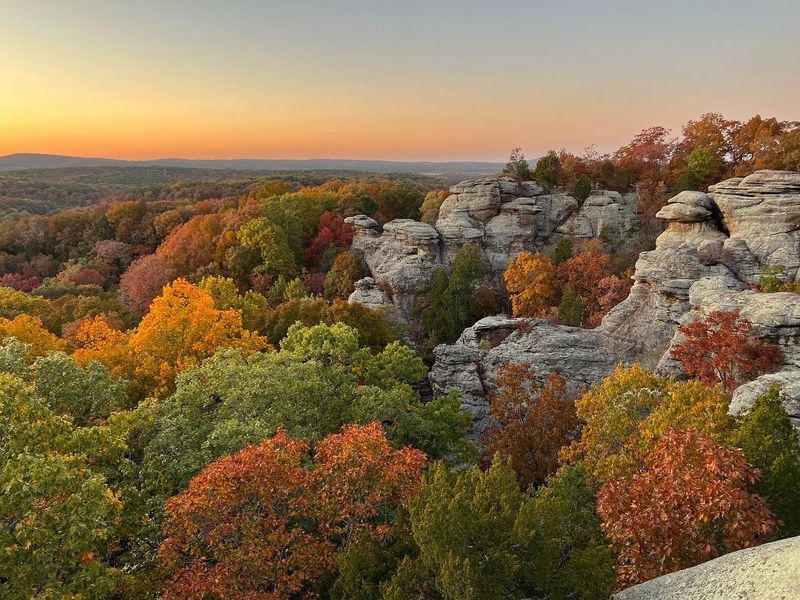
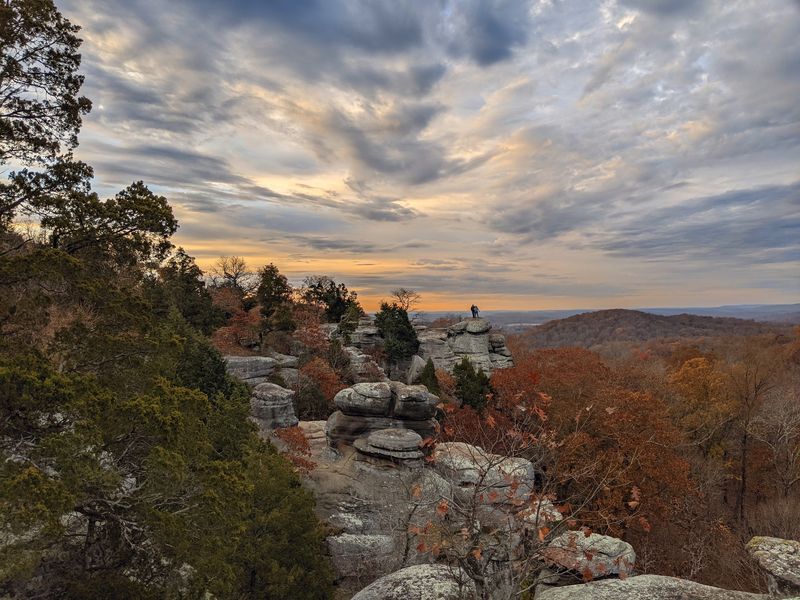
A rock shaped like a camel made it onto the back of an Illinois quarter, and most folks have no idea where it actually sits. Down in the far southern tip of Illinois, sandstone cliffs rise above a sea of trees, and in late fall they turn orange and pink as the sun goes down.
It costs nothing to visit, the main trail is short enough for grandparents and kids, and the views feel like they belong in another state. Here is why this quiet corner deserves a spot on your autumn plans.
A Rocky Surprise In Southern Illinois
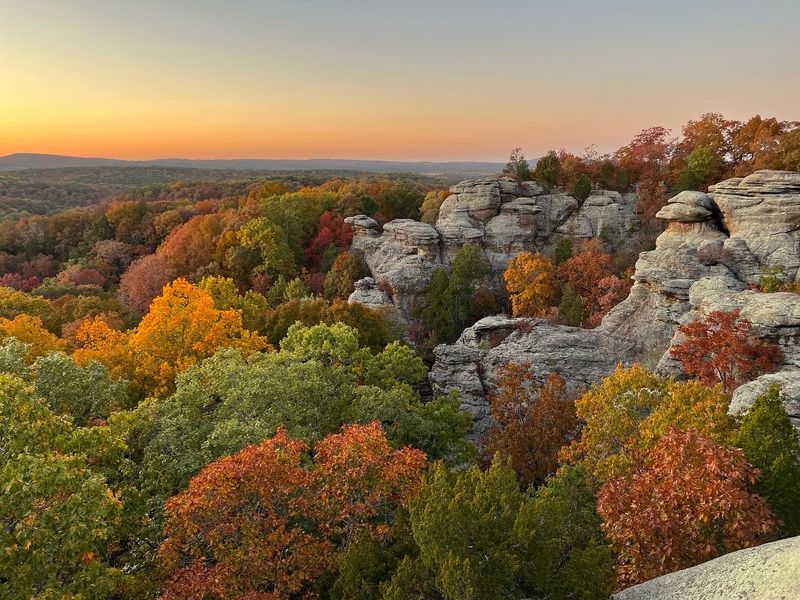
Flat cornfields are what most people expect from Illinois. Drive far enough south, though, and the land starts to buckle into hills, cliffs, and towering stone.
Garden of the Gods Recreation Area sits near the small community of Herod, inside the sprawling Shawnee National Forest. The surrounding wilderness covers 3,318 acres and stretches across parts of Hardin, Pope, Saline, and Gallatin counties.
That is a lot of wild ground for a state known mostly for farmland and big-city skylines.
The star attraction is a cluster of massive sandstone formations perched high above the forest. From the overlooks, you can see ridge after ridge rolling toward the horizon, and the whole scene looks nothing like the rest of the state.
Many first-timers say it feels like stepping into a completely different part of the country.
Plenty of families who live just a few hours away have never made the trip. Travelers headed to bigger destinations often zip right past the turnoff without a second thought.
That is a shame, because this spot packs dramatic scenery, easy walking, and real wow moments into one compact outing. For anyone in Illinois hunting for a hometown gem with bragging rights, few places come close.
Stone Shaped By An Ancient Sea
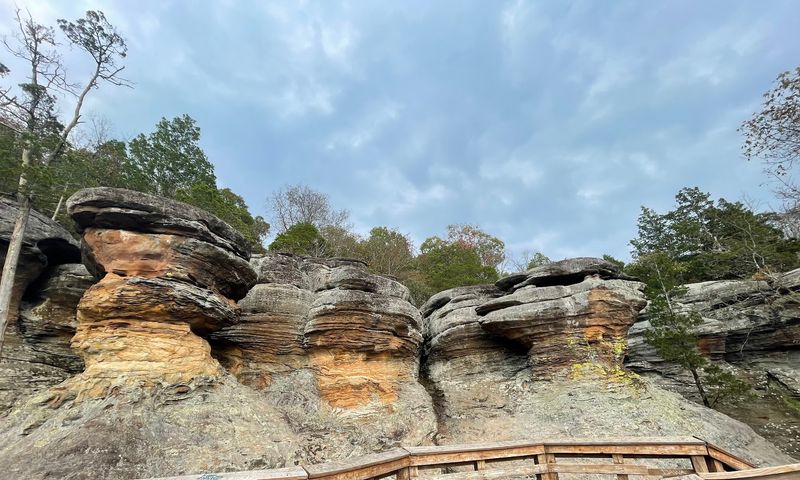
Roughly 320 million years ago, this corner of Illinois sat beneath an inland sea. Sand piled up in thick layers on the bottom and slowly hardened into a heavy bed of gray sandstone.
Fast forward a few hundred million years. When glaciers crept across most of Illinois and flattened the land, this raised sandstone plateau escaped their grip.
Instead of being scraped smooth, the rock was left to the slower work of wind, rain, and the endless cycle of freezing and thawing.
Those forces chipped, carved, and polished the stone into the hoodoos and bluffs standing today. Look closely and you will spot swirling bands, odd pockets, and honeycomb-like textures on the rock faces.
Each one is a record of time and weather written right into the stone.
Interpretive signs along the main trail explain this story in plain terms, which makes it a sneaky little geology lesson for kids. Curious young minds tend to love learning that they are standing on an old sea floor.
Grown-ups often find it just as amazing. Seeing what millions of years of erosion can do to a landscape gives the whole visit a sense of wonder that sticks around long after the drive home.
Camel Rock And Its Curious Neighbors
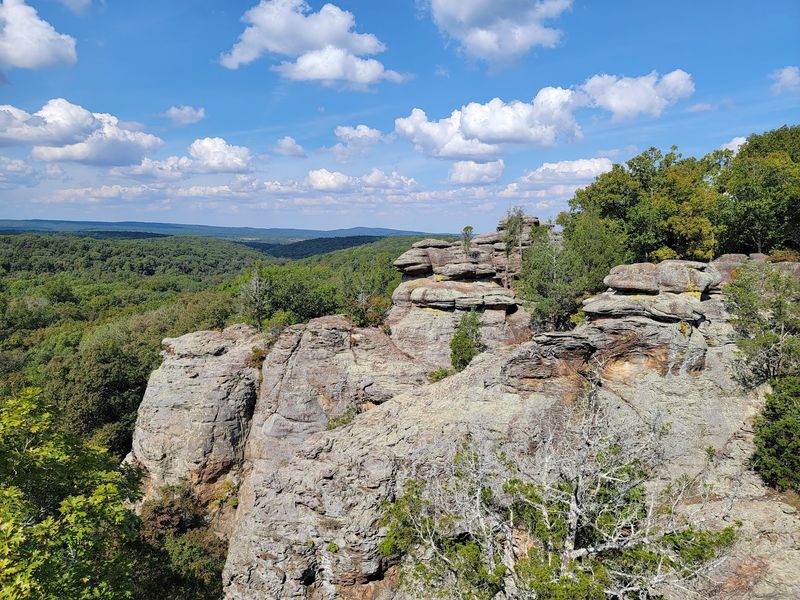
Kids usually spot it first. One long, humped boulder looks exactly like a camel kneeling to rest, and it has become the most famous landmark in the whole area.
Camel Rock earned so much fame that it appeared on the 2016 Illinois state quarter. Digging through your coin jar before the trip and finding one makes a fun little scavenger hunt for the family.
Holding the coin up next to the real rock is a photo nobody will forget.
The camel is far from alone. Other formations carry playful names like Anvil Rock, Table Rock, Mushroom Rock, and Devil’s Smokestack.
Each one looks a bit like its namesake, depending on where you stand and how much imagination you bring.
Many visitors notice that the rocks seem to have faces or resemble different animals from a distance. That turns a simple walk into a guessing game, with everyone pointing and calling out what they see.
A turtle here, a grumpy old man there, maybe a bear shoulder over by the ledge.
Bring patience and a sharp eye. The longer you look, the more shapes start popping out of the sandstone, and that sense of discovery is half the fun.
The Quarter-Mile Observation Trail
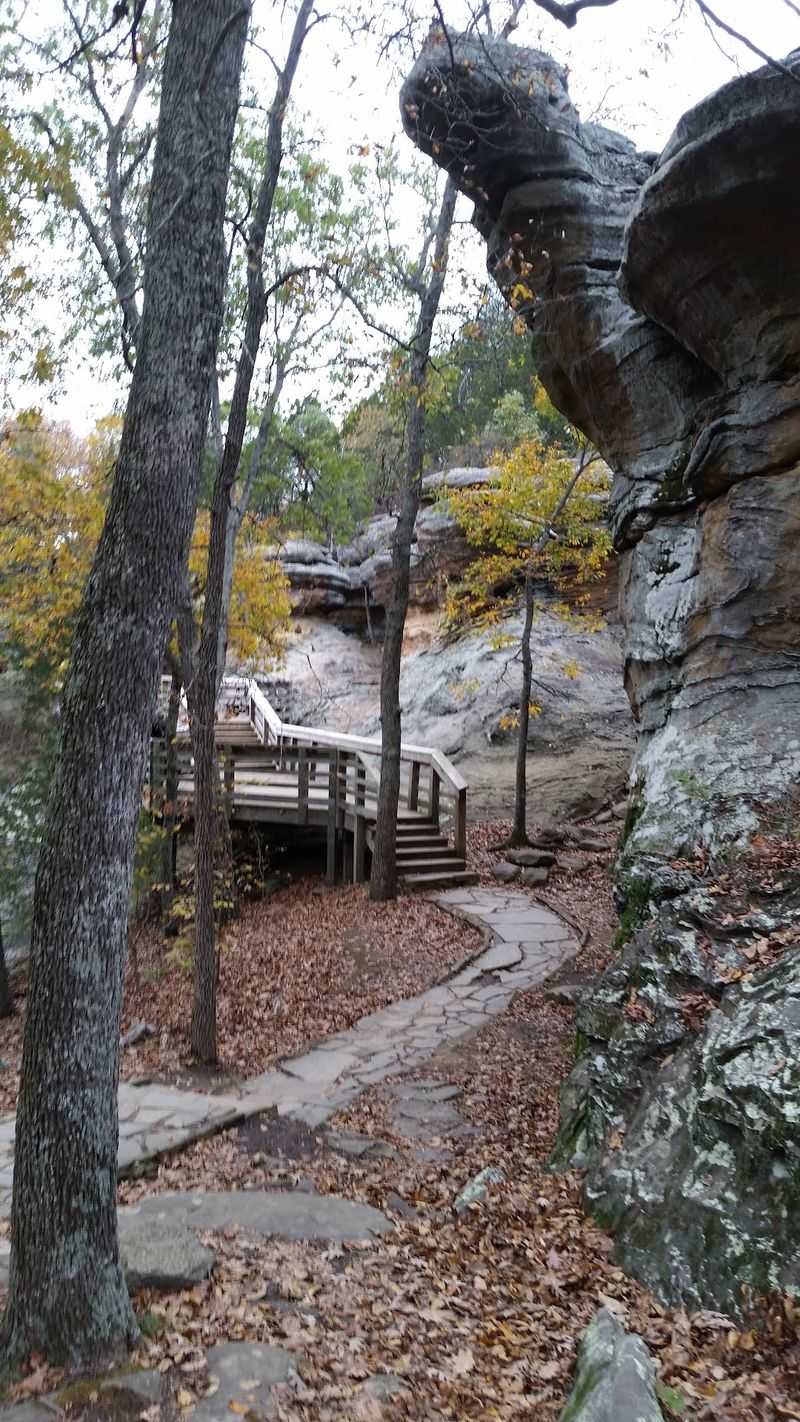
Only about a quarter mile long, the Observation Trail proves that big views do not require a big hike. Most of the loop is laid with flagstone pavers, with a few wooden steps and some gentle inclines along the way.
The start feels fairly ordinary, winding through trees. Then the path climbs, the forest opens up, and suddenly you are standing on top of the bluffs with southern Illinois spread out below.
Every few steps brings another formation and another sweeping lookout, and each one seems to top the last.
Here is a handy tip from regulars: heading to the right from the start puts the stairs on the way up, which many find easier on the knees. It also saves the most impressive stacked sandstone for the end, like a grand finale, followed by a gradual stroll back down.
Signs suggest the walk takes around 45 minutes, but plenty of people linger for an hour or more. Benches and rocky perches invite you to sit and soak it in.
The trail suits a wide range of ages, from young kids to grandparents in decent shape. Folks with back trouble have found trekking poles make it very manageable.
When The Bluffs Turn Orange And Pink
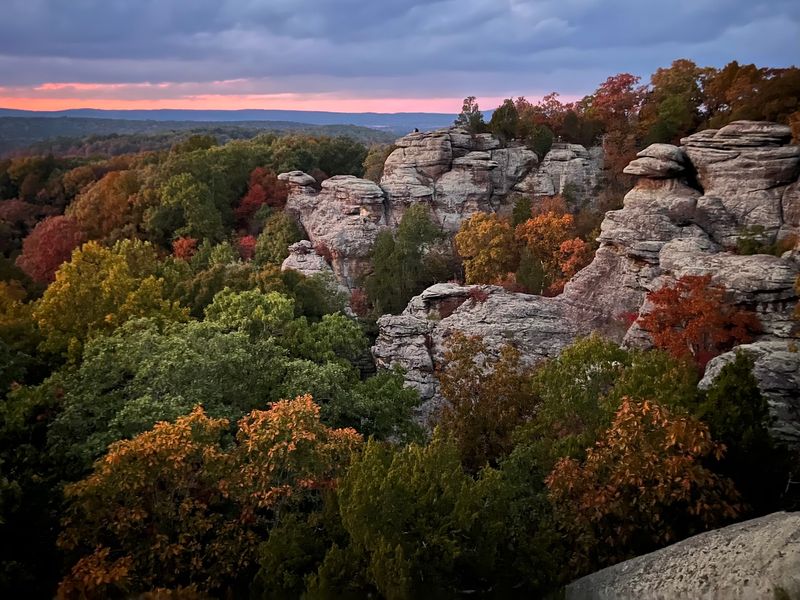
Late October into early November is when this place truly shows off. As the sun rises or sets, the sandstone bluffs are said to glow in warm shades of orange and pink.
Meanwhile, the forest below bursts into reds and golds. Standing on the overlook during that window feels like watching a painting come to life, with color in every direction.
Fall colors come up again and again when people describe their favorite visits.
Sunset lines up nicely with the main highlights here, so evening light offers great photo chances. Families planning a fall day trip might head down in the afternoon, walk the loop, and then settle onto a rock to watch the sky change.
Pack a warm layer, because temperatures drop quickly once the sun slips away.
Since the area is open 24 hours, early risers can also catch the sunrise glow before most people arrive. Morning visits tend to be quieter and cooler.
Peak autumn weekends do draw crowds, though. Arriving early or choosing a weekday makes a big difference if you want breathing room at the overlooks.
Either way, the season delivers a show that rivals any fancy fall getaway, and it will not cost a dime.
More Miles For Wanderers And Birders
Short loop finished and still itching to explore? Good news, the fun keeps going well beyond the main overlook.
Garden of the Gods offers about 5.5 miles of interconnecting hiking trails. The broader wilderness area adds another 15 miles of multi-use paths, and some of those are open to horseback riding.
Several routes are easy, while a couple lean more toward moderate, giving everyone a way to stretch their legs at their own pace.
Many visitors realize they could easily spend half a day here, or even plan a return trip just for the longer trails. One quick stop often turns into a promise to come back.
Bird lovers have even more reason to slow down. More than 250 species of birds have been spotted in the area, including raptors soaring along the cliffs.
Bringing binoculars turns a quiet walk into a treasure hunt in the sky.
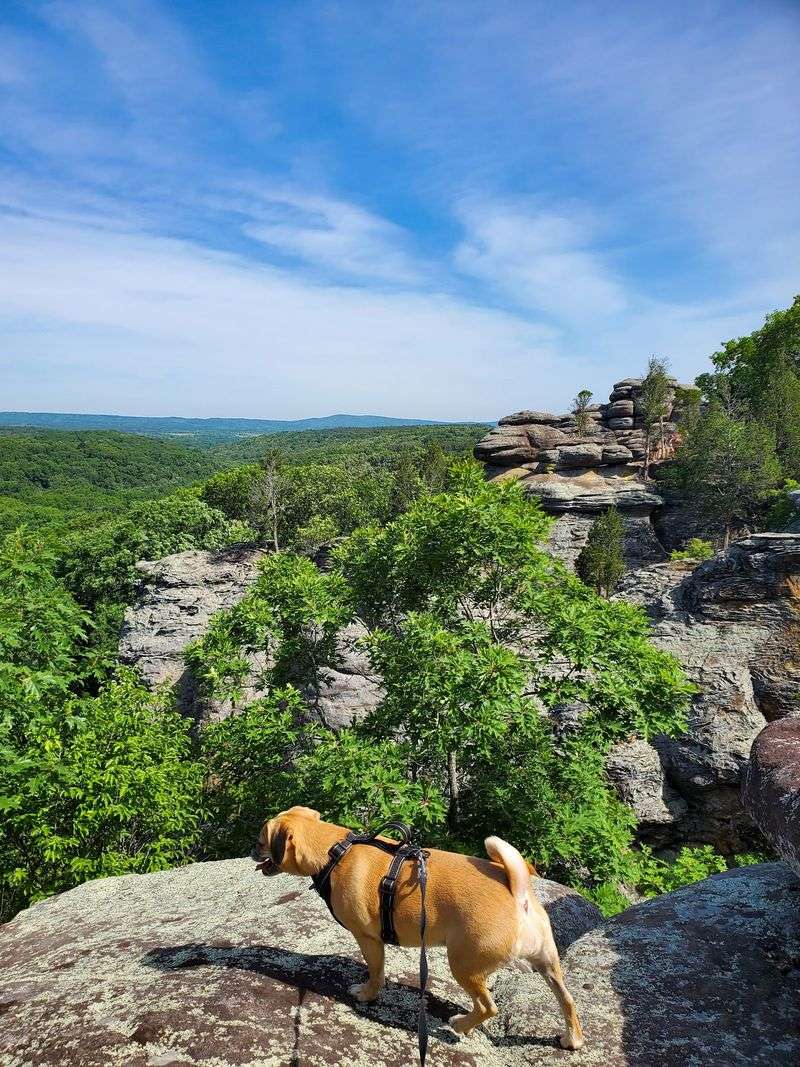
Dogs are welcome too, so the family pup can tag along on the adventure. Keep leashes handy and pick up after your four-legged hiker.
A word to the wise: after heavy rain, some trails can flood out. Checking the weather before you go helps keep plans on track.
Safety Smarts For Little Climbers
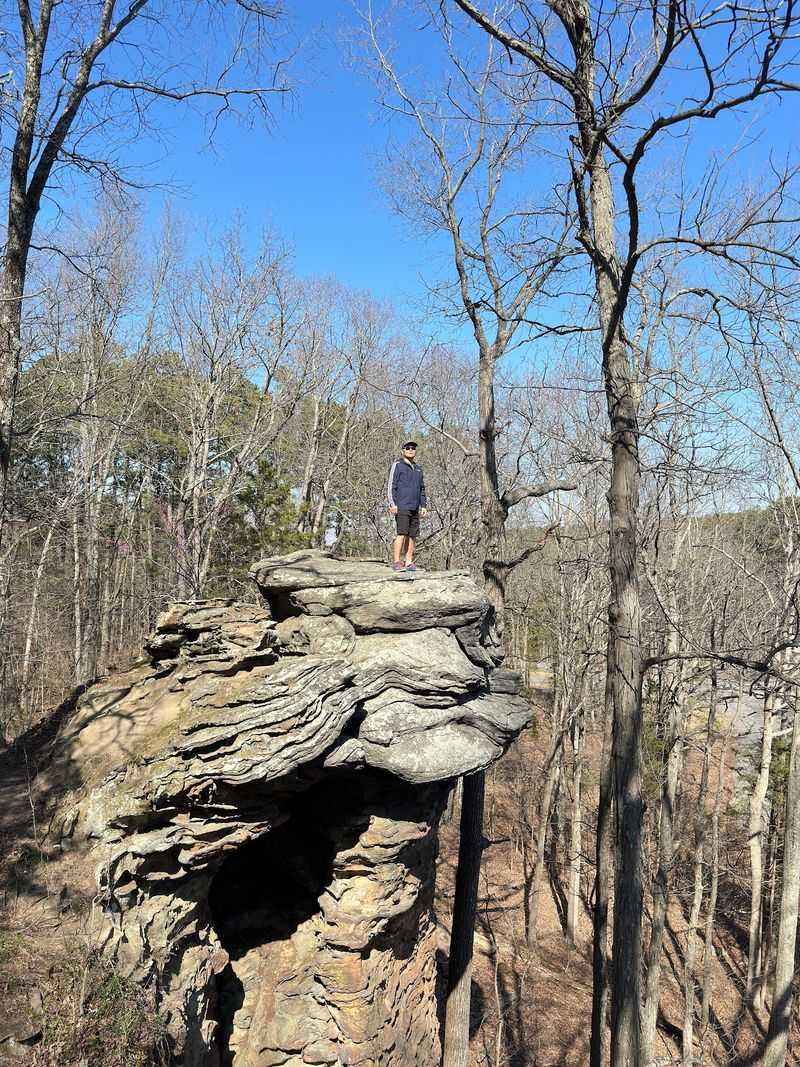
Kids treat the rocks like a giant playground, and honestly, it is easy to see why. Climbable boulders, nooks, and ledges pop up everywhere just off the path.
That same freedom comes with a real catch. Steep drop-offs sit close to many of the best viewpoints, and there are no fences along most edges.
Keeping a close eye on little ones is a must, especially near the cliffs where curious feet love to wander.
Moisture changes things too. Even a light dampness can make the sandstone slick, so take extra care after rain or early in the morning.
Sturdy, supportive walking shoes or hiking boots make a big difference on uneven spots.
A few sections of the paved trail have broken areas that could be tricky for strollers or anyone using a wheelchair. Families with very small children might consider a carrier instead.
On the practical side, restrooms are basic pit toilets near the parking area, so bring hand sanitizer and wipes. Packing water and snacks is smart, since this is a wild place rather than a developed attraction.
With a little planning, the adventure stays fun, and everyone heads home with great stories instead of scraped knees.
Free Admission, Campfires, And A Worthy Drive
Budget-minded families, rejoice. Admission to Garden of the Gods is completely free, which makes it one of the best bargain outings anywhere in Illinois.
The area is open 24 hours a day, every day of the week. Parking sits conveniently close to the main trailhead, so you can be on the path within minutes of stepping out of the car.
Picnic areas make it simple to bring lunch from home and keep costs low.
Want to stretch the trip? Pharaoh Campground operates year-round with 12 campsites.
Each comes with a fire pit and picnic table, and the campground offers toilets and drinking water. Roasting marshmallows under a southern Illinois sky is the kind of memory kids bring up for years.
Plenty of places to eat and stay can be found nearby, and many people say the scenic drive down is part of the joy. Folks have made the long trek from Chicago and called it completely worth it.
So next time you are cruising through the southern tip of the state, take the turn. A quarter-mile walk, a famous camel, and glowing autumn bluffs are waiting, and the price of admission is simply showing up.