
Must See Michigan Roadside Attractions For Your Next Drive
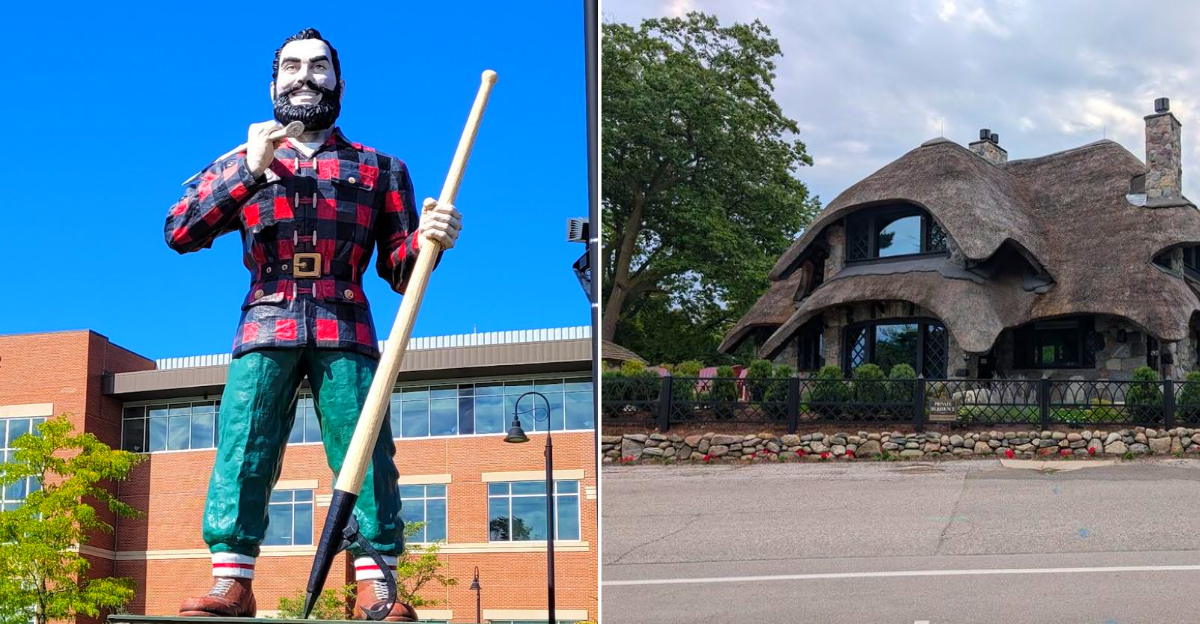
I’ve always found that the best parts of a Michigan road trip aren’t necessarily the things you have to buy a ticket for, but the oddities that catch you by the eye on the shoulder of a two-lane road. Our state has this wonderful habit of hiding folklore, engineering stunts, and pure art right where you least expect them.
I’ve spent countless afternoons chasing down “castles” that were originally built as dairy farms and walking through quiet, prayerful shrines tucked so deep into the pine shade that you can almost hear the trees breathing.
Roadside attractions in Michigan offer a quirky and unforgettable journey through local history, unique architecture, and creative folk art.
Some of these places quietly reveal deep, generational stories, while others are just here to make you smile and pull over. Stick with me as I reveal my favorite detour-worthy spots that prove the journey is far more interesting than the destination.
1. Cross In The Woods, Indian River
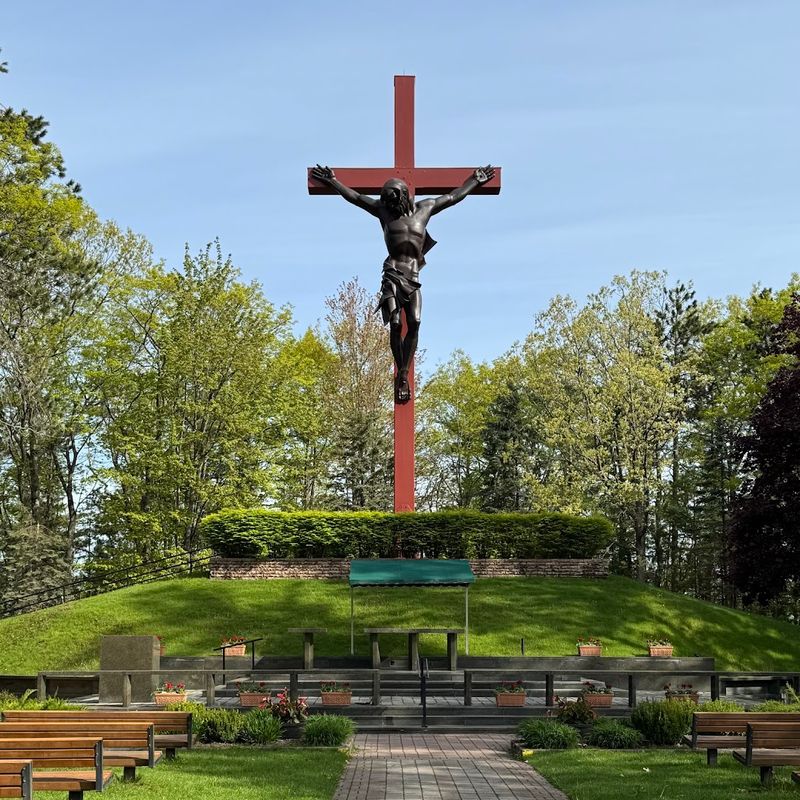
A towering crucifix rises among the pines at Cross in the Woods, quieting chatter the moment you step from the car. The bronze figure, a masterpiece by sculptor Marshall Fredericks, stands 28 feet tall on a massive cedar cross.
History threads through the site, from its humble 1950s origins to the ample devotionals that draw pilgrims yearly. The Nun Doll Museum is an absolute must-see.
It displays dolls in intricate, historically accurate habits, representing hundreds of different orders. It is equal parts impressive craftsmanship and fascinating curiosity.
I like arriving at the golden hour, when the setting sun warms the carved Stations of the Cross and the long wooden benches. Parking is simple and accessible.
But remember to bring a respectful quiet and perhaps a light sweater. The pine canopy keeps the air brisk even in the height of July.
This sanctuary was the dream of Father Charles D. Brophy, who wanted a Cross in the Woods that would serve as a beacon for the traveling public. Today, it remains one of Michigan’s most visited spiritual landmarks.
2. Marvin’s Marvelous Mechanical Museum, Farmington Hills
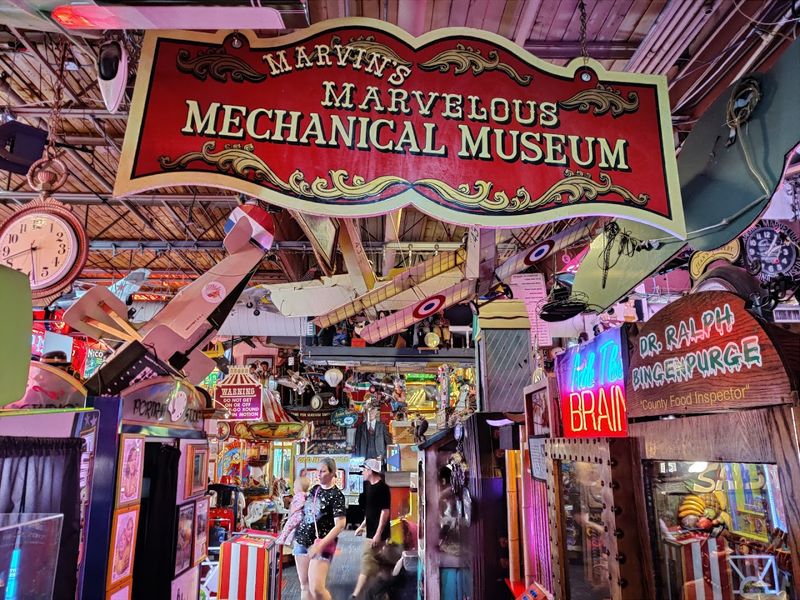
Lights blink in every direction at Marvin’s Marvelous Mechanical Museum, a kaleidoscope of coin-ops and vintage neon that feels like a fever dream in a strip mall. The air smells like fresh popcorn and machine oil.
Animatronic fortune tellers cackle beside old-fashioned penny pinchers and mechanical belly dancers. The walls are crammed with circus banners, historic patents, and hand-lettered jokes.
They reward the observant visitor at every turn. It is a sensory overload in the best possible way.
Founder Marvin Yagoda curated these rarities for decades, turning this Farmington Hills spot into a living archive of human ingenuity and humor. You will see kids hovering over modern pinball machines.
Grandparents point out the mechanical games they remember from lakeside summers long past. To get the most out of your visit, bring a stack of small bills for the change machines.
Many of the oldest machines still take pennies or nickels. That lets you experience history for a literal pittance.
3. Mystery Spot, St. Ignace
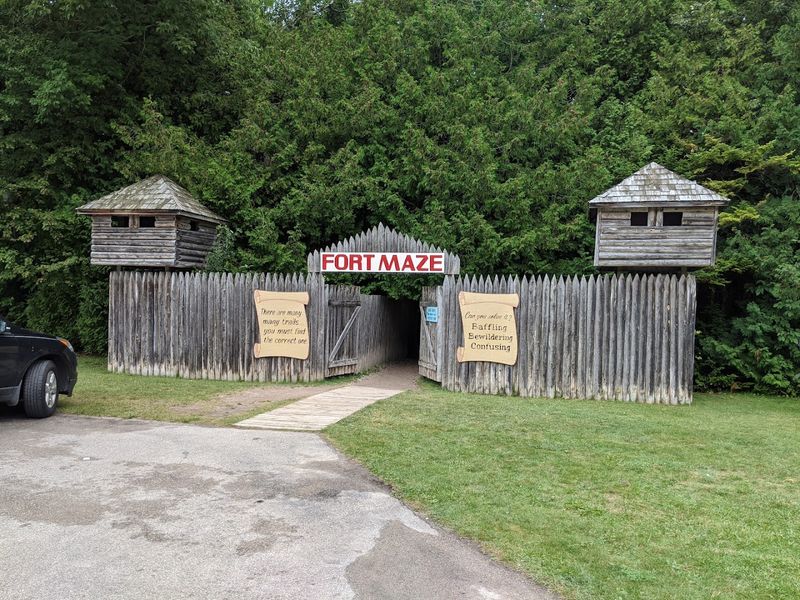
At the Mystery Spot, your inner level gets confused the second the guide tilts a board and water appears to climb uphill. This is a classic of the roadside genre.
Floors lean at impossible angles, bodies appear to change height, and simple physics tricks become dizzying inside the crooked wooden shack. Laughter bubbles up because your senses insist on one thing.
Your eyes report something completely different. It is a delightful, dizzying challenge to your equilibrium.
It has been baffling travelers since it first opened.
Opened in the early 1950s along US-2, it mirrors a grand American tradition of gravity hills and roadside curios. The story goes that surveyors in the 1950s found their equipment went haywire in this specific patch of woods.
That discovery led to the mystery. The setting high above St. Ignace grants beautiful, pine-framed glimpses toward the Straits of Mackinac.
Go with a playful mood and shoes with a decent grip, as the slanted floors are part of the fun. The tour guides have a practiced patter that makes the show.
4. Castle Farms, Charlevoix
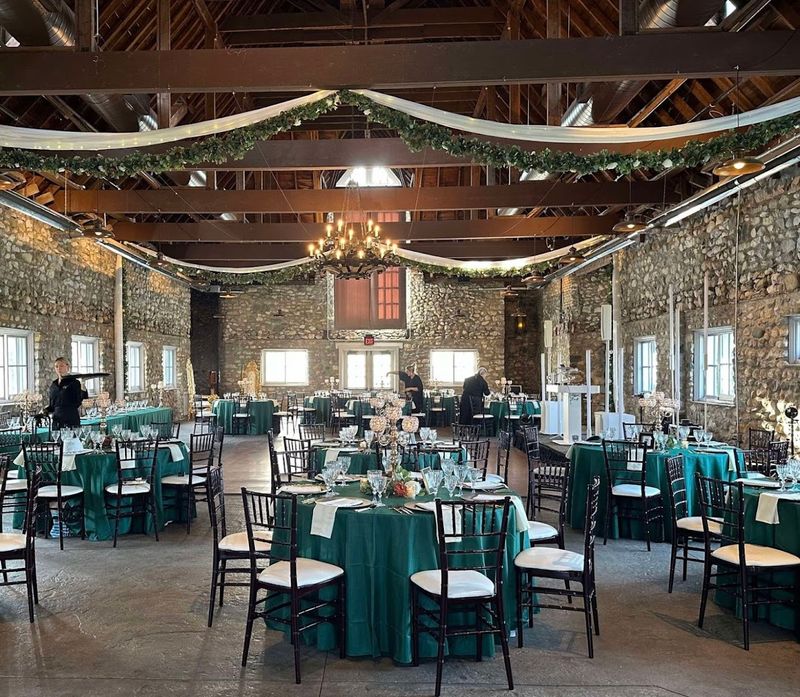
Gray stone gables rise like a French fairy tale at Castle Farms, but the story behind them is one of pure Michigan perseverance. Built in 1918 by Albert Loeb, the acting president of Sears, Roebuck & Co., the estate began as a model dairy farm.
It was designed to resemble the stone barns of Normandy. Over the century, it transitioned from a farm to an art gallery.
It even hosted legendary rock concerts in the 70s and 80s before a meticulous restoration returned it to its formal, regal bones.
Today, the gardens smell of fresh thyme and lavender, and the pond lilies mirror the stone turrets in the still water. I often linger by the massive stone archways.
I like tracing the tool marks that have survived a hundred years of northern Michigan weather. The preservation here is world-class.
There are exhibits throughout that explain the techniques used, from sourcing compatible limestone to stabilizing massive timber trusses.
Weekdays are usually unhurried and peaceful, though the castle is a premier wedding destination. So it is a smart move to check their public tour calendar before you arrive.
5. Mushroom Houses, Charlevoix
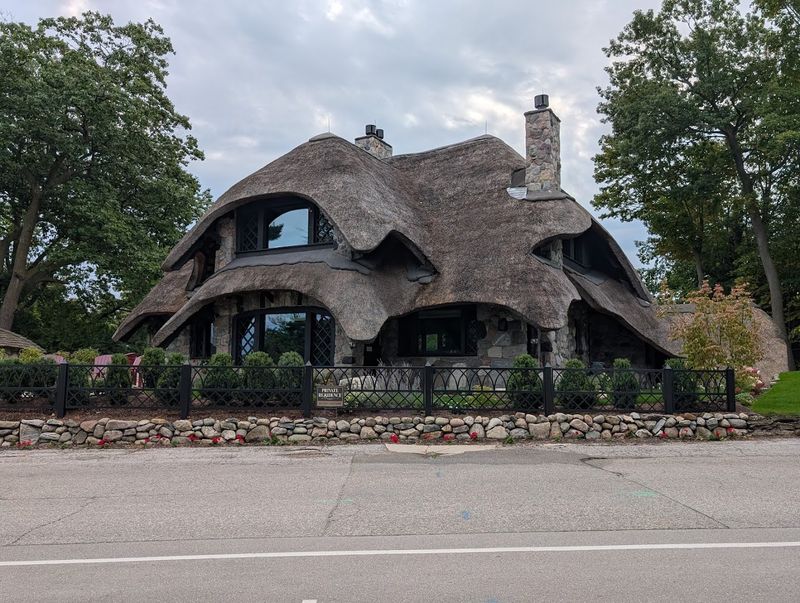
Shingled caps and swooping stone walls make Earl Young’s Mushroom Houses feel like they were grown from the damp earth after a particularly heavy rain. Chimneys bulge with organic curves, and doors seem to melt into the stone.
Massive boulders nest like sleeping animals along the quiet lanes near downtown Charlevoix. The rooflines hunker close to the landscape.
That was a design choice meant to keep the winter winds at bay and the summer afternoons cool and shady.
Earl Young never officially trained as an architect, yet his organic design language shaped a distinctive neighborhood that has become world-famous. Working from the 1910s through the 1950s, he insisted on using local stone.
Limestone, fieldstone, and granite all helped create homes that looked like they belonged to the land. While several of these homes are private residences, you can take guided tours.
They point out subtle details you might otherwise miss, like the fieldstone ribbons and the wavy eaves that mimic the rolling waves of nearby Lake Michigan.
Always respect the residents by staying on the sidewalks and keeping noise to a minimum. There are several properties, like Stafford’s Weathervane Restaurant, where you can actually step inside.
6. World’s Largest Tire, Allen Park
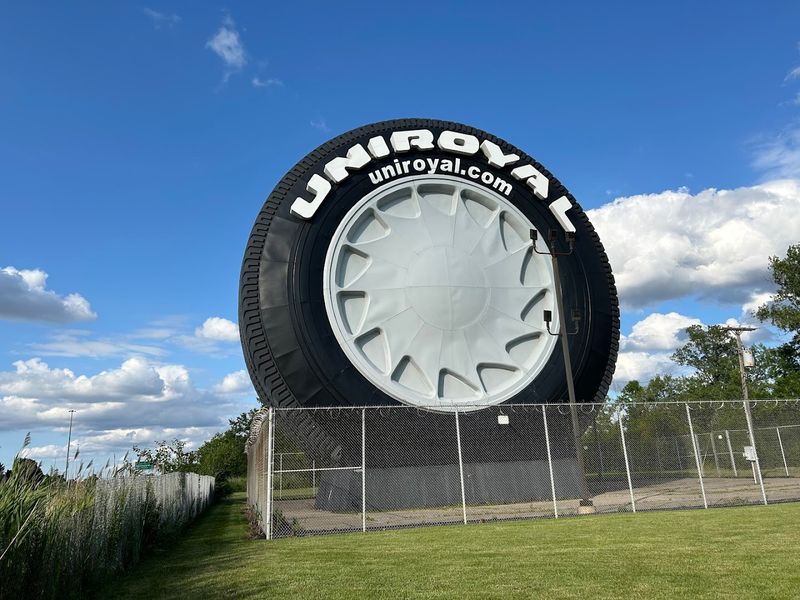
Just off the busy lanes of I-94, a colossal whitewall looms high above the traffic, lettered with the familiar, bold Uniroyal script. The World’s Largest Tire is a genuine piece of Americana with a fascinating resume.
It originally served as a Ferris wheel for riders at the 1964 New York World’s Fair. After the fair ended, the tire was disassembled into 22 pieces and shipped to Allen Park in 1965.
Standing 80 feet tall, the tire is a marvel of scale, with its ribs and lug nuts detailed to heroic proportions. It serves as a literal landmark for locals navigating the Detroit crawl.
Maintenance crews have worked hard over the decades to keep the fiberglass and steel skin looking crisp. Interestingly, for a brief marketing stunt in the late 90s, a giant nail was even stuck in the tire.
There is no formal visitor center or museum here. It is a roadside attraction in the purest sense.
To get a good look, plan a quick pull-off into the nearby parking lots or use the designated viewing areas on the shoulder. Morning light is best for photographers.
7. Legs Inn, Cross Village
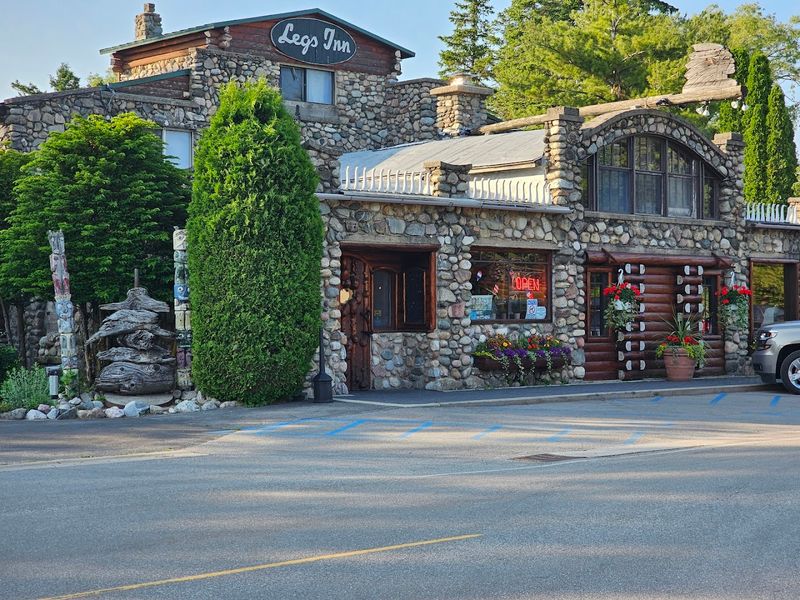
Perched at the northern terminus of the famous Tunnel of Trees, Legs Inn looks like a dark-timbered fairy tale forged from driftwood and fieldstone. It is a monumental piece of folk art as much as it is a restaurant.
Hand-carved mushrooms, stove legs, the namesake of the inn, and intricate antlers sprout across the dining rooms. Each corner honors the Kashubian Polish roots of the founders.
Outside, the bluff lawn frames Lake Michigan in an unruly, spectacular rectangle of blue.
I always come hungry for the Pierogi and the Whitefish, which are staples of the region. I make it a point to linger over a slice of Blueberry Pie while the local gulls heckle the picnic tables.
The Smolak family has carefully preserved these recipes and the incredible folk art since the 1920s. That has turned what could have been just another seasonal eatery into a vital cultural waypoint.
Note that the inn has gone cashless, so bring your card. Parking can be a bit of a puzzle when the crowds arrive.
8. The Heidelberg Project, Detroit
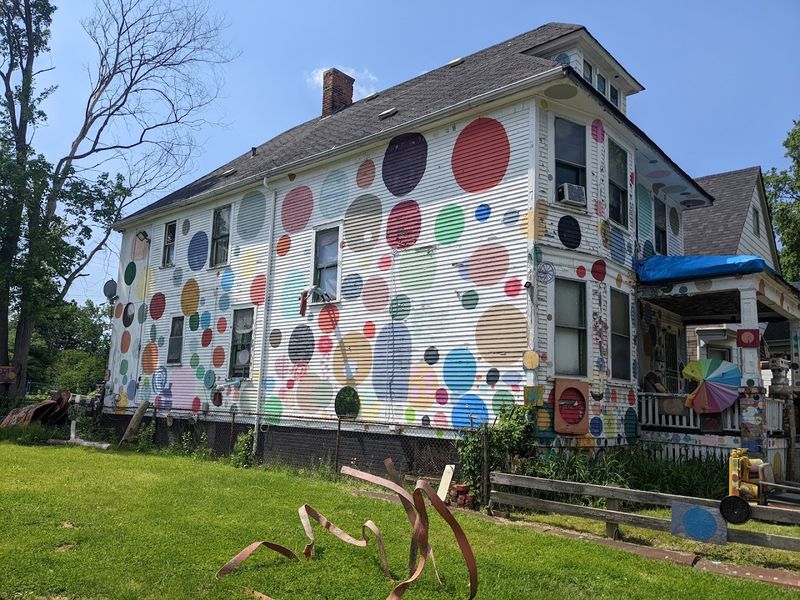
On Detroit’s east side, entire houses become vibrant, sprawling canvases in The Heidelberg Project. This is an outdoor art environment that is polka-dotted, clock-studded, and defiantly alive.
Shoes dangle from the branches of trees, stuffed animals are lined up like soldiers on front porches, and bold messages sprawl across the weather-beaten siding. The street feels both playful and pointed.
It asks every visitor to reckon with the themes of absence, resilience, and the power of neighborhood memory.
Artist Tyree Guyton launched this evolving installation in 1986 with his family and neighbors. He used art to confront urban blight through color and assemblage.
Because it is an active, living project, the works change frequently. Pieces are removed, others reappear, and new houses are added to the fold.
That means each visit is a new chapter in a long story rather than a walk through a static museum.
Engage quietly with the art. If you see a docent or a volunteer, do not be afraid to ask questions.
9. Paul Bunyan Statue, Brooklyn

In the heart of the Irish Hills near Brooklyn, a towering Paul Bunyan guards the entrance to the old Stagecoach Stop with his massive axe at the ready. Standing tall against the Michigan sky, the fiberglass giant is a classic example of the American roadside tall tale tradition.
He is a cousin to the famous muffler men and fairground mascots of the mid-century. Years of weathering have softened his paint.
But that somehow only adds to the nostalgic, summer-camp vibe of the whole area.
I always make it a point to pull over for a goofy grin and a photo with the big guy.
Local lore says the property has cycled through various owners and closures over the years. So while the buildings might not always be open, the lumberjack is always there to greet passersby.
Traffic on US-12 moves quickly, so be careful when pulling onto the shoulder and avoid blocking any private driveways. The best time for a portrait with Paul is in the morning.
10. Smiley Face Water Tower, Caspian
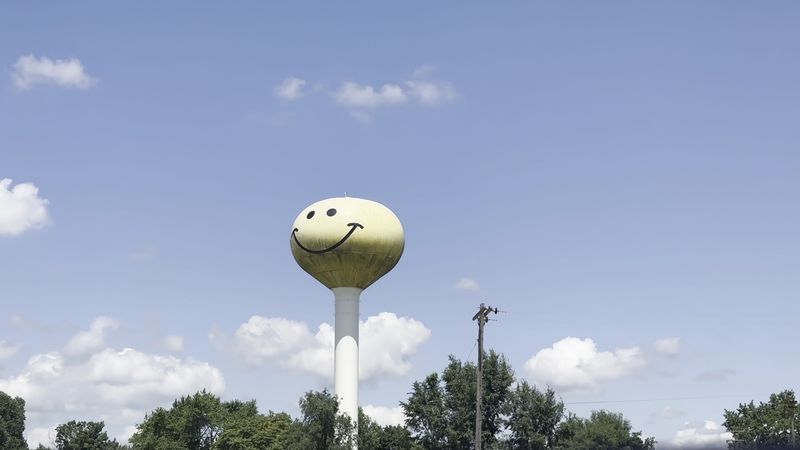
Somewhere between cheerful and slightly surreal, a bright yellow smile beams over the town of Caspian from the top of its water tower. This oversized grin first appeared in the 1970s and quickly became a beloved, friendly landmark for anyone driving through Iron County.
Towering over the surrounding landscape, the yellow face looks almost like a giant balloon caught in the trees. The deep green pines rake the sky behind it.
There is no formal tour or visitor center for the tower. The attraction is the simple visual lift it gives you as you roll past on US-2 or the local side streets.
Photographers often favor the nearby ballfield or the residential side streets. That helps them get a clean shot of the face without too many power lines in the way.
The joke is simple, but the effect is persistent. It is nearly impossible not to feel a little bit better after the tower peaks over the treeline.
In the winter, the snow adds soft blue shadows to the tank. Late summer often throws a carpet of colorful wildflowers into the foreground of your frame.
11. The Barrel, Douglas
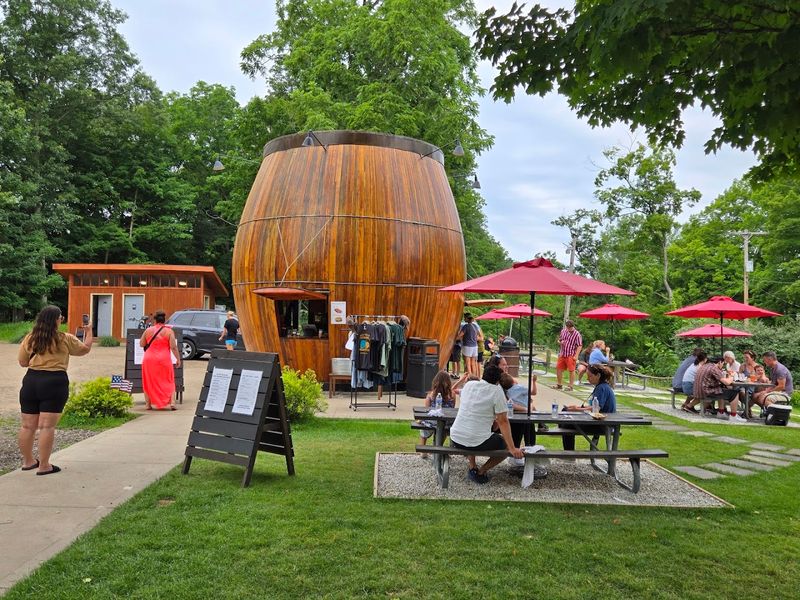
A giant wooden barrel squats proudly beside the Blue Star Highway in Douglas, recently revived as a seasonal snack stand with a sly, historical wink at Prohibition.
The wooden staves curve like the hull of a beached ship. The service window pops open under bright, painted stripes. The form is a perfect example of programmatic architecture.
That means buildings shaped like the products they sell. It is delightful because it declares exactly what it is without saying a word.
Built in the 1940s and long dormant, the Douglas Root Barrel was saved and reopened after an impressive feat of local fundraising and careful carpentry. Volunteers and the city worked together to keep the original proportions.
At the same time, they updated the structure for modern safety. Today, you can expect thick soft-serve ice cream, classic hot dogs, and of course a cold, frothy Root Drink.
During beach weekends, you should expect a sunny, friendly queue of families and travelers. Parking is available along the adjacent park.
The evening light turns the wooden slats a warm amber color. With the Lake Michigan breeze cooling the picnic tables, it is the quintessential Michigan summer stop.