
12 Must-Visit Historical Sites in New York You Should See in 2026
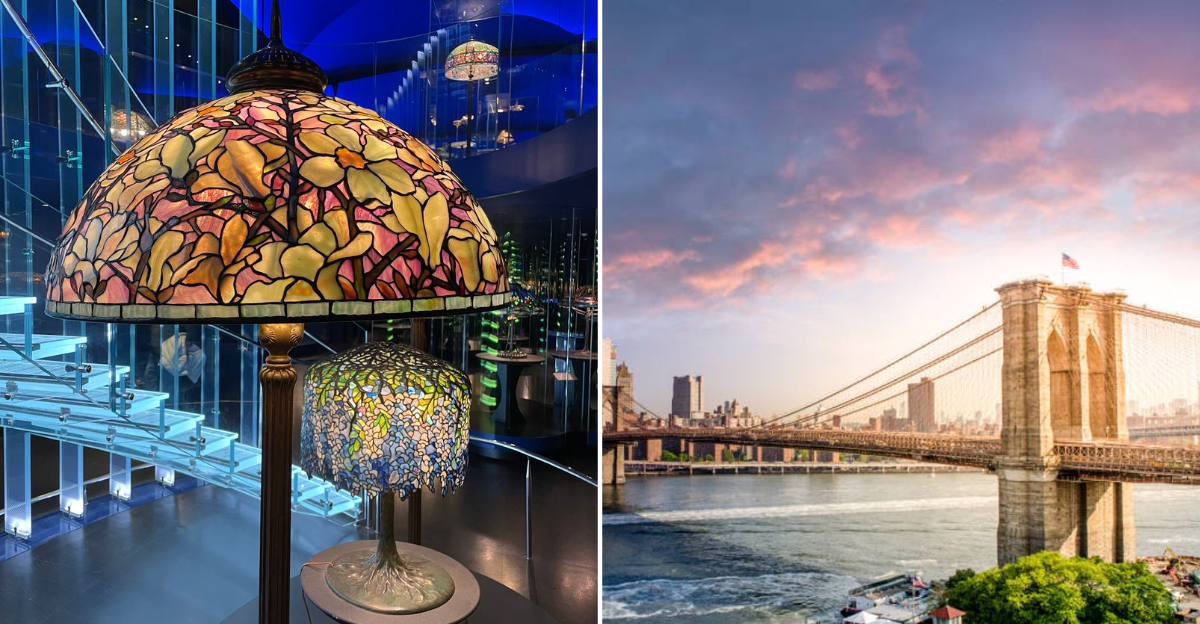
New York City holds more stories than any history book could ever contain.
Walking through its streets means stepping into moments that shaped America and the world.
From revolutionary battlegrounds to immigrant gateways, these landmarks aren’t just tourist stops—they’re time machines waiting to transport you backward through centuries of triumph, tragedy, and transformation.
1. Statue of Liberty National Monument (Liberty Island)
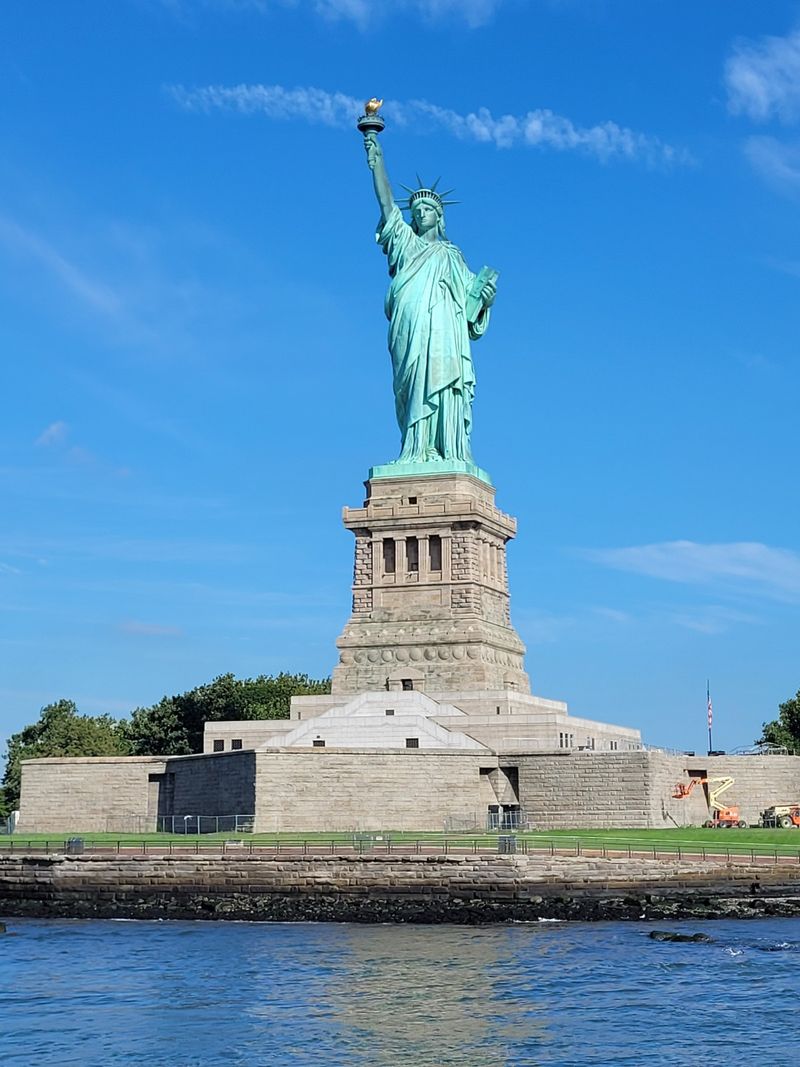
Lady Liberty herself stands tall on Liberty Island, and honestly, seeing her in person hits differently than any postcard ever could.
This 305-foot copper goddess has been welcoming immigrants and visitors since 1886, and she’s still got that “I’m-here-to-symbolize-freedom” energy that makes your heart do a little patriotic flutter.
You’ll need to catch a ferry from Battery Park (Address: Liberty Island, New York, NY 10004), but trust me, the boat ride is half the fun.
Once you’re there, climbing the roughly 354 steps from the lobby all the way up to the crown feels like earning your citizenship in the Cool Kids Club of America.
The views from up top? Absolutely bonkers.
Manhattan sprawls before you like a concrete jungle snow globe.
Fun fact: She was originally a shiny copper color before oxidation turned her that iconic seafoam green we all know and love.
Book your crown tickets months in advance because everyone and their grandmother wants this Instagram opportunity.
The museum at the base tells her construction story with enough fascinating details to make even history-haters pay attention.
2. Ellis Island National Museum of Immigration
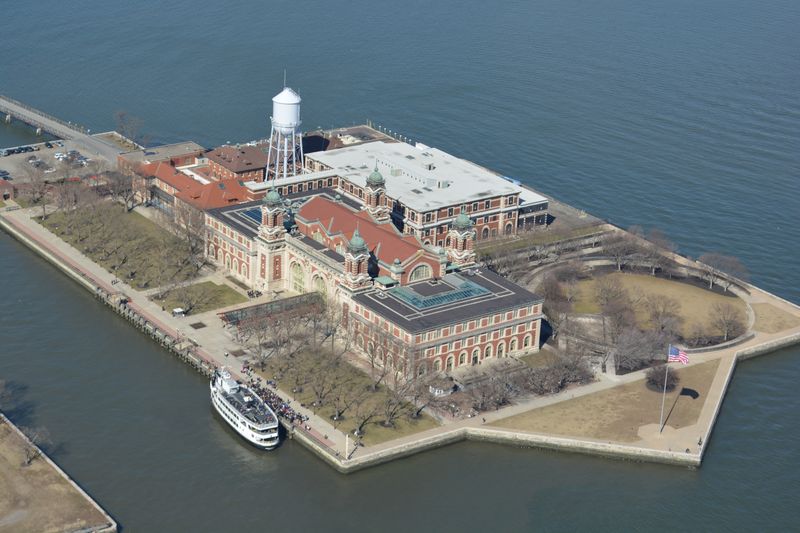
Right next door to Liberty Island sits Ellis Island, where over 12 million immigrants processed through between 1892 and 1954.
Walking through the Great Hall gives you goosebumps when you imagine the hope, fear, and exhaustion that filled this space.
Located at Ellis Island, New York, NY 10004, this museum doesn’t sugarcoat the immigrant experience—it celebrates it with raw authenticity.
The Wall of Honor outside displays hundreds of thousands of immigrant names, and finding a relative’s name there feels like discovering buried treasure.
Interactive exhibits let you search historical records, and you might just find your great-great-grandma’s arrival documents.
The baggage room displays actual trunks and suitcases these brave souls carried across oceans, containing entire lives packed into impossibly small spaces.
Medical examination rooms show where doctors checked for diseases in literally seconds—talk about pressure.
Audio tours feature stories narrated by descendants, bringing voices to the faded photographs lining the walls.
Combination tickets with the Statue make this a double-whammy historical punch.
3. National September 11 Memorial & Museum
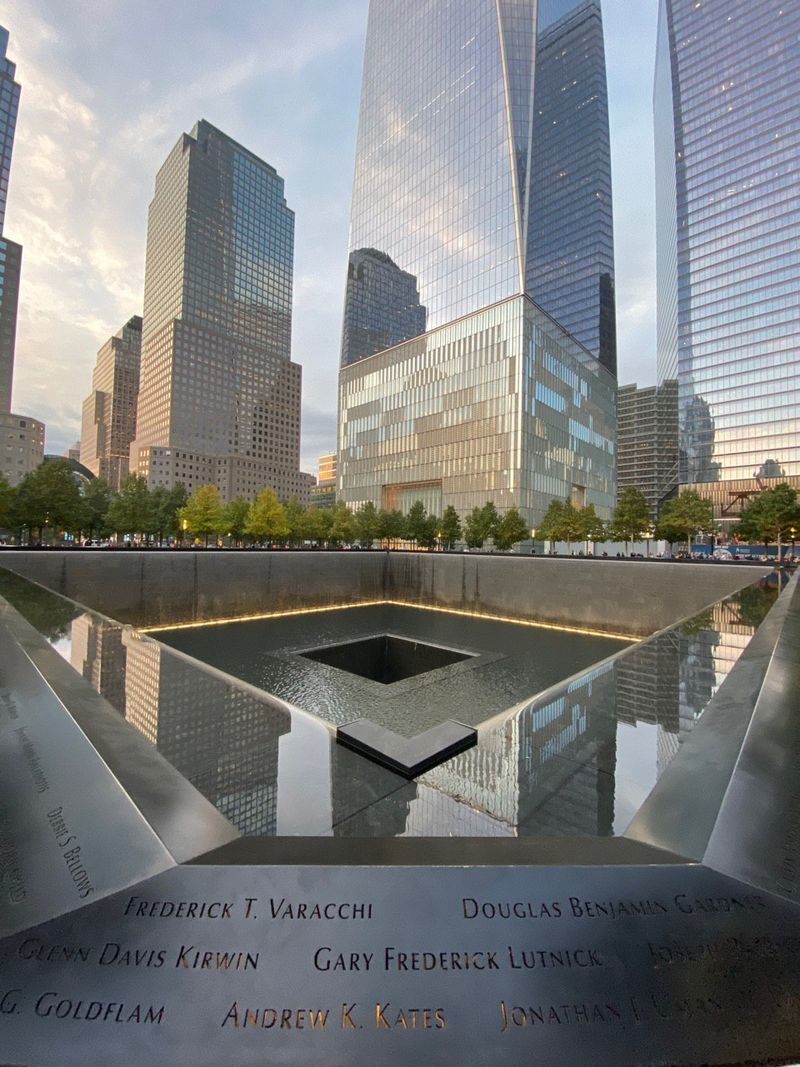
Some places demand silence, and the 9/11 Memorial at 180 Greenwich Street, New York, NY 10007 is definitely one of them.
Two massive reflecting pools sit exactly where the Twin Towers once stood, with waterfalls cascading into voids that feel appropriately impossible to fill.
Bronze panels surrounding the pools bear the names of every soul lost that day, and touching those engraved letters connects you to history in the most profound way.
The museum underground preserves artifacts that survived the attacks—twisted steel beams, crushed fire trucks, and personal items that tell individual stories of that terrible morning.
Walking through feels heavy, but it’s the kind of weight that matters.
The Last Column, covered in messages and mementos from rescue workers, stands as a testament to resilience.
Survivor Tree, a Callery pear that lived through the collapse, now blooms defiantly each spring.
Audio recordings and video footage document the day with unflinching clarity.
Reserve timed tickets online because this isn’t a place to rush through.
4. Tenement Museum (Lower East Side)
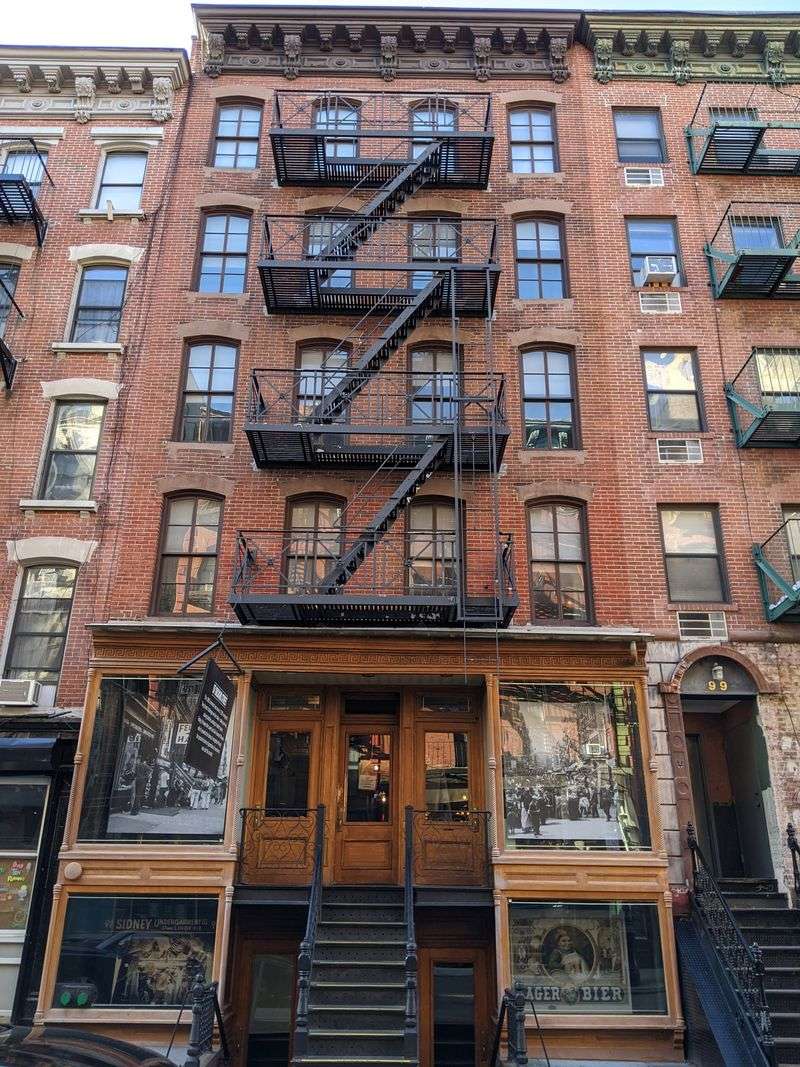
Ever wonder how immigrants actually lived when they arrived in America?
The Tenement Museum at 103 Orchard Street, New York, NY 10002 answers that question by preserving actual apartments where families squeezed into impossibly tiny spaces.
This five-story tenement at 97 Orchard Street housed nearly 7,000 people from over 20 nations between 1863 and 1935, and the stories these walls could tell would fill libraries.
Guided tours take you through restored apartments, each one frozen in a different time period with authentic furnishings and personal belongings.
You’ll meet the Gumpertz family (through historical recreation, obviously—they’re not ghosts) who lived there in the 1870s.
The Baldizzi apartment from the 1930s shows Depression-era life with heartbreaking detail.
Cramped rooms, shared toilets, minimal light—this museum doesn’t romanticize immigrant life, it honors it.
Costumed educators bring these families to life with stories researched from census records and historical documents.
Walking through makes modern studio apartments feel like palaces.
5. Brooklyn Bridge
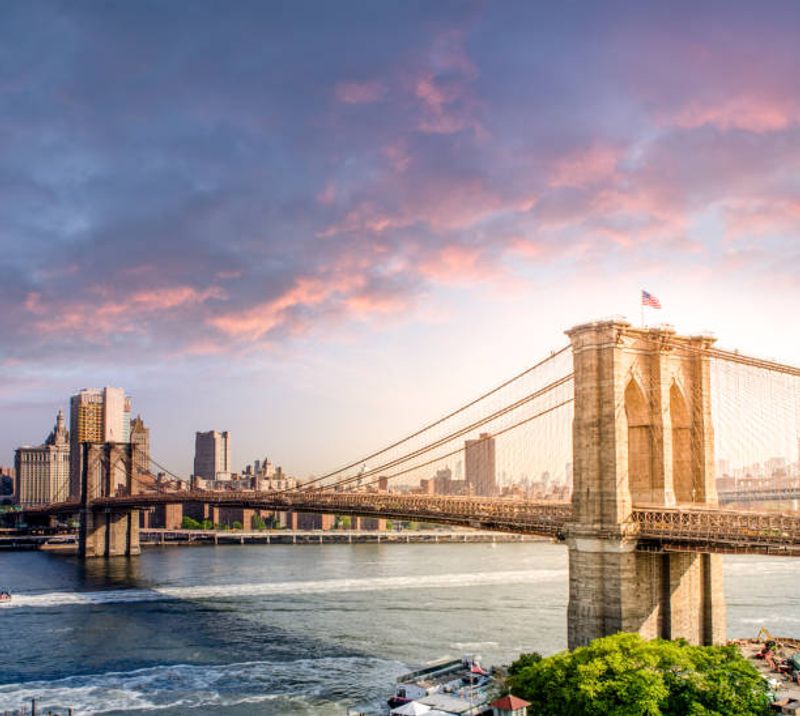
Completed in 1883 after 14 years of construction, the Brooklyn Bridge (spanning from Manhattan to Brooklyn, NY) remains an engineering marvel that makes modern architects weep with envy.
Chief engineer John Roebling died during construction, his son Washington took over and got the bends working in underwater caissons, and Washington’s wife Emily basically ran the whole show after that—talk about a family project.
The pedestrian walkway sits above car traffic, giving you unobstructed views of Manhattan’s skyline, the Statue of Liberty, and the East River below.
Sunrise walks offer that golden-hour Instagram magic without the tourist crowds.
Those massive Gothic stone towers feel like medieval castles transplanted to New York, because apparently the Roeblings had flair.
Steel cables crisscross overhead in geometric patterns that somehow feel both industrial and artistic.
Street performers and artists line the walkway, adding spontaneous entertainment to your historical stroll.
The bridge has survived everything from stampedes to terrorism attempts, proving Brooklyn and Manhattan’s connection is literally unbreakable.
6. Grand Central Terminal
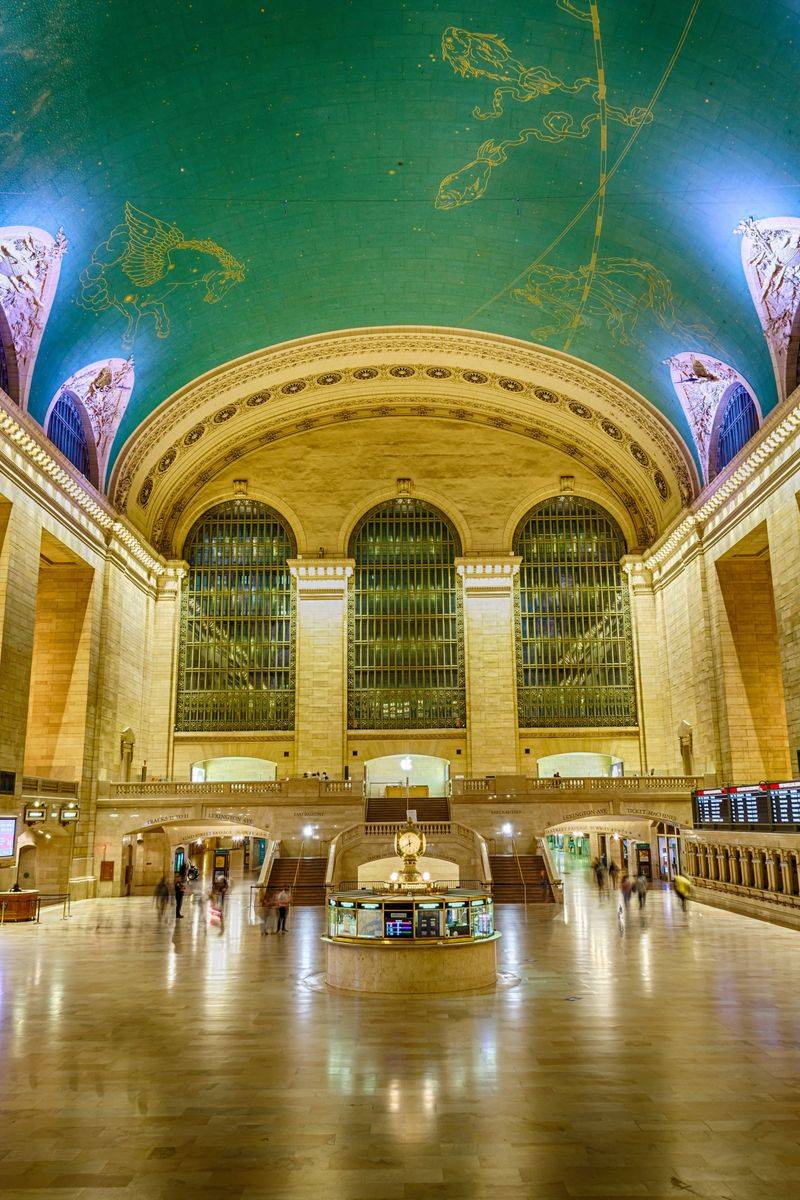
Grand Central Terminal at 89 East 42nd Street, New York, NY 10017 isn’t just a train station—it’s a Beaux-Arts masterpiece where commuters rush beneath constellations.
That famous ceiling mural depicts the Mediterranean sky with 2,500 stars, though hilariously, they’re painted backward (someone used a medieval manuscript as reference and didn’t account for the heavenly perspective).
The four-faced clock atop the information booth is worth somewhere between 10 and 20 million dollars because its faces are genuine opal.
Whispering Gallery near the Oyster Bar lets you stand in opposite corners and hear each other perfectly through acoustic magic—try it, it’s weirdly romantic.
Secret tunnels and hidden passages riddle the building, including Track 61, a private train platform used by presidents.
During Prohibition, spaces in and around the terminal reportedly housed speakeasies, because of course they did.
The Main Concourse windows pour in natural light that makes the marble practically glow.
Free weekly walking tours of Grand Central and the surrounding neighborhood reveal architectural secrets most commuters never notice during their daily sprint to catch trains.
7. Empire State Building & Observatory
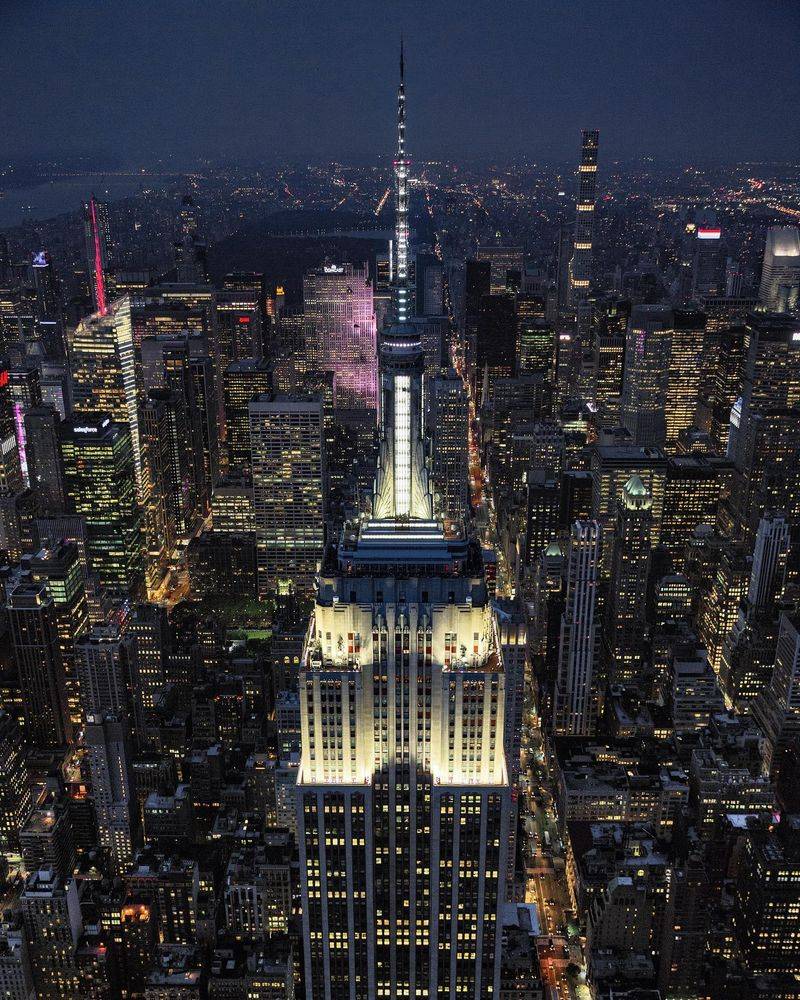
Built during the Great Depression in just 410 days, the Empire State Building at 20 West 34th Street, New York, NY 10001 became an instant symbol of American ambition and Art Deco swagger.
King Kong made it famous by climbing it in 1933, though security these days frowns upon giant apes.
Two observation decks on the 86th and 102nd floors offer 360-degree views that’ll make your phone’s camera work overtime.
On clear days, you can see five states from up there, which feels like a geographical superpower.
The building’s lights change colors for holidays, events, and causes, turning it into New York’s mood ring.
Original Art Deco lobby features murals and geometric designs that scream 1930s glamour.
Lightning strikes it dozens of times each year because apparently Mother Nature has beef with tall buildings.
Sunset visits give you daylight and nighttime views in one trip—maximum value for your ticket price.
Express passes skip the lines, which on busy days can save literal hours of standing around.
8. Federal Hall National Memorial
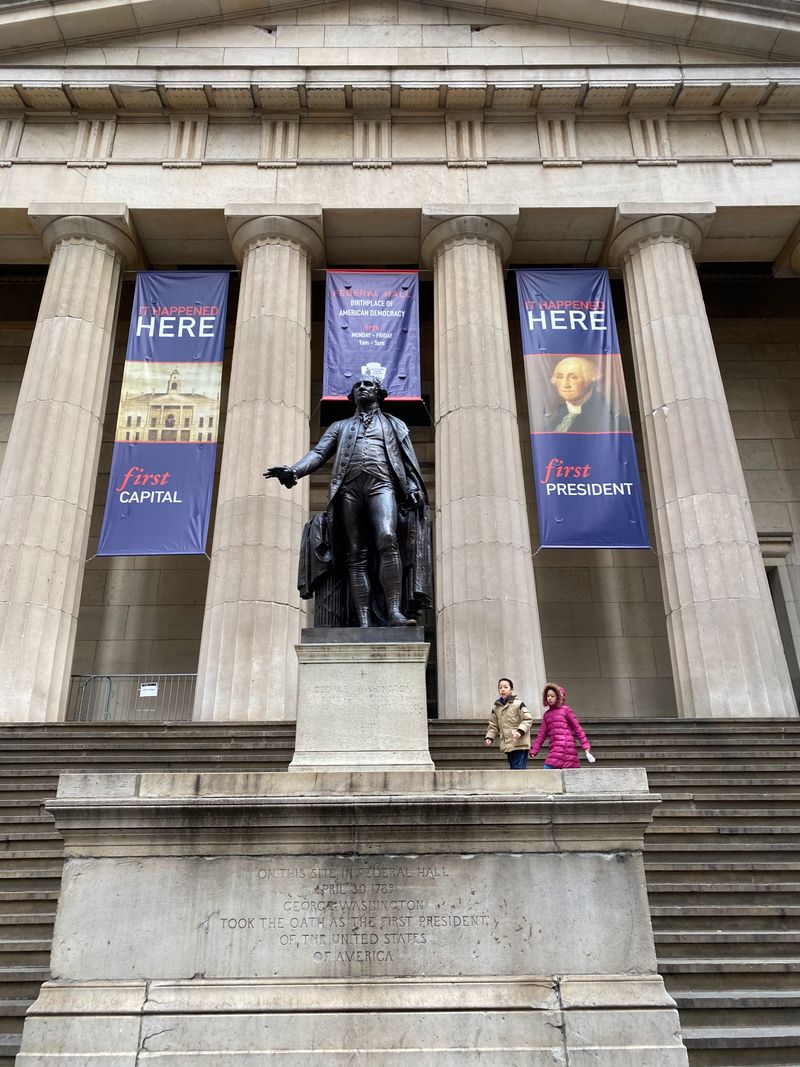
George Washington took his oath as America’s first president right here at 26 Wall Street, New York, NY 10005, making Federal Hall basically the birthplace of American government.
The current Greek Revival building (built 1842) replaced the original structure, but the historical significance remains absolutely massive.
That bronze statue of Washington on the steps marks the exact spot where he stood on April 30, 1789, promising to preserve, protect, and defend the Constitution.
Inside, the Rotunda features Corinthian columns and a domed ceiling that makes you feel like you’ve stepped into ancient Athens.
The Bible Washington used during his inauguration occasionally appears in special exhibitions, which is basically touching history through glass.
This site, whose original 18th-century building served as New York’s City Hall and the first U.S. Capitol, has governmental street cred for days.
Free admission makes it perfect for budget-conscious history buffs.
Rangers give talks about the Revolutionary period, answering questions you didn’t know you had about powdered wigs and colonial politics.
Wall Street’s financial chaos swirls around outside while inside, you’re standing where democracy literally began.
9. Fraunces Tavern Museum
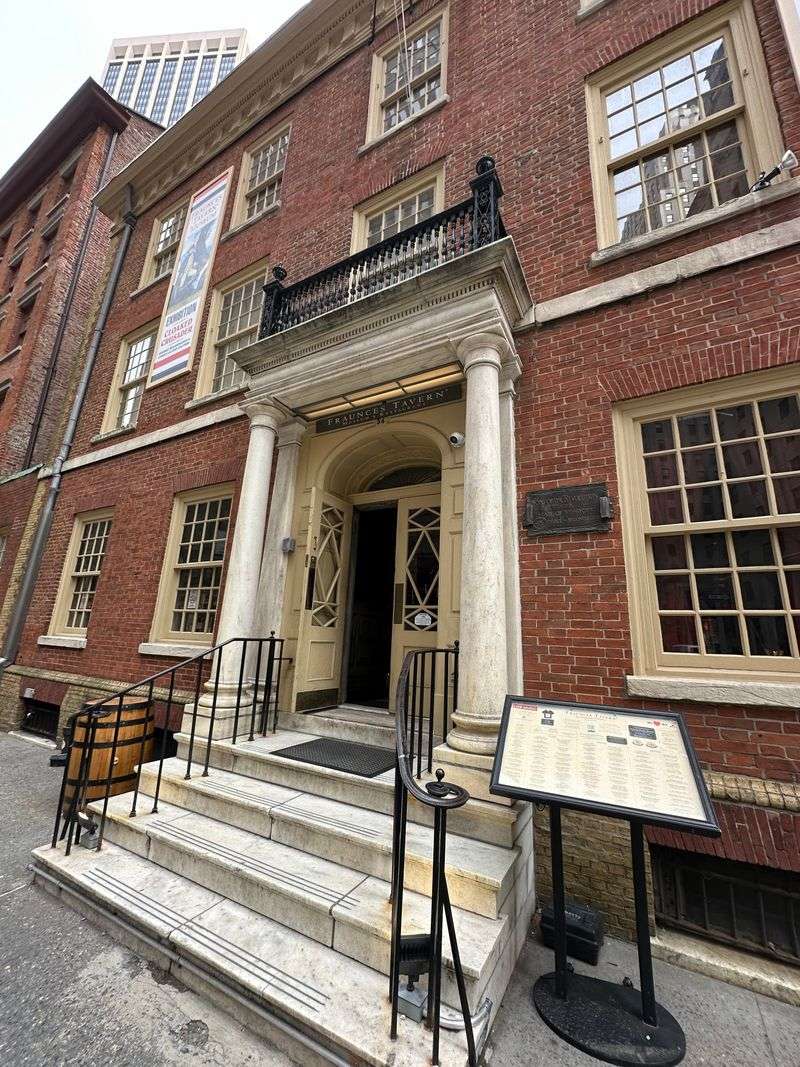
George Washington said goodbye to his officers at Fraunces Tavern (54 Pearl Street, New York, NY 10004) in 1783, and yes, there were definitely tears involved.
This colonial-era building has been a tavern since 1762, surviving fires, revolutions, and New York’s tendency to demolish everything old.
The Long Room on the second floor hosted that famous farewell, where Washington basically told his military bros he was retiring and getting emotional while doing it.
Museum galleries display Revolutionary War artifacts, including weapons, documents, and personal items that bring that era into sharp focus.
The tavern still operates a restaurant downstairs, so you can literally eat where Founding Fathers once argued about independence over ale.
Period rooms recreate 18th-century life with authentic furnishings that show how colonials actually lived beyond the history textbook highlights.
Flag collection includes early American banners that predate our current stars-and-stripes design.
Special events and lectures bring historians in to discuss everything from Revolutionary battles to colonial cuisine.
The building itself is a National Historic Landmark, making every creaky floorboard a piece of American heritage.
10. Trinity Church & Churchyard (Wall Street)
Trinity Church at 89 Broadway, New York, NY 10006 has been standing at Wall Street’s head since 1846, watching financial empires rise and crash with ecclesiastical calmness.
Its Gothic Revival spire once dominated the skyline before skyscrapers made it look like a historical footnote—but what a beautifully defiant footnote it is.
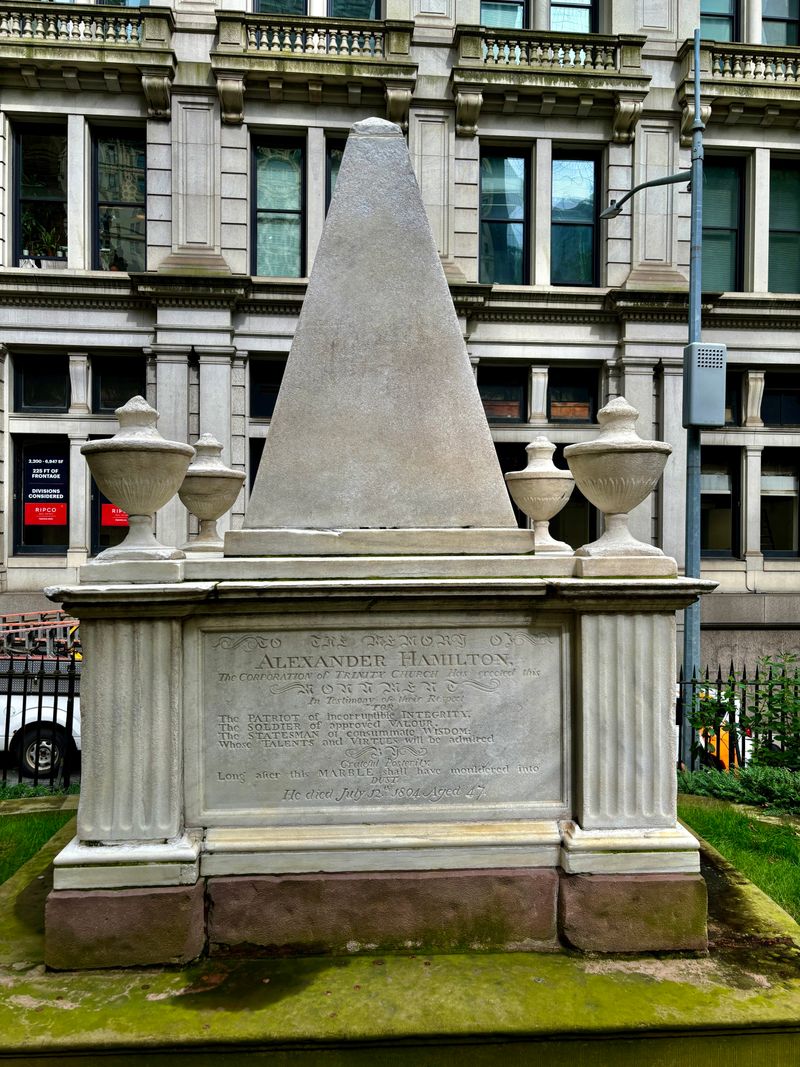
The churchyard cemetery holds some serious American heavyweight names: Alexander Hamilton, Robert Fulton, and other historical figures who shaped the nation.
Hamilton’s grave attracts pilgrims (especially since that musical made him cool again) who leave flowers, coins, and handwritten notes.
Weathered headstones date back to the 1600s, their inscriptions worn smooth by centuries of New York weather and curious fingers.
Inside, stained glass windows filter light into rainbow patterns across wooden pews where worshippers have sat for nearly 180 years.
Free concerts happen regularly, filling the sanctuary with music that echoes off stone walls.
The church survived 9/11 when the South Tower collapsed just blocks away, and the Trinity parish, especially nearby St. Paul’s Chapel, served as a refuge for rescue workers afterward.
Walking these grounds feels like stepping into a peaceful time pocket while Wall Street’s chaos rages just outside the gates.
11. New-York Historical Society Museum & Library
Founded in 1804, the New-York Historical Society at 170 Central Park West, New York, NY 10024 is literally older than most American institutions, making it the cool grandparent of New York museums.
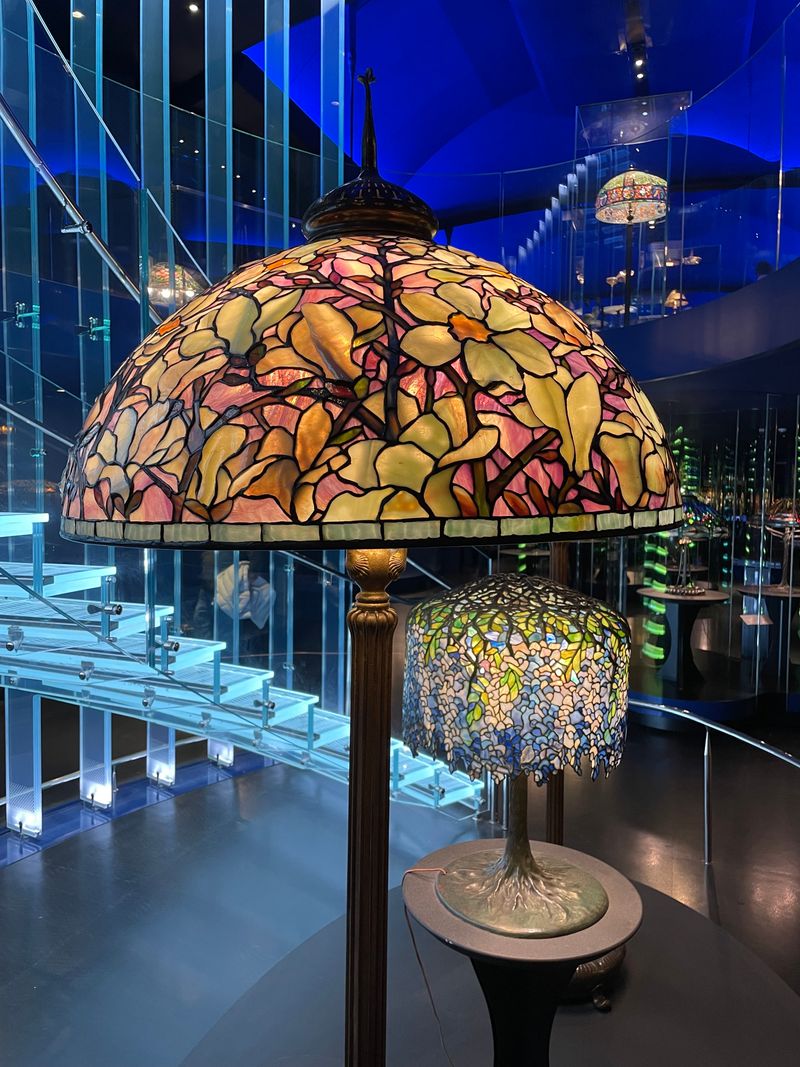
Their collection includes over 1.6 million objects, from George Washington’s inauguration chair to Tiffany lamps that’ll make your eyes water with their beauty.
The entire collection of original Audubon watercolors lives here—all 435 of them—which is basically a bird-watcher’s fever dream.
DiMenna Children’s History Museum makes learning about New York fun for kids through interactive exhibits that don’t feel like sneaky education.
The library holds millions of documents, photographs, and maps that researchers use to uncover forgotten New York stories.
Rotating exhibitions cover everything from slavery in New York to the history of LGBTQ+ activism, never shying from complicated truths.
That Tiffany lamp collection deserves its own mention because seriously, they’re stunning.
The building itself, designed in Classical Revival style, makes you feel scholarly just walking through the doors.
Lectures and panel discussions bring historians, authors, and experts in to discuss current events through historical lenses.
12. The Metropolitan Museum of Art (The Met)
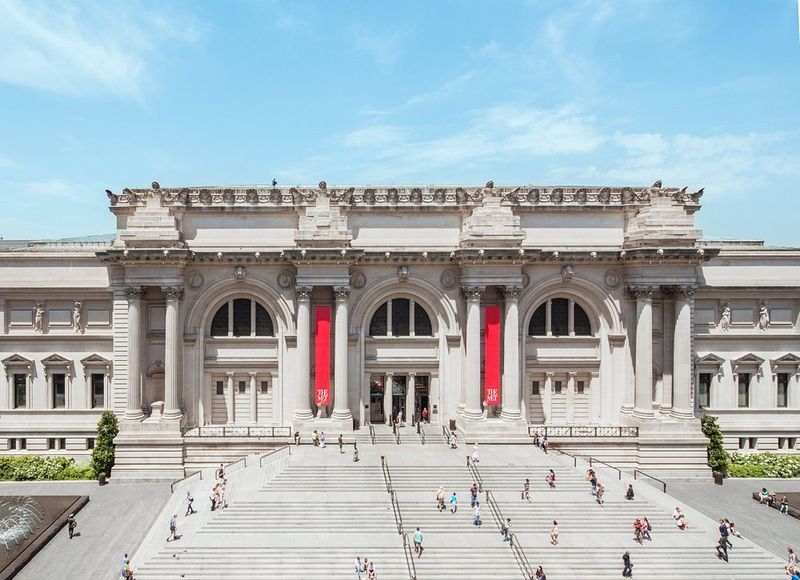
The Met at 1000 Fifth Avenue, New York, NY 10028 isn’t just a museum—it’s a sprawling cultural universe containing 5,000 years of art from literally every corner of Earth.
With over 2 million works in its permanent collection, you could visit daily for years and still not see everything.
The Temple of Dendur, an actual Egyptian temple from 15 BC, sits in a glass-walled gallery overlooking Central Park because the Met doesn’t do anything halfway.
European paintings galleries house works by Rembrandt, Vermeer, and Van Gogh that you’ve seen in textbooks but never imagined encountering face-to-face.
The Arms and Armor collection turns medieval warfare into an art form with elaborately decorated suits that knights actually wore into battle.
The rooftop garden has traditionally opened seasonally, offering stunning skyline views alongside contemporary art installations and drinks.
American Wing’s period rooms transport you through different eras of American domestic life, from colonial simplicity to Gilded Age excess.
Costume Institute exhibitions draw massive crowds with thematic displays of historical and contemporary fashion.
Suggested admission still applies on a pay-what-you-wish basis for New York State residents and tri-state area students, while most other visitors pay a fixed general admission, keeping world-class art relatively accessible.