
12 Myths About New York Pizza Finally Explained
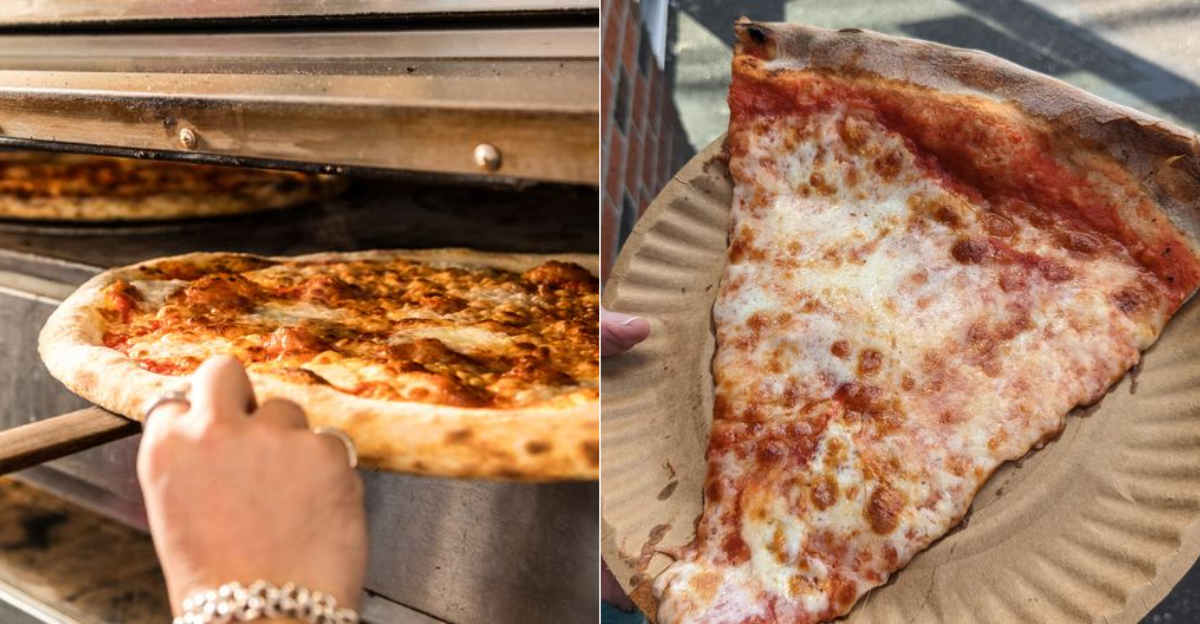
As a born-and-raised New Yorker, I’ve spent my entire life defending our iconic pizza from myths, rumors, and wild tall tales.
The classic New York slice—the one that folds perfectly in your hand with just the right balance of tangy sauce, gooey cheese, and thin, chewy crust—has sparked more debate than the subway system itself.
Over the years, I’ve heard it all: theories about magical New York water, endless arguments about proper toppings, and even bold claims that no other city can come close. Today, I’m setting the record straight on what truly makes our pizza special—and what’s pure hot air.
1. The Magic Water Myth
People love claiming our tap water is the secret pizza ingredient, but that’s mostly baloney. I’ve watched my uncle make the same exact dough in Jersey using bottled water, and guess what? Still tastes like New York pizza.
The real magic comes from technique and tradition. Most pizzerias follow recipes passed down for generations, with specific flour blends and fermentation times that create that distinctive chew and flavor.
When visiting pizzerias, I always chuckle when tourists ask if they import NYC water. While our water is indeed excellent for baking, skilled pizza makers can reproduce authentic NY pizza anywhere with the right know-how.
2. The Giant Slice Stereotype
Last weekend I stumbled upon a cozy spot in Brooklyn serving perfectly authentic New York pizza that was decidedly medium-sized. The truth? Our slices come in all dimensions.
While many famous joints like Joe’s or Scarr’s do serve those Instagram-worthy massive triangles, plenty of respected establishments offer modest portions. The size has more to do with the pizzeria’s style and neighborhood than some unwritten rule about authenticity.
What defines a real New York slice isn’t its circumference but its proportions – that ideal ratio of thin crust to sauce to cheese that creates the perfect fold without dripping everywhere.
3. The Thin-Only Fallacy
My grandmother would roll her eyes at anyone claiming all New York pizza must be paper-thin. Having grown up in the Bronx during the 1950s, she introduced me to the delightful variety across our boroughs.
Sure, the classic New York slice rocks that thin, foldable crust with a slight crispness at the bottom. But Sicilian squares with their fluffy, inch-thick bases have been NYC staples for just as long! Then there’s the grandma slice – a rectangular thin-crust variation that’s pure New York.
Even our standard round pies vary in thickness depending on the neighborhood and the pizzaiolo’s personal style.
4. The Daily Pizza Ritual
My buddy Steve, born and raised in Manhattan, hasn’t touched a slice in three years due to a newfound gluten sensitivity. The stereotype that every New Yorker eats pizza daily makes me laugh!
We’re a diverse city of 8.4 million people with wildly different diets, preferences, and cultural backgrounds. While pizza is undoubtedly beloved here, plenty of New Yorkers go weeks or months without it. Some follow specific diets, others simply prefer different foods.
What’s true is that most New Yorkers have strong opinions about pizza – even those who rarely eat it can direct you to their neighborhood’s best slice.
5. The Dollar Slice Authenticity Claim
The first time my cousin from Chicago tried a dollar slice, he looked at me bewildered and asked, “This is what you’ve been bragging about?” I nearly choked on my soda! Dollar slices are convenient budget food, not the standard-bearers of our pizza tradition.
These ultra-cheap options only became widespread after the 2008 recession as an affordable lunch alternative. Most use pre-shredded cheese, mass-produced sauce, and rapid-rise dough to keep costs down.
For authentic New York pizza, you’ll want to visit established neighborhood pizzerias where slices typically cost $3-5 and feature quality ingredients, proper fermentation, and techniques refined over decades.
6. The Brick Oven Requirement
Walking past my favorite slice joint on 7th Avenue, I can clearly see their gas deck ovens cranking out perfect New York pizza all day long. No bricks in sight!
While wood and brick ovens produce wonderful pizza, they’re not the historical standard for New York slices. Since the early 20th century, most neighborhood pizzerias have used standard gas deck ovens. These workhorses heat evenly and can handle the volume needed for slice service.
The brick oven renaissance really took off in the 1990s when upscale pizzerias began highlighting artisanal methods. Both styles make legitimate New York pizza – the proof is in the taste, not the heating method.
7. The Coal-Fired Confusion
My Italian grandfather nearly spilled his espresso when a tourist told him all authentic New York pizza must be coal-fired. “Mamma mia, what nonsense!” he exclaimed, having eaten city slices since the 1940s.
Coal ovens were indeed used by early pizzerias like Lombardi’s and Totonno’s, creating a distinctive charred crust that’s delicious but not the universal standard. The vast majority of classic New York pizzerias use gas ovens and have for generations.
Today, coal-fired places represent a small, prestigious subset of our pizza landscape. They’re historical treasures worth visiting, but claiming they’re the only authentic style is like saying all New Yorkers live in brownstones!
8. The Five Borough Boundary Myth
Last summer I had a religious experience eating a perfect New York slice in – of all places – Philadelphia! The owner, a Brooklyn transplant, had brought his expertise and techniques just 90 miles down the road.
Great New York pizza can absolutely exist outside the five boroughs. What makes our pizza special isn’t some magical geographic boundary but rather techniques, recipes, and standards that can travel. Many successful pizzerias across America were started by New York-trained pizza makers.
The key elements – proper dough fermentation, quality ingredients in the right proportions, and specific cooking methods – can be replicated anywhere by someone with the knowledge and dedication.
9. The Plain-Only Purist Argument
My first job was at a busy slice shop in Queens where the pepperoni pizza outsold plain cheese two-to-one. The idea that toppings aren’t authentic on New York pizza would have bankrupted us!
While it’s true that many New Yorkers judge a pizzeria by its plain slice (it can’t hide behind toppings), we’ve always enjoyed variety. Classic pizzerias have offered toppings for generations – pepperoni, sausage, mushrooms, and more have been standard options since at least the 1940s.
What distinguishes New York-style is restraint with toppings – we typically use fewer ingredients than Chicago or California styles, allowing the fundamental elements to shine.
10. The Sweet Sauce Misconception
“What’s that secret sweetness in the sauce?” a friend visiting from Texas once asked me. I laughed and took him to meet my favorite pizzaiolo, who confirmed: most authentic New York pizza sauce has no added sugar.
The natural sweetness comes from quality tomatoes, often Italian San Marzano or domestic varieties specifically grown for sauce. The best New York pizza places use minimally processed tomatoes with just salt, maybe some oregano or basil, and occasionally a touch of olive oil.
This simple approach lets the natural flavor of the tomatoes shine through. Any perceived sweetness comes from the ripeness of the fruit, not from sugar bowls in the kitchen!
11. The Slice Quality Myth
Growing up, my dad would walk us two extra blocks past three perfectly good pizzerias because, “Their slices are better than their pies.” Each shop has its own reputation, completely upending the myth that slices are always inferior.
The reality varies wildly across New York. Some places do focus on whole pies, reheating slices as an afterthought. But many legendary slice joints specifically design their process around slice service – using slightly different recipes and techniques that improve with a quick reheat.
The best slice shops understand the physics of cooling and reheating, creating pies that actually develop more complex flavors after resting briefly on the counter.
12. The Frozen-in-Time Fantasy
My great-uncle ran a pizzeria in the Bronx from 1962 to 1998, and he’d be the first to tell you how much his recipes evolved over those decades. The notion that New York pizza hasn’t changed since the early 1900s is pure nostalgia.
Our pizza tradition has continuously adapted. Ingredients have changed – from the flour varieties available to cheese production methods. Equipment has modernized, and influences from Naples to Detroit have been incorporated by innovative pizzaiolos.
Today’s renaissance includes both traditionalists preserving century-old techniques and forward-thinkers using sourdough fermentation, local ingredients, and creative approaches while maintaining the essential New York character we all recognize.