
Nature Has Almost Taken Back These Abandoned Railroads In West Virginia
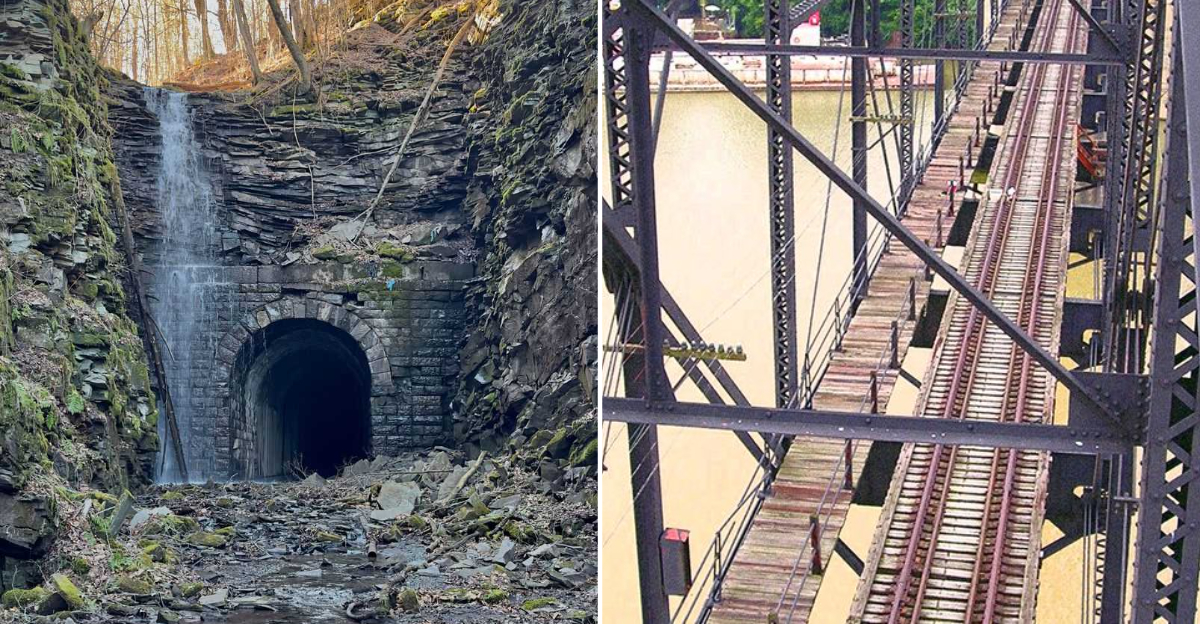
West Virginia’s mountains once echoed with the thunder of steam engines hauling coal and timber through narrow valleys.
Today, many of these railroad lines sit silent, slowly disappearing under blankets of moss, ferns, and towering trees.
These forgotten tracks tell stories of boom times and busy workers, now serving as peaceful trails where nature writes new chapters over old steel and stone.
1. Patterson Creek Cutoff Running From Maryland To West Virginia
Railroad builders carved this shortcut through rocky terrain to save time hauling freight between states. Mother Nature apparently had other plans for this engineering marvel.
Moss now covers the old stone foundations where bridges once spanned Patterson Creek. You can spot remnants of telegraph poles poking up through thick underbrush like forgotten sentinels.
Wildlife has claimed this corridor as their own personal highway, with deer paths crisscrossing the former rail line.
2. Kanawha Bridge In Charleston Stands As Industrial Art
This massive steel structure once carried countless coal trains across the Kanawha River. Today it serves as an accidental sculpture garden where plants grow from every crevice.
River birds nest in the old girders while vines wrap around rusty supports like green ribbons. The bridge creates interesting shadows on the water below, forming patterns that change throughout the day.
Photographers love capturing the contrast between industrial metal and organic growth.
3. Glady Tunnel Cuts Through Shavers Mountain Like A Time Machine
Engineers chose to bore straight through this mountain rather than build around it, creating a 511-foot passage through solid rock. Moisture drips constantly from the ceiling, feeding delicate cave plants.
The tunnel stays cool even on hot summer days, making it a natural air conditioner for hikers. Strange echoes bounce off the curved walls, turning footsteps into mysterious sounds.
Salamanders and other creatures enjoy the perpetually damp environment inside.
4. North Bend Rail Trail Tunnels Offer Underground Adventures
Multiple tunnels along this former Baltimore and Ohio line now serve adventurous trail users. Each tunnel has its own personality, from short passages to longer underground journeys.
Brickwork shows the craftsmanship of workers who built these passages over a century ago. Cool air flows through the tunnels year-round, creating natural refrigeration for anyone seeking relief from summer heat.
Headlamps reveal interesting rock formations and occasional bat colonies overhead.
5. Elk And Little Kanawha Railroad Served Central West Virginia Communities
This railroad connected small towns scattered throughout the region’s rugged terrain. Forest succession has turned former rail yards into meadows where butterflies dance among Queen Anne’s lace.
Old loading platforms now serve as foundations for wild berry bushes that feed local wildlife. You might stumble across rusty spikes or pieces of rail hidden under fallen leaves.
The gentle grades make perfect paths for mountain biking and horseback riding adventures.
6. Little Kanawha Railroad From Placid To Owensport Followed River Valleys
Smart engineers followed natural water courses to avoid steep climbs and expensive bridge construction. The abandoned right-of-way parallels streams where herons fish and kingfishers dive for minnows.
Sycamore trees shade sections of the old roadbed, their white bark contrasting with dark soil. Flooding occasionally reveals old cross ties buried under decades of river sediment.
Fishermen use former bridge abutments as casting platforms for catching bass and catfish.
7. Baltimore And Ohio Fairmont Subdivision Connected Major Cities
This important mainline carried passenger trains between Fairmont and Wheeling for decades. Stately stations once welcomed travelers, but only concrete platforms remain under blankets of pachysandra and ivy.
Urban sections show how quickly nature reclaims industrial corridors when trains stop running. Maple and oak trees grow where freight cars once rolled, creating green tunnels through former rail yards.
Graffiti artists have decorated surviving bridge abutments with colorful murals.