
9 New York Covered Bridges So Charming, They Look Straight Out Of A Painting
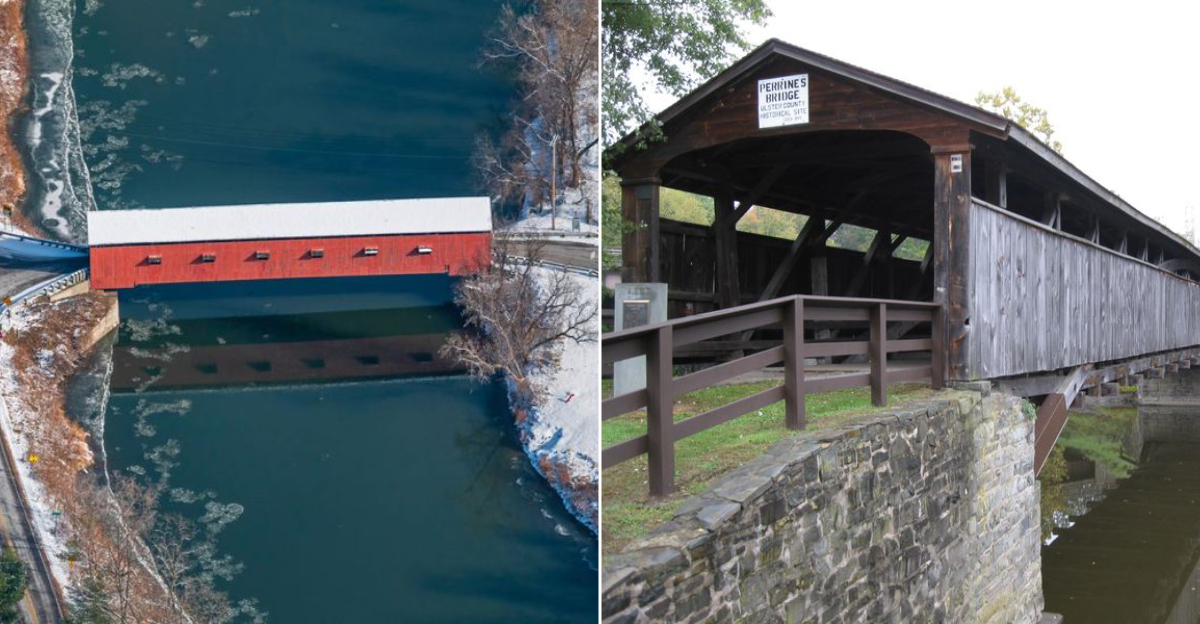
Hidden throughout New York’s countryside are architectural treasures that feel like portals to simpler times. The state’s covered bridges, with their weathered wooden beams and rustic silhouettes, stand as enduring monuments to early American craftsmanship and ingenuity.
I first stumbled upon these magical structures during a winding fall road trip last year, when the foliage blazed in brilliant reds and golds, and I was instantly enchanted by their storybook appeal.
Each bridge tells its own quiet story, set against peaceful streams and pastoral landscapes. Join me as we explore nine of New York’s most picturesque covered bridges—scenes straight from an artist’s canvas.
1. Hyde Hall Covered Bridge
Standing since 1825, this wooden wonder holds the title of oldest covered bridge in the United States! My first glimpse of its weathered red siding against the backdrop of Glimmerglass State Park nearly took my breath away.
Walking through feels like stepping back two centuries. The craftsmanship amazes me every time—those hand-hewn beams have witnessed nearly 200 years of history passing beneath them.
What I love most is how the sunlight filters through the wooden slats, creating dancing patterns on the wooden floor. Visit during autumn when the surrounding maples frame this historic treasure in a blaze of orange and gold.
2. Ashokan-Turnwood Covered Bridge
Nestled in Ulster County, this charmer wasn’t actually built for horse-drawn carriages but as part of the Ashokan Reservoir project in the 1990s. Yet something magical happens when traditional craftsmanship meets modern engineering!
The bridge spans 120 feet across the reservoir’s sparkling waters, creating a picture-perfect scene that I’ve captured countless times on my camera. Locals whisper that early mornings bring a mystical fog that hovers just above the water.
My favorite memory here? Watching an osprey dive for fish while standing dead-center on the bridge. The wooden structure creaks softly underfoot, a gentle reminder of the beauty in functional architecture.
3. Perrine’s Covered Bridge
Built by Benjamin Perrine in 1844, this magnificent structure stretches 154 feet across the Wallkill River. The moment you approach, you’ll notice the distinctive red siding that practically pops against green meadows in summer.
I once picnicked beside this bridge during a thunderstorm and watched in awe as it stood defiant against nature’s fury. That’s 19th-century engineering for you! The interior beams form a complex lattice that resembles a wooden cathedral ceiling.
A quirky tradition has emerged over the years—couples carve their initials into the wooden beams for good luck in love. Look closely and you’ll find dates going back decades, each telling a story of romance beneath this historic shelter.
4. Salisbury Center Covered Bridge
Tucked away in Herkimer County, this wooden gem spans the crystalline waters of Spruce Creek. The first time I stumbled upon it, I literally gasped—it looked exactly like a Thomas Kinkade painting come to life!
Built in 1875, the bridge features a unique queenpost truss design that engineering buffs will appreciate. What captivates me most is how the bridge seems to change personality with the seasons—demure in winter’s white blanket, vibrant amid spring’s wildflowers.
Fishermen often cast lines from nearby rocks, creating a timeless tableau. I’ve spent hours sketching this scene, trying to capture the way sunlight plays on the dark wooden boards and dapples the water below.
5. Rexleigh Covered Bridge
Crossing the Battenkill River with timeless grace, this 1874 masterpiece boasts a town lattice design that makes my inner architecture nerd squeal with delight. The name itself—Rexleigh—sounds like something from a fairy tale!
During my summer visit, I watched children splash in the shallow waters beneath while their parents photographed the bridge’s perfect reflection. The interior smells wonderfully of aged timber and history.
A funny moment occurred when a local farmer told me about the bridge’s nickname: “The Kissing Bridge.” Apparently, young couples would steal kisses inside its shadowy confines away from prying eyes. Some traditions never die—I spotted modern-day teenagers doing exactly the same thing!
6. Buskirk Covered Bridge
Straddling the border between New York and Vermont, this crimson beauty has welcomed travelers since 1857. The striking contrast of its deep red planks against emerald fields stopped me in my tracks the first time I drove past.
What makes Buskirk special? The unusual combination of Howe truss and queenpost designs creates an architectural hybrid that’s rare among covered bridges. During my visit, an elderly gentleman shared tales of how the bridge once accommodated horse-drawn school buses!
Photographers flock here year-round, but winter transforms it into something truly magical. After a fresh snowfall, the bridge looks like a cardinal perched on a white landscape—a splash of vibrant color that warms even the coldest day.
7. Eagleville Covered Bridge
Bravely spanning the Batten Kill since 1858, this plucky bridge survived both the great flood of 1927 and a truck crash in 1977! I find something deeply inspiring about its resilience.
The name “Eagleville” comes from the majestic birds that once nested nearby. During my springtime visit, I spotted a bald eagle soaring above—nature’s perfect homage to the bridge’s heritage. Inside, the intricate lattice pattern creates fascinating shadow play throughout the day.
Local legend claims the bridge is haunted by a young woman who waits eternally for her lover to return from war. Whether you believe in ghosts or not, there’s an undeniable feeling of stepping through time when you walk its planked floor.
8. Shushan Covered Bridge
Grandly stretching 161 feet across the Batten Kill River, this 1858 treasure offers perhaps the most photogenic setting of all New York’s covered bridges. Morning mist rising from the river creates an ethereal frame that had me reaching for my camera before I’d even had my coffee!
The town of Shushan embraces its landmark with annual festivals celebrating its history. During my visit, locals shared stories of how the bridge once served as an impromptu community center during winter months.
What fascinated me most was learning that the bridge’s distinctive town lattice truss design was patented by architect Ithiel Town, who charged one dollar per foot to anyone using his design. Talk about a smart business model for the 1800s!
9. Copeland Covered Bridge
Affectionately known as “The Kissing Bridge” by locals, this intimate structure spans Coldbrook Creek in Edinburg. Unlike its grander cousins, Copeland’s charm lies in its modest size and perfectly preserved condition.
Built in 1879, the bridge features a queenpost truss system that has withstood nearly a century and a half of Adirondack winters. During my autumn visit, the surrounding maple trees created a fiery canopy that reflected in the creek below—a double display of nature’s artistry.
The bridge sits in such a peaceful setting that time seems to slow down. I spent an entire afternoon here sketching, listening to the gentle burble of the creek, and wondering about all the stories these wooden beams could tell if they could speak.